
Specs are compiled from manufacturer listings and verified buyer reviews and can change over time — please confirm the key details on the product page before buying.
If you just want to hem a pair of pants without fighting a screen full of menus, a basic mechanical sewing machine is what you need. These machines run on simple dials and a foot pedal — no computer board to freeze mid-seam. The right one stitches straight, handles a few layers of denim, and lets you fix a wobbly seam in seconds with a dial turn instead of a menu scroll.
I’m Mohammad Maruf — the founder and writer behind KitchPrep. This guide is built by comparing the manufacturers’ published specifications and the patterns across verified customer reviews, so you get each pick’s real strengths and trade-offs instead of marketing spin.
You will see stitch counts, weights, and feed systems explained in plain words, so you know exactly which dial does what. The goal is simple: match you to the right basic mechanical sewing machine without the guesswork.
Our Picks at a Glance


How To Choose The Best Basic Mechanical Sewing Machine
Buying a mechanical machine is about matching three things to your real projects: how many stitches you need, how the bobbin loads, and how much the machine weighs. Get these three right and you avoid the two most common beginner regrets: a machine that only sews thin cotton, and one so light it walks across the table mid-seam.
Stitch count is not about variety, it is about fabric type
A straight stitch and a zigzag cover most repairs and hems. The extra stitches — stretch, blind hem, decorative — matter when you sew knits or want a clean finish on a cuff. A machine with 12 stitches handles everyday mending fine. If you plan to quilt or sew stretch fabric, the higher-count machines like the 37-stitch and 97-application options give you a stitch for nearly any material without buying a second machine.
Bobbin loading decides how easy threading feels
A drop-in top bobbin sits under a clear cover and takes seconds to swap. A front-loading bobbin requires you to reach behind the needle, and on many models you must remove the extension table first. For a beginner, the drop-in design is the gentler learning curve. Janome’s MOD-19 and 2212 use different systems, with the 2212 using a front-loading vertical hook.
Weight determines stability
Lighter machines are easy to lift and store, which suits small apartments and shared tables. But a very light machine can vibrate when you push through thick fabric. Heavier frames stay planted. If you sew denim or canvas regularly, the extra pounds of a metal-frame model work in your favor.
The free arm and presser feet matter more than they sound
The free arm is the narrow section of the bed that lets you slide a sleeve or pant cuff around it to hem in the round. Without it, those jobs are awkward. Presser feet — the zigzag, zipper, and buttonhole feet — open up specific tasks. A machine that includes a buttonhole foot and a zipper foot from the start saves you a separate purchase.
Quick Comparison
| Model | Best For | Built-In Stitches | Bobbin Type | Item Weight | Amazon |
|---|---|---|---|---|---|
| Brother XM3700★ Best Overall | All-round first machine | 37 | Drop-in top bobbin | 12.5 pounds | Amazon |
| The Believe AH600 by American HomeBest for Beginners | Kids and absolute beginners | 12 | Non-drop-in with metal case | 12.8 pounds | Amazon |
| MICHLEY LSS-505+Most Compact | Smallest storage footprint | 12 | Drop-in magnetic bobbin | 4.7 pounds | Amazon |
| FEIYUE FYe310 | Denim and thick fabric | 25 | — | 13.6 pounds | Amazon |
| Brother SM1400 | Small projects and mending | 14 | — | 12.8 pounds | Amazon |
| SINGER MX60 | Crafters and menders | 6 stitches / 57 applications | Class 15 bobbins | 5 kg | Amazon |
| SINGER M3300 | Garments and alterations | 23 stitches / 97 applications | Class 15 transparent bobbins | 13.6 pounds | Amazon |
| MILLEPUNTI MKR45 | Quiet sewing for shared rooms | 25 | — | 14.9 pounds | Amazon |
| Janome MOD-19 | Reliability over years | 19 | Top loading | 11.7 pounds | Amazon |
| Janome 2212 | Heavy-fabric workhorse | 12 | Front-loading vertical oscillating hook | 14.9 pounds | Amazon |
In‑Depth Reviews
1. Brother XM3700 Sewing Machine 37 Built-in Stitches
Our pick — over 4.5★ from 950+ verified ratings; the strongest balance of quality and price.
The 37-stitch workhorse that threads itself and never makes you hunt for a setting
If you want one machine to cover hemming, mending, and a first quilt without learning a computer menu, start here. The Brother XM3700 packs 37 built-in stitches — 37 different stitch patterns for seams, stretch, and decorative work — plus a one-step auto-size buttonhole that stitches the hole to match your button in a single pass. Compare that to The Believe beginner machine’s 12 stitches, and you can see the XM3700 gives you roughly three times the stitch variety for projects that grow with you.
Threading is where beginners usually give up, and Brother tackled that directly. An automatic needle threader pushes the thread through the needle’s eye for you, and the drop-in top bobbin sits right under a clear lid so you can see it seating correctly. The free arm slides out so cuffs, sleeves, and baby clothes wrap around easily instead of fighting the needle. The machine weighs 12.5 pounds, light enough to lift with one hand but heavy enough to sit still while you sew.
The bundle saves you shopping trips: 5 sewing feet (zigzag, zipper, blind stitch, buttonhole, and button sewing), a 3-piece needle set, a twin needle, 4 bobbins, and a white accessory pouch. Brother also throws in At Your Side support — free chat or phone help for the life of the machine. To keep the warranty valid, it needs 120 volts and is sold for US use only.
Where It Wins
- 37 built-in stitches plus a one-step buttonhole cover stretch, hem, and decorative work in one machine.
- Automatic needle threader and jam-resistant drop-in bobbin remove the two biggest beginner headaches.
- Free Brother At Your Side chat and phone support for the life of the machine.
- 5 sewing feet, twin needle, and 4 bobbins included right in the box.
What To Know Before You Buy
- A drop-in bobbin still needs the thread tail held correctly — it will jam if you skip that step.
- Some buyers report the self-threading hook takes a try or two to master.
- Sold for US 120-volt outlets only; using it elsewhere voids the warranty.
Best for a first real machine: Buyers who want room to grow into quilting and garment work without upgrading in a year.
Look elsewhere if: You want the absolute smallest, lightest machine for occasional mending only — the MICHLEY is far easier to stash.
2. The Believe Beginner Sewing Machine by American Home Makes, AH600
The starter machine a nine-year-old can learn on in an afternoon
For a household where a kid or a total novice takes the first turn at the pedal, the Believe AH600 keeps everything basic on purpose. It runs 12 pre-set stitches with a 4-step buttonhole, so you can hem, mend, and start a small DIY project without dialing in settings. Automatic stitch control manages the stitch width and length for the straight stitch, blind hem, zigzag, and decorative stitches — one less thing to think about while you learn.
The stitching is genuinely praised: owners mention a nine-year-old grandson learned threading plus bobbin winding and insertion quickly, then ran a flannel quilt and clothing repairs on his own. At 12.8 pounds it travels easily by the built-in carry handle, and the free-arm section is roomy enough for pant legs and sleeves. The bobbin winds itself automatically and stops when full, which removes one fiddly step.
Just plan a little practice time for the bobbin. It is a non-drop-in design with a metal case, so you insert it from underneath rather than dropping it in from the top like the Brother XM3700. The instruction booklet is clear and drawn out, though it is ordered a little oddly — bobbin winding appears later than you would expect. Plenty of people follow a short video instead and are sewing the same day.
The learning curve: This is the machine for a child, a first-time adult, or anyone who wants to mend and craft without a big outlay. The 12 stitches cover the overwhelming majority of everyday repairs.
Reach for this if: You are teaching someone to sew, or you only need basic stitches for hems and repairs.
Look elsewhere if: You already know you will want stretch and decorative stitches — the Brother XM3700’s 37 stitches give you far more to grow into.
3. MICHLEY LSS-505+ Desktop 12-Stitch Sewing Machine, White
A 4.7-pound desk machine that tucks into a drawer between mending jobs
If storage, not stitch count, is your real problem, the MICHLEY LSS-505+ wins by sheer size. It weighs 4.7 pounds — versus the 12.8 pounds of The Believe machine — and its body measures 10.8 inches wide by 10.2 inches tall, so it slips onto a shelf or into a closet without a dedicated table. The same compact frame means it will not dominate a small apartment desk.
It runs a two-thread lockstitch with a stainless steel rotary hook tip and a top drop-in magnetic bobbin that makes loading quick. You can start the machine with either a hand switch or the included foot pedal, which suits people who want full control over speed. It also runs off an AC adapter, and the box includes two thread spools, two bobbins, a replacement needle, a needle threader, and the pedal.
Set your expectations to match its size. This is a light-duty desktop unit for thin fabrics, hemming, and small mending rather than thick denim. The stitch knob takes some getting used to, and reviews are more divided on long-term performance than on the bigger machines in this list — it is best treated as a backup or a tiny-space helper, not a daily production machine.
Made for: Small apartments, dorm rooms, and anyone who needs a machine that disappears into a cupboard.
skip it if: You plan to sew denim or run long projects — the lightweight build is meant for lighter fabric and occasional use.
4. FEIYUE FYe310 Full Size Sewing Machine, Foot Pedal

Punches through thick denim on a motor that protects itself from jams
Say you want to hem a pair of jeans and the fabric keeps fighting back. The FEIYUE FYe310 handles thick material with an integrated metal frame and a high-torque motor. Its upgraded servo motor is rated 10% more efficient and up to 35% more energy-saving than a traditional single-phase induction motor. It counters heavy fabrics like denim and canvas with consistent, smooth feeding. You get 25 built-in stitches spanning basic, decorative, and stretch patterns.
There is a smart safeguard built in. If the machine detects a jam or overload, the light flashes and the handwheel locks so you can clear the issue — this protects both the motor and the needle from damage. An automatic needle threader saves time and eye strain, and the box ships with 6 bobbins, 3 needles, 5 sewing feet, and the foot pedal. It weighs 13.6 pounds, so it sits solid on the table.
The honest catch is quality control. Some units report function issues from the start, and a few arrive stiff from long storage, needing oil and a tension adjustment before they sew cleanly. If you are comfortable doing that basic setup — or having a shop do it — the machine rewards you with real power on tough fabric.
Power where it counts: This is the pick for canvas bags, jean hems, and upholstery-weight jobs that stall lighter machines.
The trade-off to know: Budget-tier QC means a small share of units need oiling or a tune-up before the first real seam.
Best for tough fabric: Sewers whose projects live in the thick-fabric zone — denim, canvas, and layered work.
Look elsewhere if: You want a machine that sews perfectly on the very first pull — a brand with a long support record suits nervous first-timers better.
5. Brother SM1400 14-Stitch Sewing Machine

A lightweight, quiet mender that stores under a cover until you need it
For small projects and quick repairs, the Brother SM1400 does one thing very well: it is easy to thread and easy to lift. It offers 14 built-in stitches — spanning blind hems and stretch work — which translates to 35 stitch functions, and it comes with 4 sewing feet: zigzag, zipper, buttonhole, and button sewing. A brightly lit LED work area throws light right where the needle meets fabric.
Owners who just want hemming and alterations tend to love the weight balance here. It is light enough to lift with one hand, but heavy enough to stay in place while the needle moves — one of the more frequent voices on this machine puts it plainly: it is “lightweight to lift but heavy enough to stay in place when using.” The machine weighs 12.8 pounds and works on small projects, curtains, cushion covers, and simple mending.
The one recurring friction point is the manual. It is not always clearly written, and plenty of buyers lean on video tutorials to thread the machine and fill the bobbin the first time. The thread guide above the needle is also a little fiddly to reach. Neither stops you from sewing; both just add a few minutes of setup on day one.
What Owners Value
- 14 built-in stitches with 35 stitch functions cover blind hems and stretch seams.
- Lightweight at 12.8 pounds, easy to lift and tuck under a cover between uses.
- Bright LED area lights the needle for low-light evening mending.
- 4 sewing feet shipped in the box, including buttonhole and zipper.
The Fine Print
- The written manual is thin, so new sewers rely on video walkthroughs at first.
- The thread guide above the needle is a tight spot to thread.
- Corded electric only — no battery option.
A solid default: Anyone whose sewing is mostly hems, repairs, and small craft projects on a modest table.
Not the one for: Quilters who need wide throat space or a long list of decorative stitches.
6. SINGER MX60 Lightweight and Portable Sewing Machine with Accessory Kit
The wide-appeal pick for mending, crafts, and stash-anywhere sewing
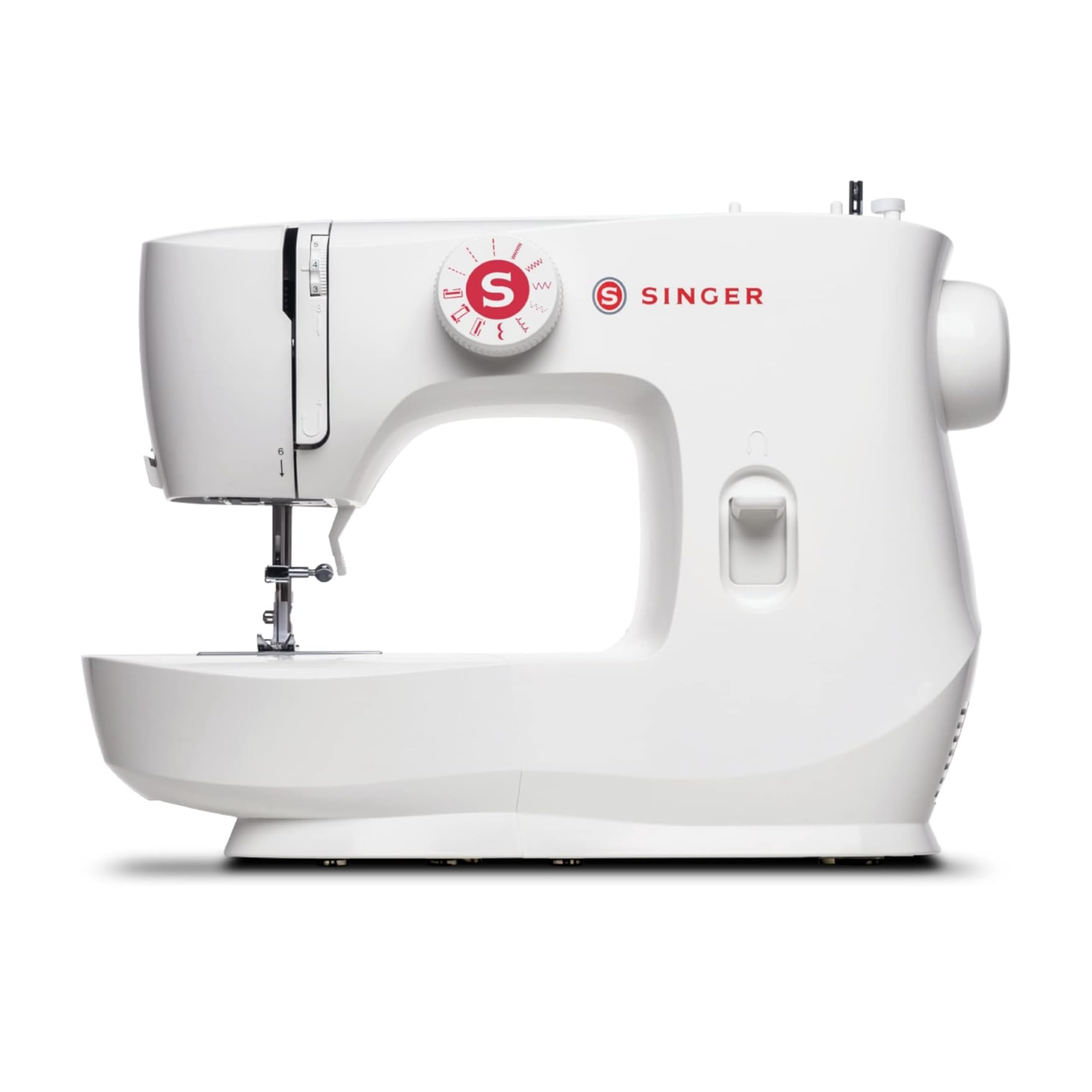
The MX60 is the crowd favorite here — 4.5 stars across 5,000+ owners — because it pairs a 57-application stitch library with a 5 kg portable body. Six stitches deliver 57 stitch applications, so a small dial selection gives you a much wider range of techniques for seams, hems, and decorative work. A heavy-duty metal frame keeps it stable across multiple layers, and preset stitch length and width mean you are not dialing in every setting by hand.
Singer packs in a full accessory kit: an all-purpose foot, zipper foot, buttonhole foot, a darning plate, an L-screwdriver, a seam ripper and brush, two spool pin felts, a 3-pack of needles, and 4 Singer Class 15 bobbins. An LED light and foot pedal round it out, and the wood-free compact body makes it easy to carry to a class or store on a shelf. The 4-step buttonhole covers basic button tasks without extra hardware.
Bear in mind this is a portable-class machine, not a heavy workshops unit. It is happiest with light to medium fabrics and everyday mending, and it rewards a careful threading routine on day one. Treat the bobbin winder area with care from the start and you will get the most consistent results.
Why it sells: Six stitches plus 57 applications gives beginners a wide range in a light, storable frame at a popular price point.
Keep in mind: It is built for portability, so thick upholstery or constant heavy use is outside its comfort zone.
Pick this if: You want a well-loved, portable machine with plenty of stitch options and a full starter accessory kit.
pass on it if: Your projects run to denim and canvas on a regular basis.
7. SINGER M3300 Lightweight Portable Sewing Machine with Accessory Kit

23 stitches that stretch to 97 applications and a buttonhole that sizes itself
When your projects swing from a silk blouse to thick denim, you want a machine with a stitch for each. The M3300 delivers 23 built-in stitches that translate into 97 stitch applications — basic, stretch, and decorative — so you can match the stitch to the fabric. The one-step buttonhole sizes itself to whatever button you place in the foot, which takes the guesswork out of that job entirely. A built-in needle threader guides the thread through the eye to save setup time.
You also get full control over stitch length and width, useful for applique and basting where precision matters. The included kit is generous: a general-purpose foot, buttonhole foot, button sewing foot, zipper foot, an edge and quilting guide, transparent Class 15 bobbins, a darning plate, a seam ripper, a lint brush, a needle pack, and a spool cap. The machine weighs 13.6 pounds and runs on household power.
One honest note on the learning curve. This machine is front-loading for the bobbin, and a few owners find that initial seating fiddly until they get the hang of it. The built-in needle threader is also a common spot where people need a little practice. Once past the first session, the machine settles in and sews a wide range of fabrics smoothly.
Its Strong Points
- 23 stitches delivering 97 applications cover basic, stretch, and decorative work.
- One-step buttonhole automatically stitches to the size of your button.
- Adjustable stitch length and width for applique and basting.
- Full accessory kit including quilting guide, darning plate, and multiple feet.
Worth a Heads-Up
- Front-loading bobbin takes some practice to seat correctly.
- The built-in threader needs a gentle learning curve of its own.
- Heavier than a desktop machine at 13.6 pounds, so it is less of a couch-side tool.
Ideal for: Sewers who want maximum stitch variety for garments and alterations in one portable machine.
Think twice if: You dislike a fiddly first session — the front-loading bobbin rewards patience, not speed.
8. MILLEPUNTI MKR45 25 Stitches Beginner Sewing Machine, Auto Needle Threader
A quiet 25-stitch machine for late-night sewing in a shared home
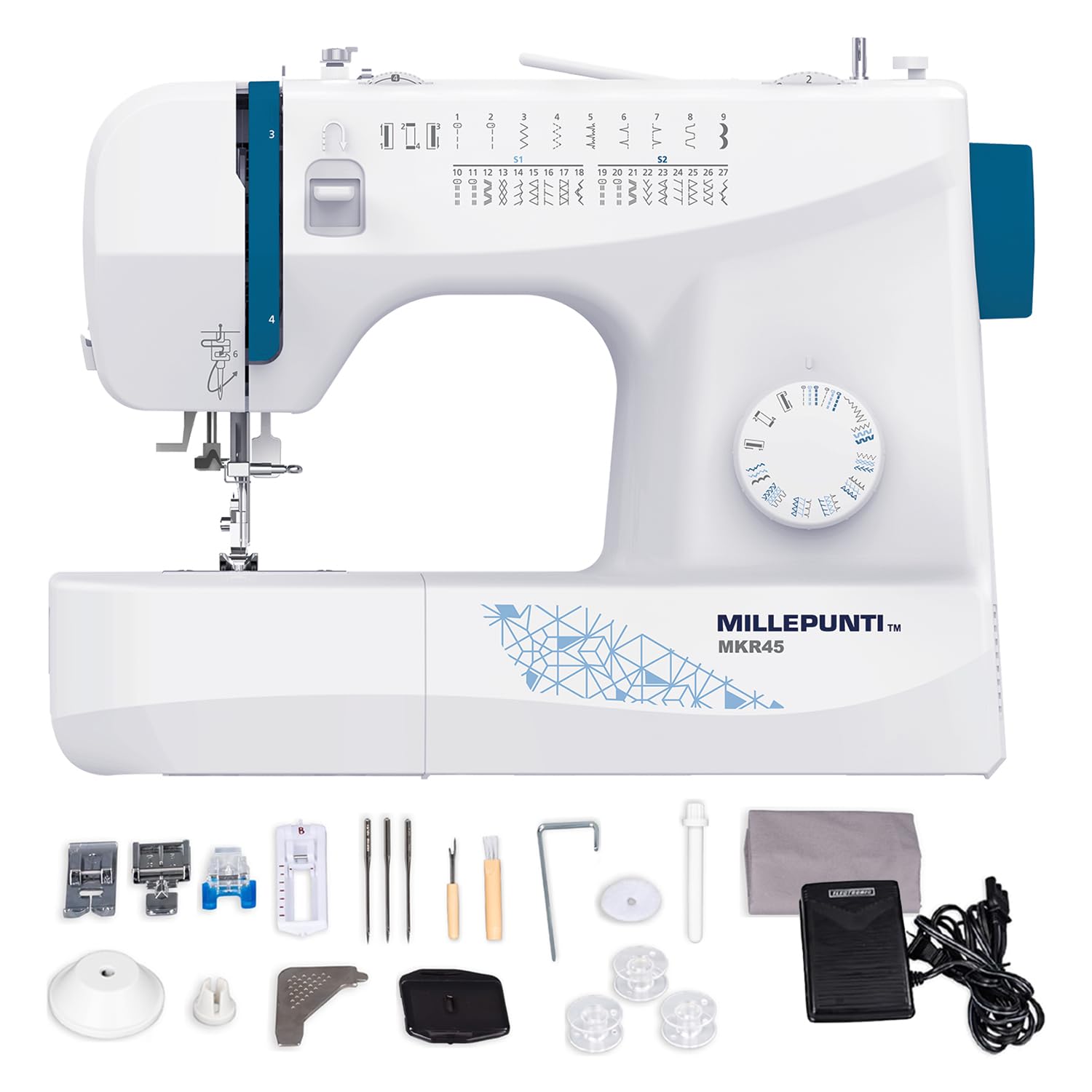
Sewing in an apartment with thin walls is its own challenge, and the MKR45 is built for it. Owners describe it as quiet and lightweight, so a late-evening project is less likely to travel through the floor. It runs 25 distinct built-in stitches — from delicate fabrics to heavier material — plus a stack of decorative stitches for creative work. A built-in automatic needle threader and automatic bobbin winder handle the fiddly setup steps.
The free arm is the feature you will notice most for small work. It lets you slide pant legs, cuffs, and doll-size seams around the needle bed without wrestling the full machine, and the smooth surface helps fabric move without snagging. The accessory bundle is thorough: 4 sewing feet, 3 bobbins, a variety pack of needles, a seam ripper and brush combo, a quilting guide, a spool holder, an L-screwdriver, a darning plate, a spool pin felt, a second spool pin, and a non-woven fabric dust cover.
The auto threader is the one feature to weigh honestly. It simplifies setup for most people, but it is the single most inconsistent part of the machine — some units thread flawlessly, others need a manual threader to pick up the slack. Threaded-ness aside, the stitching itself holds up well, and experienced sewers who own big machines often keep this one next to the couch.
Where it shines: Quiet running, low weight, and a detailed accessory set make it a comfortable everyday machine for small projects.
The variable part: The auto needle threader is the one piece of this machine where your mileage may vary — the stitching is the reliable part.
Great for: Apartment sewers who want quiet operation, a light body, and plenty of included accessories.
Look past it if: The auto threader is the deal-maker for you — a machine with a simpler top-loading bobbin will disappoint you less on that one feature.
9. Janome MOD-19 Easy-to-Use Sewing Machine with 19 Stitches

The quiet, sturdy machine owners keep coming back to for years of hemming
If you plan to own one machine for a decade and want it to feel solid every time you sit down, the Janome MOD-19 targets exactly that. It carries 19 stitches including a 4-step buttonhole and uses five feed dogs — five toothed bars under the needle that grip and advance fabric — for even, controlled stitching on tricky seams. A top-loading bobbin sits under a clear cover for easy threading, and stitch length and width are both adjustable.
What sets the MOD-19 apart is how owners describe it over time. It feels quiet, lightweight yet sturdy, and it handles larger jobs like comforter repairs without complaint. At 11.7 pounds it is the lightest of the Janome trio here, so it lifts and stores easily. The instruction booklet is well-regarded, and the machine comes with 4 presser feet plus a free arm and drop feed for free-motion work.
Two small things temper the picture. Some people report a bit of a learning curve at first, which is normal for any new machine. And the work area is a touch dark for some owners — a mild complaint, but note if you often sew at night and want extra light near the needle.
What wins people over: Rock-solid reliability across many projects and a comfortable, quiet feel that makes long sewing sessions easy.
Small gripe: The built-in light is modest, so dark corners of the needle area can be hard to see without extra lighting.
Choose this for: A long-term machine where build quality and smooth stitching matter more than a huge stitch library.
it’s not for you if: You sew mostly at night and need generous built-in lighting without adding your own lamp.
10. Janome 2212 Front-Loading Sewing Machine with 12 Built-In Stitches

A durable 12-stitch machine that feeds denim like it is cotton
Some sewers care less about stitch variety and more about whether a machine can push through a folded pair of jeans. The Janome 2212 owns that job. It uses a five-piece feed dog for smooth, even fabric feeding and a front-loading vertical oscillating hook for the bobbin. Twelve built-in stitches plus a 4-step buttonhole and a dial pattern selector keep the controls simple, with adjustable stitch width and length for hands-on tuning.
The mechanical build is where it earns its keep. Owners consistently note a smooth, sturdy feel, and the machine tolerates multi-folded denim and heavy quilt seams without bunching or trapping the fabric. The extra-high presser foot lift helps you slide thick seams under the foot, and a push-pull bobbin winder simplifies spooling. Two retractable vertical spool pins let you run two threads when needed. The buttonhole foot, zipper foot, and blind hem foot arrive in the box.
Two things to plan for. The machine weighs 14.9 pounds and needs a stable table — it is built to stay put, not to move around. And the reverse is controlled by holding a switch rather than a dedicated lever, which some owners find less natural than a standard push lever. Save for those, this is the heavy-fabric machine in the Janome line.
Why It Holds Up
- Five-piece feed dog feeds thick fabric smoothly, including multi-folded denim.
- Extra-high presser foot lift makes sliding heavy seams under the foot easier.
- Adjustable stitch width and length plus a dial pattern selector.
- Buttonhole, zipper, and blind hem feet included.
What To Plan For
- Reverse must be held down rather than toggled by a lever.
- At 14.9 pounds it wants a solid, dedicated table.
- Front-loading bobbin takes a little practice to seat.
A worthy buy for: Sewers whose work leans heavy — denim, quilts, and layered home-dec projects that stall lighter machines.
Not for you if: You want a one-hand-carry machine for a shared couch — the Janome’s 14.9-pound body is built to sit still.
Understanding the Specs
Built-In Stitches vs. Stitch Applications
These two numbers mean different things, and mixing them up leads to disappointment. Built-in stitches are the distinct stitch patterns the machine physically offers — 12, 22, or 37 depending on the model. Stitch applications are the combinations of those stitches with different width and length settings. So a machine with just 6 stitches can reach 57 applications, and one with 23 stitches can reach 97. When you compare machines, look at the built-in stitch count first — that is the raw variety you get.
Drop-In vs. Front-Loading Bobbins
The bobbin holds the lower thread that locks with the top thread to form a stitch. A drop-in bobbin sits under a clear cover on top of the machine; you drop it in place with almost no fuss, which is why beginners prefer it. A front-loading bobbin sits in a case behind the needle bed. It works just as well once threaded, but reaching it takes more hand control, and on some machines you must remove the extension table first. Neither design sews better than the other — it is purely about how easy setup feels for you.
FAQ
What is the difference between a mechanical and a computerized sewing machine?
How many built-in stitches do I actually need?
Can these machines sew denim and other heavy fabric?
What is a free arm and why does it matter?
Do I need a machine with an automatic needle threader?
How much space do I need for a basic sewing machine?
What presser feet come with these beginner machines?
Is a lighter machine worse than a heavier one?
What does five-piece feed dog mean for stitching quality?
Can I use a mechanical machine to quilt a full-size quilt?
Final Thoughts: The Verdict
For most people buying a first real machine, the winner is the Brother XM3700 because 37 stitches and an automatic needle threader cover hemming, mending, quilting, and decoration in one dependable package. If you want a machine a child or total beginner can pick up without stress, the Believe AH600 is your pick. When thick denim and canvas are the whole job, the FEIYUE FYe310 brings the high-torque motor and integrated metal frame to push through material that stalls lighter units. And if your priority is a long-lived, quiet machine with a wide workspace, the Janome 1522DG earns its place on the table.
How We Picked
We do not accept paid placement. Every pick is matched to a real buyer and a real use-case; we do not hands-on test units.
Sources & Methodology
Specifications: manufacturer listings and product documentation. Review insights: verified customer reviews, as of September 2026. Pricing: not shown on this page (it changes often); check the current price via the retailer link.
As an Amazon Associate, KitchPrep earns from qualifying purchases. This does not affect which products we feature.
Related Guides
