
Specs are compiled from manufacturer listings and verified buyer reviews and can change over time — please confirm the key details on the product page before buying.
If you are swapping a heavy lead-acid box for a lithium pack, the choice depends on one thing: does the battery hold its rated capacity for years, or does it fade after the first season? The 12V lithium options here all drop pounds off your rig and run deeper than the old technology — but they are not identical. This guide sorts the strongest marine and RV batteries by how they actually behave in real use, so you can pick the one that fits your boat, trailer, or solar bank.
I’m Mohammad Maruf — the founder and writer behind KitchPrep. This guide is built by comparing the manufacturers’ published specifications and the patterns across verified customer reviews, so you get each pick’s real strengths and trade-offs instead of marketing spin.
Weighing a lighter pack against the cycle rating is the heart of the decision, and that is exactly what our 12 volt lithium battery breakdown makes simple to compare before you buy.
Our Picks at a Glance

How To Choose The Best 12 Volt Lithium Battery
A 12V lithium battery is a rechargeable power store built on lithium iron phosphate (LiFePO4), the chemistry that most marine and RV owners now pick over lead-acid. It holds more usable energy at a fraction of the weight, and it survives far more charge cycles before it wears out. The trick is matching the right size and protections to your exact setup.
Capacity In Amp-Hours Tells You How Long It Runs
Amp-hours (Ah) measure how much energy the battery stores. A 100Ah battery can run a light load for longer than a smaller pack, while a 230Ah or 280Ah version doubles or triples that runtime. The catch is that lithium lets you use nearly the entire rating, where a lead-acid box should only be drawn down partway, so the same Amp-hour number goes much further here.
Weight And Physical Size Decide The Install
Lithium packs weigh roughly a third of a comparable lead-acid battery, which matters when you are lifting one into a locker or trimming load at the transom of a bass boat. Check the group size so the new battery drops into your existing box or tray without rewiring your whole system.
Low-Temperature Cut-Off Protects Cold-Weather Overnights
Charging a lithium battery below freezing can damage its cells, so many packs here include low-temperature protection that pauses charging until things warm up. If your battery lives in an unheated trailer or boat through winter, that feature is worth prioritizing.
Quick Comparison
| Model | Best For | Capacity | Weight | BMS / Cycles | Amazon |
|---|---|---|---|---|---|
| LiTime 12V 100Ah Trolling Motor★ Best Overall | Marine and trolling motor duty | 100Ah | 22.16 lbs | 4,000+ cycles | Amazon |
| Redodo 12V 100Ah Group 31Top Rated | Long-life solar and RV banks | 100Ah | 22.04 lbs | 100A BMS / 4,000–15,000 cycles | Amazon |
| WattCycle 12V 100Ah MiniCompact Pick | Tight installs with app monitoring | 100Ah | 20.94 lbs | 100A BMS / 15,000 cycles | Amazon |
| DUNFUME 12V 100Ah Group 31 | Budget RV and camper upgrades | 100Ah | 21.6 lbs | 100A BMS / 4,000+ cycles | Amazon |
| DC HOUSE 12V 100Ah Bluetooth | Boat owners who want app data | 100Ah | 23.8 lbs | 100A BMS / 15,000 cycles | Amazon |
| ECO-WORTHY 12V 100Ah SOC Display | Owners who want a screen, not just an app | 100Ah | 25.1 lbs | 100A BMS with low-temp protection | Amazon |
| Power Queen 12V 100Ah | Trolling motors up to 120lb thrust | 100Ah | 22.16 lbs | 100A BMS / 15,000 cycles | Amazon |
| ECO-WORTHY EnergyRock 12V 280Ah | Big off-grid and inverter loads | 280Ah | — | 200A BMS / Max 3584Wh | Amazon |
| LiTime 12V 230Ah Deep Cycle | Travel trailers and home backup | 230Ah | 45.98 lbs | 200A BMS / 4,000+ cycles | Amazon |
In‑Depth Reviews
1. Litime 12V 100Ah Trolling Motor LiFePO4 Battery
Our pick — over 4.5★ from 550+ verified ratings; the strongest balance of quality and price.
The 22.16-pound marine pack that trims your boat and still runs the trolling motor all day.
If your trolling motor is the priority, start here. This Litime 100Ah sibling to the premium 230Ah rig below is built around a triple-protected BMS (Battery Management System — the onboard circuit that cuts the battery off before overcharge, overheating, or a short can damage it) that meets the ABYC E-13 marine standard. That standard is written for boats, so the protection is aimed at dust, water, and salt spray. The built-in TVS shield blocks the voltage spikes that surge through a 12V-36V motor, which keeps output steady when the water is choppy.
The weight story is the whole pitch. At 22.16 pounds, this pack is 64% lighter than a same-capacity lead-acid battery — lift a lead-acid box once and you will understand why that matters at the dock. Buyers report better hole shot and top speed on a bass boat. As one boater put it, moving to LiFePO4 helped hole shot and top speed on a bass boat. The manufacturer rates the cells for 4,000+ cycles at 100% depth of discharge, the deep-drain point that would wear a lead-acid pack out far faster.
What wins people over is battery quality, and the app-free design keeps it simple. You will find a 10-year lifetime claim backed by that 4,000+ cycle rating, and the pack scales into a 51.2V 400Ah bank if your energy needs grow. The honest catch: it arrives asleep and the BMS lacks cell balancing, so owners handling multi-battery banks wire in a multibank charger to keep the packs even. Watch the resting voltage with loads off — this chemistry reads nearly dead at 12.8V at rest, which surprises first-timers converting from lead-acid.
What Sells It
- 22.16 lbs — 64% lighter than a 12V 100Ah lead-acid battery
- ABYC E-13 BMS with TVS surge protection for 12V-36V motors
- 4,000+ cycles at 100% depth of discharge
- Smart low-temp protection stops charging below 32°F
Where It Needs Attention
- BMS does not balance cells on its own
- Arrives in sleep mode with no wake-up notes
- Not built for starting, golf carts, or jacks
Made for trolling motor anglers: the ABYC E-13 protection and TVS surge shield are aimed squarely at marine duty.
Heads up: this is an energy-storage battery, not a starter — keep it for motors and solar, not cranking an engine.
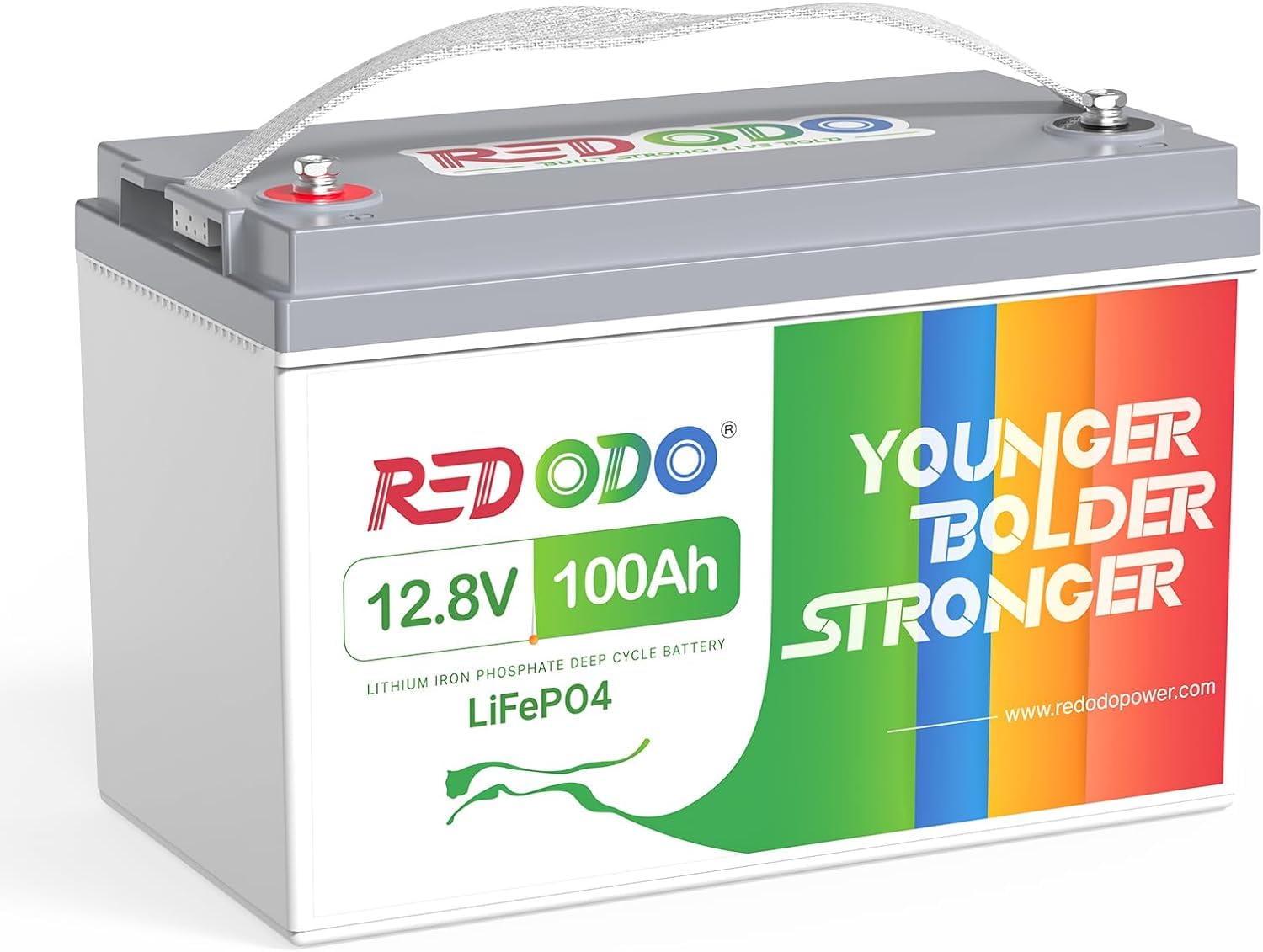
2. Redodo 12V 100Ah LiFePO4 Battery, Group 31
Long-lived solar and RV power that asks for nothing more than a quality charge controller.
For a home solar bank or a full-time van build, the Redodo 100Ah is the pick that rewards patience. It uses Automotive Grade LiFePO4 cells with a low self-discharge rate of 3%, so it holds its charge through storage far better than lead-acid. The maker rates 4,000 cycles at 100% depth of discharge, 6,000 at 80%, and 15,000 at 60% — a range that stretches well past the 200-500 cycles a lead-acid battery manages.
Weight and size are the practical wins. At 22.04 pounds in a 13 x 6.77 x 8.43-inch case, it drops straight into a BCI Group 31 battery box. Set it beside a 12V 100Ah lead-acid battery and the difference is obvious: the lead-acid unit usually tips the scale at 63.89 pounds, so the lithium pack here is far lighter for the same stated capacity. Owners running a 200W solar panel with a 20A MPPT controller and a 1000W inverter report using 40-60Ah overnight and recharging in about 5 hours of sun.
The 100A BMS guards against overcharge, over-discharge, over-current, short circuit, and high temperature, and you can extend it up to 4 in series or 4 in parallel for a 400Ah or 51.2V system. The one thing to size correctly: this pack is aimed at a 30-70 lb thrust trolling motor and is not made for starter or golf cart duty. The recurring gripe across long-term owners is that a few units have failed to accept a charge years in, though service tends to step in with a replacement.
Value for a full-timer: a 100Ah pack that reliably delivers its capacity cycle after cycle is worth the wait for good sun.
Plan the charge path: pair it with a proper lithium-capable MPPT controller so it reaches full charge cleanly.
Reach for this if you are building a solar home, camper, or van system and want the longest cycle life in the group.
Look elsewhere if you need to crank an engine or run a golf cart — this is an energy-storage pack only.
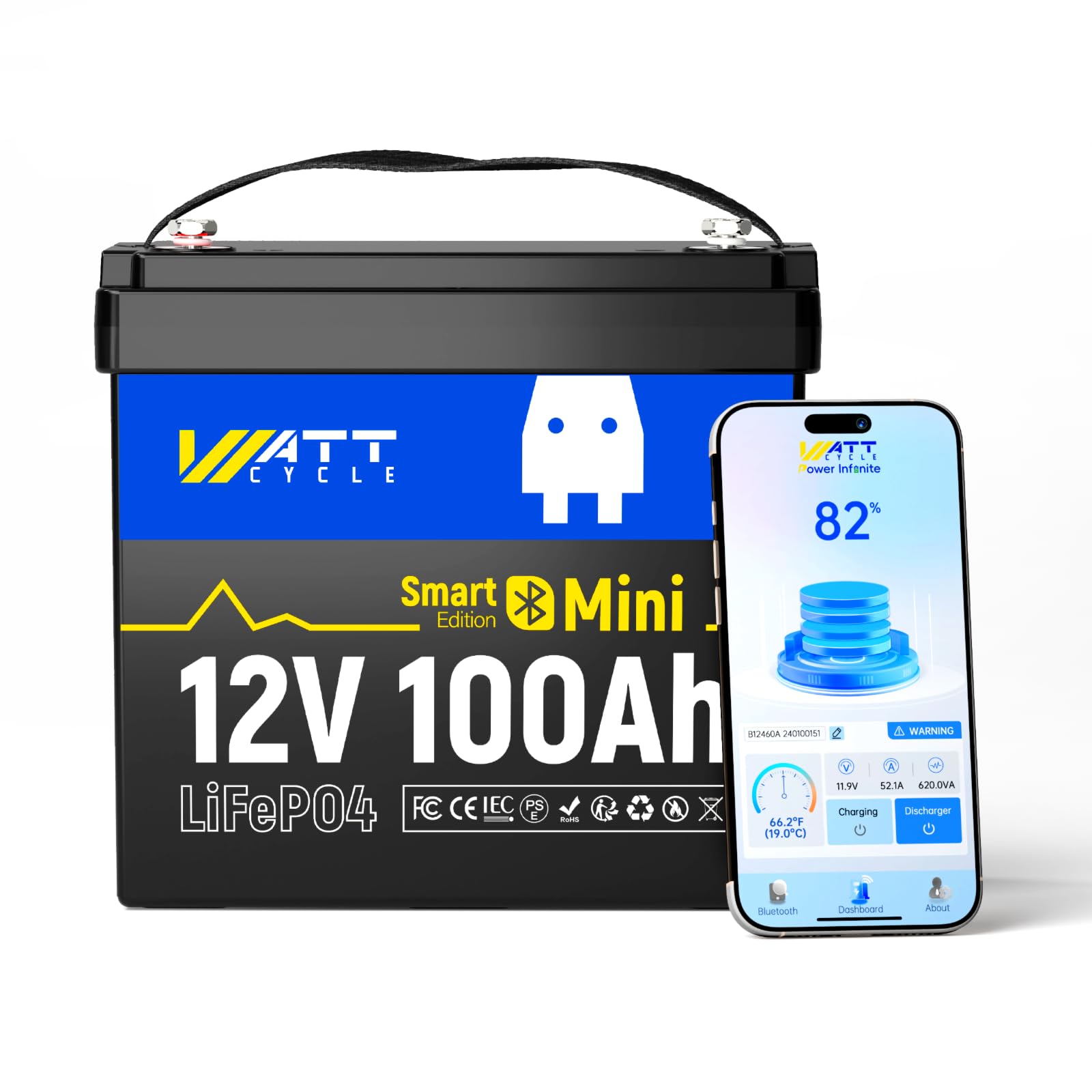
3. WattCycle 12V 100Ah Mini LiFePO4 Battery with Bluetooth
The tiny 100Ah pack that fits where a full-size box will not and shows you its data on your phone.
When space is the enemy, this mini WattCycle earns its place. It measures just 9 x 5.4 x 8.2 inches and weighs 20.94 pounds, which the maker says is an 11% weight reduction and a 39% volume reduction over its first-generation pack. That smaller footprint means you can stack more batteries in the same locker or drop a pair into a space a standard Group 31 would fill with one.
The Bluetooth connection is the standout feature. After loading the WattCycle app you can read live voltage, charge and discharge current, temperature parameters, and alarm prompts — so you can watch the battery’s health without a separate meter. That monitoring matters on boats, where a pack that shuts off unexpectedly ruins a fishing day. The EV Grade A+ cells are rated up to 15,000 cycles and a 10-year lifespan, and the 100A BMS handles overcharge, deep discharge, overload, overheating, low temperatures, and short circuits with individual cell balancing.
The honest trade-off is brand track record. A newer name means long-term reliability is still unproven, and the app and BMS tuning have drawn some inconsistency notes. Cold shutdowns are the other watch point — the pack does protect itself, but a few owners have seen one need a restart once temperatures climb back up. Low-temperature protection runs from -4°F to 158°F, and it scales up to a 4S4P 51.2V 20.48kWh bank if you want to build out later.
Why It Stands Out
- Bluetooth app shows voltage, current, temperature, and alarms in real time
- 39% less volume and 11% less weight than the prior generation
- EV Grade A+ cells rated up to 15,000 cycles
Trade-offs to Weigh
- Newer brand — long-term reliability not yet proven
- App and BMS tuning inconsistencies reported
- Cold-shutdown restarts needed in some cases
Built for tight lockers: if you need maximum capacity per square inch, the mini form factor wins.
Know the risk: you are betting on a newer brand, so buy with the warranty terms in mind.
4. DC HOUSE 12V 100Ah Bluetooth LiFePO4 Trolling Motor Battery
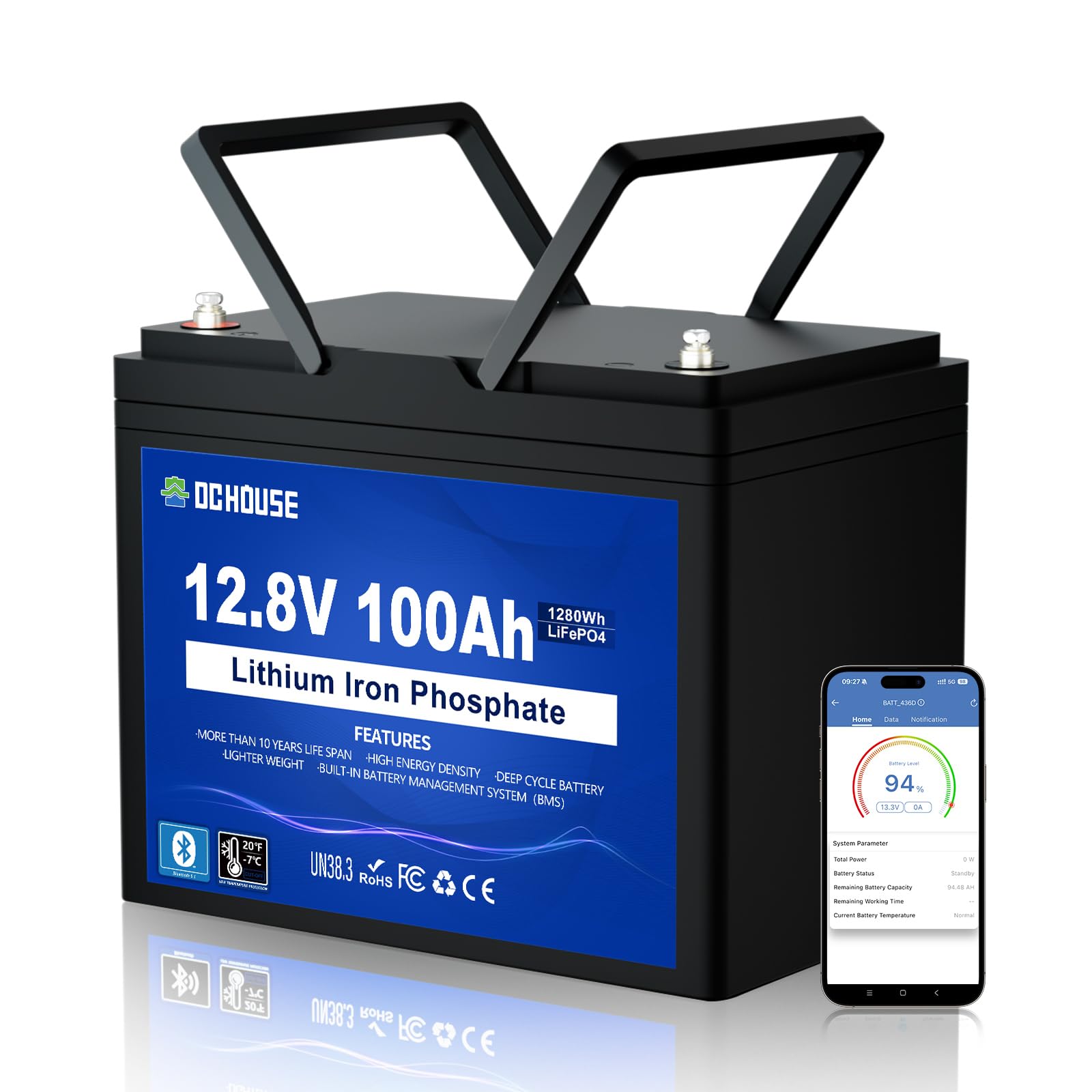
A boat battery that tells you exactly how much charge is left — down to the cell.
For anyone tired of guessing the state of charge on the water, the DC HOUSE pack hands you the numbers. Its Bluetooth 5.1 connection links to the DC HOUSE app within 5-10 meters and reports state of charge, voltage, and current all the way down to individual cell data, with a dedicated fault page and push notifications when something looks off. Every bit of that is aimed at trolling motor owners who want an early warning before the motor quits.
The low-temperature protection is upgraded here: the BMS cuts off charging below 19.4°F and cuts discharge below -4°F, then recovers on its own once the temperature rises to 32°F. That automatic restart makes winter storage less of a worry. The Class A LiFePO4 cells are rated up to 15,000 cycles and a 10-year lifespan, and DC HOUSE backs the pack with a 3-year service term rather than the 5 years several rivals offer. The size runs close to a BCI Group 24 case — about 0.32 inches taller — so it fits many standard trays.
The cost story is where this one lands. Owners call it a good budget battery: a 55lb Minn Kota at 75-100% speed for roughly three hours with two people aboard still left 40% of capacity. One reviewer trolled a heavy 16-foot aluminum boat for four hours on a windy day and finished with about 60% left. The honest limits: it is not made for starting or cranking, and the app expects a dedicated lithium charger to top it up properly.
What owners value: the Bluetooth readout is the favorite part — it turns a mystery battery into a dashboard.
The fine print: a 3-year support term is shorter than the 5-year coverage on several picks here, so factor that into the decision.
Best for the data-hungry boater: if you want cell-level monitoring on a budget, this delivers.
skip it if you need a longer warranty window — three years is shorter than most here.
5. ECO-WORTHY 12V 100Ah LiFePO4 Battery with SOC Display
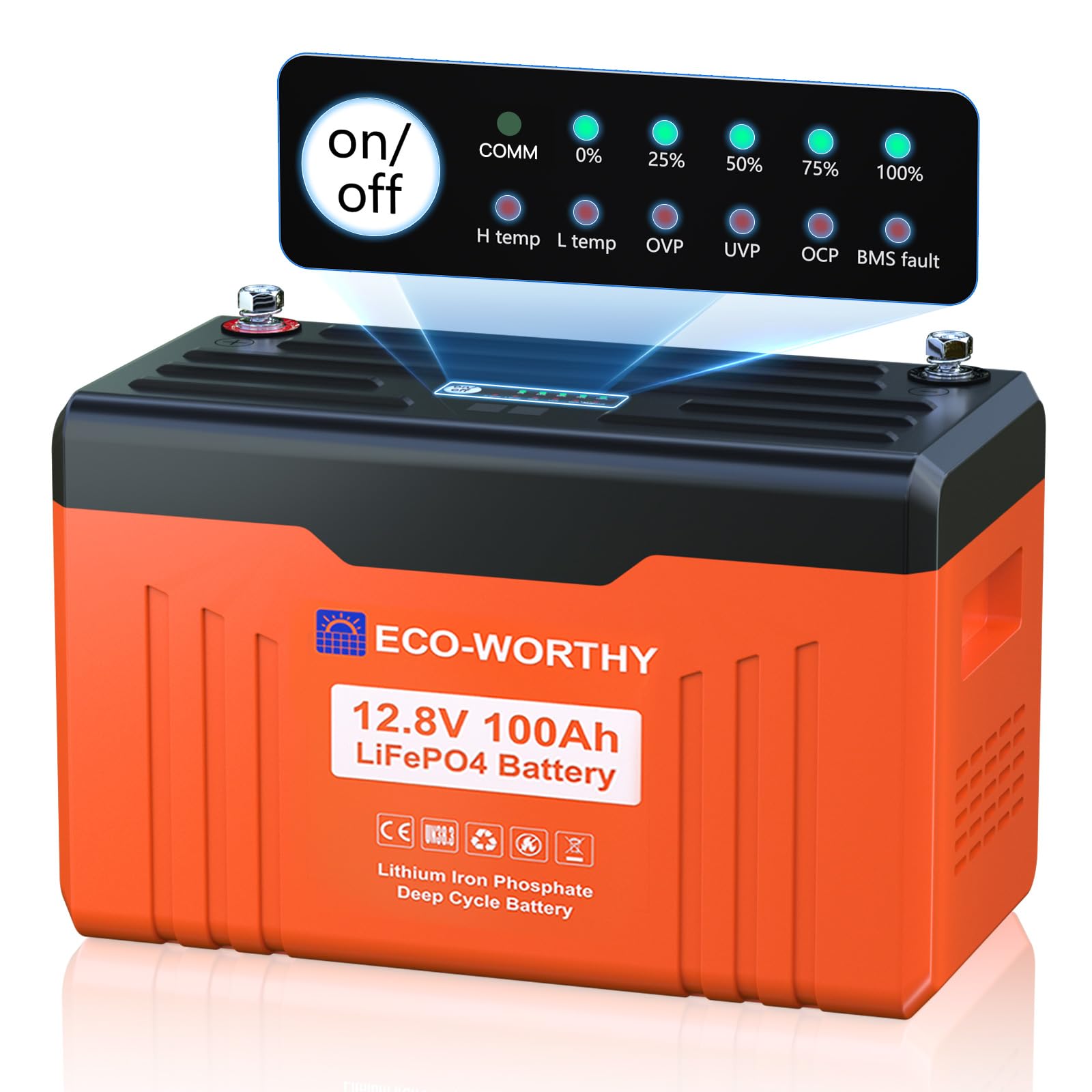
A lithium pack that shows its charge level on a screen — no phone required.
Hate digging out your phone to check the battery? This ECO-WORTHY unit puts the numbers right on the case. Its LED panel displays state of charge and flags abnormalities instantly, and you can read it without opening an app. That alone will appeal to anyone who wants a quick glance at the battery before a trip. If you do want more detail, the built-in Bluetooth connects to the ECO-WORTHY app within 98 feet and reports voltage, current, capacity, runtime, and even cell voltages and consistency.
Safety is the second theme. This freshly upgraded pack passed over 15 strict tests, and it has smart abnormal detection with a built-in buzzer that sounds the moment a BMS fault appears. A unique metal fixture secures the internal cells, which helps prevent expansion and the short-circuit hazards that come with it. It supports a 4P2S expansion up to 10.24kWh, and it fits a Group 27 box at 25.1 pounds.
The catch to know: the app’s coulomb counting (how it tracks charge by measuring current in and out) drifts under very light loads, so the display can read high when the battery is actually low. The fix is simple — verify with an external voltmeter or a shunt meter, and charge monthly since it loses about 1% of charge per day in storage. Set against the boat packs above, it is a touch heavier, but the screen makes day-to-day monitoring quicker.
The Case For It
- LED panel shows state of charge without an app
- Built-in buzzer alerts on BMS faults
- Metal cell fixture resists expansion and shorts
What to Watch
- App coulomb counting drifts under sub-1A loads
- Loses about 1% of charge per day in storage
- Group 27 size runs heavier than the mini picks
Made for the glance-checker: if you want a status screen on the battery itself, this is the one.
Trust the meter, not the app: keep an external voltmeter handy for load-free readings.
6. Power Queen 12V 100Ah Trolling Motor LiFePO4 Battery
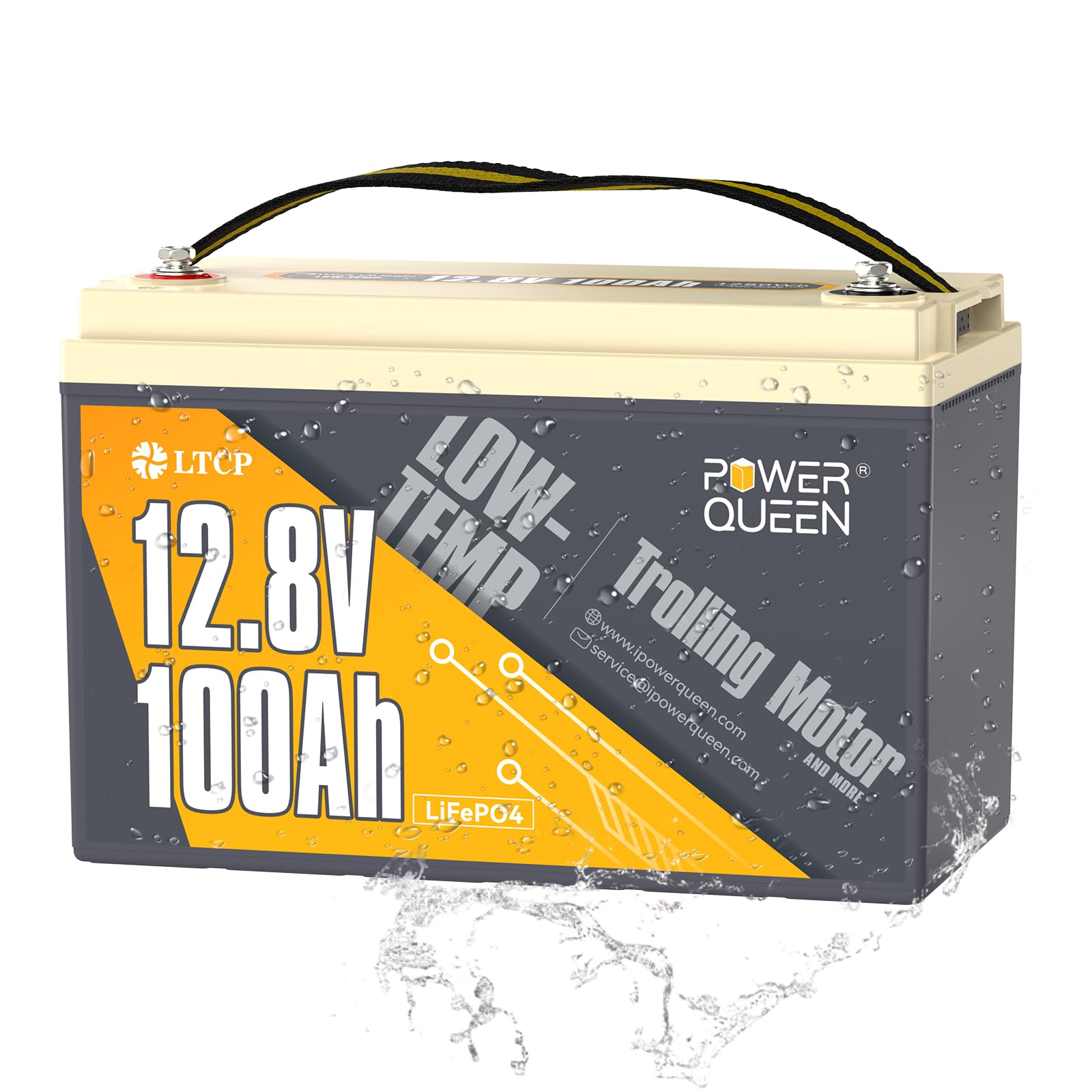
An IP65-sealed 22.16-pound pack built for motors up to 120lb of thrust.
If your trolling motor is a big one, the Power Queen matches it. This pack is rated for motors up to 120lb thrust and packs a built-in TVS surge protector that blocks voltage spikes across 12V-36V motors. It keeps output steadier when the water gets rough, so the electronics on your boat are shielded from a sudden surge. It carries the same ABYC E-13 compliance as the top pick, with a triple-protected BMS guarding against dust, water, and salt spray.
At 22.16 pounds, it is up to 64% lighter than a 12V 100Ah lead-acid battery, which trims load and makes installs easier. Owners repeatedly praise the solid build and the light weight. The pack supports a 4P4S expansion to 51.2V 400Ah and 20.48kWh, with 4,000+ cycles at 100% depth of discharge. It is rated IP65 waterproof, so splashes and rain are not a threat.
The honest caveat lands on power capacity, where feedback runs mixed: some owners see power for days, while a minority report shorter runtimes. The bigger concern is a rare heat event — a single case of overheating on first use — but that is not the typical experience. Size it against the small motors honestly: it is aimed at trolling and marine duty, not cranking or golf carts, and used within that lane it is a solid marine pick with a 5-year warranty behind it.
Big-motor match: the 120lb thrust rating and TVS shield target serious trolling rigs.
One caution: keep your connections tight and sized right — wiring issues are the usual cause of heat trouble on any lithium bank.
Pick this for a high-thrust motor: the 120lb rating covers boats the smaller 100lb packs cannot.
Not the choice for starting batteries or golf carts — this is a deep-cycle marine pack.
7. ECO-WORTHY EnergyRock 12V 280Ah Metal Case LiFePO4 Battery

A 280Ah metal-cased powerhouse that runs an air conditioner or a fridge for days.
When one pack has to carry the whole system, the EnergyRock steps up. At 280Ah with up to 3584Wh of stored energy and a 200A BMS, it delivers the kind of load a 100Ah pack simply cannot. Owners run a 12,000 BTU portable air conditioner and lights for a couple of hours down to 30%, or a 1000-watt amp without complaint. A half-horsepower sump pump pulling 500W continuous runs for roughly five hours, or twelve-plus hours intermittently, off a single pack.
The metal case is the design hook. A heavy-duty enclosure and reinforced internal cell holders resist impacts and road vibration, and the maker ships four mounting feet so the battery installs directly into an RV or camper without a separate battery box. A one-touch safety switch disconnects output for maintenance. Bluetooth monitoring and low-temperature protection round it out, with the BMS automatically pausing charging in the cold.
The weight is the honest trade-off, and it is a real one: this is a substantial unit, and one owner returned it purely because it tipped the scale too far for their setup. Measure where it will live before you commit. The rest of the value story holds — owners running it off-grid in a fifth wheel report it powers everything and just keeps going, and the capacity, build, and ease of installation are all well received.
Where It Excels
- 280Ah with up to 3584Wh and a 200A BMS
- Metal case with mounting feet — no battery box needed
- Runs heavy loads like a 12V air conditioner or sump pump
Plan Around This
- Substantial weight for a portable install
- Order may arrive in multiple packages at different times
- Slightly wider than a standard battery, may need fitment tweaks
For the big-draw system: this is the pick when you are powering an AC, an inverter, or a whole off-grid bank.
Check your space first: the hefty metal case needs a solid, measured home before it arrives.
8. DUNFUME 12V 100Ah LiFePO4 Lithium Battery Group 31
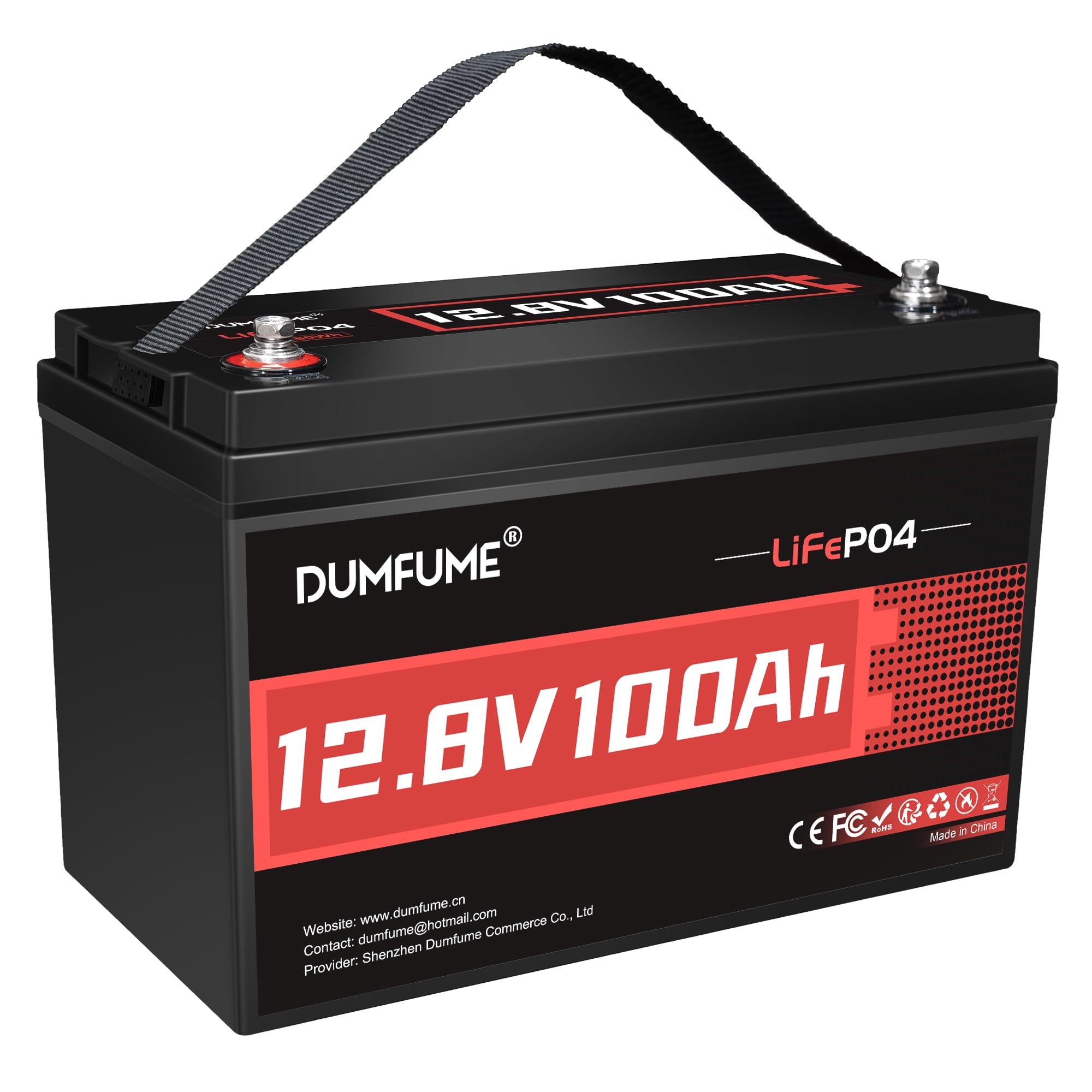
An entry-level 100Ah pack that drops into a Group 31 box and saves your back doing it.
For a first switch to lithium on a tight budget, the DUNFUME 100Ah lands the basics well. It weighs just 21.6 pounds — the maker calls it two-thirds lighter than a 100Ah AGM battery that tips the scale at 63.9 pounds — and it carries a 1.28kWh energy capacity. That energy density is pitched as 7.5 times higher than a 12V 70Ah AGM pack, which is the whole reason lithium cuts so much weight for the same job.
The 100A BMS protects against overcharging, over-discharging, short circuits, overheating, and overcurrent, and the Grade A cells are rated for a big cycle spread: 4,000 cycles at 100% depth of discharge, 6,000 at 80%, and 15,000 at 60%. It is rated a drop-in replacement for a lead-acid battery with no rewiring needed, and it supports series and parallel connections up to 4S4P for a 51.2V 400Ah system. Owners call the build solid and light, and one ran it off a 100-watt rooftop solar panel.
Two things to understand before buying. First, cold matters: the pack needs temperatures of 5°C or higher, and return shipping for low-temperature charging issues is not covered, so keep it above freezing for charging. Second, feedback on charge-taking and long-term life runs mixed — most units hold up well, but a few owners have had one stop accepting a charge or fade after months, which is the risk at this price tier. The ABS casing is dustproof and weather-resistant but not waterproof, so keep it under cover.
Entry-level pick: if you want a genuine LiFePO4 100Ah pack without stretching the budget, this covers the essentials.
Know the limits: not waterproof and not cold-charge friendly, so plan its home accordingly.
Ideal for the first-time switcher: budget-friendly, light, and a direct drop-in for lead-acid.
Choose another pack if you need waterproof sealing or plan to charge in freezing conditions.
9. Litime 12V 230Ah Deep Cycle LiFePO4 Battery
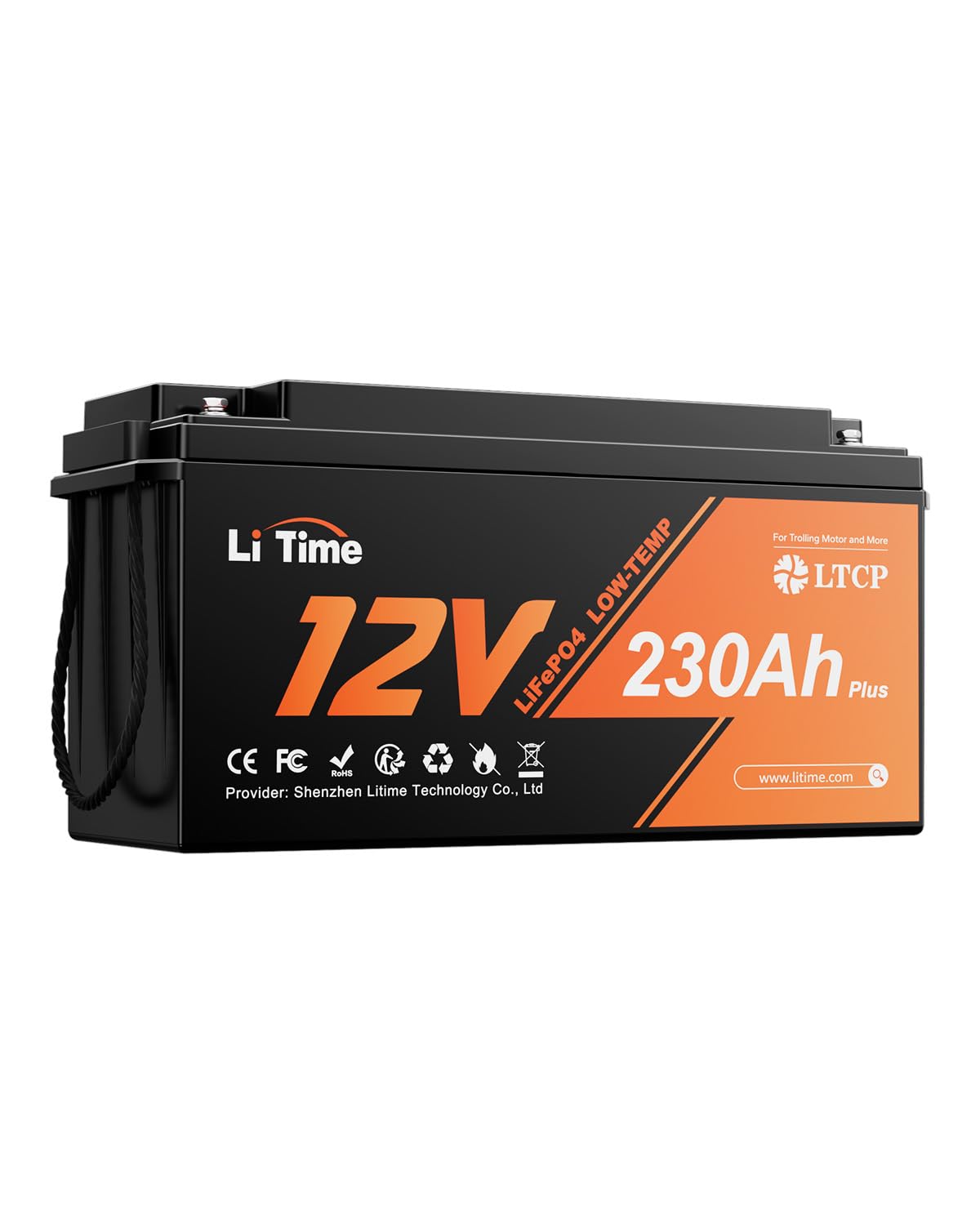
A 230Ah travel-trailer pack that stores big energy while shedding lead-acid weight.
For a travel trailer or Class C RV with real power needs, this 230Ah pack is the heavyweight that stays practical. It fits Group 4D boxes and weighs 45.98 pounds — the maker puts it at about a third of a lead-acid unit’s weight — so it is manageable to handle despite the larger capacity. The built-in 200A BMS carries 20+ safeguards, and its low-temperature protection pauses charging below 0°C (32°F) to guard the cells.
Capacity is the point. Owners mention 130 more Ah than the two OEM lead-acid batteries it replaced, and its compact footprint fits where those two boxes sat. Cycle life is rated 4,000+ at 100% depth of discharge, far past the 200-500 cycles a lead-acid battery manages, and the pack scales up to 16 batteries in a 4P4S 48V 920Ah system with a 47.1kWh maximum output for serious home backup and solar storage.
Two honest points. There is no Bluetooth on this model, so you monitor it with an external meter rather than your phone — a shift if you have used an app-connected pack. And like the brand’s other packs, it is for energy storage, not for starting, golf carts, or jacks. Backed by a 5-year warranty and 24/7 online support, it is a straightforward choice for anyone prioritizing raw capacity over connectivity.
Capacity leader: when you need deep reserves for a trailer or home backup, 230Ah gives you room to run.
No phone monitoring: expect to read this one from a meter, not an app.
Built for trailers and backup: if you want maximum stored energy for a camper or home bank, this delivers.
Pass if you want app-based monitoring — this model has no Bluetooth.
Understanding the Specs
What Amp-Hours Really Mean
Amp-hours (Ah) measure how much energy a battery holds. A 100Ah pack stores less runtime than a 230Ah or 280Ah unit, so match the number to your load. The key advantage of lithium is that you can use nearly the full rating, while lead-acid should only be drawn down partway — so the same Ah figure lasts longer here.
Why The BMS Amperage Matters
The BMS (Battery Management System) sets how much current the battery can deliver continuously and how it protects itself. A 100A BMS suits trolling motors and moderate loads, while a 200A BMS like the one in the larger packs handles heavier draws from inverters and appliances. Higher BMS amperage means more headroom for surges on startup.
Depth of Discharge and Cycle Life
Cycles count how many times you can drain and refill the battery. The same pack is often rated 4,000 cycles at 100% depth of discharge but 15,000 cycles at 60% — the less you drain it each time, the longer it lasts. That is why lithium outlasts lead-acid, which typically manages only a few hundred cycles.
Low-Temperature Cut-Off Explained
Charging a lithium battery below freezing can harm its cells, so many packs pause charging automatically until the temperature rises. Features vary — some cut off around 32°F, others around 19.4°F — but the goal is the same: protect the battery through cold nights and storage.
FAQ
Can I use a 12V lithium battery to start my engine?
How long does a 12V 100Ah lithium battery last?
Will a 12V lithium battery fit my existing battery box?
Do I need a special charger for a lithium battery?
Can I connect several 12V lithium batteries together?
What happens to a lithium battery in freezing weather?
Why does my fully charged battery read only 12.8V?
Is a Bluetooth battery monitor worth it?
Do 12V lithium batteries need maintenance?
Is a metal-cased battery better than a plastic one?
Final Thoughts: The Verdict
For most trolling motor and marine setups, the 12 volt lithium battery to beat is the LiTime 12V 100Ah Trolling Motor Pack — its ABYC E-13 triple-protected BMS and TVS surge shield are purpose-built for the water, and it trims 64% of the weight off a lead-acid box doing the same job. If you are building a solar home or full-time van system and want the longest cycle life, grab the Redodo 12V 100Ah with its 3% self-discharge rate. And for a trailer, camper, or off-grid bank that needs serious reserves, the ECO-WORTHY EnergyRock 280Ah is the one to reach for. Whichever you pick, match the capacity, group size, and BMS amperage to your real load first — that is the whole game with lithium.
How We Picked
We do not accept paid placement. Every pick is matched to a real buyer and a real use-case; we do not hands-on test units.
Sources & Methodology
Specifications: manufacturer listings and product documentation. Review insights: verified customer reviews, as of September 2026. Pricing: not shown on this page (it changes often); check the current price via the retailer link.
As an Amazon Associate, KitchPrep earns from qualifying purchases. This does not affect which products we feature.
Related Guides
