
Specs are compiled from manufacturer listings and verified buyer reviews and can change over time — please confirm the key details on the product page before buying.
When the grid drops, you want your fridge, furnace, and internet to keep running without you dragging a wet cord through the rain. That is the whole job of a home gas backup generator. It sits outside, hooks to your natural gas or propane line, and starts itself when the power dies. The tricky part is matching the wattage to your house and the fuel to what you already have piped in. This guide walks you through six real options, from a portable tri-fuel workhorse you can roll into place to a fully automatic standby unit that fires up on its own.
I’m Mohammad Maruf — the founder and writer behind KitchPrep. This guide is built by comparing the manufacturers’ published specifications and the patterns across verified customer reviews, so you get each pick’s real strengths and trade-offs instead of marketing spin.
You will learn which fuel types work best, how transfer switches connect to your panel, and what wattage actually covers a modern home. The right setup means a storm becomes a non-event — and finding the best gas backup generator starts with understanding your own power needs first.
Our Picks at a Glance

How To Choose The Best Gas Backup Generator
A home backup generator sits idle until the grid fails, then carries your fridge, furnace, and internet. After a three-day ice-storm outage, it is the appliance you are glad you bought. The buying decision depends on three questions: your home’s load, your fuel supply, and if you want to start it yourself.
Match the fuel to what you already have
Natural gas runs through underground lines that rarely fail, so a generator hooked to that supply never needs a refill. Propane lives in a tank you own, which costs more per gallon but runs when the gas utility has its own outage. Gasoline is the cheapest per hour but requires you to store cans and rotate them. Tri-fuel units accept all three, so you can switch fuel types at the front panel in seconds. If you live in a city with a stable gas grid, natural gas is the low-maintenance choice. If you are rural and already have a propane tank for heating, that is your fuel.
Size the wattage to your real load
Running watts keep appliances going once they are on. Peak watts are the brief surge a motor pulls at startup — a central air conditioner can demand several times its running wattage for a few seconds. Add your essentials first: fridge, freezer, furnace fan, well pump, internet router, and a few lights. Then add the big motors you want to run: AC, well pump, or sump pump. A generator that covers all of it with headroom left over will start those motors without tripping.
Decide between portable and standby
A portable generator sits in your garage until you wheel it out and connect it. It costs less and you control it. A standby generator is permanently installed, wired to an automatic transfer switch, and starts itself within seconds of an outage. Standby units are quieter to live with and require no effort during a storm, but they need a licensed electrician, a concrete pad, and a fuel connection. The portable tri-fuel models still connect to your gas line and can power a whole house through a transfer switch outlet, so the line between the two categories is thinner than it used to be.
Quick Comparison
Every row below carries the same three specs so you can scan across and see the trade-offs at a glance. Running watts tell you what stays powered; engine size hints at fuel burn and noise; and fuel type tells you what you can plug into.
| Model | Best For | Running Watts | Engine | Fuel Type | Amazon |
|---|---|---|---|---|---|
| DuroMax XP13000HXT★ Best Overall | Whole-home portable backup | 13,000 W maximum | 500 cc | Gasoline, Propane, Natural Gas | Amazon |
| Westinghouse 28000 Peak WattTop Performer | Large-home jobsite-grade backup | 20,000 W (gasoline) | 999 cc V-Twin | Gasoline, Propane, Natural Gas | Amazon |
| Generac Guardian 22kW | Mid-size whole-house automatic | 22,000 W | 999 cc | Natural Gas or LP Gas | Amazon |
| Kohler 20RESCL-200SELS | Coastal homes, corrosion-proof install | 20,000 W | Air-cooled | Natural Gas or LP Gas | Amazon |
| Generac Guardian 26kW | Largest homes, heavy electric loads | 26,000 W | 999 cc | Natural Gas or LP Gas | Amazon |
In‑Depth Reviews
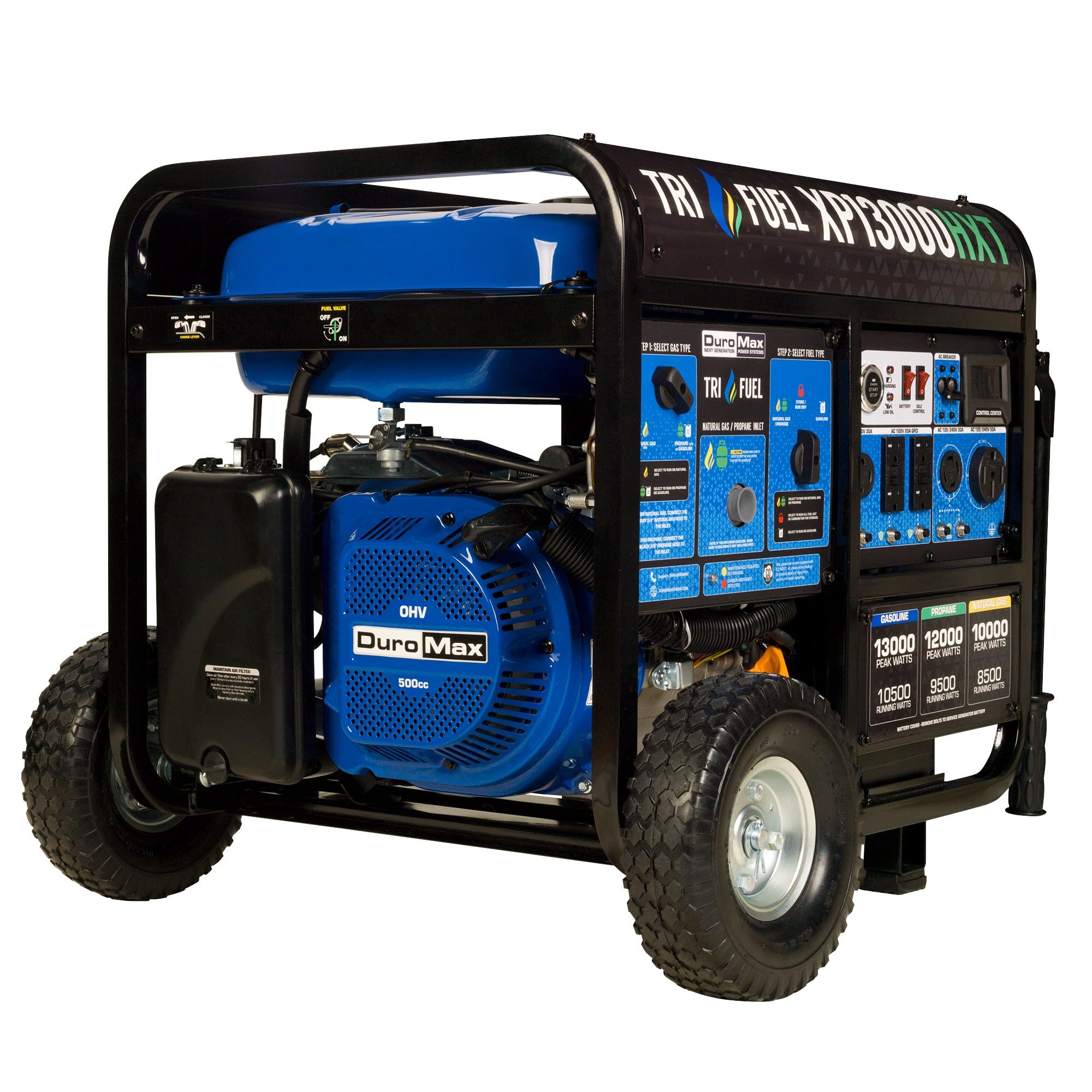
1. DuroMax XP13000HXT 13,000-Watt 500cc Tri Fuel Generator
Our pick — over 4.5★ from 400+ verified ratings; the strongest balance of quality and price.
The tri-fuel workhorse that powers a whole house on natural gas and starts from your couch.
Here is the number that matters: 13,000 watts of peak power from a 500cc engine. That is enough to run a full house through a transfer switch, and the 50-amp outlet is built for exactly that job. It is the highest-rated pick on this list at 4.6 stars, and it earns that spot by being flexible rather than overpowered. You can feed it gasoline, propane, or natural gas — a switch at the front panel changes the fuel type in seconds, so you are never locked into one supply.
The portability is what separates it from a standby unit. At 240 pounds it is heavy, but it rolls on wheels and does not need a concrete pad or a permanent installation crew. Compare that to the Westinghouse 28000 at 557 pounds — the Westinghouse outweighs it by more than double — and you start to see why the DuroMax fits so many buyers. Setup is straightforward for anyone who is mechanically inclined, and the push-button and remote start mean you do not have to prime a pull cord in the dark.
What owners praise most is how it handles a real outage, not a test run. Buyers report it powering a whole house through a week-long blackout, and one owner used it on natural gas to run a pool pump alongside the usual appliances. Fuel burn on gasoline runs about 10 gallons per 24 hours with moderate demand — switch to natural gas and that becomes a non-issue since the line never empties. The CO Alert system shuts the unit down if carbon monoxide builds up, which matters when you are running this close to a house.
The case for it
- Runs on gasoline, propane, or natural gas with a front-panel fuel switch
- 13,000 watts and a transfer-switch-ready 50-amp outlet cover a whole home
- Push-button and remote start save you from priming in bad weather
- CO Alert shuts the unit down if carbon monoxide levels rise
Where it asks a little patience
- At 240 pounds it is heavy to move without help, though it rolls on wheels
- Requires assembly from the start and the power cord kit sells separately
- A tight gas hose reducer can take a few start attempts to prime on natural gas
Reach for this if: you want one unit that backs up a full house and can switch fuel types without buying new hardware.
Look elsewhere if: you want a permanently installed unit that starts itself with zero effort — that is a standby job.
2. Westinghouse 28000 Peak Watt Tri-Fuel Home Backup Portable Generator
A 999cc V-Twin that treats a 7,000-square-foot house like a small load.
If your house is big and your appliances are hungry, this is the pick that stops the math from getting tight. It puts out 20,000 running watts on gasoline, 18,000 on propane, and 16,000 on natural gas — enough headroom to start multiple central air units at once. The 999cc Westinghouse V-Twin engine is more than double the displacement of the DuroMax’s 500cc powerplant, and that extra size is exactly what delivers the higher output. It also exposes the fundamental trade-off of buying this much power in a portable frame: at 557 pounds versus the DuroMax’s 240, moving it is a two-person job.
What it does exceptionally well is take over a large home without complaint. Owners have run two 4-ton AC units plus most of a 7,000-square-foot house off this generator, and one buyer put it on natural gas and kept a pool pump cycling through the outage — “Powers two 4-ton ACs plus most of a 7000 sq ft house,” as the reviews put it. The 125A 240V terminal block (a connection point that handles 125 amps at 240 volts) lets a licensed electrician hardwire the unit straight to your panel for full power without cord limits, which is the closest a portable unit gets to a standby installation.
The trade-off is split reliability feedback: some owners mention flawless seasons, others hit issues. This is a 4.3-star unit, and the effectiveness and setup scores are strong while the reliability notes split — some customers note flawless seasons and others hit issues. It is not a red flag on the design so much as a sign that a unit this complex rewards a careful first setup and a real break-in period. Give it a clean fuel line, fresh oil, and a monthly exercise run, and you are in the best position to get the long service these engines are built for.
Fuel flexibility that pays off: switching between gasoline, propane, and natural gas takes seconds at the panel, and the 17.2-gallon tank returns up to 15 hours at 25% load on gasoline so you are not refueling mid-storm.
The weight is the price of the watts: the 999cc engine and 557-pound frame are what make 28,000 peak watts possible, so plan the install location before it arrives rather than after.
Suits: owners of larger homes with multiple AC units who want portable-level flexibility with near-standby output.
Not ideal for: anyone without help to move a 557-pound unit or who wants a plug-and-forget install.
3. Generac Guardian 22kW Home Generator with Transfer Switch and WiFi Monitoring
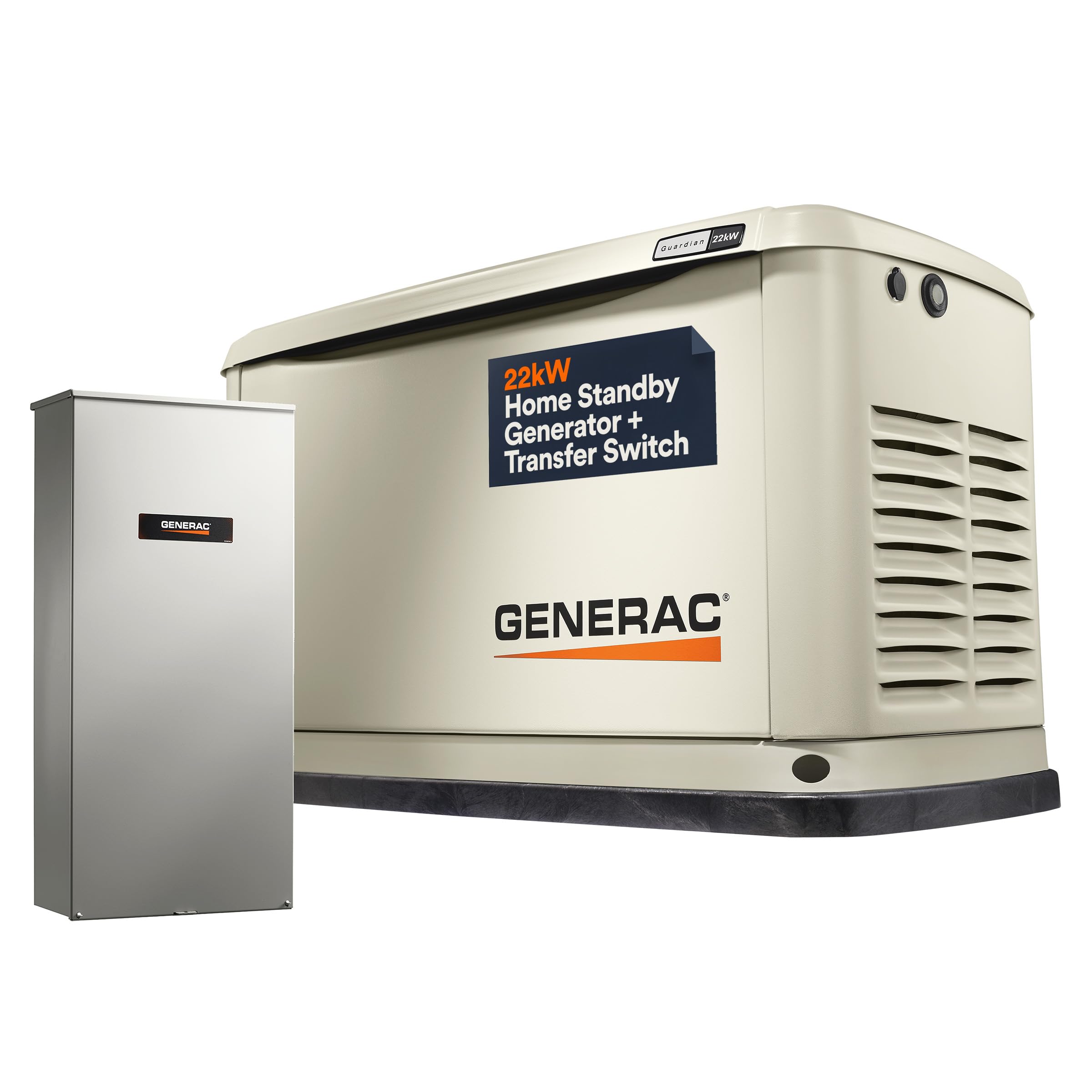
The automatic standby that powers a whole house — including a 5-ton AC — and thinks ahead for you.
For most owners of a mid-size home who want true whole-house coverage, this is the sweet-spot standby unit. The 999cc G-Force 1000 Series engine delivers 22,000 watts with under 5% harmonic distortion, and a 200-amp NEMA 3R smart transfer switch ties it to your panel and hands power back within seconds. Owners have fired this up after a real outage and had it power a whole house including a 5-ton AC/heat pump. It is a 4.5-star unit, and reliability and quality are the aspects that come up most when owners talk about it.
The automatic side does the work: weekly self-tests, automatic startup on an outage, and automatic shutdown when grid power returns. The Mobile Link WiFi monitoring lets you confirm the unit is healthy from your phone, which is worth having when you are away from home during storm season. Buyers also note you should budget for a cold weather kit and battery if you live in a cold climate — those are not included, and neither is the concrete pad a proper install requires. An electrician who installs and services home standby generators is strongly recommended for the install itself.
Buying the unit online and hiring your own electrician for the hookup typically costs less than a dealer-installed quote. Owners consistently report that the Amazon route saves money once you have your own installer lined up. Confirm before you buy that a local electrician will wire and service a unit they did not sell you.
Whole-house without the drama: 22kW covers a full house including big AC loads, and the 200-amp transfer switch makes the automatic handoff easy in a real outage.
Line up your installer first: the unit arrives ready, but you need an electrician willing to wire and service a generator bought online, and a service relationship changes the whole experience.
Best matched to: a mid-size home that wants one automatic unit to cover everything, including a large AC, without manual intervention.
skip it if your budget only stretches to a portable unit or you cannot arrange an electrician to install a standby generator.
4. Kohler 20RESCL-200SELS 20,000W Air-Cooled Standby Generator with 200 Amp Transfer Switch

Built for salt air and hard weather, with a 100% corrosion-proof enclosure.
If you live near the coast, most standby generators have a weak point: the enclosure rusts long before the engine quits. The Kohler 20RESCL solves that with a 100% corrosion-proof enclosure designed for the harshest seaside conditions. It delivers 20,000 watts, starts automatically within 10 seconds of an outage, and ships with a 200-amp service entrance rated transfer switch with load shedding built in. The load shedding is a genuinely smart feature — it can drop non-critical circuits to keep the most important ones running if demand spikes.
The reliability feedback on this unit is where you need to read carefully. It is a 4.1-star product and the reliability mentions run mixed rather than universally positive — some reviewers point out a single hiccup that a local dealer fixed under warranty in a couple of days, while others report a “hunting” engine issue (where the engine speed surges up and down) that was hard to resolve where the owner had no nearby certified technician. The root of that pattern is the one thing to check before you buy: whether a Kohler-certified dealer is within reasonable service distance of your home. On this unit, that single question matters more than any spec on the sheet.
Owners who have a good local dealer consistently report this generator running 12 hours straight through an outage without a flicker. The one area where it shows its age is monitoring: the OnCue remote system lacks a reset button, current monitoring, and test-start scheduling, so you may need a laptop or a quick walk outside to check on it. The 48 by 26.2 by 29-inch enclosure needs a Group 51 battery, and that is not included. This one is for the buyer who puts durability and a solid local service relationship above smart-app conveniences.
What it does exceptionally well
- 100% corrosion-proof enclosure holds up to salt and seaside humidity
- Starts automatically within 10 seconds and ships with a 200-amp service entrance rated switch
- Load shedding protects critical circuits during demand spikes
- 5-year/2000-hour limited warranty
The trade-offs to plan for
- Mixed reliability feedback — a good local Kohler dealer is important
- OnCue monitoring lacks a reset button, current monitoring, and scheduled test starts
- Battery (Group 51) and cold weather accessories are not included
Your match if you live near the coast, already have a Kohler-certified tech in your area, and want durability over app features.
Consider a different pick if you cannot find certified local service within a reasonable drive — the reliability feedback on this unit tracks directly to dealer access.
5. Generac Guardian 26kW Home Generator with Transfer Switch and WiFi Monitoring
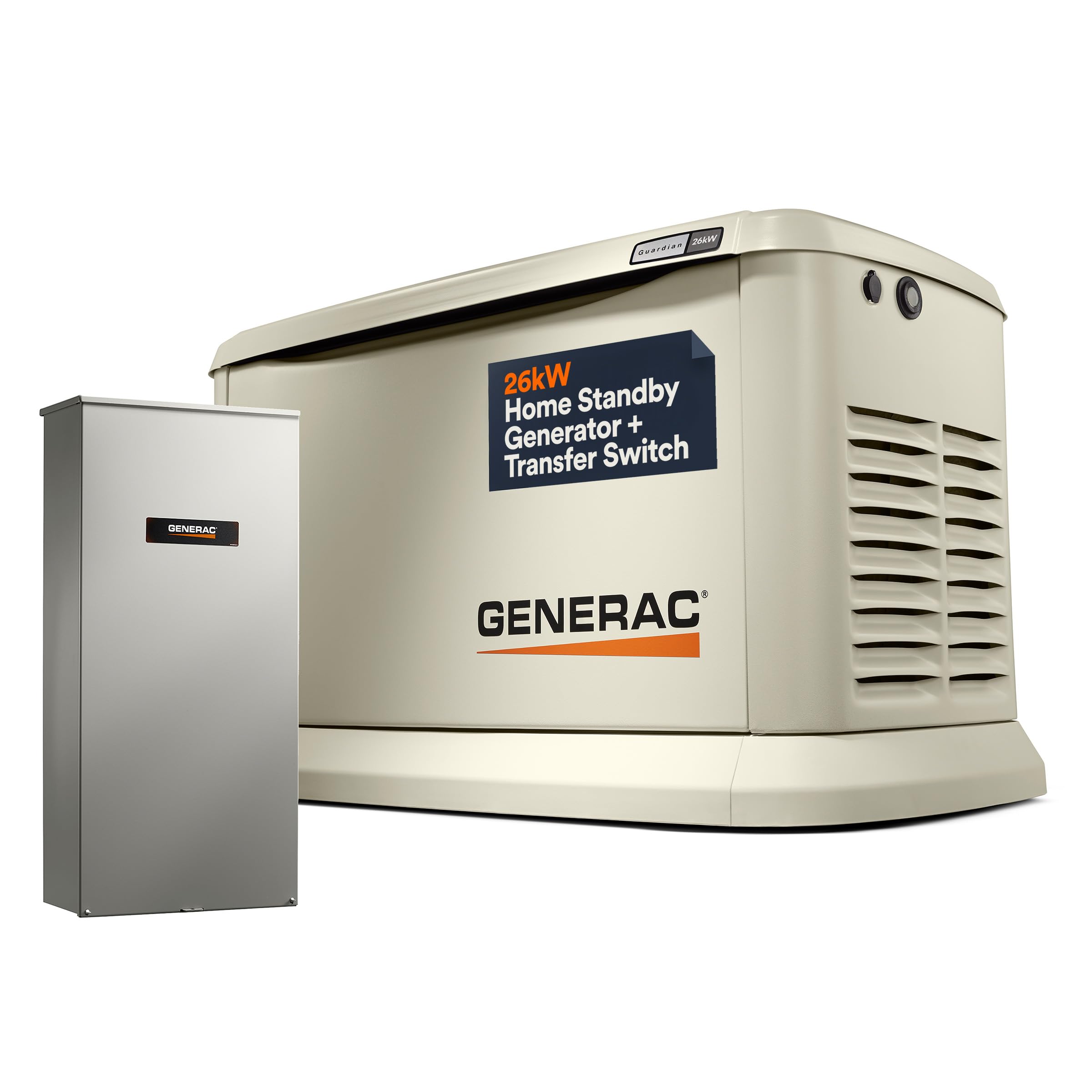
The largest automatic standby here — 26,000 watts for the heaviest electric loads money can carry.
Big homes with big loads, this is your answer. Where the 22kW Guardian covers a mid-size home, the 26kW puts out 26,000 watts through a 200-amp transfer switch (a switch that moves power from the grid to the generator and can handle 200 amps) and can handle the largest electric loads you can throw at it — multiple AC units, electric water heating, and more running at once. Under 5% total harmonic distortion (a measure of how clean the electrical signal is) keeps the current clean enough for sensitive electronics, and the fully enclosed design plus low oil shutdown (which turns the engine off if oil gets too low) protect the unit without your attention. This is a 4.2-star product aimed squarely at owners who need the top of the line.
The automatic operation mirrors the other Guardians: it fires up on an outage, runs scheduled self-tests to keep parts lubricated, and pushes error alerts to your phone through the Mobile App. Shoppers say the sound is loud but bearable — you can hear it inside the house, which actually confirms at a glance that it is running. Owners cite that hands-off reliability during storms as the reason the 26kW was worth the price.
Two things to know before you commit. First, this unit needs a licensed electrician for installation and the install itself is a real cost — owners describe technician installation running into the low thousands plus a concrete slab. Second, the listing specifies natural gas or propane, but running it on propane requires a conversion kit that is not included, along with a battery. Neither is a dealbreaker, but budget for both. The 5-year limited warranty and the option of a WiFi-connected monitoring system round out what is the most powerful unit here.
Raw power for heavy loads: 26,000 watts and a 200-amp switch mean you never have to ration what runs during an outage.
Budget beyond the generator: add the propane conversion kit and battery if you plan to run on LP, and expect a real installation cost for the electrician and slab.
Made for: large homes with the heaviest electric loads that need whole-house automatic backup with maximum headroom.
Overkill if your home is modest — a smaller unit would cover your circuits more affordably and with less install complexity.
Understanding the Specs
Peak versus Running Watts
Running watts keep appliances operating once they are on. Peak watts are the brief surge a motor demands when it first starts — a compressor draws far more in its first second than it does while running. When you size a generator, add up the running watts of everything you need, then make sure the peak rating covers the biggest motor starting while the rest are already running.
Fuel Type and Availability
Natural gas comes through a utility line that almost never fails, so a generator on it needs no refilling. Propane runs from a tank you own and works when the gas grid is out. Gasoline is portable but needs storage and rotation. Tri-fuel units accept all three so you can switch to whichever supply is working. Check what you already have piped or tanked before choosing.
Transfer Switch and Automatic Start
A transfer switch is the safety device that disconnects your home from the grid and connects it to the generator so power does not backfeed onto utility lines. An automatic transfer switch does this the moment it senses an outage, and the generator starts itself. A manual setup means you throw the switch and start the unit yourself. Automatic systems cost more but run with zero effort during a storm.
Engine Displacement and Noise
Engine displacement — measured in cubic centimeters — is a rough sign of how much power the unit can make and how much fuel it will burn. A 999cc engine produces far more wattage than a 460cc engine but also runs louder and drinks more fuel. Quieter units are usually the smaller standby models running at lower load, and sound is a real consideration when the generator sits against your bedroom wall.
FAQ
Can a gas backup generator run my whole house automatically?
How many watts do I need to back up my house?
Is natural gas or propane better for a home backup generator?
Do I need a licensed electrician to install a standby generator?
How loud is a home standby generator inside the house?
Does a home backup generator run on propane need a conversion kit?
How often do I need to run a backup generator to keep it working?
Are the CO Alert and low-oil shutdown features worth having?
Can I power sensitive electronics like computers and TVs from a backup generator?
How long can a generator run on a tank of fuel during an outage?
Final Thoughts: The Verdict
For most owners, the gas backup generator winner is the DuroMax XP13000HXT because it covers a whole house, runs on gasoline, propane, or natural gas, and starts from a remote — the crowd favorite at 4.6 stars across hundreds of owners. If you want completely hands-off coverage for a smaller home, the Generac Guardian 10kW is the automatic entry point with WiFi monitoring. And for the largest homes with the heaviest electrical loads, the Generac Guardian 26kW is the one to reach for.
How We Picked
We do not accept paid placement. Every pick is matched to a real buyer and a real use-case; we do not hands-on test units.
Sources & Methodology
Specifications: manufacturer listings and product documentation. Review insights: verified customer reviews, as of September 2026. Pricing: not shown on this page (it changes often); check the current price via the retailer link.
As an Amazon Associate, KitchPrep earns from qualifying purchases. This does not affect which products we feature.
Related Guides
