
Specs are compiled from manufacturer listings and verified buyer reviews and can change over time — please confirm the key details on the product page before buying.
If you want one stove to heat a whole 2000 square foot house without constant refilling, buy the ComfortBilt HP22. It is the best 2000 sq ft pellet stove for most homes, and no other pick here combines 50,000 BTUs of heat, a large hopper, and strong owner trust in one cabinet. This list matches heating capacity around 2000 square feet, so it accepts anything from roughly 1800 to 2200 square feet. Not every pick is the exact number you typed into the search bar — the nearest same-type size serves the same purpose in a real house.
I’m Mohammad Maruf — the founder and writer behind KitchPrep. This guide is built by comparing the manufacturers’ published specifications and the patterns across verified customer reviews, so you get each pick’s real strengths and trade-offs instead of marketing spin.
Below you’ll find nine stoves that genuinely heat big spaces, sorted by what they are good at rather than by what they cost. Whether your winters hit below zero or you just want to quit the propane truck, this is the shortlist that answers your 2000 sq ft pellet stove question without the spec-sheet noise.
Our Picks at a Glance

How To Choose The Best 2000 Sq Ft Pellet Stove
The number on the box is a mild-weather rating, not a promise. A stove advertised for 2,000 square feet is telling you it can hold that much space warm when it is cool outside, not when it is well below freezing. Buy with BTU headroom above your square footage rather than matching it exactly.
Start With Heat Output, Not Square Footage
Heat output is measured in BTUs per hour — British Thermal Units, the standard unit for how much heat an appliance puts into a room each hour. More BTUs means more raw heating power. For a house near 2,000 square feet that is insulated and not sitting in brutal cold, a stove in the 40,000 BTU range is a reasonable floor. If your home is drafty, older, or in a genuinely cold climate, aim higher than the sticker suggests. A stove that tops out at your exact square footage will leave the furnace running on cold nights.
Hopper Size Decides How Often You Refill
The hopper is the bin that holds the pellets, and its capacity sets your daily routine. A small hopper means you fill it every morning and every evening; a larger hopper means you fill it once a day or less. Pair hopper size with burn time, which is how long the stove runs on one fill at a given setting. A big hopper with a short burn time is wasted capacity, and a small hopper with a long burn time means constant refilling. A 130 lb hopper paired with a short burn time wastes capacity; a 47 lb hopper with a long burn time means constant refilling.
Venting And Installation Shape Everything Else
Most pellet stoves here are auger-fed and use standard pellet venting, and some need a fresh-air intake as well. Following the maker’s chimney recommendation matters more than people expect. Exhaust piping is frequently a hidden extra cost, so plan for it before you commit. Mobile-home approvals and included fresh-air kits exist on a few picks here, and those small details decide whether an installer will sign off on your setup at all.
Quick Comparison
| Model | Best For | Heat Output | Coverage | Hopper Capacity | Amazon |
|---|---|---|---|---|---|
| ComfortBilt HP22★ Best Overall | Whole-house heating in a mild-to-moderate climate | 50,000 BTU | 2,800 sq ft | 55 lb | Amazon |
| US Stove GW1949 WisewayOff-Grid Pick | Off-grid or no-electricity setups | 40,000 BTU | 2,000 sq ft | 60 lb | Amazon |
| Cleveland Iron Works LargeFewest Refills | Fewest refills thanks to the giant hopper | 29,501 BTU | 2,000–3,000 sq ft | 130 lb | Amazon |
| Canyon Lodge Large | Basement and mobile-home heating on a budget | 29,501 BTU | 2,000–3,000 sq ft | 130 lb | Amazon |
| PelPro PP70 | Fuel economy in an older or smaller home | 42,500 BTU | 2,000 sq ft | 70 lb | Amazon |
| Cleveland Iron Works Bayfront | Quiet operation with smart-home control | 30,173 BTU | 1,800–2,500 sq ft | 66 lb | Amazon |
| ComfortBilt HP22N | Longest run time between refills | 50,000 BTU | 2,800 sq ft | 80 lb | Amazon |
| Freedom Stoves Independence PS21 | Riding out power outages on battery backup | 34,700 BTU | 800–1,800 sq ft | — | Amazon |
In‑Depth Reviews
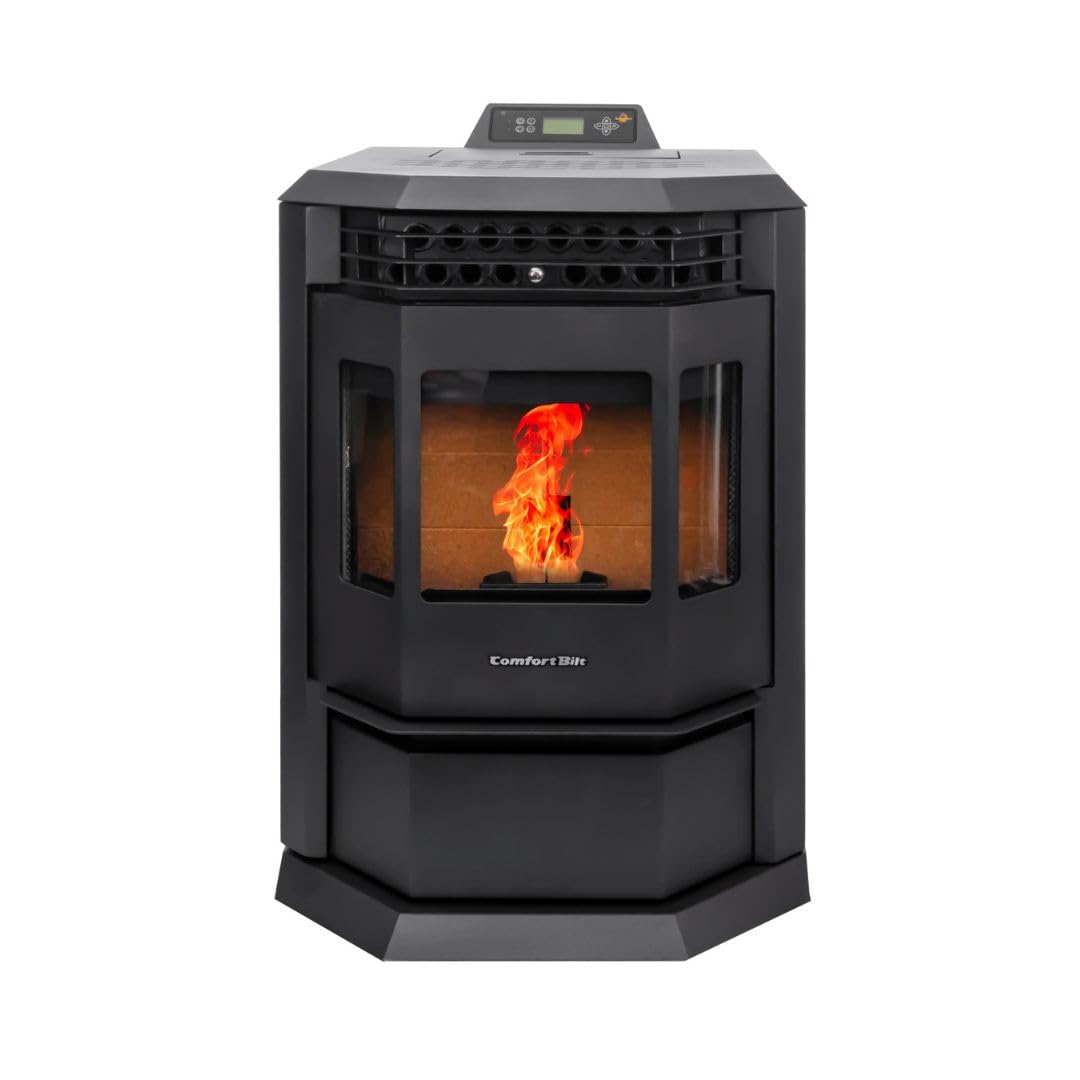
1. ComfortBilt HP22 Pellet Stove, 2,800 sq. ft., 55 lb. Hopper, Black
Our pick — over 4★ from 250+ verified ratings; the strongest balance of quality and price.
The stove that makes whole-house pellet heat feel like flipping a switch.
BTUs are the raw heating power a stove puts out each hour, and this one tops the list at 50,000 of them. That is a meaningful number: for a home of about 2,000 square feet, it means the stove can carry the load with room to spare, not sit pinned at its ceiling all winter. The manufacturer rates the coverage at 2,800 square feet under mild conditions, so on a genuine 2,000 square foot floor plan you are working with headroom instead of a gamble. You also get up to 20 hours of run time on a single fill of the 55 pound hopper.
What buyers keep coming back to is how rarely this stove asks for attention. Setup tends to be straightforward, it starts on one button, and the pellets burn clean with very little smoke. A programmable thermostat handles the day-to-day, and five power settings let you dial things back instead of roasting the house. The reliability is the headline — owners who replaced 25-year-old stoves with this one report heat within minutes, and some have run it for years with no trouble at all. Owners who replaced 25-year-old stoves with this one report heat within minutes and years of trouble-free service.
Be honest about the weight and the install. At 273 pounds, this is a two-person job to move into place, and one home on a sloped driveway had the freight truck stop at the bottom rather than make the climb. Some buyers also note the start-up is loud, and a few describe an intermittent whine, so a quiet bedroom wall is not the best home for it. The paint also gives off a burn-off smell on the first fire — light it outside or with the windows open the first time and it clears.
Where This Stove Wins
- 50,000 BTU output with 2,800 sq ft of rated coverage — real headroom for a 2,000 sq ft home
- Up to 20 hours of burn time on a 55 lb hopper, so most days mean one fill
- Reliability is what owners praise most, followed closely by the heat it throws
- EPA and CSA certified, direct-vent, with a bay-view window and removable ash pan
What To Plan Around
- 273 pounds — plan for help moving it and a clear path for the freight truck
- Start-up is loud, and some units develop an intermittent whine
- Paint needs a first burn-off outside to clear the smell
Buy this if: you want the strongest all-rounder for a 2,000 sq ft house and value reliability over gimmicks.
Look elsewhere if: the stove is going in the room you sleep in, or nobody in the house can lift a third of its weight.
2. US Stove GW1949 Wiseway Non-Electric Pellet Stove
The stove that keeps burning when the grid goes down and every other heater quits.
Gravity feed means the pellets fall into the burn pot on their own, with no auger motor and no electricity to run one. That is the entire appeal here: a 60 pound hopper and up to 30 hours of burn time, longer than any other pick on this list. It runs on standard 3 inch pellet venting and it is EPA certified, delivering 40,000 BTUs to a rated 2,000 square feet. At 131 pounds it is far easier to move than the 273 pound ComfortBilt HP22 above — roughly half the weight, and far friendlier to a single installer.
Gravity-fed stoves have a real catch, and buyers are split on it. Owners who love this one call it effective and simple to assemble, lighting easily with a torch and holding comfort in a well-insulated home — one ran 8 weeks and kept an 1,800 square foot main floor comfortable even at 9°F. Others found gravity temperamental: pellets clump and clog the chute, and it needs regular rodding and scraping to stay lit. Heat output is genuinely mixed in the review data, and in a cold northern climate a few buyers found the rated 2,000 square feet far too optimistic — one reported a room topping out at 68°F while a bedroom sat at 48°F below zero.
This gravity-feed stove trades convenience for heat that runs without electricity. If you live off-grid or lose power often and your home is well insulated on a straight vertical chimney, the trade-off in convenience buys you heat with no power draw. If you are chasing maximum output in a brutal climate, the auger-fed stoves above and below will serve you better.
Who it is built for: off-grid homes, storm-prone areas, and anyone who wants heat that survives an outage.
The honest limit: it takes hands-on tending, and in extreme cold its real-world coverage can fall well short of the rating.
Reach for it if: losing power is a genuine annual worry and you will keep the fire tended.
Pass if: you want to set a thermostat and forget it, or your winters run deep below zero.
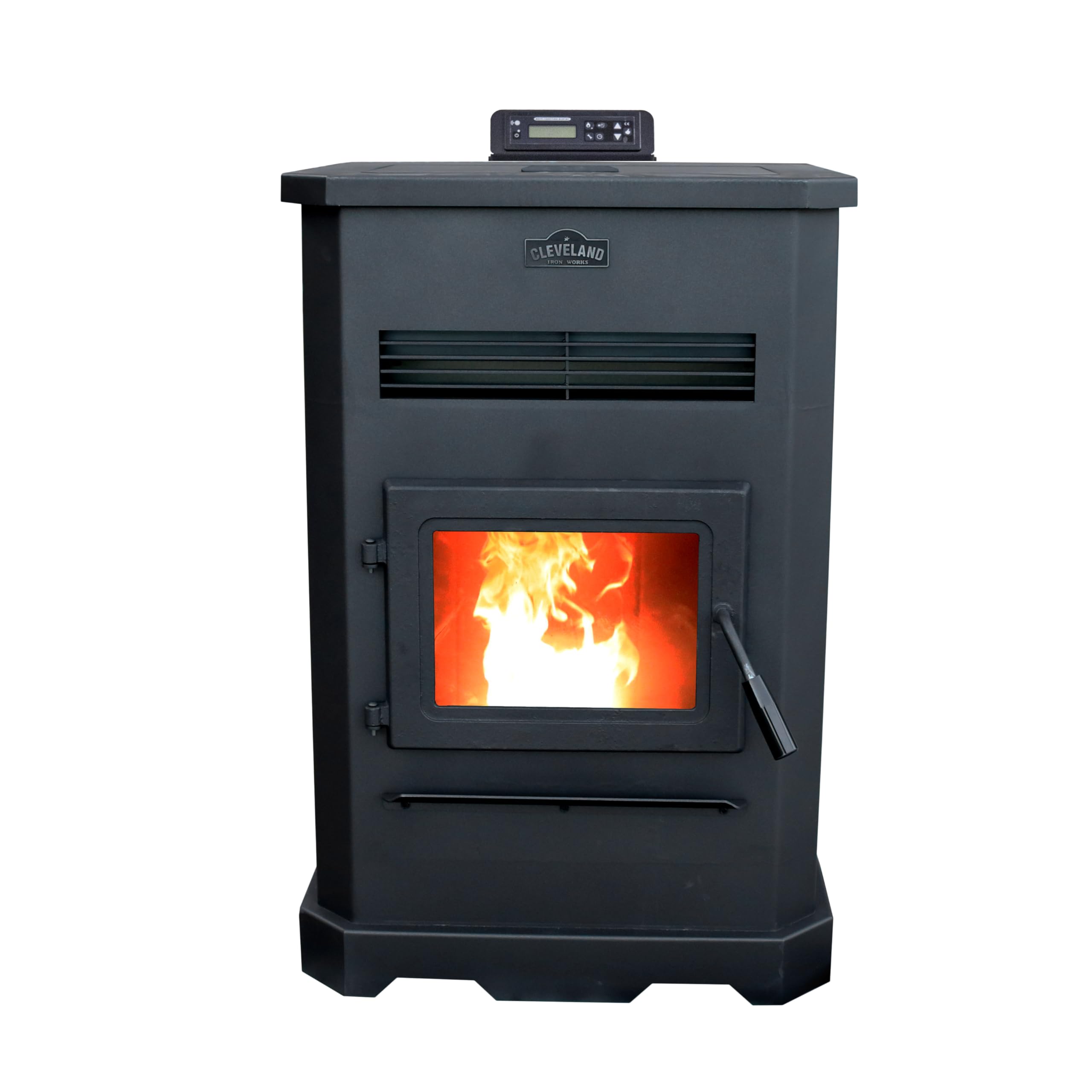
3. Cleveland Iron Works Large Pellet Stove – 130lb Hopper
Three bags of pellets in one hopper — the stove that all but refuses to run dry.
The hopper is the reason to buy this one. At 130 pounds it holds about three full bags of pellets at once, which is well over double the 55 pound hopper on the ComfortBilt HP22 — the biggest fuel bin on this list. In practice that means you fill it every few days instead of every single morning, and buyers report exactly that: it works like a beast, sets up easily, and the big hopper takes three bags without complaint. It heats a rated 2,000 to 3,000 square feet with a cast-iron build and built-in WiFi, and the 29,501 BTU output is enough to keep a moderate 2,000 square foot home warm. You also get app control for programming timers, which owners use to stretch each bag further.
The profile of a happy owner here is someone who hates the daily pellet chore. Fill it, forget it for a couple of days, run it from the app or the remote, and clean the burn area once a day where it is quick and easy. The house warms up fast, and the heat is steady without any overheating drama.
The trade-offs are worth naming. This is not the most powerful heater on the page — 29,501 BTUs against the 50,000 the ComfortBilt HP22 puts out, so in a genuinely cold climate you may find yourself leaning on a second heat source. The manual is also weak; several buyers found it unhelpful and turned to YouTube to set the clock. And the factory paint is not fully cured, so the first high-temp break-in can smoke — do that outside.
Big draw: 130 pounds of hopper space and WiFi timer control, which together end the fill-it-every-morning routine.
Reality check: modest BTU output for the price, and a manual that leaves you to figure things out.
Great fit when: refill frequency is your main gripe and your home is not fighting extreme cold.
Not for: a big, drafty northern house that needs maximum BTU punch.
4. Canyon Lodge Large Pellet Stove
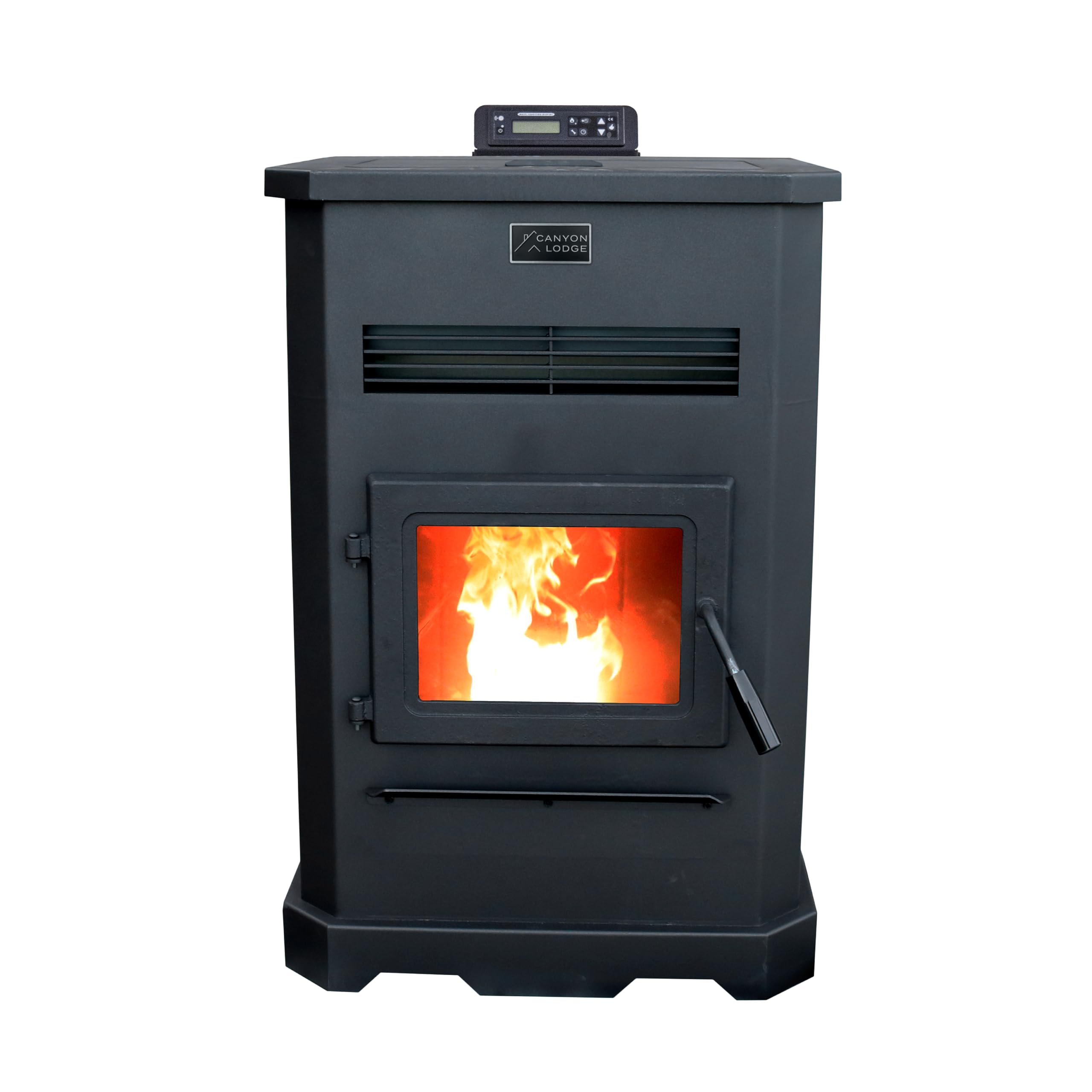
A 130 pound hopper and a fresh-air kit, aimed straight at the basement and the mobile home.
This stove matches the Cleveland Iron Works above on core specs — a 130 pound hopper, 29,501 BTUs, and a cast-metal Enerco build — but adds features that matter for specific homes. It ships with a fresh-air kit included (a duct that pulls outside air for combustion) and it is mobile-home approved, which is a real hurdle for a lot of buyers. The large viewing glass has an air wash system (a stream of air that keeps soot off the glass) to help keep it clearer, and the blower is marketed as Whisper Quiet. Owners mention it heats a whole house from the basement and works beautifully as a rescue-space heater, and it ran fast and dent-free for a four-bedroom mobile home owner who leaves the bedroom doors open to distribute heat.
Where it shines is value in a modest, insulated home. It is functional hardware that does the job without asking much, and the automatic ignition and smart-home features put it in line with stoves that cost more on paper. Owners describe the quality as wonderful and the function as exceptional for the price.
One serious caution deserves a straight sentence: a single review reports this stove caught fire inside and required fire extinguishers to put out, with the buyer describing the metal as very thin. That is an outlier against an otherwise positive picture, but any solid-fuel appliance warrants a professional installation and a working smoke and carbon monoxide alarm nearby. A likelier everyday grumble is that the listed 130 pound capacity is optimistic — one owner found it held three 40 pound bags instead, and the app and remote are described as functional but clunky.
The right buyer: someone heating a mobile home or basement where the fresh-air kit and approval matter.
The caveat: get it installed properly and keep alarms on — a solid-fuel stove is not a place to cut corners.
5. PelPro PP70 Pellet Stove – 70 lb Hopper, 42,500 BTU

EPA-certified at 88.5% efficiency — the stove that stretches every bag of pellets furthest.
Efficiency is the number most 2,000 square foot buyers overlook, and it is this stove’s whole argument. An EPA-certified 88.5% efficiency rating means less of your fuel’s heat exits the chimney and more of it lands in the room. It puts out 42,500 BTUs to a rated 2,000 square feet and holds a 70 pound hopper, which the maker says covers up to two days of fuel so you refill less. The dial control with 10 variable heat settings is simple to run, the variable-speed blower is quiet, and the 300 watt auto-igniter starts the fire for you.
Owners describe the heat as better than they expected and genuinely powerful — one bought it for a shop and the husband went from skeptical to telling his friends, and another runs one to back up heat pumps in a 30x40x16 barn and says it works flawlessly. It comes with a fresh-air kit included (a duct that pulls outside air for combustion) and is approved for mobile-home use, and it is made in the USA.
The honest counterweight here is the reliability picture. The heat and efficiency are well liked, but the review data on this model is more mixed than most picks — a subset of customers note auger jams (the screw that feeds pellets gets stuck) that need clearing, a thermostat that only really offers high and low rather than true modulation, and start/stop smoke. Daily cleaning is required, and on this stove it means losing heat for the better part of an hour. That is a real routine for a real owner, not a dealbreaker, but it does mean this is a stove for someone who does not mind tending it while saving on fuel.
The value math: 88.5% EPA-certified efficiency plus a 70 pound hopper means you buy and load less fuel over a season.
The trade-off: more mixed reliability than its rivals, with some owners clearing jams and living with a coarse thermostat.
Worth it if: fuel economy is your priority and you want a simple dial instead of an app.
Hold off if: you want a stove that runs untouched for days — this one rewards hands-on owners.
6. Cleveland Iron Works Bayfront Pellet Stove – 66lb Hopper

So quiet you can watch TV next to it — with smart-home control and a bayfront view.
Quiet is the rare quality in this category, and this stove owns it. Owners consistently describe it as whisper-quiet, quiet enough that you do not have to raise the TV volume — a genuine advantage over the louder blowers elsewhere on this list. It heats a rated 1,800 to 2,500 square feet with a 30,173 BTU cast-iron build, a 66 pound hopper, and built-in WiFi for app and temperature control. The temperature control is a standout too: one owner notes it comes on automatically when the room drops to a set temperature, which is exactly the hands-off behavior you want.
The build quality and door design earn praise as well — buyers call it stout, with clever doors that make access easy. It runs with very low ash, lights reliably every time, and throws strong heat. Many owners say they switched from wood and would never go back.
The consistent complaint is the glass. It smokes up quickly at low settings and needs frequent cleaning, and that is the one maintenance chore buyers mention over and over. Exhaust piping is expensive for this model, so budget for it beyond the stove itself. There are also a couple of reports of units arriving with bent side doors, and the maker is not always quick to respond — so inspect the crate while the carrier waits. Worth noting: fans report performance as what buyers praise most here, ahead of heat output.
Choose it if: a near-silent stove you can live beside, with smart-home control, is worth a little glass-cleaning.
Not ideal if: you cannot stand wiping the window often, or you want the biggest raw BTU number.
7. ComfortBilt HP22N Pellet Stove, 2,800 sq. ft., 80 lb. Hopper, Black
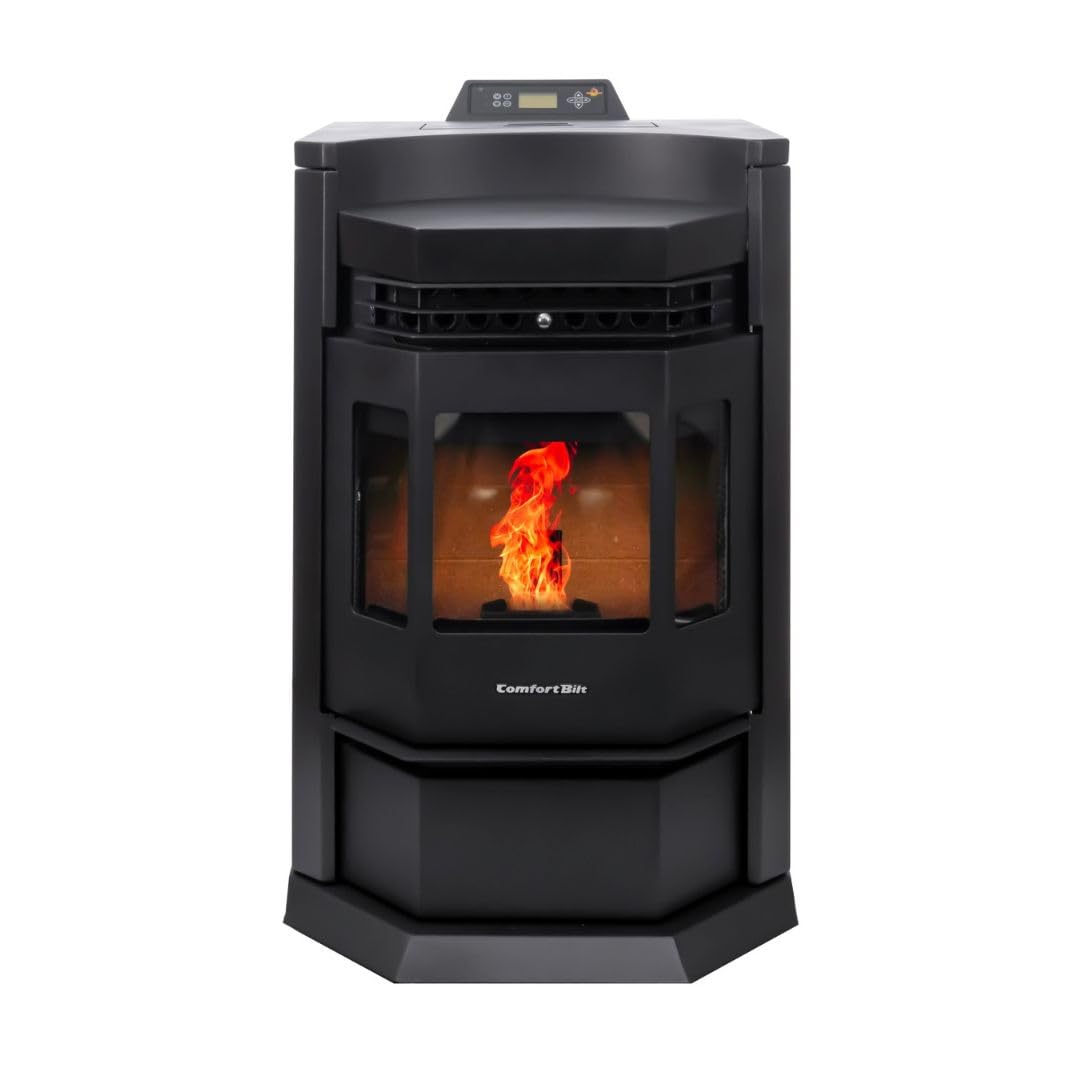
The big-hopper ComfortBilt that runs up to 35 hours before you touch it again.
This is the HP22’s larger-hopper sibling, and the difference is not cosmetic. The hopper here holds 80 pounds against the 55 pounds on the model at the top of this page — 25 pounds more fuel — and the burn time stretches to up to 35 hours. It delivers the same 50,000 BTUs and the same 2,800 square foot rated coverage, so the heat is identical; what you gain is up to 15 more hours before you have to reload. That is the difference between daily refilling and every-other-day, and it is why this one takes the long-run-time spot even though it is not the priciest stove here.
Owners back that up. One runs it on level 2 and heats a 1,200 square foot mobile home with heat to spare, and level 5 is described as too hot to run. Another warmed a 1,900 square foot home — 1,000 square feet of living space plus a 900 square foot basement — at 11°F outside, holding the living area around 74 to 77°F. Heats fast, easy to use and clean, and the appearance gets compliments. The manufacturer also checks in after purchase, which owners single out as unusual and welcome.
It is not without quirks. The hopper opening is small and fiddly to load, the control-panel sticker and remote feel cheap, and there is no WiFi. Pellet type matters more than you would expect, and the auger clunks a little from pellet dust. It is also very heavy, so plan the install. None of that changes the core story: this is a comfortable, high-heat workhorse for a large home that rewards a little diligence.
The draw: 50,000 BTU heat and the longest hopper-fed run time in this lineup, so refills become an every-other-day task.
The fine print: no WiFi, a small hopper opening, and a heavy frame to move.
Best for: a big house where you want maximum run time between fills and do not care about app control.
skip it if: you want smart-home integration and lighter weight — the earlier HP22 covers that.
8. Freedom Stoves Independence PS21 Pellet Stove with Battery Backup
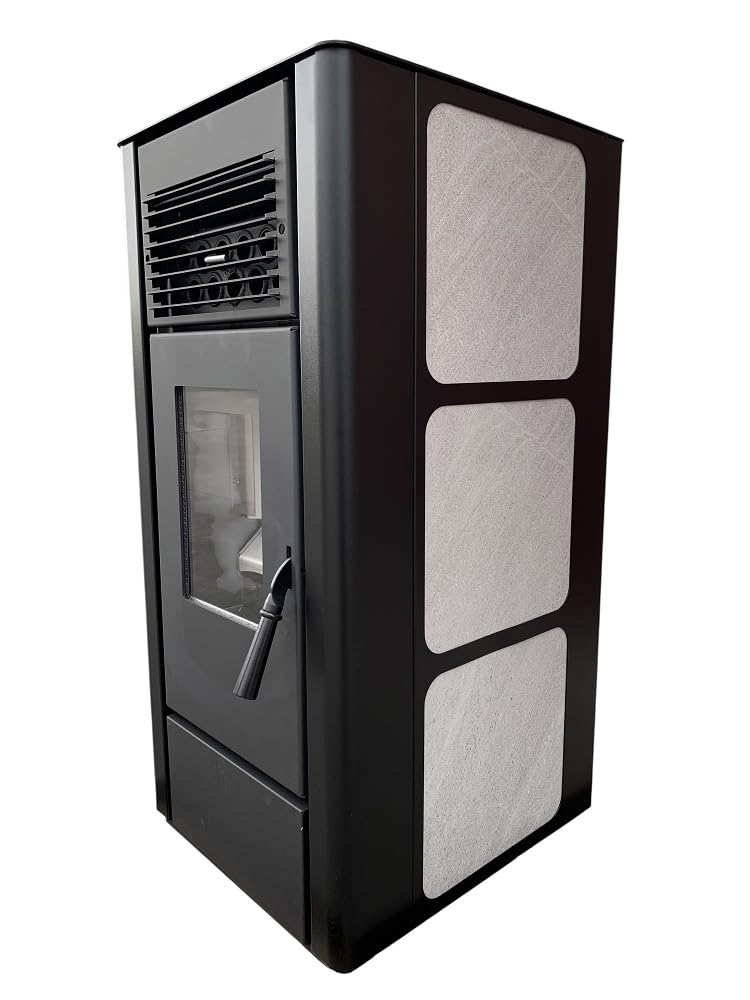
Battery backup that keeps the fire alive for over 40 hours when the power drops.
This is the pick for storm country. The PS21 runs on two 12-volt batteries (you buy those separately) using a 24-volt DC system that delivers over 40 hours of runtime, so a multi-day outage does not kill your heat. It produces up to 34,700 BTUs and heats a rated 800 to 1,800 square feet using a stacked tube heat exchanger, which spreads warmth more evenly around the room. Add a built-in touchscreen, mobile app, and remote, and swappable side panels you can replace with any standard 12×12 tile, plus a 5-year limited warranty and a Vent Free configuration.
The control array is what separates it — feed rate, airflow, fire height, and fan speed are all adjustable, which matters if you like tuning efficiency by hand. Owners rave that it throws huge heat, runs quiet, and stays cool to the touch on the outside, with one saying it is the best of the three stoves they have owned. It lights in about 4 minutes, and the ECO mode and multiple operating modes help manage pellet use.
Two honest notes. Its coverage ceiling is 1,800 square feet, so it is the smallest-space option here — for a true 2,000 square foot whole-house job, the larger ComfortBilts above fit better. And it is a bare unit for the money: no stove pipe, vent, or cleaning kit is included, which some buyers find surprising at this tier. The connection to the Wi-Fi can also be finicky, and the pellet feed gives you a limited number of settings. For the right buyer — off-grid, storm-prone, or someone replacing a wood stove in a smaller space — the battery backup alone justifies the ask.
Made for: storm-prone or off-grid homes where surviving a multi-day outage is the whole point.
Look elsewhere if: you are heating a full 2,000 square feet or you expect venting and accessories in the box.
Understanding the Specs
BTU Output
BTU stands for British Thermal Unit — the measure of how much heat a stove puts into the room each hour. The higher the number, the more raw heating power you have. On this list, the ComfortBilt HP22 delivers 50,000 BTUs and the HP22N matches it, while the Freedom Stoves PS21 tops out at 34,700. For a house around 2,000 square feet, a higher BTU figure gives you the headroom to handle cold snaps instead of running flat out. Size to your coldest week, not your average winter day.
Hopper Capacity And Burn Time
The hopper is the bin that feeds pellets to the fire, and its capacity in pounds dictates how often you refill. Burn time is how long the stove runs on one full hopper at a given setting, so the two numbers only make sense together. The 130 pound Cleveland Iron Works hopper holds about three bags at once, while the 47 pound ComfortBilt HP50S runs up to 23 hours on a fill. A bigger hopper with a long burn time means fewer refills per week.
FAQ
Will a stove rated for 2,000 sq ft actually heat my 2,000 sq ft house?
How many BTUs do I need to heat 2,000 square feet?
Does a pellet stove need electricity to run?
What size hopper do I need so I am not refilling every day?
Is a gravity feed pellet stove better than an auger stove?
How long does a pellet stove run on one hopper of pellets?
Do I need a fresh air kit for a pellet stove in a mobile home?
How much maintenance does a pellet stove need each day?
Can I control a pellet stove from my phone?
Do pellet stoves work during a power outage?
Final Thoughts: The Verdict
For most homes near 2,000 square feet, the 2000 sq ft pellet stove to buy is the ComfortBilt HP22 — it pairs 50,000 BTUs with 2,800 square feet of rated coverage, and reliability is what its owners value most, which is exactly what you want from a heater you will lean on every winter. If run time between refills is your priority, grab the ComfortBilt HP22N and its 80 pound hopper. And if you live where the grid fails, the Freedom Stoves Independence PS21 and its 40-plus-hour battery backup is the one to reach for. Whichever you land on, size for your coldest week, not your mildest.
How We Picked
We do not accept paid placement. Every pick is matched to a real buyer and a real use-case; we do not hands-on test units.
Sources & Methodology
Specifications: manufacturer listings and product documentation. Review insights: verified customer reviews, as of September 2026. Pricing: not shown on this page (it changes often); check the current price via the retailer link.
As an Amazon Associate, KitchPrep earns from qualifying purchases. This does not affect which products we feature.
Related Guides
