
Specs are compiled from manufacturer listings and verified buyer reviews and can change over time — please confirm the key details on the product page before buying.
If you want baked beans with a thick, sweet crust on top and soft, creamy beans underneath, the pot matters as much as the recipe. A good bean pot holds heat low and steady for hours, keeps steam in so the beans never dry out, and moves straight from oven to table without a fuss. The five pots below cover every kind of cook: heavy cast iron for sourdough and roasts, featherweight enamel for small batches, and traditional stoneware for a proper Boston-style crock.
I’m Mohammad Maruf — the founder and writer behind KitchPrep. This guide is built by comparing the manufacturers’ published specifications and the patterns across verified customer reviews, so you get each pick’s real strengths and trade-offs instead of marketing spin.
You will see what each pot is actually made of, how much food it truly holds, and who each one suits best. By the end you can pick the right vessel for your own kitchen with confidence, whether you are shopping for the baked bean pot that lives on your stove for years or a smaller one for occasional batches.
Our Picks at a Glance

How To Choose The Best Baked Bean Pot
A bean pot is not a plain stock pot. It is a deep, narrow-mouthed vessel built to cook beans slowly for hours without drying them out, and the shape is doing real work. The narrow opening traps steam and slows evaporation, so your beans stay saucy instead of turning into a dry brick. The wide base spreads heat gently, which is exactly what a long bake needs. Get the material and the size right and the pot disappears into the background; get them wrong and you fight sticking, cracking, or a pot too heavy to lift.
Pick the material around your cooktop and your patience
Cast iron is the slowest to heat up and the slowest to cool down, which is why it bakes beans so evenly and browns bread crusts so well. It is also heavy and it needs oiling after every wash. Enamel on steel is the opposite — light enough to lift one-handed, and the glass-like porcelain coating wipes clean with a sponge, though the coating can chip with rough handling. Unglazed clay is the traditional choice; it breathes, it keeps a gentle, even warmth, and it demands soaking and careful drying. Match the material to how you actually cook and clean.
Size the pot to the batch, not the shelf
Bean recipes expand once soaked beans and liquid go in, and they bubble up in the oven. A 2-quart pot suits a side dish for a small household and a loaf of bread. A 4-quart pot handles a family batch of baked beans or a whole chicken. A 5-quart or larger vessel is the one you use for big weekend batches. Buy wider than you think you need and you will not be scraping overflow off the oven floor.
Check the cooktop compatibility before you buy
Not every bean pot belongs on every stove. Some enamel-on-steel and clay pots are not recommended for induction or glass stovetops, because the contact between a rough or uneven base and a flat glass surface can scratch or crack it. Cast iron works on induction and on open flame, and it moves to grills and campfires. Read the pot’s own compatibility notes before you commit, especially if you cook on a smooth electric top.
Quick Comparison
| Model | Best For | Capacity | Material | Weight | Amazon |
|---|---|---|---|---|---|
| Lodge Cast Iron Dutch Oven with Loop Handle, Oven-Safe, 5 Quart★ Best Overall | Sourdough, roasts, and campfire cooking | 4.7 liters | Cast iron | 12.8 pounds | Amazon |
| Amazon Basics Pre-Seasoned Cast Iron Mini Dutch Oven Pot with Lid and Dual Handles, Oven Safe, 2-Quart, Round, BlackMost Compact | Small households and everyday rice or beans | 1.9 liters | Cast iron | 5.5 pounds | Amazon |
| Fox Run 0350 Stoneware Bean Pot, 9.75″, Brown | Traditional baked beans served at the table | 3.5 quarts | Earthenware | 3.8 pounds | Amazon |
| Hakan Suphan Handmade 7.6-Quart Large Clay Cooking Pot with Lid, Natural Unglazed Cookware, Terracotta Cazuela, Casserole Dish, Rice Cooking, Stewpot, Korean, Indian, Mexican Dish 7.2 L | Big-batch slow cooking and rustic presentation | 243.5 fluid ounces | Unglazed terracotta | 7.01 kg | Amazon |
| Granite Ware Porcelain Enamel Bean Pot, 4 Qt – Speckled Black | Lightweight everyday beans and small solar-oven batches | 4 quarts | Porcelain enamel on steel | 1.4 pounds | Amazon |
In‑Depth Reviews
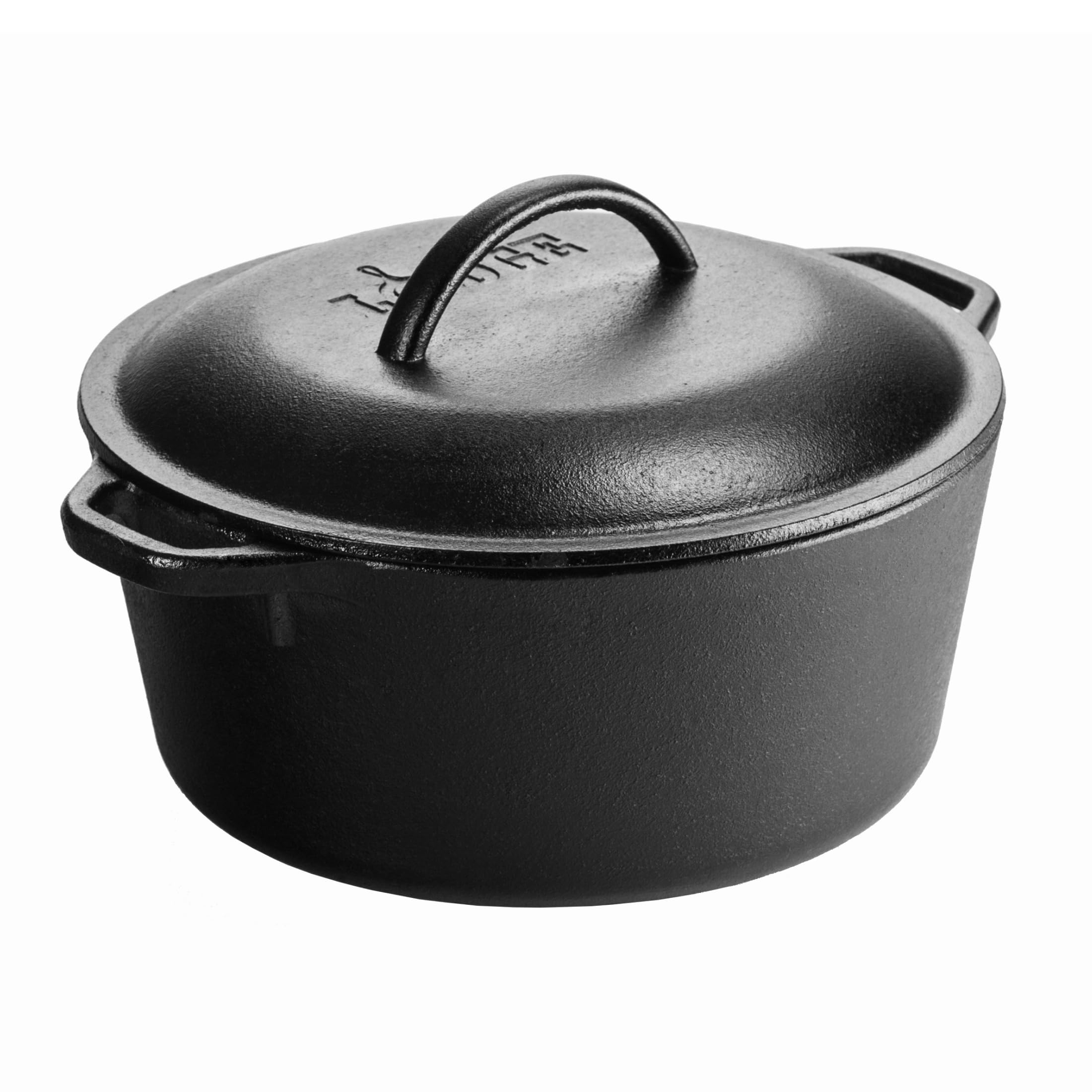
1. Lodge Cast Iron Dutch Oven with Loop Handle, Oven-Safe, 5 Quart
Our pick — over 4.5★ from 17,000+ verified ratings; the strongest balance of quality and price.
Twelve and a half pounds of iron that browns a sourdough crust and never quits on the beans.
This is the pot most people picture when they think of slow, oven-baked beans, and the reason is simple. It holds a generous 4.7 liters, which is roughly a family-sized batch with room to spare, and its cast iron walls release heat so gradually that the beans simmer without hot spots. It is the heaviest pick here by a wide margin — 12.8 pounds — which is the price you pay for that even, unhurried cooking. The lid and the pot are both cast iron, and the two loop handles give you a proper grip when you lift it out of the oven with mitts on.
What Earns Its Place: This is a two-in-one pan. Flip the lid over and it becomes a skillet for searing, frying, and baking, so it replaces a second piece of cookware. The finish is iron and oil only, listed as PFAS-free, so there is no chemical coating to worry about. Owners lean on it hard for soups, roasts, casseroles, and bread. It works on the stovetop, in the oven, on a grill, and over a campfire, and it is compatible with induction. Compare it with the Amazon Basics mini below: this one carries 4.7 liters against that pot’s 1.9 liters, so the Lodge is the one for a big batch while the mini handles a side dish.
The Honest Catch: Cast iron asks for care. The factory pre-seasoning is a base layer, not a finished non-stick surface, so you build it up over time. A hot-water rinse and a scrub brush is all most cleanups need, but scrubbing with steel wool can strip the seasoning and let rust start. If that happens the pot is not ruined — it can be sanded back to bare metal, re-coated with fat, and baked again. That is the trade-off worth accepting if you want a pot that can outlast most of your kitchen.
What sets the Lodge apart
- 4.7-liter capacity handles a full family batch of beans or a large sourdough loaf
- Cast iron body and lid hold heat steadily, so beans cook evenly with no hot spots
- Reversible lid doubles as a skillet, giving you two pans in one
- PFAS-free finish made from iron and oil only, with no chemical coating
- Safe on stovetop, oven, grill, and campfire, and induction compatible
Where it asks more of you
- At 12.8 pounds it is the heaviest pot in this guide and needs two hands plus mitts
- Pre-seasoning is a starting layer, so it needs regular oiling to stay non-stick
- Harsh scrubbing can strip the seasoning and open the door to rust
Reach for this if: you cook big batches, bake bread, and want one heavy pan that does stovetop, oven, and campfire duty.
Think twice if: lifting a 12.8-pound pot is a problem, or you would rather not maintain a seasoned surface.
2. Amazon Basics Pre-Seasoned Cast Iron Mini Dutch Oven Pot with Lid and Dual Handles, Oven Safe, 2-Quart, Round, Black
A two-quart iron pot that tucks into a cabinet and still cooks beans like the big ones.
If your kitchen is short on space, this is the cast iron pot that earns its shelf. It holds 1.9 liters, which is a sensible batch for two to four people, and it weighs 5.5 pounds — about 7.3 pounds lighter than the Lodge above, so lifting it one-handed is realistic. The cast iron body and lid give the same even heat distribution and retention as its larger cousin, which is why rice, dried beans, and bread all turn out consistent. It is oven safe to 500 degrees Fahrenheit, so stovetop-to-oven cooking is straightforward.
Small Pot, Real Cast Iron: What wins people over is the size. It cooks for four to six people, and the deep walls keep oil splatter down when you brown meat. The dual side handles make maneuvering it onto the counter easy. Buyers report it works well on smooth-top stoves and wipes clean easily. Soaked dried beans turn tender in about an hour on medium-low, and rice needs only 20 minutes on low. Unlike the Lodge’s do-it-all reversible lid, this one is a straight lid, so you trade that second use for a much smaller footprint.
Read the Care Notes First: The pre-seasoning is a point of disagreement. Some owners find it excellent straight from the start, while others say it needs more work to become truly non-stick. The finish does not function as a non-stick surface on its own, and the interior can rust if you do not dry it and oil it after washing. Hand wash only. It is the classic cast iron bargain: a little maintenance in exchange for a pan that owners describe as lasting for decades. For a small household that will actually use it, that is an easy trade.
Who it fits: a couple or small family that wants real cast iron cooking without the bulk, and does not mind a quick oil-and-dry routine after each use.
The trade-off: at 1.9 liters it will not handle a big holiday batch, and the interior rusts quickly if it sits wet.
Best for: tight kitchens and small households that cook beans, rice, or a chicken for two to four people.
Look elsewhere if: you need serious capacity or want a pan you can wash and forget.
3. Fox Run 0350 Stoneware Bean Pot, 9.75″, Brown
The traditional brown crock that goes from a six-hour bake straight to the middle of the table.
This is the shape people mean when they say bean pot: a deep, wide earthenware vessel with a narrow opening that holds steam in and keeps your beans saucy instead of dry. It holds 3.5 quarts, which suits a full batch of Boston-style baked beans, and it weighs 3.8 pounds, so it is easy to carry from oven to table. The brown glazed finish is scratch and stain resistant, and the two stay-cool side handles make the move to the table safe. A removable lid is included to hold heat and keep the temperature steady.
Why It Looks Good Enough to Leave Out: Appearance is what draws people in — the deep glazed brown looks at home on any table, and it earns compliments when you bring it out full of beans. Owners cook everything from baked beans with bacon, onion, and molasses to soups, stews, and chili. The lid fits well and the interior holds up under oven heat. The shape itself is the real function: the narrow mouth slows evaporation, so a long bake does not dry your beans out. Compare it with the Amazon Basics mini above and the capacity is the difference — this is a 3.5-quart serving pot, not a 1.9-liter everyday pan.
The Fragility to Respect: This is stoneware, and stoneware can crack. A few owners have had theirs crack on a second use. Size the risk honestly: most of these pots go years without trouble, and the maker rates the earthenware for temperatures up to 1,235 degrees Celsius, so the material itself is heat-tolerant. Treat it as a slow, even-heat pot, avoid thermal shocks like moving it straight from a hot oven to a cold counter, and inspect it when it arrives. If you want a workhorse you can bang around, cast iron is the safer bet; if you want a beautiful serving piece, this is it.
Why the Fox Run stands out
- 3.5-quart earthenware holds a full batch of baked beans
- Deep, wide body with a narrow mouth keeps beans moist during a long bake
- Glazed brown finish is scratch and stain resistant and looks good on the table
- Two stay-cool handles and a removable lid make serving easy
- Rated for temperatures up to 1,235 degrees Celsius
What to keep in mind
- Stoneware can crack, so it needs gentle handling and no thermal shocks
- Inspect it on arrival, since a rare unit arrives damaged
- At 3.8 pounds it is easy to carry but the shape takes up cabinet space
Pick this one if: you want a traditional bean crock that looks as good on the table as the beans taste.
Skip stoneware if: you need a pot that can survive rough handling and thermal swings without a second thought.
4. Hakan Suphan Handmade 7.6-Quart Large Clay Cooking Pot with Lid, Natural Unglazed Cookware, Terracotta Cazuela, Casserole Dish, Rice Cooking, Stewpot, Korean, Indian, Mexican Dish 7.2 L
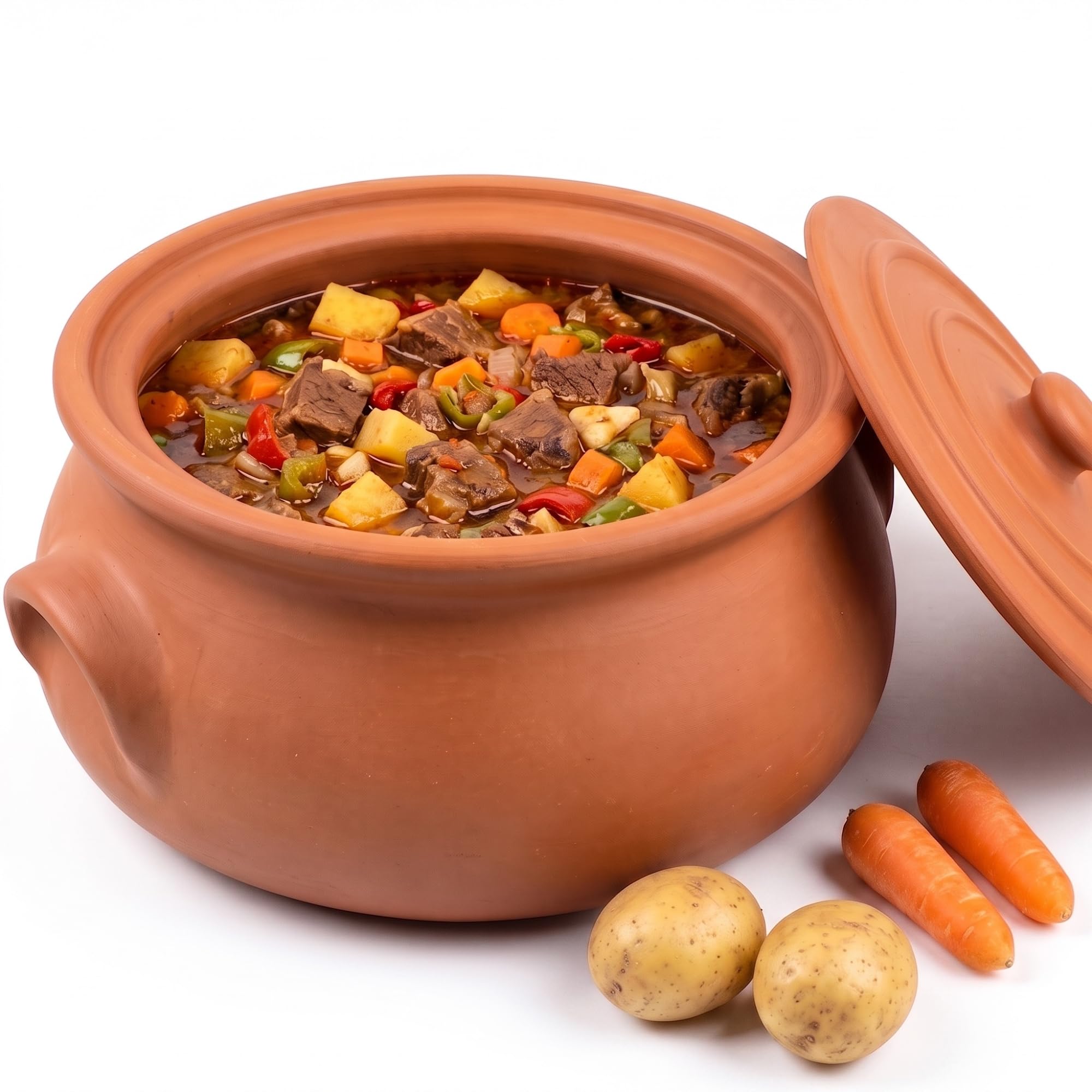
A handmade terracotta giant that holds 243.5 fluid ounces of slow-simmered beans and doubles as decor.
This is the biggest pot in the group by capacity — 243.5 fluid ounces, or 7.2 liters, which is enough to double a recipe and still have room. It is handmade from unglazed terracotta in the Cappadocia region of Turkey, and because it is made by hand, each one is unique with slight variations in size and dimensions. The unglazed surface is porous, which is what gives clay its gentle, even heat and lets it work as both a stovetop pot and an oven dish. It looks the part too: the vintage, smooth terracotta finish is handsome enough that owners keep it out for decoration between cooks.
Clay rewards patience: soak it before first use, heat it slowly rather than with a sudden blast, and let it dry fully after washing. One long-term user reports 18 months of steady performance, with rice and boiled-tea water as favorites and a flat base that works as a slow cooker on a warming tray. Clean it with coarse salt rather than soap, dry it completely, and it darkens and smooths with use. Treat it like a cast iron pan that needs even more patience.
Know What You Are Signing Up For: Two things stay honest here. The unglazed clay has an initial smell that fades after roughly five uses and does not affect the taste of your food. More importantly, clay is fragile — some owners have had their pot crack after only three uses, and a few arrived broken in transit. It is a handmade, delicate, high-maintenance material, and it rewards careful owners best. If you want something you can preheat hard and scrub with anything, this is not that pot. If you want to cook the traditional way and accept the care it demands, it delivers.
The big-batch appeal: 7.2 liters and a design that works on stovetop and in the oven, all from a single handmade piece you will want to display.
The honest catch: unglazed clay needs soaking, gentle heat, and full drying, and it can crack if treated roughly.
The verdict: a beautiful, high-capacity clay pot for cooks who enjoy slow, traditional methods and will care for it accordingly.
Know your limit: it is a delicate, high-maintenance vessel — not for anyone who wants a rough-and-tumble everyday pan.
5. Granite Ware Porcelain Enamel Bean Pot, 4 Qt – Speckled Black

Four quarts of speckled enamel that weigh about as much as a bag of coffee.
At 1.4 pounds for the whole pot, lid and all, this is the lightest bean pot in this guide — roughly 11.4 pounds lighter than the Lodge, so you can lift it one-handed even when it is full. It holds a generous 4 quarts, enough for a full batch of beans, and the steel core spreads heat evenly so slow-cooked dishes simmer without scorching. The porcelain enamel coating is applied over the steel to be chip-resistant, with a smooth, glass-like surface for easy cleanup. And it is free from PFOA and PTFE (two chemical coatings some cooks avoid), with a naturally non-stick surface rather than a chemical coating.
Where It Shines: This pot earns its place for smaller, lighter cooking. It holds 16 to 20 ounces of dry beans, works on the stovetop and in the oven, and its compact size makes it a favorite for solar ovens. Owners cook vegetable soups and boil chickens in it with ease. The naturally non-stick surface lets even stubborn residue wipe off with a sponge after a short soak. It is also scratch-resistant and metal utensils are fine to use on it, which is a big plus for anyone tired of babysitting a more delicate pot. Compared with the heavier cast iron picks, this is the one you can move around the kitchen without thinking about your back.
Two Things to Know: The description calls it non-stick, and a few owners push back on that — one notes rice stuck on the first use and needed an overnight soak. Heat management helps; it gets very hot, so low heat and pot holders are the way to cook with it. The other note is compatibility: it is not recommended for induction or glass stovetops, so if you cook on a smooth electric top, this is not the pot for you. Also worth knowing: the speckled finish is a painted exterior, so a rare unit arrives with a small chip from transit — worth a quick look when it lands.
The case for the Granite Ware
- 1.4 pounds makes it the easiest pot here to lift, load, and store
- 4-quart capacity handles a full batch without the weight of iron
- PFOA-free and PTFE-free with a chip-resistant porcelain enamel coating
- Metal utensils are fine, and the smooth surface wipes clean after a quick soak
- Compact enough for solar oven use and small kitchens
The fine print
- Not recommended for induction or glass stovetops
- Some owners find the non-stick claim overstated for sticky foods like rice
- The painted speckled exterior can chip on rough handling
Grab this if: you want a light, budget-friendly bean pot for small batches, soups, or a solar oven.
Hold off if: your stove is induction or glass top, or you need a heavy pot for high-heat roasting.
Understanding the Specs
Capacity in quarts and liters
Capacity tells you how much food the pot actually holds, and it is the spec most likely to trip you up. A 2-quart (1.9-liter) pot like the Amazon Basics mini is a small-batch pan for a couple or a side dish. A 4-quart (roughly 4.7-liter) pot like the Lodge handles a family batch of beans or a large loaf of bread. Bigger pots like the Hakan clay pot, at 7.2 liters, let you double a recipe. Remember that beans expand once they soak and cook, so a pot that looks huge on the shelf fills up fast.
Weight and material
Weight is the spec you feel every single time you pull the pot out of the oven. Cast iron is the heaviest — the Lodge Dutch oven weighs 12.8 pounds, while the smaller Amazon Basics mini comes in at 5.5 pounds. Porcelain enamel on steel is the lightest, with the Granite Ware bean pot at just 1.4 pounds. Heavier pots hold heat longer and cook more evenly; lighter pots are easier to handle and clean. The right choice depends on whether you prioritize steady heat or easy lifting.
Cooktop compatibility
Not every pot belongs on every stove. Cast iron, like the Lodge and the Amazon Basics mini, works on gas, electric, and induction, and it can move to a grill or campfire. The Granite Ware enamel pot is not recommended for induction or glass stovetops because its base can scratch or crack a smooth surface. Unglazed clay works on stovetop and in the oven but wants gentle, gradual heat. Always confirm the pot works with your stove before you buy.
Finish and surface
The finish decides how much work the pot is after dinner. Cast iron comes pre-seasoned but needs oiling and hand washing, and it can rust if left wet. Porcelain enamel, like the Granite Ware, is smooth and easy to clean, with a chip-resistant coating, and it is free from PFOA and PTFE. Glazed stoneware wipes clean and resists stains and scratches. Unglazed terracotta is porous, so it needs soaking, salt cleaning, and full drying. Match the finish to how much care you want to give.
FAQ
What size baked bean pot do I need for a family batch?
Can I use a bean pot on an induction cooktop?
Why is a bean pot shaped differently from a normal pot?
How do I keep a cast iron bean pot from rusting?
Is a clay baked bean pot better than cast iron?
What is the difference between glazed and unglazed bean pots?
Can I put a stoneware or clay bean pot in the oven?
How many dry beans fit in a bean pot?
How long does a baked bean pot usually last?
Do I need to pre-season a cast iron bean pot before first use?
Final Thoughts: The Verdict
The most versatile baked bean pot here is the Lodge Cast Iron Dutch Oven, because it handles a full family batch at 4.7 liters, doubles as a skillet with its reversible lid, and goes from stovetop to oven to campfire without complaint. If space or batch size is your limit, the Amazon Basics Mini Dutch Oven does the same cast iron cooking in a lighter, smaller pot that suits two to four people. And if you want a traditional crock that looks as good on the table as the beans taste, the Fox Run Stoneware Bean Pot is the serving piece to reach for. Whatever you pick, match the material to your cooktop and the size to your batch, and the beans will reward you.
How We Picked
We do not accept paid placement. Every pick is matched to a real buyer and a real use-case; we do not hands-on test units.
Sources & Methodology
Specifications: manufacturer listings and product documentation. Review insights: verified customer reviews, as of September 2026. Pricing: not shown on this page (it changes often); check the current price via the retailer link.
As an Amazon Associate, KitchPrep earns from qualifying purchases. This does not affect which products we feature.
Related Guides
