
Specs are compiled from manufacturer listings and verified buyer reviews and can change over time — please confirm the key details on the product page before buying.
If your well water has slowed to a trickle, or your old jet pump finally quit, you need a submersible pump that pushes real pressure up a long drop pipe without burning out. That is what a 1/2 HP (half-horsepower) submersible well pump does. It sits underwater at the bottom of your well and pushes water up to your tank, so you get steady pressure at the tap instead of a weak sputter. The picks below are all true 1/2 HP models — no 1/3 HP lookalikes, no 3/4 HP curveballs.
I’m Mohammad Maruf — the founder and writer behind KitchPrep. This guide is built by comparing the manufacturers’ published specifications and the patterns across verified customer reviews, so you get each pick’s real strengths and trade-offs instead of marketing spin.
The two numbers that matter most before you buy are flow rate (how many gallons per minute it delivers) and max head (how high it can push water). Get those two right for your well depth, and everything else falls into place — read on for the 1/2 hp submersible well pump that fits your setup.
Our Picks at a Glance

How To Choose The Best 1/2 HP Submersible Well Pump
Buying a well pump is different from buying most home gear. You bury it 50, 100, or 200 feet underground, wire it up, and hope you never have to pull it out again. That makes getting the spec right the first time worth far more than saving a few dollars on the pump itself. Here is what to check before you buy.
Match max head to your well depth, not to a round number
Max head is the tallest column of water the pump can push straight up — measured in feet. If your water level sits 80 feet down and you need it lifted another 30 feet to reach a pressure tank on a hill, you need a pump rated well above 110 feet of head. A pump that only just reaches your depth will run at a fraction of its rated flow and wear out early. Always leave headroom above your actual lift.
Flow rate tells you what the pump can actually deliver
Flow rate (measured in GPM, or gallons per minute) is how much water the pump moves. A pump rated 28 GPM at zero head will deliver far less once it is pushing water 100 feet up. Household use — showers, laundry, garden hose — usually needs somewhere around 8 to 12 GPM at working pressure to feel normal. Irrigation and livestock setups want more. Check the pump’s flow at your working depth, not just its peak number on the box.
Voltage and wire count decide your install bill
A 115V pump runs on standard household voltage, which is simpler to wire but draws more current over long runs. A 230V pump draws roughly half the amps for the same horsepower, so it handles longer cable runs with less voltage drop. A 2-wire pump (plus ground) has the starting switch built into the motor — no external control box needed. A 3-wire pump needs a separate control box. Fewer parts underground usually means fewer things to fail.
Quick Comparison
| Model | Best For | Flow Rate | Max Head | Voltage | Amazon |
|---|---|---|---|---|---|
| Hallmark Industries MA0343X-4★ Best Overall | All-around home well replacement | 25 GPM | 150 feet | 110V | Amazon |
| VEVOR 0.5HP 115VBest Value | Sprinklers and household pressure | 28 GPM | 167 feet | 115V | Amazon |
| Red Lion RL12G05-2W2VPremium Pick | Potable-water home well, 2-wire ease | 12 GPM | 212 feet shut-off | 230V | Amazon |
| WASSERMANN 1/2HP 115V | Deep wells needing extra lift | 28 GPM | 179 feet | 115V | Amazon |
| Goulds 10HS05422C | Long-term residential reliability | 10 GPM | — | 230V | Amazon |
| Hallmark Industries MA0343X-4A | 230V installs with existing wiring | 25 GPM | 150 feet | 230V | Amazon |
| Red Lion RL12G05-2W1V | Cabins and small rural wells | 12 GPM | 212 feet shut-off | 115V | Amazon |
| 3″ Bore 0.5HP 110V Multi-stage | Tight 3-inch boreholes | 16 GPM | 216 feet | 110V | Amazon |
| Grundfos 10SQ05-160 | Generator and solar-friendly installs | 10 GPM | — | 115V | Amazon |
| VEVOR 0.5HP 230V | Long cable runs on 230V | 28 GPM | 167 feet | 230V | Amazon |
| ZYIY 2in Rotary Screw | Low-flow narrow wells | 4.4 GPM | 164 feet | 110V | Amazon |
In‑Depth Reviews
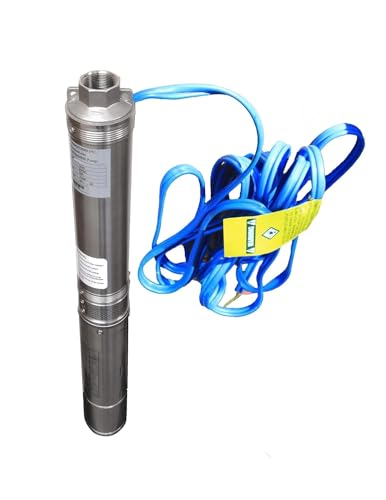
1. Hallmark Industries MA0343X-4 Deep Well Submersible Pump
Our pick — over 4★ from 850+ verified ratings; the strongest balance of quality and price.
The 25 GPM workhorse that keeps pressure steady for years, not seasons.
If your well is home to a family that actually uses water — showers, laundry, a yard sprinkler — this is the sensible starting point. It moves 25 GPM (gallons per minute) and can lift water 150 feet, so it handles a 44-foot well with room to spare and still pushes real pressure at the tap. Owners document roughly 10 GPM at 61 PSI through a standard outdoor faucet, which is plenty for irrigation and daily household demand.
You get a pump that just runs, day after day. The stainless steel and thermoplastic body is built for constant submersion, so it handles being underwater without rusting. The wiring kit and manual come in the box, so you are not hunting for a splice kit separately. One long-term owner summed it up best: “have ours sitting at 100 ft in a 200 ft well – works great – been running it for 11 years now.” That 11-year run at 100 ft is the service life a jet pump cannot match.
Set your expectations on outlet size before you order. The discharge is 1.25 inches, and that detail trips up plenty of first-time buyers who assumed a standard pipe would screw straight on — plan the reducer into your parts list. Depth also matters: keep in mind that a 115V pump draws more current over a long run, so if your well is especially deep, a 230V unit makes more sense. For most shallow-to-mid wells, though, this is the pump to beat.
Top pick for deep wells
- 25 GPM flow and 150 ft head cover most residential wells with margin
- Stainless steel and thermoplastic body rated for constant submersion
- Wiring kit included — no separate splice-kit purchase
- Owner reports include 11 years of continuous service at 100 ft depth
Installation planning needed
- 1.25-inch outlet is not the standard size many buyers assume
- 115V wiring is less efficient over very long cable runs
- Warranty period is one year from purchase
Best overall: you want a proven residential pump with the flow to run sprinklers and household water together.
Consider alternatives: your well is deep enough that the lower current draw of a 230V motor would serve you better.
2. VEVOR Deep Well Submersible Pump 0.5HP 115V
Five-stage impellers pushing 28 GPM, wrapped in stainless steel and priced to move.
For the money, this one punches well above its tier. It delivers 28 GPM — the highest flow in this lineup, edging out the Hallmark’s 25 GPM — with 167 feet of max head, which is 17 more feet of lift than the Hallmark. It runs on 115V household voltage and comes with a 33-foot cord, so if your well is moderate depth and your wiring is simple, this gets you running with less fuss than most.
The build is what turns heads. The whole frame — outlet, connecting components, everything — is stainless steel with an IP68 waterproof rating, which is the top dust-and-water protection class and means the pump is sealed against continuous submersion. The 5-stage thermoplastic impellers and copper motor with built-in overheat protection round out a package that performs like a pump costing noticeably more. One owner put it bluntly: it replaced a job that “would of cost us 5k for a professional.”
The catch is depth. A 115V motor drawing 230V-grade head means more current, and VEVOR’s own material warns you not to run it without water or at low water level. For a well 60 feet or shallower, this is a smart, budget-friendly buy that gives you 28 GPM. Go much deeper and the 230V version (further down this list) handles the electrical load better.
Budget-friendly 0.5HP: stainless steel throughout and IP68 sealing at this price point is genuinely hard to argue with.
Limited performance data: keep the pump fully submerged — dry running is the one thing that will kill an impeller fast.
Best value: shallow-to-mid wells where you want maximum flow per dollar.
Look elsewhere: your well runs deep enough that 115V current draw becomes a concern.
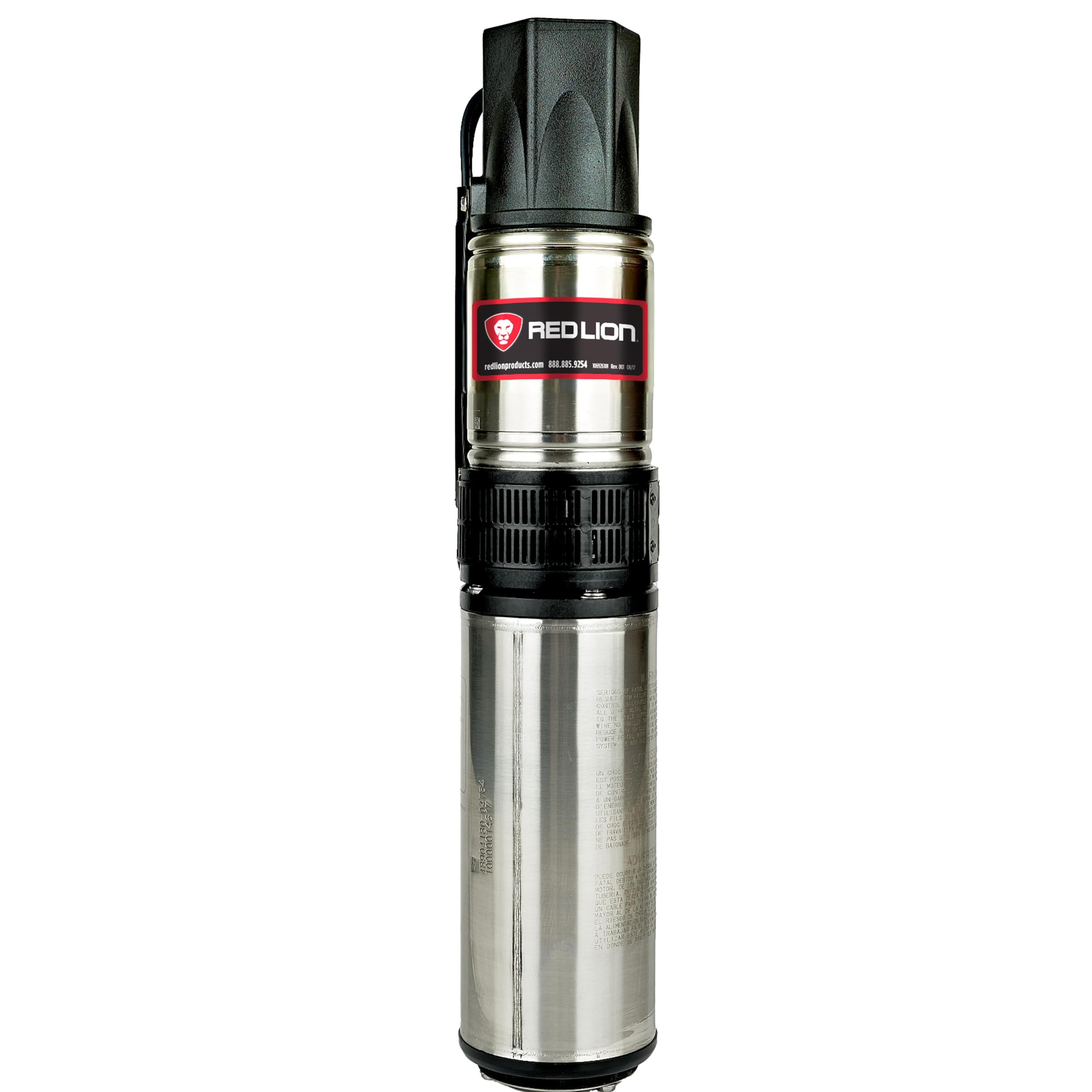
3. Red Lion RL12G05-2W2V Submersible Well Pump
Potable-water certified, 2-wire simple, and built to shut off clean at 212 feet.
If your well feeds drinking water for a house, this is the pick that checks the box most others skip. It is NSF/ANSI 372 certified for potable water, which is an independent standard for lead-free drinking-water components — a real differentiator when the water is going in a glass, not just on a lawn. It runs 12 GPM at 30 PSI from 40 feet down, with a 212-foot shut-off head, so it has the depth tolerance for deeper drilled wells.
Unlike the 115V options crowding this list, this one runs on 230V and draws just 6 running amps — meaning you get the same half-horsepower with half the current, which matters over long cable runs. The 2-wire (plus ground) design puts the starting switch inside the motor, so there is no external control box to mount, wire, or replace. It fits 4-inch or larger wells, comes with a 48-inch lead and a wire splice kit, and is CSA and UL listed in the USA and Canada.
Consider the brand positioning before you decide. Red Lion sits in the mid-tier value bracket, and a few buyers report units that quit early — a recurring gripe about longevity. That is the honest trade-off at this price. If you want the same water-pump category with a track record measured in decades rather than years, the Grundfos further down is the upgrade. For most potable-water residential installs, though, this balances certification, ease, and price better than anything else here.
Ideal for homeowners: homeowners feeding a drinking-water system who want certification and 2-wire simplicity.
Skip if on budget: anyone prioritizing a long, well-documented service life over value-tier pricing.
4. WASSERMANN 4″ Deep Well Submersible Pump 1/2HP 115V

The deepest-lifting 115V option here, with a sealed motor that will not cook itself.
When your well is genuinely deep and you still want household voltage, this is the one to beat on head. That combination means it reaches water other budget-tier 115V pumps cannot touch without dropping to a trickle. The discharge is 1.25-inch FNPT, standard for this class.
The motor is the standout. It is oil-immersed with 100% copper windings, hermetically sealed and thermally protected, so it shuts itself down before overheating rather than frying. It is a 2-wire pump (2-wire plus ground) with the control box built in — no external box to buy or wire. Owners who had one fail report the company sent a replacement without a fight. As one put it simply: “they care about you and your needs as a customer.”
Two things to sort before you order. The filtration mesh is stainless steel and will stop impurities, but on a brand-new drilled well with heavy granular sediment, add a layer of gauze in front of the inlet to protect the impellers. And note this is a constant-run pump in many setups, so it typically needs an inline pressure switch to cycle correctly — build that into your install plan. Add the gauze and pressure switch, and this 179 ft, 115V pump earns its place.
Durable 4-inch design
- 179 ft max head is the highest among the 115V picks here
- Hermetically sealed, thermally protected oil-immersed motor
- 2-wire design with built-in control box — no extra box to wire
- Responsive customer support, per owners
Pre-install checks required
- New drilled wells with granular sediment usually need added gauze at the inlet
- Often needs an inline pressure switch to cycle properly
- Wire colors may be reversed versus the label — double-check before wiring
Go-to for durability: a deep well on 115V where 167 ft of head is not quite enough.
Budget constraints: an inline pressure switch if your system does not already have one.
5. Goulds 10HS05422C 4″ Submersible Water Well Pump

A heritage brand name for owners who plan on leaving the pump in the ground.
This is where the conversation shifts from flow numbers to service life. It is a 4-inch submersible rated 1/2 HP, 10 GPM, 230V, and 2-wire, sitting in a stainless steel casing. If you have already replaced a pump twice in a decade, that heritage name is worth consideration.
Owners tend to be in it for the long haul, and their stories reflect that. One 41-year well owner had burned through four pumps, two of them defective, before settling on this American-brand pump for its silent operation and minimal plumbing vibration. Another had run the same brand name for 32 years. A 32-year service run is a track record no warranty sheet captures. The 230V, 2-wire setup also keeps the install clean, with no external control box required.
The honest caveat is the connection head. It is plastic, not stainless steel, and while it functions fine, it is the one part a few owners wish were metal — the argument being that anything living 100 feet underground should be as durable as possible. Plastic or not, the 32-year owner run is what earns this pump its place. If you value a name with decades of groundwater history over a higher flow rating, this is your pick.
Long-term reliability: owners who prioritize longevity over peak flow tend to keep buying this name — one replaced a pump that had served 32 years.
Premium cost: the connection head is plastic, and a few owners would have preferred stainless there for a part that lives so deep. It is a style-of-build note, not a performance flaw.
Choose for longevity: a home well where you want a proven, long-lived pump and 10 GPM is sufficient.
Skip if budget tight: you need the higher GPM of a 25 or 28 GPM pump for irrigation or heavy household demand.
6. Hallmark Industries MA0343X-4A Deep Well Submersible Pump
Same 25 GPM engine as the top pick — wired for 230V service instead.
If your well already has 230V service, this pump is the twin to the Best Overall. It matches the 1/2 HP, 25 GPM, and 150-foot max head of the top pick, and it uses the same stainless body. The difference is the voltage: this one runs on 230V/60Hz, which means it draws roughly half the current of the 115V version. That makes it the right call for a long cable run, where voltage drop would otherwise starve a 115V motor.
The build quality earns its keep. Functionality leads the way in owner experience, and the pump is designed for years of daily submersion. The included splice kit and manual mean you are wiring, not scavenging. It fits standard 4-inch wells and installs like any comparable submersible in this class. If your home already has 230V available at the well head, this removes the wiring downgrade that comes with the 115V twin.
One thing to weigh honestly. Durability feedback on this family of pumps is a touch split — a small number of owners mention the pump lasting around four years at full strength before weakening. That is a minority experience given how many are in service, but it is worth knowing. If you want the highest long-term odds, plan your install correctly: proper wire gauge, a clean check valve, and a well free of heavy grit go a long way.
Made for efficiency: wells that already run 230V service and want the same 25 GPM the top pick delivers.
Check stock first: a small share of customers note shorter-than-hoped lifespans, so correct wiring and clean water matter.
7. Red Lion RL12G05-2W1V Submersible Well Pump
The potable-water build above, reworked for standard household 115V wiring.
For a cabin or small rural system, this 115V sibling of the Red Lion further up gives you simpler wiring. It keeps the same 3.9-inch diameter stainless and thermoplastic build, the same 12 GPM rating, and the same potable-water certification. What changes is the voltage: 115V here means easier hookup, but it also means drawing roughly double the current of the 230V version — so it is best kept on shorter runs.
Where it shines is quiet, low-demand installs. It replaced a jet pump for one owner with a well about 50 feet deep, dropped to around 40 feet, and delivered “good solid pressure.” It also suits a lake-fed sprinkler setup with 10–12 feet of rise. There is no control box to mount, the switch is built into the pump, and a 48-inch lead and splice kit are in the box. All told, it is a capable choice when you do not need 25-plus GPM.
Two caveats to note. Value-for-money feedback is genuinely split — several owners feel the price is on the high side for the flow you get. And there is a hard rule with this design: it does not tolerate dry running. If it runs dry for even a second, the pump head can seize, so a working low-water cut-out switch is not optional. Wire a low-water cut-out and this NSF/ANSI 372 pump delivers potable water on 115V household wiring.
Great value
- NSF/ANSI 372 potable-water certification
- 2-wire, 115V — fits standard household service with no control box
- Quiet operation and dependable pressure for a cabin or shallow well
Component costs
- 12 GPM is modest — not built for heavy household or big irrigation demand
- Dry running can seize the pump head, so a low-water cut-out is essential
- Some owners find the price steep for the flow rate
Perfect for value seekers: you are on standard 115V service and want certified, quiet performance for a cabin or shallow well.
Pass if premium needed: you need high flow or you cannot guarantee the pump stays submerged.
8. Grundfos 10SQ05-160 115v 3″ Submersible Water Well Pump

The soft-start pump built to run on inverters, generators, and solar off the grid.
The Grundfos is what happens when power quality is the whole problem. Its defining feature is a soft-start motor, which ramps the motor up gently instead of slamming it on. That makes it generator- and inverter-friendly — it will run on a modified sine wave inverter without the usual starting surge that stalls smaller power sources. This is a 3-inch pump in stainless steel, 1/2 HP, 115V, 2-wire plus ground, rated 10 GPM.
It also protects itself in two ways most pumps here do not. Dry-run protection keeps the motor from destroying itself when the water level drops. And because the startup is soft, there is no torque-arresting coupling needed on the discharge — one fewer mechanical part to fail down the hole. Owners installing them for off-grid and solar-tank systems report noticeably lower electrical consumption than the above-ground injector pumps they replaced.
The honest limits are two, and both are on paper. First, this is a low-flow pick at 10 GPM — a couple of faucets open and it hits its limit, which is fine for one home but not for big irrigation. Second, it is the premium-priced pick of this lineup, so you are paying for the electronics and the name. If you are on a generator or a solar system and need the soft start, no other pump here does what this one does. If you just need cheap gallons on the grid, the money is better spent lower down this list.
Buy for quality: generator, inverter, or solar installs that need a soft-start, dry-run-protected motor.
Avoid if budget limited: raw GPM — this is a 10 GPM pump, not an irrigation monster.
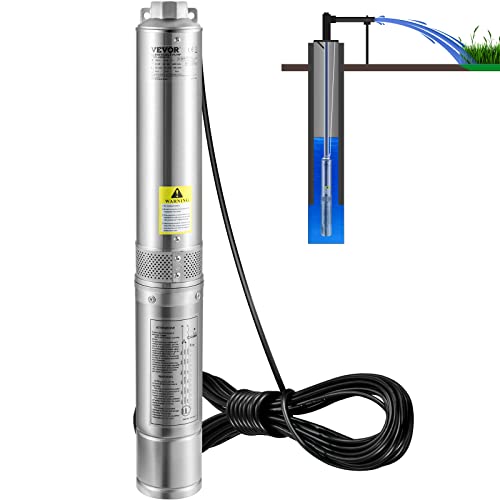
9. VEVOR Deep Well Submersible Pump 0.5HP 230V
The high-flow VEVOR platform, rewired for 230V service and long runs.
Take the 28 GPM flow and 167-foot head of the value VEVOR and step the voltage up to 230V, and you get the version for homes with deeper wells or longer cable runs. At 230V, the same half-horsepower motor draws less current, so voltage drop over a long underground run is far less of a problem. The 5-stage thermoplastic impellers, stainless steel frame, and IP68 sealing all carry over unchanged. It also ships with a 33-foot cord and a US plug, one of the few pumps here with a plug on the lead.
Pay close attention to the electrical setup with this VEVOR line. Reliability feedback is mixed — some units run great for years, others quit inside the first week or develop a check-valve problem. Much of that depends on installation and water quality. The pump has a built-in check valve to stop back-flow and a stainless filtration mesh to trap impurities, but VEVOR itself stresses that a second check valve is highly recommended and that new drilled wells with granular sediment should get a layer of gauze at the inlet.
The other fixed rule with this pump is that it cannot run dry. The manual flags idle running — running without water or at a low water level — as the one thing that will burn the motor. Add a low-water cut-out and a second check valve, and this 28 GPM, 230V pump matches pumps costing far more. Skip that setup and it is a gamble regardless of the brand.
Pick for 230V systems: you need 28 GPM on 230V service for a longer cable run or a slightly deeper well.
Skip if 115V needed: add the recommended second check valve and never run it dry, or the improved current draw buys you nothing.
10. 3″ Bore Stainless Steel Deep Well Pump 110V Multi-stage

Built for 3-inch boreholes when nothing else fits down the casing.
Not every well is a wide 4-inch hole. If yours is a tight 3-inch or larger bore, most standard submersible pumps physically will not go in. This one will. It is a 3-inch outer-diameter pump rated for well diameters of 3.5 inches and above, running on 110V/60Hz with a 33-foot cable. It delivers 16 GPM with 216 feet of max head, and it has 10 impellers stacked in a multistage design — meaning it keeps its pressure high across a long lift.
You get flexible installation with this pump. There is no special requirement on the well or the pipe: it works in steel pipe wells, ash pipe wells, or soil wells, and can use steel, hose, or plastic pipe as the water line if the pressure allows. It ships with a combined motor and pump and no control box to mount, and it can be mounted vertically. For a narrow municipal-style bore or an old casing, that physical fit is the whole reason to choose it.
Reliability is the trade-off to understand going in. A few reviewers point out units that failed inside a year or would not restart without a knock, and the controller on at least one unit was described as cheaply built. It is a smaller brand without the depth of owner history a Goulds or Grundfos carries. Check your well diameter carefully — it is a 3-inch pump, so a mismatch with a wider casing is easy to make. For a genuine 3-inch bore, though, options are scarce, and this one is dimensioned correctly.
Multi-stage efficiency: a true 3-inch body with 10 impellers and 216 feet of head — made for narrow wells other pumps cannot enter.
Sensitive to debris: the narrower brand following means fewer long-term owner reports, and the control electronics draw a few reliability complaints, so buy it for the fit, not the badge.
Right for efficiency: a 3-inch or larger borehole that a standard 4-inch pump cannot enter.
Careful with water quality: measuring your casing first — it is a 3-inch pump, so wider wells should look at the 4-inch models above.
11. ZYIY 2in Stainless Steel Rotary Screw Deep Well Pump

A 2-inch screw pump for the narrowest wells, sized for low flow at big depth.
This is a specialist, and it pays to understand that going in. It is a rotary screw pump — a different design from the centrifugal pumps everywhere else on this list — with a 2-inch body that fits wells where a standard 4-inch pump simply will not descend. It runs on 110–120V, has a 1/2-inch outlet, and uses a 66-foot cable. Max head is 164 feet, but here is the key number: max flow is just 4.4 GPM.
That low flow is a design choice, not a flaw. Screw pumps are built to move a modest amount of water from a very deep, very narrow hole and keep working. If you have a 2-inch or slightly wider bore and your priority is getting water up from deep in a tight casing rather than filling a big tank fast, this is one of the only shapes that fits. It is stainless steel throughout, oil-immersed, with a fine stainless filter inlet to keep grit out of the mechanism.
The critical thing to verify is the wiring and the diameter. On the electrical side, note that this pump uses a two-wire cord on the pump itself while the power lead carries a ground plug — so if you are running a 3-wire system, plan for the mismatch. On size, expect it to measure a shade over 2 inches, so confirm your casing clears it before lowering it in. Buy it specifically for a very narrow, deep well and low-flow duty, and it does its job.
Compact 2-inch size
- 2-inch stainless body fits the narrowest wells
- 164 ft max head handles serious depth
- Rotary screw design keeps working in a slim casing
- Fine stainless inlet filters grit
Niche application
- 4.4 GPM is a low flow — not for households wanting fast refill
- Two-wire pump cord with a grounded plug does not match a 3-wire system
- Actual diameter runs a bit over 2 inches — measure your casing first
Only for tight spaces: your well is too narrow for a 4-inch pump and you need water from real depth.
Not for standard wells: you want household flow rates — 4.4 GPM will feel slow at the tap.
Understanding the Specs
Flow Rate (GPM)
Flow rate is how many gallons per minute (GPM) the pump moves. It matters most when several taps are running at once — a shower, laundry, and a garden hose all at the same time. A 28 GPM pump handles that easily, while a 10 GPM pump suits a single home with normal use. Remember that rated flow drops as lift height rises, so a pump labeled 28 GPM delivers less once it is pushing water 150 feet up.
Max Head (Feet)
Max head is the tallest vertical column of water the pump can physically lift, measured in feet. It is the number that decides whether the pump reaches your tank at all. If your water level is 80 feet down and the tank sits 30 feet higher, you need head well above 110 feet to keep pressure decent. Always pick a pump whose max head comfortably exceeds your total lift, or it will run weak and wear out early.
Voltage and Wire Count
Voltage is the electrical pressure the pump runs on. A 115V pump needs only standard household service, while a 230V pump draws roughly half the current for the same horsepower, so it tolerates longer cable runs with less voltage drop. Wire count is separate: a 2-wire pump (plus ground) has its starting switch built into the motor and needs no external control box, which means fewer components to mount and fewer things to fail.
Discharge Size and Casing Fit
The discharge size is the diameter of the outlet where your drop pipe connects — commonly 1.25 inches on this class of pump. Match it to your plumbing before you order, because a mismatch means a trip to the hardware store. Casing fit is the other half: a 4-inch pump needs a 4-inch or larger well, while a 3-inch or 2-inch pump exists specifically for narrower boreholes. Measure your well diameter first.
FAQ
Will a 1/2 HP submersible well pump reach my water depth?
How do I know if I need a 115V or 230V pump?
Do I need an external control box for these pumps?
What does max head mean and why does it matter more than flow?
Can I install a submersible well pump myself?
What is the difference between a 2-wire and 3-wire well pump?
How deep a well can a 1/2 HP submersible pump handle?
What size well casing do I need for a 4-inch submersible pump?
How much water pressure will a 1/2 HP well pump deliver?
Is it worth buying a premium well pump over a budget one?
Can a submersible well pump run on solar or a generator?
Final Thoughts: The Verdict
For most homeowners, the 1/2 hp submersible well pump that balances proven reliability with real flow is the Hallmark Industries MA0343X-4, thanks to its 25 GPM output, 150 feet of head, and a body built for daily submersion. If you want deeper lift on a budget, grab the WASSERMANN 1/2HP with its 179-foot head. And if you are running off a generator or solar system, the soft-start Grundfos 10SQ05-160 is the one to reach for.
How We Picked
We do not accept paid placement. Every pick is matched to a real buyer and a real use-case; we do not hands-on test units.
Sources & Methodology
Specifications: manufacturer listings and product documentation. Review insights: verified customer reviews, as of September 2026. Pricing: not shown on this page (it changes often); check the current price via the retailer link.
As an Amazon Associate, KitchPrep earns from qualifying purchases. This does not affect which products we feature.
Related Guides
