
Specs are compiled from manufacturer listings and verified buyer reviews and can change over time — please confirm the key details on the product page before buying.
One outdoor box that both cools and heats your home or small commercial space is what a 2-ton package unit gives you. All three Goodman models below deliver 24,000 BTU of cooling (a BTU is a unit of cooling power) in one self-contained cabinet. The real decision is matching the unit to your climate, your ductwork, and if you want straight cooling or a heat pump that also warms the space in winter.
I’m Mohammad Maruf — the founder and writer behind KitchPrep. This guide is built by comparing the manufacturers’ published specifications and the patterns across verified customer reviews, so you get each pick’s real strengths and trade-offs instead of marketing spin.
Packaged systems are a big purchase, and installation matters as much as the model number. Below you’ll find the right 2-ton package unit for your home, your ductwork, and your climate zone.
Our Picks at a Glance
How To Choose The Best 2-Ton Package Unit
A packaged unit puts the cooling coil and the blower fan inside one outdoor cabinet, so you don’t need a separate indoor air handler. That single-box layout makes them a favorite for manufactured homes, small commercial buildings, and any property where indoor space is tight. The catch is that everything relies on proper ductwork and a licensed installer.
Match the tonnage to your actual square footage
Every unit on this list is rated at 2 tons, which equals 24,000 BTU of cooling power. That figure works best for a modest home, typically a smaller single-family house or a manufactured home. If your space runs larger than that, a 2-ton unit may struggle to keep up during peak summer heat. Sizing too small is a bigger headache than sizing slightly large, because an undersized unit runs constantly and never quite catches up.
Decide between straight cooling and a heat pump
A straight packaged air conditioner handles cooling only. A packaged heat pump adds a reversing valve so the same cabinet can also warm your home when temperatures drop, and that can replace a separate furnace in milder climates. If you need the strongest cold-weather heating, a dual-fuel gas package unit pairs a gas furnace with the cooling coil so you get both. Your climate zone and whether you already have gas service should drive this call.
Understand SEER2 and regional requirements
SEER2 is the updated efficiency score for cooling equipment, and higher numbers mean less electricity used per unit of cooling. The U.S. Department of Energy sets minimum SEER2 levels that vary by region, and the Southwest also has a separate EER2 requirement. A 13.4 SEER2 or 14 SEER2 unit may meet the standard in one state but not another, so always confirm the exact model meets the code where you’re installing it before you order.
Quick Comparison
| Model | Best For | Cooling Capacity | Efficiency Rating | Refrigerant | Amazon |
|---|---|---|---|---|---|
| Goodman GPCH32431★ Best Overall | Straight cooling in mild-to-moderate climates | 24,000 BTU | 13.4 SEER2 | R-32 | Amazon |
| Goodman GPH1424H41 | Year-round heating and cooling in one cabinet | 24,000 BTU | 14 SEER | R410-A | Amazon |
| Goodman GPG1424040M41 | Dual-fuel homes needing gas heat plus cooling | 24,000 BTU | 14 SEER / 81% AFUE | — | Amazon |
In‑Depth Reviews
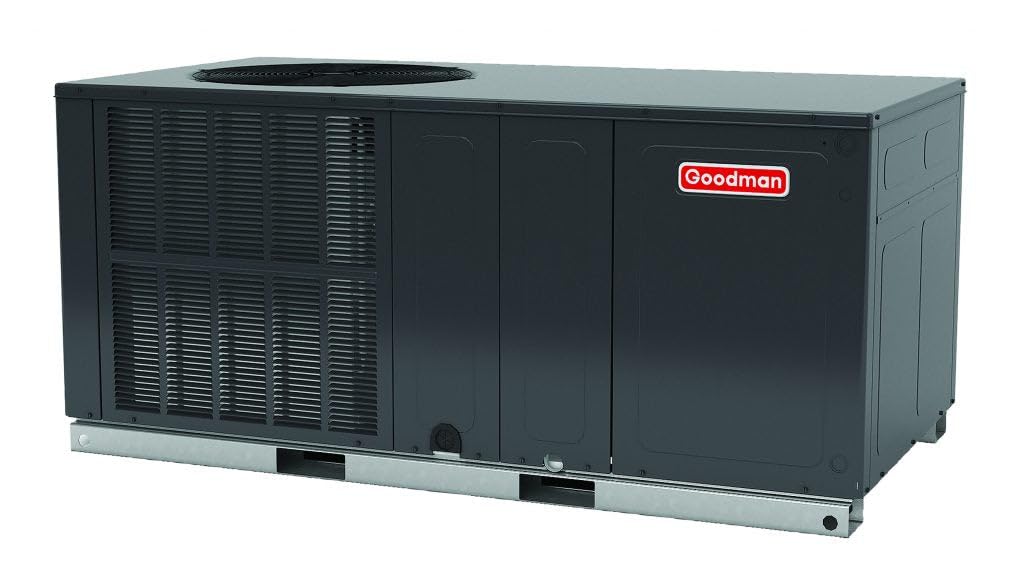
1. Goodman GPCH32431 2 Ton 13.4 SEER2 R-32 Packaged Air Conditioner – Individual Packaged Unit – Replaces GPCH32441
The no-frills straight-cooling cabinet that runs on the newer R-32 refrigerant
This is the pick for the buyer who just needs dependable cooling without paying for a heat pump or a gas furnace they’ll never use. It’s an individual packaged air conditioner cabinet rated at 2 tons — that’s 24,000 BTU of cooling power — with the indoor blower and cooling sections housed together in one outdoor box. Goodman builds it on the R-32 refrigerant platform, and R-32 is the newer standard with a lower Global Warming Potential than the older R-410A blend you’ll see on some competing cabinets. It’s also the direct replacement for the legacy GPCH32441 model, so if you’re swapping out an aging unit and want the current-generation part, the model number alone tells you it’s the updated version. One important limitation: thermostat, duct transitions, and optional electric heat are not included, so budget for those field accessories separately.
The efficiency story here is 13.4 SEER2. SEER2 is the current efficiency score for cooling gear, and 13.4 sits at the entry-level end of the range. Goodman lists this family as meeting 13.4 SEER2 in all U.S. regions, but the Southwest also has additional EER2 requirements, so you’ll want a pro to confirm the exact model clears code where you live before ordering. What that 13.4 figure means in practice is a slightly higher electric bill than the 14 SEER heat pump above, but it also keeps the upfront cost lower for a cooling-only install.
What wins people over is how straightforward the hookup is — owners describe it as easy to get running once it arrives. The recurring gripe is shipping, and it’s a real one. Multiple buyers report the unit arriving damaged from the shipper during a heat wave, and one of them put it bluntly: it “cools well” but they couldn’t wait another two weeks for a replacement mid-summer. The other honest caveat is sizing. The most-discussed complaint is a buyer who says their 902-square-foot home couldn’t be kept below 76 degrees in the summer — that’s a real signal to have a load calculation done rather than eyeball your square footage. Treat it firmly as a compact-home or light-commercial cabinet, not a whole-house solution for a big floor plan.
What It Does Right
- Runs on R-32, the newer lower-GWP refrigerant platform
- Direct replacement for the legacy GPCH32441 model number
- Straightforward two-wire hookup once on site
- Single outdoor cabinet frees up indoor space entirely
Where It Falls Short
- Thermostat, duct transitions, and electric heat sold separately
- Underpowered for a large floor plan without a load calculation
- Shipping damage during peak season is a documented issue
Reach for this if: you need straight cooling on the R-32 platform for a compact home and want the lowest entry point of the three.
Look elsewhere if: you want heating from the same cabinet in winter, or your space is large enough that a 24,000 BTU rating genuinely won’t cover it.
2. Goodman 2 Ton 14 Seer Package Heat Pump GPH1424H41

One cabinet that cools in July and warms the same rooms in January
This Goodman heat pump warms your home when the temperature drops, because it reverses direction — unlike the GPCH32431 above, which only cools. It’s a self-contained unit rated at 2 tons, meaning 24,000 BTU, with two-stage heating and cooling (two-stage means it can run at a lower level instead of only full blast). That lower level is the quiet advantage: when the load is light, the system runs gently instead of blasting on and shutting off, which smooths out temperature swings in a well-sealed home. It runs on R410-A refrigerant (an older refrigerant type) rather than the newer R-32 in the pick above, so if you’re specifically chasing the R-32 platform, this isn’t the one.
The efficiency number to know is 14 SEER, which edges past the 13.4 SEER2 of the straight-cooling unit. That gap is small on paper, but over a full cooling season in a hot climate it means slightly less electricity used for the same comfort. The internal relief valve on the compressor adds a layer of protection for the compressor itself, and the EEM (X-13) blower motor is designed to run the indoor air fan efficiently. It’s rated for both commercial and residential use, which gives it a little more license than a pure home-only unit, and it’s controlled via remote, with app control also listed.
What stands out in owner experience is the pre-sale support. Owners mention getting real-time answers to questions on weekend and evening hours, described as knowledgeable and friendly, with the unit arriving high quality and exactly as described. The honest trade-off is cosmetic: one reviewer noted the unit had some dings on arrival but said it was otherwise great. That’s a delivery-handling issue rather than a build flaw, but it’s worth inspecting the cabinet on arrival before the installer mounts it. Copper or aluminum core material and split-system install type mean a licensed tech should still handle the line connections.
Two-season flexibility: A heat pump removes the need for a separate furnace in milder climates, so one cabinet handles the whole year instead of two pieces of equipment.
The refrigerant note: If your installer or local code is pushing toward R-32, this unit runs the older R410-A blend — confirm compatibility before you commit.
The confident verdict: the right choice if you want one box to handle both seasons and value strong pre-purchase support from the seller.
One caveat to weigh: it ships as a packaged heat pump, so a heat load calculation and a licensed installer are still non-negotiable before it goes in.
3. Goodman 2 Ton 14 Seer 40,000 Btu 81% Afue Gas Package Air Conditioner GPG1424040M41

Cooling plus a gas furnace in one cabinet, for homes that already run on gas
This is the powerhouse of the three. It pairs a 2-ton, 24,000 BTU cooling section with a gas furnace rated at 40,000 BTU and 81% AFUE. AFUE is the annual fuel utilization efficiency score for gas heating, and 81% means the vast majority of the gas it burns goes into warming your home rather than up the flue. It carries the Energy Star certification and 14 SEER cooling efficiency, matching the heat pump above on the cooling side while adding real gas-fired heat. If you’re in a cold climate where a heat pump alone would struggle, this dual-fuel package is the one to beat. It includes a 10-year parts limited warranty provided it’s installed by a qualified installer and registered online within 60 days of installation, so proper registration matters.
Because it’s a gas appliance, there are a few accessories that don’t come in the box. Linesets, thermostats, and LP conversion kits are sold separately, and if the unit is being shipped to certain California climate districts, an environmental mitigation fee applies that varies by district. A residential and commercial rating means this cabinet can be spec’d into light commercial buildings as well as homes, and it uses a rotary scroll compressor with a listed air purification filter type. The compressor runs without an inverter, so it stages on and off rather than modulating speed — the standard setup for this class of equipment.
The pattern in owner reviews is genuinely enthusiastic. Buyers who were skeptical describe being surprised by how efficient the unit runs after install, with heating and cooling that’s so quiet you can’t hear it, and one simply says they’re happy with the purchase. Others report the system arrived, went in, and works very well. What keeps this honest is the install burden: anything with a gas furnace demands proper venting, gas-line hookup, and local permitting, and the 10-year warranty is void if a qualified installer doesn’t do the work and register it. So the value ladder is real — most cooling-only cabinets sit below this one in function, and this is the pick that replaces two pieces of gear.
Heating muscle: A 40,000 BTU gas furnace at 81% AFUE adds serious winter output that a straight heat pump can’t match in a deep cold snap.
Install caveat: Gas venting, linesets, LP kits, and thermostats are all on you, and the warranty depends on a qualified installer registering it within 60 days.
Pick this one when: your home already uses gas and you want one packaged cabinet to deliver both cooling and reliable gas heating without a separate furnace.
Think twice if: you’re in a mild-winter region where a heat pump’s dual function is enough, or you don’t want the extra permitting a gas appliance requires.
Understanding the Specs
Tonnage and BTU — Why 2 Tons Equals 24,000 BTU
A “ton” of cooling is an old unit that traces back to the heat a literal ton of ice could absorb in a day. In modern HVAC terms, 1 ton equals 12,000 BTU per hour, so a 2-ton package unit delivers 24,000 BTU of cooling power. That figure is what you should compare across models, because the “ton” shorthand is just math. A 2-ton cabinet suits modest homes and small commercial spaces, while larger floor plans need a higher tonnage or a second unit. Never size by square footage alone — demand a manual load calculation from your contractor.
SEER2, AFUE, and EER2 — The Efficiency Scores That Matter
SEER2 measures cooling efficiency across a full season; a higher number means less electricity used for the same cooling. AFUE measures gas-furnace efficiency as a percentage of fuel turned into heat, so 81% AFUE means 81% of the gas becomes usable heat. EER2 is a separate score required in the Southwest in addition to SEER2, and it reflects efficiency at peak, hottest conditions rather than across the season. Always confirm the exact model you’re buying meets the SEER2 and EER2 minimums for your specific region, because the same cabinet may pass in one state and fail in another.
FAQ
What does 2-ton package unit mean in real terms?
How many square feet does a 24,000 BTU package unit cool?
What is the difference between a package heat pump and a package air conditioner?
Can I install a 2-ton package unit myself?
What accessories do I need to buy separately with a packaged unit?
Is R-32 refrigerant better than R410-A?
Do I need to check SEER2 and EER2 rules for my state?
What is AFUE on the gas package model and why does it matter?
Can a 2-ton package unit handle both my home and a small shop?
How long does a packaged HVAC unit last before replacement?
Final Thoughts: The Verdict
For most buyers who just need dependable cooling in a single cabinet, the winner on this list is the Goodman GPCH32431. It delivers 24,000 BTU on the newer R-32 platform (a newer refrigerant type) and replaces the legacy GPCH32441 directly, which keeps the swap simple. If you want the same cabinet to warm your home in winter without a separate furnace, reach for the Goodman GPH1424H41 heat pump. And if your home runs on gas and you want serious winter heating from one box, the Goodman GPG1424040M41 is the dual-fuel pick that does the most work.
How We Picked
We do not accept paid placement. Every pick is matched to a real buyer and a real use-case; we do not hands-on test units.
Sources & Methodology
Specifications: manufacturer listings and product documentation. Review insights: verified customer reviews, as of September 2026. Pricing: not shown on this page (it changes often); check the current price via the retailer link.
As an Amazon Associate, KitchPrep earns from qualifying purchases. This does not affect which products we feature.
Related Guides
