
Specs are compiled from manufacturer listings and verified buyer reviews and can change over time — please confirm the key details on the product page before buying.
If you rent your place, work off a folding table, or just refuse to drill holes in a good bench top, a clamp-on vise is the answer. It grips the edge of whatever surface you already own, does the holding, and comes off when you need the space back. The trick is matching three specs to your work: clamp thickness to your bench edge, jaw opening to your thickest stock, and body material to how hard you clamp. One honest note before we start: this list uses flexible, human-like matching for clamp-on style mounting, so not every pick is the exact model number you typed in. The nearest same-type size that serves the same purpose is included so you can compare fairly.
I’m Mohammad Maruf — the founder and writer behind KitchPrep. This guide is built by comparing the manufacturers’ published specifications and the patterns across verified customer reviews, so you get each pick’s real strengths and trade-offs instead of marketing spin.
Below you will find nine clamp-on vises sorted by what they actually do well, from a dual-jaw workhorse to a pocket-sized third hand for jewelry and models. Every pick here clamps to a bench or table edge — no bolting required — so you can start working today with the best clamp-on bench vise for your bench.
Our Picks at a Glance
![GOEHNER's [Upgraded] Bench Vise 4-1/2' Jaw Width](https://m.media-amazon.com/images/I/91UyPAGYt6L.jpg)

How To Choose The Best Clamp-On Bench Vise
A clamp-on vise earns its keep or loses it on three numbers: how wide the jaws are, how far they open, and how thick a surface the clamp can bite.
Start With Jaw Width And Jaw Opening
Jaw width is the horizontal measurement of the gripping faces — the wider they are, the more of your workpiece they touch. Jaw opening is how far apart those faces travel, which sets the thickest object the vise can swallow. A 4.5-inch jaw with a 4.3-inch opening handles medium woodworking and DIY jobs comfortably. A 3-inch jaw with a 3-inch opening is built for small parts. Size the opening to your thickest regular workpiece, not your average one.
Measure Your Bench Edge Before You Buy
The clamp on a portable vise only grips surfaces up to a set thickness. A vise rated for 2 inches of clamp thickness will not hold a bench edge thicker than that, no matter how tight you crank it. Measure your bench lip with a ruler before ordering. If your bench top is unusually thick, look for a vise with a deeper clamp or a dual-mount design that also accepts bolts.
Decide How Much Movement You Need
A fixed vise holds one angle. A 270-degree swivel base lets you swing the workpiece around to a comfortable working position. A full 360-degree or articulating ball-joint design lets you tilt and rotate into angles a fixed vise simply cannot reach, which is why model makers, jewelers, and gunsmiths favor them. More movement usually means a lighter-duty build, so choose between flexibility and clamping strength.
Quick Comparison
| Model | Best For | Jaw Width | Jaw Opening | Weight | Amazon |
|---|---|---|---|---|---|
| GOEHNER’s 4-1/2″ Bench Vise★ Best Overall | All-round bench work | 4.5 in | 4.3 in | 13 lb | Amazon |
| WORKPRO Dual Jaws Table ViseMost Versatile | Two jaw types in one tool | 2.5 in & 1.5 in | — | 7.7 lb | Amazon |
| Stanley 83-069M MaxsteelBest for Fine Work | Repositioning at any angle | — | ~2.75 in | — | Amazon |
| Groz 6-Inch Woodworking Vise | Planing and chiseling wood | 6 in | — | 7 lb | Amazon |
| Toolsmith 2-1/2″ Third Hand Vise | Jewelry and hobby work | 1.5 in & 2.5 in | — | 7.5 lb | Amazon |
| Dazefree Articulating Vise | Odd-angle carving and finishing | — | — | — | Amazon |
| VEVOR 4.5 Inch Bench Vise | Metalworking and drilling | 4.5 in | ~3.35 in | 13.5 lb | Amazon |
| KojinTora Mini Vise | Soldering and model kits | — | 0-2.48 in | 0.5 lb | Amazon |
| CMOOD Universal Table Vise 3 Inch | Quick small jobs on a budget | 2.8 in | 3 in | 1.88 kg | Amazon |
In‑Depth Reviews
1. GOEHNER’s [Upgraded] Bench Vise 4-1/2″ Jaw Width
Our pick — 4.5★ from 450+ verified ratings; the strongest balance of quality and price.
The cast-iron all-rounder that swallows a 2×4 and still grips a bolt
For anyone who wants one vise to handle woodworking, pipe cutting, and general DIY without bolting anything down, this is the pick. The jaws are 4.5 inches wide and open 4.3 inches, which is wide enough for a standard 2×4 laid flat and deep enough for most bench work. The throat depth — the vertical gap between the jaw faces and the top of the clamp — is 2 inches, so you have room to get a hacksaw or chisel in without scraping your knuckles.
That 60,000 PSI tensile strength rating means the cast iron body is built to take serious clamping pressure without cracking, so you can lean on the handle when a bolt is seized. The dual-jaw design pairs flat jaws for boards with pipe jaws for round stock, and the 270-degree swivel base lets you swing the whole workpiece around to a comfortable angle. It clamps onto surfaces up to 2 inches thick, or you can bolt it down permanently with the four included fixing bolts.
The one honest caveat is the swivel lever, which the review pages flag as prone to working loose during use — a quick tighten gets you going again. There is also a small trade-off in jaw precision: the fit is good for the price rather than machinist-grade, so if you need sub-millimeter accuracy for precision assembly, a dedicated precision vise will serve you better. For everyday shop work, that gap disappears fast.
What earns the top spot
- 4.5-inch jaws open to 4.3 inches — big enough for a 2×4 without repositioning
- 60,000 PSI cast iron body handles high clamping pressure without flex
- Dual flat-and-pipe jaws cover both boards and round stock
- 270-degree swivel base lets you swing the workpiece to a better angle
Where it asks a little patience
- Swivel lever works loose over time and needs re-tightening
- Tolerances are decent for the price, not precision-grade
- At 13 lb it is a stay-put vise rather than a carry-around tool
Reach for this if: you want one dependable clamp-on vise that handles medium woodworking, pipe work, and general garage chores.
Look elsewhere if: you need the sub-millimeter jaw alignment of a precision instrument or you plan to carry the vise from job to job.
2. WORKPRO Dual Jaws Table Vise 2.5″ & 1.5″
Two jaw sets and a full swivel, in a package light enough to move around
There is a specific kind of buyer who loves this vise: the maker who switches tasks constantly and resents re-chucking. The WORKPRO’s 2.5-inch serrated jaws bite into pipe and metal rod, while the 1.5-inch smooth jaws hold wood and finished surfaces without marking. That pairing is what wins people over — it is effectively two vises on one articulating head. The 360-degree swivel base and rotating head let you present the workpiece at any angle you need.
The build backs that up. The body is ductile iron rated QT400, the carbon steel jaws are hardened to 52–58HRC, and the handle is galvanized for corrosion resistance. The clamping force figure is 660 lbs (300 kg), which is ample for small to medium jobs like knife handle work, jewelry making, and resin finishing. At 7.7 lbs it is portable enough to move between bench and garage, though it still clamps on a 2×4 without complaint.
Compared to the GOEHNER’s above, this one trades raw jaw width for two jaw types — the GOEHNER’s opens to 4.3 inches while the WORKPRO tops out at 2.5 inches on its serrated set. Pick accordingly. Also check your bench edge thickness before ordering: the fit and stability feedback is mixed, with some noting the throat attachment is smaller than expected.
The jaw-swap advantage: having one serrated set for grip and one smooth set for finish work means you stop fumbling with jaw pads mid-project.
The real trade-off: the throat attachment is shallow enough that thick bench edges may not clamp as deeply as you would like, so measure first.
Ideal for: the hobbyist who moves between grip-heavy and surface-sensitive tasks and wants one tool that does both.
Skip it for: thick bench tops or heavy hammering where a deeper clamp and a beefier body are non-negotiable.
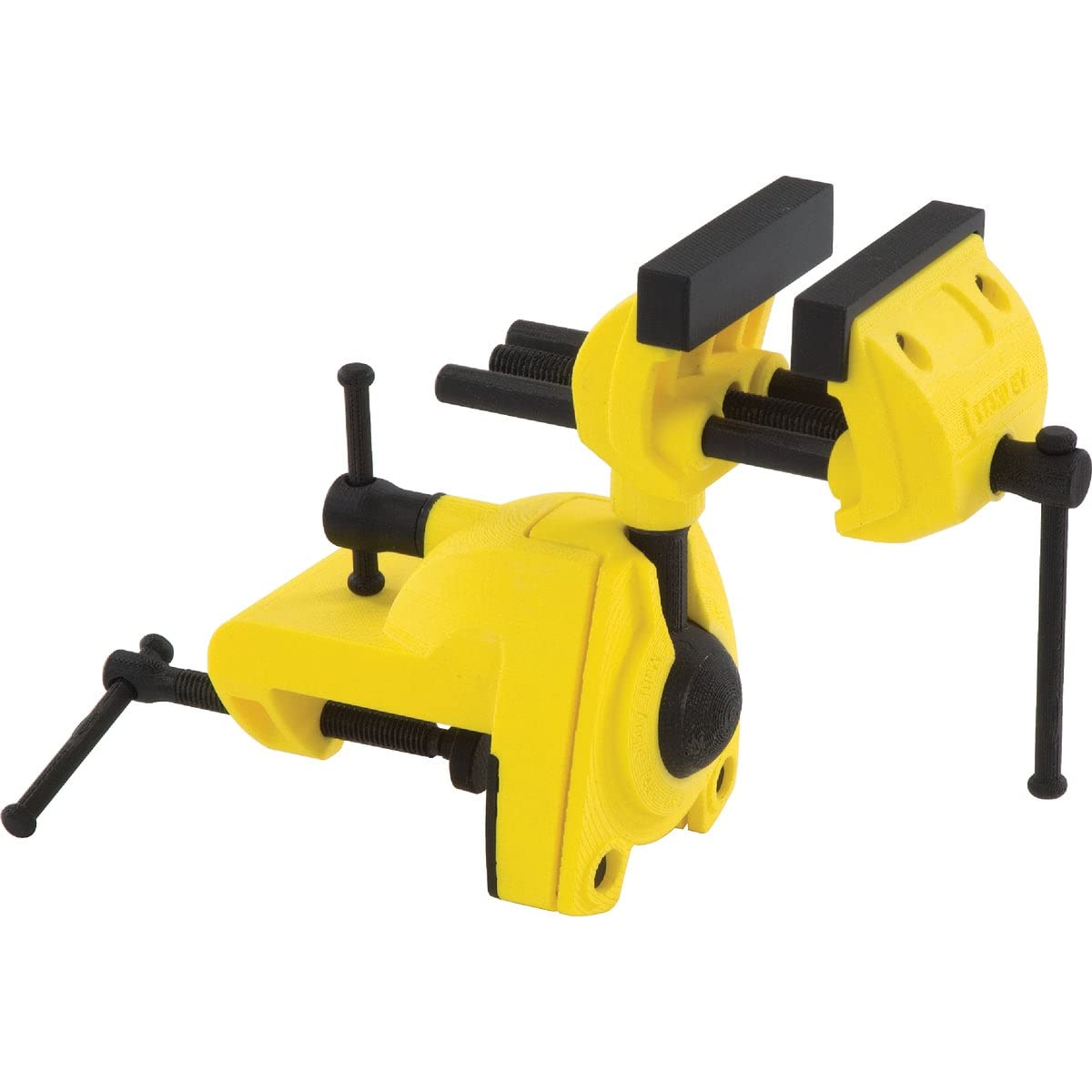
3. Stanley 83-069M Maxsteel Multi-Angle Base Vise
A swivel-ball head that locks wherever you point it
The angular adjustability is what makes this one click for a specific crowd. The swivel-ball design gives you infinite, lockable positioning — you point the jaws at a workable angle and they stay there. That is why it shows up on electronics benches, model-building tables, and light gunsmith work where you need the part presented to you rather than you contorting around the part.
Construction is cast iron with cast aluminum, with removable jaw pads included to protect finished surfaces from marring. It attaches to almost any work surface using its integral screw clamp, no drilling required. The jaws open to roughly 2.75 inches, which suits small to medium parts. Think of this as a light-duty tool with a smart mechanism, not a heavy metal-bashing vise.
Where it asks for realism: this is a light-duty unit. Over-torque it and you can break it, and one line of feedback mentions the screw mechanism loosening over time — worth a periodic check. It also arrives coated in a sticky packing oil that some buyers clean off before use. None of that undercuts what it does well: hold small, awkward-shaped parts firmly at any angle.
Positioning that just works: the swivel-ball head locks tight and stays put, so you can glue, solder, or carve without fighting the angle.
The honest limit: this is a light-duty vise, so treat it as a holder for delicate work rather than a base for hammering or heavy bending.
Best for: hobbyists, model builders, and electronics tinkerers who need to reposition a small part to a comfortable angle repeatedly.
Not for: anyone who needs to hammer, bend, or clamp with heavy force on a daily basis.
4. Groz 6-Inch Portable Woodworking Vise
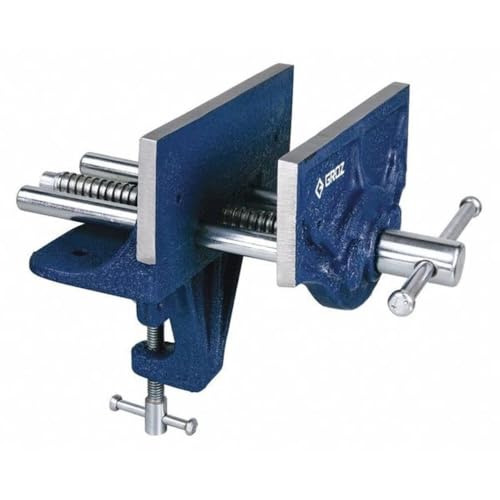
Six inches of toe-in jaw that clamps onto almost anything
Woodworkers judge a vise by two things: does the stock stay square while you work it, and does the grip hold through planing and chiseling. The Groz answers both. Its close-grained cast iron body damps vibration so your board stays square through planing, sawing, chiseling, and sanding without flex. The 6-inch jaw width gives you real surface area to bear down on.
The standout feature is the toe-in jaw profile — the jaws are machined to meet at the top first when closed, which distributes pressure evenly across the full depth of the workpiece for a slip-free hold. The main screw, twin guide rods, and tommy-bar handle are all chrome plated for corrosion resistance and smooth action. It clamps to your bench or bolts down permanently, so it suits both a portable setup and a fixed bench.
The honest trade-off is tightening effort: the clamping rod is sized somewhat small, so getting the jaws really cinched takes more turns than you might expect. The alignment and tightness feedback is mixed in places, with some reporting the jaws are not perfectly parallel — though the design is built around that toe-in geometry. Once set, it holds tight with no shifting.
Wood-first design: the toe-in jaws and vibration-damping cast iron body are tuned for planing and chiseling, not metalwork.
One thing to size honestly: the clamp rod makes final tightening a bit of a workout, especially on thick stock.
The pick for you if: your projects live in wood — planing, routing, chiseling — and you want a vise that clamps anywhere without drilling.
Look past it if: you mostly bend metal, hammer, or need the absolute fastest jaw tightening.
5. Toolsmith 2-1/2″ Portable Clamp-On Third Hand Vise
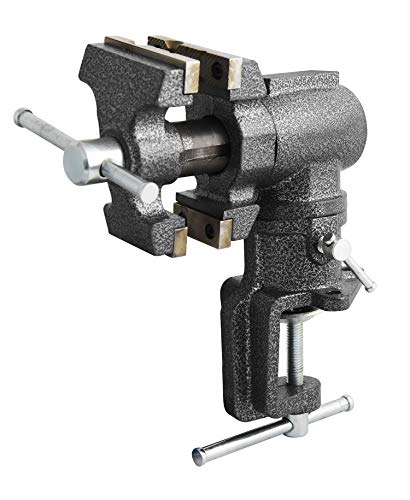
Twin jaws that flip into position so your hands stay free
This is the vise for people whose projects are small, fiddly, and need both hands. The 2-in-1 design packs 1.5-inch and 2.5-inch jaws into one unit, and the balanced jaws rotate 360 degrees on a horizontal axle. You set the part, flip it to a workable angle, and drive in with both hands — a genuine third hand for jewelry, models, and crafts. The nylon soft jaws protect delicate surfaces, and there is even a small anvil face on the base.
Mounting is simple: the clamp grips sturdy surfaces up to 1.5 inches thick, and bolts are included if you want it permanent. At 7.5 lbs it stays put once clamped but is not glued to one bench — the rotating head and base make it far more flexible than a fixed vise. The versatile holding pattern — round stock, odd-shaped parts, small assemblies — is the reason hobbyists keep coming back to this design.
Two real caveats to size up. First, the jaws arrive fairly sharp and rough on some units and have been measured as slightly misaligned (around 2 mm in one account), which some owners address with a light file pass. Second, the jaw faces can mar softer metals and tubing until you fit the soft pads. On the roughest review, the table clamp itself failed under hand tightening — a rare outcome, but worth knowing the clamp is the limiting part under heavy force.
What hobbyists love about it
- 360-degree rotating head flips between jaw types without tools
- Fits clamps to surfaces up to 1.5 inches thick, or bolts down with included hardware
- Nylon soft jaws included for delicate or finished parts
Where the design asks care
- Jaws arrive sharp and slightly misaligned on some units — a quick file pass fixes it
- The table clamp is the weakest link under heavy hand force
- At 7.5 lbs it is not the pack-along choice it looks like
A fit for: jewelers, modelers, and crafters who need a hands-free holder that angles the work toward them.
Better left on the shelf if: you plan to crank down with serious force, where a heavier cast-body vise is safer.
6. Dazefree 360° Swiveling Articulating Vise
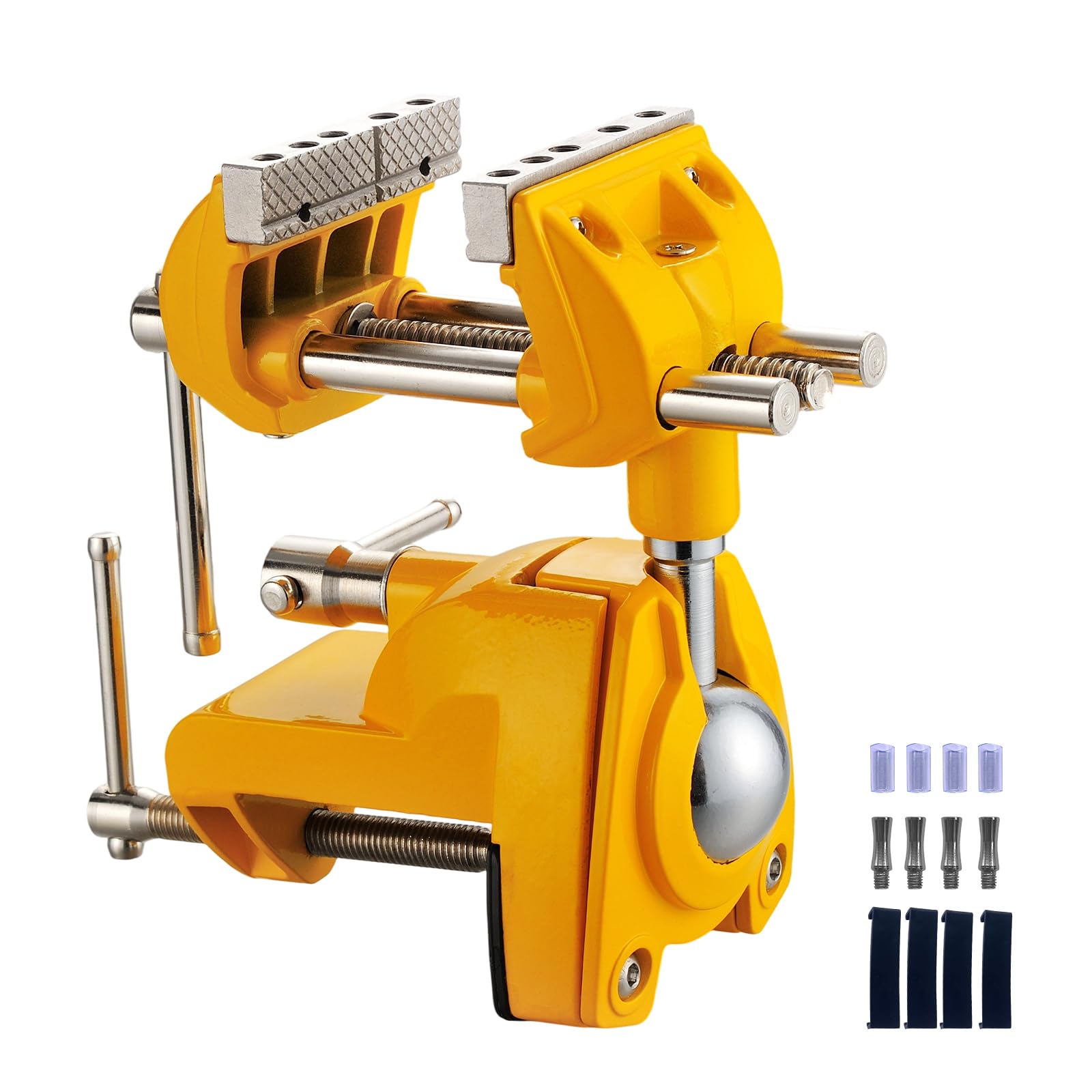
A ball-joint head that points the work wherever you need it
Model makers and carvers reach for this one because of the ball joint. The articulating head gives full 360-degree rotation and multi-angle adjustment, so you can sand, file, carve, or glue with the workpiece tilted toward you instead of wrenching your wrist around a fixed jaw. The ergonomic hand crank and Quick Cam Ball system make repositioning fast between steps.
The body is cast steel for solid clamping stability, and it clamps on without bolts, so it moves from bench to table in seconds. It handles small parts, pipe, jewelry, and tools without complaint — the functional, compact profile is exactly what a crowded workbench needs. Included rubber jaw covers protect finished surfaces.
Set expectations before ordering: the fit and finish is where it shows its lightweight nature, with some feedback describing the jaws as wobbly when open and the tolerances as looser than the design deserves. The pivot knob on the ball joint can also loosen under load, so re-tighten as you work. Use it as a holder for drilling, grinding, welding, or soldering — not as a base for hammering or heavy leverage.
The angle advantage: the ball-joint head lets you present small parts at almost any orientation, which is the whole point of an articulating vise.
The catch: jaw wobble and loosening pivot knobs mean you re-check tightness between steps rather than set and forget.
Great for: carvers, modelers, and hobbyists who need to reach awkward angles on small parts.
skip it if: you need tight tolerances and a rock-solid base for heavy drilling or hammering.
7. VEVOR 4.5 Inch Portable Bench Vise
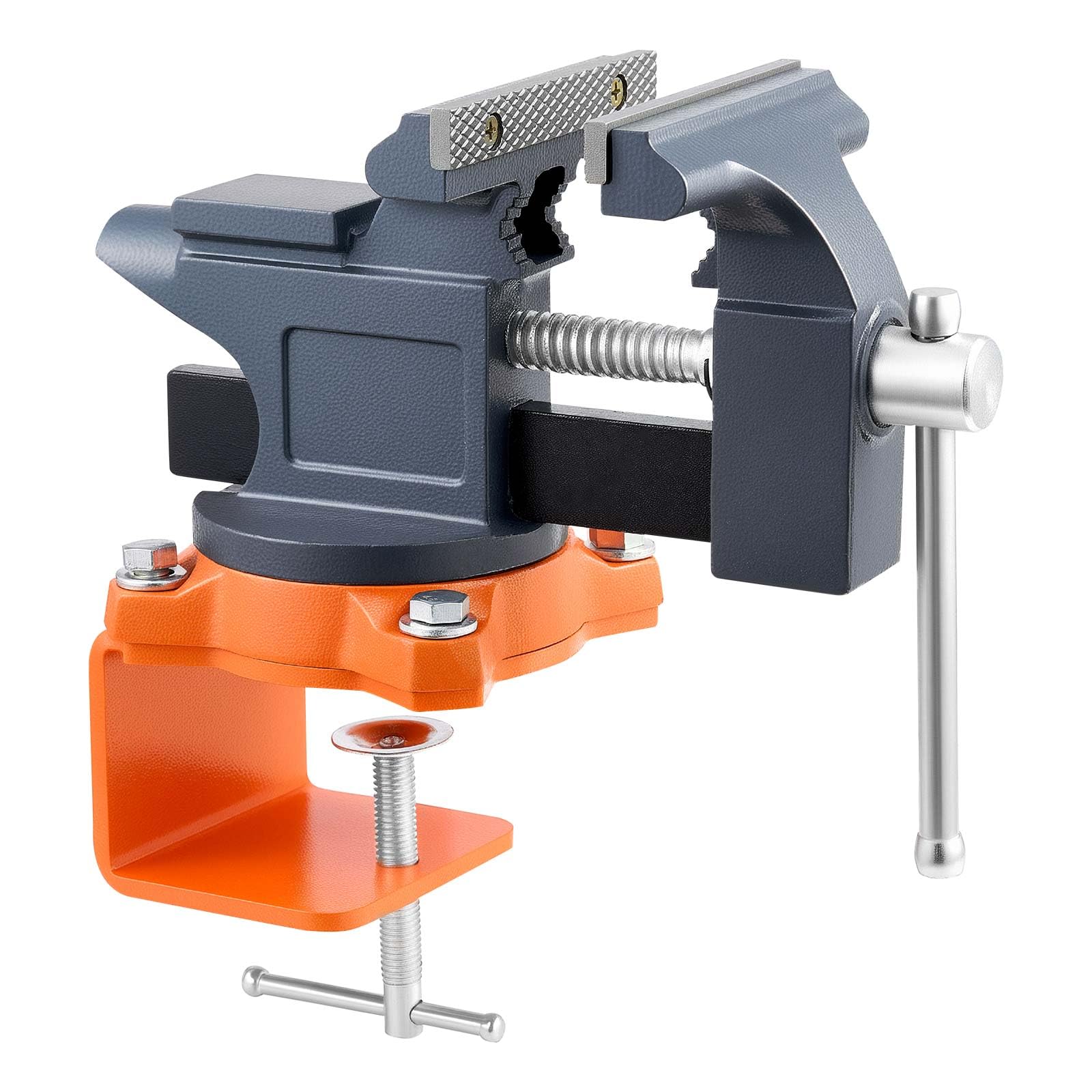
Ductile iron muscle in a bench-clamp body built to take a beating
If your work leans toward metal — threading rod, removing rusted bolts, holding tube while you cut — this VEVOR is a natural fit. The body is ductile iron, which is the tougher, impact-resistant cousin of standard cast iron, so it takes high-strength use without cracking. The 4.5-inch jaw width handles a broad range of shapes, and the textured anti-slip jaws grip tightly so your workpiece does not scoot under pressure.
The 270-degree rotating base lets you swing the jaws to the angle you need, and it is positioned as friendly to left-handed users too. A labor-saving handle adjusts the jaws for different sizes and shapes, and everything needed to mount it securely is in the box. It clamps without drilling or bolts down if you prefer a permanent home.
What to weigh before buying: at 13.5 lbs this is on the heavier end of portable, so it is a bench-lip vise rather than a toss-in-the-truck tool. The jaw opening measures around 3.35 inches and it clamps surfaces up to 2 inches thick, so if you routinely hold thick stock you may want the wider-opening GOEHNER’s above. Also note the swivel knob can work loose and needs occasional re-tightening.
Built for grip: ductile iron construction plus anti-slip textured jaws is exactly what metalwork demands.
One number to check first: the 3.35-inch opening suits most jobs but is tighter than a 4.3-inch-jaw vise for thick stock.
The tool for you if: you cut, drill, or thread metal and want a clamp-on vise that shrugs off impact.
Pass on it if: you need to hold very thick stock, where a wider jaw opening wins.
8. KojinTora Mini Vise Table Top Clamp
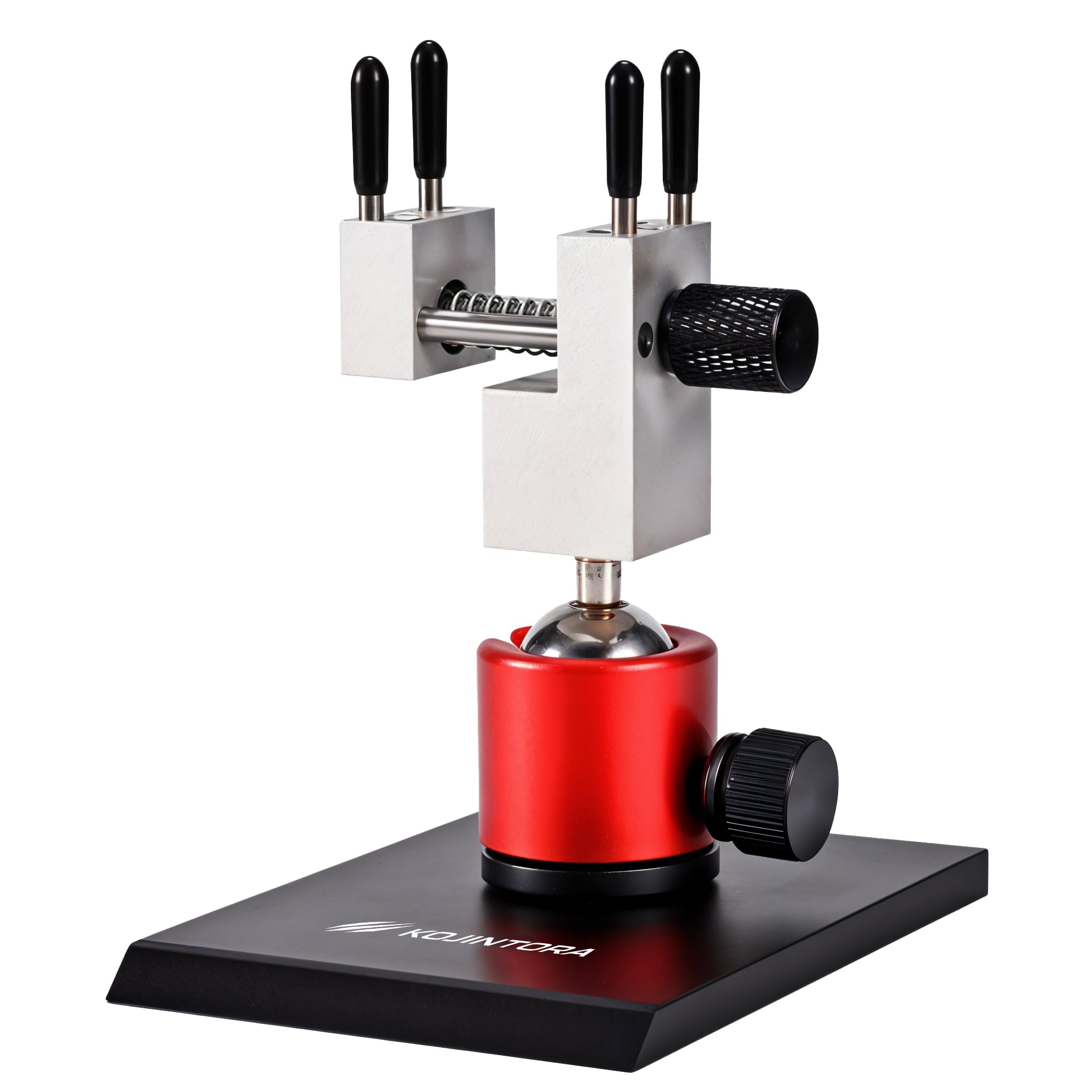
A half-pound third hand that tilts to any angle on your desk
Soldering a circuit board or assembling a model kit with nothing but two hands and gravity gets old fast. This mini vise solves that at an almost comical scale — it weighs 0.5 lbs and measures just 2.28 inches in vise length, yet it has a rotatable spherical aluminum alloy base that spins 360 degrees and tilts up to 90 degrees. You park a tiny part in it and attack it from any direction.
The grip system is clever: four adjustable steel rods with silicone sleeves clamp down on a ten-hole base to hold small, delicate, or irregular pieces without scratching them. The jaws are heat-treated and polished for a smooth grip on tiny model parts, and the detachable jaw clamp lets you switch from tabletop to handheld use in one motion.
Know the limits going in. The clamping range tops out at 2.48 inches, and one recurring gripe is that the silicone peg covers slide off too easily — a bit of glue or a spare set solves it. There are also no rubber feet, so it can slide on a smooth bench. This is a soldering and model-building tool, not a vise for wood screws or hammering.
Where it shines: soldering and fine model work — the rotating head holds tiny parts hands-free so you can work with both hands.
The small-print reality: silicone covers slip off and it lacks rubber feet, so it needs a grippy surface and a little TLC.
Ideal for: electronics hobbyists and scale-model builders who need a compact, tiltable holder for tiny parts.
Not built for: any job with force behind it — wood screws, hammering, or heavy metal stock.
9. CMOOD Universal Table Vise 3 Inch

A budget clamp-on that earns its keep on small jobs
For light work and a modest spend, this 3-inch vise covers the basics well. The jaw width is 2.8 inches with a maximum opening of 3 inches, which is plenty for holding wooden strips, small metal parts, or even irregular shapes like walnuts. The cast steel body with a chrome-plated spindle and nut resists corrosion, and the quenched-and-re-fired jaws add hardness where it counts.
The 360-degree swivel base lets you angle the work to suit the task — woodworking, cutting conduit, drilling, gluing, sanding, sawing. A round base and swivel lever let it grip a table quickly, and a rubber blanket is included for clamping fragile items like glass and protecting your tabletop from marks. It is portable enough to strip off and store when the bench needs clearing.
Set expectations honestly. The stability and sturdiness feedback is mixed, with some noting it is not the strongest under heavy clamping and that the rubber clamp covers slip off. The 360-degree swivel also does not always lock positively in place. It is a light-duty helper for small tasks, not a heavy-work vise, and priced accordingly.
Solid small-job value: 2.8-inch jaws and a 3-inch opening handle stripping, sanding, and gluing without fuss.
The fit-note: if you plan to lean on it hard, step up to a heavier cast-body vise — this one is built for small work.
Right for: beginners and light tinkerers who want a cheap clamp-on vise for occasional small jobs.
Step up if: you need serious clamping force and a swivel that locks firmly.
Understanding the Specs
Jaw Width and Jaw Opening
Jaw width is the measurement of the gripping faces across the top. It decides how much of your workpiece meets steel, so wider jaws spread pressure and hold heavy stock better. Jaw opening is how far the faces travel apart — the thickest object the vise can grip. A 4.5-inch jaw with a 4.3-inch opening suits medium work; a 2.5-inch jaw suits small parts. Match the opening to your regular workpiece thickness.
Clamp Thickness and Mounting
The clamp thickness rating is the thickest surface the vise can bite. A vise rated for 2 inches will grip a bench edge up to 2 inches deep and no more. Dual-mount vises clamp on or bolt down, letting you choose portable or permanent. Always measure your bench lip before ordering — an undersized clamp means a wobbly vise no matter how hard you crank the handle.
Swivel and Articulating Bases
A fixed vise holds one angle. A 270-degree swivel base lets you swing the jaws around for a comfortable working position. A full 360-degree or ball-joint articulating design adds free tilt and rotation, which is how model makers and jewelers reach awkward angles.
Build Material and Durability
Cast iron is rigid and holds up under heavy clamping. Ductile iron is a tougher, impact-resistant variation that resists cracking. Cast aluminum is lighter but meant for light duty. Hardened jaws resist wear and grip better over time. Match the body to the job: cast aluminum for delicate work, cast or ductile iron with hardened jaws for metalwork and heavy DIY.
FAQ
Will a clamp-on vise fit my workbench?
Do I have to drill holes to mount a clamp-on vise?
What is the difference between a fixed vise and a swivel or articulating vise?
How much clamping force do I actually need?
Which jaw width should I pick for my projects?
Can I use a clamp-on vise for hammering or heavy bending?
Is a clamp-on vise stable enough for real work?
What is the jaw opening and why does it matter?
Can I move a clamp-on vise between benches or take it to jobsites?
Final Thoughts: The Verdict
For most buyers, the best clamp-on bench vise is the GOEHNER’s 4-1/2″ Bench Vise because its 4.5-inch jaws and 4.3-inch opening cover medium woodworking, pipe work, and DIY without bolting down — and its 60,000 PSI cast-iron body takes real clamping pressure. If you switch between gripping pipe and finishing delicate surfaces, grab the WORKPRO Dual Jaws Table Vise with its serrated and smooth jaws. And for planing and chiseling wood on a bench you cannot drill, the Groz 6-Inch Woodworking Vise is the one to reach for, thanks to its toe-in jaws that grip the full depth of the board.
How We Picked
We do not accept paid placement. Every pick is matched to a real buyer and a real use-case; we do not hands-on test units.
Sources & Methodology
Specifications: manufacturer listings and product documentation. Review insights: verified customer reviews, as of September 2026. Pricing: not shown on this page (it changes often); check the current price via the retailer link.
As an Amazon Associate, KitchPrep earns from qualifying purchases. This does not affect which products we feature.
Related Guides
