
Specs are compiled from manufacturer listings and verified buyer reviews and can change over time — please confirm the key details on the product page before buying.
If your basement floods, the pump that saves you is the one already sitting in the pit and switching itself on at 2 a.m. A 1/2 HP sump pump is the middle of the road in this category — strong enough to move serious water and still common enough that plumbing aisles stock them everywhere. The catch is that a horsepower number on a box tells you almost nothing. Two pumps can both say “1/2 HP” and still differ wildly in gallons per hour, how much debris they pass, whether their float survives a season, and how loud they are under your bedroom floor. That is what this guide sorts out.
I’m Mohammad Maruf — the founder and writer behind KitchPrep. This guide is built by comparing the manufacturers’ published specifications and the patterns across verified customer reviews, so you get each pick’s real strengths and trade-offs instead of marketing spin.
You will see flow rates, switch types, housing materials, and cord lengths side by side, plus the honest warts that show up after a full winter of cycling. By the end you will know which of these eleven is worth putting in your pit. Every pick below earns its place in this list of the best 1/2 hp sump pump options for a flooded basement.
Our Picks at a Glance

How To Choose The Best 1/2 HP Sump Pump
The single biggest mistake buyers make in this category is shopping by horsepower alone. Every pump on this list is a genuine 1/2 HP unit, so the motor rating is the one thing they all share. The differences that actually decide whether your basement stays dry live somewhere else entirely: how much water the pump moves once it has to push that water up and out, what kind of switch turns it on, and what the housing is made of.
Flow rate means nothing until you add the lift
Manufacturers quote gallons per hour at zero feet of lift — meaning the pump is moving water sideways with nothing to fight against. Real installations never work that way. Your pump sits at the bottom of a pit and has to push water up a discharge pipe and out through a wall, and every foot of that vertical climb costs you flow. A pump rated at 4,400 GPH at zero feet may only manage 3,540 GPH once it is lifting ten feet, which is why the specs that matter most to you are the ones measured at a real height.
Pick your float switch before anything else
The float switch is the part that fails first on most sump pumps, and it comes in two main shapes. A vertical float rides up and down a stem mounted on the pump or the discharge pipe — it takes up very little floor space, so it fits narrow pits and tight lids. A tethered float swings on a cord and needs a wider pit to swing freely. The other decision is whether the switch is built into the pump or piggybacked onto the power cord. A piggyback switch unplugs from the pump for testing or replacement, which means a failed switch does not mean a dead pump.
Cast iron, thermoplastic, or both
Cast iron housings resist flexing and dissipate motor heat, and many models here use a cast iron body with a thermoplastic volute — the lower housing around the impeller. Thermoplastic is lighter and will not rust, but it can crack if something heavy lands on it during installation. If your pit sits under living space, weight also matters: a 20-pound cast iron pump is noticeably heavier to lower into a pit than a 9.2-pound thermoplastic one.
Match the discharge and the pit
Most 1/2 HP pumps use a 1-1/2 inch NPT discharge, and some accept 1-1/4 inch as well. If your existing pipe is already 1-1/2 inch, a direct swap takes minutes. Check your basin diameter too — several vertical-switch pumps here run in basins as narrow as 11 inches across, while a tethered float needs more room than that. And confirm your cord reaches the nearest outlet, since cord lengths on this list range from 9 feet to 19 feet.
Quick Comparison
| Model | Best For | Max Flow (GPH) | Switch Type | Housing | Amazon |
|---|---|---|---|---|---|
| Red Lion RL-SC50T★ Best Overall | Deep, high-volume pits | 4300 | Piggyback tethered | Cast iron | Amazon |
| Liberty Pumps 287Premium Pick | Near-silent basement duty | — | VMF vertical magnetic | Cast iron | Amazon |
| Zoeller M98 Flow-MateLong-Haul Champion | Long-haul reliability | 4320 | Snap action float | Cast iron | Amazon |
| WAYNE SPF50 | Indoor-only, quick swaps | 4300 | Vertical float | Coated steel + thermoplastic | Amazon |
| ECO-FLO EFSA50 | Heavy solids and vortex flow | 5100 | Vertical switch | Cast iron | Amazon |
| Westinghouse WH50TP | Tight pits and small basins | 4100 | Vertical float | Aluminum | Amazon |
| The Basement Watchdog SIT-50D | Narrow pits with lids | 4400 | Caged dual float | Cast iron | Amazon |
| Superior Pump 92570 | Budget tethered-float build | 3300 | Tethered float | Thermoplastic | Amazon |
| Superior Pump 92572 | Small wells and tight sums | 3300 | Vertical float | Thermoplastic | Amazon |
| Acquaer PCP025-BLS | Temporary drainage and transfers | 2450 | Built-in electronic sensor | Thermoplastic | Amazon |
In‑Depth Reviews
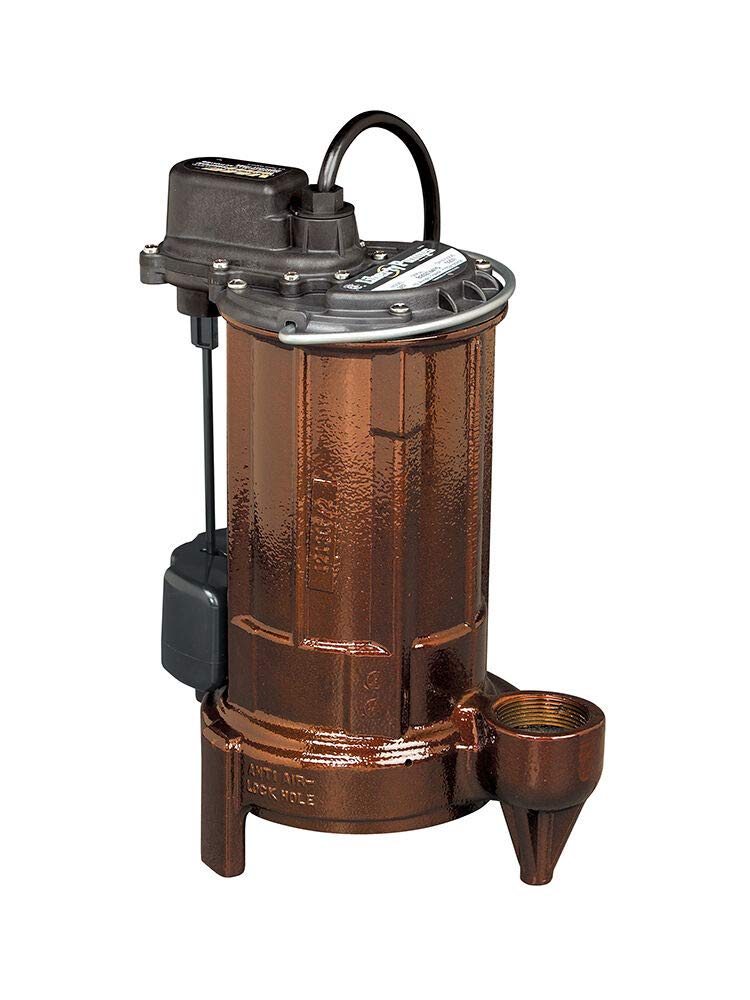
1. Red Lion RL-SC50T, 115V, 1/2 HP, Automatic Sump/Light Effluent Pump
Our pick — over 4.5★ from 250+ verified ratings; the strongest balance of quality and price.
The cast iron heavyweight that empties a deep pit fast and does it quietly.
If your pit is deep and your water volume is high, the Red Lion RL-SC50T is the one to beat. It moves 4300 gallons per hour and pushes water up to a 28-foot shutoff — that is the point at which the pump can no longer lift any higher, so it tells you how much vertical pipe run you have to work with. Compare that flow rate to the Acquaer at 2450 GPH and the gap is enormous: the Red Lion moves nearly three quarters more water per hour, which is the whole reason it tops this list. The rugged cast iron housing, volute, and clog-resistant impeller handle semi-solids up to 3/8 inch, so grit and small debris ride through instead of jamming the works.
What wins people over here is sheer build quality — it is a 20-pound cast iron pump, and the owners who have leaned on it longest are the ones who swear by it. One owner reported it draining 80,000+ gallons from a flooded basement in under two days. That switch is the smart part: it is a piggyback tethered design that unplugs from the pump, so testing or replacing it never means pulling the pump. A separate 10-ft cord keeps the install flexible.
The honest catch is the footprint. A tethered float swings on a cord, so it needs a basin at least 18 inches across — squeeze it into a narrow pit and the float catches on the walls. It is also the heaviest pump here at 20 pounds, roughly double the weight of the 9.2-pound Superior Pump 92572, so it is a two-hand job to lower into place. If your pit is roomy and you want the strongest all-rounder, this is it.
What earns it the top spot
- 4300 GPH flow with a 28-ft shutoff for deep pits and long discharge runs
- Cast iron body and clog-resistant impeller pass semi-solids up to 3/8 inch
- Piggyback tethered switch unplugs for easy testing and replacement
- Quiet enough that owners sleeping directly above the pit rarely hear it
- 1-1/2 inch FNPT discharge with a 10-ft power cord
Where it asks something of you
- Tethered float needs a basin 18 inches or wider to swing freely
- At 20 pounds it is the heaviest pump in this lineup to lower in
- Rocks can jam the float if the pit is not kept clear
Best for deep pits: High-volume basements with a wide basin that flood hard and need fast, quiet removal.
Think twice if: Your sump pit is a narrow 11-inch liner — the tethered float wants more room than that.
2. Liberty Pumps 287 1/2-Horse Power 1-1/2-Inch Discharge 280-Series Automatic Submersible Sump Pump with VMF Switch
The whisper-quiet tank of a pump that keeps running long after cheaper ones quit.
The Liberty 287 is what you buy when a noisy pump under the floorboards has already ruined your sleep. It lifts water to a 37-foot shutoff — more than any other pump here — and its magnetic reed float switch (a sealed switch with no moving seal to wear out) sits small enough to squeeze into packed pits alongside a backup pump. The housing is a single one-piece cast iron UniBody, which means fewer seams to leak, and the internals run on permanently lubricated upper and lower bearings rather than bushings.
What wins people over is the quiet. Owners describe hearing only moving water, not motor whine, and several switched brands specifically to escape the racket. The stainless steel motor shaft and stainless hardware resist the corrosion that eats cheaper castings. The magnetic float switch design is the standout — because there is no seal to fail, it sidesteps the single most common failure point on sump pumps. It cycles on at around 9 inches of water and off at around 4, so it runs longer and less often, which is easier on the motor.
Two things to know before you buy. First, this is a top-tier pump with the price to match, and it does not include a discharge fitting — you supply your own 1-1/2 inch PVC male connector. Second, the higher switch-on level means more water sits in the pit before it fires, so you may need to clean the sump annually and may not be able to use a riser platform. For a packed, fussy pit that needs a quiet, reliable pump that fits, this is the premium answer.
A pump that lasts: With a 37-ft shutoff, sealed magnetic switch, stainless shaft, and cast iron body, every part here is chosen for longevity — buyers report flawless running a decade in.
The fitting you add: The 1-1/2 inch discharge fitting and any check valve are bought separately, so factor that into your install day.
Reach for this if: Your pit is shallow, crowded, or shared with a backup pump, and you want near-silent operation and a decade of service.
Look elsewhere if: Your basin is very wide and you want the simplest, cheapest install — this pump wants a properly provisioned pit.
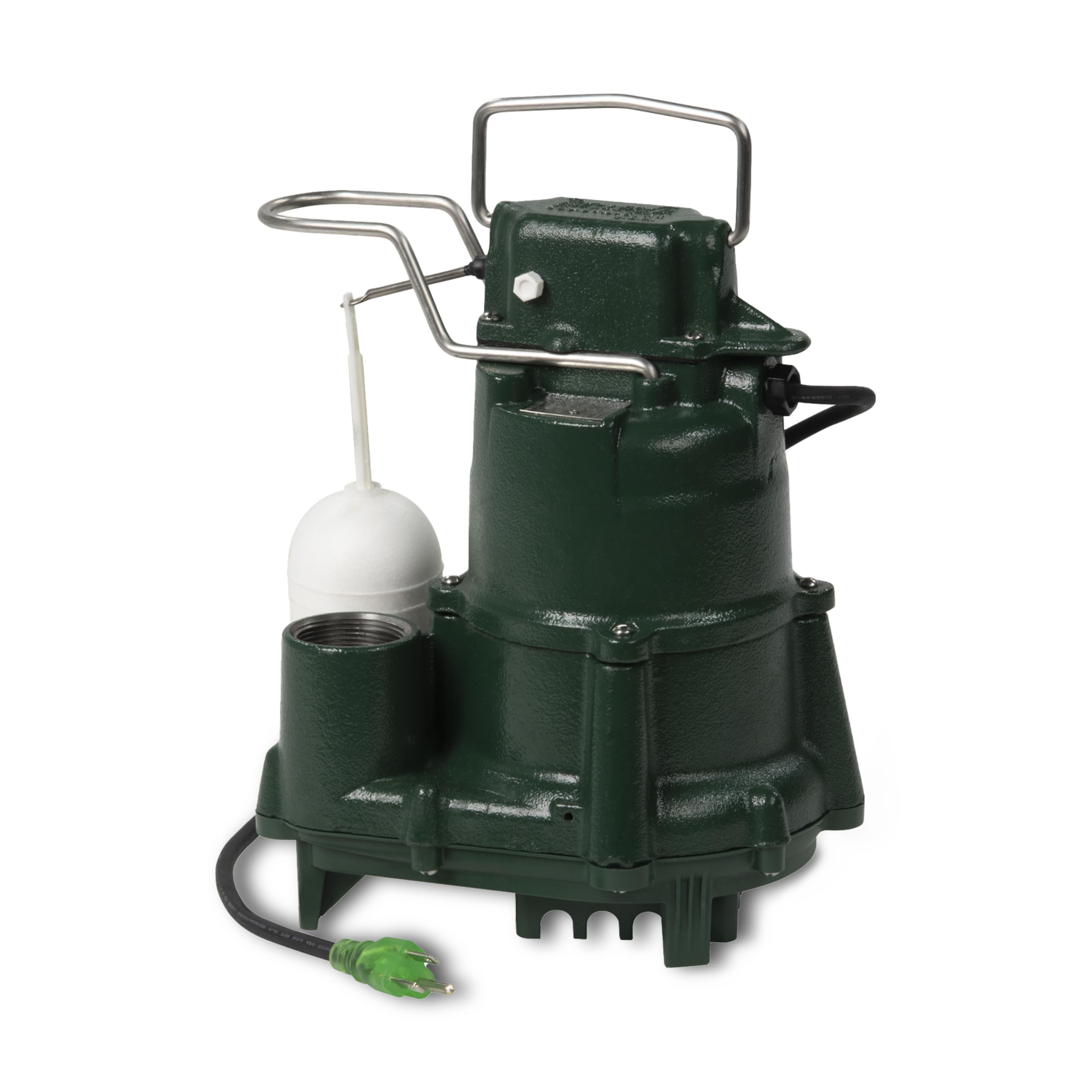
3. Zoeller M98 Flow-Mate Sump Pump – 1/2 HP – Cast Iron – LED Power Plug
Cast iron muscle with an LED plug that tells you at a glance it has power.
Zoeller has a reputation in sump pits for one thing above all: pumps that run for decades. The M98 Flow-Mate backs that up with a 4320 GPH flow rate — the highest on this list — a cast iron housing, and an oil-filled motor that pulls heat away from the windings so it runs cooler and lasts longer. The vortex impeller (a funnel-shaped design that lets solids spin through) passes debris without clogging, and the stainless steel hardware, float guard, and switch arm fight off rust in the damp air of a sump pit.
The neat extra is the LED power plug: a glowing indicator on the cord end that shows the pump has live power, so you know at a glance whether it is ready before the storm hits. The built-in snap action float switch runs automatically with no fiddling. Owners routinely describe these pumps running for a decade or more: one M98-C was replaced after 12 years with its motor still good, and another of the same model lasted about 30 years. Heavy-duty construction is the theme that comes through loudest, along with the confidence that it will simply keep working.
Two fair notes. This is a premium-price pump, and at 23 feet of lift it gives up some headroom compared with the Red Lion’s 28-foot shutoff, so plan your discharge run accordingly. It is also built for dependability over raw speed, so it may run a bit longer to clear the same pit than a higher-flow unit. If you want the pump that everyone buys to forget about for the next decade, this is that pump.
Why owners keep buying it
- 4320 GPH flow rate, the top figure here
- Oil-filled motor and cast iron housing resist heat and rust
- LED power plug shows live power at a glance
- Vortex impeller passes solids instead of clogging
- Stainless float guard and hardware stand up to damp pits
What to plan around
- 23-foot maximum lift is lower than some rivals on long discharge runs
- Premium positioning means you pay for the badge and the build
The set-and-forget pick: Buyers who want a decade-plus of automatic protection and do not mind paying for iron and reputation.
skip it if: Your discharge line climbs higher than 23 feet of total lift and you need every foot of headroom.
4. WAYNE 1/2 HP Sump Pump Coated Steel Thermoplastic SPF50

A light 14-pound pump that drops into a tight pit and clears it fast.
If you are fishing a dead pump out of a cramped historical-home pit and you want a quick, no-drama swap, the Wayne SPF50 is built for exactly that. It moves 4300 GPH at zero feet, dropping to 3360 GPH once it lifts water ten feet, and its vertical float switch fits spaces where a swinging tethered float would not. The innovated top suction design pulls water down through the top to dodge the air lock that plagues side-intake pumps, and it does that without the traditional weep hole to maintain. At 14 pounds it is lighter than the 20-pound Red Lion, and it disappears into a small pit without knocking the walls.
A coated steel and thermoplastic body resists corrosion, and the 1-1/2 inch NPT discharge drops straight into standard household plumbing. Owners repeatedly describe the change-out as quick and simple, with one noting it connected directly to existing plumbing with no issues. It handles heavy Tennessee rain reliably and stays quiet enough indoors that you mostly hear water moving, not the motor. For a straightforward basement swap with an existing pipe, it is hard to argue with.
Two honest limits. Wayne states clearly this pump is for indoor use only, so it is not the one for an outdoor pit or a fountain. And this is a value-priced pump — a few owners have had units fail early on covered bolt corrosion, so it suits a regular sump duty cycle rather than a punishing constant-run job. For a standard basement pit that cycles now and then, that trade-off is fair.
What buyers notice: The install is the standout — owners walk away pleased with how fast the swap goes and how well it matches existing plumbing.
Keep it indoors: This pump is rated for indoor use only, so leave outdoor pits and ponds to a different pick.
Best fit: Standard indoor basement sump duty where you want a fast plug-and-play swap into existing 1-1/2 inch pipe.
Consider skipping if: You need an outdoor-capable pump or you push a pump hard with constant cycling.
5. ECO-FLO Products EFSA50 1/2 hp 5100 GPH Cast Iron Sump Pump with Vertical Switch

Heavy cast iron with the highest gallon count here and a vortex impeller that shrugs off solids.
When the water is coming in fast and you need it gone yesterday, the ECO-FLO EFSA50 posts the biggest raw number on this page: 5100 gallons per hour. The vertical switch runs in narrow basins just 11 inches across, and the heavy-duty cast iron body with a thermoplastic volute brings real mass to the job.
The motor carries built-in thermal overload protection, so if it ever runs hot it shuts itself down before damage sets in. Owners mention it pushing water very quickly, staying quiet under normal use, and holding up; the float in particular draws compliments for not waterlogging or sticking the way cheaper switches do. This is a pump that feels solid in the hand and clears a full pit in seconds of run time.
Here is the honest trade-off that a fast, powerful pump brings: reliability feedback is genuinely mixed. Most owners are happy, but the pump has a documented habit of occasionally arriving dead on arrival or needing an early repair, and one owner received a unit that seized after half a second. If you buy it, test it in a bucket of water before the flood season starts, not during. Treated as a fast workhorse with a small risk of a dud, it delivers serious flow for the money.
The case for it
- 5100 GPH, the highest flow rate in this lineup
- Vortex impeller passes 1/2 inch solids without clogging
- Cast iron construction with a thermoplastic volute
- Vertical switch fits basins only 11 inches in diameter
- Thermal overload protection guards the motor
Watch-outs
- Reliability feedback is mixed — test it in a bucket before you rely on it
- A few units arrive dead on arrival and need replacing
Go for this when: You want maximum gallons per hour and 1/2 inch solids handling from a cast iron pump that fits a narrow pit.
Play it safer if: You want zero risk — this one earns its spot on flow, not on a perfect reliability record.
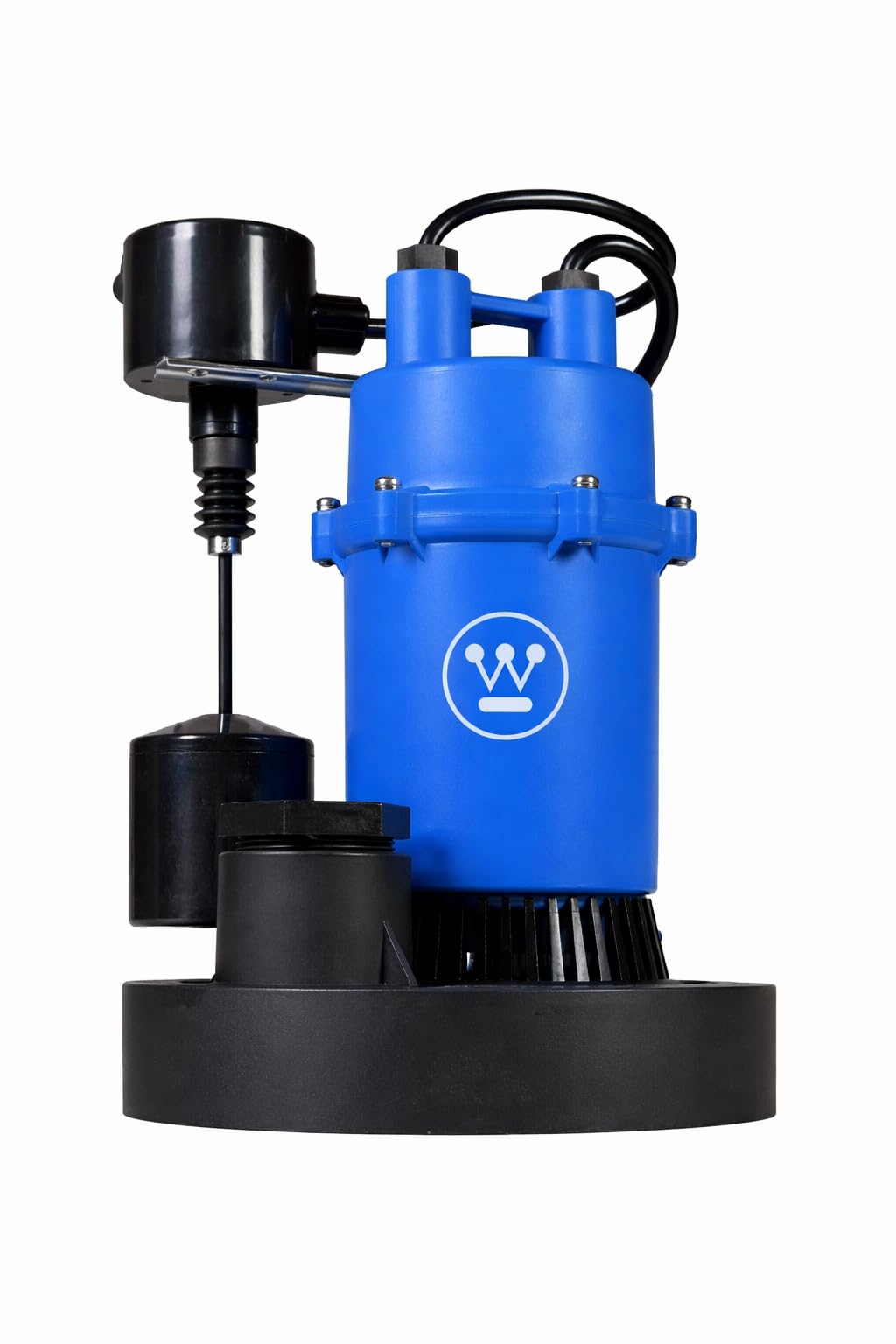
6. Westinghouse Sump Pump 1/2 HP 69 GPM Submersible Water Pump with 10ft Long Power Cord
A small-footprint pump with a serious 28-foot lift and a flexible connector range.
The Westinghouse WH50TP is the versatile little one: 1/2 HP pushing 4100 GPH and lifting water up to 28 feet vertically, matching the Red Lion’s shutoff. what separates it is how it hooks up — it accepts either a 1-1/4 inch or 1-1/2 inch discharge, so it bends to your existing pipe instead of demanding you replumb. The integrated vertical float switch starts automatically as water rises, and because the whole pump is compact, owners have used it inside a 5-gallon bucket as a makeshift sump pit. Its anti-airlock top-suction system filters debris and cuts clogging so flow stays steady.
The epoxy-coated aluminum housing sheds heat, and the oil-filled PSC motor with thermal overload protection is built to last through repeated cycles. Owners describe it as starting earlier than other models they have owned, running quietly, and installing without fuss, and they rate it well on value. For a homeowner who wants a flexible, genuinely automatic pump that works with whatever is already installed, it is a strong middle choice.
The caveat is the housing material. Aluminum is lighter and resists rust, but the plastic top housing has been reported as brittle — one owner cracked it with a bump during install, though the pump kept functioning fine. Handle it gently going in and it serves you well. For small basins, narrow pits, and handy drain setups, this is the flexible pick.
Flexible connections: Takes 1-1/4 inch or 1-1/2 inch discharge and lifts to 28 feet, so it plays nicely with existing plumbing and shorter basins.
Easy does it: The aluminum body keeps the weight down, but the top housing prefers a careful install — a bump can crack it.
Pick it for: Small or awkward basins, existing pipe you do not want to change, and buyers who value a compact, versatile pump.
Point your attention elsewhere if: You want a full cast iron tank you can knock around without a care.
7. The Basement Watchdog Cast-Iron ½ HP Submersible Sump Pump w/Copper-Wound PSC Motor (SIT-50D)

A caged dual-float design that fits tight pits where nothing else wants to go.
The Basement Watchdog SIT-50D solves a specific problem: cramped pits. Its discharge is mounted on top rather than the side, and the whole housing is a trim 6.25 inches across, so it slips into narrow sump liners that make other pumps bind up. Flow-wise it moves 73 GPM — about 4400 GPH at zero feet and 3540 GPH once it lifts ten feet — enough to empty a pit in a hurry. And instead of one float, it uses two micro reed floats (sealed magnetic switches) tucked inside a protective cage, so if one fails the other still trigges the pump, and the cage keeps debris and stray wires from fouling the mechanism.
The copper-wound PSC motor is built for long, efficient service, and dual carbon-ceramic and Buna-N shaft seals keep water out of the motor housing to guard against the corrosion that kills lesser pumps. Owners switching from a discontinued model call it a perfect drop-in, and praise the discharge-pipe-mounted adjustable float for dialing in the switch point on an odd-shaped pit. The company’s customer service also draws repeated praise — customers note fast, real-person support and free replacement parts when something goes wrong.
One genuine gripe to know: the top-mounted discharge, while space-saving, makes the plumbing connection tighter to reach than a side discharge, and at least a few owners found the check valve hard to install afterward. Budget a little extra time for the pipe work. For a narrow, awkward pit that demands a tiny, redundant pump, it is the standout.
Built for tight spaces
- 4400 GPH at zero feet, 3540 GPH at ten feet of lift
- Caged dual floats add redundancy and keep debris out
- Compact top-discharge body fits narrow sump liners
- Copper-wound PSC motor with dual carbon-ceramic and Buna-N seals
- Adjustable float height for odd-shaped pits
The install trade-off
- Top-mounted discharge is trickier to plumb and can complicate check-valve access
- Float switch and discharge get mixed feedback on ease of install
The narrow-pit answer: Anyone stuck with a cramped liner who needs a compact cast iron pump with redundant switching.
Less compelling if: You have a wide, easy-access pit and value the simplest plumbing possible.
8. Superior Pump 92570 1/2 HP Thermoplastic Submersible Sump Pump with Tethered Float Switch

A lightweight thermoplastic build with a tethered float and room to swing.
The Superior Pump 92570 is the plastic-bodied sibling of the 92541, trading cast iron for a tough thermoplastic housing that will not rust. It moves up to 3300 gallons per hour and lifts water up to 25 vertical feet, and its tethered float switch means you get the swinging-cord design — like the Red Lion’s — in a lighter, budget-friendly package. At 8.8 pounds it is the lightest pump here, so lowering it into and out of the pit is a one-hand job. The 1-1/2 inch NPT discharge handles high-capacity pumping, and the pump ships fully factory tested.
Owners often pick this because they want to move away from rusting cast iron. One switched from a pump line that was wearing out and found this one quieter, easier to install, and it pipes straight up with 1-1/2 inch PVC into a concrete well. When they compare it to the cheaper plastic alternatives, the higher flow rate stands out: this pump cycles less often because it empties the basket on each run rather than dribbling.
The honest split here is on the switch. This pump’s stock float is a tethered type, and some owners have swapped it for an aftermarket switch to get a shorter, more predictable run. And the tethered float, like any swinging cord, needs a wider pit — squeeze it into a tight liner and it will not cycle cleanly. If your basin has room and you want a light, rust-free pump you can move yourself, this is a sensible budget choice.
Why it makes sense
- 3300 GPH with a 25-foot lift
- 8.8-pound thermoplastic body will not rust and is easy to handle
- Tethered float switch on a lightweight build
- 1-1/2 inch NPT discharge for high-capacity plumbing
Room to swing
- Tethered float needs a wider basin to work cleanly
- Stock float is occasionally swapped out for a quicker-triggering option
Choose it for: A wide pit, a rust-free plastic body, and the easiest pump weight to handle on the list.
Not the one for: Tight liners that need a vertical float’s smaller footprint.
9. Superior Pump 92572 1/2 HP Thermoplastic Submersible Sump Pump with Vertical Float Switch

The light, narrow-pit pump that fires fast and cycles for years on small wells.
If your sump is a tight liner and you want a vertical float that fits, the Superior Pump 92572 is the value-first answer. It pumps up to 3300 gallons per hour and lifts water up to 25 vertical feet, and its tough thermoplastic body keeps the weight to 9.2 pounds — less than half the 20-pound Red Lion and the Basement Watchdog. The vertical float switch takes up very little floor space, so it drops into basins that would pinch a swinging tethered float, and the 1-1/2 inch NPT discharge pushes high-capacity flow.
Owners prize it for reliability in a small well. Reviewers point out this 1/2 HP pump running five years, including three separate eight-hour stretches during sewer-backup floods. for raw water capacity, the numbers speak: owners describe it emptying a 5-gallon bucket almost instantly. A separate replaceable switch means a worn float does not condemn the whole pump, and its flow beats what comparable plastic pumps manage in the same basket.
The compromises match the price. The float switch gets mixed feedback and its stem is on the short side — the pump cycles a bit more often than some owners would like, and one resorted to a DIY extension. And the plastic housing on a couple of units wore through over a long season of pond use. Treat it as a dependable, light-duty cycler for a small, clean pit and it pays its way. This is your budget entry, not your flood-warrior.
Light and agile: At 9.2 pounds with a compact vertical float, it is the easiest pump here to fit into a small well.
Know the limits: The float engages fairly often on a short stem, and the plastic housing is not meant for a punishing constant-run pond job.
Grab it for: A small, clean sump well where you want a light, narrow vertical-float pump at an entry-level outlay.
Look up the range if: You need to survive repeated multi-hour flood events or want a cast iron body.
10. Acquaer 1/2 HP Automatic Sump Pump, 2450 GPH Submersible Water Pump

A long-cord transfer pump that drains down to three-quarters of an inch and runs itself.
The Acquaer is the odd one out here, and that is its whole appeal: it is meant for moving water, not just guarding a pit. It moves up to 2450 gallons per hour — 40.8 gallons per minute — and lifts water up to 25 feet, with a bottom-suction design that drains down to just 3/4 inch of water left. Its 19-foot power cord is the longest on this page, nearly double the Red Lion’s 10-foot cord, so you can run it off an outlet across the room without an extension cord. It ships with three adapters: a 1-1/2 inch NPT elbow, a multi-hose adapter for 1 inch NPT and 1.2 inch hose, and a 3/4 inch garden-hose check valve adapter.
Instead of a float, it uses a built-in electronic sensor: it switches on at about 2 inches of water, then keeps running for 10 more seconds after the level drops to drain the last of it. Owners use it for a front-entrance fountain that runs around the clock, and some run two of them to keep a flooded Florida lanai dry through hurricane season. They also highlight the company’s responsiveness, with buyers reporting that Acquaer backed the pump with a full refund even after the return window closed.
The honest catch is the sensor and the flow rate. This is the lowest-gallon pump here at 2450 GPH, so it is a transfer and light-flood pump rather than a heavy-duty pit workhorse. And because the on/off is governed by electronics rather than a mechanical float, a few units have misbehaved: some shoppers say the pump running far longer than the advertised sequence, and one found it eventually stopped entirely after that. Buy it for fountains, pool covers, tubs, and flooded crawl spaces where its long cord and drain-down suction shine — and test it before you depend on it during a storm.
Where it earns its keep
- 19-foot power cord reaches outlets other pumps cannot
- Bottom suction drains water down to 3/4 inch
- Three adapters cover 1-1/2 inch NPT, 1 inch NPT, 1.2 inch hose, and garden hose
- Lifts water up to 25 feet for pool covers and fountains
- Thermal overload protector resets the motor automatically
The sensor trade-off
- 2450 GPH is the lowest flow rate in this lineup
- Electronic sensor feedback is mixed — some units ran long or stopped working
Made for moving water: Fountains, pool covers, garden watering, and flooded crawl spaces where a long cord and low drain-down matter.
Wrong tool for: A high-volume basement pit that needs maximum gallons per hour and bulletproof mechanical switching.
Understanding the Specs
Gallons Per Hour (GPH) and the Zero-Foot Trap
A pump’s headline flow rating is measured at zero feet of lift — water moving sideways with no climb. That number is useful for comparing pumps against each other, but it is not what you will see at home. Once the pump has to push water up and out, flow drops, which is why some makers publish a second figure at a real height (the Basement Watchdog, for example, drops from 4400 GPH to 3540 GPH once it is lifting ten feet). When you compare two pumps, make sure you are reading their numbers at the same height. A pump with a big zero-foot number but a shallow shutoff can end up delivering less usable water than one with a smaller number and a taller lift.
Float Switch Types and Why They Fail First
The switch is the moving part, so it takes the wear. A vertical float rides a short stem and takes up minimal floor space — good for narrow liners — but the shorter the stem, the more often it cycles. A tethered float swings on a cord, needs a wider basin, and can tangle if the pit is cluttered. Sealed magnetic-switch designs sidestep the usual seal failure. A piggyback or detachable switch is the practical winner for maintenance: it unplugs from the power cord so you can test, clean, or replace it without pulling the whole pump out of the pit. Whatever design you choose, a quick test in a bucket before flood season separates a good unit from a dud.
Housing Material, Heat, and Rust
Cast iron housings pull heat away from the motor and hold their shape under load, and they bring real mass — several pumps here weigh around 20 pounds. Thermoplastic bodies will not rust and cut weight, which makes them easier to handle, but they flex and can crack if mishandled. Many designs split the difference with a cast iron body and a thermoplastic volute — the lower housing around the impeller. What you pick depends on your pit: a damp, long-service install favors iron; a temporary or transfer job favors the lighter plastic.
Cord Length, Discharge Size, and Thermal Protection
Cord length decides where you can plug in without an extension cord, and the range here runs from 9 feet up to 19 feet. Discharge size decides whether the pump drops into your existing pipe: 1-1/2 inch NPT is the common standard, and a few pumps also accept 1-1/4 inch. Thermal overload protection is an internal safety cutoff that stops the motor if it runs too hot, then lets it restart once it cools — a feature worth confirming on any pump headed for a pit that cycles under a heavy load.
FAQ
Does a 1/2 HP sump pump use a lot of electricity?
Will a 1/2 HP pump fit in my existing sump pit?
What discharge pipe size do I need for a 1/2 HP sump pump?
How long does a 1/2 HP sump pump last?
Do I need a check valve with a 1/2 HP sump pump?
Is a vertical or tethered float switch better?
What water level does a 1/2 HP sump pump turn on at?
Can a 1/2 HP pump handle solids and debris?
Can I use a 1/2 HP sump pump outdoors or in a fountain?
Does the switch have to be replaced separately from the pump?
Final Thoughts: The Verdict
Across the board, the best 1/2 hp sump pump winner is the Red Lion RL-SC50T because it pairs the strongest flow rate at 4300 GPH with a 28-foot shutoff, a clog-resistant cast iron build that passes 3/8 inch solids, and the quiet operation that keeps owners sleeping through the storm. It holds a 4.6-star score across 250+ owners, the strongest owner record in this group.
If you want premium, fit-it-and-forget-it reliability in a packed pit, the Liberty Pumps 287 is the one — a sealed magnetic switch, a 37-foot shutoff, and near-silent running that has held up for a decade plus in owner reports. And if sheer volume and 1/2 inch solids handling top your list, the ECO-FLO EFSA50 posts the highest gallon figure here and fits basins as tight as 11 inches.
Whichever you choose, test the pump in a bucket of water before the next storm arrives — that one habit separates a well-run sump system from a flooded basement. For a straight swap into standard 1-1/2 inch plumbing on a modest budget, the Superior Pump 92541 gives you cast iron construction and a stainless impeller without the premium cost, which is a genuinely smart way to cover your basement.
How We Picked
We do not accept paid placement. Every pick is matched to a real buyer and a real use-case; we do not hands-on test units.
Sources & Methodology
Specifications: manufacturer listings and product documentation. Review insights: verified customer reviews, as of September 2026. Pricing: not shown on this page (it changes often); check the current price via the retailer link.
As an Amazon Associate, KitchPrep earns from qualifying purchases. This does not affect which products we feature.
Related Guides
