
Specs are compiled from manufacturer listings and verified buyer reviews and can change over time — please confirm the key details on the product page before buying.
Buying stainless tubing should be simple, but it rarely is. You need a tube that actually measures what the listing promises, bends without splitting, and survives whatever you are pumping through it. The problem is that “1/2 inch” means different things depending on whether a seller is quoting outside diameter or nominal size. That single mismatch is the reason so many orders end up back in the mail. This guide cuts through the confusion and shows you exactly which picks hold their dimensions, which ones flare cleanly, and which ones are better left for low-pressure jobs.
I’m Mohammad Maruf — the founder and writer behind KitchPrep. This guide is built by comparing the manufacturers’ published specifications and the patterns across verified customer reviews, so you get each pick’s real strengths and trade-offs instead of marketing spin.
A quick note before we start: some picks here match your 1/2 inch search by outside diameter, while others match by nominal size. Both serve the same purpose, so read on for the best 1/2 inch stainless steel tubing.
Our Picks at a Glance

How To Choose The Best 1/2 Inch Stainless Steel Tubing
Most buyers get burned in this category for one of three reasons: the diameter is not what they assumed, the tube is too thin to flare or bend without cracking, or the grade is wrong for the environment.
Outside Diameter vs Nominal Size
A “1/2 inch” tube is almost always 1/2 inch measured across the outside of the tube — the outside diameter, or OD. That is the number fittings grip. Some listings instead quote nominal size, which is a plumbing convention and not the same measurement. When a pick in this list shows a metric outside diameter such as 12.7 millimeters, that is simply the metric equivalent of a half-inch OD. Always match the OD to your fitting, not the marketing headline.
Wall Thickness and How It Bends
Wall thickness decides whether a tube flares cleanly or splits. Thin walls bend easily by hand but will not hold a flare or take a tight radius without collapsing. Thicker walls resist pressure and hold their shape, but they fight you when you try to bend them around a corner. If your job involves flaring or 90-degree bends, thickness is the spec to check first — not the length.
304 vs 316 Grade and smooth vs Welded
For general plumbing, automotive, and workshop jobs, grade 304 stainless works well. For marine, chemical, and food-grade work, grade 316 is the usual choice because it adds molybdenum (a metal that boosts corrosion resistance). smooth tubing is drawn from a solid billet with no weld seam, so it can be flared and holds higher pressure than welded tube, which is formed from strip and joined along a seam. Welded tube is fine for low-pressure routing; go smooth if the line will be flared or carries anything critical.
Quick Comparison
| Model | Best For | Length | Grade | Outer Diameter | Amazon |
|---|---|---|---|---|---|
| Vigorous 1/2″ x 10Ft 304 Welded Tubing★ Best Overall | Fuel and fluid line routing | 10 feet | 304 | 0.5 in | Amazon |
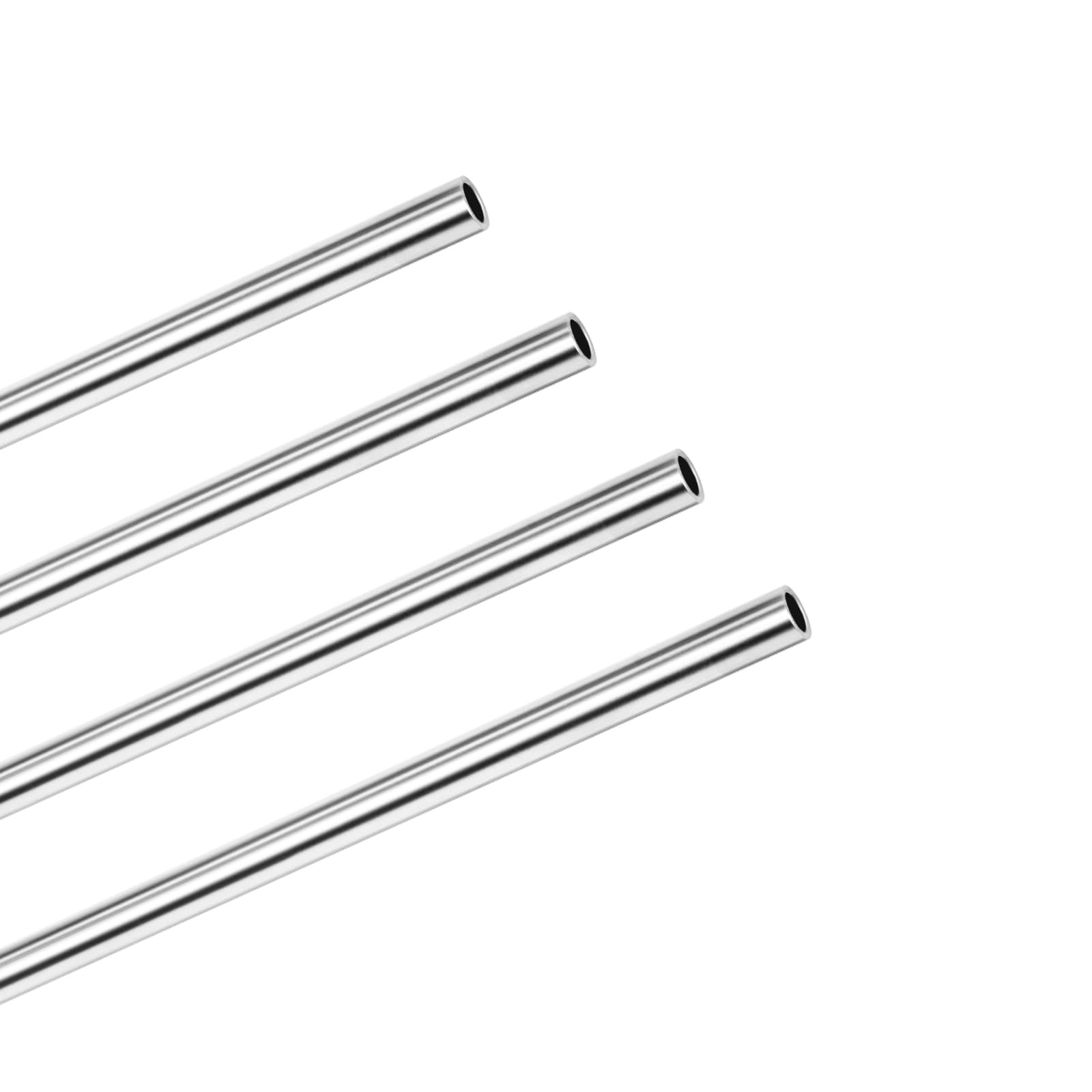
| VALVENTO 316 Stainless Steel Tube, 4 PackTop Rated | Marine and food-grade projects | 12 inches | 316 | 0.5 in | Amazon |
| GeilSpace 1/2″ OD 304 Round Tube | DIY furniture and decor | 24 inches | 304 | 0.5 in | Amazon |
| FITOK 316/316L smooth Tubing | Instrumentation and flared lines | 40 inches | 316/316L | 0.5 in | Amazon |
| uxcell 304 Stainless Steel Tubing Coil | Pneumatic and gas lines | 10 feet | 304 | 12.7 mm | Amazon |
| GEPPHILL 1/2″ OD x 25 Ft 304 Coil Tubing | Brewing and coolant loops | 25 feet | 304 | 0.5 in | Amazon |
In-Depth Reviews
1. Vigorous Stainless Steel Tubing Coil, 1/2″ x 10Ft 304 Stainless Steel Welded Tubing
Our pick — over 4★ from 100+ verified ratings; the strongest balance of quality and price.
Ten feet of 304 stainless that coils easily and forgives a first-time fluid line install.
If you need to route a new fuel line or replace a rusty steel section, this is the pick that gets the job done without drama. You get a single 10-foot continuous coil of 304 stainless steel welded tubing with a 0.5 inch outside diameter. The grade resists corrosion, so it holds up to fuel, coolant, and ordinary weather exposure far better than mild steel. Owner feedback underlines that point: “Good quality and perfect for my application,” as one fuel-line replacement job summed it up. The whole roll is light enough to unspool by hand and wipe clean with a cloth when you are done.
Here is the honest trade-off, and it shows up repeatedly in the review pages. This is thin-wall tubing at 0.035 inch nominal thickness, which means it bends beautifully around gentle curves but resists flaring and hates tight radii. Buyers describe the same experience in nearly the same words: “Great product but needs to be thicker to flair.” If tight, professional-quality flares are part of your build, plan for a thicker-wall or smooth tube instead, because this one will fight you at the flare die. It is not a defect — it is simply what thin-wall welded stock does, and it is why this tube shines on long, smooth runs.
What buyers appreciate
- Full 10-foot coil for long runs without splicing
- 304 stainless resists corrosion and wipes clean with a cloth
- Bends by hand around gentle curves without cracking
- Proven on fuel-line replacement jobs
Where it falls short
- Thin wall resists flaring and tight-radius bends
- Thicker stock needed for brake-line-grade work
Right for you if: you are running fuel or fluid lines where easy bends beat precision flares.
Think twice if: your build centers on flared joints and 90-degree corners.
2. 1/2″ OD x 0.035″ Wall x 12″, 316 Stainless Steel Tube, 4 Pack
Four short 316 stainless tubes that measure dead-on and shrug off salt water.
The dimensions here are the headline, and they hold up under close inspection. Each tube is a 12-inch length with a 0.035 inch nominal wall and a 0.5 inch outside diameter, and the two numbers come out right at the caliper. Buyers measuring them found a 25.40 mm outer diameter and a consistent 2.00 mm wall, with a finish described as “an even matt/satin probably lightly brushed.” That accuracy matters for marine, chemical, and food-grade work where a loose-fitting tube leaks.
Grade 316 stainless is the reason this pick belongs in saltwater and caustic environments. It carries an even matt/satin surface finish and can be cut, bent, and welded. Where it beats the Vigorous coil above is precision per piece — a four-count pack of fixed 12-inch lengths versus a single 10-foot roll, and that four-count vs one-count gap is exactly what a small project with repeatable joints wants. If you need four identical short sections rather than one long coil, this is the smarter buy. Production runs with varied lengths will still want a full-length coil.
Consistency wins: short lengths, spot-on dimensions, and a durable 316 grade make this a natural fit for marine hardware, chemical handling, and any small-part job needing repeatable geometry.
Best matched to: small projects needing several identical short sections in a corrosive setting.
Not the one for you if: your job needs continuous long runs rather than discrete cut lengths.
3. GeilSpace 1/2″ OD 304 Stainless Steel Round Tube, 24 inch Length
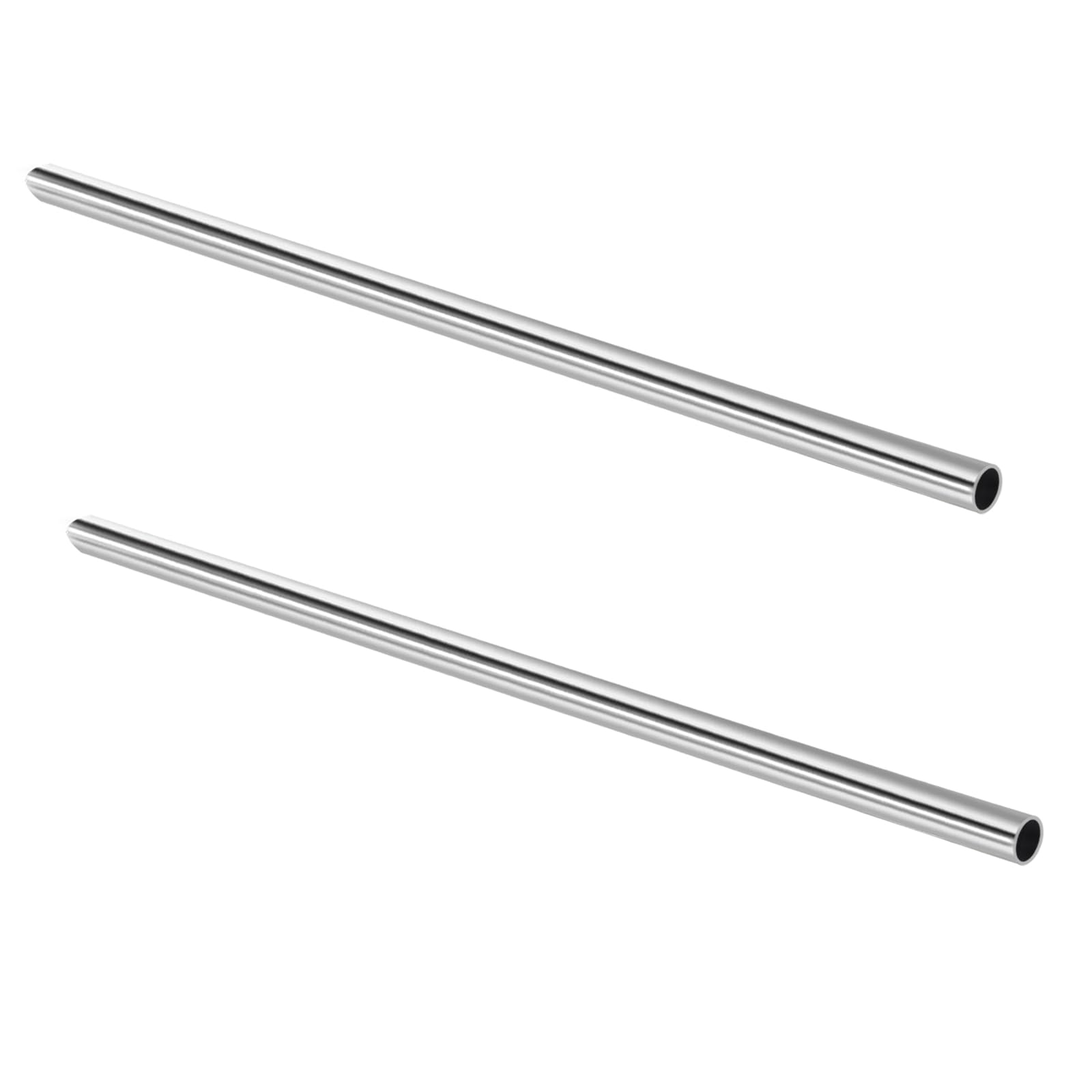
A polished 24-inch tube built for furniture legs and industrial-looking racks.
This one is less about fluid lines and more about structure. The GeilSpace round tube runs 24 inches long with a 0.5 inch outside diameter and a 0.04 inch nominal wall, all in 304 stainless steel. The surface is mirror-like and burr-free, which means it arrives ready to bolt onto a shelving unit, handrail, or custom furniture frame without a finishing step. One buyer put it to work as a vacuum-release retrofit on old clam guns, and another bolted a pair to the front of a bike — proof that this tube earns its keep anywhere you need a clean, straight metal rod.
The design trades flexibility for straightness. This is a rigid 24-inch section, not a coil, so it will not bend to follow a curve on its own. For anyone building a structure that is fine. For anyone running a line around obstacles, it is the wrong tool. What works in its favor is how clean and consistent each piece arrives — buyers who checked the dimensions found straightness and a burr-free finish they could trust as-is. The 24-inch length is longer than the 12-inch VALVENTO tubes above but shorter than the 40-inch FITOK stock, putting it in a middle zone that suits furniture proportions well.
Built for the builder: weldable, cuttable, and polished enough to leave bare on a finished piece.
Pick this for: furniture, racks, and decorative metalwork that needs a clean straight rod.
Look elsewhere if: you need a coil that follows bends around pipework.
4. 316/316L Stainless Steel smooth Tubing 1/2″ OD × 0.035″ Wall × 40″ Length Annealed ASTM A269 Mechanically Polished

Forty inches of smooth 316L stock made to hold a leak-tight flare under pressure.
Length is this pick’s quiet advantage. At 40 inches it gives you more than three times the reach of a 12-inch tube, which means fewer joints and fewer places for a line to leak. The tube is 316/316L dual-certified stainless steel, annealed and mechanically polished, with a 0.035 inch nominal wall and a 0.5 inch outside diameter. Because it is smooth — drawn without a weld seam — it can be flared without splitting and holds higher pressure than welded tube. For instrumentation fluid systems and hydraulic lines, that is the difference between a joint that seals and one that weeps.
Fitok holds tighter tolerances than ASTM A269 requires, with a controlled 80 HRB maximum hardness that lets compression fittings grip without galling. At 40 inches versus the 12-inch VALVENTO pack, this is the length advantage that matters most when you are building critical lines. The one gripe that surfaces is cosmetic, not functional: some buyers wish the surface were more highly polished, though it arrives shiny enough for most work.
Where it shines
- 40-inch smooth length means fewer joints and leak points
- 316/316L dual-certified grade for marine, chemical, and food work
- Flares without splitting — no weld seam to fail
- Controlled 80 HRB hardness for tight compression-fitting connections
Small considerations
- Some buyers want a brighter polish than the mechanical finish provides
- smooth stock carries a higher outlay than welded tube
The choice for: instrumentation, hydraulic, and any line that will be flared or run under pressure.
Skip if: your job is decorative metalwork where a welded coil is cheaper and just as good.
5. uxcell Stainless Steel Tubing Coil, 1/2″ OD x 10 ft Industrial 304 Stainless Steel Tube, Welded
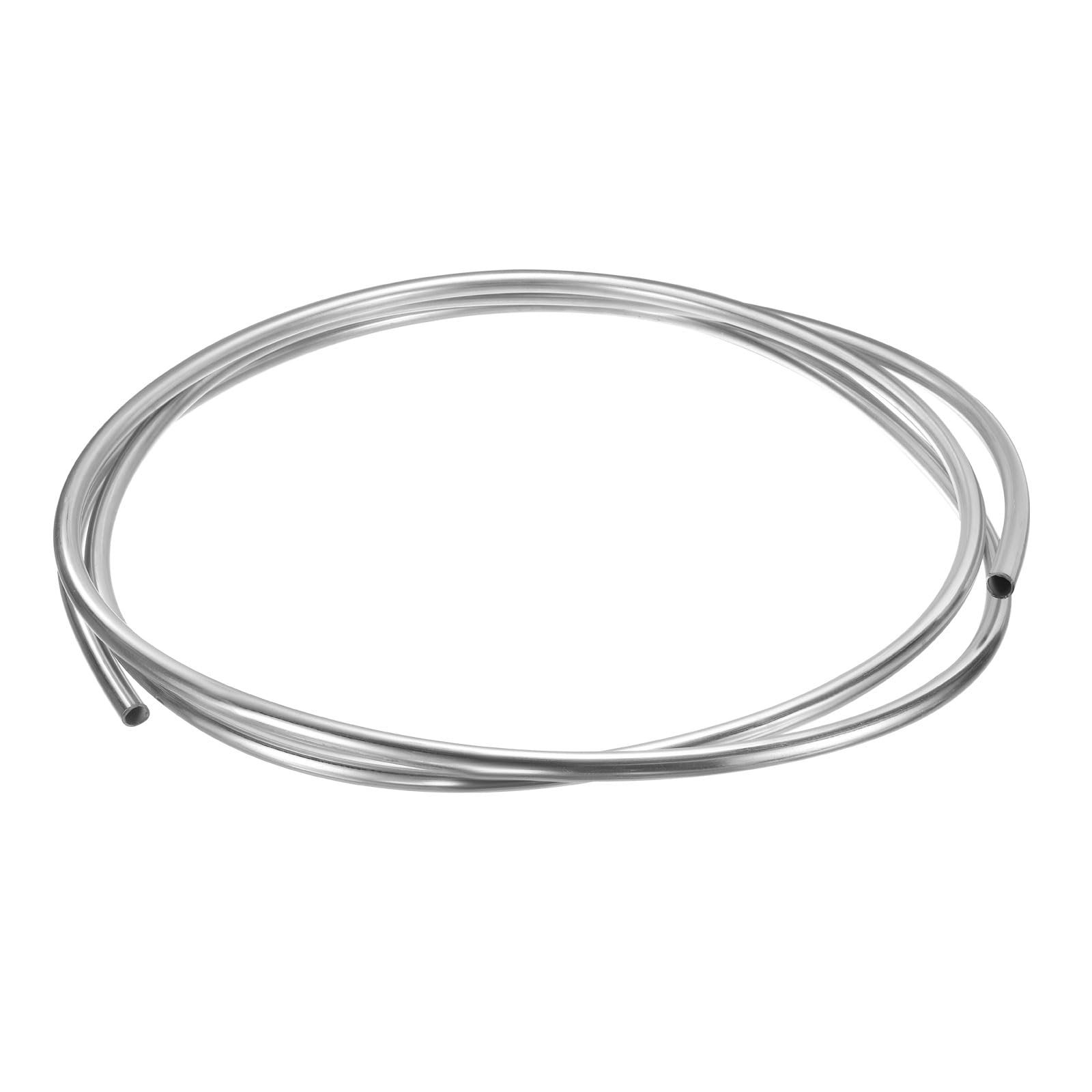
A light 10-foot 304 coil that straightens by hand and slips into tight install spaces.
If you are feeding air, gas, or a small turbo oil line, this uxcell coil is the value pick to beat. It runs 10 feet long with a 12.7 millimeter outside diameter — that is the metric way of saying half an inch — and a 1 millimeter nominal wall in 304 stainless steel. The smooth inner wall keeps flow resistance low, so air and liquids move through it efficiently. Buyers have run it as a turbo oil supply line and built a pop-up fertilizer system for a John Deere 750 drill, and it handled both without complaint.
What makes it easy to live with is how it straightens. The tubing unrolls and takes a straight form with minimal effort, which is a real advantage when you are fishing it along a frame rail. The trade-off is that this is welded tubing, not smooth. Welded tube is joined along a seam and will not take a flare or hold the pressure that the FITOK smooth stock above manages, so keep it on low-pressure duty. For the price, its corrosion resistance and easy straightening make it solid value for pneumatic and gas-line work.
Handles the everyday jobs: pneumatic lines, laboratory gas runs, and coolant routing where low pressure and easy handling matter more than flare-ready strength.
The reality check: as welded 304 stock, it is not built for flaring or high-pressure duty — the smooth FITOK tube is the one to choose when those matter.
Great for: low-pressure air, gas, and coolant lines where easy straightening and 10 feet of coil do the job.
Step up if: your line will be flared or run under real pressure.
6. 1/2″ OD x 25 Ft 304 Stainless Steel Coil Tubing for Water/Fuel/Air
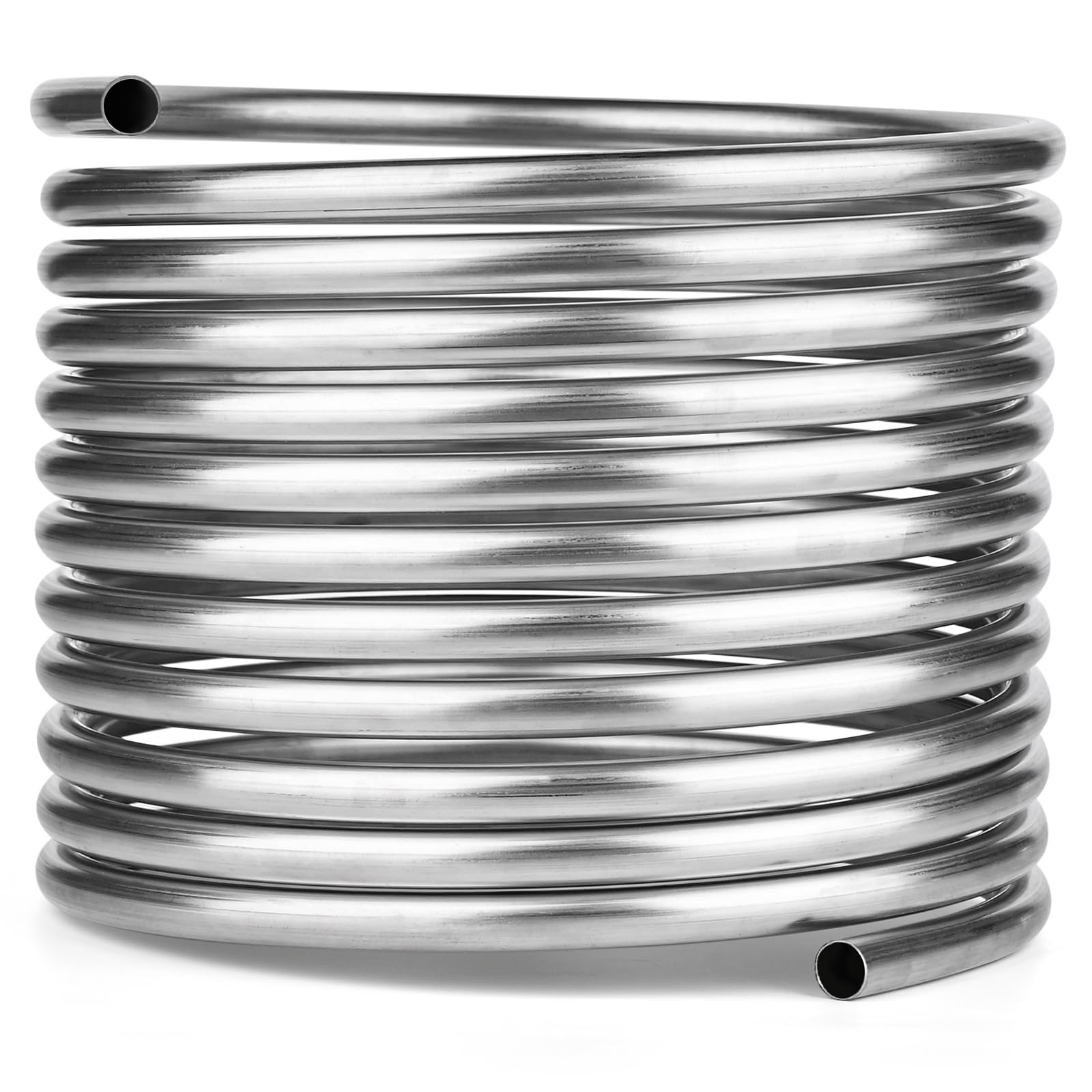
Twenty-five continuous feet of 304 coil built for wort chillers and glycol loops.
When you need serious footage, this is the coil that delivers it. The GEPPHILL tubing comes as 25 feet of continuous 304 stainless steel coil — more than double the 10-foot Vigorous and uxcell coils — with a 0.5 inch outside diameter and a 0.60 millimeter wall thickness. Made to ASTM A269, it is rated to +1600°F and suits food-grade fluid transfer. Brewers have used it to build wort chillers with ample surface area and faster cooling, and the mirror-polished surface keeps buildup down in food and beverage lines.
The flip side of that wall thickness is stiffness. Because it is thicker and stronger than the thin-wall coils, it resists bending and can kink if you force a tight radius. Standard benders may not fit inside the coil, so you will want a proper tool. At 0.6 millimeters, the wall is also too thin for clean 90-degree bends, which is why it is best thought of as a flexible coil for gentle curves rather than a bender’s tubing. Verify the coil size fits your container before you commit, since the roll is bulky. For a cooler loop or a carbonated beverage line under pressure, the trade is worth it.
Best when footage wins: brewers, beverage lines, and coolant loops that need a long continuous run will get the most out of this coil.
The catch: the thicker wall resists bending and can kink on tight turns, and it will not take a sharp 90 — bend gently and measure your container first.
Made for: wort chillers, glycol contact, and pressure beverage lines that need 25 continuous feet.
Not ideal if: your job calls for sharp corner bends or flaring at the ends.
Understanding the Specs
smooth vs Welded Tubing
Welded tubing is formed by rolling stainless strip into a tube and joining the seam, which makes it affordable and fine for low-pressure routing. smooth tubing is pierced from solid bar with no seam at all, so it can be flared and takes far more pressure before it fails. If your line ends in a flared fitting — the kind that seals by pressing metal against metal — you want smooth. For air, water, or gas runs where the tube just routes flow, welded stock is the practical, budget-friendly route.
Outside Diameter, Wall, and Grade
Outside diameter is the measurement your fitting actually grips, so match it to your fitting before anything else. Wall thickness sets both the pressure rating and how easily the tube bends: a thin wall rolls into gentle curves by hand but splits under a flare, while a thicker wall holds pressure and fights your hands. Grade 304 handles general shop and automotive work, and grade 316 adds molybdenum for stronger corrosion resistance, which is why it is the standard pick for marine, chemical, and food-grade lines.
FAQ
Is 1/2 inch tubing measured inside or outside?
Can I bend this tubing by hand or do I need a bender?
What is the difference between 304 and 316 stainless steel tubing?
Can this tubing be flared for a compression fitting?
Will a 1/2 inch OD tube fit standard compression fittings?
How long does stainless steel tubing last outdoors?
Do I need smooth tubing or is welded tubing fine?
What wall thickness do I need for fuel or brake lines?
Can I use stainless tubing for drinking water or food contact?
How do I cut stainless steel tubing without damaging it?
Final Thoughts: The Verdict
The top-rated smooth 316L line — the FITOK 316/316L smooth Tubing — is the pick to reach for when your job involves flared connections or real pressure, because smooth construction lets it hold a leak-tight flare where welded stock cannot. If you want to spend less and just route fluid or fuel lines with easy hand bends, the Vigorous 10-foot coil handles that beautifully. For marine or chemical environments, the VALVENTO 316 four-pack gives you short, dead-on lengths in the corrosion-resistant grade those settings demand.
How We Picked
We do not accept paid placement. Every pick is matched to a real buyer and a real use-case; we do not hands-on test units.
Sources & Methodology
Specifications: manufacturer listings and product documentation. Review insights: verified customer reviews, as of September 2026. Pricing: not shown on this page (it changes often); check the current price via the retailer link.
As an Amazon Associate, KitchPrep earns from qualifying purchases. This does not affect which products we feature.
Related Guides
