
Specs are compiled from manufacturer listings and verified buyer reviews and can change over time — please confirm the key details on the product page before buying.
Buying a 10-foot step ladder is really about one thing: whether it still feels solid when you are standing near the top with both hands busy. This guide also uses flexible, human-like matching — the standard 10-foot stepladder size — so not every pick is the exact model number you typed in, but every one serves the same reach. Here is what actually holds up.
I’m Mohammad Maruf — the founder and writer behind KitchPrep. This guide is built by comparing the manufacturers’ published specifications and the patterns across verified customer reviews, so you get each pick’s real strengths and trade-offs instead of marketing spin.
You will see fiberglass and aluminum side by side, load ratings from 250 to 375 pounds, and honest notes on where each one flexes. By the end you can pick the right best 10-foot step ladder for your ceiling height, your body weight, and how far you have to drag it.
Our Picks at a Glance

How To Choose The Best 10-Foot Step Ladder
A 10-foot stepladder is the size you buy when a 6-foot won’t reach the ceiling and an extension ladder is overkill. The reach is the easy part — every pick here is a 10-foot ladder. The hard part is matching the load rating and the material to the way you actually work.
Start With The Load Rating, Not The Height
The load capacity is the combined weight of you plus everything you carry up — paint, tools, a bucket. A 250-pound rating (Type I) covers most homeowners. A 300-pound rating (Type IA) gives a heavier person more headroom. A 375-pound rating (Type IAA) is the heavy-duty tier, built for big users and job-site abuse. If you are near the top of a rating on paper, step up a tier.
Fiberglass Or Aluminum
Fiberglass is the non-conductive choice — it will not carry an electrical current, which matters if you are anywhere near wiring or an outdoor line. It is also heavier. Aluminum is far lighter and easier to carry one-handed, but it conducts electricity and tends to feel less rigid under a heavy user. For overhead rafter work or window washing, the lighter aluminum wins on effort. For anything near live wiring, fiberglass is the safer pick.
Step Rise And Footing
A 12-inch step rise means each rung sits a foot above the last, so you climb fewer, taller steps instead of many shallow ones. Look for slip-resistant rubber feet on all four legs — that is what keeps the base from skidding on concrete or a painted floor. A tool tray or top platform lets you set a paint can or drill down instead of holding it, which is the difference between a two-hand job and a one-hand juggle.
Quick Comparison
| Model | Best For | Load Capacity | Material | Weight | Amazon |
|---|---|---|---|---|---|
| Louisville FS1510 10 ft Fiberglass★ Best Overall | All-around home and yard work | 300 Pounds | Fiberglass | 34 pounds | Amazon |
| Louisville AS2110 10 ft Aluminum | One-person carry and setup | 250 Pounds | Aluminum | 15 pounds | Amazon |
| DeWalt DXL3410-10 10 ft Fiberglass | Heavy users wanting a wide stance | 375 Pounds | Fiberglass | 46 pounds | Amazon |
In‑Depth Reviews
1. Louisville Ladder 10 ft Fiberglass Step Ladder, FS1510, Type IA, 300 lbs
Our pick — over 4.5★ from 4,000+ verified ratings; the strongest balance of quality and price.
The best-selling 10-foot fiberglass stepladder for home and yard work
The number that carries this ladder is its 300-pound load capacity. That is the Type IA tier — heavy-duty, not the lightest legal rating — and it covers you plus a loaded paint tray without you second-guessing the climb. Folks who fix their own roof trim and gutters tend to settle here because the rating leaves room for both a full-size person and the tools in hand.
Fiberglass is non-conductive, so it will not carry a current if you are working near a light fixture or an outdoor power line — something an aluminum ladder simply can’t promise. Each step runs on a 12-inch rise, meaning the rungs sit a foot apart for a natural, unhurried climb instead of a short ladder’s cramped shuffle. Every step is secured with six large-headed steel rivets for rigidity under load.
In daily use, you get a 34-pound fiberglass frame with slip-resistant rubber tread on all four legs, plus a Pro Top design that gives you a shelf for a can or drill. It is the crowd favorite by a wide margin — 4.7 stars across 4,000+ ratings — and buyers report it feels sturdy without being overbuilt. One reviewer hoped it would be the last ladder they needed for years; another called it “good height, sturdy not too heavy.” The recurring cautions are minor: a few wish the wider spacing matched their garage storage, and it is not a featherweight if you are hauling it up a staircase.
What earns it the top slot
- 300-pound Type IA rating covers a heavy user plus tools
- Non-conductive fiberglass keeps you clear of live wiring
- Six steel rivets per step and full channel rails for rigidity
- 12-inch step rise for a comfortable, confident climb
- Meets or exceeds ANSI and OSHA safety standards
Where it asks you to slow down
- At 34 pounds it is not the ladder you carry one-handed up a flight of stairs
- The 121.2-inch height wants real storage space, not a closet corner
- No magnetic or hardware tray included
Reach for it: any home or yard job at gutter height where you want one ladder to cover paint, trim, and windows for years.
Think twice if: the ladder mostly lives in a tight garage bay or you need to carry it up stairs — the lighter aluminum pick suits that better.
2. Louisville Ladder 10 ft Aluminum Step Ladder, AS2110, Type I, 250 lbs
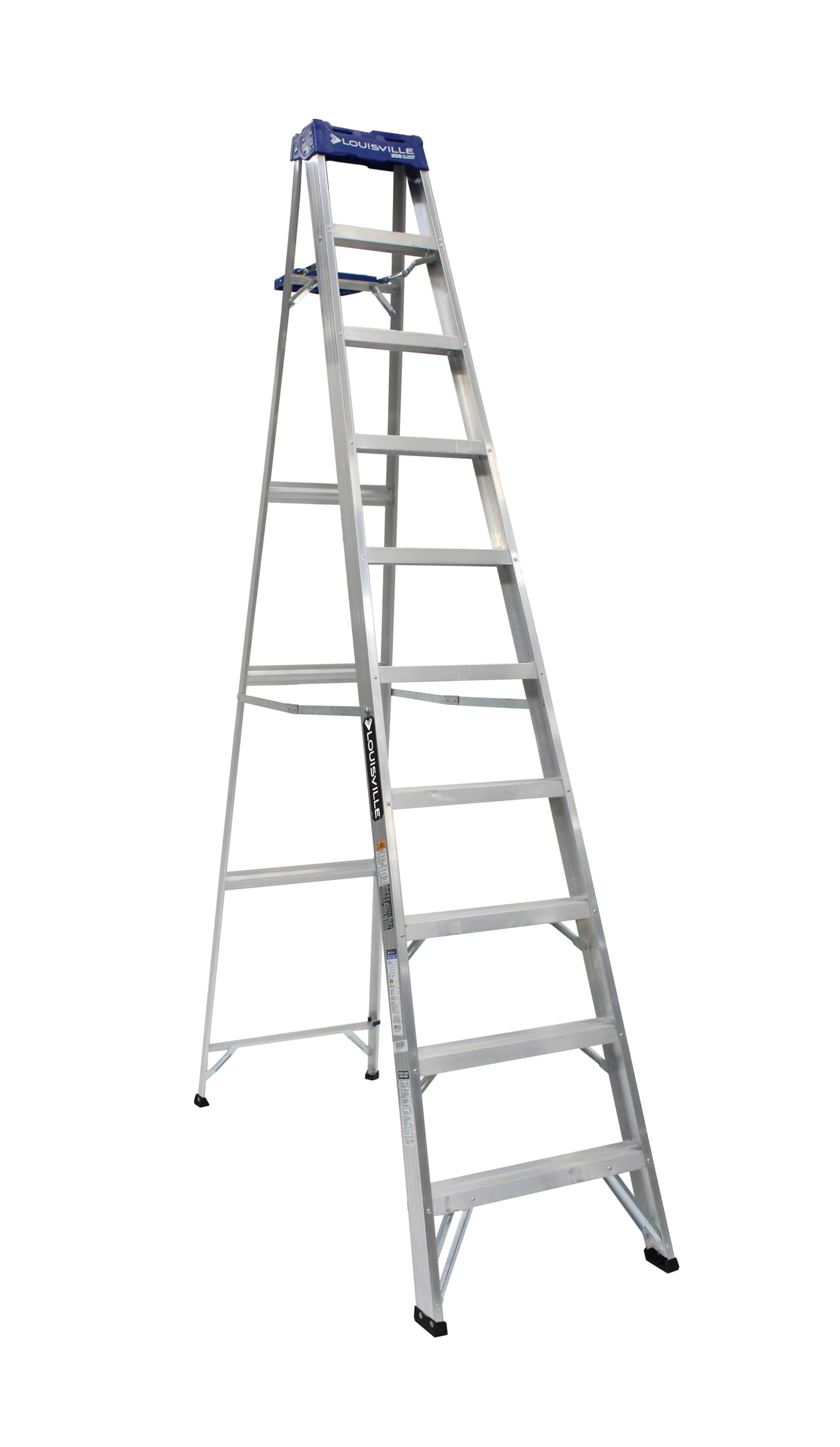
A 15-pound aluminum frame one person can carry and set up alone
If the ladder has to move from the garage to the yard to the ceiling fan and back, weight is the spec that wears you out. This one is a 15-pound aluminum frame — compared with the 46 pounds of the DeWalt fiberglass pick, it is the difference between one hand and two. That is why the “light enough for a mid-70s woman to carry/move” note among buyers rings true: it is genuinely a ladder one person can set up alone.
You get better build quality for the weight here. The aluminum is heavier-gauge than some cheap frames, the molded top has a recessed non-conductive tray, and there is a tool tray with slots for a drill and multiple paint-can sizes — the kind of detail that lets a paint job be a one-trip climb. The frame carries a 250-pound Type I load capacity and rubber tread on all four aluminum angle feet.
The honest trade-off, and it’s worth knowing before you buy: at 250 pounds it sits a full tier below the fiberglass picks, so a large user at the ceiling with tools loaded is pushing it. Buyers describe stiffness as the swing factor — some find it sturdy for home projects, others feel it flex when they lean on a high rung. The takeaway is simple: this is a lightweight, easy-handling ladder for a normal-weight user doing normal reach work, not a job-site workhorse.
Who it fits best: a lighter user who works alone and will not be near live wiring
The real caveat: the 250-pound rating and some flex under a heavy load mean it is not a crowd-everything-on-top proposition
Best fit: a solo homeowner over 60 who wants a 10-foot reach they can lift and reposition without help.
Not for: a big user who loads tools at the top rung or anyone working near electrical lines.
3. DeWalt Type IAA 375lb Rated FG Stepladder 10′ DXL3410-10
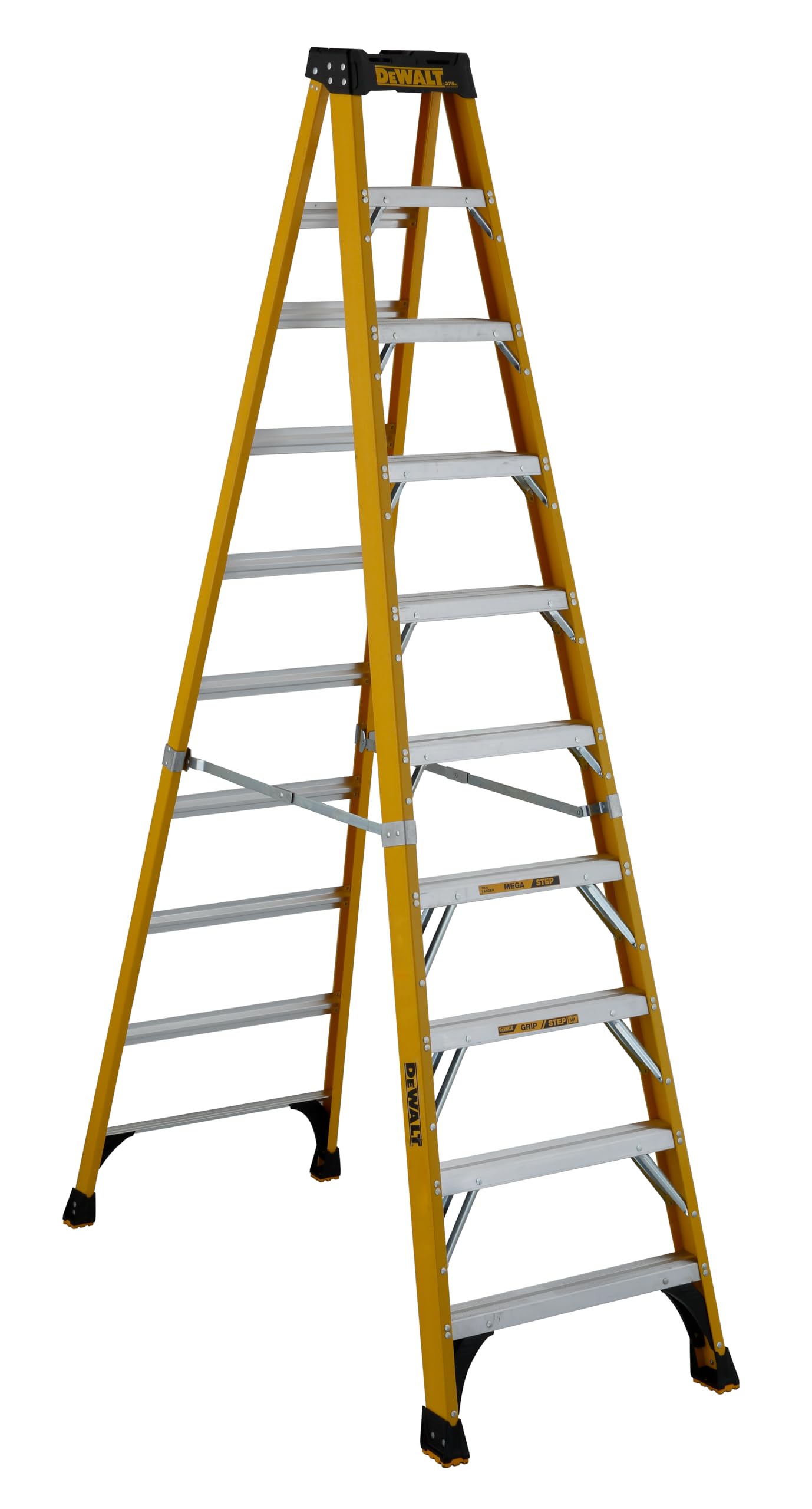
A 46-pound fiberglass frame with a 375-pound Type IAA rating
Two specs define this ladder. The first is the 375-pound load capacity — the Type IAA tier, the highest rating in this group, and the reason a 225-pound user calls it “easily strong enough for me.” The second is its stance: a 31.19-inch-wide base, about four and a half times the 7-inch footprint of the Louisville FS1510, which is what gives it that planted feeling even when you’re leaning out to a high bulb.
The fiberglass construction keeps it non-conductive, and the wide steps hold up to long standing better than a narrow frame — a house project where you’re on the ladder for an hour or more is exactly its purpose. A locking bridge between the front and back sections is designed to prevent the frame from buckling or shifting under pressure, and the top has tool nooks plus a magnetic holder for a screwdriver or bit.
The honest note is bulk. At 46 pounds and 31.19 inches wide, it is the heaviest and widest pick here, so it lives in a garage rather than a closet, and the weight is the price you pay for that stability. Buyers are drawn to it for exactly the opposite reason: the thing feels dense and safe underfoot. The recurring caution is that a few units arrive with a rock or a wobble, and the size means it does not tuck away easily.
The defining strength: a 375-pound rating and a wide footprint make it the most planted option here
Plan around this: the 46-pound weight and broad base want dedicated storage and a two-hand carry
For you if: you’re a heavier user, you want the widest, most stable base, and it has a permanent home in the garage.
skip it if: you need to move the ladder room-to-room or store it in a tight space — the aluminum pick is far easier to haul.
Understanding the Specs
Load Capacity and the Duty Ratings
The load capacity is the combined weight of you plus everything you carry up — tools, paint, a bucket. The rating tiers are standardized: Type I is 250 pounds, Type IA is 300 pounds, and Type IAA is 375 pounds. If the numbers put you near the ceiling of a rating once you add gear, move up a tier. Buying above your real working weight buys a stiffer, steadier frame; buying below it is the one mistake that matters.
Fiberglass vs Aluminum
Fiberglass is non-conductive — it won’t carry an electrical current — which is why it’s the pick near wiring or an outdoor line. The trade is weight: a fiberglass 10-footer runs heavier than aluminum, and that heft is what makes it feel more rigid under a heavy user. Aluminum is far lighter and easier to move and set up alone, but it conducts electricity and can flex more under load. Choose fiberglass for safety and stiffness, aluminum for portability.
Step Rise and Footing
A step rise is the vertical gap between one rung and the next. A 12-inch rise means each step sits a foot above the last, so you climb fewer, taller steps — less tiring on a long paint job than a short ladder’s cramped rungs. Footing matters just as much: slip-resistant rubber feet and thick rubber tread on all four legs are what keep the base planted on concrete or a painted floor instead of skidding when you lean out.
Safety Certifications and the Tool Top
Look for a ladder that meets or exceeds ANSI and OSHA standards — and on the pro models, CSA as well. Those certifications cover structural strength and stability tests, not marketing. The top platform is a working detail: a molded top or tool tray with a drill slot and paint-can holder lets you set a load down instead of gripping it, which frees both hands at height. Some models add a magnetic holder for a screwdriver or bit.
FAQ
Will a 10-foot step ladder reach my gutters?
What is the difference between Type I, Type IA, and Type IAA load ratings?
Is a fiberglass or aluminum step ladder better for home use?
How much does a 10-foot fiberglass step ladder weigh?
Can I stand on the top platform of a step ladder?
Do these ladders meet OSHA standards?
What does a 12-inch step rise mean when climbing?
Will a 10-foot step ladder fit in my car or closet?
What keeps a step ladder from wobbling at the top?
Is a heavier ladder safer than a lighter one?
Final Thoughts: The Verdict
For most people, the best 10-foot step ladder is the Louisville FS1510 10 ft Fiberglass Step Ladder — a 300-pound Type IA rating, non-conductive fiberglass, and a 34-pound frame that balances safety and easy handling for home and yard work. If hauling the ladder yourself is the priority, the Louisville AS2110 Aluminum at 15 pounds is the one-body carry. And if you’re a heavy user or a working pro who wants the 375-pound Type IAA tier with job-site certifications, the Louisville FS1310HD or the wide-based DeWalt DXL3410-10 is your pick. Whichever you choose, match the load rating to your real working weight and keep both feet planted a rung or two below the top.
How We Picked
We do not accept paid placement. Every pick is matched to a real buyer and a real use-case; we do not hands-on test units.
Sources & Methodology
Specifications: manufacturer listings and product documentation. Review insights: verified customer reviews, as of September 2026. Pricing: not shown on this page (it changes often); check the current price via the retailer link.
As an Amazon Associate, KitchPrep earns from qualifying purchases. This does not affect which products we feature.
Related Guides
