
Specs are compiled from manufacturer listings and verified buyer reviews and can change over time — please confirm the key details on the product page before buying.
If your basement has no window, you can still cool it — you just need a system that vents somewhere other than a window frame. The picks below are all designed for a below-grade room, and every one works without a window-unit sleeve or a sliding-window bracket. A ductless mini split cools the whole room through a small wall or floor opening, while a dual-hose portable unit does the same job through a hose panel you cut to fit. That is the key thing to know before you buy anything.
I’m Mohammad Maruf — the founder and writer behind KitchPrep. This guide is built by comparing the manufacturers’ published specifications and the patterns across verified customer reviews, so you get each pick’s real strengths and trade-offs instead of marketing spin.
You’ll find ductless systems that keep working well into the cold months, plus one portable that still runs quietly. Below is the full rundown of the basement air conditioner with no window.
Our Picks at a Glance

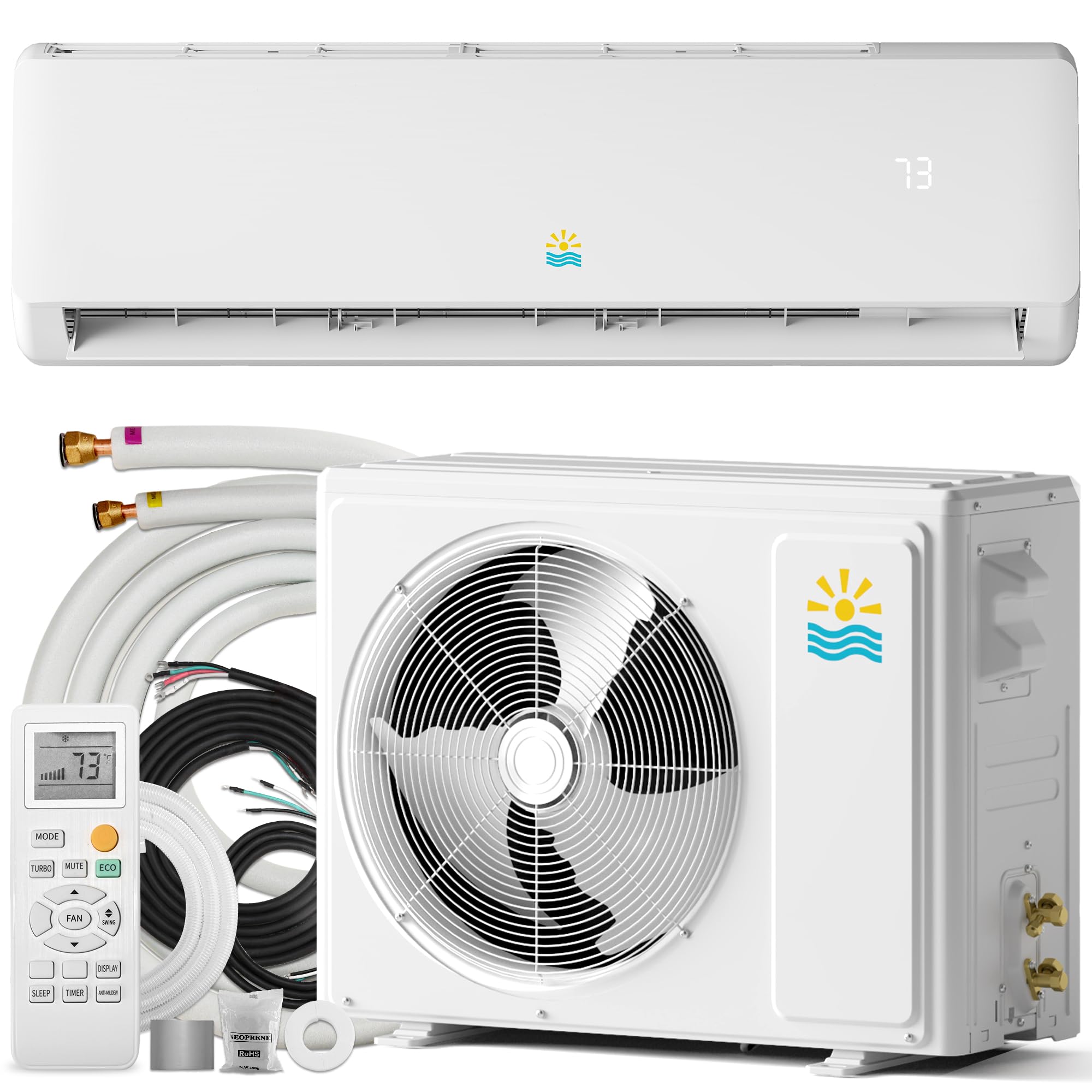
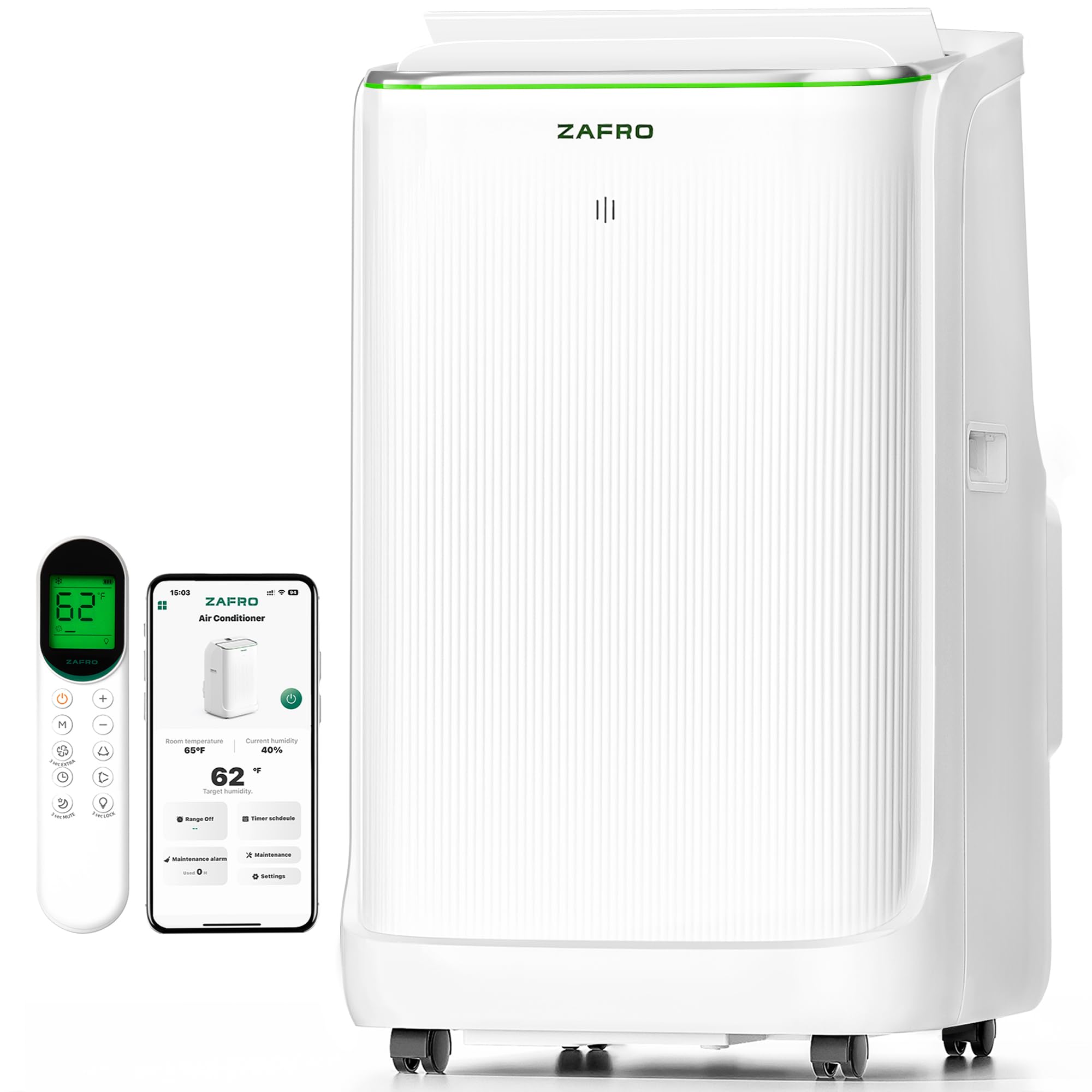
How To Choose The Best Basement Air Conditioner with No Window
Cooling a below-grade room is its own puzzle. Basements sit against soil that stays cool and damp, so the air down there feels heavier and more humid than the air upstairs. A window unit is usually out of the question, and that leaves two real families of equipment: a ductless mini split, and a dual-hose portable. Choosing well is mostly about sizing, venting, and knowing what your installer will actually need access to.
Match the BTU number to the room, not your square-footage guess
BTU stands for British thermal unit, a measure of how much heat a unit can remove per hour. Underpowering is the single most common mistake. A room that is too large for the rating will never reach the temperature you set, so the compressor runs nonstop and your bill climbs. Go the other way and you overspend on equipment you cannot fully use. Measure your basement’s width by length, account for ceiling height and insulation, then compare that number to the manufacturer’s stated coverage in square feet before you buy.
Decide how the unit will vent before you buy
A mini split never asks for a window. The indoor air handler mounts high on a wall, and refrigerant lines plus a drain run through a small hole in the exterior wall to an outdoor condenser. In a true below-grade space you may need to run those lines up to grade through a joist bay or a sleeve, and that is a job for a licensed HVAC tech. A portable with two hoses is different: you cut a panel to fit an opening you already have, often a basement window well or a dryer-style vent, and route both hoses through it.
The efficiency rating is where your running cost lives
SEER2 tells you how efficiently a unit cools and HSPF2 does the same for heating. Higher is better, and the difference shows up on your monthly statement rather than the sticker. A unit with a high SEER2 can pull the same heat out of your room for less electricity than a lower-rated one. If you plan to run the system all summer and use it for heat in the winter, paying for a higher rating usually pays you back over a few seasons.
Quick Comparison
| Model | Best For | Cooling Power | Coverage | Form Factor | Amazon |
|---|---|---|---|---|---|
| Senville AURA 12000 BTU★ Best Overall | Whole-basement year-round comfort | 12000 BTU | 750 sq ft | Mini-Split | Amazon |
| Rellytech 9000 BTUBest Value | Small finished basement on a budget | 9000 BTU | 450 sq ft | Mini-Split | Amazon |
| ZAFRO 14000 BTU InverterBest for Drainage-Free Living | Finished basement with a vent opening | 14000 BTU | 700 sq ft | Portable | Amazon |
| Confortotal 12000 BTU | Plug-in mini split without an electrician | 12000 BTU | 550 sq ft | Mini-Split | Amazon |
| EXNOS 12000 BTU | Sunroom and basement additions | 12000 BTU | 750 sq ft | Mini-Split | Amazon |
| ROVSUN 12000 BTU | Owner-builders and light commercial spaces | 12000 BTU | 550 sq ft | Mini-Split | Amazon |
| DREO 515S Portable | Renters who cannot cut a wall | 12000 BTU | 150 sq ft | Portable | Amazon |
| YITAHOME 18000 BTU | Large open basement or RV space | 18000 BTU | 1250 sq ft | Mini-Split | Amazon |
| DELLA Motto 12000 BTU | Efficient full-time basement cooling | 12000 BTU | 550 sq ft | Mini-Split | Amazon |
| Cooper & Hunter MIA | Quiet high-efficiency basement rooms | 12000 BTU | 550 sq ft | Mini-Split | Amazon |
| DELLA Econo 23000 BTU | Whole-floor basement cooling | 22000 BTU | 1500 sq ft | Mini-Split | Amazon |
| Daikin Entra 12000 BTU | Renovations and sunroom conversions | 12000 BTU | 550 sq ft | Mini-Split | Amazon |
| MRCOOL Easy Pro 24000 BTU | Large open basement, DIY install | 24000 BTU | 1000 sq ft | Mini-Split | Amazon |
In‑Depth Reviews
1. Senville AURA Mini Split Air Conditioner, Heat Pump, White, 12000 BTU
Our pick — 4.5★ from 650+ verified ratings; the strongest balance of quality and price.
The one that heats a New England winter away and still asks for no window.
The AURA is the pick that covers the most ground without ever touching a window frame. At 12000 BTU and a rated 750 square feet of coverage, it beats the Rellytech on both counts — 12000 versus 9000 BTU, and 750 versus 450 square feet. For a large finished basement, that difference is the whole reason to spend more. It also uses 25.5 SEER, a high efficiency rating that means the compressor sips power instead of gulping it, and the 208-230V DC Inverter keeps the temperature steady instead of swinging up and down.
Heating is where this unit earns its keep. The spec sheet rates it to run in outdoor conditions down to -22°F (that is 22 degrees below zero Fahrenheit, colder than most winters get), and owners in cold climates back that up. One buyer reports running a 12k Aura all winter in Massachusetts with no oil used and an electric bill far below what the fuel cost. Another notes it cooled a 450 square-foot master suite quickly and quietly after 18 months of Phoenix summers. What wins people over most is simple effectiveness, and the pattern holds across every season.
The catch is installation. This is not a plug-and-in unit — Senville is explicit that professional installation is required, and you need a vacuum pump, gauges, and a licensed tech to keep the warranty intact. If you were hoping to cut a hole and be done by lunch, this is not that machine. Plan the install budget alongside the equipment, and put it on the calendar before the hot season starts.
Senville AURA efficiency
- 25.5 SEER efficiency holds running costs down through long basement summers
- Rated to 750 square feet — the largest coverage in the mini split half of this list
- Heats to -22°F outdoor, so it doubles as winter warmth instead of sitting idle
- Alexa voice control means you can nudge the temperature without leaving the couch
needs pro install
- Professional installation required — no self-install shortcut here
- 16ft line set limits how far the condenser can sit from the indoor head
- The remote draws mixed reactions — treat the app as your main control
AURA for cold: a large finished basement you want both cooled and heated without ever installing a window unit.
DIY not advised: you want a DIY weekend project — this one demands a licensed installer and vacuum equipment.
2. Rellytech Mini Split AC/Heating System – 19 SEER2 9000 BTU
The budget-friendly split that walks into a basement with 110V power and zero fuss.
For a smaller basement, this Rellytech is the value play. It runs on 110/115V (standard household voltage), so you can tap a normal wall circuit instead of paying an electrician to run 230V service. It covers 450 square feet at 9000 BTU (British thermal units, the standard measure of cooling power), uses just 907 kilowatt hours per year, and holds a 19 SEER2 rating (a government efficiency score, where higher means cheaper to run) — considerably thriftier than the Senville on paper, though it also moves less air and covers a smaller area. The pre-charged lines and included installation kit trim the setup cost further.
Owners describe rapid, consistent cooling — temperatures dropping from 86°F to 72°F in ten minutes — alongside a pleasingly low noise level. The 42dB operation and sleep mode let you run it overnight without the compressor rattling you awake. It includes four modes, a 24-hour timer, and a 90-degree vertical swing to push air where you need it. An 8-year warranty backs it, unusually long for this tier.
The honest limit is size. At 9000 BTU it suits a bedroom-sized basement, not a wide open rec room, and the 450-square-foot coverage assumes decent insulation. If your basement is larger or leaks cold air around the rim joints, step up to a 12000 BTU unit. Otherwise, for a compact below-grade room, this is the least expensive path to ductless cooling.
Rellytech 9000 BTU: 450 square feet is real, but it depends on how tight your space is. A narrow basement bedroom with good insulation stays comfortable; an open, drafty room will not.
small room only: 110V operation, an 8-year warranty, and a 19 SEER2 rating all point to a machine built to run cheaply for years without a service call.
Rellytech starter: you have a finished basement under 450 square feet and want ductless cooling without an electrician visit.
oversized rooms: your space is larger than the rated coverage or badly insulated — you will want more BTU.
3. ZAFRO Smart Inverter Portable Air Conditioners, 14000 BTU (10000 BTU SACC)
A dual-hose portable that cools a basement without a single trip to the drain pan.
If you cannot or will not cut an exterior wall, this ZAFRO gives you real cooling without a window. It is a portable with two hoses, one intake and one exhaust, and it happily routes through any opening you can fit a panel into. At 14000 BTU it covers 700 square feet and runs on an inverter compressor that holds temperature steady instead of cycling on and off. The dual-hose design keeps the airflow strong and even, which is the part most portables get wrong.
For basement use, the practical numbers are tough to top: it runs down to 61°F, stays at 42dB in quiet mode (about as loud as a quiet library), and uses a self-evaporating system that lets it run up to 72 hours without draining in environments below 90% humidity. That matters a lot in a below-grade space where a dripping pan would be a hassle. What owners rave about is raw cooling performance — it pulls a basement down quickly, and the numbers back the reputation.
The thing to watch is your venting plan. A portable pushes warm air out through the hose, so the panel needs a real opening to sit in, whether that is a basement window, a crawlspace vent, or a custom cut. If your basement truly has zero opening, this is not the answer — the heat has to go somewhere. Plan that route before you buy.
ZAFRO no drill: your basement has any ventable opening and you want serious cooling without a wall-mounted system.
permanent setup: your space has no exterior opening at all — a portable needs somewhere for the exhaust to go.
4. Confortotal 12000 BTU Mini Split Air Conditioner and Heat Pump 110V Ductless

The split that plugs into a normal wall outlet, so no electrician visit is needed.
What sets this Confortotal apart is the plug. It runs on 110V and plugs into a standard wall outlet, sidestepping the dedicated 230V circuit and the electrician quote that usually comes with a mini split. For a basement install, that is often the biggest hidden cost, and here it simply evaporates. It delivers 12000 BTU of cooling across a rated 550 square feet, and Alexa and Google voice control let you adjust it by voice.
Owners consistently single out performance — it cools steadily, holds temperature without short-cycling, and stays quiet inside and out. The dehumidify mode pulls humidity down fast, which is exactly what a damp basement needs. One refrigeration mechanic who bought a second unit reports setting it up plug-and-play after a proper vacuum. It reaches a set temperature at 77°F and holds it, and the outdoor condenser is quiet enough to forget about.
You do trade some coverage for that convenience. 550 square feet is smaller than several splits here, and the manual is thin — the mounting template is not included, which slows a first-time install. Some owners find the cooling in high heat is only adequate, not aggressive. For a moderately sized basement, none of that is a problem.
Confortotal plug in: reaching for this saves you the cost of running a new circuit and the scheduling around an electrician, which is often the difference between a project you do this month or next year.
no heat pump: you still need a licensed installer with a vacuum pump for the refrigerant lines — the plug covers power, not the whole job.
Confortotal easy: a homeowner who wants ductless cooling without rewiring the house.
heating gaps: a very large basement, since 550 square feet is its stated ceiling.
5. EXNOS 12000 BTU Mini Split AC & Heating System, Heat Pump, 19 SEER2, 115V
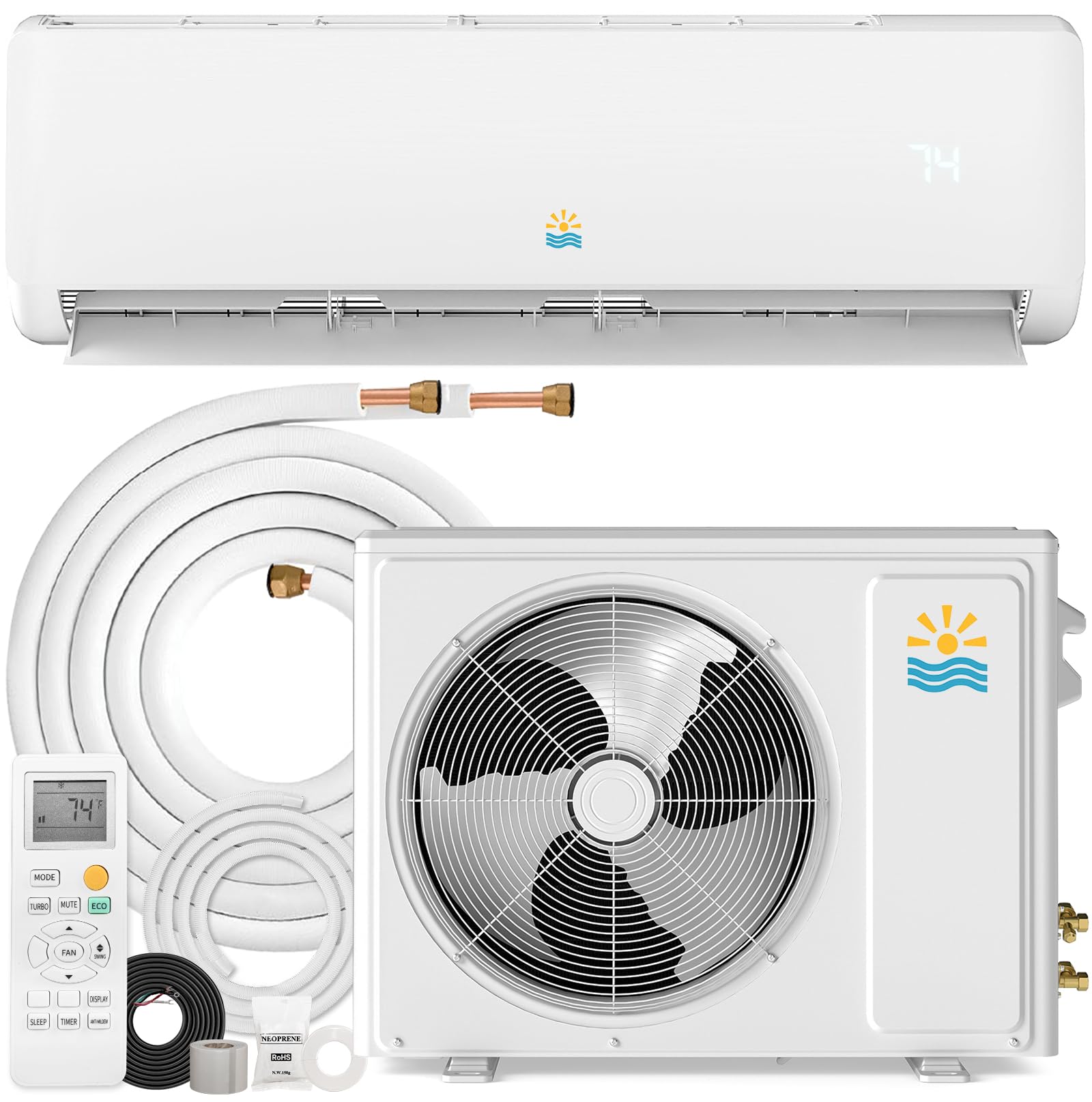
Quiet enough to record audio over, with a turbo mode for when the room is already hot.
This EXNOS runs its sleep mode at just 26dB, which is roughly the sound of a soft whisper — quieter than most refrigerators and well below the noise floor of a typical basement. That matters if you use the space for anything where quiet counts. It pushes 12000 BTU of cooling and 12500 BTU of heating across a rated 750 square feet, with a 19 SEER2 rating to keep the running cost reasonable.
Buyers report it works like a unit that costs a great deal more, cooling a sunroom in minutes and holding temperature without drama. It includes four operating modes, a vertical swing, multiple fan speeds, a dimmable LED display, and a 24-hour timer. Turbo mode gets the space to your target quickly, which is handy when you come downstairs to a room that has been baking all afternoon.
Two things to know before ordering. The outdoor unit requires above 19°F for proper heating — below that, the heat side is limited, so a genuine deep-winter basement in a cold climate may need a backup. And like every split here, it needs professional installation with a vacuum pump, though the required tools are standard. Plan for a licensed tech regardless of who carries the box in.
EXNOS dual mode: your basement doubles as an office, studio, or quiet room and you want the lowest noise floor in this lineup.
extra parts: heating performance depends on outdoor temperatures staying above 19°F.
6. ROVSUN 12000 BTU Wifi Enabled Mini Split Air Conditioner & Heater

The split that contractors keep coming back to, priced for owner-builders.
ROVSUN has built a following among people who install systems for a living, and that shows in the customer feedback. A general contractor reports using this brand across foam-and-timber builds, noting the wall-mount format installs more easily than ceiling cassettes. The 12000 BTU unit delivers 12600 BTU of heating to match, covers 550 square feet, and carries a 20 SEER2 rating. It survives on a 230V circuit with a 15A double breaker.
Owners like the range of extras: four-way swing, auto-defrost, turbo mode, eco and sleep modes, and voice control through Alexa or Google Assistant. One buyer had an HVAC tech friend inspect it and confirm the build quality and SEER rating were genuine. What wins people over is ease of install — several owners describe wiring it up as straightforward, and getting it running in an afternoon with a couple of YouTube videos.
The main thing to plan around is the temperature window. The manufacturer rates cooling only between 32°F and 90°F indoor, so it needs a basement that stays above freezing. It wants a basement that stays within a normal range. Also note the line set: the included 16-foot run covers most basements but a far-off condenser may need a longer kit.
ROVSUN wifi control
- 20 SEER2 rating with voice and app control for schedule-based cooling
- 12600 BTU heating capacity covers cool-season use in a below-grade room
- Straightforward wiring suited to an owner-builder with basic tools
- Wide feature set — four-way swing, turbo, auto-defrost, eco mode — at this tier
wifi flaky
- No cooling outside the 32°F to 90°F indoor range
- Included 16.4-foot line set may not reach a distant condenser location
- WiFi pairing takes some patience — six display presses over eight seconds to reset
ROVSUN remote: an owner-builder comfortable with basic electrical work and a bit of patience.
signal issues: an unheated basement that drops near or below freezing.
7. DREO Portable Air Conditioner 515S, 12000 BTU ASHRAE (8000 BTU DOE)
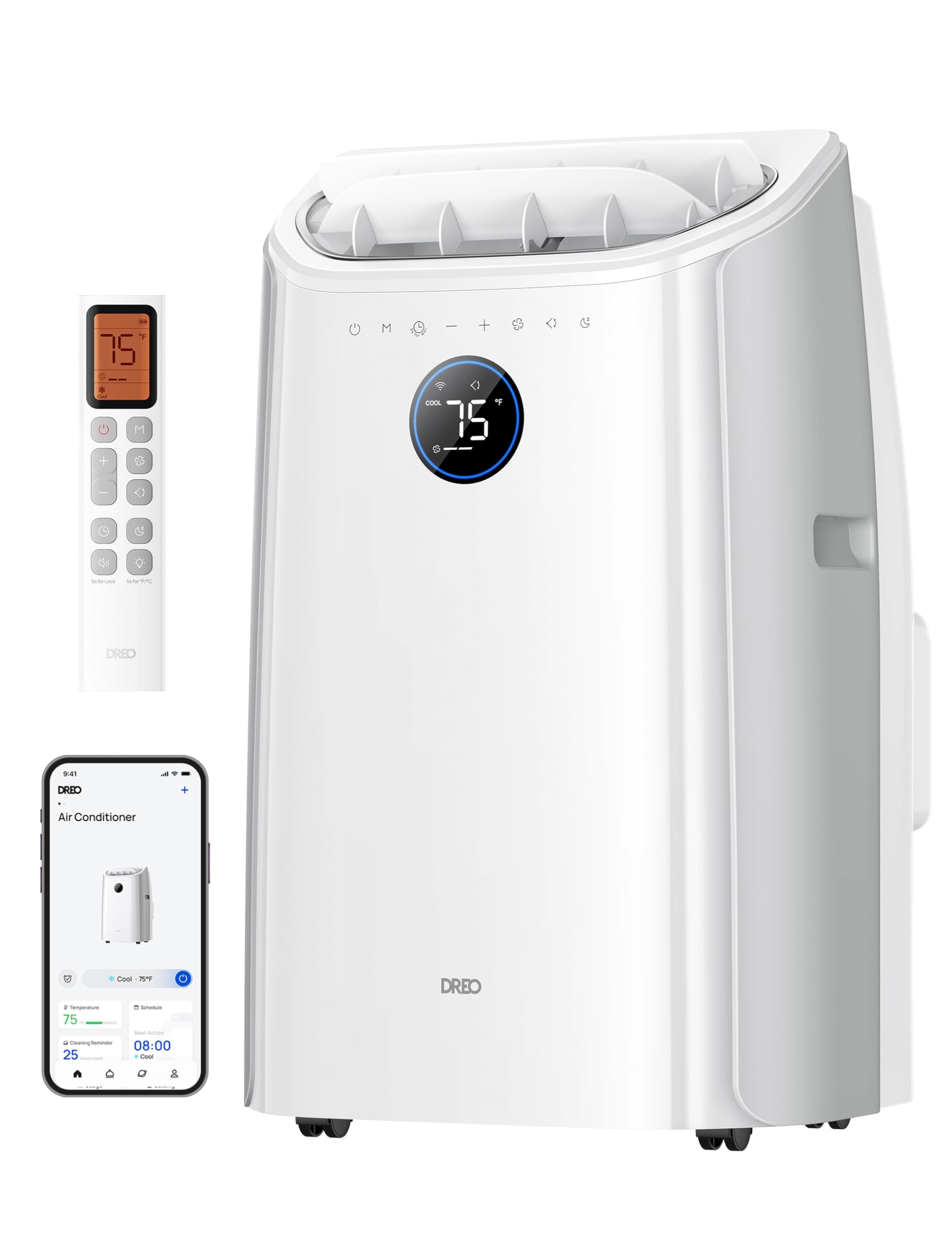
The rolling unit you can park in a basement and move out at lease end.
When you cannot touch the walls, a portable is the whole plan, and the DREO 515S is built for exactly that. It rolls on wheels, uses a self-evaporating system that eliminates drainage in humidities under 90%, and counts 12000 BTU of ASHRAE cooling that reaches about 150 square feet effectively. DREO’s noise-isolation system holds it to 45dB, and voice control through Siri, Alexa, and Google means you can cool the room before you reach the bottom of the stairs.
Performance is what carries this unit — owners consistently describe fast cooling, quiet operation, and reliable temperature control that drops as low as 64 degrees. The wheels make it easy to follow you from room to room, and three-in-one cool, fan, and dry modes cover the full year. The remote plus the phone app give you several ways to steer it, which owners appreciate when the basement feels damp and muggy.
The trade-off is the exhaust. It is a single-hose portable, so it needs a window or vent opening for that hose, and the rated 150-square-foot coverage is smaller than the split systems here. Basements with zero openings will need a custom panel or a different category of unit entirely. If you have a basement window or vent, this is the lowest-commitment option.
DREO 515S wheels: cooling that follows you into any room without a wall-mount install, which is exactly the flexibility a renter wants.
single hose limit: the exhaust hose must reach an opening, so a fully sealed basement needs a different solution.
DREO roll away: you rent and cannot mount anything permanent but have any ventable opening.
large rooms: the space has no exhaust route — the warm air has to escape somewhere.
8. YITAHOME 21 SEER2 18000 BTU Mini Split AC/Heating System 208-230V
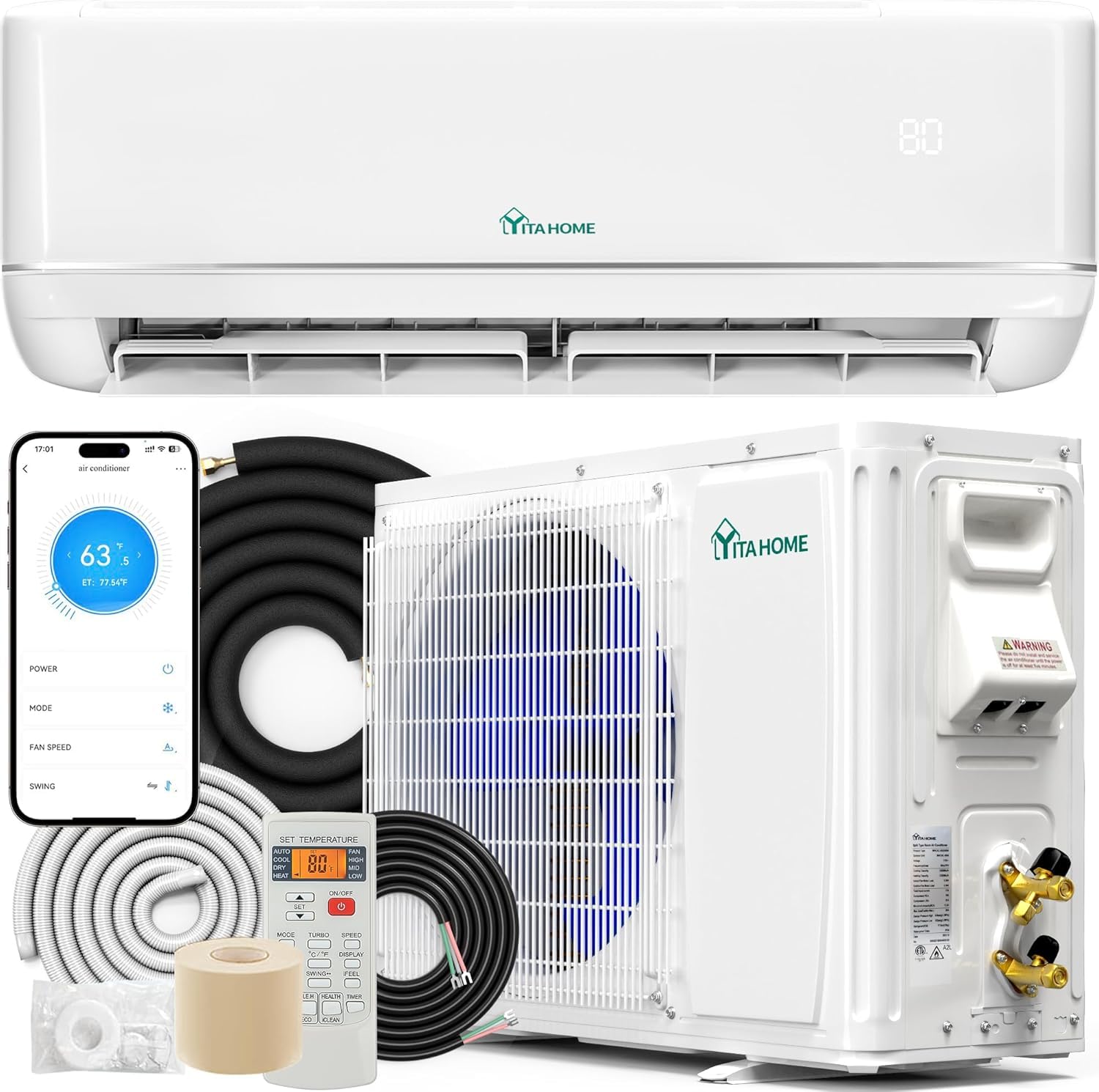
The high-capacity split that handles a wide open basement without breaking a sweat.
An open basement rec room needs more muscle, and this YITAHOME delivers 18000 BTU across a rated 1250 square feet — the largest coverage in this list that still runs efficiently. Its 21 SEER2 rating and inverter compressor cut running costs by up to 25% on the manufacturer’s estimate. The five modes include Auto, Cooling, Drying, Heating, and Fan, plus four fan speeds up to Turbo. For below-grade spaces with poor insulation, that headroom is the whole point.
Owners mention it cools RVs quickly and holds stable temperatures, with the ability to set it as low as 60°F. It runs under 49dB and the included app supports timers and sleep mode, making overnight use comfortable. A 135°F self-cleaning cycle and a washable, removable filter keep maintenance simple — clean the filter monthly and the machine stays efficient. Voice control through Alexa rounds out the feature set.
Plan the install carefully. This unit requires professional installation, and a clearance specification in the manual has caught at least one installer — an indoor air handler with an over-8-foot mounting requirement cannot fit in an 8-foot ceiling. Confirm clearance before you buy. It also ships in two packages that may arrive on different days, so schedule installation after both arrive.
YITAHOME big room: a large, open, or under-insulated basement where extra BTU makes the difference between cool and stuffy.
wall strength: the mounting clearance requirement fits your ceiling height before committing.
9. DELLA Motto Series 12000 BTU 20 SEER2 115V Mini Split AC
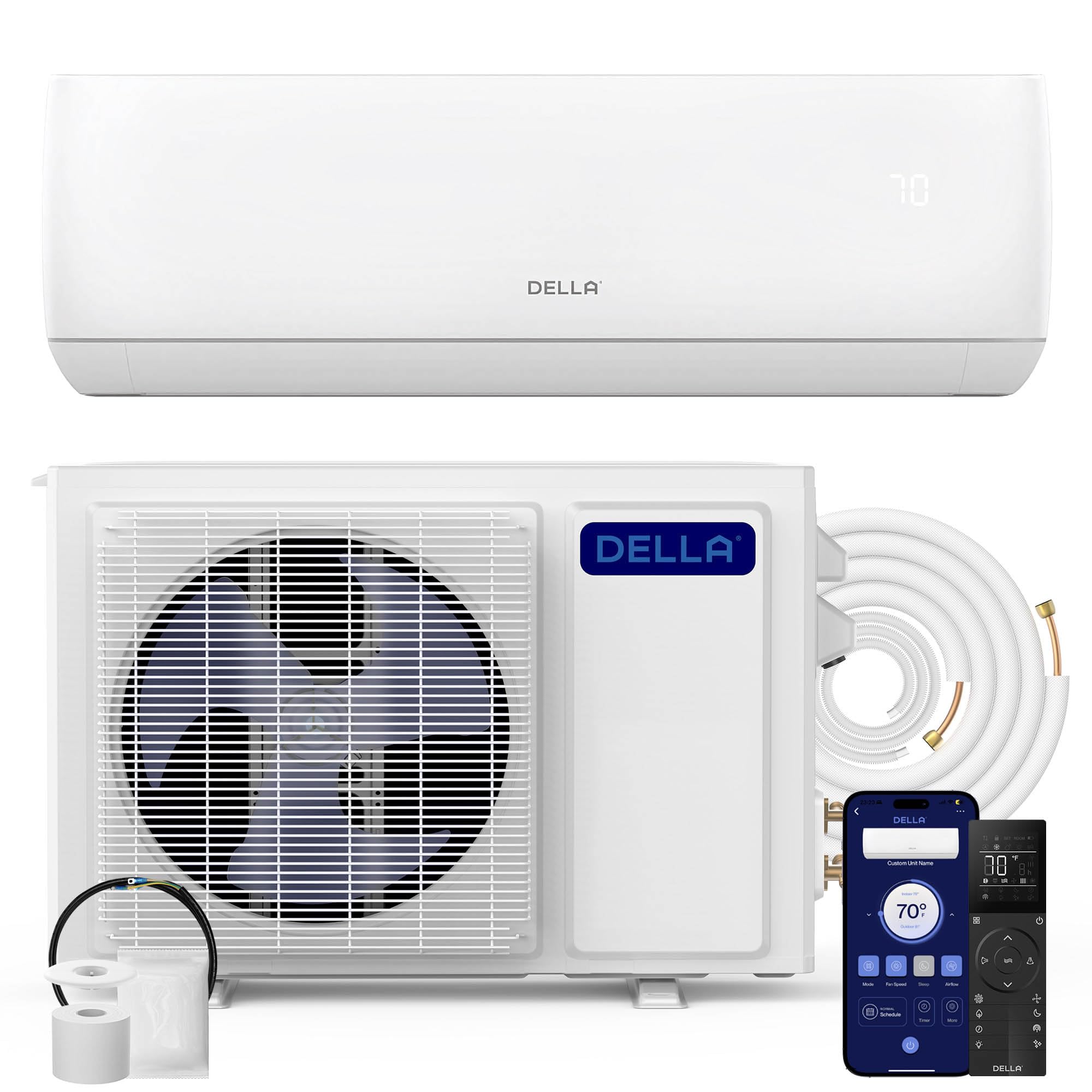
The split that stays under 30 decibels and blows air good enough to cool a drafty barn.
At 27 dBa, the DELLA Motto is one of the quietest units here, and that number is worth caring about in a basement that doubles as a living space. It runs on standard 115V power, cools up to 550 square feet, and pairs a 20 SEER2 rating with an inverter compressor the manufacturer rates for up to 30% power savings. The DC inverter technology keeps the compressor spinning at just the right speed instead of cycling, which is what keeps both your ears and your electric bill happy.
Owners like the smart sensor — the remote reads room temperature and adjusts the air accordingly for personal comfort. It runs the full complement of modes: heating, cooling, dehumidifying, and dry. The 4D air flow moves air both up-down and left-right, and turbo mode gets you to your target fast. Several customers note significant drops in their electric bill after switching from portable AC units.
Set expectations around the line set. The included 16ft copper line is standard-size, but owners with tall ceilings or distant condenser locations find it too short — and adding length requires refrigerant. If your condenser needs to sit far from the indoor head, plan for a longer line and a top-up. Also note that setting the temperature below 60 degrees is not supported, so a deep cold room may want a different approach.
DELLA Motto 20 SEER
- 27 dBa operation keeps a basement living room genuinely peaceful
- 20 SEER2 efficiency with a manufacturer-rated 30% power savings
- R-32 refrigerant — the newer choice for cleaner indoor and outdoor air quality
- Smart sensor reads temperature at the remote, not the unit, for more even comfort
line set short
- Included 16ft line set may be too short for some installations, and extending it requires refrigerant
- Temperature control in auto mode draws some gripes — manual mode gets steadier results
DELLA Motto quiet: quiet operation is your top priority and your condenser can sit within the included line-set reach.
long runs: you need a long refrigerant run — the added cost and refrigerant refill may change the math.
10. Cooper & Hunter MIA 12,000 BTU 115V Wall Mount Mini Split AC, 21.2 SEER2

A high-efficiency split that blows air cold enough to chill objects, not just rooms.
With a 21.2 SEER2 rating, this Cooper & Hunter sits at the top of the efficiency pack alongside the YITAHOME, and it reaches that number in a 12000 BTU frame that covers 550 square feet. It runs on 115V, uses a smart kit for scheduling and remote control through your phone, and includes a 16ft copper line set, communication wires, and a drainage extension in the box. U.S.-based technical support is part of the package.
The performance claims stack up in the field. Owners describe it as whisper quiet inside and out, with humidity and temperature control that holds steady — one reports the AC blowing 34°F air on an 80-degree day. The WiFi module brings a full-featured app, and the unit is a common pick for homes, shops, and older houses with brick walls. Dehumidifying a damp basement quickly is part of what it does well.
The one part to keep an eye on is the drain line. The preinstalled drain hose clamp has caused water to leak into a room in some cases, so it pays to check that connection when the unit is installed. Beyond that, this is a solid, efficient package that many reviewers point out deserves the price. Budget the install — the manufacturer requires a licensed HVAC tech and the warranty registration needs a license number within 60 days.
Cooper Hunter slim: anyone who wants top-tier efficiency in a smaller basement room with smart control built in.
far corners: have your installer verify the drain hose clamp — a loose connection there can drip into the room.
11. DELLA Econo Series 23000 BTU Mini Split Air Conditioner 17 SEER2, 230V
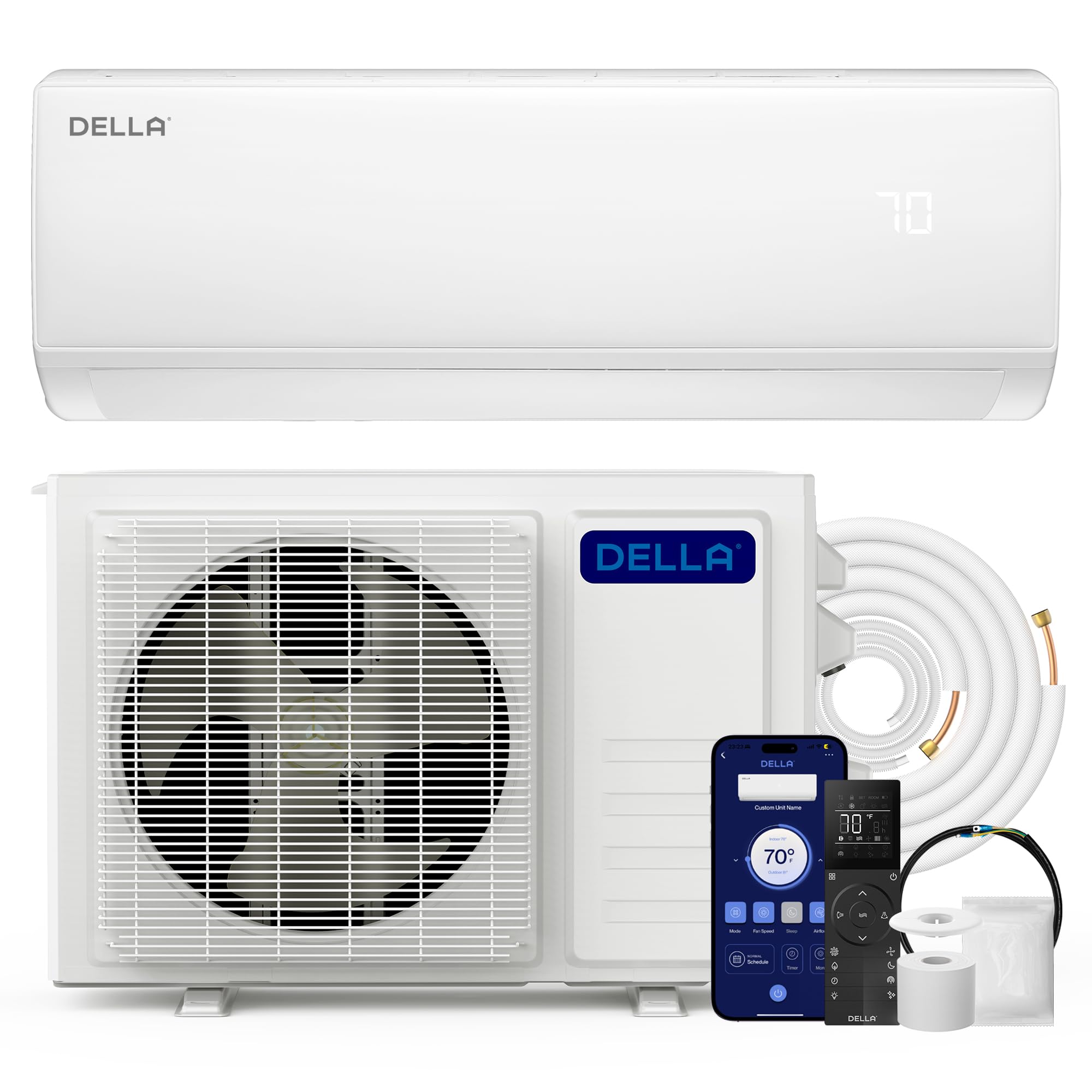
The high-capacity split that cools an entire basement floor and calls it easy.
When the basement is really a whole floor, you need the DELLA Econo. It runs 22000 BTU of cooling with a 23000 BTU/h rating, covers a rated 1500 square feet, and carries a 17 SEER2 rating. That square-footage sweep is the largest in this entire list, which makes it the natural pick for an open lower level. It runs 37 dBa in low mode, so it stays clear of conversation-level noise even at full output. Runs on 208-230V with a 25A maximum fuse.
Owners describe it as a strong, solid build that cools a 1500 square foot space fast and keeps the heat pump working through chilly temperatures. The DELLA name comes up often for the build quality itself — the fit, finish, and compressor feel better than the tier implies. Wi-Fi and Alexa control let you manage it from anywhere, and the four-way airflow and dehumidify mode are particularly appreciated in damp basements. Full installation kit with standard 1/4-inch and 1/2-inch copper pipes is included.
Two things to know. It requires professional installation — this is not a DIY system. And the included 16.4-foot line set may need trimming if your run is shorter, so plan your condenser placement carefully. The 25A circuit requirement also means you need a dedicated power run, which adds to the install cost.
DELLA Econo 23000: at 1500 square feet this is the only unit here sized for a full lower level, so one system cools the whole space without a second head.
230V required: a 230V circuit with a 25A breaker plus a licensed tech — worth budgeting for alongside the equipment.
DELLA Econo power: a full basement floor or a large open lower level that needs one system to handle it all.
110V homes: your space is compact — you would be paying for capacity you cannot use.
12. Daikin 12,000 BTU 18 SEER2 Entra R32 Series Heat Pump Mini Split A/C

The name-brand split with a rinse-free air-purifying filter and a broad operating window.
Daikin is one of the marquee names in ductless cooling, and the Entra lives up to it with 12000 BTU of cooling, 11300 BTU of heating, and an 18 SEER2 rating (a government efficiency score, where higher means cheaper to run) with a 3.30 COP — the COP being a measure of how much heat it moves per unit of electricity. It runs across a wide outdoor range, cooling from 50°F to 115°F and heating from 5°F to 65°F, which covers a basement in nearly any climate. The manufacturer names basements, attics, and garages as intended use cases.
Owners describe it as quiet and efficient, with easy filter cleaning and simple controls including a programmable on/off timer. The Titanium Apatite Photocatalytic Air Purifying Filter is a genuine bonus for a basement where air quality matters. Several professional HVAC contractors call out the brand’s price-to-quality mix. The 15-foot line set and wall-mount bracket come included.
The honest note is that value reviews run mixed. Some buyers call it a great deal; others feel the price runs high for a 12000 BTU unit that covers the same 550 square feet as several cheaper alternatives. The 15-foot line set is also shorter than some competitors’ 16-foot run, so a distant condenser could need an extension. If brand reliability matters more to you than shaving cost, this makes sense.
Daikin Entra R32
- 18 SEER2 with a 3.30 COP for efficient year-round operation
- Air-purifying filter with Blue Fin Protection for cleaner basement air
- Wide operating window: cools 50°F to 115°F, heats 5°F to 65°F
- Manufacturer explicitly names basements as a fit for this system
premium price
- Value reviews split — some buyers find the price high for 12000 BTU
- The included 15ft line set is shorter than the 16ft runs on several rivals
- No filter-cleaning alert on the display
Daikin name: a buyer who wants a known brand name, an air-purifying filter, and a system the maker itself points at basements.
budget splits: budget rules and you do not need the brand cachet or the air-purifying filter.
13. MRCOOL 24000 BTU 230V Ductless Inverter Mini Split Air Conditioner & Heat Pump System, Easy Pro Series

Twice the cooling power of the standard splits, with a genuine DIY installation path.
The headline number here is 24000 BTU — double what most splits in this list push, which is why it can cool up to 1050 square feet. For a large open basement or a below-grade commercial space, that capacity is the whole reason to pick it. It runs on 230V, works with Google Assistant and Amazon Alexa, and uses a washable filter and copper core. The Easy Pro Series is specifically built to be installed without the professional equipment that most splits require.
Owners describe the install as genuinely achievable for a handy homeowner. One reports completing it in four hours with electrical work; another spent five to six hours being picky and expects three to four next time. Several mention it cools a small house down to 66°F even when it is 110°F outside, and one describes it as the only split that blows truly cold air compared to other brands. Quiet operation and the turbo mode earn repeated praise.
Two practical notes before you buy. You will still need a 240V breaker, a disconnect, and a cable whip — none are included in the box — so factor those in. The mounting plate is also narrower than standard 24-inch stud spacing in some installs, which means you may need anchors instead. And while heating is supported, the manufacturer does not publish an operating floor as low as the cold-climate units. For most basements, none of that is a problem.
MRCOOL self install: you have a large basement and want a DIY-friendly install on the most powerful unit in this list.
panel limits: the 240V breaker, disconnect, and cable whip, which are sold separately.
Understanding the Specs
BTU and Square-Foot Coverage
BTU stands for British thermal unit — the amount of heat the unit can move out of a room in an hour. A higher BTU number means more cooling power and, usually, more square feet of coverage. But the two do not scale perfectly: 12000 BTU on a well-insulated, low-ceiling basement can cover as much as 750 square feet, while the same rating in a leaky, high-ceiling space may handle only half that. Always read the manufacturer’s stated coverage alongside the BTU number. If you are between sizes, size up — a system that cannot reach your target runs constantly and drives up the bill.
SEER2, HSPF2 and Running Cost
SEER2 and HSPF2 are efficiency ratings for cooling and heating respectively. Higher numbers mean the unit turns less electricity into the same amount of cooling, so your monthly bill is lower. A unit rated 20 SEER2 does that job with noticeably less power than a 17 SEER2 model. The trade-off is upfront cost, but in a space you plan to run all summer and possibly heat in winter, the more efficient unit tends to pay you back over several seasons. Note that these ratings describe how efficiently the unit uses electricity — they do not change how quickly it cools.
Venting Without a Window
Every air conditioner has to send the heat it collects somewhere. Mini splits send warm air through a refrigerant line to an outdoor condenser, so they require no window at all — just a small wall penetration for the lines and drain. Portables are different: they blow warm air out through a hose, so they need an opening to route it through, whether that is a basement window, a vent, or a custom panel you fit into a sill. Confirm which family your space can accommodate before you buy. If you have any opening at all, a portable works; if not, a mini split is the only route.
Noise, Installation and Power Requirements
Noise is measured in decibels (dB), and lower is better for a basement you actually use. Under 30dB is roughly a whisper; over 50dB starts to interfere with conversation. Most splits in this list sit between 26dB and 49dB depending on mode and fan speed. On power, mini splits come in 110V, 115V, and 230V varieties — 110V and 115V units often plug into a standard outlet, while 230V systems need a dedicated circuit and breaker. Almost every split requires professional installation with a vacuum pump and gauges to pull moisture from the lines; skipping that step voids the warranty on most brands.
FAQ
Can a mini split really cool a basement with no window at all?
How many BTU do I actually need for my basement square footage?
Can I install a mini split myself in the basement, or do I need a professional?
Do portable air conditioners work in a basement without a window frame?
What does SEER2 mean and does a higher rating really save money?
My basement is damp and humid — will a mini split remove the moisture too?
How much noise will I actually hear from a split in the basement?
Do I need a dedicated electrical circuit for a basement mini split?
Is a mini split worth it versus a portable air conditioner for a basement?
How long does a mini split typically last, and what maintenance does it need?
Final Thoughts: The Verdict
If you want one pick that does everything well without ever touching a window, the Senville AURA 12000 BTU earns its spot as the strongest all-around choice. It covers more area than any other 12000 BTU unit in this list, heats effectively down to -22°F outdoor, and its 25.5 SEER rating keeps the running cost in check. It is the strongest all-around pick for a large finished basement that needs both cooling and winter heat.
If you want the best possible value for a smaller basement, the Rellytech 9000 BTU gives you 110V convenience, an 8-year warranty, and a 19 SEER2 rating for a fraction of the commitment. And if you want the most powerful single system in this list with a real DIY path, the MRCOOL Easy Pro 24000 BTU is the one to reach for — twice the cooling of the standard splits and designed for the homeowner who wants to do the install themselves. Whichever route you take, size the unit to your space, plan the venting, and budget for the install — that is where most of these projects go right or wrong.
How We Picked
We do not accept paid placement. Every pick is matched to a real buyer and a real use-case; we do not hands-on test units.
Sources & Methodology
Specifications: manufacturer listings and product documentation. Review insights: verified customer reviews, as of September 2026. Pricing: not shown on this page (it changes often); check the current price via the retailer link.
As an Amazon Associate, KitchPrep earns from qualifying purchases. This does not affect which products we feature.
Related Guides
