
Specs are compiled from manufacturer listings and verified buyer reviews and can change over time — please confirm the key details on the product page before buying.
Getting bitten every night and never seeing the culprit is the worst part of a bed bug problem. A monitor — a small cup you slide under each bed or furniture leg — turns that guessing into evidence. Bed bugs climb up the leg to reach you, fall into the trap, and cannot climb back out because the inner walls are too smooth. It will not wipe out an infestation on its own, but it tells you whether bugs are actually present and which pieces of furniture they are using. That is exactly what you need before you spend money on treatment.
I’m Mohammad Maruf — the founder and writer behind KitchPrep. This guide is built by comparing the manufacturers’ published specifications and the patterns across verified customer reviews, so you get each pick’s real strengths and trade-offs instead of marketing spin.
Below you will find how to size a trap to your actual furniture legs, which models hold up under heavy beds, and where glue traps fall short. If you want the monitor that earns the most consistent owner confidence, a 12-pack in white is the pick most people should start with. This guide to the best bed bug monitor explains every alternative in plain terms.
Our Picks at a Glance

How To Choose The Best Bed Bug Monitor
A monitor only works if bugs physically cannot walk around it. That depends on three things: whether the trap has a smooth inner wall, whether the base stays flat under real weight, and whether the opening actually fits your furniture legs. Get those three right and a simple plastic cup will out-detect a complicated gadget.
Pitfall, Glue, and Lure: Pick the Right Type First
A pitfall trap is a hard plastic cup with a rough outer texture so bugs can climb in and a polished inner channel they cannot grip to escape. It never wears out, needs no replacement pads, and can be rinsed and reused. A glue trap works differently — it holds bugs on an adhesive surface, so once it fills you throw the whole thing away. Glue traps are also the format most likely to disappoint, because a bed bug walking across paper has far less contact with adhesive than a bug dropping into a cup. A pheromone lure trap adds a scent designed to mimic bed bug harbor odors and pull insects toward the device, which helps most in rooms where you suspect nothing yet.
Measure Your Legs Before Anything Else
This is the step almost everyone skips, and it is why so many reviews end with the words “didn’t fit.” A monitor has a maximum opening. If your leg is wider than that, the trap slides out from under the furniture or the leg simply sits outside the rim and the barrier does nothing. Measure the thickest part of the leg, not the thinnest. If your bed legs are board-style rather than round, measure the widest diagonal across the corner. Traps with an inward taper are narrower at the bottom than the outer rim suggests, so the usable footprint is usually the number that matters, not the advertised one.
Check the Base, Not Just the Walls
Smooth walls catch bugs; a stiff base keeps the trap working. A thin base will bow or crack under a heavy bed frame, and once a trap deforms, gaps appear at the rim and bugs walk straight through. Look for a reinforced or thickened base plate, and if you have a genuinely heavy frame or board-style legs, size up rather than down. Monitors sitting on deep carpet also need a flat, rigid base — on soft pile, a flexible cup rocks and opens up escape routes.
Decide How Many You Actually Need
Count your legs. A standard bed has four, a sofa usually four, and some platform frames have six or a center support. A barrier with gaps in it is the same as not having one, so buy enough capacity for the furniture you are trying to protect, plus a spare or two for spots like a luggage rack or a reading chair. Multi-packs priced for three beds are generally the smarter buy than a small pack you have to top up later.
Quick Comparison
| Model | Best For | Trap Type | Pack Size | Max Leg Opening | Amazon |
|---|---|---|---|---|---|
| TruGuard X Bed Bug Interceptors★ Best Overall | Heavy beds and wide legs | Pitfall, reinforced base | 12 | Round 3-11/16″ | Amazon |
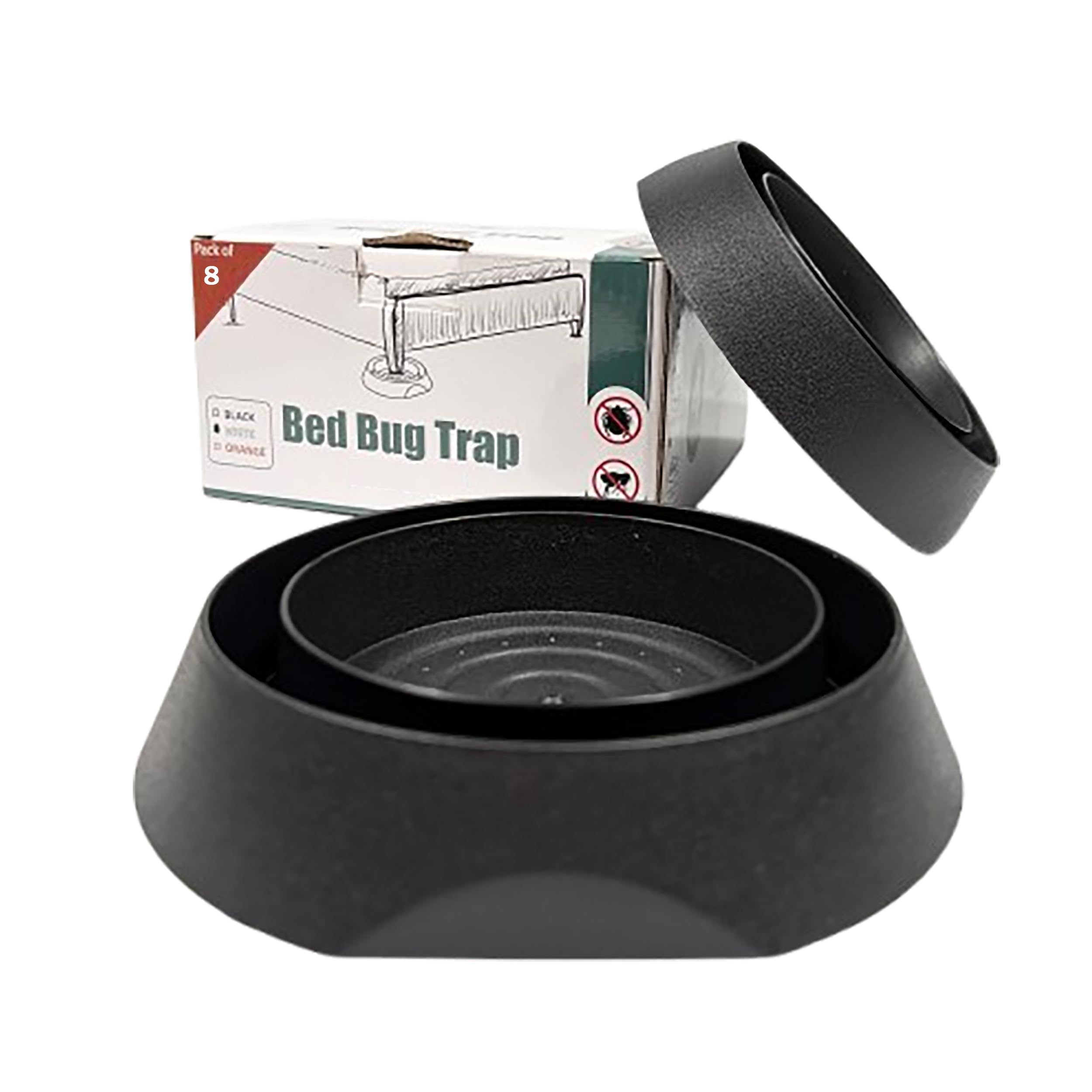
| PESTEZE USA 8 PackBest for Oversized Legs | Reusable apartment monitoring | Dual-wall pitfall | 8 | 6″ outer design | Amazon |
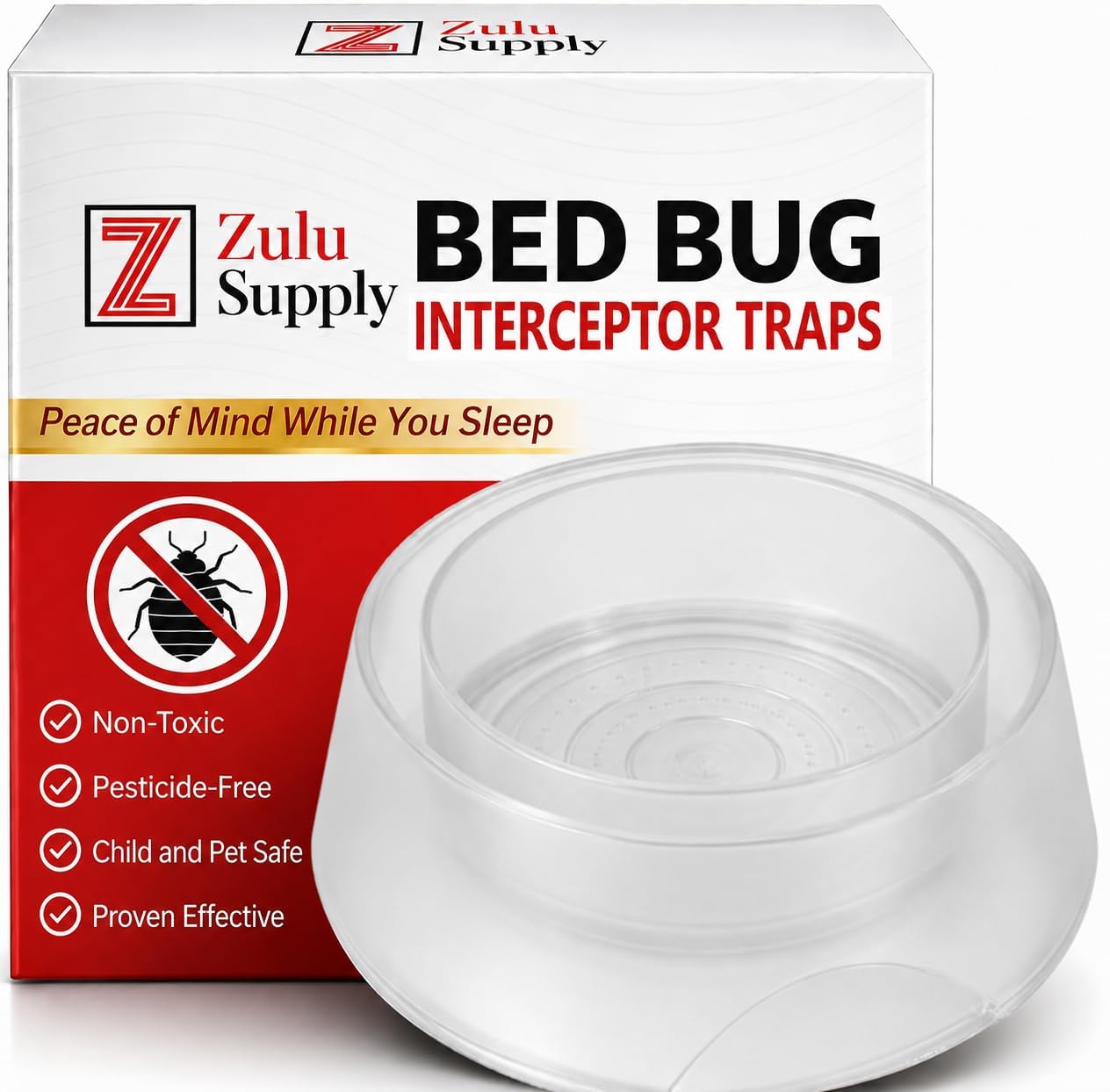
| Zulu Supply Clear 8-PackBest Visibility | Seeing bugs without lifting the trap | One-piece clear pitfall | 8 | 4.25″ | Amazon |
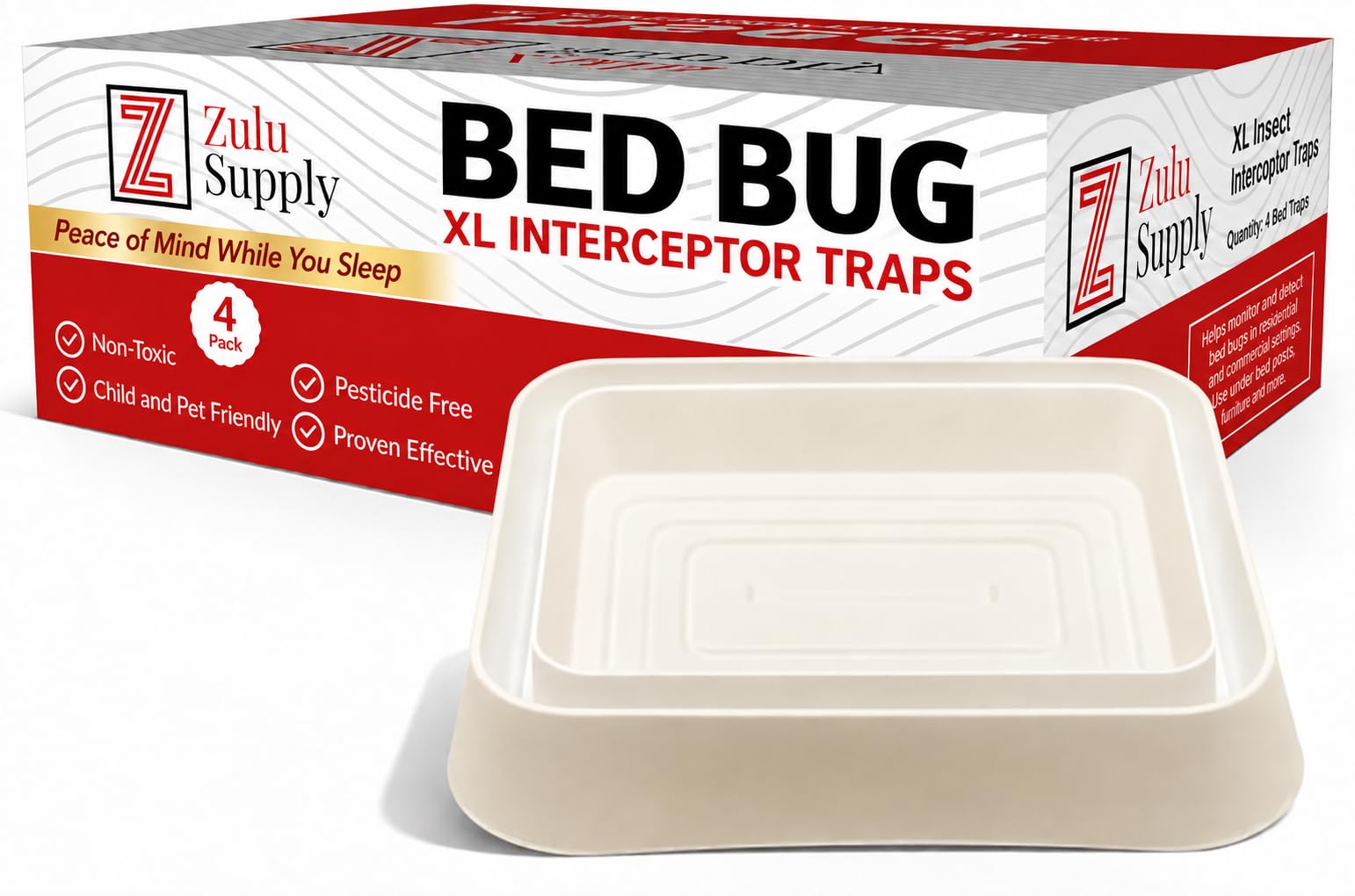
| Zulu Supply XL 4-Pack | Board-edge and oversized legs | Extra-large pitfall | 4 | 4.25″ inner | Amazon |
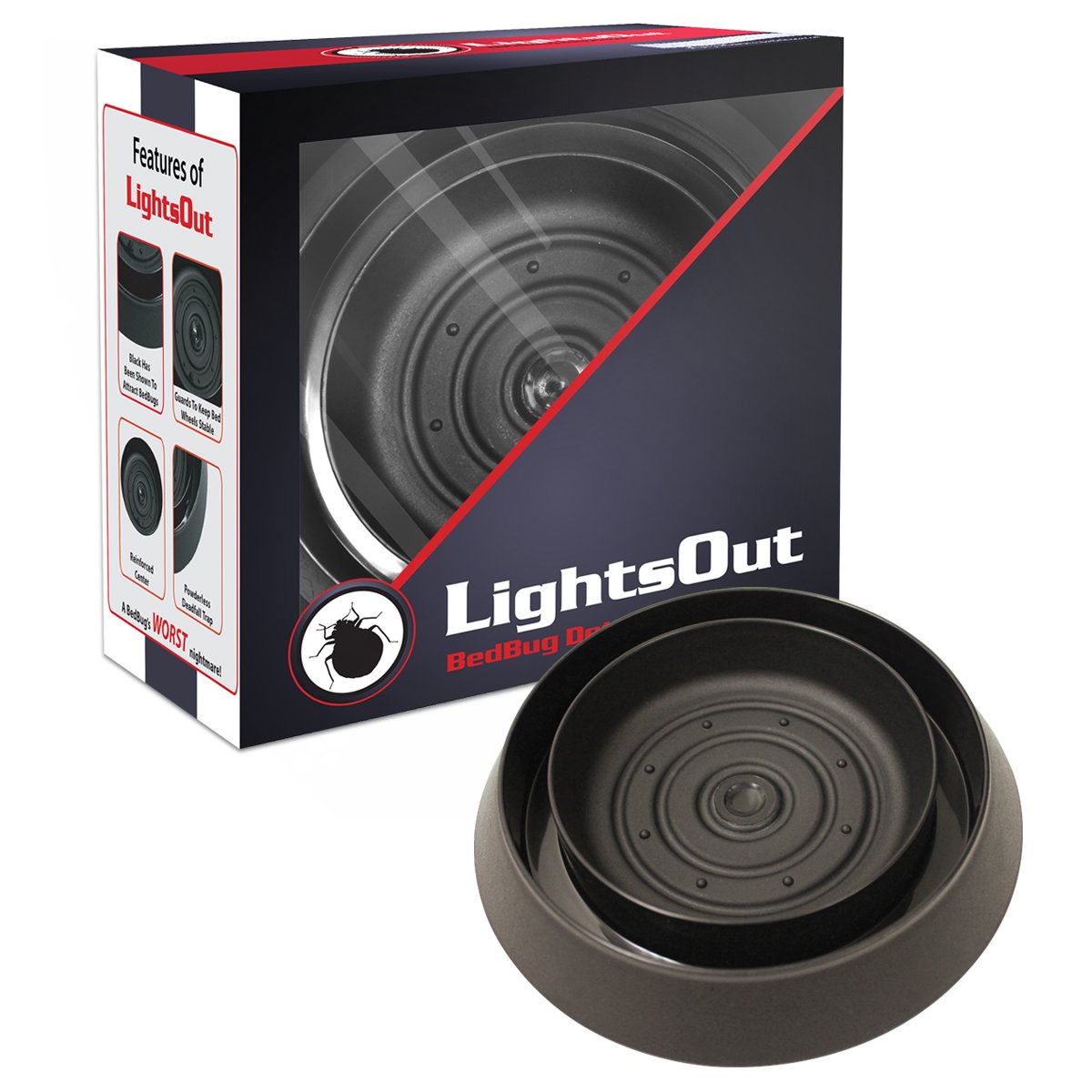
| Lights Out Pitfall Trap | Bed frames on casters | Black pitfall with stability guards | 4 | Posts 3.75″, casters 4″ | Amazon |
| Nattaro Scout | Confirming a room is clean | Pheromone lure monitor | 2 traps with lures | — | Amazon |
| BugMD Interceptor Traps | Foldable placement in tight spots | Three-way glue trap | 12 | — | Amazon |
In‑Depth Reviews
1. Bed Bug Trap — 12 Pack | TruGuard X Bed Bug Interceptors
Our pick — over 4★ from 650+ verified ratings; the strongest balance of quality and price.
A reinforced base plate that survives a real bed frame, not just a spec sheet.
If your bed frame is heavy, this is the one to start with. The ShieldFlex TruGuard is a 12-pack of white pitfall traps built around a reinforced polypropylene base plate — a thickened plastic floor that resists the cracking that kills cheaper cups once a loaded bed settles onto them. That single design choice is why it takes the top spot: a trap that deforms stops being a barrier. It holds up under real furniture weight, and the smooth-walled wells keep anything that drops in from climbing back out.
What wins people over is the durability. Buyers report leaving these under a loaded bed for months on carpet with no cracks, including one trap that held a 360-pound sleeper.
Size is where you need to pay attention. Each trap handles a square post up to 3-5/16 inches, a round post up to 3-11/16 inches in diameter, or a rectangular leg up to 3-11/16 by 2-15/16 inches. The advertised 4×4 footprint is wider than the usable opening because the inner walls taper inward and the corners are chamfered, so measure before you commit. As for weight, these run notably heavier than the BugMD traps at 0.91 kg versus 0.24 kg — that extra material is exactly what keeps the base flat under load.
White 12-pack, 4.3 stars. Twelve traps covers three beds or three pieces of furniture, which means you can guard a bed, a sofa, and a reading chair without ordering again.
The case for it
- Reinforced polypropylene base plate resists cracking under heavy beds and furniture
- 12 traps cover three beds, so a whole room gets a continuous barrier
- White shell makes trapped bugs and cast skins easy to spot on inspection
- Smooth inner wells are too steep for bed bugs to escape once they drop in
The honest catch
- The 4×4 listing is misleading — the tapered inner opening tops out around 3-11/16 inches
- Board-edge legs wider than that will not sit inside the well
- Heavier and bulkier than foldable glue traps if you need to pack them for travel
Grab this if: you have a normal home bed or upholstered furniture with legs inside about three inches and you want one purchase that covers the whole room.
Look elsewhere if: your bed sits on a wide board frame or casters — the XL options below take those, and this trap does not.
2. PESTEZE USA 8 Pack Bed Bug Trap & Interceptor
The 6-inch footprint that finally swallows awkward, wide furniture legs.
PESTEZE takes a different route to the same job: instead of shrink-wrapping the trap around a leg, it builds a wide 6 by 6 by 1.5 inch basin in black polyethylene so oversized furniture feet actually sit down inside it. The dual-wall pitfall design catches bed bugs climbing up or down the leg — a passive monitor, detector, and barrier in one reusable piece. There is no glue, no vapor, and no treatment inside it, which matters if you have pets or small children moving around the bedroom floor.
Black is the interesting choice here. Lights Out uses a black shell on the reasoning that the color draws bed bugs in, and PESTEZE follows the same instinct — but the trade-off is visibility, since dark bugs on a dark base are harder to spot than on white. You give up some spotting ease and gain a much wider catch surface. Built from durable plastic heavy enough to sit still under a sofa or nightstand, these are made for long-term monitoring rather than a short-term fix.
Owners running these under bed and table legs report catches within a couple of nights, and the reusable basin rinses clean instead of needing replacement pads. The one thing to plan around is scale — with 8 traps you cover two standard beds or a bed and a sofa, not a whole apartment. If you are treating a rental with several rooms of furniture, you will want two sets.
Where it earns its place: the extra-wide 6-inch basin covers furniture legs that slide straight out of narrower cups, and the chemical-free reusable build suits a bedroom where you would rather not leave sticky paper or powder on the floor.
What to expect in daily use: because the shell is black, you will want a small flashlight or a bright phone screen when you do your weekly scan — dark bugs on a dark rim are easy to miss.
Suits you if: your bed or sofa has chunky legs that keep escaping standard interceptors, and you want something you rinse and keep.
Think twice if: you need to arm three or more beds at once — the 8-pack spreads thin across more than two pieces of furniture.
3. Bed Bug Interceptors – 8-Pack Clear Passive Monitor
Clear plastic walls so you can see the evidence without lifting the bed.
The obvious problem with a solid white trap is that checking it means pulling the trap out from under the leg — and every time you do, you disturb the very spot you are trying to leave alone. This Zulu Supply set sidesteps that with a clear shell. Each 8-pack trap has a 4.25 by 4.25 by 1.25 inch one-piece body with smooth inner walls, and the transparency means you can glance at it from an angle and see whether anything is sitting in the basin. From sturdy plastic in 8-pack clear, it needs no assembly and no tools.
Set-up is genuinely tool-free: place one under every leg on a clean, flat surface and check it as part of your normal room routine. There are 8 traps here, which is enough to protect one bed and a sofa. Owners run these under both beds and living-room furniture and describe trapped bugs that cannot climb out and stop where they are.
The honest side of the clear-shell design is that a clear cup shows the bugs that arrived and nothing else — it is a detector, not a treatment. Several owners mention a clean trap that still flagged an infestation early, because a mattress encasement went on next. That is the correct way to read it: a clean monitor after one week is information about where the bugs are not, not a declaration that you are free of them.
What it does well
- Clear body lets you inspect for trapped bugs without lifting the furniture leg
- Tool-free install — no assembly, no tape, nothing to peel
- 4.25-inch opening fits most standard bed, couch, and chair legs
- Reusable hard plastic, so no replacement pads to buy
Where it stops
- Clear plastic looks grubbier over time than an opaque white trap — a quick rinse keeps it readable
- Eight traps cover one bed and one sofa, not a whole apartment
- It detects and blocks; it does not clear an active infestation on its own
Pick this if: you want to confirm whether bugs are present at a glance and you would rather not keep disturbing the trap to find out.
Look past it if: you already know the problem is widespread — you need more coverage than eight traps, not better visibility.
4. XL Bed Bug Interceptors – 4-Pack White Passive Monitor
Built for the wide, awkward legs that ordinary interceptors refuse to accept.
This is the same Zulu Supply design as the clear set above, but scaled and shaped around a 4.25 inch inner diameter that swallows the wide board-edge legs modern platform beds use. Owners with wide board-edge bed legs report these dropping in cleanly where narrower traps slid out. That alone justifies the switch if your frame is the reason your current monitors keep sliding out. From sturdy plastic in a 4-pack XL white, it is a straightforward pitfall with a low profile and no moving parts.
Durability is double-sided here. These hold up fine on carpet for months, and owners with more than 70 pounds pressing down on a small 1×5 inch footprint note the base flexes a bit — expected, not a fault. A flexible base under a genuinely heavy frame opens small gaps at the rim, which is the difference between a clean catch and a bug that walks around the trap. If you have a very heavy frame, this XL set is the one where the trade-off shows up.
Four traps is a single-bed kit plus a little slack, so if you want a sofa and a guest bed protected as well, plan on a second pack. The payoff is the sizing: this is the option for the frame no other trap on this list will accept.
The one reason it wins: that 4.25-inch inner diameter fits oversized board-edge and thick chunky legs that other interceptors simply cannot take.
The size ceiling: with only four traps in the box, it covers a single bed comfortably and runs out of capacity before a second piece of furniture.
Best match for: oversized bed frames and sofas whose legs won’t fit into standard cups.
Skip it for: protecting more than one bed — this four-pack is a single-furniture solution.
5. Lights Out Bedbug Detector Chemical Free Reusable Pitfall Trap (4-Pack)
The rare interceptor sized for casters, with a shell colored to draw bugs in.
Most bed bug monitors assume a plain post. Lights Out assumes a wheel. This black ABS trap handles furniture or bed posts up to 3.75 inches in diameter and casters up to 4 inches — a size range almost nothing else on this list covers. So if your frame rolls rather than rests, this is the pick that actually applies. The design is powderless and talc-free: a textured outer surface bugs climb up, then an ultra-smooth inner channel with reinforced center and stability guards so the trap stays put while the bed comes and goes. The black shell is a deliberate choice, since black is used to draw bed bugs toward the device.
Owners running these under a couch with wheeled feet report no cracks after months on carpet, and one watched a bed bug trapped in the well unable to climb out. They are used both as a full-time barrier under furniture and as an interim measure alongside oils and sprays before a professional treatment.
Where this needs honest sizing is the cleaning routine. Because the well is deep and narrow, the trap needs periodic rinsing or a blast of air duster to stay functional — a clogged channel defeats the whole point. And with only four traps in the pack, this is a single-piece-of-furniture purchase rather than a whole-room kit.
Standout strengths
- Handles casters up to 4 inches, a fit almost no other interceptor offers
- Durable ABS body with a reinforced center and stability guards
- Black exterior is used by design because it attracts bed bugs
- Powderless and talc-free, so nothing to reapply or spill on carpet
Reality check
- The deep channel needs periodic rinsing or an air-duster blowout to stay effective
- Four traps covers one bed or one sofa, not a full apartment
- No proof of activity until a bug actually walks the leg you have trapped
Made for you if: your bed frame rolls on casters or your posts are chunky, and no standard cup will sit under them.
Not your pick if: you want a low-maintenance trap you can leave for months without pulling it out for cleaning.
6. Scout Bed Bug Detection Trap, Includes 2 Traps and Lures
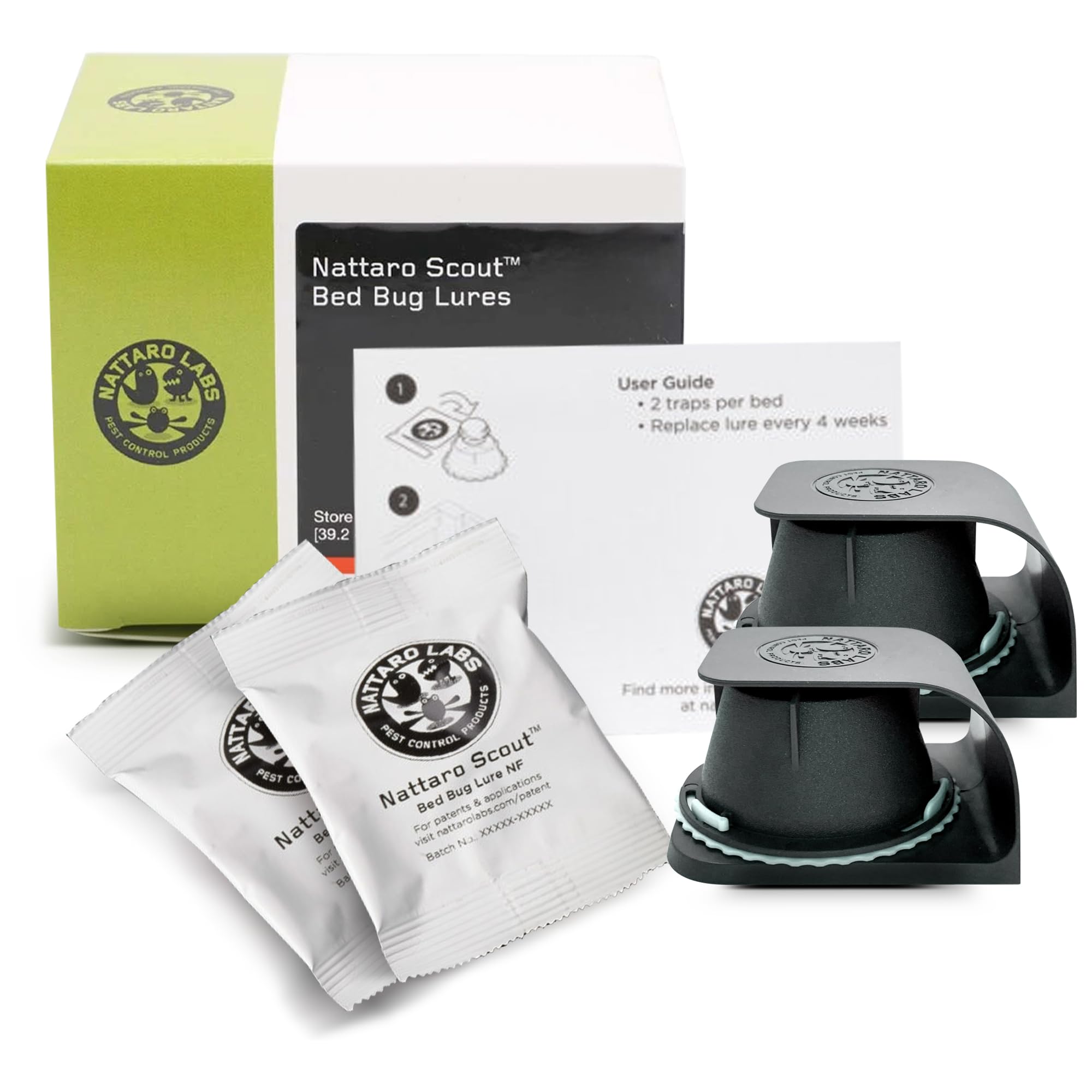
The one monitor that tries to lure bugs in rather than wait for them to walk.
Everything else on this list is passive — it sits there and traps whatever happens to climb the leg. The Nattaro Scout changes the approach with a patented pheromone lure: a scent designed to mimic bed bug harbor odors and pull in males, females, and nymphs toward the device. Instead of waiting for a bug to stumble into a cup, it works on the insect’s chemistry. Each lure holds its effectiveness for up to four weeks and can be replaced for extended use, and the whole thing is chemical-free, which makes it a reasonable fit for bedrooms and other sensitive areas. The kit ships with two traps and their lures.
The case for it is the specific job it does best: checking a room after travel. Placing a lure monitor near the bed and near where luggage sits is a sensible way to watch for bugs in the weeks after you come home from a stay somewhere unknown. Owners describe exactly that routine — a subtle, chemical-free setup that gives them a way to check rather than worry. Some owners bought it on the recommendation of a pest professional they work with.
The honest framing here matters, because this is the most specialized trap in the group and the least suited to a broad first purchase. Reviews split on the lure’s pulling power, with owners reporting units running a full month without catching anything. That is not a product failure so much as a reminder of what a lure trap is for: confirming your own space is clean, not replacing a professional inspection when you already have bites. Two traps also only covers one small area, so think of this as a monitoring supplement, not a whole-room barrier.
Why it earns a place
- Patented pheromone lure is designed to attract males, females, and nymphs, not just passers-by
- Lure holds effectiveness for up to four weeks and can be swapped for continued use
- Chemical-free and non-toxic, suitable for bedrooms and living areas
- Compact and discreet — easy to tuck near a headboard or luggage rack
Where it falls short
- The luring power divides people — some run these for a month without a single catch
- Two traps is a tiny footprint compared to a 12-pack barrier
- It cannot stand in for a proper inspection once you already suspect an infestation
Worth it for: frequent travelers and renters who want an active lure watching a room rather than a passive cup waiting for a bug.
Not the one to start with: if you have bites or visible bugs now, buy a full pitfall pack and treat — this monitor is a supplement, not a cure.
7. BugMD Bed Bug Interceptor Traps, 12 Pack

A paper trap that folds into place — and asks you to throw it away, bugs and all.
BugMD is a different animal from every cup on this list: it is a glue trap on paper that folds three different ways so you can tuck it under furniture legs, between a mattress and its frame, or flat along the floor. From 12 traps in the box, it is by far the lightest option here at 0.24 kg against the TruGuard’s 0.91 kg, and its adhesive design means once a bug lands, it stays put. The disposal routine is genuinely tidy — when a trap fills, you toss the whole thing and slide in a new one without touching anything.
If there is a place this earns its keep, it is odd jobs. Owners fold these under table legs to catch carpet beetles in their crawling phase, and the flat sheets slide into a suitcase for checking a hotel room. For detecting activity in a spot no rigid cup can reach — under a low frame, in a gap beside a headboard — the foldable format has real advantages.
The place to be clear-eyed is what glue can and cannot do against bed bugs. The folding flexibility and the mess-free disposal are the selling points, but a bug walking across a flat sticky sheet has far less contact with the adhesive than one dropping into a cup’s smooth well, and the mixed reports reflect that gap. Owners run these alongside other methods rather than in place of them. Treat this as a flexible detector for odd corners, not as your primary barrier around a bed’s four legs.
Where it fits in: the three-way folding lets you place detection under low furniture and between mattress and frame, and the drop-it-in-the-trash disposal keeps the process clean.
Set expectations: as a passive glue sheet it is a supplemental monitor — pair it with a pitfall trap under each bed leg rather than leaning on it alone.
Choose this if: you need a monitor for awkward gaps, want nothing to rinse and reuse, and like the idea of folding a fresh trap into place.
Pass on it if: you want a durable barrier around a whole bed — glue sheets are the supplement, not the defense line.
Understanding the Specs
Max Leg Opening and Inner Diameter
This is the number that decides whether a monitor works for your furniture at all. The advertised footprint is often wider than the opening your leg actually sits in, because many traps taper inward toward the base, so the usable footprint is smaller than the outer rim suggests. Measure the thickest part of your leg and compare it to the inner diameter. If the leg is wider than the opening, the trap slides out from under the furniture and the barrier does nothing — a fit mismatch, not a defect. When a trap lists a round-post diameter, a square-post width, and a rectangular span separately, as the TruGuard does, match your actual leg shape to the right number.
Base Plate and Load Capacity
A pitfall trap catches because the walls are smooth; it keeps working because the base stays flat. A thin or unreinforced base bows and cracks once a loaded bed settles onto it, and a cracked or bowed trap opens gaps at the rim — the exact escape route the design is built to close. Look at the material and the build: a reinforced base plate holds up, while a wide, thick-walled basin spreads weight more evenly. Board-style legs and genuinely heavy frames load a small footprint hard, so if you have either, size up rather than down and expect a little flex over time.
Sticky Glue Versus Smooth Well
These two formats trade flexibility against catch rate. A glue trap is thin, foldable, and can be tucked into places a rigid cup never reaches, and disposal is as simple as throwing it away. A smooth-walled pitfall trap is reusable, rinsable, essentially never wears out, and catches bugs that drop in — with a catch surface that surrounds the leg on all sides. Bugs walking across a flat sticky sheet have far less adhesive contact than bugs dropping into a walled well, so glue tends to serve as a supplemental detector while a welled cup carries the main barrier duty.
Lure Traps and Monitoring Coverage
A pheromone lure trap adds an active attractant — a scent designed to mimic bed bug harbor odors — to pull insects toward the device rather than waiting for them to wander in. That can be useful for early detection in a room you suspect is clean, particularly after travel. Because lure formulations lose potency, they carry a replacement interval, such as four weeks per lure, and need to be swapped to keep working. None of this replaces coverage: a lure monitor with a couple of units watches a small area, while a barrier needs a trap under every leg of the furniture it is defending. Most effective setups combine both — a lure for early warning and pitfall cups for the actual barrier.
FAQ
How do I measure my bed legs to pick the right interceptor?
Do I need four interceptors or twelve?
How long do bed bug monitor traps last?
Are chemical-free traps safe around pets and children?
Will a monitor alone get rid of my bed bugs?
My trap caught nothing — does that mean my room is clean?
What is the difference between a pitfall trap and a glue trap?
How often should I check and clean my interceptors?
Can I leave interceptors under the bed permanently?
Do pheromone lure monitors work better than plain traps?
Final Thoughts: The Verdict
For most people, the bed bug monitor that earns its spot first is the ShieldFlex TruGuard X 12-Pack — it is the one trap here with a reinforced base that survives a heavy bed, it covers three pieces of furniture from the start, and its white shell makes every inspection quick. If your problem is a frame no cup will fit, the Zulu Supply XL 4-Pack swallows wide board-edge legs, and if your bed rolls on casters, the Lights Out 4-Pack is the only one sized for wheels. Whichever you choose, buy enough to cover every leg you are defending — a barrier with a gap in it is not a barrier. And if you are watching a shared building or traveling often, add a Nattaro Scout lure trap alongside a full set of cups so you get an early warning instead of a surprise.
How We Picked
We do not accept paid placement. Every pick is matched to a real buyer and a real use-case; we do not hands-on test units.
Sources & Methodology
Specifications: manufacturer listings and product documentation. Review insights: verified customer reviews, as of September 2026. Pricing: not shown on this page (it changes often); check the current price via the retailer link.
As an Amazon Associate, KitchPrep earns from qualifying purchases. This does not affect which products we feature.
Related Guides
