
Specs are compiled from manufacturer listings and verified buyer reviews and can change over time — please confirm the key details on the product page before buying.
If you need one hole through thick steel and you need it done today, the honest answer is simpler than most shoppers expect: buy the bit that starts clean, cuts cool, and fits the drill you already own. This guide covers exactly that — seven real 1 1/16 inch drill bits, what each one is genuinely built for, and which shank will actually clamp into your chuck without spinning.
I’m Mohammad Maruf — the founder and writer behind KitchPrep. This guide is built by comparing the manufacturers’ published specifications and the patterns across verified customer reviews, so you get each pick’s real strengths and trade-offs instead of marketing spin.
You will see how shank type, steel grade, and point angle change what a bit can do before you commit. Here is what separates a reliable 1 1/16 inch drill bit from one that dulls halfway through the job.
Our Picks at a Glance
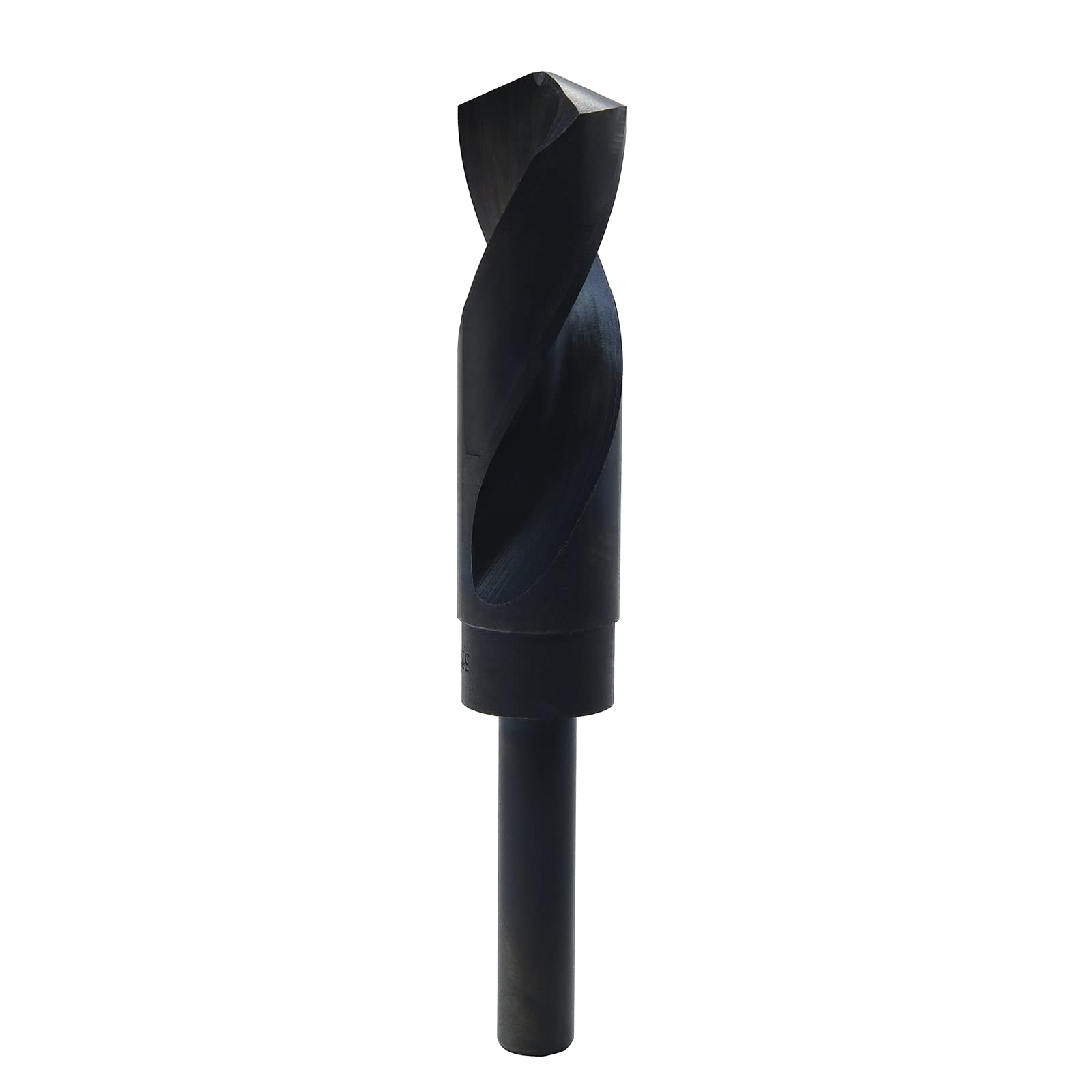

How To Choose The Best 1 1/16 Inch Drill Bit
A bit this size is not a small accessory — it is the tool that decides whether a project finishes this afternoon or stalls in the middle of a hole. Three things decide that: whether it clamps into your drill, what steel it is made of, and how its tip meets the metal.
Shank first — it has to clamp
A bit this wide will never fit a standard chuck at full diameter. That is why every metal-cutting bit here uses a reduced shank — the cutting end is 1-1/16 inch wide, but the part that goes into the drill is turned down to 1/2 inch so an ordinary chuck can grip it. A three-flat shank adds three machined flats that bite into the jaws and stop the bit from spinning when you hit resistance. A round shank is smoother to insert but relies on jaw pressure alone.
Steel grade and finish
High-speed steel, usually shortened to HSS, is the baseline for drilling metal — it stays hard when the tip gets hot. M35 steel carries cobalt, a harder alloying element that holds up against stainless and other tough metals. Black oxide and gold oxide finishes are surface coatings: they reduce friction, resist rust, and help lubricant cling to the flutes so chips clear instead of packing in.
Point angle tells you how it behaves
A 118 degree point is the traditional profile — it starts quickly and needs a pilot dimple to avoid wandering. A 135 degree split point is blunter and flatter, which keeps the tip from skating across a curved or polished surface, so you can start a hole on steel without center-punching first.
Quick Comparison
| Model | Best For | Shank | Point Angle | Material | Amazon |
|---|---|---|---|---|---|
| MAXTOOL Silver and Deming★ Best Overall | Production drilling in steel | 1/2″ Reduced | 118 degrees | HSS M2, Black Oxide | Amazon |
| Vearter HSS M2 Twist Drill BitBudget Pick | One-off jobs on a budget | 1/2″ Reduced | 118 degrees | HSS M2, Gold Oxide | Amazon |
| Greycore Tools Reduced Shank | Slip-free hold in a driver | 1/2″ 3-Flat | 118 degrees | HSS with Titanium Coating | Amazon |
| Fisch Black Shark Forstner | Flat-bottom holes in wood | Reduced Cylindrical, 3-Flat | Center Point | Forged HSS, Uncoated | Amazon |
| uxcell M35 Cobalt | Stainless and hard alloys | Reduced Shank | 135 degrees | M35 5% Cobalt | Amazon |
| Drill America KFD3F Contractor | General metal and framing work | 1/2″ 3-Flat | 135 degrees | M1 High Speed Steel | Amazon |
| Drill America GSC Cobalt Stepped | Acrylic and enlarging holes | 1/2″ 3-Flat | 135 degrees | Cobalt, Gold Oxide | Amazon |
In‑Depth Reviews
1. MAXTOOL 1-1/16″ Silver and Deming Drill Bit, HSS M2 Black Oxide
Our pick — over 4.5★ from 550+ verified ratings; the strongest balance of quality and price.
The HSS M2 bit that drills a full run of holes in steel without a mid-job swap.
If you are drilling a run of holes rather than a single one, this is where the money goes — 554 ratings averaging 4.6 stars back that up, the strongest combination in the group. The build is HSS M2 high-speed steel, a grade that keeps its hardness when the cutting edge heats up, finished in black oxide so chips slide out instead of welding to the flutes. A 1/2 inch reduced shank means the 1-1/16 inch cutting end still fits an ordinary drill chuck, and the 6 inch overall length gives you reach past a framing member or into a deep bracket.
What wins people over is the build quality itself — it is what the bulk of the feedback centers on. The repeat story is endurance: bit after bit, owners describe jobs where they expected a burn-out and got a finished task instead. As one crew buyer put it after a full day on a customer’s line posts, they bought two bits expecting the first to die. Neither did. A 118 degree point with a milled flute design and 2 flutes keeps chips moving and starts a hole accurately, and the black oxide finish holds lubricant so the tip stays cooler on long cuts.
The honest catch is durability when you push it hard. A small share of feedback describes bits breaking under aggressive feed, and one owner found the edge dulled after a few days of light production work in mild steel, then struggled in 304 stainless even after sharpening. Read that as a fit note rather than a flaw: this is an occasional-use bit, not a shop-floor consumable, and if you drill stainless daily you want a cobalt grade instead. For everyone else — a farmer, a fabricator, a homeowner with a thick steel plate — it does the job and does it more than once.
What earns its place up top
- Black oxide finish holds lubricant better, so the tip runs cooler on long cuts.
- 118 degree point with 2 milled flutes clears chips and starts accurately.
- 1/2″ reduced shank fits standard chucks; 6″ overall length reaches deeper.
Where it asks for restraint
- Feed it gently — breakage shows up when it is forced through hard stock.
- Not the pick for daily production drilling in stainless steel.
- Ships as a single bit, so you have no spare if you push too hard.
Reach for this one when: you have real holes to drill in steel, wood, or plastic and you want one bit that finishes the run.
Look elsewhere if: stainless steel is your daily material — this steel grade is not built for that pace.
2. Vearter 1-1/16” HSS M2 Twist Drill Bit with Round Shank
The cheapest bit here, sized for one hole in mild steel rather than a production run.
Some jobs only need one hole, and this Vearter is priced for exactly that. The spec sheet is straightforward: 1-1/16 inch cutting diameter, a total length of 6 inches with 3 inches of working flute, a 118 degree split point, and a gold oxide finish over HSS M2 steel. That split point is the useful part — instead of a sharp chisel tip that wants to skate across a surface, the split geometry bites down immediately and cuts down on walking. The parabolic flute design moves chips out of the hole and reduces heat build-up, and the 1/2 inch reduced shank locks onto a chuck for portable drilling.
Where this one leads the pack by a clear margin is raw cutting width. On paper it measures 1.17 inches of cutting diameter against the Greycore’s 1.06 inches — a 10% more gap that shows up as genuinely more material removed per revolution. Over a deep bore that difference compounds; you feel it in how quickly the hole opens up.
That said, this is a fair-weather bit and the feedback reflects it. Performance splits roughly half and half: several owners describe it reaming out a sway bar bushing or swapping into a bowling ball’s thumb hole as smoothly as a pro shop’s tool, while others report the leading edges chipping and dulling before two holes were done. The chucks matter too — at least one buyer returned it as a poor fit for their drill. For the occasional DIY job on steel, copper, aluminum, or wood, it is a sensible spend. For production work, it is not the one.
The width argument: at 1.17 inches of cutting diameter it removes measurably more material per turn than the narrower 1.06 inch alternatives here.
Buy it with eyes open: results are genuinely inconsistent — treat it as a one-job tool and you will not be disappointed.
Pick it for: a single hole where you want to spend as little as possible and the material is mild.
Skip it for: a long run of holes or anything in hardened plate, where a chipped edge ends the session.
3. Greycore Tools 1-1/16 Inch Reduced Shank Drill Bit, 3-Flat Shank
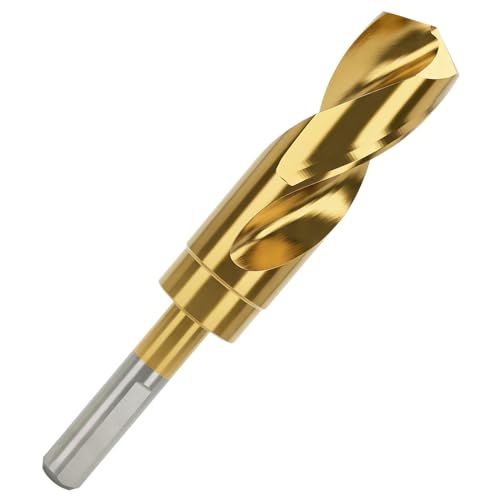
Three machined flats on the 1/2 inch shank bite into the chuck jaws and stop the bit spinning under load.
If your drill has ever grabbed a big bit and spun it in the jaws, the fix is written right on this bit’s shank. Greycore machines three flats into the 1/2 inch reduced end, so the jaws lock onto flat surfaces instead of chasing a smooth cylinder. It is a 1-1/16 inch bit with a 6 inch overall length, an 118 degree cutting head for clean entry, and a titanium coating over HSS steel for added heat resistance in metal, iron, aluminum, wood, and plastic.
The value case is what owners keep coming back to — the sense that this performs like a brand-name tool at a fraction of the spend. One buyer put it plainly: “Bought 2 of these because I wasn’t sure how sturdy they would be. They are as heavy and accurate as the expensive brand.” That weight in the hand is not an accident; it is forged steel doing its job.
There is a real safety note buried in the feedback that applies to any reduced-shank bit this size. Do not exceed your chuck’s rated capacity just because the shank is turned down to fit — a keyless chuck can jam or seize under the leverage of a bit this wide. A keyed chuck tolerates it better, but either way, take the cut slowly. And as with most large bits in this class, durability under aggressive use is the recurring variable; the steady users report sturdy service.
Why the shank wins
- 3-flat design prevents the bit from slipping in the chuck jaws.
- Titanium coating adds heat resistance for sustained cutting.
- Fits most drill drivers and drill presses via the 1/2″ reduced shank.
What to watch
- Respect your chuck’s rated size — oversized leverage can seize a keyless chuck.
- A few units reportedly break early, so inspect the edge before the first cut.
- No pilot dimple needed, but slow speed still keeps the edge alive longer.
The right call for: anyone using a corded driver or drill press who wants the bit to stay put under load.
Think twice if: your chuck is a small keyless model with a low rated capacity — the leverage can overwhelm it.
4. Fisch Black Shark Forstner Drill Bit, Forged Steel, 1-1/16 in

A Forstner that carves flat-bottomed holes with clean rims in hardwood, MDF, and plywood.
If your project is wood, not metal, this is a different animal entirely. A Forstner bit cuts like a rotating chisel rather than a screw — it carves a flat-bottomed hole with a clean rim, which is why it is the standard for hinge recesses, cable runs, and dowel seats. This Fisch is forged from high-speed steel in Austria and given three wave-style cutting edges, a patented profile the maker says drills faster and clears chips more efficiently than a plain edge. A sharp center point plants the bit exactly where you mark it, so drilling softwood, hardwood, MDF, plywood, or composite board is a matter of position and pressure rather than a fight.
On dense material is where the price starts to make sense. The feedback from woodworkers runs consistently warm — the kind of clean cut that lets one owner move from spade bits and describe the difference as cutting “like going through butter,” and another to clear material for ashtrays in minutes rather than a half hour. Hardwoods like maple, walnut, and teak do not tear the rim out, and the bit holds its edge through repeated boring.
The two things to know before you buy are size and depth. The 1-1/16 inch diameter arrived mislabeled on at least one shipment — the outer package said one size, the bit inside measured another — so verify the marking on the bit itself when it lands. On deep bores, clear the chips frequently; a Forstner will grab the wall of a deep hole if you let debris pack in behind it. The value question also splits opinions, with some owners finding the Austrian steel worth the premium and a few feeling otherwise.
A note on finish: the uncoated forged steel leaves a flat-bottomed hole that needs no cleanup pass — that is the Forstner advantage over a twist bit.
One check at unboxing: confirm the stamped size on the bit matches what you ordered before the return window closes.
For the woodworker: anyone cutting hinge mortises, dowel joints, or cable holes who needs a true flat bottom and a clean edge.
Not your bit if: you are drilling steel — this one is built for board, not bar stock.
5. uxcell 1-1/16″ Drill Bit, M35 5% Cobalt HSS, 135° Split Point
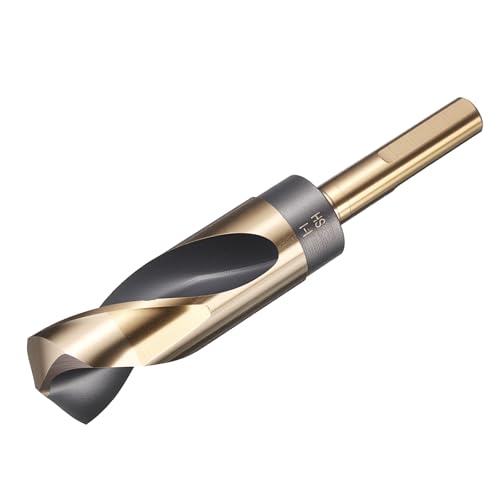
M35 5% cobalt steel for 316 stainless, chromoly, and cast iron, where plain HSS dulls out.
Stainless steel is where most drill bits lose the argument, and cobalt is the answer to it. This uxcell bit is made from M35 high-speed steel containing 5% cobalt, an alloy that holds its hardness at higher temperatures than plain HSS. The finish is black and gold, adding corrosion and wear resistance on top. The tip runs a 135 degree split point, which is blunter and flatter than the 118 degree bits elsewhere in this list — that geometry resists chipping and keeps the bit from walking on a hard surface, so your hole starts where you marked it. It is rated for steel, alloy cast iron, stainless steel, iron, copper, aluminum alloys, plastics, and wood.
The application is specific: this is the bit you hand someone working in 316 stainless or chromoly rather than mild steel. Buyers describe cutting through 3/8 inch 316 stainless without trouble, and machining aluminum cleanly and accurately. The tip is genuinely sharp out of the packaging, and the reduced shank keeps it usable in a standard chuck.
Here is the trade-off to be honest about. Durability is the weak spot in the pattern. Some buyers report the edges chipping with hard use, and one buyer needed two bits to get through 1/4 inch mild steel — an outlier, but worth knowing. Several others have resharpened successfully on a grinder, which tells you the steel itself is sound and the edge simply wants a proper feed rate. Start with a smaller pilot hole and keep the coolant flowing, exactly as the maker recommends, and the bit performs as intended.
Where the cobalt pays off
- 5% cobalt M35 steel holds hardness in stainless and hard alloys.
- 135° split point resists chipping and resists walking on hard surfaces.
- Reduced shank fits a standard chuck; resharpens well on a bench grinder.
The honest limitations
- Chipping is reported under aggressive feed — let the tip do the work.
- Users split on whether the cost reflects the durability they got.
- Best paired with a pilot hole and coolant to protect the cutting edge.
Made for: the shop or garage that regularly faces stainless, chromoly, or cast iron and needs a bit that survives the heat.
Overkill for: pine and MDF — the cobalt edge is wasted on soft material where a cheaper HSS bit would do.
6. Drill America 1-1/16″ Reduced Shank Contractor Drill Bit, KFD3F Series
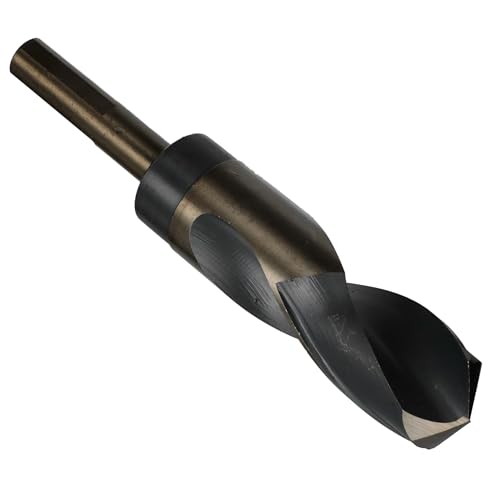
M1 high-speed steel with a 135 degree split point for wood, aluminum, and mild steel on the same job.
Contractors rarely drill one material all day, and this bit is built around that reality — 563 ratings at 4.5 stars, the largest feedback base here, and one that has clearly seen a lot of varied work. It is made from M1 high-speed steel with a black and gold finish on a 3-flat 1/2 inch reduced shank, so it clamps securely and fits a standard chuck. The 135 degree split point is the standout feature: self-centering, lower thrust, and per the maker’s own comparison, no “walking” the way a conventional 118 degree tip can on a smooth surface. A 3 inch flute length and 6 inch overall length keep tool changes to a minimum when you swap between jobs.
What owners like most is that it simply functions — cutting a clean, unsplit hole through 2×12 lumber for cable runs, boring a dowel replacement, and removing metal shavings from the hole. That reliability is the whole appeal: it does not need to be the fastest bit you own, only the one that finishes.
The recurring gripe is the sticky oil coating that protects the bit in transit and, until it is cleaned off with acetone or a similar solvent, holds debris on the flutes for the first few uses. It is a minor housekeeping matter, not a defect. Durability is the mixed variable — some buyers find it stays sharp for a long run, while others report it struggling to finish a single hard hole. Treat it as a general-purpose and framing bit rather than a hardened-steel specialist.
Clean the shipping oil first: the protective film is doing its job, but wiping it down before the first cut keeps chips moving.
Suits the toolbox: the generalist builder working wood, aluminum, and mild steel week to week.
Look past it for: heavy stainless or precision hardened alloy work, where a cobalt or stepped bit serves better.
7. Drill America 1-1/16″ Cobalt Stepped Drill Bit, GSC Series
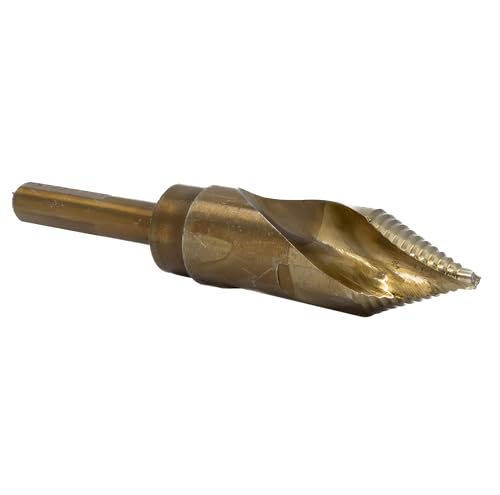
A stepped-point cobalt bit for enlarging existing holes and drilling acrylic panels without cracking them.
Some holes cannot be drilled in a single pass, and this bit is engineered for exactly that problem. A stepped point starts easier and cuts faster than a standard tip, according to the maker, while increasing lifespan and reducing heat. It is made from cobalt steel with a gold oxide finish, carries a 135 degree split point, and uses a 3-flat shank to keep it from spinning. The design is meant for enlarging existing holes or creating fresh ones in acrylics, steel, metal, brass, and other hard metals, with a 3 inch flute length, a 6 inch overall length, and a 1/2 inch shank.
Where it earns its keep is on fragile material. Buyers drilling acrylic panels report no cracked work, and the stepped geometry keeps holes round and centered without the machine stress a full-width bit would put on thin stock. One owner cleared an entire trailer’s worth of deck boards on a single bit without it ever slowing.
The caution is unmistakable in the feedback. The stepped point behaves differently from a standard twist bit, and users who leaned on it — especially with a powerful hand drill on oversized work — reported bending or snapping tips. One buyer bent two of three while drilling from 1/2 inch up, only getting the third through with a feather-light touch. The lesson is simple: this bit wants light, controlled pressure and a steady hand, not brute force. Used that way, it is the most specialized tool in this group, and the priciest.
Where the stepped point shines
- Cobalt steel with gold oxide finish handles hard metals and acrylic.
- Stepped geometry keeps holes round and centered on thin stock.
- 3-flat shank prevents spinning; enlarging holes is its core strength.
Where it demands care
- Reports of bent or snapped tips under heavy pressure — go gently.
- Sharpness fades after repeated holes in extruded aluminum.
- The most expensive bit here; the precision is what you are paying for.
Buy it for: acrylic work, enlarging drilled holes, and any job where a clean, centered result matters more than speed.
Wrong tool for: anyone planning to lean on a high-torque hand drill — the stepped point needs a light touch.
Understanding the Specs
Reduced Shank and Three-Flat Grip
A bit this wide cannot fit a standard chuck at full diameter, so the shank is turned down to 1/2 inch — the cutting end stays 1-1/16 inch wide while the part the jaws grip is smaller. A three-flat shank adds three machined surfaces that bite into the jaws and stop the bit from spinning under load. If you use a keyless chuck, stay within its rated capacity even though the reduced shank lets the bit fit physically.
118 vs 135 Degree Points
The point angle decides how the bit meets the metal. A 118 degree point is traditional — it starts quickly and pierces well, but can skate across a smooth, curved surface unless you center-punch a starter dimple. A 135 degree split point is flatter and blunter, so it self-centers and resists walking, which is why bits rated for stainless and hard metals tend to use it. Neither is better overall; the angle should match your material and whether you pre-mark your start.
FAQ
Will a 1-1/16 inch drill bit fit my regular drill?
What is the difference between a 118 and 135 degree drill bit point?
Can I use a wood Forstner bit on metal?
Do I need cobalt steel or is regular HSS enough?
Why does my large drill bit keep spinning in the chuck?
What speed should I run a 1-1/16 inch bit at?
How do I stop a large bit from walking across the surface?
Can I sharpen a dull 1-1/16 inch drill bit?
Is a stepped drill bit better than a standard twist bit for enlarging holes?
What does a gold oxide or black oxide finish actually do?
Final Thoughts: The Verdict
The strongest all-rounder is the MAXTOOL Silver and Deming, backed by 4.6 stars across 500+ ratings — its HSS M2 edge and black oxide finish hold up through long runs in steel. If grip is what you have been missing in your chuck, the Greycore Tools bit and its 3-flat shank hold firm under load. For woodworking, the Fisch Black Shark Forstner leaves flat bottoms and clean rims that no twist bit can match, and if stainless steel is on your bench, the uxcell M35 Cobalt bit is the one that survives the heat.
How We Picked
We do not accept paid placement. Every pick is matched to a real buyer and a real use-case; we do not hands-on test units.
Sources & Methodology
Specifications: manufacturer listings and product documentation. Review insights: verified customer reviews, as of September 2026. Pricing: not shown on this page (it changes often); check the current price via the retailer link.
As an Amazon Associate, KitchPrep earns from qualifying purchases. This does not affect which products we feature.
Related Guides
