
Specs are compiled from manufacturer listings and verified buyer reviews and can change over time — please confirm the key details on the product page before buying.
If your caulk keeps sinking into a deep crack or splitting open a few months later, the problem usually isn’t the caulk — it’s that nothing is backing it up. A backer rod is a soft foam rope you press into the gap before you seal, so your caulk sits at the right depth instead of draining into the void. Pick the wrong diameter, though, and the rod either won’t stay put or won’t leave room for the sealant, so the size matters more than anything else.
I’m Mohammad Maruf — the founder and writer behind KitchPrep. This guide is built by comparing the manufacturers’ published specifications and the patterns across verified customer reviews, so you get each pick’s real strengths and trade-offs instead of marketing spin.
You’ll see which diameter suits which gap, why the foam type matters, and how much length each roll actually gives you. From there it’s easy to find the backer rods for caulking that fit your project.
Our Picks at a Glance
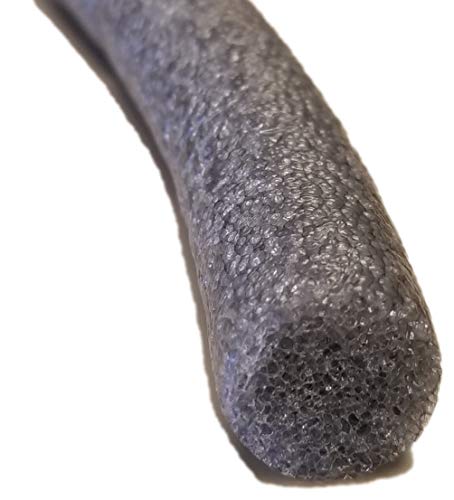


How To Choose The Best Backer Rods for Caulking
Most bad caulk jobs trace back to a gap that was never filled properly underneath. Get the diameter, the foam type, and the roll length right, and the sealant on top does exactly what it’s supposed to do.
Match the diameter to the gap, not the other way around
The rod should be slightly wider than the gap so it wedges in and stays put. A 3/8-inch rod fits most driveway control joints, window frames, and door gaps, while a 1/4-inch rod suits tighter seams like trim and molding cavities. If the rod is too thin it floats up through the wet caulk, and if it’s too fat it won’t sit below the surface where you need it.
Closed cell foam versus open cell
Closed cell polyethylene foam has sealed cells, so it won’t drink up groundwater and it won’t stick to your sealant. That matters on outdoor joints where standing water sits for days. Open cell foam is spongier and cheaper but soaks up water, which is why practically every rod on this list is closed cell.
Think about total length before you buy
A single driveway project can eat 50 feet of rod in an afternoon. Short rolls are plenty for a few window seams, while the long contractor packs make sense when you’re sealing a whole patio, foundation, or handful of vehicles.
Quick Comparison
| Model | Best For | Diameter | Roll Length | Foam Type | Amazon |
|---|---|---|---|---|---|
| Sashco 30381 Pre-Caulking Filler Rope★ Best Overall | All-round sealing jobs | 3/8 in | 100 ft | Closed cell | Amazon |
| Gordon Glass 1/4″ Closed Cell Polyethylene Backer RodTop Performer | Tight trim and molding gaps | 1/4 in | 100 ft | Closed cell polyethylene | Amazon |
| CR Laurence CRL 3/8″ Closed Cell Backer RodBest for Big Jobs | Concrete and glazing joints | 3/8 in | 100 ft | Closed cell polyethylene | Amazon |
| 59FT Backer Rod Foam Caulk Saver | Driveways and sidewalks | 3/8 in | 59 ft | Closed cell polyester foam | Amazon |
| 3/8″ Closed Cell Backer Rod 100 ft Roll | Driveway repair work | 3/8 in | 100 ft | Closed cell polyethylene | Amazon |
| 1/4″ Closed Cell Backer Rod 100 ft Roll | Fine joints and thin seams | 1/4 in | 100 ft | Closed cell | Amazon |
| Sashco 30501 Pre-Caulking Filler Rope | Wide gaps and chinking | 1/2 in | 100 ft | Closed cell | Amazon |
| 5/8″ Diameter x 50′ Backer Rod Caulk Saver | Oversized driveway joints | 5/8 in | 50 ft | Closed cell foam | Amazon |
| Frost King C21CP-C Caulk Saver Contractor Pack | Whole-house bulk sealing | 3/8 in | 350 ft | Polyurethane foam | Amazon |
In‑Depth Reviews
1. Sashco – 30381 Pre-Caulking Filler Rope Backer Rod Roll, 100′ Length x 3/8″ Width, Grey
Our pick — over 4.5★ from 400+ verified ratings; the strongest balance of quality and price.
The 3/8-inch rod that quietly saves more caulk than any other pick here.
Its 3/8-inch diameter seats into the widest range of residential gaps, from window frames to driveways. It comes in a 100-foot length, so you get a full season’s worth of sealing from one strip. Because it’s closed cell polyurethane, water beads off instead of soaking in, and the foam never bonds to your sealant.
Sashco built this rod to comply with ASTM C 1330, Type C — a published industry specification for the round backer rod shape used behind cold-applied sealants. That’s not marketing talk; it means the rod is round enough to sit inside a joint without flattening under a bead of caulk. The closed cell design also repels water to keep the joint from taking damage as the seasons turn.
What sets this rod apart is how reliably it does its one job: it slides in easily, stays put, and holds caulk at a workable depth. Buyers report the same thing again and again — simple, consistent function. One reviewer, a Ford Edge owner, pushed 3/8-inch tubing into five car door seals using the coax cable method (feeding the rod through the seal like a cable), with lotion as a lubricant, working no more than half a seal at a time so the foam wouldn’t snap. That buyer reported tighter doors, no wind noise, and better car audio. That’s not a caulking job at all, which shows how far this rod reaches past the driveway.
Why this pick earns the top slot
- 3/8-inch diameter handles the widest range of common joints
- 100-foot length covers a full project with room to spare
- Closed cell foam repels water and won’t stick to sealant
- Meets ASTM C 1330, Type C specification
- Soft and pliable enough to fit tight, awkward gaps
Where it gives ground
- Durability gets mixed feedback — some owners mention it holds up nicely, others want to see how it survives a winter
- Deeper gaps may need the rod pressed down twice to stay below the surface
Go-to choice for: anyone sealing a mixed batch of joints — window frames, door seals, concrete patios — who wants one roll that fits all of them.
Worth knowing: the rod is soft, so pushing it too shallow leaves it riding up through wet caulk; seat it deep and check before you seal.
2. Gordon Glass 1/4″ Closed Cell Polyethylene Backer Rod – 100 ft Roll
A quarter-inch rod built for the fine seams trim and molding leave behind.
Here’s the head-to-head that matters before you choose a diameter: the Gordon Glass rod runs 1/4 inch across, while pick four’s 59FT roll measures 3/8 inch — a meaningful step between them. That 1/4-inch profile is the right call for tight trim cavities, basement cracks, and expansion joints that never widen past a quarter inch. You also get a full 100 feet in the roll, and closed cell polyethylene means the foam stays inert and refuses to bond with your sealant.
That non-adhering quality is what makes removal clean. If you ever have to re-caulk, the rod pulls out without leaving foam crumbs behind, and it won’t stain the surrounding surface or bleed into the joint. It’s rated for cold-applied sealants and lands in curtain wall, bridge, parking deck, and glazing work as well as plain household seams, so it doesn’t buckle under a serious job.
What wins people over here is pure function — the rod does exactly what a backer rod is supposed to do, and it does it in tight spaces where a thicker rod would be useless. One buyer put it to work filling expansion joint cracks in a concrete driveway, controlling the joint depth so the expensive caulk went no deeper than it had to. That’s the entire value proposition of a backer rod, and this one delivers it at a fuss-free price for the length.
Straight talk on foam: closed cell polyethylene resists water, doesn’t bleed, and won’t cling to sealant — three things open cell foam simply can’t claim.
Sizing matters: 1/4 inch is genuinely slim; if your gap is 3/8 inch or wider, jump to pick one instead of forcing this rod to fill a space it wasn’t cut for.
Reach for it if: you’re sealing trim, molding, or narrow basement cracks and want a slim rod that disappears under the bead.
Think twice if: your joints are wide open at 3/8 inch or more — this quarter-inch rod will float out of them.
3. CR Laurence CRL 3/8″ Closed Cell Backer Rod – 100′ Roll
Commercial-grade 3/8-inch foam that trades a spool for a hundred feet of savings.
Its 100-foot length beats the 59-foot run of pick four by 69%, which matters when you’re sealing a whole foundation instead of a single seam. The 3/8-inch diameter is the same workhorse size the top pick carries, so it drops into standard driveway, window, and door joints without fuss. CRL grades it as commercial stock, the label you’d expect on a roll that turns up in glazing shops.
One quirk you need to know up front: it does not come on a spool. It arrives bagged, and you’ll want a way to store the loose coil between sessions. The upside of the bag is that it’s compact to ship and easy to pull a length from when you’re working in a tight corner. The foam has an exterior skin and a round profile, so it keeps its shape as you press it in.
The consistency is genuinely good — the rod stays uniform as you push it into a joint, and it takes a utility knife cleanly when you need to trim. That’s exactly what the color-varies, closed cell polyethylene build is designed to do: fill the joint, control sealant depth, and let the caulk above it do its job. The one honest catch is that the roll won’t stay tidy on its own, so keep a bag or bin handy or the length will tangle between days.
Where the length wins: 100 feet versus 59 feet from the short roll means fewer reorders on a full exterior job.
What you give up: no spool means loose storage — plan a bin or the coil will wander.
Suits you if: you’re sealing a large exterior surface and want 100 feet of 3/8-inch rod without paying a premium.
Might not suit you if: you only need a dozen feet and would rather have a tidy spool than a bagged coil.
4. 59FT Length Backer Rod Foam Caulk Saver for Concrete Filling, Joints and Gaps, 3/8 in Diameter x 59FT Length (Grey)

A waterproof 3/8-inch foam rope that bends into any crack you point it at.
This one is the soft, bendable option for tricky geometry — the foam twists into any shape you need, which is why it handles laminate flooring gaps and RV slideouts as readily as a sidewalk seam. The 3/8-inch diameter is a standard size, and the roll runs 59 feet, shorter than the 100-foot rolls but enough for a single driveway or a batch of window gaps. Waterproof rating means it won’t drink up standing water, and the closed-hole design keeps rain from working its way in.
The material is a closed cell polyester foam with a very high closure rate — plain English: almost no open pores for water to sneak into. That’s the difference between a joint that dries out between storms and one that stays damp and rots the caulk above it. The rod fills the crack fully and then takes the sealant on top, so the caulk has a floor to sit on rather than a void to fall into.
Buyers lean on this for concrete work — sidewalks, driveways, expansion strips that have cracked out — and it holds up there. One reviewer noted it was exactly the size they needed, which sums up why the 3/8-inch measurement is the balance for most residential concrete joints. The softness that makes it easy to install also means you can over-compress it if you jam it in hard, so ease it into place rather than forcing it.
What’s working in its favor
- Bends and twists into irregular crack shapes
- Waterproof closed cell foam resists rain and groundwater
- 3/8-inch diameter fits standard concrete expansion strips
- Very economical for the length you receive
Keep in mind
- 59-foot roll runs shorter than the 100-foot options — measure your project first
- Soft foam can crease if you force it into a stubborn gap
Best for: driveway and sidewalk joints where soft, forgiving foam that bends around corners is what you need.
Not the one if: you’re sealing a long foundation run — a 59-foot roll will run out before you reach the end.
5. 3/8″ Closed Cell Backer Rod – 100 ft Roll
Built to survive a rough push into a driveway crack without tearing.
If your past backer rod shredded on contact with rough concrete, this is the one to look at. The standout trait here is strength — the closed cell polyethylene foam takes a firm shove into jagged cracks without ripping apart, which is exactly where flimsier rods fail. You get 100 feet at a 3/8-inch diameter, the standard size for driveway and sidewalk joints, and the waterproof rating means groundwater won’t wick into the joint.
Use with cold-applied sealants is the intended pairing, and the foam is nonimpregnated, nonstaining, and nonbleeding — it doesn’t leave oil marks or color bleed on the surrounding surface. That neutrality is underrated on light-colored concrete where any transfer would show. The roll is a single, full-length strip, and the surface lends itself to tile, window, door, and wall joints alike.
The durability is what buyers keep coming back to. It holds its shape under pressure instead of going floppy, and it doesn’t disintegrate when you drag it across a rough slab. One buyer, sealing expansion joints in a driveway, called it the best product compared with others they’d picked up — the rod made the work easier and didn’t tear in the process. That’s a useful signal when the job involves kneeling over a sun-baked slab with a putty knife.
Where it earns its place: the foam resists tearing under pressure, so rough concrete joints won’t eat the rod on the way in.
Storage note: it arrives folded rather than wound on a spool, so it can tangle slightly — shake it loose before you cut a length.
Ideal for: concrete driveway and sidewalk repair where the joint edge is rough and the foam needs to hold together.
Look elsewhere if: you want a neat, spooled roll for storage — this one comes loosely packed and wants some untangling.
6. 1/4″ Closed Cell Backer Rod – 100 ft Roll
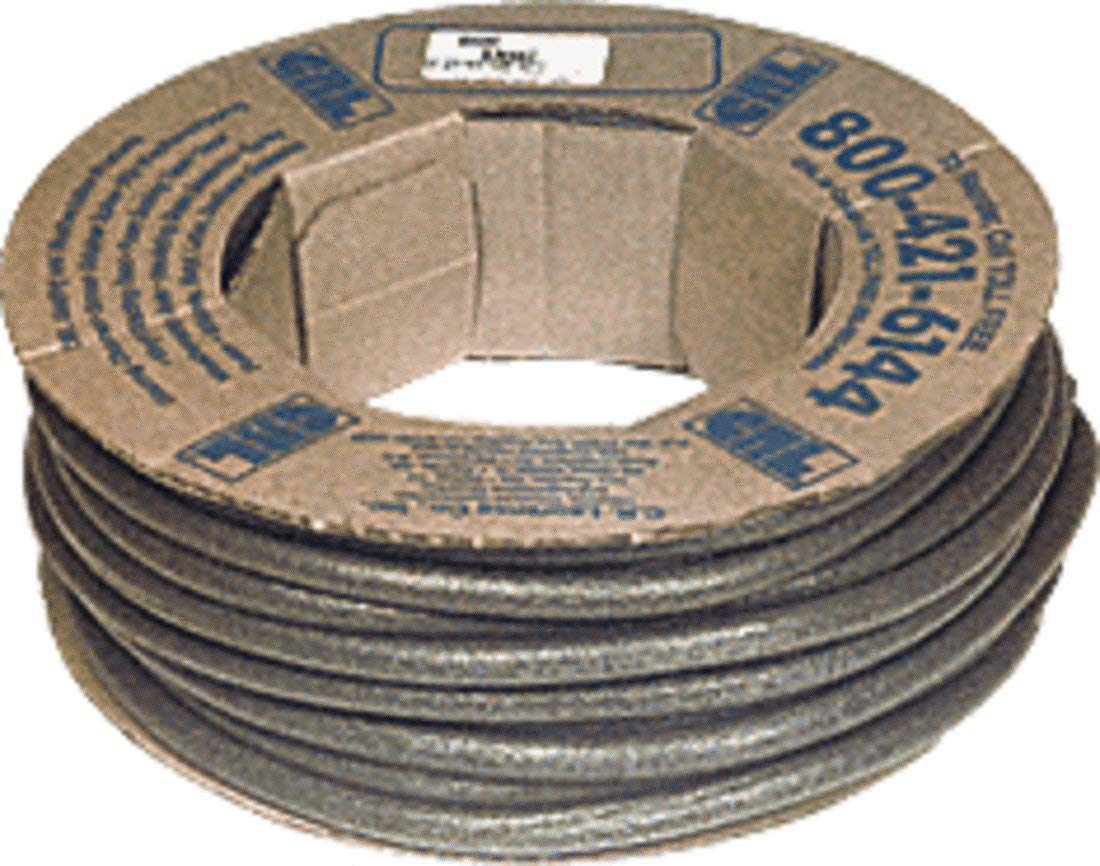
A slim quarter-inch rod that threads into saw cuts and thin molding lines.
The 1/4-inch diameter slips into narrow saw cuts, trim gaps, and tight trim cavities that a 3/8-inch rod can’t reach. You get 100 feet of it, and the foam is closed cell and compatible with all cold-applied sealants. Best of all, the foam won’t adhere to sealant, so you don’t need a separate bond breaker strip between rod and caulk — one less thing to buy and one less step on the ladder.
What that means in practice: the sealant sits clean on top and doesn’t fuse to the foam below, so the joint can flex and move without the caulk being locked rigid. That’s the whole point of a backer rod in a moving joint, and this rod handles it without extra prep. It also controls sealant application thickness, which is what keeps a bead from going on too thick and sagging out of the joint.
Real owners use it just about everywhere — asphalt driveway cracks, trim cavities before caulking, and 1/4-inch saw cuts with a roller tool. The consensus is that it’s straightforward foam that just works, with good length for the outlay. The recurring gripe is storage: it arrives balled up in a box rather than wound, and it sometimes shows up in a battered bag. The foam itself is sturdy and untangles without the mess a bundle of cord would create, but plan a bin for it.
No extra parts to buy: the foam doesn’t bond to sealants, so a separate bond breaker isn’t required — rare in this price range.
Storage reality: it arrives coiled in a box, and one delivery showed up in a damaged bag — the foam survived, but don’t expect a tidy spool.
Made for: narrow joints where a quarter inch is the right fit, especially anywhere you’d otherwise need a bond breaker.
Not your pick if: your gaps are 3/8 inch or wider — this slender rod would just bob up through the caulk.
7. Sashco-30501 Pre-Caulking Filler Rope Backer Rod, 1/2-Inch x 100-Feet, Grey
The half-inch rope for chinking logs and sealing gaps that run deep and wide.
When a joint is wider than 3/8 inch, standard rods float out and your caulk sags. This one measures 1/2 inch across and runs 100 feet, so it fills the wider gaps between concrete slabs, log courses, and floor trim that thinner rods simply can’t grip. It’s closed cell polyurethane that repels water and won’t stick to your sealant, and the same ASTM C 1330, Type C compliance as pick one tells you it’s a properly-shaped round rod.
Buyers use this roll for a wide range of jobs. Chinking an engineered log cabin is a common one — a reviewer reported the seal tightness returned and the insulation improved so much that a window had to be cracked to vent the wood stove. In an older apartment, the 1/2-inch rope tucked under the floor trim and carpet gap killed the drafts coming off a cold floor. Same roll, two very different jobs.
The material is soft and cuttable with scissors, which makes it forgiving to shape around corners and uneven trim. The honest caveat: because it’s half an inch thick, it can be too fat for gaps that narrow down to 1/4 inch, and buyers sometimes trim it lengthwise to make it fit. That’s the nature of the size — it’s a wide-gap rod, not a fine-joint rod.
What it does best
- 1/2-inch diameter fills gaps that thinner rods can’t hold
- 100-foot roll gives plenty for a large chinking or sealing project
- Water-resistant closed cell foam protects the joint
- Cuts with scissors for shaping into awkward gaps
The honest trade-off
- Half an inch is too thick for narrow gaps — you may need to trim it down
- Durability gets mixed feedback, so keep an eye on any joint that sees heavy movement
Grab it if: your gaps run wide and deep — log chinking, concrete patio slabs, or floor trim where a thinner rod won’t grab.
Pick something else if: you’re working fine seams — the half-inch profile needs trimming to fit anything tighter than 3/8 inch.
8. 5/8″ Diameter x 50′ Length Backer Rod Caulk Saver Foam Backer Rod for Gaps and Joints Backing Concrete Filler

A fat 5/8-inch foam rope for broad driveway joints and oversized gaps.
When a joint gapes wider than a standard driveway seam, this 5/8-inch rod is sized to fill it. The roll runs 50 feet, so it’s the shortest option here, but a wider rod covers more volume per foot. It’s a round, water-resistant foam rated for pavement cracks, wall joints, and plank gaps, and it takes scissors cleanly when you need to trim it to a custom width.
Softness is the selling point — the foam bends and yields so it molds into uneven cracks instead of fighting them. That makes it easy to push into an old, weathered joint where the edges have crumbled. Because it’s compressible, the maker notes it can recover its shape after being packed in a box, so a slightly squashed arrival isn’t a defect. Just unpack it and give it a while to fluff back out.
Concrete driveways are where this one gets used most, and it handles the job: tuck it into the cleaned-out seam and it keeps water from running under the slabs. Buyers also put it to packing and craft work, though the driveway use is the main draw. The fair warning is that 5/8 inch is genuinely thick — it can be larger than the joint you’re filling, so measure before you commit and trim if you need to.
What it brings to the table
- 5/8-inch diameter for genuinely wide, open joints
- Soft foam molds into uneven or crumbled crack edges
- Water-resistant and trims easily with scissors
- Suitable for pavement, wall, and plank gaps
What to watch
- 50-foot roll is the shortest here — long jobs will need a second roll
- It runs larger than some buyers expect, and durability leans more fragile on this one
Suits you if: your joint gapes wider than a standard driveway seam and you need a thick, moldable rod to fill it.
skip it if: your gaps are ordinary 3/8-inch joints — this rod is on the large side and would need trimming down.
9. Frost King C21CP-C Caulk Saver Bulk Contractor Pack, 3/8-inch Diameter x 350-feet Long, Grey

Three hundred fifty feet of 3/8-inch foam — the contractor pack for whole-house work.
At 350 feet of 3/8-inch rod, this roll outruns the 100-foot standard rolls and the 59-foot short pick. That’s the size to buy when you’re sealing a whole house, a rental property, or a fleet of vehicles and don’t want to reorder halfway through. It’s made of durable, resilient polyurethane foam, works with virtually all caulk, and repels moisture — everything you’d want in a rod you’ll pull from again and again.
The 3/8-inch diameter is the practical middle ground that fits most driveways, window seals, and door gaps, and the bulk pack lets you cut exactly what you need and toss the rest back in the bag. Door seals on trucks and SUVs are a proven use case, which is a smart angle if you’re chasing wind noise in a vehicle rather than a leaking slab. The foam holds its shape while you press it in, so it doesn’t collapse and leave a shallow seat for the sealant.
Ease of use carries this one — it flexes, installs without tearing, and keeps its round profile, which is what lets the caulk above it sit at a consistent depth. The one limitation is that it’s a small-diameter rod: it’s built for fine and standard gaps, not the deep, wide openings a half-inch or 5/8-inch rod is made for. If you’ve got a wide joint, layer up or step up in size.
Where it wins outright: 350 feet of 3/8-inch rod means a single pack covers a whole property without a reorder.
The limit to note: this is a standard-diameter foam, so wide or deep gaps need a larger rod or a doubled-up layer.
Right for you if: you’re sealing a whole house or a run of vehicles and want one big pack of 3/8-inch rod that keeps going.
Better to look around if: your joints are wide open — a standard-diameter roll won’t bridge a gap that needs a half-inch rod.
Understanding the Specs
Diameter
Diameter is the width of the foam rope, given in fractions like 1/4 inch, 3/8 inch, or 1/2 inch. That number decides which gaps the rod will hold. Match it to your joint — the rod should be a touch wider than the opening so it wedges in and stays below the surface. Too thin and it floats up through wet caulk; too thick and it won’t sit deep enough to leave room for the sealant above it.
Roll Length
Length tells you how many feet of joint one package covers. A 50-foot roll suits a single driveway or a handful of window seams, while 100 feet covers a full exterior job and a 350-foot contractor pack is aimed at whole-property work. Running out mid-project means a second order, so estimate your total joint length before you pick a size — a long driveway can swallow 50 feet in an afternoon.
Closed Cell Foam
Closed cell foam packs sealed, airless cells together, so water can’t soak in and the foam won’t bond to your sealant. That’s why it stands up to rain, groundwater, and freeze-thaw cycles in outdoor joints. Open cell foam is spongier and cheaper, but it drinks up moisture and can stick to the caulk — which is why nearly every rod on this list uses the closed cell design.
Gap Fill Capacity
Some listings state a maximum gap fill — the widest opening that rod can bridge. That number is a quick sanity check on whether a rod fits your project: pick one rated for your joint width, and you won’t force a thin rod into a wide gap or trim a fat one down. Anything wider than the stated capacity usually wants a bigger diameter instead.
FAQ
What diameter backer rod do I need for a standard driveway joint?
Does backer rod really save caulk?
What is the difference between closed cell and open cell backer rod?
Can I use backer rod under self-leveling sealant?
How do I keep backer rod from floating up through wet caulk?
How much backer rod does a driveway project usually take?
Can I use backer rod to stop drafts around windows and doors?
Does backer rod need a bond breaker?
Can I use a 3/8-inch rod for a 1/4-inch gap?
How should I store leftover backer rod between projects?
Final Thoughts: The Verdict
For most people sealing up a home, the backer rods for caulking winner is the Sashco 30381 3/8-Inch Rod — its 3/8-inch diameter fits the widest range of joints, it meets the ASTM C 1330, Type C spec (a standard for backer rod that won’t stick to sealant), and the foam won’t bond to sealant. If you’re chasing fine trim seams or need a rod that skips the bond breaker, grab the 1/4-Inch Closed Cell Rod. Wide driveway joints and log chinking want the Sashco 30501 1/2-Inch Roll, and anyone sealing an entire property should reach for the Frost King C21CP-C Contractor Pack with its 350 feet of standard-size foam.
How We Picked
We do not accept paid placement. Every pick is matched to a real buyer and a real use-case; we do not hands-on test units.
Sources & Methodology
Specifications: manufacturer listings and product documentation. Review insights: verified customer reviews, as of September 2026. Pricing: not shown on this page (it changes often); check the current price via the retailer link.
As an Amazon Associate, KitchPrep earns from qualifying purchases. This does not affect which products we feature.
Related Guides
