
Specs are compiled from manufacturer listings and verified buyer reviews and can change over time — please confirm the key details on the product page before buying.
A 10 cu ft freezer holds a full brisket, a bulk chicken order, and the bags of ice that never fit in the kitchen fridge. Before you buy, know one thing: the brands on this list are matched flexibly, so a couple of them run a touch under or over the exact 10 cubic feet you searched for. The nearest same-type size serves the same job, and we flag it clearly for each pick so you are never caught off guard at delivery.
I’m Mohammad Maruf — the founder and writer behind KitchPrep. This guide is built by comparing the manufacturers’ published specifications and the patterns across verified customer reviews, so you get each pick’s real strengths and trade-offs instead of marketing spin.
The numbers that matter are inside the cabinet: basket count, daily kilowatt-hour draw, and whether the 10 cu ft dimensions clear your doorframe and lid swing. This breakdown of the 10 cu ft freezer covers nine real options so you can match the right cabinet to your kitchen, garage, or basement.
Our Picks at a Glance

How To Choose The Best 10 Cu Ft Freezer
Buying a 10 cu ft freezer is a space-matching job. The capacity number tells you how much food fits inside; the cabinet dimensions tell you whether it clears your doorframe with room to open the lid. Measure your spot first, then match the basket layout to how you actually shop.
Chest or Upright — Pick the Shape Before the Brand
A chest freezer opens from the top, so cold air stays put when you lift the lid — best for bulk buys and long storage. An upright stands like a second fridge, with shelves and door bins visible at a glance, in a tall narrow footprint instead of a wide deep one. If you grab items daily, the upright layout is easier on your back. If you stack a season’s worth of meat, the chest layout wins on usable space.
Temperature Range and the Dial You Set
Most freezers here run a 7-level dial, with “1” warmest and “7” coldest, and a range that dips into the deep-freeze zone. A setting near the cold end is where you lock in long-term storage for meat and fish. A setting toward the warm end lets the same box work as an overflow fridge for drinks. Check the listed range before you buy, because the floor of that range is what tells you how hard the compressor can freeze.
Defrost, Drain, and Everyday Maintenance
Manual defrost sounds like a chore, but with a front-mounted drain it is a simple job: you let the ice melt, and the water runs out through the drain instead of pooling in the bottom of the cabinet. Frost builds up faster in humid garages and slower in dry basements, so match your location to your tolerance for defrosting. A drain near the front means you are not leaning over the rim with a towel.
Power Draw and Noise for Garages and Apartments
A freezer that runs in a garage has to keep working when the outdoor temperature swings. Look for a garage-ready rating if your space gets cold or hot, because that tells you the compressor is built to handle it. For apartments, the daily kilowatt-hour figure and the decibel rating matter more, since a loud compressor in a studio is hard to ignore. Both numbers are listed on the picks below so you can weigh them side by side.
Quick Comparison
| Model | Best For | Capacity | Temperature Range | Weight | Amazon |
|---|---|---|---|---|---|
| BLACK+DECKER 10 Cu. Ft. Chest Freezer BCF1000E★ Best Overall | Best Overall | 10 cu. ft. | Mechanical dial | 99.2 lb | Amazon |
| Danby DCF100A6WMGarage-Ready Pick | Garage-Ready Pick | 10 cu. ft. | 0°F to 110°F ambient | 82.7 lb | Amazon |
| Hamilton Beach HBFRF1006Best for Families | Best for Families | 10.3 cu. ft. | 7 settings | 70 lb | Amazon |
| FRIGIDAIRE EFRF9003 | Compact Premium Pick | 9 cu. ft. | Adjustable thermostat | 90 lb | Amazon |
| Antarctic Star 10.0 Cubic Feet | Efficient Cold Pick | 10 cu. ft. | 6.8°F to -7.6°F | 80.5 lb | Amazon |
| BLACK+DECKER 10 Cu. Ft. Upright Freezer BUF1000LW | Best Upright Layout | 10 cu. ft. | Mechanical dial | 114.6 lb | Amazon |
| Kismile 10.0 Cubic Feet Freezer | Best Value | 10 cu. ft. | 6.8°F to -7.6°F | — | Amazon |
| COWSAR Chest Freezer 10.0 Cubic Feet | Best Sushi Freezer | 10 cu. ft. | -7.6°F to 8.6°F | 102.5 lb | Amazon |
| TABU 10.0 Cubic Feet Chest Freezer | Budget Champion | 10 cu. ft. | -7.6°F to 6.8°F | — | Amazon |
In‑Depth Reviews
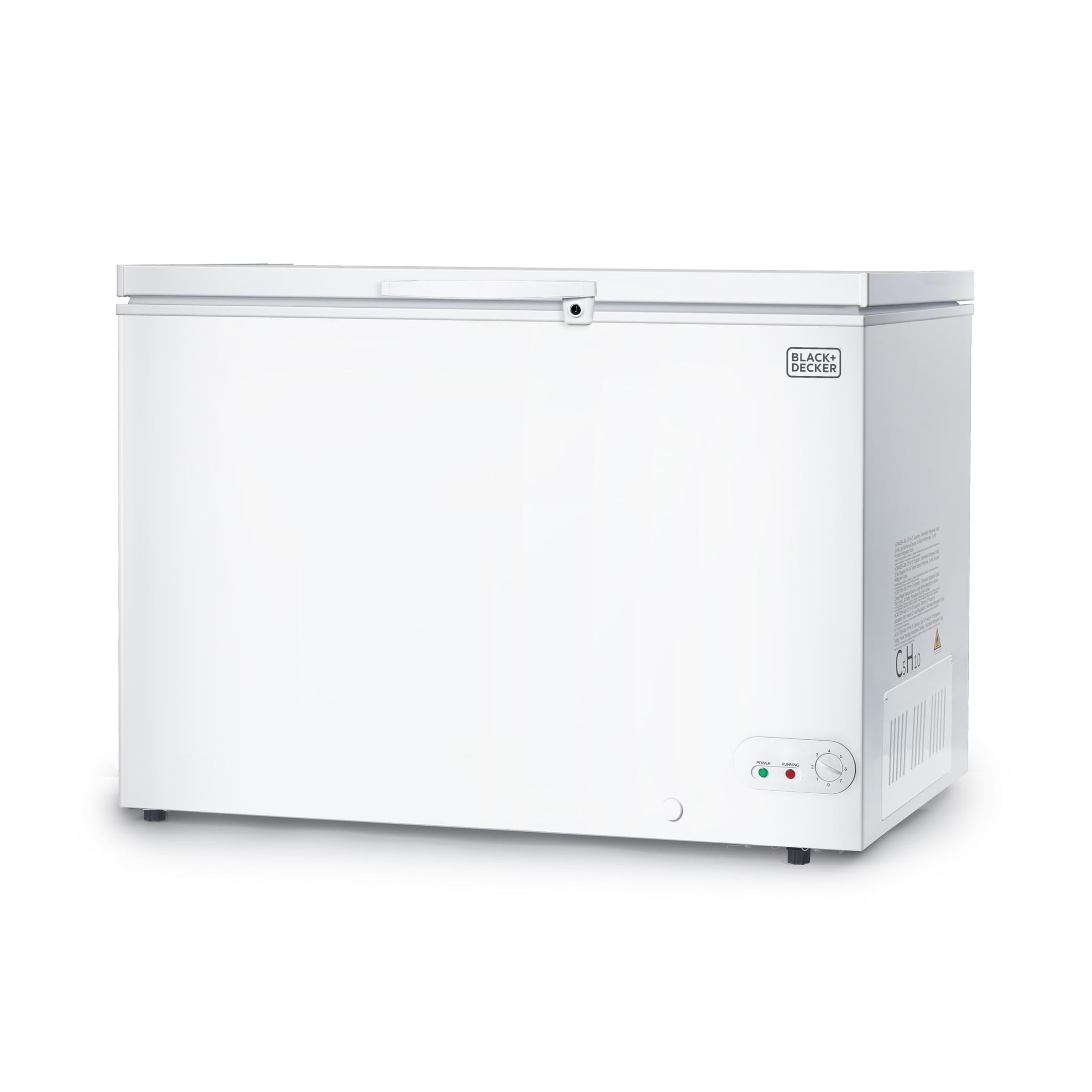
1. BLACK+DECKER 10 Cu. Ft. Chest Freezer, BCF1000E, White
Our pick — 4.5★ from 500+ verified ratings; the strongest balance of quality and price.
The 10-cubic-foot workhorse that tucks a big cabinet into a small-kitchen footprint.
If your kitchen is tight but your grocery runs are not, this is the shape to start with. The cabinet measures 29.5″D x 40.7″W x 33.5″H, a deep but not sprawling slab you can slide against a wall. Compare that to the smaller-footprint options further down the list and the trade-off is choice: the DANBY pick is 34% shorter in width, so it slips into a narrower nook while this one gives you a broader lid opening to lay items flat. Owners describe it as the freezer that finally gives a small kitchen real overflow room, and the removable storage basket makes the deep pocket under the rim far less of a dig.
What wins people over is how it handles the basics without drama. Food stays frozen hard, the mechanical dial on the outside lets you nudge the temperature without popping the lid, and the manual defrost pairs with an easy-access drain so cleanup does not turn into a bucket-and-sponge ordeal. At 99.2 pounds it is a two-person lift, but that weight sits low and steady once it is in place. Buyers report using it for everything from a garage overflow stash to a dedicated breast-milk freezer, and the common thread is quiet, steady cold that you stop thinking about. One buyer notes it may hold fewer bags than the rated capacity suggests, so if you need maximum volume, count your actual items before you commit.
Where it earns its keep
- Solid 10 cu. ft. cabinet in a footprint that still fits small kitchens and condos
- Outside mechanical dial means no lid-opening to adjust temperature
- Manual defrost with an easy-access drain keeps maintenance simple
- Removable basket lifts the small items into easy reach
Where it may not fit your plan
- At 99.2 pounds and 29.5″D x 40.7″W, it needs a real corner, not a slim nook
- Real-world bag count can run under what the 10 cu. ft. rating suggests
- A small number of long-term owners mention failures past the first year, so keep your receipt and warranty paperwork handy
Lock it in if: you want a proven, well-loved chest that fits a small space but still swallows a bulk haul.
Measure twice if: your space runs narrow — the width here is real, and the deeper cabinet needs a genuine 29.5 inches of clearance.
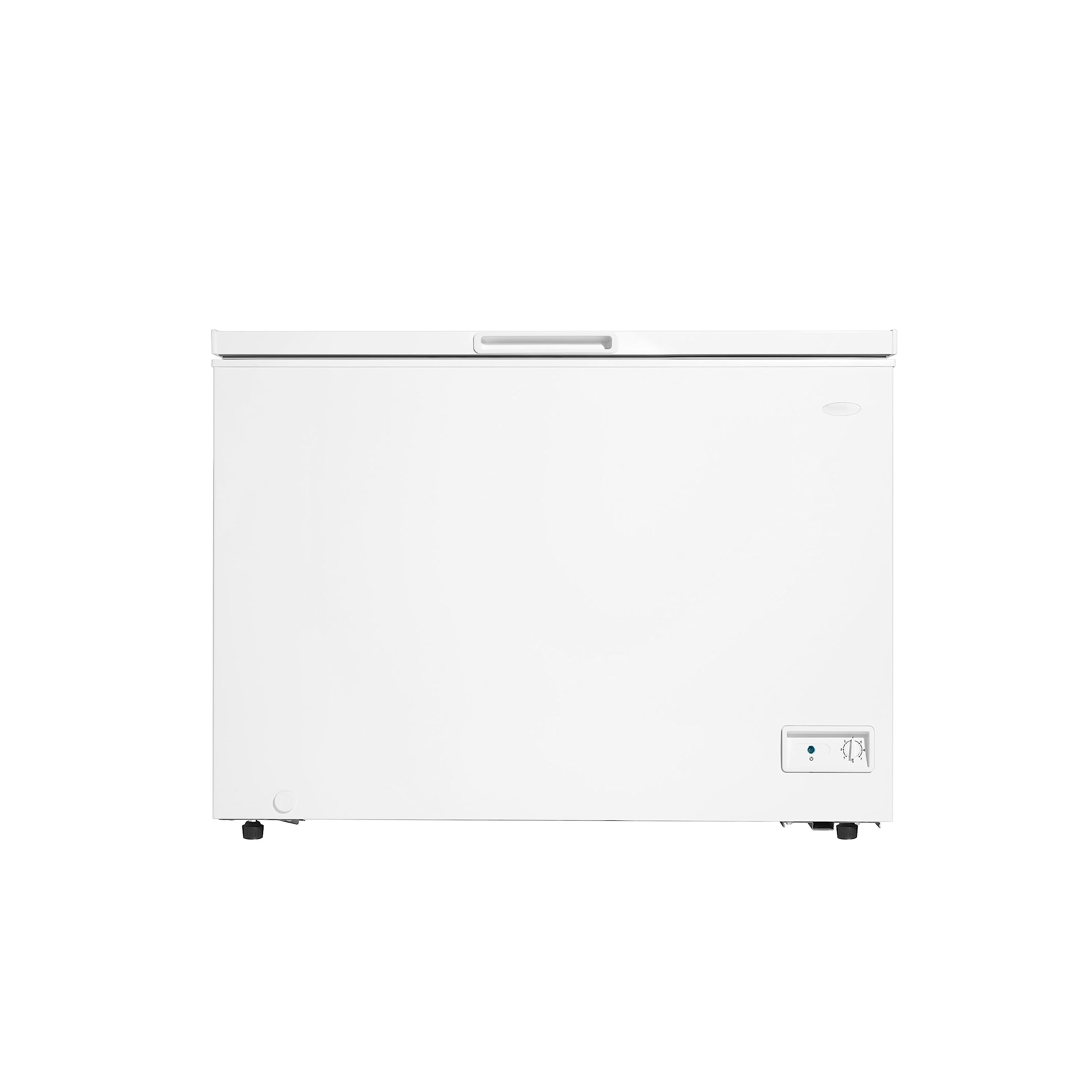
2. Danby DCF100A6WM 10.0 cu. ft. Square Model Chest Freezer
The one built to shrug off a freezing garage and keep working.
Most freezers assume a mild room, which is why a cold snap can stall the compressor in an unheated garage. This one is rated to perform in ambient temperatures from 0°F to 110°F (-17°C to 43°C), so it keeps freezing whether the bay is sweltering in July or frosty in January. It is also the lightest full-size chest in this lineup at 82.7 pounds, which means two people can walk it into place without a dolly.
The control layout is the other reason it lands high. The mechanical thermostat sits on the front, so you turn the dial and read the temperature without lifting the lid. A manual defrost pairs with a front-mount drain to run the meltwater out the front instead of down your leg, and there are 2 front leveling legs plus 2 back rollers so you can shuffle it into a corner after it is loaded. A power-on indicator light confirms at a glance that the unit is running. Owners who have lived with the brand describe it as durable and easy to repair when something does go wrong, which is a rare thing to hear about a major appliance.
What the site does not advertise: this is the “square model” Danby built on its Diplomat platform, and the front-mount thermostat plus roller feet point at a design meant to be serviced in a garage bay or back room, not a show kitchen.
The right pick for you: any owner who needs freezer capacity in an unheated or overheated space where the temperature swings hard.
Look past it if: you want a big-brand nameplate and a wide review history — this pick is quieter in the marketplace, so you are buying on spec and reputation, not a mountain of feedback.
3. Hamilton Beach HBFRF1006 Chest Freezer, 10.3 Cu. Ft.
A 10.3-cubic-foot chest with the biggest lid opening and the lightest lift of the group.
Capacity is the headline here. The Hamilton Beach box is rated 10.3 cubic feet, which nudges just past the standard 10 you came searching for, and it is the widest cabinet on this list at 44.25″W x 33.25″D x 27.5″H. That width means a longer lid and a flatter top layer, so trays and cartons drop in without fighting the rim. It is also the lightest unit in the lineup at 70 pounds, so if you are hauling this up a flight of stairs or into a basement, the weight difference against the COWSAR chest at 102.5 pounds is one you will feel on moving day.
The daily use details hold up too. A seven-setting adjustable thermostat lets you pick the exact coldness for what is stored, from a deep freeze for meat to a milder setting for frozen meals. The removable vinyl-coated wire basket keeps small items from getting lost at the bottom, and the top opening with a power-on indicator light keeps you informed without kneeling. An easy-access exterior defrost drain makes the manual defrost a non-event. Owners run these hard in hot bays and unheated garages, and the recurring story is a chest that stays quiet, seals tight, and swallows more than expected, including a whole beef or a 220-pound stash of bagged ice.
The honest catch: the power light only glows while the compressor is running, so a glance at the unit does not confirm it is actually holding temperature. A cheap standalone thermometer inside solves that in a day.
What buyers keep bringing up
- 10.3 cu. ft. is the largest capacity here, good for a family’s bulk haul
- Lightest cabinet at 70 pounds for stair carries and basements
- Seven thermostat settings plus tight-sealing lid
The details to plan around
- Widest cabinet at 44.25″W, so it needs the most wall space
- The power light only shows when the compressor runs, so a separate thermometer adds confidence
Built for: big families and anyone who wants the most cubic feet, the lightest lift, and the flattest loading lid in the lineup.
Skip if: your spot is narrow — at 44.25 inches wide, this cabinet needs a real wall, not a nook.
4. FRIGIDAIRE EFRF9003 Chest Deep Freezer, 9 Cu. Ft. Class

A brand-name box that loads up bigger than its 9-cubic-foot label suggests.
This one runs slightly under the 10 you searched for, at a 9 cubic foot class rating, and that is the trade-off for the smallest usable footprint in the chest group at 26″D x 37″W x 33″H. It is the freezer to grab when the spot you have is stubbornly small but you still want a brand you recognize. The nameplate is the real draw: owners who have lived with other Frigidaire appliances describe this as the same trusted quality scaled down, quiet, and cold. What people rave about most is the build quality itself, followed by functional, no-fuss operation.
The layout is designed for people who grab from it daily. A single flip-up lid means one clean opening rather than a split, and a removable storage basket keeps your most-used items on top where you can reach them without digging. An interior drain plug plus a defrost drain mode makes the manual defrost straightforward. A compressor-on indicator lets you confirm it is running, and the adjustable exterior thermostat gives you control without opening the lid. On the cold side, customers note it gets to temperature fast: one buyer notes the freezer cooled in around 20 minutes and was holding steady after 24 hours.
The plan-ahead note: this is a compact cabinet, and buyers describe the interior as roomier than the rating implies. Actual usable space still depends on how you pack it, so if 10 cubic feet was the non-negotiable number, the 10.3 cubic foot Hamilton Beach sits closer to what you came for.
Choose this if: your floor space is the hard limit and you want a trusted brand in the smallest well-built cabinet here.
Hold off if: you need every cubic foot, because 9 is a real step down from the 10-cubic-foot picks above.
5. Antarctic Star Chest Freezer 10.0 Cubic Feet
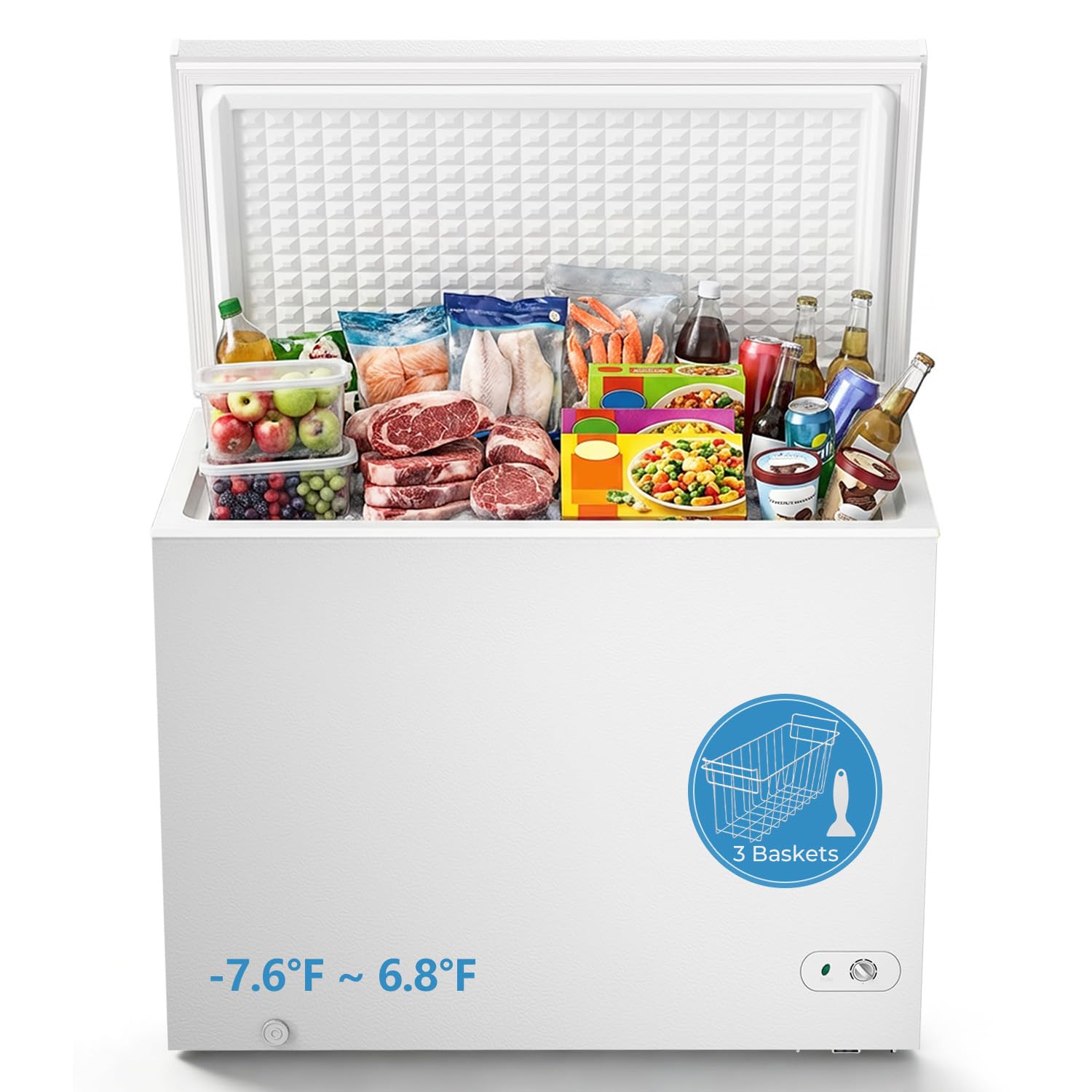
Three baskets, a wide-temperature dial, and a frugal daily power number.
For a chest this size, the headline number is the draw. Antarctic Star lists this 10-cubic-foot cabinet at 0.66 kWh consumed per day, the lowest daily figure stated across this group, and over a year of garage duty that is a quieter hit to your bill than you might expect. The temperature dial spans 6.8°F to -7.6°F across seven settings, so it can swing from a mild chill for dairy and produce to a full deep freeze for seafood and meat. That flexibility is the reason to consider it over a fixed-temperature box.
Organization is where it shines in daily use. It ships with three removable baskets, the most included across this lineup, which turns one deep pocket into layered storage so you can pull a basket, find what you want, and drop it back. A built-in handle sits flush to avoid snags, the hinged door locks between 0° and 85°, and the corner feet adjust for uneven garage floors. It also ships with a two-year warranty, which is longer coverage than most of the picks here list.
The catch to weigh: the adjustable feet and hinge points mean the cabinet needs to sit on a flat surface rather than a ragged garage slab, and the freezer body will require the standard upright rest before you plug it in. A small handful of long-term reviewers point out a unit that intermittently shut off, so if you are staking a season’s worth of meat on a single cabinet, add an internal thermometer as cheap insurance.
Worth it if: you want a flexible deep-freeze dial, the most included baskets, and the lowest stated daily power draw in this lineup.
Think twice if: you have a very uneven floor or your storage is critical enough that any compressor hiccup would be a serious loss.
6. BLACK+DECKER 10 Cu. Ft. Upright Freezer, BUF1000LW
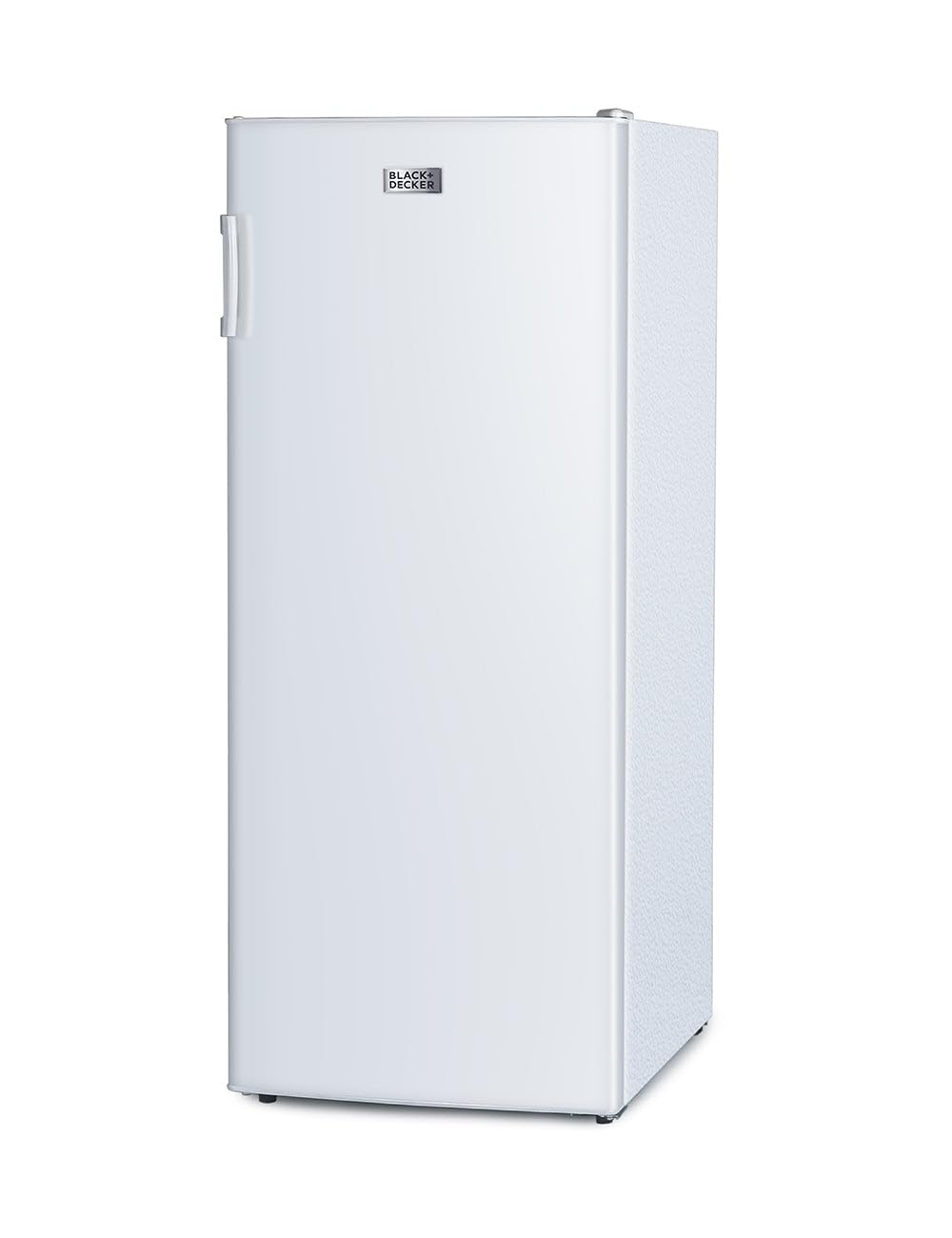
The stand-up freezer for anyone who wants to see what they own at a glance.
This is the only upright in the group, and that changes how you use it. Instead of a single deep pocket you reach into, you get 3 full-width freezer shelves and 4 door bins, so items stack front-to-back like a second refrigerator. The cabinet measures 29.7″D x 23.4″W x 58.3″H, which is a tall, narrow tower of a footprint: you trade floor space for height, and you can actually see your inventory every time you open the door. The door is reversible, so you can set the swing to match your kitchen layout instead of your layout working around the freezer.
It handles both jobs too. Owners use it as a freezer and also as an everyday refrigerator, since the dial control can be set to run warmer. One buyer who doubled it as a fridge reported it holding a steady 32°F for cold drinks and dipping to -9°F when set for freezing. It runs quiet, seals tight, and hides fingerprints on the door face. It weighs 114.6 pounds, the heaviest single cabinet here, so a second set of hands is smart for the unboxing day.
What you gain, what you give up: shelves and door bins make daily grabbing easy, but the upright format holds less usable volume for its size than a chest. If you are storing big irregular items like a whole pork shoulder, the chest picks above pack more in the same cubic footage.
The best match for you: if you want a fridge-style layout with visible shelves, a door that can swing either way, and a cabinet that stands tall instead of sprawling wide.
Otherwise consider: a chest freezer if you are storing large frozen goods, because shelves favor packaged, stackable items over odd shapes.
7. Kismile 10.0 Cubic Feet Chest Freezer
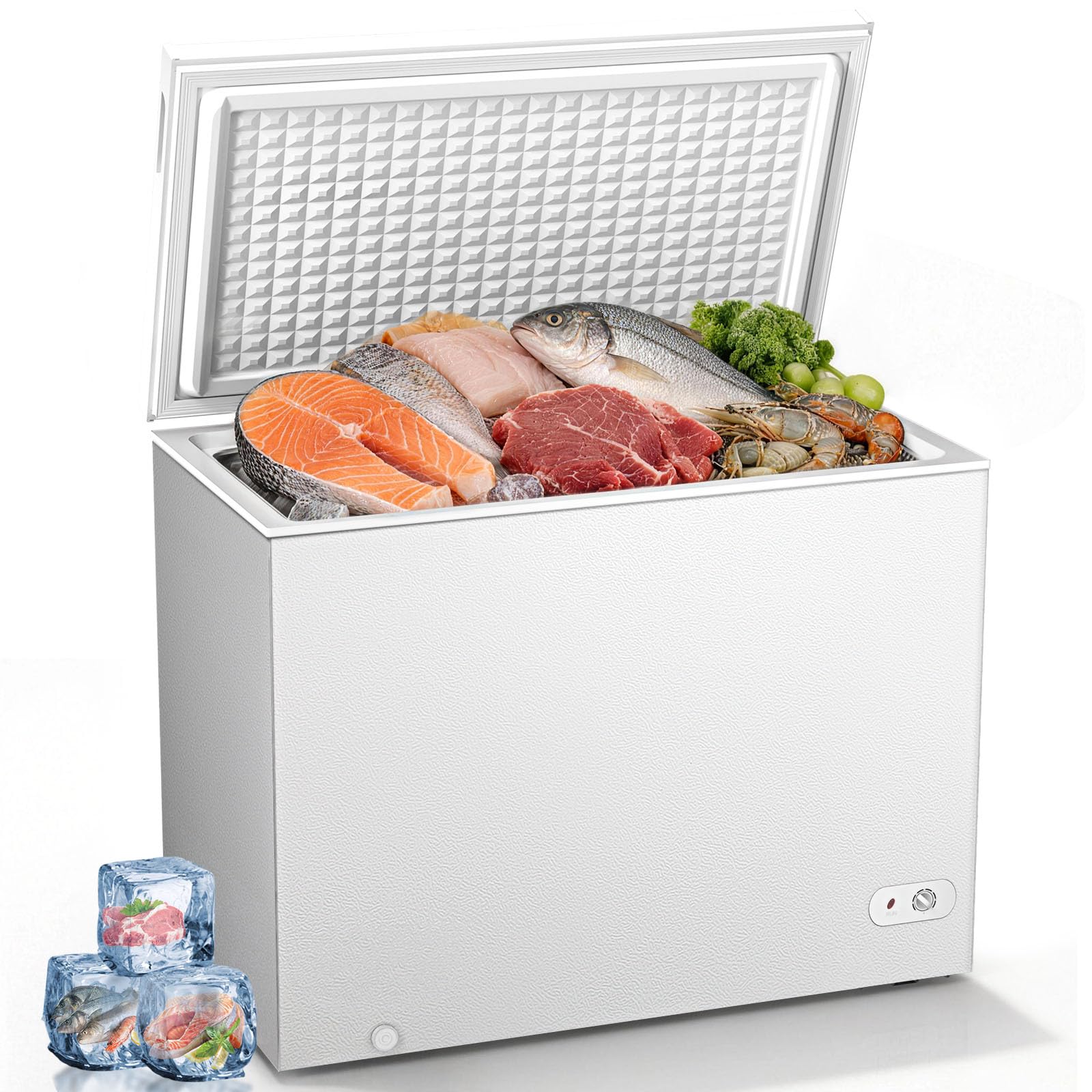
The apartment-friendly chest that runs quiet and sips power at 0.68 kWh a day.
The number that does most of the work here is the daily draw. Kismile lists this 10-cubic-foot cabinet at 0.68 kilowatt-hours per day, right alongside the most efficient pick on this list, so you can leave it plugged in without bracing for the utility bill. The noise number is just as friendly: below 40 decibels, which is roughly the hum of a quiet room, so it can sit in a studio apartment or a dorm without becoming the loudest thing in the place. The temperature dial runs 6.8°F to -7.6°F, and the 7-grade control lets you set a warm chill for drinks or a deep freeze for meat.
What buyers love most is the footprint. At 41.73″W x 23.62″D x 33.46″H, this is a slightly shallower cabinet than the widest pick, and owners consistently describe it as looking small but holding far more than expected. The hinge door stays open between 45 and 90 degrees so you can load with both hands, and the package includes three baskets to organize the interior. One owner runs it plugged into a regular household outlet on a camping trip, and others note it kept a stash of meat frozen solid with no ice build-up on the walls. It also carries a 1-year warranty with a customer-service reputation that buyers call responsive when the rare issue pops up.
The pull factors
- 0.68 kWh per day keeps the power cost low for a full-size chest
- Below 40 dB means it fits apartments and dorm rooms without noise complaints
- 45-to-90-degree hinge keeps the lid open for two-handed loading
- Three baskets included for layered storage
What to know before you commit
- A dryer-friendly power draw, but check your outlet: one owner reported it drawing around 80 watts running, with a start-up surge that tripped a 300-watt inverter
- Standard startup rest applies: leave it upright before the first plug-in
Your pick if: you need a quiet, efficient chest that fits a small apartment and will not spike your electricity bill.
Second-guess it if: you plan to run it off a small inverter or battery bank, since the start-up surge needs more headroom than a tiny setup provides.
8. COWSAR Chest Freezer 10.0 Cubic Feet with 3 Removable Baskets
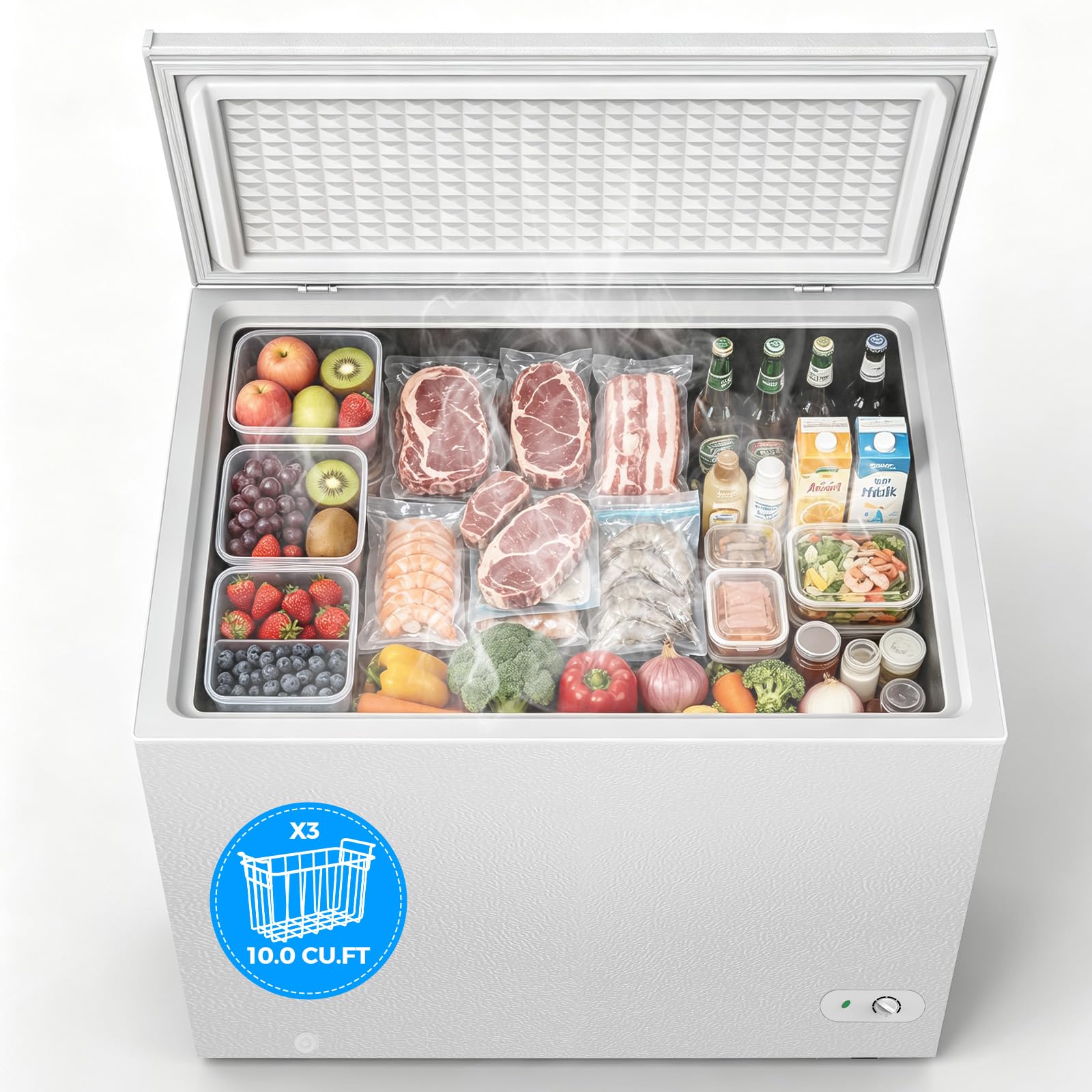
The chest that owners use to push frozen sushi and meat into deep arctic territory.
The temperature range is what sets this one apart. COWSAR lists a 7-level dial running from -7.6°F down to 8.6°F, and a dedicated sushi and meat-storage buyer reports the unit running far colder than the dial suggests, getting as low as -55°F when measured with a separate thermometer while the main setting sat at -31°F. That kind of headroom is rare in a compact chest, and it is why this earns the sushi label: it can freeze fresh fish hard enough to hold quality for long storage. It weighs 102.5 pounds, which is heavier than the BLACK+DECKER BCF1000E at 99.2 pounds, so weigh that against the fact that it also runs at 40 decibels, which is a quiet hum you will barely notice.
Organization is clean here too. Three removable wire baskets let you sort by category and lift whole sections out at once, and the aluminum interior is sturdier than the plastic liners on some competitors. A front-mounted drain makes manual defrost easier, and the hinged door holds open while you load. The included power indicator light confirms at a glance that the unit is running. There is also a compact flash-freeze feature, though owners note the button takes a short wait before it engages, so it is a planned move, not an instant one.
One real caveat: this is a low-volume model in buyer feedback, so you are buying largely on spec and the COWSAR engineering rather than a mountain of long-term owner reports. A few units have arrived with a crooked lid, so inspect the door alignment the day it lands and flag it before you break down the box.
The one to grab if: you freeze sushi-grade fish, game, or meat and want a chest that can reach deep sub-zero territory with a front drain for easy cleaning.
Not the best fit if: you want a long track record of owner feedback — this pick is newer on the market, so its reputation is still being built.
9. TABU 10.0 Cubic Feet Chest Freezer, White

The space-saving chest for a narrow nook — if you trust the dimensions, not the headline.
Footprint is where this freezer earns its slot. At 22″D x 25″W x 34″H, the TABU cabinet is dramatically smaller than the BLACK+DECKER BCF1000E, which measures 29.5″D x 40.7″W x 33.5″H — a difference that makes this the better fit for a narrow gap between a wall and a counter. That same compactness is also the honest catch. The size feedback on this model is genuinely mixed, with some owners finding it perfect and others saying it runs well under the advertised 10 cubic feet, and one buyer states plainly that it is substantially smaller than expected. Measure your spot and your storage needs before you commit.
For those it fits, the day-to-day is solid. The 7-level thermostat dial sits on the front and runs -7.6°F to 6.8°F, so you set your coldness without opening the lid. The hinged door swings between 45 and 90 degrees to hold open while loading, and a removable basket plus adjustable leveling legs let you set it flat on an uneven floor. It runs at 40 dB or below, on the low-noise side of a quiet room, and uses an R600a high-efficiency compressor to cool quickly. Owners who found their size balance describe it as quiet, energy-efficient, tight-sealing, and dependable, with one noting no loud sounds and no defects after almost a year.
Factor the price in: this is the lowest-position entry in this lineup, and for a 10-cubic-foot-labelled chest in a small footprint, owners who fit their space describe the value as strong for the money. Just confirm the interior volume in person against your plan before you commit.
Reach for this if: you have a narrow spot and want a quiet, efficient, level-legged chest, and you are comfortable checking the interior volume against your own expectations.
Look elsewhere if: a true full-size 10-cubic-foot interior is the must-have, because the compact footprint here may come up short of the headline number.
Understanding the Specs
Cubic Feet and Usable Volume
Cubic feet is the freezer’s internal storage room, and it is the first number every buyer checks. But inside that cabinet, a lot of space is spent on walls, the compressor hump, and air gaps between packaging. A chest that reads 10 cubic feet may hold less than you picture if you are stacking odd shapes, and it may hold more if you are laying flat trays. That is why two cabinets with the same cubic-foot number can feel wildly different once loaded — read the basket count and the interior liner material alongside the number.
Temperature Range and the Dial
Every freezer here runs a dial or thermostat, and the range tells you how cold it can actually go. A range like -7.6°F to 8.6°F means you can set it warm enough for a chill drawer or cold enough for a long-term deep freeze. The rule of thumb with the numbered dials is simple: higher numbers are colder. A setting near the top is for meat and fish you plan to store for months, and a setting near the bottom works for drinks and frozen meals you plan to eat soon.
FAQ
What size freezer will actually fit 10 cubic feet of food?
How long should I wait before plugging in a new freezer?
Is a chest freezer or an upright freezer better for a garage?
How much energy does a 10 cubic foot freezer use per day?
Do I have to defrost a chest freezer manually?
Will a freezer run on a standard household outlet?
What does the temperature range on a freezer dial actually mean?
How do I know my freezer is running after I plug it in?
Can I use a chest freezer as a refrigerator?
What is the difference between a chest freezer and a deep freezer?
Final Thoughts: The Verdict
For most buyers, the 10 cu ft freezer winner is the BLACK+DECKER BCF1000E because it delivers a proven 10-cubic-foot cabinet, an easy outside dial, and the basket-plus-drain layout that keeps daily use simple. If you need a freezer that runs in a cold or hot garage, grab the Danby DCF100A6WM with its 0°F to 110°F ambient rating. And for squeezing a 10-cubic-foot chest into a narrow nook, the TABU 10.0 Cubic Feet Chest Freezer is the one to reach for — just confirm the interior volume against your plan first.
How We Picked
We do not accept paid placement. Every pick is matched to a real buyer and a real use-case; we do not hands-on test units.
Sources & Methodology
Specifications: manufacturer listings and product documentation. Review insights: verified customer reviews, as of September 2026. Pricing: not shown on this page (it changes often); check the current price via the retailer link.
As an Amazon Associate, KitchPrep earns from qualifying purchases. This does not affect which products we feature.
Related Guides
