
Specs are compiled from manufacturer listings and verified buyer reviews and can change over time — please confirm the key details on the product page before buying.
Picking a shade for a basement window is a different job than picking one for a bedroom. Your window is probably short and wide, set deep in a concrete or block wall, and sitting in a room that stays damp and dim all year. So the two things that actually matter are whether the shade is cut to fit that odd opening and whether the material can handle moisture without warping, sagging, or growing a smell. Below you will find nine real options — vinyl mini blinds, zebra shades, blackout rollers, cordless cellular honeycombs, no-drill renters’ shades, and even a temporary paper set — sorted by what each one does best.
I’m Mohammad Maruf — the founder and writer behind KitchPrep. This guide is built by comparing the manufacturers’ published specifications and the patterns across verified customer reviews, so you get each pick’s real strengths and trade-offs instead of marketing spin.
Every shade here was checked against the same list: does it fit a deep-silled basement frame, does the material survive damp air, and can you raise it without a cord dangling into a kid’s reach. If you want the short answer on the best basement window shades, the cordless mini blind that lets in daylight while keeping the room private is the one most people should start with.
Our Picks at a Glance

How To Choose The Best Basement Window Shades
Basement windows break the normal rules. They are usually short and wide, buried in a deep frame, and exposed to more humidity than any window upstairs. Get these four things right and almost any shade on this list will work for you.
Measure the frame, not the glass
Almost every inside-mount shade here is deliberately cut narrower than the width you order, so it slides into the frame instead of jamming against it. Lumino trims its blind ½ inch narrower than the ordered width; ChrisDowa’s roller fabric comes in 0.6 inch smaller; AOSKY and LazBlinds both make a standard deduction as well. So you measure the frame opening, then order that number — the deduction is already built in. If your basement frame is unusually shaped or an odd size, note that LazBlinds’ spring-rod cellular shade extends about 1 inch total to bridge small gaps.
Match the material to damp air
This is the basement-specific call. Vinyl slats are the safest bet because they are water and splash resistant by nature, which is why the Lumino mini blind suits a below-grade room. Coated polyester fabric is the next best choice since it wipes clean with a damp cloth. Natural bamboo is beautiful but it is a dyed natural material, so slight color variation between batches is normal and expected — a fair trade if you want the warm look.
Decide how dark you actually need it
Most basement rooms have very little daylight to lose, so full blackout is often overkill. Light filtering keeps the room bright while blocking the view in from outside, which is what you want if the room is a gym, office, or laundry. Go blackout only if the basement is a bedroom, a media room, or somewhere a streetlamp or neighbor’s floodlight shines straight in.
Go cordless — especially below grade
Every shade in this guide is cordless (no pull cord at all). Down here that is practical, not fancy: nothing dangles, tangles, or trails across a low ceiling. Free-stop mechanisms (they hold the shade wherever you let go) let you park it at any height with one push or pull.
Quick Comparison
| Model | Best For | Slat / Opacity | Listed Size (W x H) | Mount Type | Amazon |
|---|---|---|---|---|---|
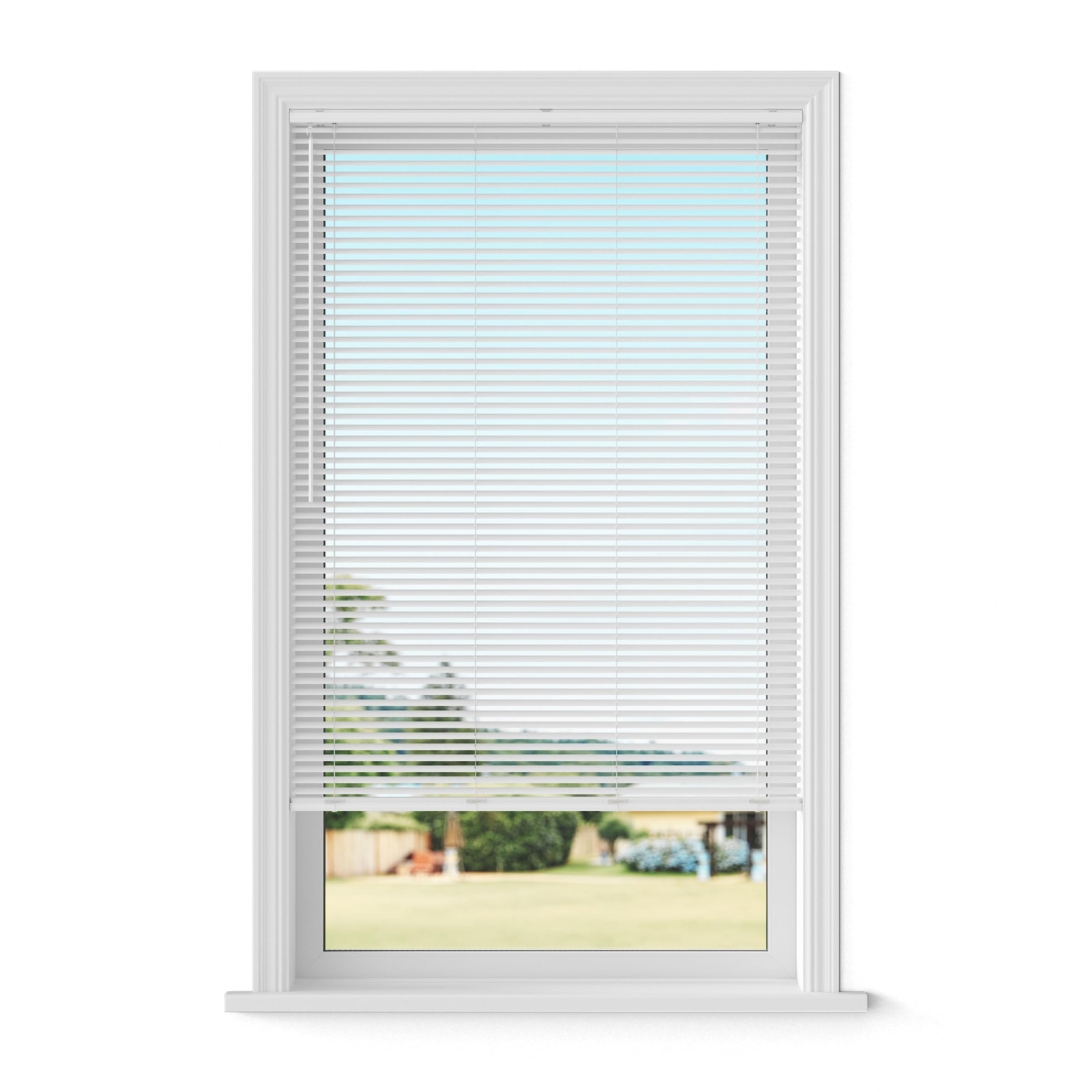
| Lumino Cordless Mini Blinds★ Best Overall | Everyday light control in a damp room | 1″ vinyl slats, light filtering | 31.5″ W x 36″ L | Inside or outside mount | Amazon |
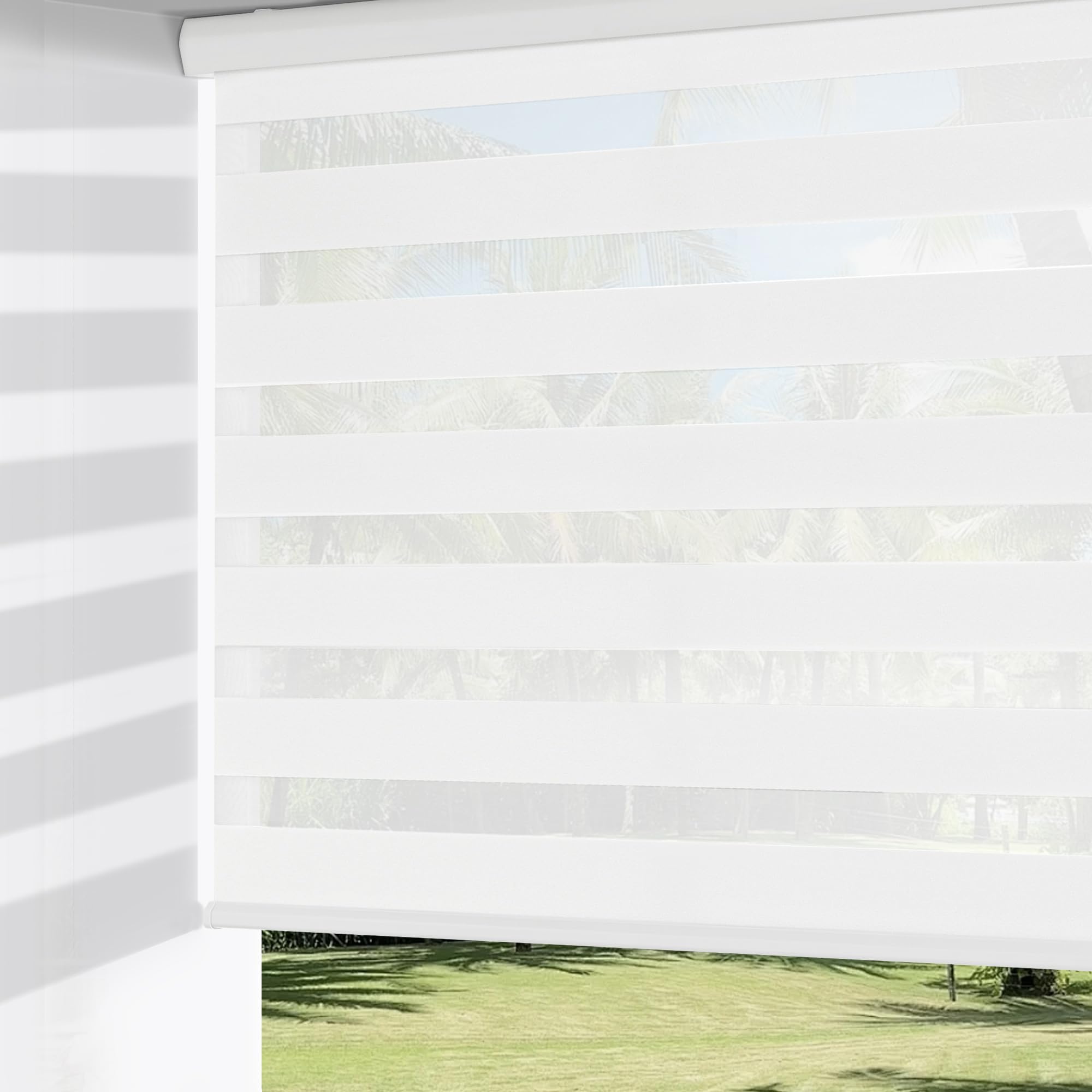
| ChrisDowa Cordless Zebra BlindsBest Value | Switching between daylight and privacy | Dual-layer fabric, semi-sheer | 20″ W x 72″ L | Inside or outside mount | Amazon |
| ChrisDowa Blackout Roller ShadesBest Blackout | Blocking a bright window completely | Blackout fabric, 100% block | 22″ W x 72″ L | Inside or outside mount | Amazon |
| AOSKY Cordless Zebra Blinds | A polished, upgraded-bracket look | Dual-layer polyester, light filtering | 20″ W x 72″ L | Inside or outside mount | Amazon |
| LazBlinds No Drill Cellular Shades | Renters who cannot drill | Honeycomb polyester, light filtering | 22″ W x 36″ H | Inside mount only | Amazon |
| MYshade 6 Pack Temporary Paper Shades | Fast, low-cost short-term privacy | Pleated paper, blackout | 36″ W x 72″ H (6 panels) | Inside mount, adhesive | Amazon |
| Boolegon Blackout Roller Shades | A tailored, lined custom fit | Linen-blend blackout fabric | Custom size | Inside or outside mount | Amazon |
| Changshade Cordless Cellular Shades | Turning a basement into a dark bedroom | 1.5″ honeycomb, blackout | 27″ W x 72″ H | Inside or outside mount | Amazon |
| LazBlinds No Drill Bamboo Roman Shades | A warm natural look over bare block | Natural bamboo, light filtering | 20″ W x 64″ H | Inside mount only | Amazon |
In‑Depth Reviews
1. Lumino Cordless Light Filtering Mini Blinds, 31.5″ W x 36″ L
Our pick — over 4.5★ from 800+ verified ratings; the strongest balance of quality and price.
Wet-air vinyl in a basement, with a one-finger lift and no cord to snag
For a basement window you open all the time, this is the sensible starting point. The slats are 1″ vinyl, and vinyl is naturally water and splash resistant — which is exactly what a below-grade frame needs, because that thin concrete sill collects condensation all winter. Because the slats let some light pass through, the room still feels like a room instead of a bunker, while the view from outside stays private.
What wins people over is the quality of the build alongside how simple it is to put up — the two things owners bring up more than any other. The lift itself is the standout: a fingertip raises the whole blind, and it parks wherever you leave it. There is no cord running down the wall, so nothing dangles near a floor-level window. Sizes run from narrow to wide, and both inside and outside mounting work.
Two numbers to hold onto. At 31.5″ W x 36″ L, this is the widest-width and shortest-height pick of the cordless shades here — meaning it is built for the squat, wide openings you actually find in basements. And the width is the largest of the cordless set in this list, so if you have a wide bulkhead window, this covers it. The Lumino arrives cut about ½” narrower than the ordered width on purpose, so it slides into the frame.
What earns it the top spot
- Vinyl slats are water and splash resistant — the right material for a damp basement
- Fingertip cordless lift; no cord to tangle or reach for
- Certified Best for Kids and safe around pets
- Cut in the USA to your exact size, then shipped
- Support team based in the USA if anything arrives wrong
The trade-offs worth knowing
- Durability is the recurring gripe — handle the lift gently, especially on a wide span
- Light filtering, not blackout; a bright streetlight will still register at night
- White leans slightly off-white in person, per owners’ photos
Reach for this if: you want one dependable shade across several basement windows and you care more about daily light control than total darkness.
Look elsewhere if: the room needs to go fully dark for sleeping — a blackout roller or honeycomb will do that job better.
2. ChrisDowa Cordless Zebra Blinds for Windows, Light Filtering Roller Shades
The budget zebra that kept one owner coming back five years later
Zebra shades work like a dimmer switch for daylight. Two layers of fabric — sheer mesh and opaque horizontal strips — slide past each other, so you can line them up for full privacy or offset them for a striped glow. It is the most adjustable light control on this list, and it costs the least. Owners say the low price and adjustable light make the room look far more expensive than it was.
The measurement rule trips people up, so read it twice: the fabric arrives 0.8 inch smaller than the size you pick, and for an inside mount your window frame needs at least 2.75″ of depth. In a deep basement sill that depth is usually there — but if your frame is shallow, mount it outside instead and go 4″ to 6″ wider than the opening. Owners who skipped the measuring step and guessed ended up returning for the right size, so the tape measure earns its keep here.
What buyers report, in their own words, is the whole story of this shade: “Cordless zebra blinds: provide privacy while allowing light in, fully block light when desired. Easy minutes-long install; raise bar gently to avoid roller track misalignment (easy fix). Excellent price. Repurchased after 5 years.” The one recurring complaint is missing hardware in the box, which the seller resends quickly if you message them.
Where it shines: the adjustment range is the point. You get a see-through position, a fully covered position, and everything between — at the lowest cost in this group.
The honest catch: the fabric is semi-sheer, so it is not a blackout shade. It also stains over time around small children, and the roller track can misalign if you yank the bar instead of raising it gently.
Suits you if: you want the most flexible light control per dollar and your basement frame has real depth behind it.
Skip past it if: you need the room pitch dark at night, or your sill is too shallow for an inside mount and you cannot go wider than the opening.
3. ChrisDowa Blackout Roller Shades, Cordless Window Blinds, Black
A black roller that turns a basement wall from bright to blank in one pull
If your basement window catches a streetlamp, a neighbor’s floodlight, or hard afternoon sun, this is the one that answers it. The fabric is 100% blackout (no light passes through) with a black backing, and the coating is thermal insulated (it slows heat moving through the fabric). That matters below grade: it cuts heat and cold loss through the glass in winter and summer, so the room holds a steadier temperature, and it damps outside noise along the way. In a finished basement that means a quieter, more even-temperature room.
Set expectations on the roller itself. The free-stop spring mechanism gets the most praise for how it works day to day, and the blackout fabric is the second thing owners call out. But the roller is the fussiest part of the design: some units hold position perfectly while others refuse to move, and the adjustment for roll-up speed and stop position takes a little patience. Its blackout performance is the clearest edge it holds over the zebra shade above, which only dims light.
One measurement note and one caution. The fabric arrives 0.6 inch smaller than the size selected, and an inside mount needs at least 2″ of frame depth — a real consideration on a shallow basement sill. Wide windows also tend to arrive short on mounting hardware, so if you are spanning a broad opening, plan to pick up extra screws rather than discovering it mid-install.
The draw: genuine 100% light blocking with a thermal backing, in a cordless roller that is simple to install.
Plan around: the free-stop mechanism is inconsistent between units, and wide widths may need extra mounting hardware.
Pick this one when: the basement is a bedroom, a media nook, or any spot where stray light is the whole problem.
Think twice if: you want a shade that just always works with zero fiddling — the roller mechanism is where this design asks the most of you.
4. AOSKY Cordless Zebra Blinds for Indoor Windows, 20″ W x 72″ H, Black

Bold black zebra fabric with upgraded metal hardware and a taller 72″ drop
Where the ChrisDowa zebra above is understated white, this one is confident black with darker, upgraded fittings to match. The fabric is 100% imported polyester, treated as waterproof, breathable, anti-static, and dustproof — a combination that matters more in a below-grade room than in a sunny one. The dual-layer sheer-and-solid weave gives you the same dimmer-style control, and the two layers together filter light while still protecting the view in.
The hardware is the differentiator versus cheaper zebra shades. Instead of a fabric-covered bottom rail, AOSKY ships a square color-matched valance and a metal fish-shaped bottom rod with a metallic sheen, and it mounts on secure snap-in brackets. Owners rave about the build quality most. Appearance and installation are named practically as often, which tells you it looks as good as it functions.
One behavior to respect: the cordless rolled fabric should be pulled slowly. Yank it fast and the end clips can break, and replacements, while the seller sends them, are not included in the box. The blinds are also cut to order, so if nothing in the standard sizes fits your basement opening, AOSKY offers a custom-size path and confirms the order with you by message within 24 hours.
Why it stands out: upgraded square valance, metal fish bottom rod, and snap-in brackets give it a higher-end look than its tier suggests.
Handle with care: pulling the fabric too quickly can snap the end clips, so a slow, deliberate pull keeps it running for years.
It fits you if: you want a modern zebra look with metal accessories and you have a tall, narrow opening to cover.
Pass if: your basement frame is wide rather than tall, or you want a shade you can yank up fast without thinking about it.
5. LazBlinds No Drill Cordless Cellular Shades, 22″ W x 36″ H, White

No tools, no holes, and a spring rod that stretches to fit odd basement openings
This is the least committal shade on the list, and the cleverest. A patented spring rod presses against the frame with no drilling at all — no screws, no brackets, no holes to patch when you move out. It installs in about 30 seconds and can carry up to 30kg, so it is not a flimsy compromise. The spring rod extends about 1 inch total, letting one blind fit a window width from 21.7″ to 22.6″.
The material is where the basement benefit lives. The honeycomb structure — a honeycomb being a row of air pockets built into the fabric — traps air inside those cells, insulating against summer heat and winter cold, and it also damps noise coming through the window. That makes it the only shade here designed to actually cut sound from outside. The fit is inside-mount only, so confirm your frame depth before ordering.
Owners care most about how little effort it takes, with build quality close behind. The quick-fit rod (a tension rod that presses into the frame) drops into frames where nothing else fits — exactly the case in older houses with odd-dimension casement windows (windows that crank open on a hinge). One buyer writes, “Perfect for odd-dimension basement casement windows.” If the size on the page does not match, measure the frame and order the closest fit: buyers who skimmed that step ended up returning, while those who measured got a tight seal.
What it gives you: tool-free installation in seconds, a 30kg load capacity, honeycomb insulation against heat and noise, and a fit range of 21.7″ to 22.6″ wide.
The honest limits: inside mount only, so a shallow or uneven frame is a no-go, and the fabric is light filtering rather than blackout.
Best for: renters and anyone who cannot put holes in concrete or block, especially on an odd-shaped basement window.
Not for: blackout needs or very shallow sills where the rod cannot get a firm purchase.
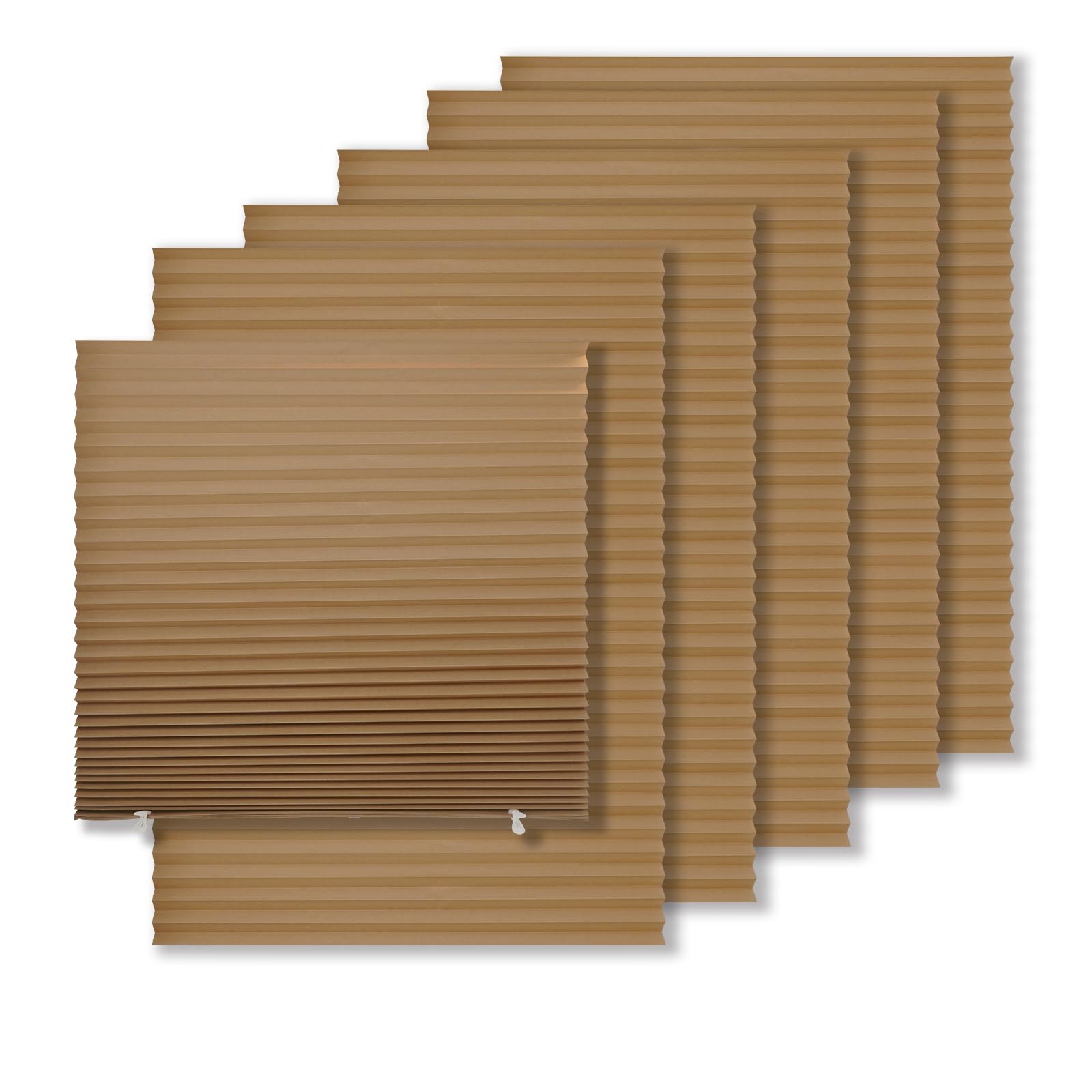
6. MYshade 6 Pack Temporary Blackout Paper Shades, 36″ W x 72″ H, Brown
Six cut-to-fit paper panels that go up in seconds and come down just as fast
Not every basement window deserves a permanent fixture. If you are staging a house, painting a room, or just covering a bare window until the real solution arrives, this six-pack is the cheapest way to get full darkness today. You cut each panel to size with a box cutter, peel the 3M adhesive, and press it to the frame — no drill, no screws, no brackets. The brown color here blocks light as a blackout shade.
The design detail that separates these from cheap paper shades is a support structure on the back that holds the pleats steady, so the folds do not sag or flatten over time. A clip raises and lowers the bottom edge for daylight. Owners note that these are flimsy by nature but hold up far better than expected, and that the cost is a fraction of a custom blind order for the same window size.
The adhesive is the split. Some buyers find it grips immediately and stays; others find it stubborn to remove later, which is a mark against it if you rent and plan to peel it off. Cold rooms make it worse — in a chilly basement, warming the tape for about 30 seconds with a hair dryer before pressing it down makes the bond stick properly. And because these are single panels, they do not raise and lower easily once clipped; plan on setting them and leaving them.
The appeal: genuine blackout from pleated paper, in a six-pack, with the fastest install here and a shape you can cut to any window.
The reality check: adhesive is a mixed bag — some run into trouble removing it, and it needs a warm-up in cold rooms to hold.
Get these when: the shade is a short-term fix — staging, painting, or waiting on a custom order — and speed matters more than permanence.
Leave them if: you need to open and close the shade daily, or you rent and a strong adhesive worries you at move-out.
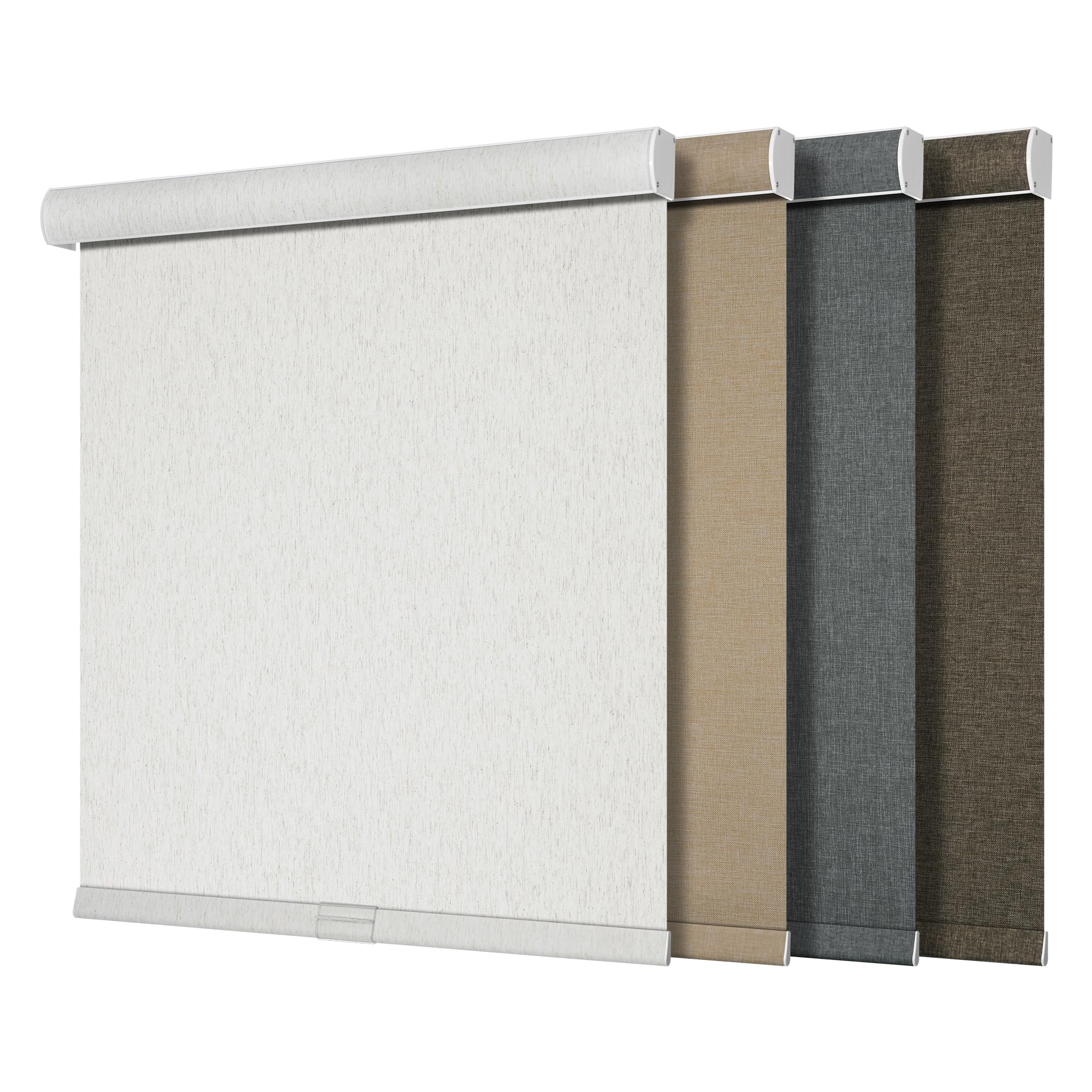
7. Boolegon Blackout Roller Shades, Custom Size, Light Beige
A custom-cut linen blackout roller with a baffle that kills top-edge light leak
The leaky top edge is the classic flaw in blackout roller shades, and Boolegon engineered around it with a baffle plate and hidden mounting code. That is the detail that makes this the most complete blackout on the list — the light does not creep in at the top where the fabric meets the roll. The fabric itself is a linen weave with richer texture and a softer hand than plain polyester, laser cut with no burrs, and the natural linen fiber carries no odor.
The roller is engineered for durability rather than guesswork. A thickened 38mm roll tube takes stress better and rolls fabric tighter, closing the gap between the fabric and the frame for better light blocking. And it is built for a custom fit: this is a made-to-order shade, with a full range of widths and lengths, so a rectangular basement opening that holds nothing off the shelf will still work. An inside mount needs at least 2″ of frame depth.
Owners rank build quality first, installation second, then the linen look and light blocking. The one recurring wrinkle is that the shade can roll up slightly off-center, leaving a light gap at one edge — a cosmetic issue most owners note and then get past rather than a dealbreaker. If you have three shades butted side by side, the owner who did exactly that reported minimal light leak between them.
Where it earns premium: a baffle plate stops top light leak, a 38mm roll tube tightens the fabric-to-frame gap, and the linen fabric is laser cut with no burrs.
One quirk to note: the shade can roll up off-center, creating a small edge gap; most owners treat it as minor.
It earns its place if: you want a blackout shade with a soft natural look and a custom fit for a frame that takes nothing standard.
Hold off if: you want a uniform factory-cornered roll every time, since off-center rolling shows up on these.
8. Changshade Cordless Cellular Shades, 27″ W x 72″ H, Blackout White

Honeycomb cells that block the light and quiet the room at the same time
Cellular shades earn their keep in a basement because they fight two problems at once. The honeycomb cells (pockets of fabric that trap air) are 1.5″ in diameter, and a built-in aluminum foil coating inside gives them a 100% room-darkening, light-blocking effect. So you get full darkness plus a real barrier against heat and cold coming through the glass, and the cells also absorb a good deal of sound — helpful if noisy neighbors or a busy street sit just above your sill.
It is cordless and certified Best for Kids, and it pulls down and stops at any height, which makes it easy to operate one-handed. Sizing is precise and worth repeating: these ship at the exact shade size listed, with no deduction, so if you order 27″ W x 72″ H you get exactly that. For an inside mount, order a width 0.25–0.5 inch narrower than the window, and for outside mount add at least 4″ to both width and height.
Owners praise the build quality and light blocking above all. The lighter-weight feel comes up as a minor gripe — some find the plastic end hangers less solid than metal ones, and it will not survive brute handling. But treated reasonably, they hold their position and do their job, and they fit tightly enough that the whole window reads as a clean, custom unit.
What it does well: 1.5″ honeycomb cells with an aluminum foil lining deliver full room darkening plus thermal and acoustic insulation.
The weak point: plastic end hangers rather than metal, and a lightweight feel that rewards careful handling.
Choose it when: you are turning a basement into a bedroom or a media room and want darkness, warmth retention, and a quieter room in one shade.
Choose differently if: you want a sturdier metal-hardware feel, or your frame runs shallow enough that an inside mount is not an option.
9. LazBlinds No Drill Bamboo Roman Shades, 20″ W x 64″ H, Brown

Natural bamboo that softens a bare basement wall without a single drill hole
Concrete and block are unforgiving surfaces, which is what makes a wood-toned Roman shade such a good match for a basement. The flat bamboo slats let a soft, warm glow through the small gaps between them, adding texture where the room has none — and because it is a no-drill mount, you never touch the wall. The metal brackets on each end extend about 0.78 inch total, letting it fit a window width of roughly 19.7″ to 20.38″.
Two LazBlinds details carry across both of its shades on this list: the patented No Tools-No Drill system that installs in about 30 seconds, and a cordless lift that raises and lowers with a simple touch. Inside-mount only, and it needs at least 1.5″ of frame depth. That install speed matters in a basement, where putting a ladder against a low window and reaching a drill into a recessed sill is the worst part of the job.
The look is the entire reason to buy this one. Owners say the warm, natural bamboo tone makes the window look far more expensive than it is. Be aware that bamboo is a dyed natural material, so slight color variation between batches is normal and the finish can differ from the screen image. It filters light rather than blocking it, so it is not a choice for a dark bedroom.
The reason to buy: natural bamboo in a warm brown neutral, no-drill install in about 30 seconds, and cordless operation — a rare combination for a rental-friendly shade.
Know going in: natural color varies between batches, and it filters light rather than blacking it out.
Ideal for: anyone who wants warmth and texture on a bare basement window and cannot drill into concrete or block.
Not the fit for: a bedroom that needs full darkness, or anyone who wants an identical color match to a photo.
Understanding the Specs
Light Filtering vs. Blackout
Light filtering means the fabric lets a controlled amount of daylight through while blocking the view in, which suits a basement office, gym, or laundry room where you want brightness, not a cave. Blackout means the material blocks the light, with coated fabric or an aluminum foil lining doing the job — right for a bedroom, media room, or any window a streetlamp shines through. Both are useful; the question is which room you are covering.
Inside Mount vs. Outside Mount
Inside mount (the shade sits inside the window frame) gives a cleaner, more built-in look — but it needs a certain depth of sill, and that depth varies by shade: ChrisDowa’s roller asks for at least 2″ and Boolegon’s at least 2″, while the zebra fabric wants 2.75″. Outside mount (the shade sits over the whole frame) covers more of the wall and hides small gaps, and it usually means ordering a shade a few inches wider and longer than the opening.
The Measurement Deduction
Most inside-mount shades ship narrower than the width you order, so they slide into the frame rather than jam against it. Lumino cuts its blind ½ inch narrower; ChrisDowa’s roller fabric comes in 0.6 inch smaller and its zebra 0.8 inch smaller; LazBlinds’ cellular makes a 3/8 inch deduction and its bamboo a 2/5 inch deduction. That is why you measure the frame opening and order that number — the smaller cut is already built in.
Why Cordless Matters
Cordless covers two things: safety and control. No cord means nothing dangles near a low window within reach of a child or pet, and several shades here are certified Best for Kids. It also means the free-stop mechanism — pull the shade to any height and let go — which is easier one-handed than a wand or pull cord, and it keeps the window looking clean and clutter-free.
FAQ
Will these shades fit a deep, recessed basement window frame?
What is the difference between light filtering and blackout for a basement window?
Why does my shade arrive narrower than the size I ordered?
Is a light filtering shade enough privacy for a basement window?
Which shades can I install without drilling into concrete or block walls?
Do cordless shades stay raised without a cord to hold them?
Can a temporary paper shade really block a basement window’s light?
Are plastic or vinyl shades safe for a damp basement?
What should I measure before ordering a custom-size basement shade?
How do I keep basement shades from getting musty over time?
Final Thoughts: The Verdict
For most basement windows, the basement window shades winner is the Lumino Cordless Light Filtering Mini Blinds. Its water-resistant vinyl slats and fingertip cordless lift (you raise and lower it by hand, no cord) suit a damp, low-silled room, and at 31.5″ W x 36″ L it fits the wide, squat openings basements actually have. Want a shade that flips between daylight and full privacy? Grab the ChrisDowa Cordless Zebra Blinds. To turn a basement into a genuinely dark, quiet bedroom, reach for the Changshade Cordless Cellular Shades. The Lumino Cordless Light Filtering Mini Blind holds a 4.7 rating across 800+ owners, while the ChrisDowa roller pulls in 900+ ratings at a lower score. So the Lumino’s higher marks are worth the small premium if light control is your priority.
How We Picked
We do not accept paid placement. Every pick is matched to a real buyer and a real use-case; we do not hands-on test units.
Sources & Methodology
Specifications: manufacturer listings and product documentation. Review insights: verified customer reviews, as of September 2026. Pricing: not shown on this page (it changes often); check the current price via the retailer link.
As an Amazon Associate, KitchPrep earns from qualifying purchases. This does not affect which products we feature.
Related Guides
