
Specs are compiled from manufacturer listings and verified buyer reviews and can change over time — please confirm the key details on the product page before buying.
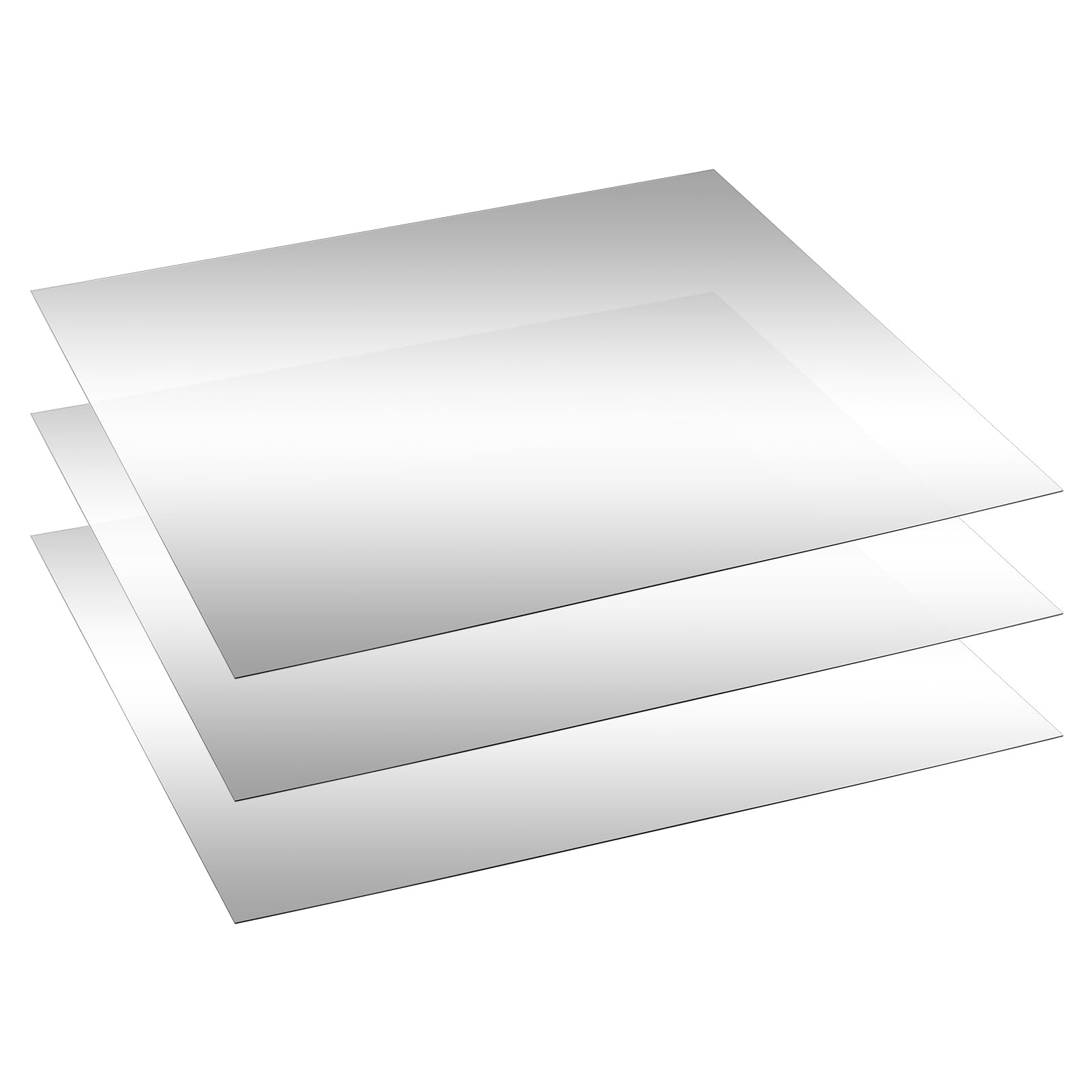
A two-way mirror that bows, hazes, or scratches ruins the whole project, and most of that depends on two things: the coating and the surface under it. You are really choosing between a rigid panel that holds its shape and a roll of thin film you stick onto something else. The acrylic sheets below skip the film entirely, and the firm panel is the one that holds the higher score at 4.2 stars.
I’m Mohammad Maruf — the founder and writer behind KitchPrep. This guide is built by comparing the manufacturers’ published specifications and the patterns across verified customer reviews, so you get each pick’s real strengths and trade-offs instead of marketing spin.
Some panels are acrylic, some are glass, and a few are just adhesive film. Those differences show up the moment you cut, mount, or clean one. Below is a practical route through the options worth considering for your 2-way mirror project.
Our Picks at a Glance
How To Choose The Best 2-Way Mirror
A two-way mirror is a panel coated with a very thin metal layer. That layer reflects part of the light and lets the rest pass through. That coating sets how the panel performs, and it scratches first if you handle the sheet roughly.
Acrylic Versus Glass
Acrylic flexes a little and resists shattering, so it usually survives hobby builds that need cutting. Glass gives a cleaner reflection, but it is brittle. If you plan to trim a panel down to size, plan the cut before you buy. One 18×24 inch acrylic set here is only 0.04 inches thick, so it needs backing support to stay flat.
Transparency Percentage
Transparency is the share of light that passes through instead of bouncing back. A 30% transparent panel passes roughly a third of the light and reflects the rest. Most infinity mirror and magic mirror builds are designed around that range. Higher transparency gives a dimmer mirror look but a brighter view through.
Film Or Rigid Panel
Peel-and-stick mirror film is cheaper, but its finish depends on your surface and your hand. Film only performs as well as the surface you apply it to and how smoothly you press it down, so a wavy or hazy result is common. A rigid panel arrives already coated, so there is nothing to apply and nothing to bubble.
Quick Comparison
| Model | Best For | Material | Panel Size | Pieces Included | Amazon |
|---|---|---|---|---|---|
| Yookeer 3 Pcs Two Way Mirror Acrylic Sheet★ Best Overall | Cutting and building infinity mirrors | Acrylic | 18 x 24 x 0.04 in | 3 | Amazon |
| Two Way Infinity Mirror Film | Covering a flat surface without cutting panels | Mirror Film | 20 x 120 in | 1 | Amazon |
| Make It Rite 4″ Wide 2-Way Mirror | Face-down viewing after eye surgery | — | 4 x 4 x 4 in | 1 | Amazon |
In‑Depth Reviews
1. Yookeer 3 Pcs Two Way Mirror Acrylic Sheet, 30% Transparent
Our pick — over 4★ from 100+ verified ratings; the strongest balance of quality and price.
Three pre-coated sheets in one order, so two failed cuts still leave you a finished infinity mirror.
You get three panels at 18 x 24 x 0.04 inches, each rated at 30% transparency — a third of the light passes through and the rest bounces back. That balance suits a magic mirror or an infinity loop. Three sheets is also spare allowance: scrap your first attempt and you still have material for a second, which matters when you are cutting a coated surface by hand.
Unlike glass, which chips into shards, this acrylic bends slightly before it breaks. A wobble in your score line usually leaves a rough edge, not a ruined build. Reviewers point to the reflection itself as the reason it wins — smooth, flat, and distortion-free, close to what a glass mirror gives. It holds a 4.2-star score, higher than the film roll’s 3.5 stars.
The catch: 0.04 inches is genuinely thin, so the same panel that flexes without breaking will bow without support. Back it with a rigid board and it stays flat. It is also smaller in span than the film option — this set measures 24.41 inches long by 18.5 inches wide, while the film roll runs 20 x 120 inches and measures in linear feet of one continuous layer. The film packs one roll to this set’s three sheets. Buyers report trimming carefully: “They fracture pretty easily. And you should maybe use a diamond cutter for smooth edges.”
What earns the top spot
- Three 18 x 24 x 0.04 inch acrylic panels in one order, at 30% transparency
- Acrylic has toughness and shatter resistance, and can be bent slightly
- Flat, distortion-free reflection that reads close to a glass mirror
- Protective film on both sides guards the coating until you are ready to peel
Where it asks more of you
- Very thin stock — needs back support to stay flat and avoid distortion
- Rough handling can still scratch the acrylic surface
- Cutting is delicate; a diamond cutter gives the cleanest edges
Take this one if: you are building an infinity mirror or magic mirror and want pre-coated sheets you can size yourself.
Keep looking if: you want a single large continuous surface rather than three separate panels.
2. TWO WAY INFINITY MIRROR FILM 20″ WIDE x PER FOOT REFLECTIVE WINDOW TINT

One 120-inch strip covers a window, tabletop, or door panel without a seam.
Where the Yookeer sheets come precut and rigid, this is a 20 inch wide by 120 inch long roll of mirror film you press onto glass or a flat panel yourself. The length is the entire point. One continuous strip wraps a window or a door panel with no visible seam, and the roll lists 1.66 square feet of coverage. You get one layer here, not three, so every cut gets one shot.
Predictability is where it loses ground. The finish depends on how flat your surface is and how steady your hand is during the press, and results come back uneven. The film reflects, but owners mention the infinity effect does not always arrive — one buyer describes getting “just reflection.” Others were happy: one says it was exactly right for the project at hand.
Installation is peel-and-stick, with no adhesive or tools needed beyond a squeegee. That makes it the easy route if you already own a flat, clean surface. It also carries no ultraviolet protection, so do not count on it to shield anything behind the glass from sunlight. Read it as a utilitarian covering, not a finished optical panel — the 3.5-star standing across dozens of ratings reflects a tool that works when the surface cooperates.
Where it earns its place: continuous seam-free coverage of a large flat surface at 20 inches wide by 120 inches long, applied by hand with no cutting of rigid stock required.
The fair warning: results hinge entirely on surface flatness and install technique, and it is sold as one roll with no ultraviolet protection built in.
Reach for the roll if: you have a flat pane already and want reflective coverage without buying precut panels.
Look elsewhere if: you need a guaranteed clean optical finish straight out of the package.
3. 4″ Wide 2-Way Mirror for Face Down Recovery

A 4-ounce panel that keeps text readable while you keep your head down.
Start with the size, because everything else follows from it: this is a 4 x 4 x 4 inch mirror weighing 4 ounces. That is small enough to hold, carry into an appointment, or rest on a cushion in front of you. While you lie face-down, the panel shows text and screens right side up instead of the upside-down, backwards view a plain reflective surface gives you. Its two-way surface also lets you make eye contact and see who is in the room without lifting your head.
That tiny footprint is where opinions split. The people it clicks for talk about it in the strongest terms — one spent a week face-down after eye surgery and still watched television, and another calls it “perfect” once positioned, despite having worried it was too small beforehand. Others find the aiming fussy: the panel needs precise elevation and direction, and a small shift in your position can lose the picture. Some could not get it to work at all, and the 4-inch size reads as extremely small to anyone expecting something closer to a full sheet.
So treat it as a positioning tool, not a screen. The listing has been on Amazon since February 5, 2016 under model number RT-4-RT. Because it is only 4 inches across, what you see at once is limited to whatever you point it at, and getting that angle right takes a little patience.
Why face-down users gravitate to it
- Keeps text and screens right side up and readable while you stay head-down
- Two-way surface lets you make eye contact and see the room without moving
- Small and light at 4 ounces, so it travels into appointments easily
The trade-offs to weigh
- 4 inches across is a narrow viewing window and felt very small by some
- Needs precise angling and elevation; small movements can lose the view
- Functionality is a genuine mixed bag across buyers rather than a sure thing
Suits you if: you are following a head-down recovery plan and want to read or watch without straining your neck.
Not your pick if: you wanted a broad mirror surface for a wall or craft build rather than a travel-sized aid.
Understanding the Specs
Transparency Percentage
Transparency is the share of light that passes through the panel instead of bouncing off it. A 30% transparent sheet sends roughly a third of the light straight through. That is why it reads as a mirror from a bright side and still lets you see behind it from a dim one. Lower transparency gives a stronger mirror look but a dimmer view through; higher transparency swings the other way. If your build looks washed out, the coating side is usually the culprit. The blue protective film marks which face carries the metal layer, and that side should generally face the inside of your work.
Panel Thickness and Support
Thickness decides whether a sheet holds its own shape. A 0.04 inch acrylic panel is flexible enough to survive a knock without shattering, but that same give means it will bow and distort the reflection if nothing supports it. Backing a thin panel with a rigid board keeps the surface flat, and flatness is what makes the reflection read true. Film is the thinnest option of all and inherits the shape of whatever you press it onto, so any dip or ripple in the surface shows up in the finish.
FAQ
How do I cut a two-way mirror sheet without cracking it?
Which side of the panel has the reflective coating?
Can I use glass cleaner on a two-way mirror?
What does 30% transparency mean in practice?
Will mirror film give the same result as an acrylic panel?
What size two-way mirror do I need for a face-down setup?
Why does my infinity mirror effect not show up?
Do I need backing behind a thin acrylic mirror?
Does mirror film block sunlight?
Is a two-way mirror the same as a one-way mirror?
Final Thoughts: The Verdict
If you want one dependable pick, the 2-way mirror winner is the Yookeer 3 Pcs Two Way Mirror Acrylic Sheet because three 18 x 24 inch panels at 30% transparency give you room to make mistakes and still finish the build. If your project lives on a large flat pane you cannot cut into panels, reach for the TWO WAY INFINITY MIRROR FILM instead. And if you need a mirror you can read through while keeping your head down after eye surgery, the 4″ Wide 2-Way Mirror is the one to pack.
How We Picked
We do not accept paid placement. Every pick is matched to a real buyer and a real use-case; we do not hands-on test units.
Sources & Methodology
Specifications: manufacturer listings and product documentation. Review insights: verified customer reviews, as of September 2026. Pricing: not shown on this page (it changes often); check the current price via the retailer link.
As an Amazon Associate, KitchPrep earns from qualifying purchases. This does not affect which products we feature.
Related Guides
