
Specs are compiled from manufacturer listings and verified buyer reviews and can change over time — please confirm the key details on the product page before buying.
Your outlet is dead, your kitchen remodel just failed inspection, or an old GFCI receptacle keeps popping for no reason — and the fix is a breaker, not a receptacle. A 20-amp GFCI breaker replaces a standard 20-amp breaker in your panel and protects the whole circuit at once. That means one device guards every outlet, light, and appliance on that line, and you never have to hunt down an inaccessible GFCI outlet behind a fridge again. Get the brand right first: a Siemens QF120A clips only into Siemens load centers, and a Square D Homeline breaker only into Homeline panels.
I’m Mohammad Maruf — the founder and writer behind KitchPrep. This guide is built by comparing the manufacturers’ published specifications and the patterns across verified customer reviews, so you get each pick’s real strengths and trade-offs instead of marketing spin.
The picks below split cleanly into two jobs: protecting a wet area like a kitchen, bath, or spa line, and meeting modern arc-fault code on a whole circuit. Our top overall pick earns its spot on the strength of its owner satisfaction and its UL 943 self-test safety feature. If you want the short version before you scroll, this straightforward breakdown of the 20-amp breaker with gfci options covers fit, fault type, and reset behavior.
Our Picks at a Glance


How To Choose The Best 20-Amp Breaker With GFCI
Before you compare features, settle one question: which load center is this breaker going into? Every unit on this list is a 20-amp, single-pole breaker rated for 120 volts, which is the standard size for a kitchen, bathroom, garage, or outdoor outlet circuit. What separates them is the brand of panel they lock into and the type of fault they watch for.
Match the breaker to your panel brand and series first
A Siemens QF120A will not seat in a Square D Homeline panel, and a Homeline breaker will not seat in a QO panel. Each manufacturer builds its own bus bar and mounting clip, so a breaker from the wrong family either will not clip in at all or will sit loose and arc. Check the label inside your panel door for the brand and series before you buy anything. Plug-on neutral models add one more requirement — they need a panel with a neutral bus bar designed for them.
Decide between GFCI-only and dual-function protection
You want shock protection anywhere water and wiring meet — spas, kitchens, bathrooms, and outdoor outlets. That is GFCI protection (ground fault circuit interrupter — a device that cuts power when current leaks to ground, the classic shock risk near water). For living areas and bedrooms, modern code often asks for AFCI protection (arc fault circuit interrupter — a device that cuts power when it detects the signature of a sparking or arcing wire, a common cause of electrical fires). Dual-function breakers do both jobs in one slot, which is why remodelers reach for them.
Look at the interrupting rating and reset behavior
The 10,000 AIC interrupting rating (the maximum short-circuit current the breaker can safely interrupt without being destroyed) is the safety ceiling every unit here shares, so it is not a differentiator on this list. What does differ is how each breaker tells you why it tripped — some use an LED that points to the exact fault, others just click off and leave you guessing.
Quick Comparison
| Model | Best For | Protection Type | Poles | Mounting | Amazon |
|---|---|---|---|---|---|
| Siemens QF120A★ Best Overall | Wet areas, spas, kitchens | GFCI | 1 | Plug-In | Amazon |
| Siemens QF120ANBest Plug-On Neutral | Outdoor outlet circuits | GFCI | 1 | Plug | Amazon |
| ABB THQL1120DFPBest Dual Function | Modernizing older GE panels | Dual Function (AFCI and GFCI) | 1 | Plug-In | Amazon |
| Siemens Q120DFP | Whole-circuit code compliance | AFCI and GFCI | 2 | Panel | Amazon |
| Square D HOM120PDFC | Homeline kitchen remodels | Dual Function (CAFCI and GFCI) | 1 | Plug-In | Amazon |
| Eaton CHFN120A1CS | Eaton CH panels | AFCI, GFCI | 1 | Plug-In | Amazon |
| Leviton LB120-DFT | Leviton load centers | AFCI | 1 | Plug-In | Amazon |
| Square D QO120DFC | QO panels, workshop circuits | Dual Function (CAFCI and GFCI) | 1 | Plug-In | Amazon |
In‑Depth Reviews
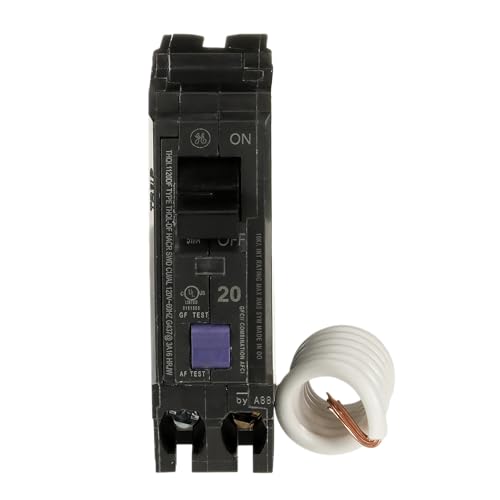
1. Siemens QF120A Gfci Circuit Breaker, Plug In, Self Testing, 20 Amp, 1-Pole, 120 Volt
Our pick — over 4.5★ from 950+ verified ratings; the strongest balance of quality and price.
The breaker that keeps testing itself so a dead outlet never surprises you
If you are wiring a spa, a hot tub, or a bathroom circuit and you want the whole line protected instead of just one outlet, this is the one most people land on. It is a single-pole, 20-amp, 120-volt GFCI breaker with Class A ground fault protection — Class A being the standard shock-protection level that trips when current leaks to ground above the safety threshold. Because it protects the entire circuit, one breaker covers a whole run of outlets, which is why it suits a pool pump line or a kitchen wall where a GFCI receptacle would sit buried behind cabinetry.
What gives this breaker its edge is the self-test function. It checks its own ground-fault detection circuitry on a regular basis, a safety feature spelled out by UL 943, so a silent failure gets caught instead of leaving you with protection that quietly stopped working. Owners also lean on that same straightforward consistency. The honest engineering detail worth knowing is the current rating behind it: the unit carries a 10,000 AIC interrupting rating, meaning it can safely shut off a short-circuit current up to that level without being destroyed. For a normal home panel that is a solid margin.
It is the crowd favorite at 4.8 stars across 900+ ratings, earned on fit and simplicity. Buyers cite the price and the clean drop-in fit into Siemens panels as the top two reasons they recommend it. As buyers put it: “The breaker fit my electrical box well and replaced a faulty breaker.” The one recurring complaint is panel match, not the breaker itself. This is a plug-in-mount, single-pole unit built for Siemens panels, and one frustrated owner discovered too late that it simply would not seat in an off-brand box. Check your panel label first, and confirm this is a GFCI application rather than an AFCI one.
Where this breaker delivers
- Class A GFCI protection for the entire circuit, not just one outlet
- Built-in self-test required by UL 943 so silent failures get caught
- 10,000 AIC interrupting rating gives a solid safety margin for a home panel
- Installation is genuinely simple for anyone comfortable in a panel
What to check before you buy
- Plug-in mount fits Siemens-style panels only — verify your load center first
- Single-pole, so it covers one 120-volt circuit, not a 240-volt feed
Grab this for water-adjacent circuits: spas, hot tubs, bathrooms, kitchens, and pool pump lines where a whole-run GFCI is the goal.
Look elsewhere if: your panel is not a Siemens-compatible box, because this breaker will not seat and that is a fit issue, not a defect.
2. 20 Amp 1-Pole GFCI Plug-On Neutral Circuit Breaker
The no-pigtail GFCI breaker that tidies up the wire clutter in your panel
Feeding a single outdoor outlet that you can never get to when it trips is exactly the job this breaker was built for. It is a 20-amp, single-pole GFCI unit at 240 volts that uses Siemens’ plug-on neutral design, which means the neutral wire lands directly on the breaker instead of trailing out as a pigtail. Fewer connections in the box means a faster install and less clutter. It is rated HACR (heating, air conditioning, and refrigeration — a rating that covers motor-heavy loads) and SWD (switching duty, so it can handle being used as a circuit switch), and it holds a 10,000 AIC interrupting rating.
What lands best with owners is the build quality and the plug-on neutral itself, which some describe as the nicest part of the whole package. One verified buyer of an outdoor outlet circuit reported that it “Tripped immediately on initial installation. I found a grounded neutral, fixed that, now works perfectly.” That is the breaker doing its job — catching a wiring fault that a plain breaker would have missed. The same buyer expected it to outlast a GFCI outlet for that same inaccessible spot.
Two honest notes before you commit. First, functionality is the mixed bag here, and the reason is usually installation, not the part — this is not a DIY job unless you can work around a live panel safely and confidently. Second, this is a Siemens-only, plug-on breaker that requires a load center rated to accept plug-on breakers. It is not a universal fit, so a quick look at your panel label saves you a return.
Steady, well-made part: Buyers consistently describe the quality as good and the plug-on neutral as the standout feature that cleans up the install.
Read the fine print: It is locked to Siemens panels built for plug-on breakers, and a careful install is mandatory for it to work as intended.
Reach for this if: you have a Siemens panel with a plug-on neutral bus bar and want a clean, pigtail-free GFCI for a hard-to-reach outlet.
skip it if: your panel is not a plug-on-rated Siemens box, or you are not confident working around a live electrical panel.
3. ABB Q-Line® THQL1120DFP 20A Dual Function AFCI/GFCI Circuit Breaker • 20 Amp Single Pole 120 VAC Breaker • Arc Fault Circuit Interrupter & Ground Fault Circuit Interrupter • Plug-in Mount Type
Two protections, one slot — fire and shock coverage with lights that tell you why it tripped
For anyone modernizing an older GE panel and wanting both fire and shock protection without adding a second device, this ABB Q-Line breaker covers both jobs in a single slot. It is a 20-amp, single-pole, 120-volt dual-function unit that combines arc fault and ground fault protection in one device. The arc side watches for the sparking signature that starts fires; the ground fault side catches the current leakage that causes shocks. It uses diagnostic LEDs and a clear trip position, so when it cuts out you can see what kind of fault set it off.
Buyers keep coming back for the build quality, which shows at install: it drops into a GE panel cleanly. How fast the protection reacts shows up in the field: “Tested all outlets: tripped in ~10ms.” That is the breaker opening the circuit in about ten milliseconds, fast enough that a person touching the fault would not sustain a serious shock. Quick-make and quick-break thermal-magnetic mechanisms (a spring-loaded trip action that snaps the contacts apart fast) drive that speed.
Plan around one trade-off: documentation. This breaker ships with basically no paperwork, and the two QR codes on it point to a site that rejected the model number as superseded — so budget a little time to find the correct install and test procedure online before you start. Reliability is a mixed picture too: most units work exactly as expected, but the occasional one shows up dead from the start, so test it before you button up the panel.
What makes it worth the slot
- AFCI and GFCI protection combined in a single 20-amp breaker
- Diagnostic LEDs and a clear trip position show the fault type
- Buyers report trip times around 10 milliseconds during testing
- Compact one-inch-per-pole Q-Line design for tight panels
Where it asks patience
- Ships with almost no printed instructions; the on-unit QR codes did not resolve for some buyers
- An occasional unit arrives dead from the start, so test before closing up
This one is for: GE-panel owners who want arc and ground fault coverage in one slot and like seeing exactly why a breaker tripped.
Think twice if: you want clear printed setup guidance in the box, because you will need to track that down yourself.
4. Siemens Q120DFP 20-Amp Dual Function AFCI/GFCI Breaker

The workhorse for passing inspection without adding separate AFCI and GFCI devices
If an inspector has told you a circuit needs both arc and ground fault protection, this breaker handles it in fewer steps than wiring an AFCI breaker plus a GFI receptacle. It is a dual-function AFCI/GFCI unit rated 20 amps, HACR and SWD at 120 volts AC, meant for Siemens load centers that accept UL type QFGA2 breakers. A Siemens-exclusive LED trip indicator pinpoints what caused the trip instead of leaving you to guess.
Here is a genuine head-to-head to have in mind: this is a two-pole breaker where most of the picks on this list are single-pole, so it takes up two slots in the panel. That matters when your panel is tight. No — flip that: the ABB unit is the heavier one at 8.16 ounces versus this Siemens at 3.84 ounces. Cleaner to state it plainly: this is the lighter of the two dual-function options, and it is also far more compact on the shelf than the QF120A, whose shipped dimensions run several inches across.
What owners mention day to day is flexibility. It drops into Siemens, older Murray, and Square D panels, which is rare for a brand-matched part. One buyer who swapped out constantly false-tripping AFCI breakers found this combo silenced the nuisance trips that walkie-talkies and similar loads had been setting off. That said, the arc fault side can be a little too eager on power-tool circuits — a miter saw motor’s brush arcing has tripped one on a garage circuit, and the answer there is to move it and use a GFCI-only breaker on that line instead. Treat this as the fix for living-area circuits, not garage power tools.
The code-compliance shortcut: One device meets the AFCI and GFCI requirements that would otherwise need a breaker plus separate receptacles, saving both wiring time and panel space.
The garage caveat: Variable-speed or brush-motor tools can trip the arc side, so keep this on the circuits it suits and use GFCI-only where power tools run.
Best for: Siemens, Murray, or Square D households that need to satisfy AFCI and GFCI code on a living-area or appliance circuit in one device.
Not the one if: you are protecting a garage outlet that runs motor-driven power tools, where the arc sensing may prove too sensitive.
5. Square D – HOM120PDFC Homeline Plug-On Neutral 20 Amp Single-Pole Dual Function (CAFCI and GFCI) Circuit Breaker

The kitchen-remodel favorite that turns one outlet problem into a whole-circuit fix
For a kitchen remodel where you want affordable duplex outlets instead of pricey GFCI receptacles at every spot, this Homeline breaker consolidates the protection at the panel. It is a 20-amp, single-pole, 120-VAC dual-function breaker handling both CAFCI (combination arc fault) and GFCI, rated for 10,000 AIR. The plug-on neutral design is the party piece — it uses fewer connections and no pigtails, which frees up gutter space in the panel and speeds the install. It is compatible with Homeline series 4 and newer load centers only, so check your panel before ordering.
The whole point shows up in how owners use it. The neutral connects straight to the breaker, so a wet-area circuit that used to demand several GFCI outlets now needs just cheap standard outlets downstream, and the cost shakes out similar to the old setup. Nuisance tripping is the thing everyone braces for with these breakers — and here it is the least of anyone’s worries, with multiple reports of it holding fine across LED lighting, fans, and hairdryers over several circuits. It also earns strong marks for value and build quality.
The one fit trap is physical spacing, not electronics. These plug-on dual-function breakers are compact, and their mounting profiles vary subtly between models, so a side-profile photo of your slot before you buy is worth the thirty seconds. If your panel predates series 4, this breaker is not the one — that is a compatibility limit, not a quality problem.
Why remodelers pick it
- Plug-on neutral with no pigtails means fewer connections and faster install
- CAFCI and GFCI combined, so it replaces several GFCI outlets at once
- Customers note no nuisance tripping across lights, fans, and hair dryers
What to confirm first
- Fits Homeline series 4 and newer load centers only
- Subtle mounting differences between models make a side-view check wise before buying
Pick this if: you are remodeling a kitchen or wet area on a Homeline series 4 panel and want whole-circuit protection without a wall of GFCI outlets.
Keep looking if: your panel is older than series 4, since this breaker is built only for the newer load centers.
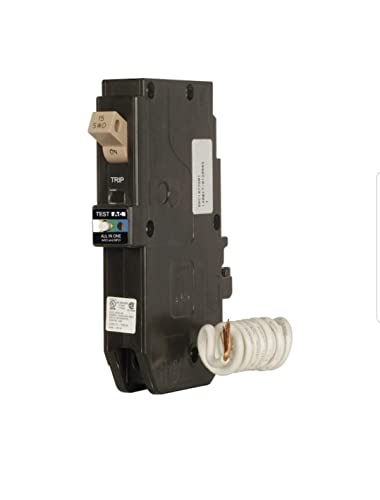
6. All-In-one Breaker 20 Amp single pole CHFN120A1CS Eaton
The Eaton CH replacement that pops straight into place and gets you back online
When you are replacing a failed arc-fault breaker and the only thing that fits is an Eaton CH-series part, this all-in-one gets the job done. It is a 20-amp, single-pole, 120-volt breaker combining AFCI and GFCI protection in one slot. It uses a plug-in mount and slots into Eaton CH panels, and for anyone who has been hunting down discontinued replacements, that availability is the whole selling point. The specifications note it is a Cutler-Hammer Series CH single-pole 20-amp unit.
Owners lean on how consistent the swap is: pull the old Eaton CH breaker, plug this one in, done. One reviewer summed up the experience well — a buyer who first ordered the wrong GFCI type, returned it, then reordered this version “installed in under 30 min, popped right in, tested and works well.” Reliability is the most-cited positive, and it is why owners keep buying it as a straight replacement for aged-out Eaton CH breakers.
The catch is one worth hearing clearly: Eaton makes more than one type of GFCI breaker, and this short-body AF/GF version did not fit one buyer’s Eaton panel even though the listing claimed compatibility with all Eaton panels. That buyer returned it and moved to the BR series instead. So confirm whether your panel needs the CH or BR line before ordering, and inspect the packaging when it arrives — a couple of units shipped in opened boxes, though they still installed and worked fine.
Straightforward replacement: For Eaton CH panels, this pops in fast and matches the reliability of the breaker it replaces, which is exactly what a repair job needs.
Know your series: Eaton’s CH and BR lines are not interchangeable in every panel, so a quick check of your specific box prevents a return trip.
Right for you if: you run an Eaton CH-series panel and need an AFCI/GFCI replacement that drops right in and works the first time.
Wrong call if: your Eaton panel takes the BR line, because this CH-series part will not seat — verify the series label before you buy.
7. Leviton LB120-DFT 20A 1-Pole Plug-On AFCI/GFCI Branch Circuit Breaker, Thermal Magnetic, 120 VAC, White

The breaker that refuses to reset if its protection has failed — and tells you in light
If you run a Leviton load center and want protection that visibly reports its own health, this breaker is built around exactly that idea. It is a 20-amp, single-pole plug-on AFCI/GFCI branch breaker at 120 VAC, and it brings a couple of features the others do not. The patented reset lockout tech will not let the breaker reset if the ground or arc fault protection is compromised, so you cannot unknowingly run an unprotected circuit. LEDs communicate the trip condition and fault type — and stay lit even while the breaker is tripped. The rocker-style switch takes less force to throw than a traditional breaker handle.
The install story is clean for Leviton owners. Leviton’s design lets you wire the entire load center at rough-in before any breakers go in, which means less rework later and easier breaker swaps down the road. Neutrals land on the breaker itself, no pigtails, and reviewers point out months of trouble-free service. The white housing is also simply less conspicuous than a bare black-and-metal breaker in an open panel.
Two things to know going in. The trip currents here are sensitive by design, which is the point of the protection but means metal boxes in the circuit need proper grounding or you may get false trips. And there is the long-term view — some owners find the arc-fault side needs replacing every few years, so a small spare on the shelf is a reasonable habit. It is a Leviton-only part, so it goes nowhere near a Siemens or Square D panel.
what separates it
- Reset lockout means it will not reset if arc or ground protection is compromised
- LEDs identify the fault type and stay lit even when tripped
- Rocker switch needs less force than a standard breaker handle
- No neutral pigtails, and the load center can be wired at rough-in
Where it needs care
- Built solely for Leviton load centers — it will not fit other brands
- Sensitive trip currents mean metal boxes in the circuit must be properly grounded
- Some shoppers say needing to replace the arc-fault side every few years
Made for you if: you have a Leviton load center and want a breaker that flags a failed protection circuit instead of quietly going dark.
Move on if: your panel is any brand other than Leviton, because this one is not going to fit.
8. Square D by Schneider Electric Square D – QO120DFC QO 20 Amp Single-Pole Dual Function (CAFCI and GFCI) Circuit Breaker

The electrician’s-panel breaker built for a QO box and a lifetime of no false alarms
For a workshop circuit that runs woodworking tools on 20-amp, 110-volt outlets, or an older Square D QO panel that needs modern arc and ground fault protection, this is the one that earns its price. It is a single-pole QO circuit breaker combining CAFCI and GFCI, rated 120 VAC and 10,000 AIR, and it carries ANSI certification plus UL listing. The plug-on design drops into QO load centers, and the QO line is the one tradespeople tend to reach for on their own jobs.
What keeps QO owners loyal is how it behaves under real conditions: no nuisance trips on workshop circuits, and correct function through multi-day outages and generator power. Installed in a workshop running woodworking tools, it holds without the bogus trips that plague some arc-fault breakers — the phrase that comes up is that it simply does not trip unless there is a real reason. It also proved itself through a multi-day power failure, where several units tripped during the surges and drops and then functioned correctly on backup generator power. That kind of performance is why one reviewer who had installed over a thousand load centers over a career still recommends the QO line and tells customers it costs more up front but delivers what you pay for.
The honest note is that this is the premium end of the QO family, and buyers have watched combo-breaker value improve as prices softened — a real plus for anyone installing five or six at once. If your panel is a Homeline rather than a QO, this will not fit at all, so match the series first.
The dependability story: No bogus trips, clean installs, and reliable performance through real-world power problems are the themes that keep QO owners coming back to this model.
The premium reality: It is the most expensive option on this list, and that premium buys brand reliability rather than a spec advantage over the dual-function breakers above.
Best for: Square D QO panel owners — especially anyone running a workshop or living area who wants dual-function protection with a proven no-nuisance-trip record.
Look elsewhere if: your panel is a Homeline series, because this is a QO-only breaker and the two are not interchangeable.
Understanding the Specs
AIC interrupting rating
The interrupting rating is the maximum short-circuit current a breaker can safely cut off without being damaged, measured in amps. Every breaker on this list carries a 10,000 AIC rating, which is the ceiling for this category. In simple terms, if a dead short sends a huge surge of current through the circuit, the breaker can open the circuit and survive. A lower interrupting rating can mean a breaker that fails catastrophically under a big fault, so 10,000 AIC is a meaningful safety floor for a home panel.
Poles and volts
A single-pole breaker controls one 120-volt circuit, which is what most kitchen, bath, and outdoor outlets run on. Two-pole breakers like the Siemens Q120DFP take two slots and can serve a 240-volt feed or a larger circuit. Match the pole count to your circuit and your available panel space. A one-pole unit frees up a slot; a two-pole unit uses two but handles heavier loads.
Plug-on neutral vs pigtail
Traditional GFCI breakers include a white neutral wire, called a pigtail, that you curl into the panel’s neutral bar. Plug-on neutral models skip the pigtail and let the neutral connect directly through the breaker, which means fewer wire connections, a faster install, and more free space at the side of the panel. It is the cleaner design, but it requires a load center built to accept it.
Self-test and reset lockout
Self-test, as required by UL 943, means the breaker periodically checks its own ground fault detection circuitry so a silent failure gets caught rather than leaving you unprotected. Reset lockout is a related safety behavior — the breaker refuses to reset if its protection is compromised. Both features matter because the danger with GFCI devices is not a loud failure; it is one that stops working without any sign.
FAQ
Will a 20-amp GFCI breaker fit any electrical panel?
What is the difference between a GFCI breaker and a dual-function AFCI/GFCI breaker?
Do I need a GFCI breaker or a GFCI outlet for a bathroom circuit?
What does the 10,000 AIC rating on these breakers mean?
Is a 20-amp breaker safe for a standard household outlet circuit?
Why would a brand new GFCI breaker trip immediately after installation?
Can a GFCI breaker replace a standard breaker in the same slot?
Do these breakers need to be tested regularly once installed?
Can I install a GFCI breaker myself or do I need an electrician?
What is plug-on neutral and do I need a special panel for it?
Final Thoughts: The Verdict
Across the board, the 20-amp breaker with gfci winner is the Siemens QF120A because it pairs Class A ground fault protection for a whole circuit with a self-test safety feature, and it is the pick that the most owners trust for spas, kitchens, and bathroom runs. If you want to modernize an older GE panel with both arc and ground fault coverage in one slot, grab the ABB THQL1120DFP. And for a Homeline kitchen remodel where you want to skip a wall of GFCI outlets, the Square D HOM120PDFC is the one to reach for.
Before you order any of them, one honest nudge: check your panel brand and series first. The single most common reason these breakers get returned is a fit mismatch, not a quality problem — and matching the breaker to your box is the one step that turns a frustrating project into a quick one.
How We Picked
We do not accept paid placement. Every pick is matched to a real buyer and a real use-case; we do not hands-on test units.
Sources & Methodology
Specifications: manufacturer listings and product documentation. Review insights: verified customer reviews, as of September 2026. Pricing: not shown on this page (it changes often); check the current price via the retailer link.
As an Amazon Associate, KitchPrep earns from qualifying purchases. This does not affect which products we feature.
Related Guides
