
Specs are compiled from manufacturer listings and verified buyer reviews and can change over time — please confirm the key details on the product page before buying.
If you are adding power to a garage, shed, or workshop, the question that decides everything is simpler than you think: how many open slots will you still have free in two years? A 100 Amp Breaker Box gives you the amperage a subpanel or small service needs. What separates a good one from a regret is space count, the wire size it accepts, and whether replacement breakers are easy to find at any hardware store.
I’m Mohammad Maruf — the founder and writer behind KitchPrep. This guide is built by comparing the manufacturers’ published specifications and the patterns across verified customer reviews, so you get each pick’s real strengths and trade-offs instead of marketing spin.
Below you will find the panel that suits the most people, plus seven alternatives that win on specific jobs — narrow walls, tight budgets, or a shop that keeps growing. Every pick here is a genuinely rated 100 amp load center, not a 200 amp panel that wastes capacity you will never use. What follows is a plain-English walkthrough of the Best 100 Amp Breaker Box options for real residential and outbuilding work.
Our Picks at a Glance
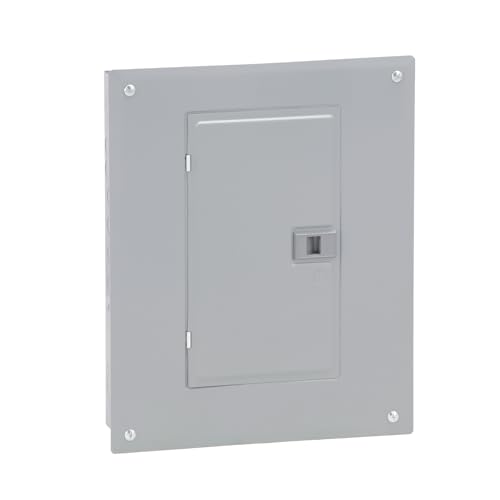


How To Choose The Best 100 Amp Breaker Box
Most people buying a 100 amp load center are feeding a detached garage, a shed conversion, a workshop, or replacing an old fuse box. That job sets your priorities: enough open slots, wire lugs that accept the cable you already own, and breakers you can buy locally on a Sunday afternoon. Here is what to weigh before you order.
Spaces versus circuits
A “space” is a physical slot in the panel where one breaker snaps in. A “circuit” is a single power feed, and a tandem breaker lets two circuits share one space. A 12-space 24-circuit panel, for example, holds 12 full-size breakers but can stretch to 24 circuits if you use tandem breakers on every slot. If you think you will add a welder, a mini-split, or EV charging later, buy spaces now — retrofitting is far harder than choosing a bigger enclosure up front.
Plug-on neutral and what it changes
Plug-on neutral (often shortened to PoN) means the breaker clips directly onto the neutral bar instead of you running a separate white pigtail wire to the neutral. It sounds minor and it is not: on an AFCI breaker (a breaker that watches for the tiny sparking signature of a damaged wire and cuts power), the pigtail is the fiddliest part of the install. Panels with a fully distributed neutral bar let you place those combination breakers on any space, not just specific ones.
Wire size, enclosure, and interrupt rating
Check the lugs before anything else. A panel that accepts 6 AWG to 2/0 AWG copper or aluminum covers most subpanel feeds, while a narrower range can force you into buying new cable. Then match the enclosure to the location: NEMA 1 means indoor and dry only, so a garage wall is fine but an exterior post is not. Finally look at the interrupt rating — 22 kAIC means the panel is built to safely handle a very high short-circuit surge, which larger utility feeds can deliver.
Quick Comparison
| Model | Best For | Circuit Capacity | Bus Material | Item Weight | Amazon |
|---|---|---|---|---|---|
| Square D Homeline HOM1224M100PC★ Best Overall | Most garages and workshops | 12-space / 24-circuit | Tin-plated aluminum | 18.3 lb | Amazon |
| Siemens SN1224B1100Best Value | Reusing existing Siemens breakers | 12-space / 24-circuit | Aluminum | — | Amazon |
| Square D Homeline HOM816M100PCCompact Pick | Compact subpanels and sheds | 8-space / 16-circuit | Aluminum | 14 lb | Amazon |
| Siemens E1020MB1100FCGP | Retrofits in narrow wall cavities | 10-space / 20-circuit | Alloy steel | 14 lb | Amazon |
| ABB PowerMark Gold TM2010CCUBK1 | Shop builds that need breakers included | 20-space / 20-circuit | Tin-plated copper | — | Amazon |
| Leviton LP210-BPD | Smart-home subpanels | 20-space / 20-circuit | Tin-plated copper | 25.8 lb | Amazon |
| Eaton BR2020B100V | Second panels in outbuildings | 20-space / 20-circuit | Tin-plated aluminum | 23.5 lb | Amazon |
| Siemens PN3030B1100C | Shops with long-term expansion plans | 30-space / 30-circuit | Copper | — | Amazon |
In‑Depth Reviews
1. Square D by Schneider Electric Homeline 100 Amp Indoor Main Breaker Load Center (HOM1224M100PC)
Our pick — over 4.5★ from 250+ verified ratings; the strongest balance of quality and price.
Twelve full-size slots that stretch to 24 circuits with tandems — room for a mini-split or welder later.
For a garage, workshop, or basement feed, this is the pick that covers the widest range of jobs. You get 12 physical spaces that turn into 24 circuits when you use tandem breakers, so the panel does not punish you for adding a mini-split six months down the road. The main breaker is a two-pole unit rated 100A at 120/240 VAC single phase, and the enclosure is built from welded sheet steel with a baked enamel gray finish over a tin-plated aluminum bus bar. It is UL Listed and meant strictly for indoor, dry locations.
What wins people over is the build — owners consistently describe it as high quality and a solid value rather than a compromise. The plug-on neutral design lets Homeline combination arc fault breakers land on any space, and the combination cover works for either flush or surface mounting, which saves a headache if your wall is already finished. A fully distributed neutral bar keeps wiring tidy, and every pole space accepts full-size, tandem, or quad breakers. The lugs take 6 AWG through 2/0 AWG in either copper or aluminum.
You get more room to grow, but you pay for it in muscle. At 18.3 pounds it is noticeably heavier to lift into place than the 14-pound Square D HOM816M100PC, so line up help before you raise it overhead. It packs 24 circuits, while the eight-space Square D below tops out at 16 — so you are not shopping for a second enclosure the moment your shop gains a tool. Budget the extra muscle, not the extra money.
What earns its keep
- 22 kA breaking capacity handles hefty short-circuit surges safely
- Plug-on neutral lets combination AFCI breakers sit on any space
- Flush or surface cover suits finished and unfinished walls alike
- Accepts 6 AWG to 2/0 AWG copper or aluminum feed wire
Where it asks more of you
- 18.3 pounds is real weight to hold overhead while you screw it in
- Indoor NEMA 1 only — it cannot live on an exterior post
- Some units arrive with a door that needs a little filing to latch
Reach for this if: you want one panel that handles a garage, workshop, or basement feed without running out of slots.
Look elsewhere if: you need an outdoor-rated enclosure or want the lightest box to lift solo.
2. SN Series 100 Amp 12-Space 24-Circuit Main Breaker Plug-On Neutral Indoor Load Center (SN1224B1100)
Takes Siemens QP breakers, so an existing breaker stock carries straight over.
This is the one to buy when you are swapping out an old subpanel and do not want to rebuy breakers. It runs the same 12-space, 24-circuit layout as the Square D up top, with a 100A single-phase, 3-wire, 120/240V rating and an aluminum bus. The interrupt rating is 22000AIC, and the NEMA Type 1 enclosure keeps it indoors only. Over 4 inches of wire bending space is the quiet win here — it is the room your hands need when you are folding a stiff 6 AWG conductor into the lugs.
Owners in the review pages speak plainly about the swap: “Replaced an old 8 slot Murry sub panel with this one. I wanted a main breaker and more breaker slots that I could re-use my Siemens QP breakers.” That is the whole pitch in one sentence. Workmanship and easy installation come up repeatedly, and one factory-installed ground bar is already in the box. It is physically roomier than the smaller Square D HOM816M100PC too — 20.25 inches long, 5 inches wide, and 16 inches tall against that panel’s 14.25 by 3.75 by 17.92 inches.
Two honest notes. First, there is no 60-amp main option — a buyer who wanted one for a main-shutoff subpanel application came away wishing for it, since the panel ships with a 100A main. Second, one unit arrived damaged in transit, which says more about shipping than about the box itself. If you are reusing Siemens breakers or want the extra bending room, neither point blocks you.
Where the value sits: breaker compatibility you might already own, plus 4 inches of bending room that makes termination easier on heavy conductors. The aluminum bus and 22000AIC rating match the larger-name panels in this class.
The trade-off worth knowing: it ships with a 100A main only, so a 60A feed for a small outbuilding means sourcing a different main breaker yourself.
Verdict: the natural choice for anyone upgrading a Siemens panel who wants to keep their existing QP breakers in service.
skip it if: you specifically need a 60A factory main or an outdoor-rated enclosure.
3. Square D – HOM816M100PC Homeline 100 Amp 8-Space 16-Circuit Indoor Main Breaker Load Center with Cover
At 14 pounds, it hangs solo on a ladder for a shed, garage, or small shop feed.
Eight slots and 16 circuits is the right size for a single-room outbuilding, and this panel keeps that job simple. It is a single-phase 100A indoor load center with an aluminum bus, a distributed neutral bar, and a combination flush or surface cover included. Each pole space takes full-size, tandem, or quad breakers, and the ground and neutral bars accept up to three 0-14 equipment grounds. A plug-on secondary surge arrestor can be added later, sold separately.
Light is where it beats the bigger Square D outright: 14 pounds versus 18.3 pounds, which is the difference between hanging it solo on a ladder and calling a second set of hands. It is also more compact in every direction — 14.25 inches long by 3.75 wide by 17.92 tall against the twelve-space model’s larger footprint — so it tucks into tighter wall space. Owners describe it as a sturdy little box that fit a garage renovation nicely, with more than enough circuits for a garage or small shop, and it accepts all the latest Square D breakers.
Size is the honest limit here. Sixteen circuits goes fast once you add lights, outlets, a compressor, and a heater, and unlike the twelve-space Square D, there is no room to grow past that ceiling without a second enclosure. Homeline also backs its load centers with a 10-year warranty for residential use when paired with the appropriate Homeline branch circuit breakers.
Pick this when: one room, a handful of circuits, and you want the lightest, most compact box that still takes standard Square D breakers.
Think twice when: you already know the shop will grow — sixteen circuits does not stretch.
4. Siemens E1020MB1100FCGP 100-Amp Indoor Narrow Width Renovation Main Breaker Load Center (10-Space 20-Circuit)

A narrow-body 10-space panel sized to drop into the wall cavity an old fuse box left behind.
Renovation panels exist for one reason: the cavity you have is not the cavity you want. This Siemens is a 10-space, 20-circuit indoor load center rated 100A, with a flush mounting cover, an included ground bar, and UL listing. The alloy steel construction and copper bars get praise from owners — one noted the box fit perfectly replacing an older panel and was better than what came out. Owners also report it can take up to 24 single-pole twin breakers when you fill it with tandems, which stretches a small enclosure further than the space count suggests.
Against the twelve-space Square D, you are trading two physical slots for a narrower body that fits more wall situations — that is the whole reason to choose it. Owners have used it for a garage panel, a portable sound power distro, and an emergency panel fed from an inverter, and the narrow profile is why it worked in tight quarters next to a regular utility panel. Breakers are readily available. It also weighs 14 pounds, matching the compact Square D and sitting well under the 23.5-pound Eaton BR2020B100V.
The plastic housing is the weak spot. Stability and build quality draw mixed marks, with a broken neutral-bar clip (the plastic tab that holds the neutral bar in place) showing up in some units and one arrival that looked like a return. That is a handful of cases out of a large pool — the overwhelming majority of owners call it good quality and good value — but it is the reason to inspect the box the day it lands, before the return window closes.
Why it earns a slot: the narrow footprint and flush cover solve a real renovation problem, while the alloy steel body and included ground bar mean fewer extra trips to the store.
The honest caveat: a broken plastic clip on the neutral bar shows up in some deliveries, so open the carton and check it on arrival.
Best for: retrofits where wall space is tight and you want the panel flush against the surface.
Look elsewhere if: you would rather have all-metal internals and the extra slots a wider box allows.
5. ABB 100A Main Breaker Load Center • Indoor Panel • 20-Space/20-Circuit (TM2010CCUBK1)
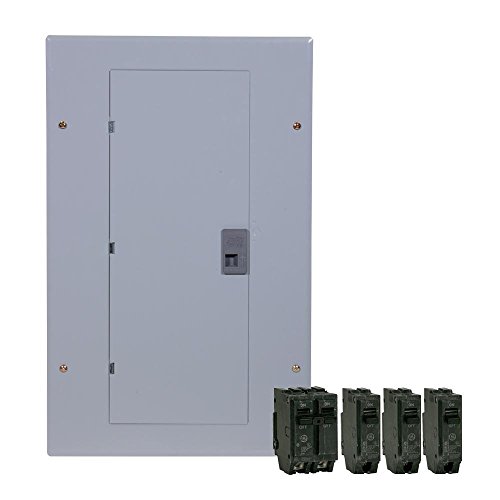
Ships with a 100A main plus three 20A single-pole and one 30A double-pole breaker installed.
Most load centers leave you hunting for breakers the same day you buy the panel. This one does not — it ships with a factory-installed 100 Amp main plus three 20A single-pole and one 30A double-pole breaker, so the wiring can start the moment it is mounted. That is 20 spaces and 20 circuits indoors, rated 120/240V single-phase, 3-wire, with a 22 kAIC interrupt rating and a NEMA 1 galvanized steel enclosure. The tin-plated copper bus bar and a self-adjusting dead front — the steel face that covers the live bus — round it out.
Where it separates from the compact Square D HOM816M100PC is the starting kit. The Square D gives you eight spaces and no breakers; this hands you twenty spaces plus the four breakers most shop builds need on day one. Full-length neutral bars with split neutral holes rated for 14–4 wire make landing conductors easier, and it takes THQP, GFCI, AFCI, and Dual Function breakers. What wins people over is the build quality and the ease of finding more breakers at big-box stores.
The one wrinkle is shipping. At least one panel arrived with minor cosmetic damage from transit while still working fine, and the copper bus means it carries a heavier price tag than the entry-level boxes. Owners describe it as sturdy, well made, and big enough for a residence or small shop. If you can handle the transit risk and want the breakers included, it pulls ahead.
Go with this if: you want a 20-space shop panel with the four most common breakers already installed.
Pass if: you already own a stock of breakers or want the lightest, cheapest box.
6. Leviton 20 Space, 20 Circuit Indoor Load Center with 100 Amp Main Circuit Breaker (LP210-BPD)

The panel can be fully wired with zero breakers installed, then breakers snap in afterward.
Leviton built this load center around a rough-in idea no other pick matches: the whole panel can be wired with zero circuit breakers present, then the breakers snap in afterward. That means a fast rough-in, clean cable management, and breaker swaps later that take seconds. You get 20 spaces and 20 circuits, a 100 Amp main breaker, tin-plated copper bussing across the board, and notches stamped into the enclosure for cable ties so wiring stays neat. The finish is white powder coat, which matters if the panel sits somewhere visible.
A copper bus (the solid metal bar that carries current to every breaker) plus that pre-wiring method is what separates it from the ABB above — the ABB includes breakers, while this one makes the wiring process easier and the panel itself heavier-duty at 25.8 pounds against the ABB’s lighter frame. Owners describe it as matching a Leviton main panel perfectly, easy to install and get wired up, and well made. One owner calls it a safer way to install and swap breakers with minimal effort. The 10-year limited warranty covers it.
The cover is sold separately — that is the detail that catches people, and it is repeated by owners in plain terms. You also need Leviton’s own breakers, so factor a trip to a supplier that stocks them. A few owners flag soft screws that strip if you over-torque them on 6 AWG terminations, and one found the main-breaker knockout stubborn to remove. None of it changes the end result once it is buttoned up.
what separates it: it comes fully pre-wired before you install any breakers, uses a copper bus throughout, and has stamped cable-tie notches (small built-in slots that hold zip ties) so a finished panel stays tidy.
What to plan for: the cover and the Leviton breakers are separate purchases, and the enclosure’s 25.8 pounds is the heaviest on this list to lift into place.
Best for: smart-home setups and anyone who values clean rough-in wiring and easy breaker swaps later.
Not for: a buyer who wants the cover and breakers bundled in one purchase.
7. Eaton Corporation BR2020B100V Main Breaker Installed Load Center, 100-Amp

A no-frills 20-space indoor panel for an outbuilding, with BR breakers cheap and stocked everywhere.
Eaton keeps this one simple: 20 spaces, 20 circuits, a 100A main, a tin-plated aluminum bus bar, and a galvanized steel enclosure with a main breaker handle that operates horizontally. It is a single-phase indoor panel, and it does not come with bells. What it does have is the biggest physical footprint here — 24.5 inches long by 16 wide by 4.25 deep — which is exactly why it swallows conductors comfortably in a wall cavity.
The quiet strength is breaker cost. BR-series breakers are cheap and stocked everywhere, so spare or future circuits cost very little, which owners point out as the reason it works well for a second panel in an outbuilding. Owners call it economical, sturdy, and easy to install, with a compact-for-its-size footprint that made it a good upgrade over a decades-old panel. That low cost of ownership is hard to argue with when you plan to add circuits over several years.
Two things to know before you buy. First, edges are sharp — a repeated warning from owners, so gloves matter during install. Second, the main-breaker fastening system draws mixed feelings; it does the job but is not the panel’s best-designed feature. Both are minor against a box that just works.
Choose this if: you want twenty spaces with the cheapest long-term breaker costs for an outbuilding or secondary panel.
pass on it if: you want a modern pre-wired design or the lightest enclosure you can lift solo.
8. PN Series 100 Amp 30-Space 30-Circuit Main Breaker Plug-On Neutral Load Center Indoor with Copper Bus (PN3030B1100C)

Thirty spaces and 30 circuits on a copper bus — the most slots of any panel here.
If you want room to keep adding circuits, this panel gives you the most on the list: 30 spaces and 30 circuits, all in a 100A single-phase indoor load center (a box that runs on standard household 100-amp power) with a copper bus, plug-on neutral, and an interrupt rating of 22000AIC (the amp level at which it safely shuts off a fault). Over 4 inches of wire bending space matches the SN Series, and the enclosure is a NEMA Type 1 (an indoor-only rating) with a grey trim and UL listing. It arrives with two factory-installed ground bars, one for each side.
That double-ground-bar layout is the practical edge — one owner describes wiring order and future troubleshooting both getting simpler because a ground bar sits on each side. Copper phase buses, two neutral and two ground bars, and the flexibility to install it inverted (main at the bottom) so shorter users can reach the switch, all show up in owner experience. It has the deepest circuit count here by a wide margin, running 30 against the 20-circuit Eaton and putting it in a class above the 12-space Square D for headroom.
It carries the highest price of the group, so it earns its place only if you genuinely need that many circuits. One owner did need a small cover adjustment to get it seated, and installing it upside down is a deliberate choice, not a flaw — it changes which end the main sits on. For a barn or shop you plan to keep for years, the slot count justifies the cost.
The long game: thirty spaces plus copper bus and dual ground bars means you will not be shopping for another enclosure when the next tool or EV circuit arrives.
The reality check: the highest price on the list, and the cover may need a small tweak to seat cleanly.
Made for you if: you want all the circuits you will ever need in one 100A panel and don’t want to revisit this decision.
Overkill if: a single-room shed or garage will never exceed a handful of circuits.
Understanding the Specs
Spaces, Circuits, and Tandem Breakers
A space is one physical breaker slot; a circuit is one feed of power. A tandem breaker fits two circuits into one space, which is how a 12-space panel reaches 24 circuits and how a 10-space box reaches up to 24 single-pole twin breakers. Buy more spaces than you think you need — adding circuits is easy, adding spaces is not.
Interrupt Rating (kAIC)
The kAIC number is how much short-circuit current the panel can safely interrupt before damage occurs. A 22 kAIC rating, seen on several of these panels, handles a bigger surge than a lower rating — useful when the feed comes from a transformer close to the building. Higher kAIC generally costs more, so match it to your service.
Bus Bar Material
The bus bar is the metal strip that carries current to each breaker. Tin-plated copper conducts well and resists corrosion; tin-plated aluminum is lighter and cheaper. Both are fine in residential use — copper tends to hold up better in damp or coastal air, which is why panels headed for humid outbuildings are worth comparing on this spec.
NEMA Enclosure Type
NEMA 1 means indoor and dry only — garages, basements, utility rooms. It is not a weather rating, so a panel mounted on an exterior post needs an outdoor-rated enclosure instead. All eight load centers here are NEMA 1, so plan a sheltered wall.
FAQ
What is the difference between a 100 amp and a 200 amp breaker box?
Can I put a 100 amp breaker box in a garage?
What does plug-on neutral mean on a 100 amp load center?
How many circuits can a 100 amp breaker box hold?
Do I need special breakers for a plug-on neutral panel?
What wire size does a 100 amp breaker box accept?
Can I install a 100 amp subpanel myself?
Why does the interrupt rating in kAIC matter on a breaker box?
Is copper bus better than aluminum bus in a 100 amp panel?
What is the difference between a main breaker and a main lug panel?
Final Thoughts: The Verdict
For most people wiring a garage, shop, or shed, the 100 amp breaker box winner is the Square D Homeline HOM1224M100PC. It has the widest circuit count among the standard picks, plug-on neutral (a bar that lets AFCI breakers snap on without a pigtail wire) for easy AFCI swaps, and a build owners describe as genuinely high quality — it is the panel that makes the fewest demands once it is mounted. If you already own Siemens QP breakers, grab the Siemens SN1224B1100 to reuse every one. And if your shop is still years from finished, the Siemens PN3030B1100C is the 30-space box that will not need replacing. Pick by circuits, not just amps — the difference between 16 and 30 slots is the difference between two purchases and one.
How We Picked
We do not accept paid placement. Every pick is matched to a real buyer and a real use-case; we do not hands-on test units.
Sources & Methodology
Specifications: manufacturer listings and product documentation. Review insights: verified customer reviews, as of September 2026. Pricing: not shown on this page (it changes often); check the current price via the retailer link.
As an Amazon Associate, KitchPrep earns from qualifying purchases. This does not affect which products we feature.
Related Guides
