
Specs are compiled from manufacturer listings and verified buyer reviews and can change over time — please confirm the key details on the product page before buying.
If you are shopping for a battery smoke detector, the two things that actually matter are simple: a power source that will not leave you standing on a chair at 2 a.m., and a sensor that tells real smoke apart from burnt toast. Everything else is detail. This guide walks you through nine battery-operated alarms, from sealed ten-year units to replaceable-battery models, so you can match one to your home instead of guessing.
I’m Mohammad Maruf — the founder and writer behind KitchPrep. This guide is built by comparing the manufacturers’ published specifications and the patterns across verified customer reviews, so you get each pick’s real strengths and trade-offs instead of marketing spin.
Some run on a sealed lithium cell you never touch, while others take standard AA or 9V batteries you swap yourself. Below you’ll find a plain-English pick for every kind of home, so you can settle on the best battery smoke detector for your hallways and bedrooms with confidence.
Our Picks at a Glance

How To Choose The Best Battery Smoke Detector
A battery smoke detector is only as good as the two decisions you make before you mount it: what powers it and how it senses smoke. Get those right and the rest is installation, which takes minutes.
Sealed ten-year battery vs replaceable battery
A sealed lithium battery is built into the alarm and cannot be swapped out — you replace the whole unit when it reaches the end of its life. That is the trade most buyers happily accept, because it removes the chore of changing batteries each year. A replaceable-battery alarm, by contrast, uses standard AA or 9V cells you swap yourself, so a dead battery is a quick fix rather than a new purchase. If you rent out a property or simply dislike maintenance, sealed is the calmer choice.
Why photoelectric sensing reduces kitchen false alarms
Photoelectric sensors (a light-beam design that reacts to visible smoke particles) are tuned to catch slow, smoldering fires, which is the type most common in homes. That same sensitivity is what lets them ignore everyday cooking fumes better than older sensing types, so you get fewer interruptions when you are making pancakes or boiling pasta. Just keep any alarm a few feet from a steamy bathroom door, because heavy shower steam can still set one off.
How loud an alarm needs to be
Look for an alarm rated at 85 decibels or higher — that is the sound level most people describe as piercing and impossible to sleep through, though manufacturers use different wording for it. An 85-decibel alarm is loud enough to wake sleepers in adjoining rooms and reach across a hallway. The red LED light on the unit is a secondary visual cue that tells you it is armed and powered.
Interconnect, standalone, or smart app
A standalone alarm sounds on its own. An interconnected model triggers every linked unit at once, so a smoke event in the basement wakes someone in a second-floor bedroom. Some newer alarms add app alerts through a smart-home system so your phone buzzes when you are away. Decide which of the three you actually need before you settle on a model — buying interconnect when you only wanted simplicity adds setup steps you will not use.
Quick Comparison
| Model | Best For | Power Source | Sensor Type | Alarm Type | Amazon |
|---|---|---|---|---|---|
| X-Sense SD2J0AX★ Best Overall | Whole-home sealed-battery coverage | Sealed 10-year lithium | Photoelectric | Audible | Amazon |
| X-Sense SD2L0AXBest Value Set | Best value three-pack upgrade | Sealed 10-year lithium | Photoelectric | Audible | Amazon |
| Kidde 20SDRSmart Home Pick | Loud standalone for apartments | 2 AA batteries | Smoke detection | 85 dB audible | Amazon |
| SITERLINK GS525A | High-ceiling mounting with magnets | Sealed 10-year lithium | Photoelectric | Audible | Amazon |
| SITERWELL GS525A | Magnetic no-drill mounting | Built-in 3V lithium | Photoelectric | 85 dB audible | Amazon |
| SITERWELL GS509A | Bedrooms with replaceable batteries | 9V carbon zinc | Photoelectric | 85 dB audible | Amazon |
| Kidde 10SDR | Budget small-space coverage | 2 AA batteries | Smoke detection | 85 dB audible | Amazon |
In‑Depth Reviews
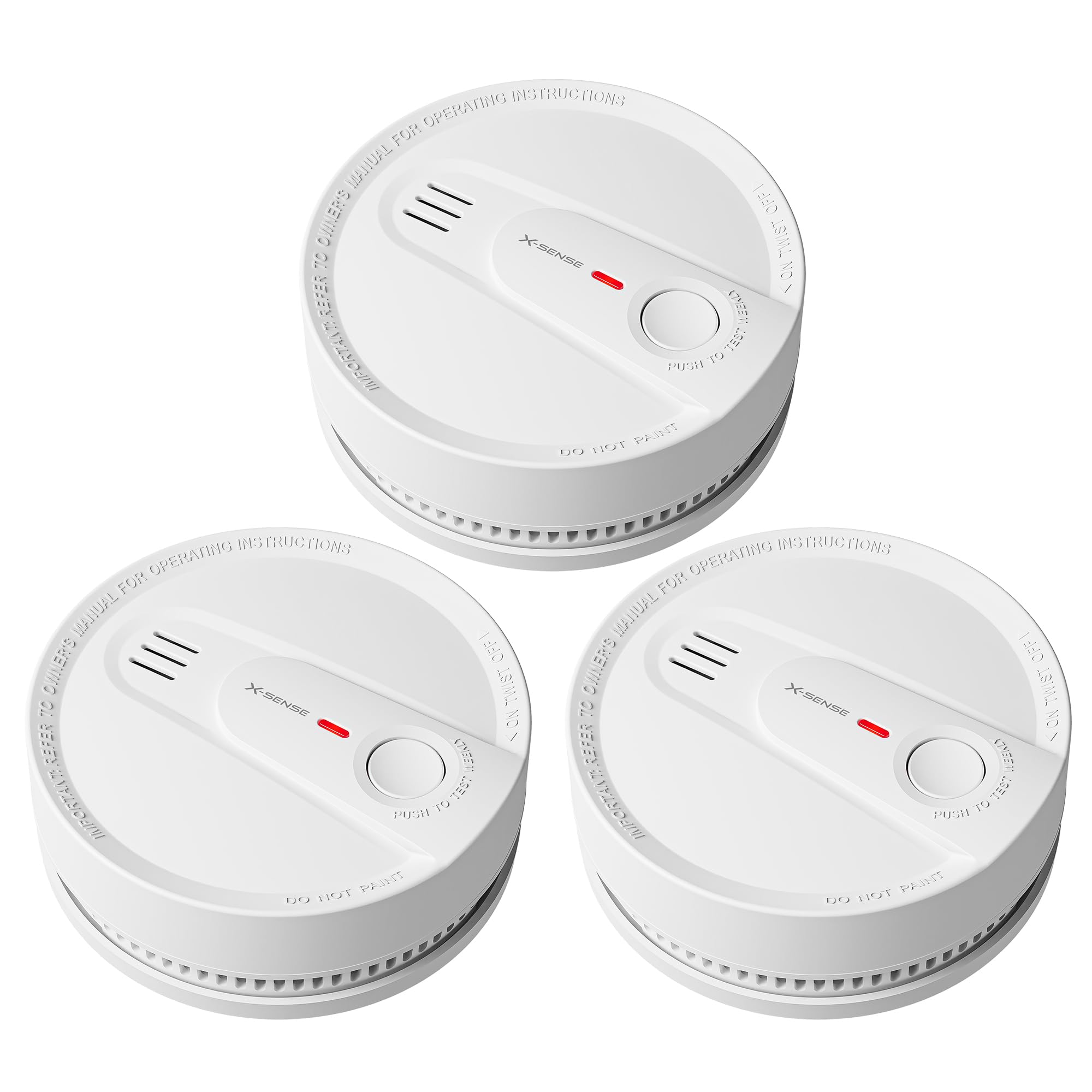
1. X-Sense 10-Year Smoke Detector, Photoelectric Sensor, SD2J0AX
Our pick — over 4.5★ from 450+ verified ratings; the strongest balance of quality and price.
Three sealed alarms that promise a decade of protection without a single battery change.
If your goal is to install an alarm and forget it exists until the next decade, this three-pack is the pick to beat. Each unit carries a sealed lithium battery rated for up to 10 years, so you skip the annual battery ritual entirely — no low-battery chirps at midnight, no ladder in the hallway. It is a photoelectric sensor (a light-beam design that reacts to visible smoke particles), and the whole set is ETL listed to the UL 217 safety standard, which means an outside lab has tested it to a published benchmark rather than the brand simply asserting it works.
Sensitivity is the trait owners talk about most, and it cuts both ways. One reviewer noted they seem more sensitive than their old alarms, which felt like the right call after a batch of pancakes set them off fast — better an early warning than a late one. That same hair-trigger response means shower steam can trip them, so keep any unit a few feet away from a bathroom door. Each alarm measures 4.8 inches square by 1.8 inches deep, which is a touch deeper front-to-back than the compact Kidde 10SDR at 1.88 inches deep by 4 inches wide — worth knowing if you are fitting one onto a tight ceiling beam.
The detail that trips people up is the battery itself: it is built in and cannot be replaced. It is not a flaw so much as a design choice — the payoff is the decade of hands-off reliability — but it does mean these are disposal units at end of life. The test button and one-button silence handle the day-to-day, and a small LED blinks to confirm the alarm is armed and powered, which owners describe as a reassuring touch.
The quiet-decade case
- Sealed lithium battery rated for up to 10 years — no replacements, no chirps
- ETL listed to the UL 217 standard for independently verified performance
- Fast, simple no-wire install with the included hardware
- Sensitive enough to catch cooking smoke early (owners call that a win)
Know before you mount it
- Battery is built in and cannot be replaced — the unit is disposed of at end of life
- That sensitivity can trip on heavy shower steam if placed near a bathroom
- Standalone only: no Wi-Fi, app alerts, or wireless interconnection
Best for: Anyone who wants a low-maintenance decade of protection across bedrooms, hallways, and rentals.
Look elsewhere if: You need alarms that trigger each other room to room — this one sounds on its own, so the X-Sense SC01-W interconnect model is the alternative.
2. X-Sense Smoke Detector, 10-Year Battery, UL 217 Certified, SD2L0AX, 3-Pack
A three-pack of sealed-battery alarms that quietly handles the whole house in one go.
Cover three rooms at once instead of buying singles one at a time. Each alarm in this pack runs on a built-in tamper-resistant lithium battery rated for up to 10 years, so the battery question disappears for the whole decade. The housing is ABS plastic, and the sensor is photoelectric — the light-beam type that responds to slow, smoldering smoke rather than fast flaming fires, which is what most household fires look like in the early minutes.
Owners consistently point to build feel and an easy, no-wire mount as their favorite things about these units, and the one-button self-test lets you confirm everything is working without climbing up with a tester. There is a fire-resistant housing around the internals, which adds a layer of protection beyond the sensing itself. If you have been putting off replacing a hallway full of tired old alarms, this is the least fussy way to do the whole sweep at once.
The honest caveat is a scattered one: a small number of units arrive non-functional right from the start, so it pays to test each alarm the moment it is mounted rather than assuming every unit in the pack is good. That is the minority of owners, not the pattern, but it is worth the two-minute check. Set against the ease of a one-box, three-room upgrade, it is a fair trade.
Why it earns the spot: Three sealed, UL 217-tested photoelectric alarms on one shelf — the quickest route to full-house coverage with zero annual battery swapping.
The catch to size correctly: A rare dud in the pack happens often enough that testing each unit on arrival is the smart move; that is a spot-check, not a reason to skip the set.
Reach for this if: You want a complete three-room upgrade in a single box with no wiring and no future battery runs.
Hold off if: You only need one alarm — buying the pack just for a single room wastes the value.
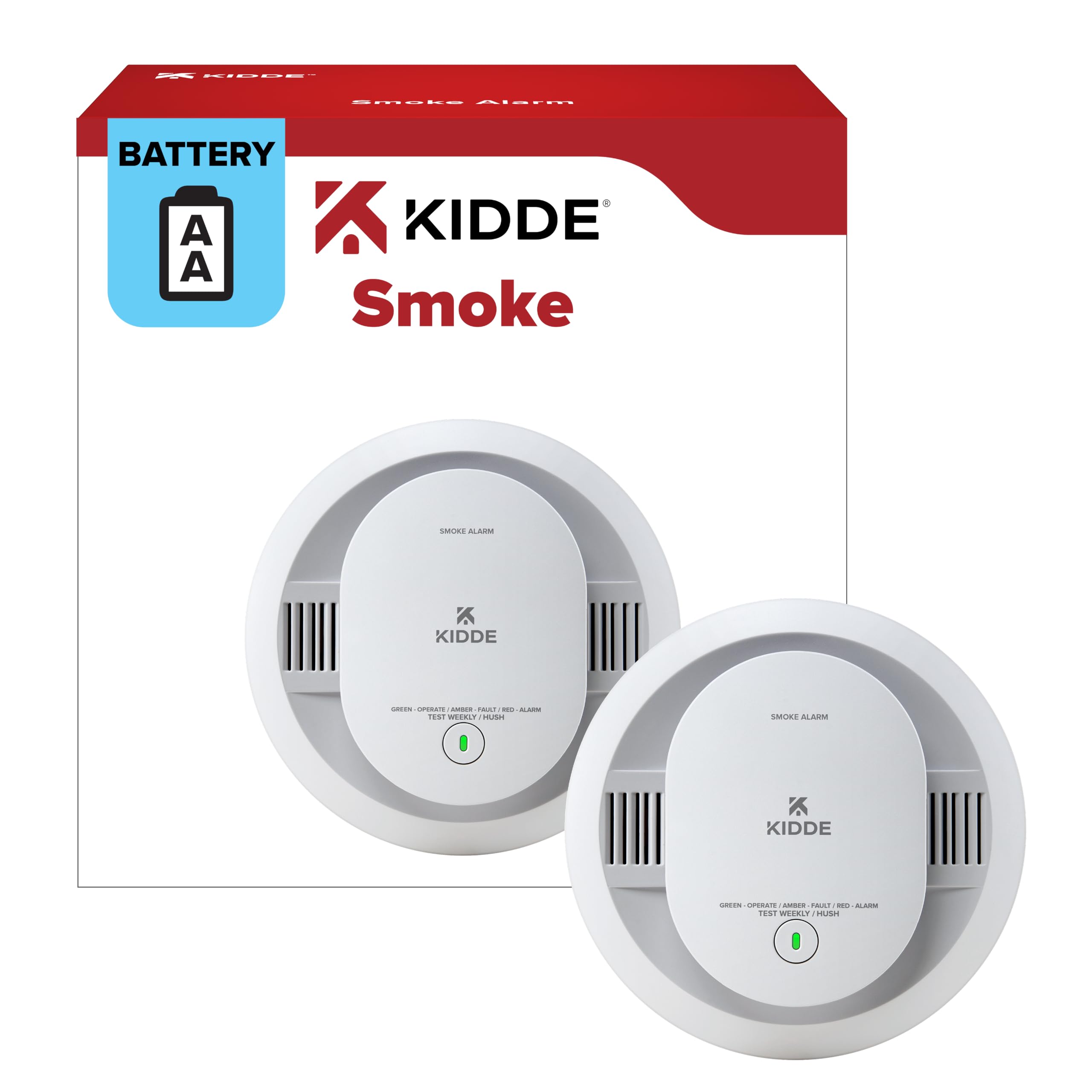
3. Kidde Smart Smoke & CO Detector with Ring, AA Battery, RGCUDR-RW
A single alarm with an 85-decibel bark loud enough to stop you mid-bacon.
If you want one dependable alarm for a hallway or an apartment and nothing fancy, this 20SDR is a straightforward pick. It runs on two AA batteries that come in the box, so there is nothing to wire, and it is tested to meet UL 217 10th Edition and FCC standards. The alarm sounds at 85 decibels with a red LED for visual warning, and Kidde rates the smoke detection over 25% faster than a leading competitor based on internal testing. There is a test-and-hush button that lets you check the unit or silence a nuisance alarm without disabling it.
The dimension worth knowing is its 5-inch footprint — that is noticeably wider than the compact Kidde 10SDR, which comes in at 4 inches wide. If you are replacing an old alarm of a similar size, this one is more likely to cover the old ceiling marks without repainting. It is also the heavier of the two Kidde models here, at 13.44 ounces against the 10SDR’s 6.24 ounces, a difference you notice mostly as heft when you are up on a ladder threading the bracket on.
There is a real reliability question in the reviews that a buyer should go in knowing. Most units work fine for years, but a recurring note is that a minority start chirping or false-alarming within a few months, and a firmware-style beep problem is hard to solve by swapping batteries. It does not describe the majority, but it does mean a quick post-install test and keeping the receipt is sensible. The 10-year limited warranty, which starts from the purchase date, is your safety net if you land a bad unit.
Where it delivers
- 85-decibel alarm that owners describe as genuinely startling
- Two AA batteries included; no wiring
- Test-and-hush button silences nuisance alarms without disarming it
- Tested to UL 217 10th Edition and FCC standards
Weigh the odds
- A minority report chirping or false alarms within a few months; the warranty is the backstop
- One 5-inch unit per pack — no whole-home coverage in a single box
- Standalone only, no wireless interconnect
Good fit for: A single high-value spot — a hallway, a rental, a small apartment — where volume is the priority.
Skip if: You want several rooms covered or units that alert each other.
4. SITERLINK Smoke Detectors 10 Year Battery Backup, GS525A 1 Pack
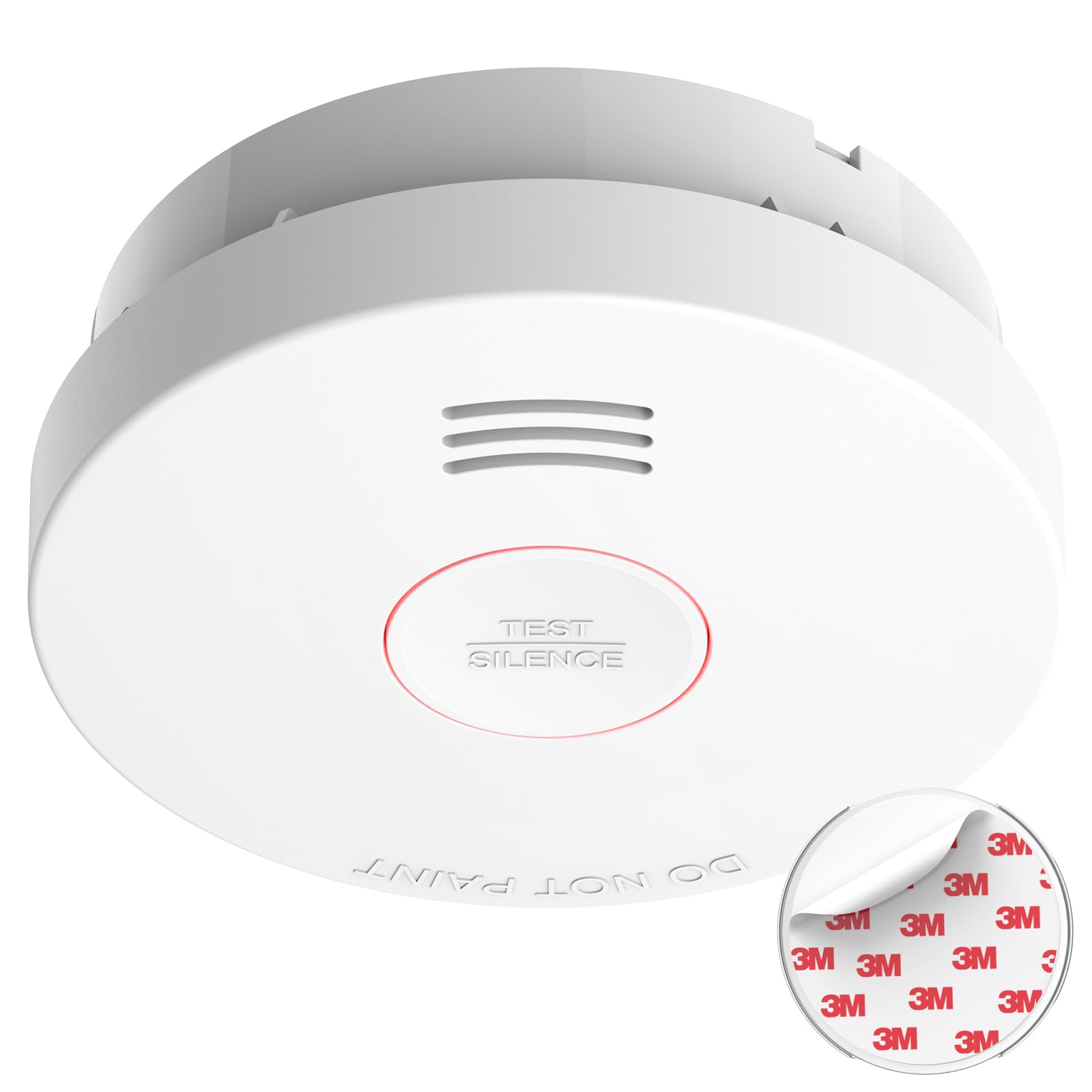
The no-drill pick that snaps to a plate with magnets — made for high ceilings.
Reaching a vaulted ceiling with a screwdriver is the exact chore this alarm sidesteps. It ships with both magnets and screws, so you can mount it without drilling into drywall or a beam — a detail that owners who rent or who have tall ceilings single out as the reason they picked it over a screw-only alarm. The size helps too: at 3.93 inches wide and 1.38 inches deep, it is compact enough to sit unobtrusively on a ceiling or wall.
The power side is the sealed-lithium story again — a 10-year battery built in, so replacement is a decade away. The sensor is photoelectric, the light-beam type that catches slow, smoldering smoke, and the unit adds an AI-driven sensing feature the maker says learns your home’s environment to filter dust and steam. A large front button lets you silence nuisance alarms for a set period without disarming the detector, which helps when cooking sets it off.
Because it is a single unit, this is not the alarm for covering a whole house in one order. And like every sealed-battery model, the cell is not replaceable, so the unit retires when the decade is up. If you want one hard-to-reach spot handled cleanly and cheaply, though, the magnet mount is the feature that makes this genuinely useful — just be sure the metal plate has a firm grip before you walk away.
Standout feature: The dual magnet-and-screw mounting kit is what turns a ten-minute ladder job into a two-minute one.
Fair caveat: A single sealed unit means no interconnect and a full-unit replacement at end of life.
The pick for: High ceilings, rentals, and anyone avoiding a drill who needs one reliable battery alarm.
Not for: Full-house coverage in one purchase or setups that need alarms to sound together.
5. SITERWELL Smoke Detector 10 Year Battery Smoke Alarm Fire Detectors
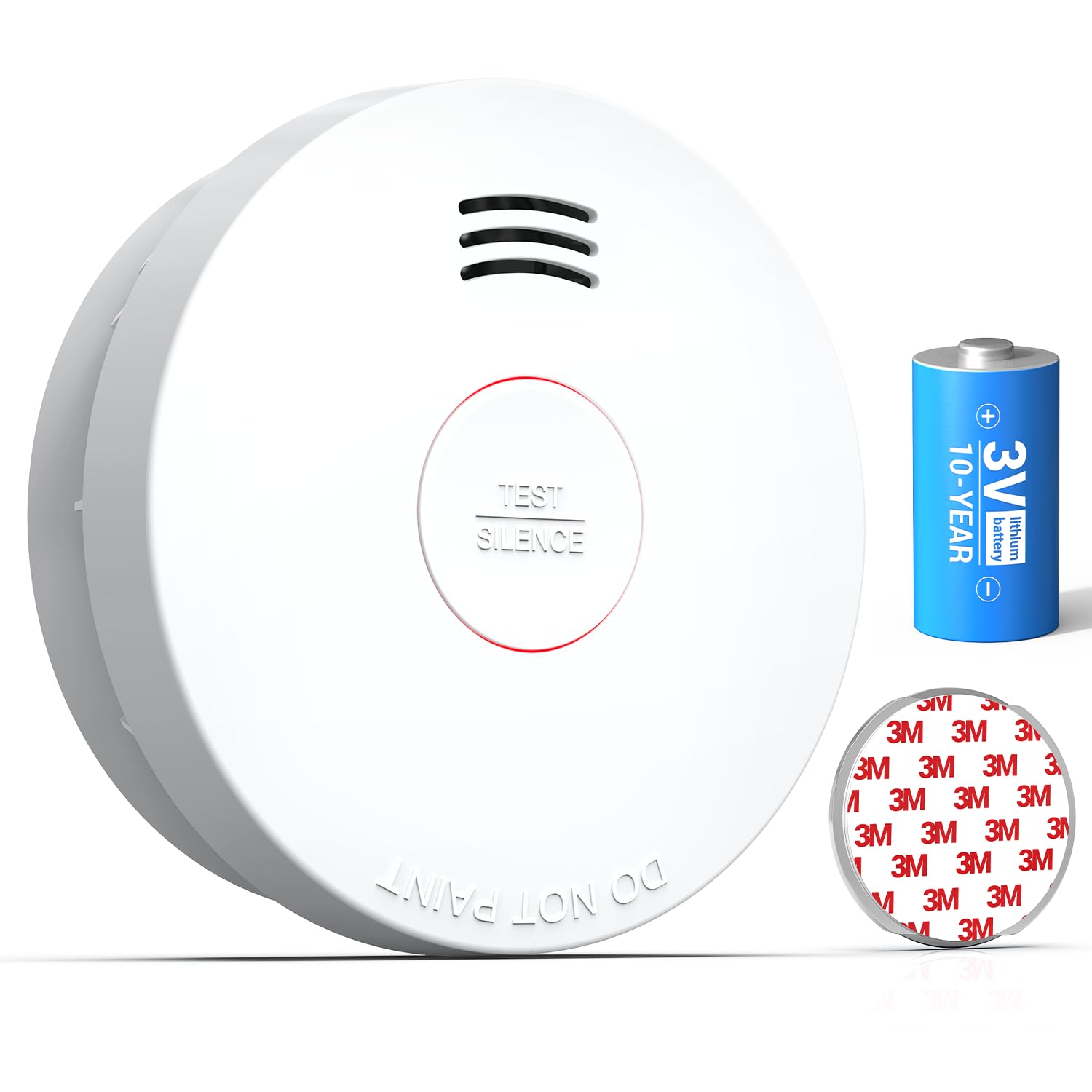
A photoelectric alarm that hangs on a magnet, stays silent at night, and lists to UL 217.
The magnet mounting is what most owners talk about here, and it is easy to see why — you get magnets and screws in the box, so you can hang the alarm on a wall or ceiling without a single drill hole. The sealed 3V lithium battery is built in and rated to run for 10 years, and the unit sends a low-battery warning when it is running down; if it ever flashes a fault signal, the maker directs you to replace the whole alarm rather than swap a cell. The housing is polycarbonate, the sensing is photoelectric, and the unit is listed to the UL 217 standard.
One thing to do before you mount it: activate it first. The battery tab has to be pulled to switch the alarm on, and if you skip that step, the unit will not respond at all — the maker is explicit that improper activation prevents it from reacting to a fire. The alarm is designed to stay quiet through the night and lets out an 85-decibel sound when it needs to, which owners confirm is loud and clear.
The fit note worth weighing is size. Owners who replaced an older, larger alarm with this one find it noticeably smaller — some like that, others miss the presence of a big disc on the ceiling. The compact body is also a hair smaller than the SITERLINK unit above it, and the same magnet-mount logic applies. So the question is less about performance and more about whether you prefer a discreet little unit or the traditional full-size footprint.
What wins people over: Magnet or screw mounting in the box, so you choose your own install — no drill is mandatory.
The fit note: This is a compact unit; buyers who want the classic wide alarm footprint may find it a touch small.
Sounds right if: You want a drill-free photoelectric alarm with a built-in decade battery and a low-battery warning.
Keep looking if: You want the large traditional alarm silhouette or a replaceable battery.
6. SITERWELL Smoke Detector Fire Alarms 9V Battery Operated
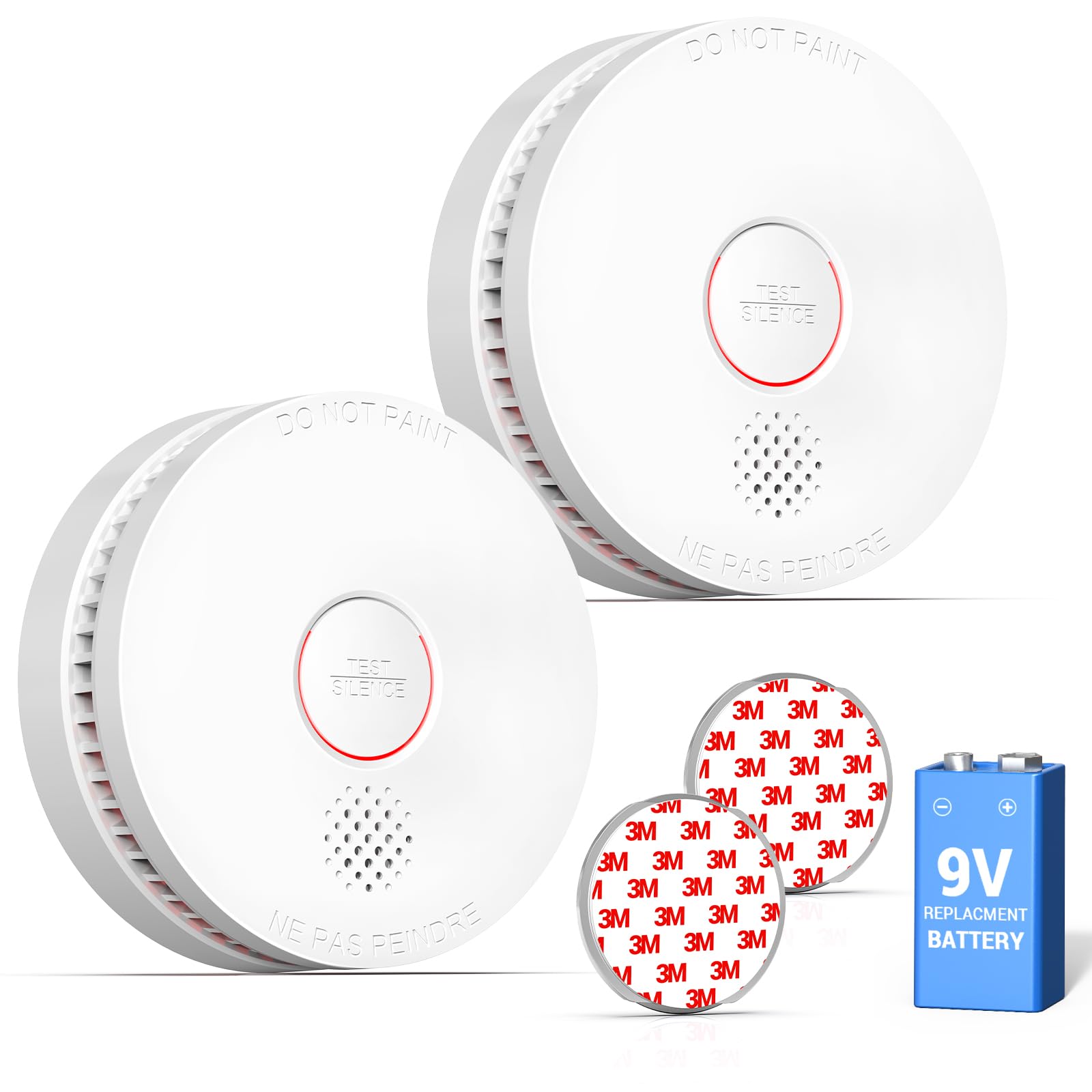
A compact 9V alarm you can re-battery yourself, sized to disappear on a bedroom ceiling.
This is the pick for anyone who wants the option of swapping the battery rather than retiring the whole unit. It runs on a 9V carbon zinc battery that you replace when needed — the product life is rated at 10 years with continuous battery replacement, so the alarm body outlasts several cells. The sensor is photoelectric, the type more sensitive to slow, smoldering fires that produce light smoke and little heat, and the alarm is tested to UL 217 and installed to NFPA 72 guidelines. It sounds at over 85 decibels, loud enough to carry across rooms.
The compact size is the other thing owners notice — at 3.93 inches wide and 1.37 inches deep, this is a small alarm, and buyers installing it on a bedroom ceiling say the reduced footprint looks tidy above a bed. The test-and-mute button handles weekly checks and silences nuisance chirps, and a low-battery signal warns you when the 9V cell is running down.
There is a mounting gap worth knowing before you buy. The description suggests a magnetic mount, but buyers report that the double pack ships without even the sticky pad the single pack includes — so if you are renting and wanted a no-screw install, plan on Command hooks or the included hardware instead. Several owners did use adhesive hooks successfully on a rental wall, so it is a workaround, not a blocker. Expect to sort out your own mounting method rather than relying on a magnet.
The real draw: A replaceable 9V cell means a dead battery is an easy, cheap swap rather than a new alarm.
The honest snag: Owners mention the advertised magnet is not in the double pack — bank on screws or your own mounting method.
Great for: Bedrooms and small rooms where you prefer to change the battery yourself and want the smallest possible ceiling disc.
Not for: Buyers specifically wanting magnet mounting — check the pack contents first.
7. Kidde Compact Smoke Detector, AA Battery-Powered, 10SDR
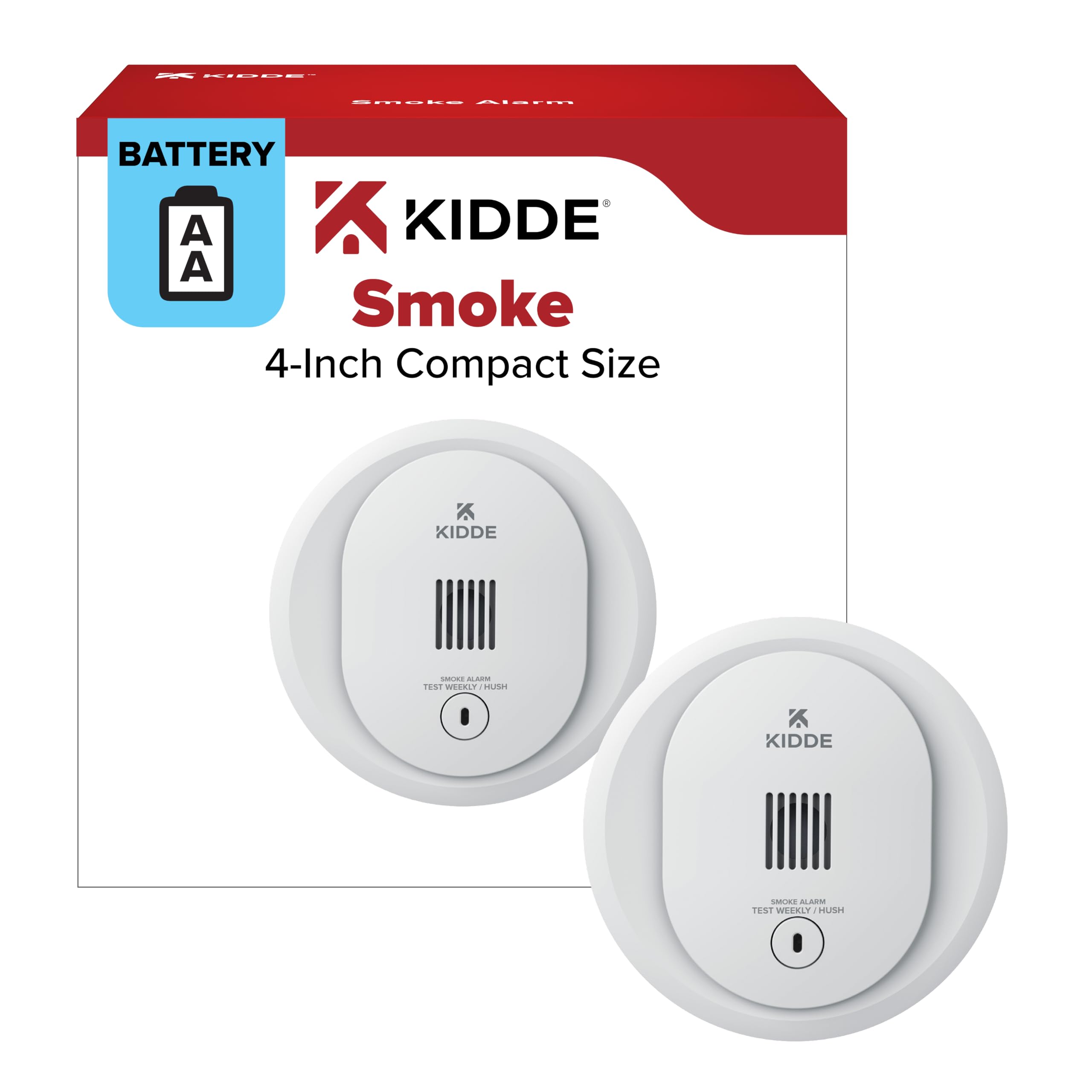
The tiny, cheap, hide-it-anywhere alarm for tight spaces and small rooms.
At 4 inches wide and a slim 1.88 inches deep, this is the smallest alarm on the list — and it is also the lightest, at just 6.24 ounces. That makes it the model that slips onto a narrow ceiling beam or above a door without dominating the space. It runs on two AA batteries that come included, so there is no wiring, and it sounds an 85-decibel alarm with a red LED indicator. Kidde rates the smoke detection over 25% faster than a leading competitor based on internal testing, and the unit is tested to UL 217 10th Edition and FCC standards.
Owners clearly rate it for straightforward ease — the instructions come with diagrams that help you work out the best placement, and the sensor arrives covered so dust from installation does not creep in before the unit is up. Being able to simply hang it on a wall or ceiling without drilling is a repeated point of praise, and the small footprint gets called out by owners who want an alarm that does not draw the eye. Think of it as the alarm you can tuck into just about any corner.
The caution is the mounting adhesive. Some customers note units dropping off over time when they rely on the included adhesive pad, and a few have resorted to stronger strips or screws to keep them in place. That is a fixable snag, not a defect in the detection, and the unit works reliably once it is secured. If you plan to use the sticky pad, it is worth pressing it on a clean, dry surface and giving it a stronger hold yourself.
Why it’s the budget pick
- Small 4-inch footprint fits tight ceilings and beams
- Lightest unit here at 6.24 ounces
- Two AA batteries included; no wiring
- Tested to UL 217 10th Edition and FCC standards
The trade to note
- Included adhesive pad can let the unit drop; add stronger strips or screws
- Standalone only, no interconnect
- AA cells need swapping over time rather than a sealed decade battery
Pick it for: Small rooms, tight ceiling spots, and rentals where you want the lightest, most discreet alarm.
Look past it if: You want a sealed battery or several units that alert each other.
Understanding the Specs
Battery Type and Ten-Year Life
A sealed 10-year lithium battery is built into the alarm and cannot be replaced — you replace the whole unit when the decade ends, which is why these are disposal units at end of life. A replaceable-battery alarm takes standard cells (two AA, or a 9V) that you swap yourself, so a dead battery is a quick fix rather than a new purchase. The trade is simple: sealed means no annual battery runs; replaceable means a longer-living alarm body you re-power as needed.
Photoelectric Sensor and Nuisance Alarms
A photoelectric sensor uses a light beam to catch visible smoke particles — which makes it especially good at the slow, smoldering fires that produce light smoke and little heat and are the most common in homes. The upside is fewer false alarms from cooking and steam than older sensing types. The flip side is that intense shower steam can still trip a photoelectric alarm if it sits near a bathroom, so placement matters.
Alarm Loudness in Decibels
Sound level is measured in decibels (dB), and 85 dB is the level you will see on most home alarms — a piercing tone owners describe as impossible to sleep through. That loudness needs to reach every bedroom, which is why an 85-decibel rating is worth insisting on for a bedroom or hallway unit. A red LED light runs alongside the sound as a visual warning cue.
Standalone Versus Wireless Interconnect
A standalone alarm sounds on its own when it detects smoke. An interconnected model triggers every linked unit at once — so a smoke event in the basement wakes a sleeper on the top floor, because all alarms sound together. Interconnect adds a pairing step at setup but multiplies your early-warning reach across floors. Standalone is simpler; interconnect is coverage.
FAQ
How long does a battery smoke detector actually last?
What does photoelectric mean on a smoke alarm?
Will a smoke detector near my bathroom keep going off?
Do battery smoke detectors need Wi-Fi or an app to work?
What is the difference between a standalone alarm and an interconnected one?
Can a battery smoke detector detect carbon monoxide too?
How do I mount a battery smoke detector without drilling?
Are these battery smoke detectors hardwired or do they need wiring?
How loud should a smoke detector be to wake me up?
Why does my smoke detector chirp at night?
Final Thoughts: The Verdict
For most homes, the battery smoke detector that makes the most sense is the X-Sense SD2J0AX because its sealed 10-year battery wipes out the annual battery chore entirely, and it is ETL listed to the UL 217 standard across a three-pack that covers the main rooms in one order. If you want the same sealed-battery logic for less per unit, grab the X-Sense SD2L0AX 3-Pack. And if your priority is a phone that pings you from anywhere, the Kidde with Ring is the one to reach for — and if you would rather cover several floors with smoke and CO in one linked set, the X-Sense SC01-W is the pick.
How We Picked
We do not accept paid placement. Every pick is matched to a real buyer and a real use-case; we do not hands-on test units.
Sources & Methodology
Specifications: manufacturer listings and product documentation. Review insights: verified customer reviews, as of September 2026. Pricing: not shown on this page (it changes often); check the current price via the retailer link.
As an Amazon Associate, KitchPrep earns from qualifying purchases. This does not affect which products we feature.
Related Guides
