
Specs are compiled from manufacturer listings and verified buyer reviews and can change over time — please confirm the key details on the product page before buying.
Buying 1-1/2 inch aluminum tubing is really a wall-thickness decision. The outside diameter — the measurement across the tube — is locked at 1.5 inches on every pick here. What changes is how thick the metal is, and that single number decides whether you can weld it, thread it, bend it, or just clamp a hose onto it. Thin 0.065-inch walls weld and bend easily and cost less. Thick 1/4-inch walls hold threads and take a beating. Get that wrong and the tube either dents under clamp pressure or refuses to bend at all.
I’m Mohammad Maruf — the founder and writer behind KitchPrep. This guide is built by comparing the manufacturers’ published specifications and the patterns across verified customer reviews, so you get each pick’s real strengths and trade-offs instead of marketing spin.
You get the exact wall thickness, alloy, and length of every option below, so you can match the metal to your build instead of ordering twice. Round or square, smooth or not, this shortlist covers the realistic choices in 1 1/2 inch aluminum tubing.
Our Picks at a Glance
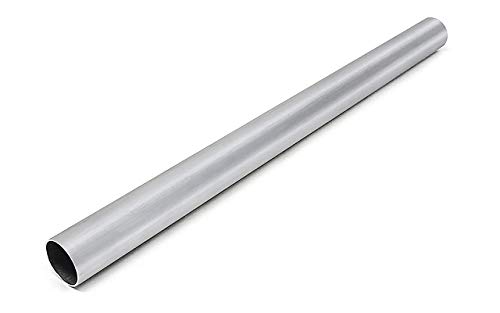

How To Choose The Best 1 1/2 Inch Aluminum Tubing
The diameter is settled before you start shopping — you need 1.5 inches on the outside. Everything else is a fork in the road, and each fork changes what you can actually build.
Wall thickness drives every decision
Wall thickness is the metal between the outside and inside surfaces of the tube. Thin walls of about 0.065 inches weld cleanly and bend without cracking, which is why they show up in intake piping and roll cages. Thick walls of around 1/4 inch leave enough metal to cut real threads into, so they suit spacers, bushings, and anything bolted. Thin tube saves weight; thick tube holds torque.
Alloy and temper decide workability
The alloy number tells you what is mixed into the aluminum, and the temper letter tells you how it was hardened. 6061-T6 is the workhorse — strong, weldable, and available in smooth form. 6063-T6 machines and finishes beautifully, so it is common in polished pipes and anodized architectural stock. Neither resists salt air forever, so marine use wants a finish on top.
Length and quantity shape your cuts
A 3-foot stick handles a full intake run, while an 18-inch piece suits a short connector. Buying two shorter tubes can beat one long tube when your design needs a cut in the middle anyway. Check the tolerance note too — a length tolerance of plus or minus 1/8 inch means your final cut needs measuring, not assuming.
Round, square, or pre-tapped
Round tube carries fluid and air and clamps into hoses. Square tube takes brackets and bolts flat against a surface. Square stock in 6063-T6 with a clear anodize finish arrives ready to join with standard T-slot fittings, so a frame build skips the drilling and painting steps entirely.
Quick Comparison
| Model | Best For | Outside Diameter | Wall Thickness | Length | Amazon |
|---|---|---|---|---|---|
| HPS AST-3F-150 16 Gauge★ Best Overall | All-round fabrication | 1.5″ | 0.065″ | 3 ft | Amazon |
| 6061 Round Tube 1/4″ WallBest Value | Spacers and bushings | 1.5″ | 1/4″ | 1.5″ | Amazon |
| ETL Industries Straight Pipe | Radiator and intake hose work | 1.5″ (38mm) | — | 18″ | Amazon |
| Tynulox 6061 Tubing 2-Pack | Hobby and antenna builds | 1.5″ | 0.12″ | 12″ | Amazon |
| HPS ALT3F-91600 3′ Tubing | Long intake runs | 1.5″ | 0.065″ | 3 ft | Amazon |
| 80/20 9700 Square Tube | Frames and structural legs | 1.5″ x 1.5″ | 1/8″ | 89″ | Amazon |
In‑Depth Reviews
1. HPS AST-3F-150 6061 T6 smooth Aluminum Round Straight Tubing, 16 Gauge, 3′ Length, 1.5″ OD, 0.065″ Wall Thickness
Our pick — over 4.5★ from 90+ verified ratings; the strongest balance of quality and price.
Three feet of 6061-T6 that takes a weld, a bead roll, and a hose clamp without complaint.
This is the tube to buy when you have not fully drawn the project yet. A 0.065-inch wall in 6061-T6 aluminum is thin enough to bend and weld with ordinary shop tools, and a 3-foot length leaves room for two cuts and a mistake. It is rated to 300 psi maximum pressure, so intercooler piping and cooling systems sit well inside its comfort zone. The outside diameter lands at 1.5 inches, and the smooth construction means no internal weld seam to interrupt airflow.
What buyers report is a straightforward piece of stock: “Buyers describe it as a solid piece of tube with a wall thickness that feels right in hand.” and the general verdict is that it works for hobby builds just as well as industrial ones. One verified measurement put the actual outside diameter at 1.503 inches with an inside diameter of 1.35 inches — worth knowing if your tolerances are tight, because that is real-world metal, not a catalog number. The same buyer flagged “some small scrapes” and planned to sand before finishing, which matches the honest note that the polish is not mirror-grade out of the wrapper.
The number that separates this from the other HPS 3-footer in this list is price, and the practical gap is stock level rather than metal quality — both are 6061-T6 with a 0.065-inch wall and a 300 psi rating. What you are paying for here is availability and a finish that arrives clean enough to weld without a prep pass.
What Earns Its Keep
- 3-foot length covers a full intake run with room for a bad cut
- 0.065″ wall welds and bends with ordinary shop tools
- Rated to 300 psi — plenty for intercooler and cooling work
- smooth bore means no internal weld seam to disrupt flow
Where It Falls Short
- Light surface scrapes are common and may need sanding
- Thin wall dents under heavy clamp pressure if you overtighten
- 6061-T6 is not a saltwater-forever alloy on its own
Buy this if you fabricate: intake pipes, cooling runs, and custom bracketry where you want to weld rather than bolt.
Look elsewhere if your build needs threads: a 0.065-inch wall has no material to cut 1/4-inch threads into.
2. 1-1/2″ OD x 1/4″ Wall 6061 Aluminum Round Tube, 1″ ID Aluminum Tubing (12)
A quarter-inch of solid wall where the rest of this list gives you sixteenths.
Most 1.5-inch tube on this page carries a 0.065-inch wall. This one carries 1/4 inch — roughly four times the metal — which turns it from a pipe into a genuine structural spacer. There is enough material to drill and tap, to press into a bore, or to take the clamp bolt on a piece of shop equipment. The inside diameter shrinks to 1 inch as a result, so anything you run through the middle has to clear that bore. Length tolerance is plus or minus 1/8 inch, so measure before your final cut.
Buyers who come here for spacers tend to be satisfied — one summed it up plainly: “One buyer bought it specifically to turn lightweight spacers and reported nothing to dislike.” That is the whole appeal. Heavy where it needs to be, hollow where it does not, and machinable with basic tooling. The generic branding means no manufacturer finish story, so expect raw aluminum you may want to clean up yourself.
Where thick-wall round stock beats the thin HPS tube above is torque and thread depth — you would fight an M6 tap in a 0.065-inch wall, while 1/4 inch takes it without drama. Where it loses is fluid flow and weight: that 1-inch bore restricts what passes through, and the added metal means more mass on your suspended part.
The standout number: 1/4 inch of wall is the real reason to pick this, and it is the thickest wall in this whole list.
The catch to plan around: a 1-inch inside diameter rules out any application where you need a wide open bore.
Reach for this if you are turning bushings, spacers, or standoffs that need threads or a pressed fit.
skip it if your project passes fluid or air through the middle — that 1-inch bore is a hard ceiling.
3. Straight Aluminum Pipe Polished, OD 1.5″ (38mm), Length 18.00″ (457mm) Intake Tube Tubing Universal smooth Round Intercooler Piping

Polished, burr-free, and already bead-rolled at both ends — the hose-clamp shortcut.
The bead roll is the detail that sells this one. Those raised ridges near each end give a rubber hose something to bite on, so your coupler stops sliding off under boost. Doing that yourself means a trip to a shop, and buyers here did not have to — one used it for an upper radiator hose and described bringing the tube to a shop anyway, only to have a fresh bead added after shortening it. Buyers sum it up as high quality and well made. This is T6063 aluminum rather than 6061, a softer alloy that cuts, drills, and welds easily and takes a polished finish beautifully.
It arrives 18 inches long and measures 1.5 inches across the outside, with smooth, burr-free ends that are safe to handle. The polished surface and corrosion-resistant treatment held up for one intake user who reported no rust, a good finish, and easy cleaning. That combination — right length, clean ends, no prep — is why this sits above the raw HPS stock for hose-and-clamp jobs.
Compare it to the HPS 3-footer above and the trade is length for finish. You give up half the stick, and in exchange you get a bead roll, a polished exterior, and a burr-free cut you can clamp the day it lands. The T6063 alloy is softer, so if your plan involves threading or heavy structural load, the 6061 tubes in this list are the sturdier choice.
Reasons It Wins
- Bead-rolled ends hold hose couplers without extra shop work
- Polished T6063 surface with burr-free, safe-to-handle ends
- 18″ length suits a single connector or a shortened run
Reasons To Pause
- T6063 is softer than 6061 — not built for high-load structure
- 18″ is short; a full intake run may need two pieces joined
Made for the hose-and-clamp builder: if your joint uses silicone couplers, the bead roll here saves you a machine-shop trip.
Not your pick if you need a long structural member or plan to hang serious load on it.
4. 6061 Aluminum Tubing, 1-1/2″ OD smooth Aluminum Round Tube, 0.12″ Wall x 12″ Length Metal Straight Pipe for Diy, Industry, Decoration, 2Pcs

Two foot-long sections with real wall behind them — the antenna builder’s stock.
You get two tubes here instead of one, and each measures 1.5 inches outside with a 0.12-inch wall and a 12-inch length. That 0.12-inch wall sits between the thin 0.065-inch HPS stock and the heavy 1/4-inch spacer tube, which makes it the middle path — enough metal to hold shape under processing, thin enough to still cut and weld without a fight. Inside diameter runs 32mm, or about 1-1/4 inches. The 6061 alloy brings weldability, corrosion resistance, and oxidation resistance, so it will not go chalky on a shelf.
Buyers use it for hobby and trade work rather than show cars. Antenna builders are clearly in the mix — log periodic antenna construction comes up directly in the reviews. Others reported the surface resisting water and the item arriving exactly as advertised. The thickness is where opinions split honestly: the recurring note is that the walls are thicker than expected, which delighted some users and frustrated others. If your plan assumed a thin-wall tube to slide over something, measure the mating part first.
Set beside the single HPS 3-footer, the arithmetic is simple: two 12-inch tubes give you more usable pieces for projects that need a left and a right, and the thicker 0.12-inch wall takes a firmer clamp. The trade is length — you cannot make a continuous 3-foot run out of two 12-inch sections without a joint.
Why hobby builders gravitate here: a 2-pack means matched pairs, and the 0.12-inch wall splits the difference between bendable and rigid.
Check before you buy: the inside diameter is roughly 1-1/4 inches, and buyers repeatedly note the walls are thicker than they pictured.
Best for antenna and model work where you want two matching pieces and a wall with some body to it.
Think twice if your design needs one unbroken length or a thin wall that slips inside a mating tube.
5. HPS 1.5″ OD, 3′ Length, 6061 T6 smooth Aluminum Straight Tubing 16 Gauge, Wall Thickness: 0.065″, ALT3F-91600, 1.5″ OD, Aluminum

A three-foot 6061-T6 stick that quietly handled a pruning-lopper repair and a patio umbrella extension.
Here is a tube doing jobs nobody designed it for. Buyers have used it to lengthen the handle of a pruning lopper, working around arm injuries that made squeezing both handles unworkable — the added length lets one handle rest against the body while the other hand does the work. Another stretched a patio-table umbrella. That is the appeal of 6061-T6 in a 3-foot length: strong, weldable, and adaptable to whatever the job calls for. The 0.065-inch wall meets a 300 psi maximum pressure rating, so fabrication work like intake and intercooler piping sits comfortably within spec.
Measured against the other HPS 3-foot tube earlier in this list, the metal is identical — same 6061-T6, same 16 gauge, same 1.5-inch outside diameter, same 300 psi. You are choosing on finish and availability, not on engineering. If you want a silver-toned look rather than the polish of the first pick, this is the version to grab.
The honest limit is the same as any thin-wall tube: it is not structural in the heavy sense. A 0.065-inch wall is for fluid, air, and light fabrication, not for a leg that carries a load or a joint you intend to thread.
What it does well: a versatile 3-foot 6061-T6 length that bends, welds, and clamps with standard tools, rated to 300 psi.
Where it stops: thin-wall construction means no threading and no heavy structural duty.
The go-to for one-off fixes and custom fabrication where you need a full three feet of weldable 6061-T6.
Not the right stock if you need to cut threads or carry significant weight — the wall is too thin for either.
6. 8020, 9700, 1.5″ x 1.5″ RT Structural Square Anodized Aluminum Tube, Wall Thickness.125″, smooth Square Tubing 80/20 DIY Industrial 1-1/2″ x 1-1/2″ Metal Profile (89″ Long)
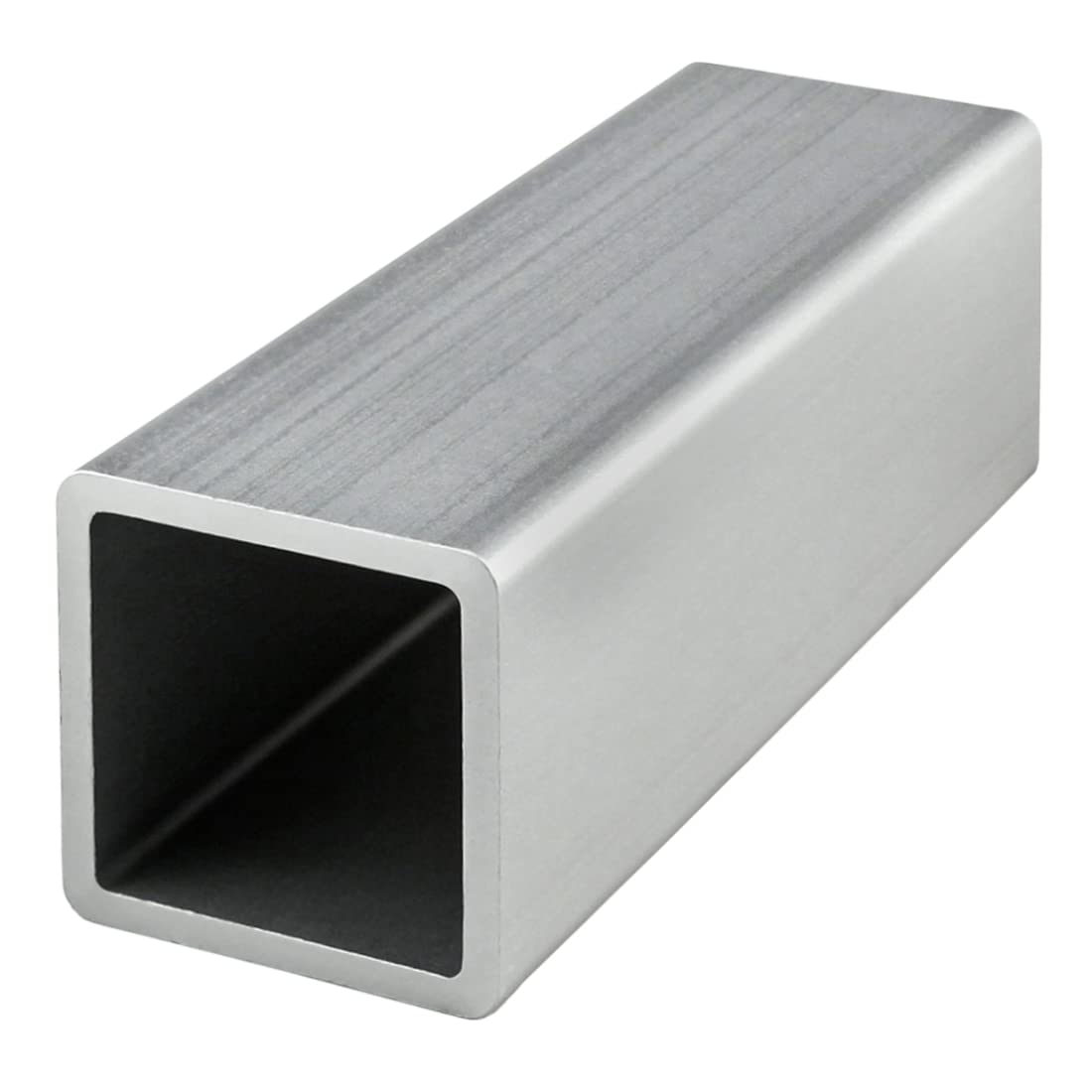
Square, anodized, and 89 inches long — the profile that bolts into a frame instead of clamping into a hose.
This is the odd one out, and deliberately so. Instead of round tube, you get a 1-1/2″ x 1-1/2″ square profile with a 1/8-inch wall, made from 6063-T6 aluminum and finished with a clear anodize that resists oxidation from the start. The length is the headline: 89 inches of continuous stock, far longer than any round tube here, which means you can cut real structural legs from a single piece. And because it is designed to mate with 8020 T-slot extrusions, it joins into framing systems with standard brackets and plates rather than a welder.
Owners mention clean square cuts, an unoxidized surface on arrival, and packaging that holds up in transit. Threading comes up repeatedly — the 1/8-inch wall is thick enough to tap for bolts, which is something none of the thin-wall round tubes handle. One buyer used it for legs on a custom build, and another praised the pre-cut sizing that made installation easy. Note the delivery experience honestly: shipping ran slow for some, and a few found it harder to track down than expected.
Versus the round 6061 tubes above, the trade is geometry. Square stock takes a flat bracket and bolts to a surface, while round stock slips into a hose. If your build uses T-slot fittings, this integrates; if it uses couplers, it does not.
Why It Belongs Here
- 89″ of continuous stock cuts into full-length structural members
- 1/8″ wall takes threads and bolts where thin round tube cannot
- Clear anodize finish resists oxidation without painting
- Joins standard 8020 T-slot framing with brackets and plates
Where It Costs You
- Ships slowly, and a few buyers found sourcing it harder than expected
- Square profile will not clamp into a round hose coupler
Choose this for structural builds: frames, legs, and machine bases where square stock bolts flat and threads cleanly.
Leave it for the round tubes if your joint relies on hose clamps or a fluid path through the center.
Understanding the Specs
Wall Thickness and What It Buys You
Wall thickness is the metal between the outside and inside of the tube, and it is the number that decides whether you can thread the stock or only weld it. A 1/4-inch wall leaves enough material to cut real threads and hold a bolt; a 0.065-inch wall is for bending, welding, and clamping into hose. Thicker walls also shrink the inside diameter — the same 1.5-inch outside diameter gives you a 1-inch bore on 1/4-inch wall stock versus a much wider opening on thin-wall tube. Match the wall to your joint, not to a spec sheet.
Alloy Temper: 6061-T6 vs 6063-T6
The alloy number tells you what is blended into the aluminum; the temper letter tells you the hardening treatment. 6061-T6 is the structural workhorse — strong, weldable, and available smooth — so it shows up in intake piping and brackets. 6063-T6 is softer and takes a polish or anodize beautifully, which is why it appears in polished hose pipe and anodized architectural tube. Neither alloy resists salt spray indefinitely, so marine and coastal builds benefit from a finish or regular cleaning.
FAQ
Is 1.5 inch tubing the same as 38mm tubing?
How thick a wall do I need to cut threads into aluminum tubing?
Will my actual tube measure exactly 1.5 inches outside?
Can I weld 6061-T6 aluminum tubing at home?
What is the difference between 6061 and 6063 aluminum tubing?
Should I buy round or square aluminum tubing?
Does a bead roll on the tube ends actually matter?
How long does an aluminum tube like this last outdoors?
Can I cut this tubing with a regular saw?
What is the inside diameter of 1-1/2 inch tubing with a thick wall?
Final Thoughts: The Verdict
If you want one tube that covers the widest range of projects, the HPS AST-3F-150 is the pick — three feet of weldable 6061-T6 with a 0.065-inch wall and a 300 psi rating, in a length that forgives a bad cut. If your joint uses silicone couplers, grab the ETL Industries polished pipe and let the bead roll do the gripping for you. And if you are building spacers that need threads, the 1/4-inch wall round tube is the one to reach for — that thick wall is the whole reason it exists.
Match the wall to the joint and this stops being a hard choice: thin wall for welding and hoses, thick wall for spacers and threads, square for frames. One practical nudge — the HPS 3-footer holds the top score in this group and the longest usable length, so if you are only ordering once, start there.
How We Picked
We do not accept paid placement. Every pick is matched to a real buyer and a real use-case; we do not hands-on test units.
Sources & Methodology
Specifications: manufacturer listings and product documentation. Review insights: verified customer reviews, as of September 2026. Pricing: not shown on this page (it changes often); check the current price via the retailer link.
As an Amazon Associate, KitchPrep earns from qualifying purchases. This does not affect which products we feature.
Related Guides
