
Specs are compiled from manufacturer listings and verified buyer reviews and can change over time — please confirm the key details on the product page before buying.
If your lower back starts complaining by mid-afternoon, the chair is usually the problem, not you. The right back support office chair holds your spine in its natural curve instead of letting you slowly slump forward. This guide breaks down ten chairs that actually do that, from mid-range workhorses to premium picks with sliding seat depth and 5D armrests.
I’m Mohammad Maruf — the founder and writer behind KitchPrep. This guide is built by comparing the manufacturers’ published specifications and the patterns across verified customer reviews, so you get each pick’s real strengths and trade-offs instead of marketing spin.
The picks below are grouped so you can match a chair to your height, your weight and how many hours you actually sit. What separates a good chair from a chair that just looks good is whether the lumbar pad reaches your back and stays there, which is exactly what this best back support office chair roundup sorts out for you.
Our Picks at a Glance
How To Choose The Best Back Support Office Chair
Most people buy a chair on looks and cushion thickness, then wonder why their back still hurts after a month. The support comes from the shape of the backrest and where the lumbar pad sits, not from how soft the seat feels.
Start with your height and weight
Your height decides whether the seat depth and backrest height will actually line up with your body. A chair built for someone between 5’1″ and 6’3″ will fit a different crowd than one built for users 5’4″ to 6’0″ and under 220 lbs. If you sit at the edges of a listed range, expect the fit to feel off. Your weight matters too, because the weight capacity rating tells you how the base and gas lift are built.
Look at the lumbar adjustment range
A fixed lumbar pad only helps if it happens to land on your lower back. An adjustable one lets you move it up, down, or in and out until it fills the curve of your spine. That is the single feature that separates a chair you can sit in for eight hours from one you fidget in all day. A two-way lumbar cushion that adjusts vertically is a step above a fixed bulge.
Check what moves besides the height
Seat height is the baseline, not the whole story. Armrests that move in three directions keep your shoulders from rolling forward. A headrest you can raise and tilt supports your neck during calls. A backrest that reclines with tension control lets you shift position instead of staying locked in one spot, which is what your spine actually needs over a long day.
Match the base and casters to your floor
A wide five-star base keeps the chair stable when you lean back or sit down hard. A larger base, like a 28-inch one, adds more stability across the full height range. Hard nylon casters roll easily on carpet but can scuff wood, so if your office has hardwood or laminate, look for softer wheels.
Quick Comparison
| Model | Best For | Weight Capacity | Backrest Width | Recline Range | Amazon |
|---|---|---|---|---|---|
| Mesh Office Chair with Headrest & 3D Arms★ Best Overall | All-day desk work | 300 lbs | 20.67 in | 120° | Amazon |
| TRALT Ergonomic Office ChairBest Value | Small spaces and heavy users | 330 lbs | 50 cm | Height & recline adjustable | Amazon |
| Youhauchair Adjustable Mesh ChairMost Popular | Budget first-time buyers | 300 lbs | 19.69 in | 30° rock | Amazon |
| HYLONE 400lb Big and Tall Chair | Larger frames and high desks | 400 lbs | — | Adjustable recline | Amazon |
| Staples Dexley Mesh Task Chair | Home offices and workstations | 275 lbs | — | 3-position tilt lock | Amazon |
| GTPLAYER Big and Tall Chair | Gaming and napping breaks | — | 23.23 in | 0°–145° | Amazon |
| ProtoArc EC200 Ergonomic Chair | Slide-adjustable seat depth | Under 220 lbs | 17 in | 90°–130° | Amazon |
| MOLENTS Ergonomic Office Chair | Heavier frames, daily support | 300 lb | 19.7 in | 90°–120° | Amazon |
| HON Wave Ergonomic Office Chair | Long-lasting office seating | 250 lb | 19.5 in | Advanced tilt | Amazon |
| Branch Ergonomic Chair Pro | Maximum adjustability | — | — | Forward tilt & smooth recline | Amazon |
In‑Depth Reviews
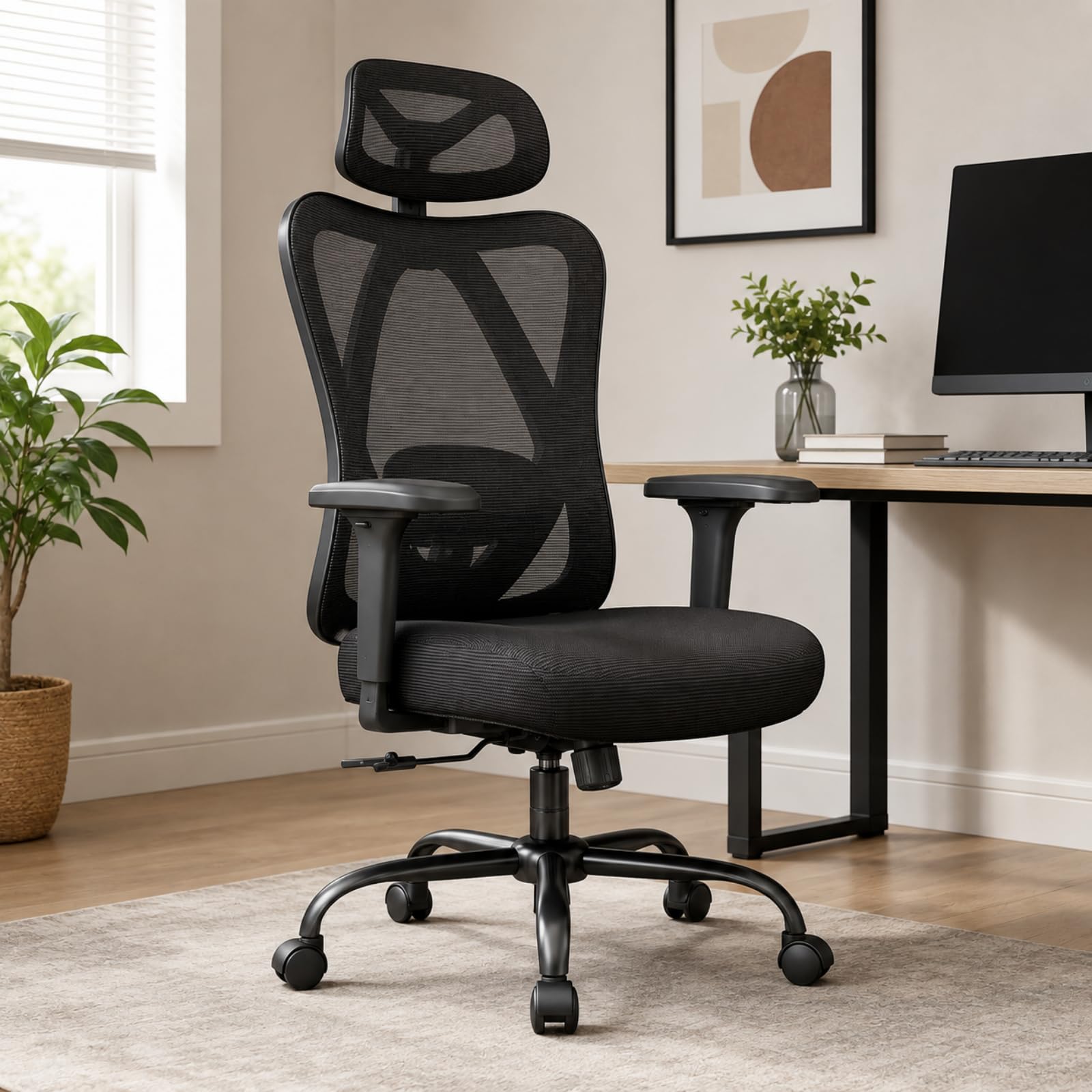
1. Mesh Office Chair with Headrest, Lumbar Support, 3D Arms, Wide Seat
Our pick — over 4.5★ from 350+ verified ratings; the strongest balance of quality and price.
The widest backrest here, paired with arms that move in three directions — this is the one most bodies will fit.
Solviva built this one around a 20.67-inch backrest, which is the measurement that matters here. It is your widest option in this lineup, wider than the 19.69-inch backrest on the Youhauchair chair below. That extra spread is what stops your shoulders from curling inward after a few hours at the keyboard.
The adjustability is the real story. A 2.96-inch seat-height range keeps almost any desk height usable, and the 3D armrests move up, down, forward, backward and side to side, so you can drop them until your elbows rest at 90 degrees. The headrest rotates and slides up or down too. Then there is the reclining backrest at 120° with a rocking function and tilt-tension control, which lets you lean back and reset your spine without leaving the chair.
Owners describe a soft cushion and a mesh back that runs cool, with one buyer saying the cushion is very soft and the back mesh keeps her cool. The frame is metal under the seat, and the chair holds up to 300 lbs. A reinforced five-star base and SGS-certified gas lift handle the load, and the casters roll without fuss. Assembly is described as clear and quick, with hardware included.
What buyers keep praising
- 20.67-inch backrest — the widest in this roundup, so your shoulders have room
- 3D armrests adjust on five axes, which most chairs at this level do not offer
- 120° recline with rocking and tilt-tension control for midday posture resets
- Breathable mesh back keeps you from overheating during long sessions
Where it gives a little
- At 300 lbs capacity it sits below the TRALT’s 330 lbs, so very heavy users should look at that pick
- The 2.96-inch seat-height range is narrower than some taller users might want
Reach for this if: you want the widest back contact and the most arm flexibility without jumping into premium pricing.
Look elsewhere if: you weigh more than 300 lbs or need a chair built for frames above 6’3″.
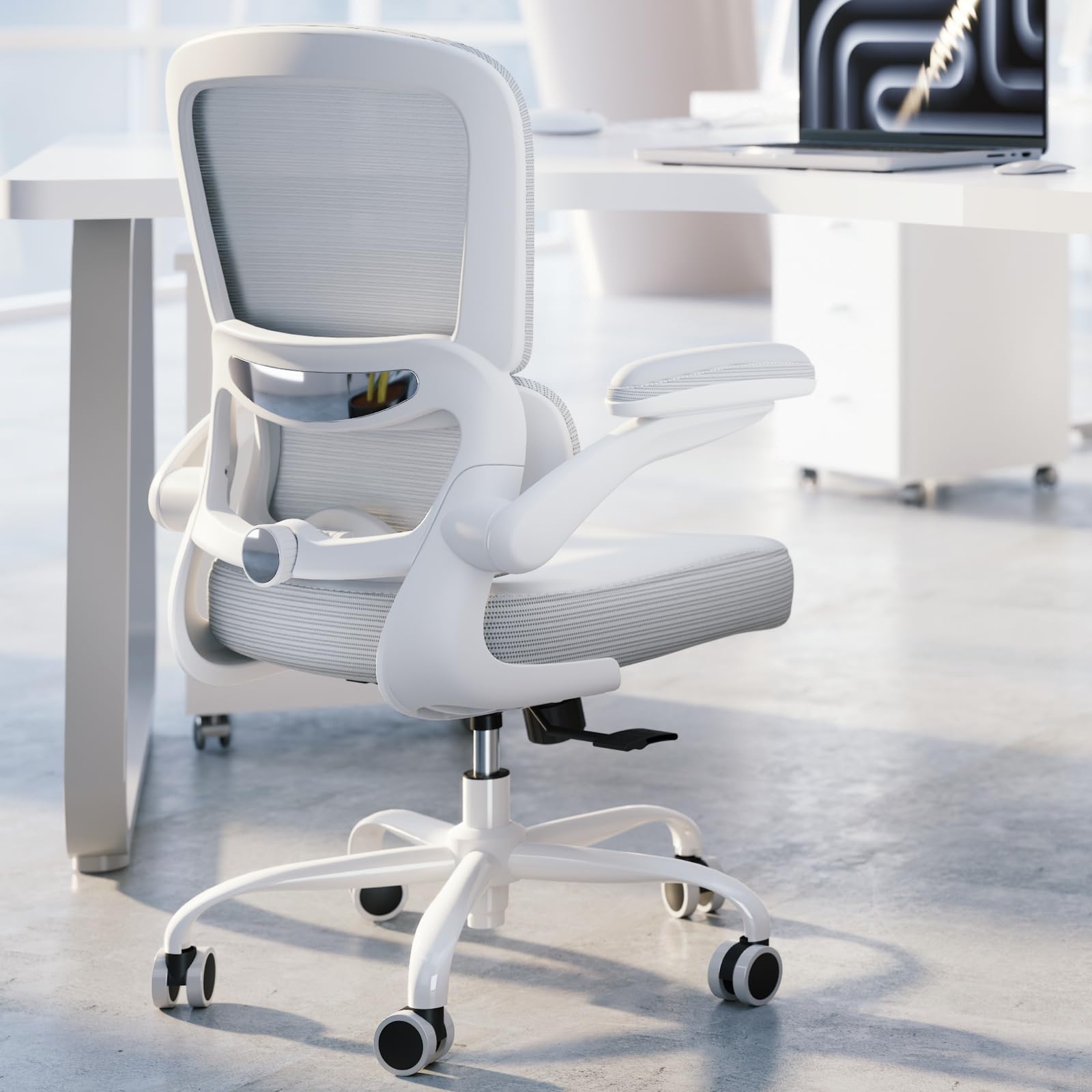
2. TRALT Ergonomic Office Chair Desk Chair with Adjustable Lumbar Support
The heaviest-rated chair under the premium tier, with arms that fold up so it disappears under a small desk.
If you need the chair to carry more, this is where the numbers separate. The TRALT holds 330 lbs against 300 lbs on the wide-seat Solviva above, a 10% bigger capacity. That rating comes from a metal frame and base with a Class-3 gas lift doing the height work, so the seat stays put instead of drifting down over the day.
The seat is sized 20″ wide by 17.3″ deep, with a height range of 18.5″ to 21.3″ — sized for people from about 5’1″ up to 6’3″. A 3.5-inch high-density sponge cushion is the layer you sit on, and it is built not to sag through long days. The back is breathable mesh, which cuts the stuffiness that builds on a leather-backed chair.
What customers talk about most is the overall quality, followed closely by how simple the build is. The leather cushion wipes down easily, and the armrests flip up so the whole chair slides under a desk in a tight room. One buyer calls it very comfortable and very supportive, with the lumbar area feeling great. One honest note owners pass along — fingerprints show on the mesh backrest when you move the chair, and cleaning it takes a little effort.
Built for small rooms: flip-up arms are the feature here, letting the chair tuck under a desk and free up floor space.
Go with it if: you want a heavier-rated chair for a compact home office or a sewing corner.
Think twice if: you sit above 6’3″ or want a headrest, since this one does not include one.
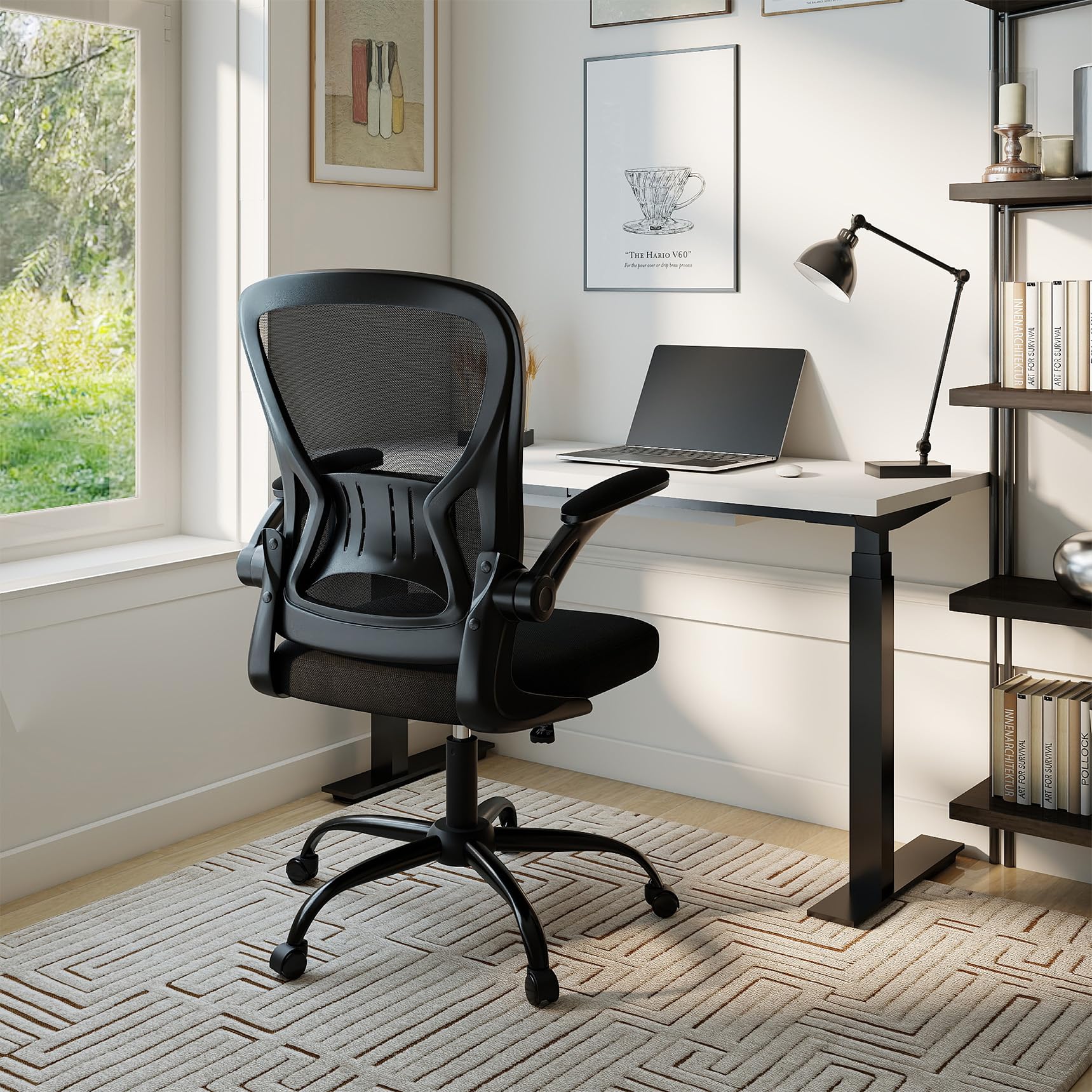
3. Youhauchair Adjustable Mesh Ergonomic Office Chair with Wheels, Black
The chair that wins the numbers game — the most-reviewed pick here, and the one buyers come back to recommend.
Here is the honest headline on the Youhauchair: it carries the biggest review base of anything on this list, with 4.5 stars across 600-plus ratings at the time of writing. That volume matters, because it means the praise and the gripes have both been filtered through a large group of real desk workers rather than a handful of early buyers.
The build is a breathable mesh back paired with high-resilience foam that resists deformation, on a stainless steel frame with a powder-coated finish. A SGS-certified gas lift handles height, the base is five-point, and the chair holds 300 lbs. The backrest measures 19.69 inches wide and the armrests sit at 27.17 inches — a touch narrower than the Solviva’s 20.67-inch back, which is worth knowing if you have broad shoulders.
What wins people over is the cushion and the back support together. The foam is plush but firm, the mesh keeps air moving, and owners who sit for hours with a bad back report the lumbar curve holds them in a proper position. Assembly lands around 15 minutes with the included tools. The mixed part is durability — the chairs mostly hold up well, but the wheel mount has occasionally given trouble, so treat the casters with a little care.
Strengths that keep showing up
- 15-minute self-assembly with all tools in the box
- 30° rocking mechanism plus 360° swivel for movement through the day
- 90° flip-up arms slide the chair under a desk when you are done
What to keep in mind
- 19.69-inch backrest is narrower than the Solviva’s at the top of this list
- The casters have been the weak point for a small share of owners
- Seat cushion screw mounts can misalign during assembly, so line them up patiently
The safe bet: for a first proper desk chair, this is the one with the deepest track record of buyers who would order it again.
skip it if: you need a wide backrest for a broad frame.
4. HYLONE 400lb Office Chair Big and Tall,Desk Chair with Lumbar Support,Black
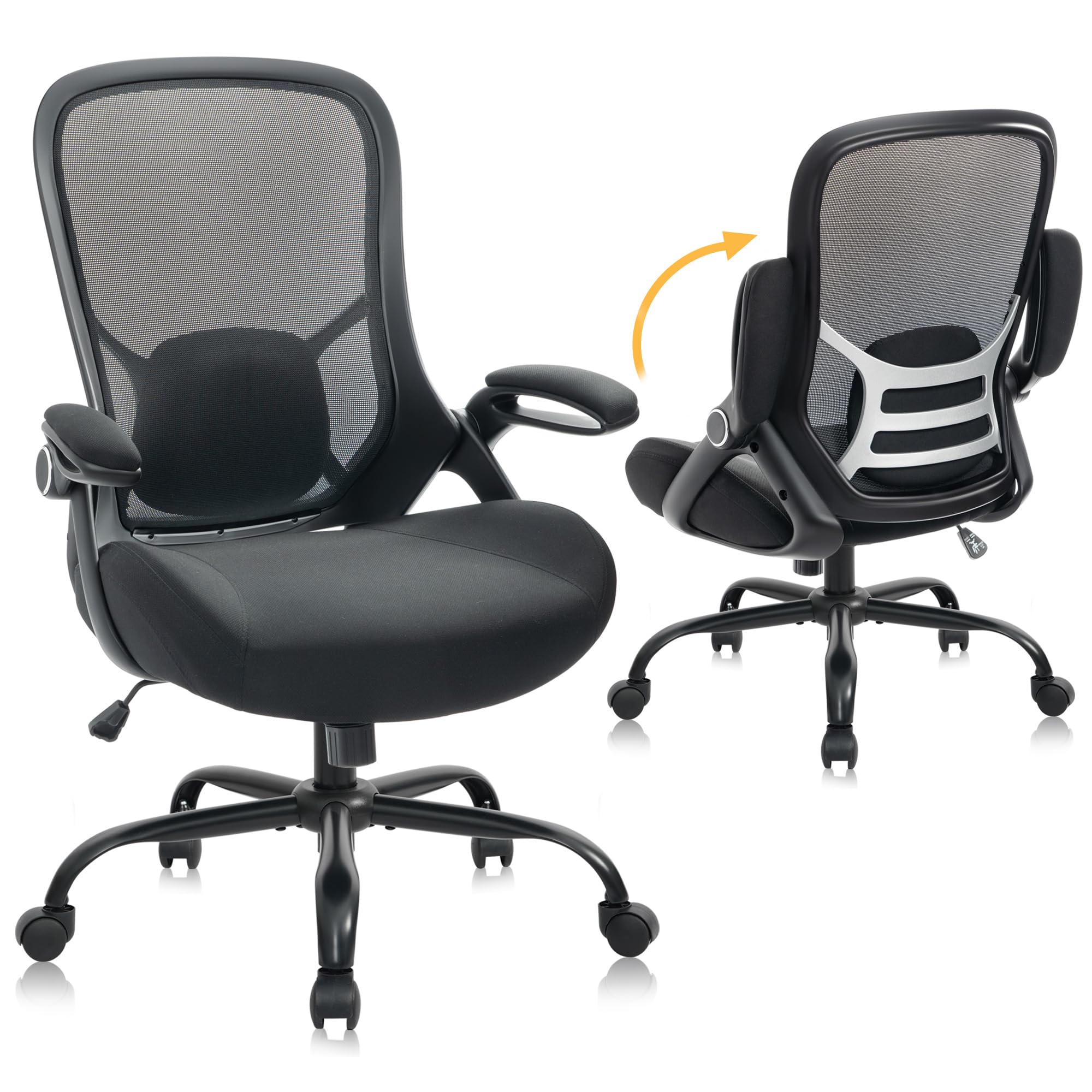
A 400 lb rating and a 28-inch base — the chair built for frames the rest of this list cannot carry.
HYLONE went after the big-and-tall market directly, and the weight rating shows it. This chair holds 400 lbs, which is the highest capacity here and comfortably above the 330 lb TRALT and the 250 lb HON Wave. It is sized for people roughly between 5’5″ and 6’2″, so it lands in the middle of the height bell curve rather than the extremes.
The seat is a 5-inch thick streamlined cushion over a breathable nylon mesh back, and the padding is built to resist compression over long use. A large 28-inch five-star base widens the footprint for stability even when you raise the seat to its top range, and the casters roll on tile, wood, and carpet alike. Flip-up arms let you adjust for a standing desk or tuck the chair away.
Owners are most impressed by the build quality and how simple it is to put together, with adjustability and sturdiness close behind. A 6’0″, 210 lb buyer calls it a comfortable dream, and another says it finally checked every box for her big-and-tall husband. The honest caveat is real, though: the “big and tall” label draws complaints about backrest width from a few buyers, who find the plastic behind the armrests narrows the usable space. If you are a small-frame sitter, this is not your chair.
Why the rating holds up: a 24-month free-parts policy and the 28-inch base are why heavy users stick with it long term.
Made for: heavier users and taller-than-average sitters who need capacity and a wide, stable base.
Not for: petite users who want a snug, close-fitting task chair.
5. Staples Dexley Ergonomic Mesh Task Chair, Lumbar Support, Adjustable, Black
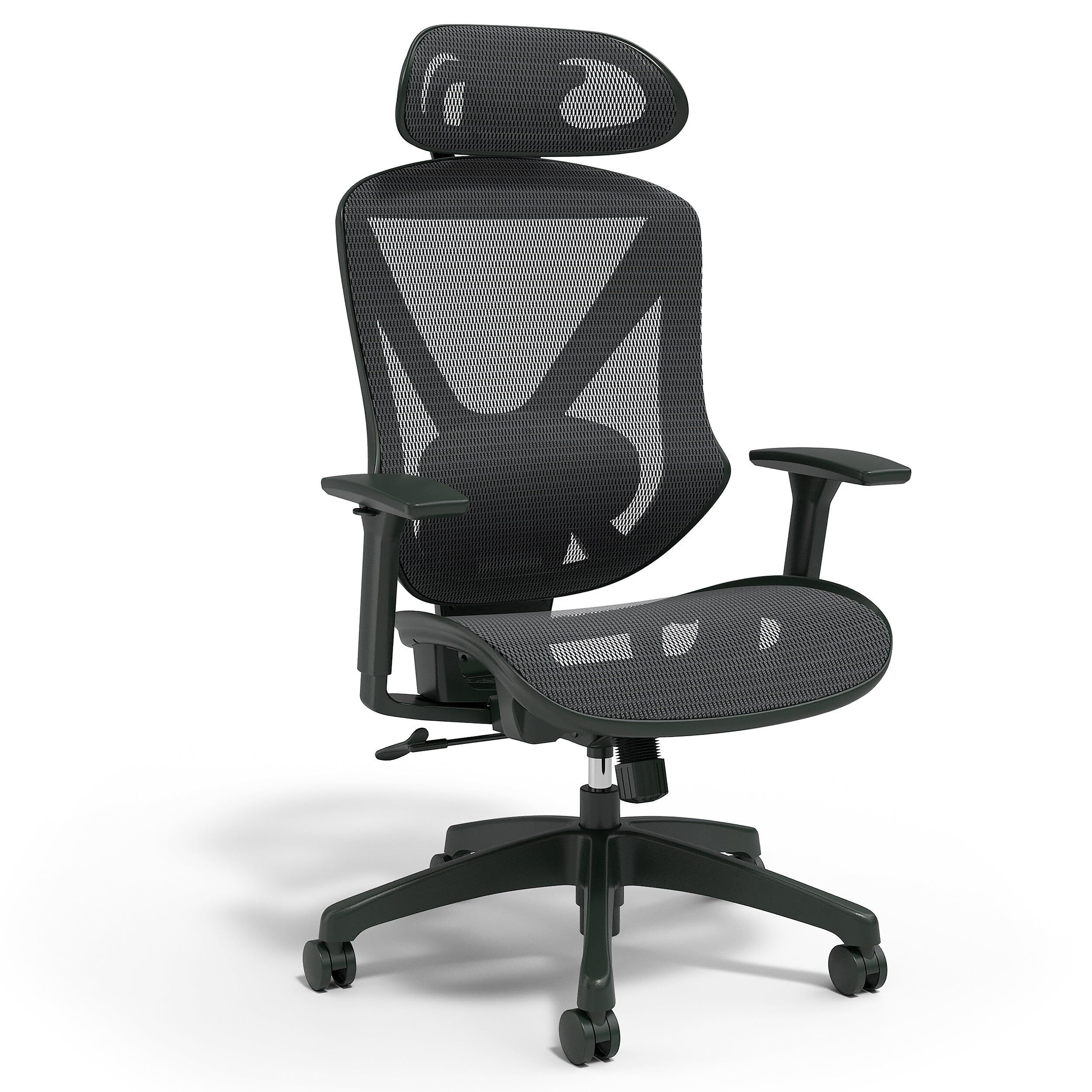
A task chair with a standards pedigree — headrest, three-position tilt lock, and a warranty most of this list cannot match.
Staples built the Dexley to office-furniture standards, and that shows in the spec sheet. It meets or exceeds ANSI/BIFMA standards and carries a 5-year manufacturer limited warranty, which is a longer safety net than you will find on the smaller brands here. The weight rating is 275 lbs, and Staples specs it for 5 to 10 hours of daily use.
The adjustability is broader than most task chairs. You can dial in seat height, armrest height, and headrest height and angle, so both your arms and neck get support without adding a separate headrest. A swivel-tilt mechanism with a three-position tilt lock and adjustable tilt tension lets you set the recline resistance where you want it, and 360-degree swivel keeps you moving around the desk. The back and seat are both ventilated mesh.
What customers rave about is the all-day comfort — several describe coming from a wooden kitchen chair and never looking back. Owners credit the lumbar pad with easing lower-back stiffness over long sessions, and a 6’4″ user reports sitting for hours without readjusting. The one soft spot is durability: the chair mostly holds up well, but the seat has come apart for a small number of owners within a couple of months. The 5-year warranty is your backstop if that happens to you.
Why it earns a place here
- Meets or exceeds ANSI/BIFMA standards for office seating
- 5-year limited warranty — the longest coverage on this list
- Headrest adjusts for height and angle, unlike most task chairs
- 3-position tilt lock and adjustable tension for controlled recline
The trade-offs
- 275 lbs capacity is the lowest on this list — heavier buyers should look at the HYLONE
- A few buyers report the seat coming apart; keep the warranty handy
The office-grade pick: ideal if you want a standards-tested chair with real warranty coverage for a home workstation.
Skip if: you tip the scale past 275 lbs.
6. GTPLAYER Big and Tall Office Chair with Pocket Spring Cushion & Ergonomic Lumbar Support
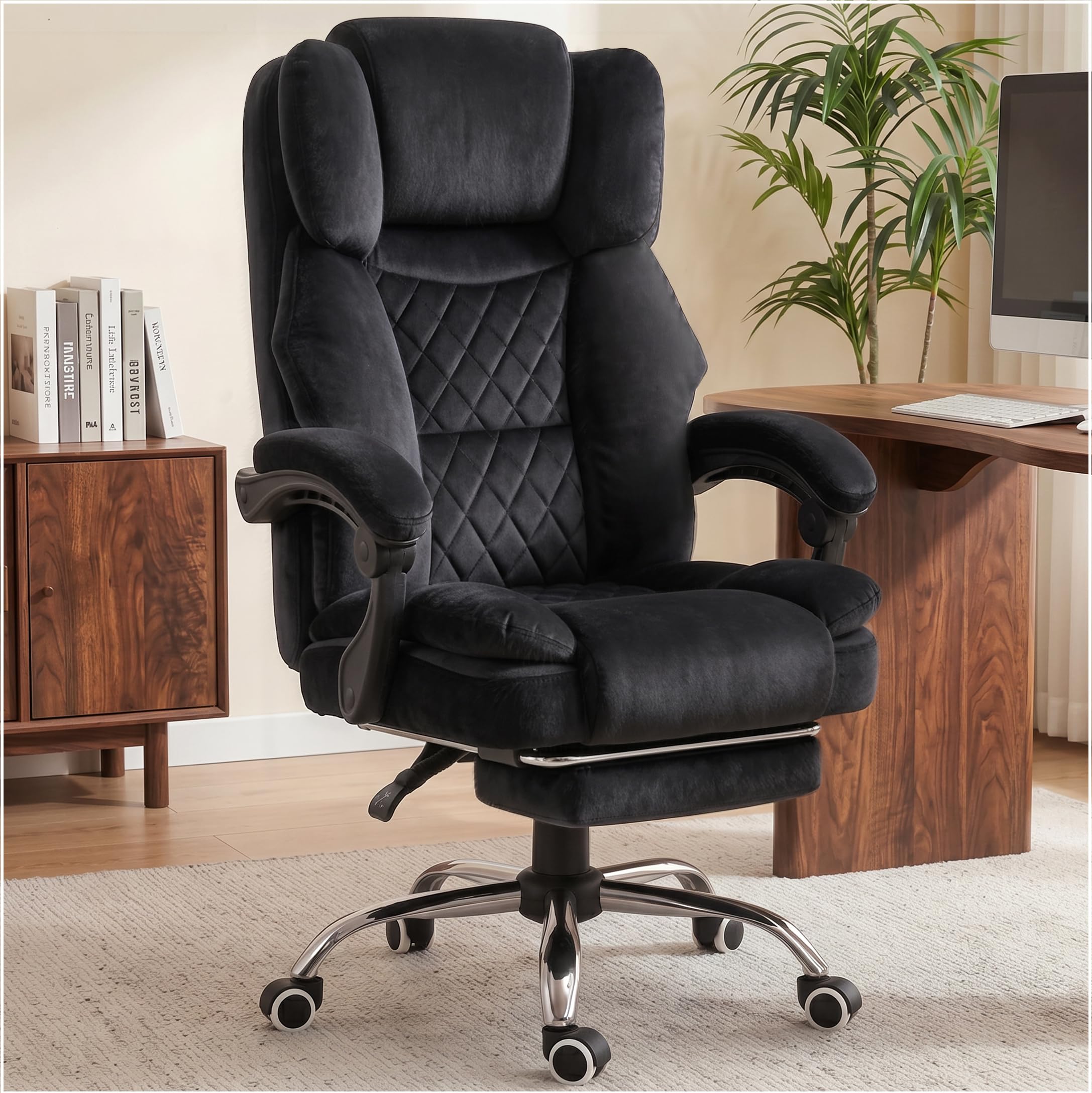
A gaming chair that borrowed its seat from a sofa — independent pocket springs and a footrest that flips out for naps.
The 23.23-inch backrest on this chair is the widest on the whole list, which makes sense given it is built as a high-back gaming seat rather than a slim task chair. GTPLAYER uses a dual-layer backrest with a soft layer over a firm structural core, so it hugs your upper, middle, and lower back at the same time instead of leaving one segment unsupported. The 0° to 145° recline is stepless, which means you can stop at any angle — upright for meetings, nearly flat for a break.
The seat cushion is the party piece. GTPLAYER borrowed pocket spring construction from sofas, so each spring moves independently under your weight, layered under a high-density memory foam cushion. The result reads as a 3-inch-thick pad that behaves more like a recliner than an office seat. The fabric is velvet, which is breathable and softer against skin than the mesh on the rest of this list.
Customers rate the quality and comfort highly, and long-sitting users report no butt or back pain even after hours. Two honest caveats surface, both on the size side: the pull-out footrest only extends about a foot, so tall users find it short, and a few owners mention the back support feels hard rather than plush. It assembles in about 20 minutes with the included guide, and carries a one-year warranty.
The comfort trade: the sofa-style pocket-spring cushion is the standout, but it is a heavier chair than the mesh options, so check it against your desk footprint.
Built for: gamers and long-session sitters who want a reclining, plush seat with a footrest.
Not ideal if: you are tall and want a footrest that reaches, or you prefer mesh over velvet.
7. ProtoArc EC200 Ergonomic Office Chair with Adjustable Seat Depth
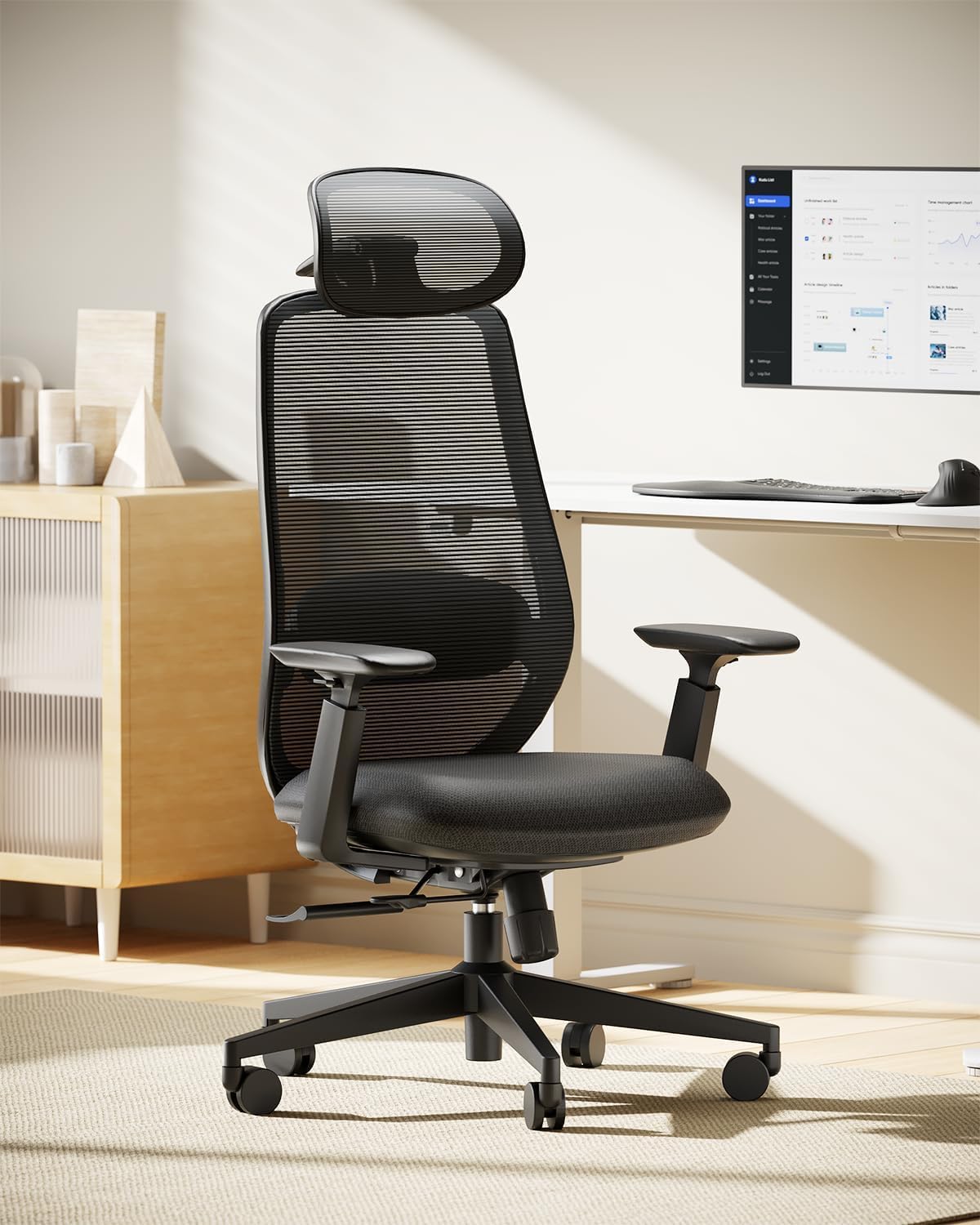
A sliding seat that moves the cushion, not you — the rare feature that ends dangling legs and knee pressure.
Seat depth is the adjustment most chairs skip, and it is exactly what the EC200 nails. The cushion slides through 5 positions with 1.97 inches of travel, so you can pull it forward until your thighs are fully supported and your back stays pressed to the lumbar pad. That is a feature you normally only find on premium office furniture, and it is why this chair is calibrated for users 5’4″ to 6’0″ and under 220 lbs.
Three contact points carry the support: an adjustable lumbar that moves 2.36 inches in height and 0.8 inches in depth to fill the curve of your lower back, a high-tension mesh back, and a 3D headrest. The cushion is 55D foam, a denser grade built to resist the collapse that leaves cheaper seats bottoming out, and the whole package is backed by BS EN 1335, BIFMA X5.1, and a TÜV-tested Class 4 gas lift.
Owners sound genuinely relieved, with several describing long sessions and no back pain afterward — one owner calls the 2.36-inch adjustable lumbar phenomenal. The recline runs in 4 stages at 90°, 105°, 120°, and 130° with tension control, so you can lock the back where it feels best. The main caveat is that this chair is not built for the tallest users: it was tested and returned by a 6’4″ buyer who found it a touch small.
The standout engineering
- Sliding seat depth with 5 positions and 1.97″ of travel — rare at this bracket
- 4-stage recline (90°/105°/120°/130°) with tension control for every work mode
- 55D foam cushion that resists sagging through years of daily use
- TÜV-tested Class 4 gas lift — a higher safety grade than the Class-3 lifts on cheaper chairs
Honest limits
- Calibrated for users under 220 lbs and up to 6’0″ — taller or heavier buyers should pass
- Some owners find the lumbar does not go low enough for their back shape
Right for: average-height sitters who want a sliding seat that fixes thigh pressure while keeping lumbar contact.
Not for: anyone above 6’0″ or over 220 lbs.
8. MOLENTS Ergonomic Office Chair, Mesh Computer Desk Chair with BIFMA X5.1 Certified, 3D Arm, Tilt Back
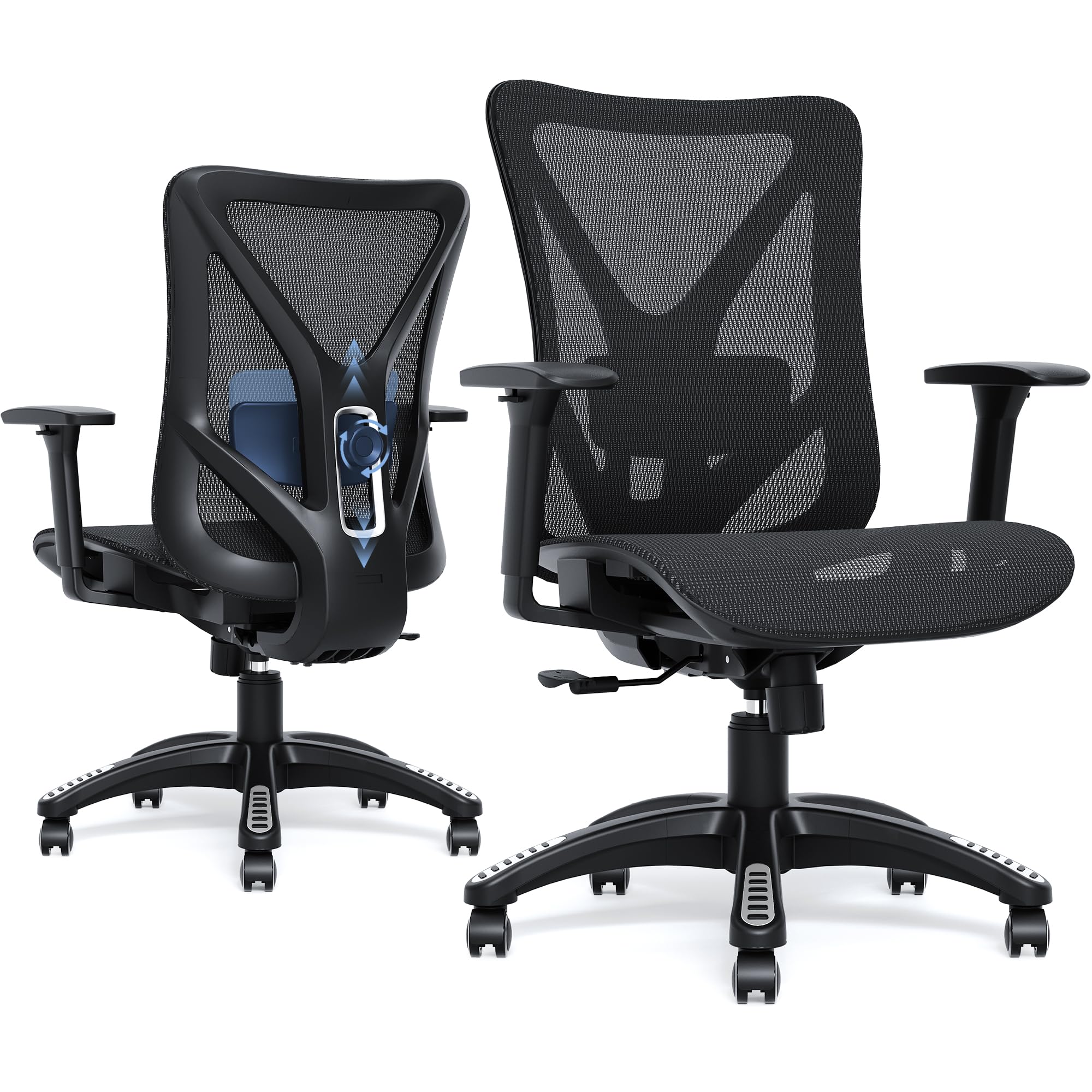
The chair buyers compare to office furniture costing several times more — and it comes out ahead in their telling.
MOLENTS designed this desk chair around adjustments, and the two-way lumbar is the centerpiece. The pad moves both up and down and forward and back, so you can position it under the exact curve of your spine rather than fighting a fixed bump. The armrests are 3D — sliding forward and back or rotating left and right — so they can follow your shoulder line instead of forcing your arms into one position.
The backrest tilts through 3 positions between 90° and 120°, letting you move from typing to reading without leaving the chair. The seat runs 19.8 inches wide with 18.9 inches of depth, and the overall height spans 38.6″ to 42.4″ with seat height from 19.5″ to 23.3″. The build is BIFMA X5.1 certified, which is a durability standard set by the Business and Institutional Furniture Manufacturers Association — think of it as the test that industrial furniture has to pass. The mesh is a skin-friendly premium weave on a shaped-sponge fill.
Owners with larger frames report no creaks and a stable feel at 6 feet and 200-plus lbs, and one owner says the two-way lumbar pad relieved lower-back pain within three days. A second sums it up by saying the chair compares to higher-end models without the premium price. The honest note: the armrest panel slides when you pull the chair across the floor, which a couple of owners find mildly annoying.
The standard that matters: BIFMA X5.1 certification is your proof that the frame and base were tested to survive years of daily load, not just look sturdy on day one.
Worth it for: buyers who want industrial-grade testing and two-way lumbar on a mid-premium budget.
Skip if: you want a chair with arms you can lock in place.
9. HON Wave Ergonomic Office Chair, Lumbar Support, Desk Chair, Black
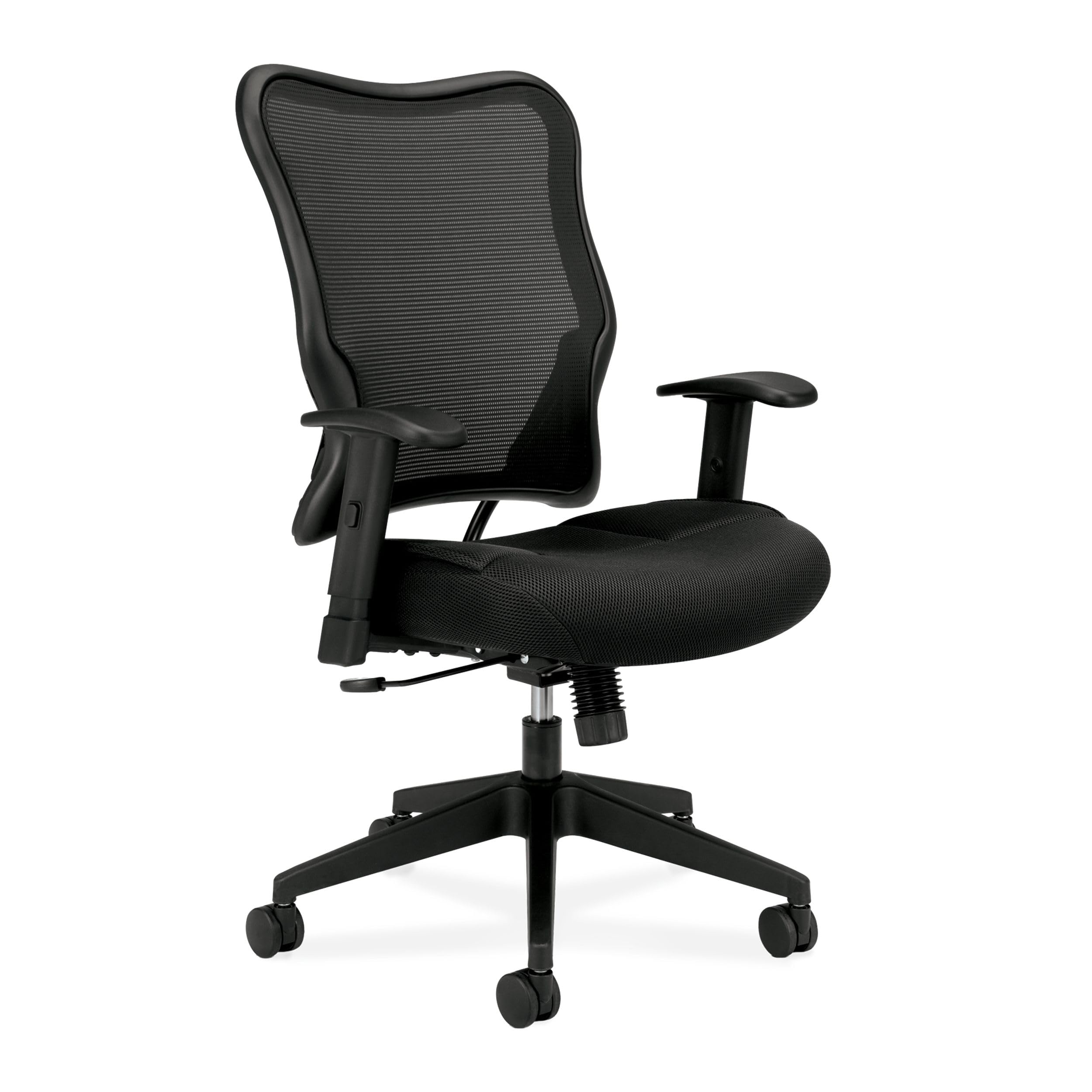
Built by an office-furniture name, and it survives years of full-time use without losing its shape.
The HON Wave trades flash for endurance, and durability is where it wins. Owners running it full-time for three-plus years with a tall, heavy user report it still looks near new, with the cushion, height, tilt, and arm adjustments all working — and the casters still rolling over carpet edges. That chair outlasted two cheaper replacements. HON backs the build with its Full Warranty for ownership confidence.
The seating is a firm, comfortable cushion under a breathable mesh high back, positioned to support posture through computer work, planning, and long admin sessions. The armrests are height-adjustable at 9.75 inches and described as solid — one buyer calls them firm with no warping after months of daily use in a small office. The chair holds up to 250 lb and rolls on a stable base that takes regular use without complaining.
Comfort lands in the top tier of what owners talk about, and owners credit the mesh high back with all-day comfort through 8-hour sitting sessions. The honest gap: this is the least adjustable chair here, and buyers describe wearing out the tilt and height settings fast. A few report the tilt locks to the left rather than centering. The backrest is 19.5 inches wide, on the narrow side if you are broad-shouldered.
Where it proves itself
- HON Full Warranty and 3-year-plus owner durability reports
- Firm cushion and breathable mesh high back stay comfortable for 8-hour sessions
- Fits both short and taller users — one owner at 5’4″ and another tall-heavy both report comfort
What to know before buying
- 250 lb capacity is the second-lowest on this list
- Adjustability is limited compared to the ProtoArc or the Branch
- Some owners find the tilt sits to the left rather than centered
Pick this one if: you want a chair you can park in a small office and forget about for years.
Look elsewhere if: you need a wide range of adjustment or a higher weight rating.
10. Branch Ergonomic Chair Pro, Mesh Office Chair with 14 Points of Adjustment
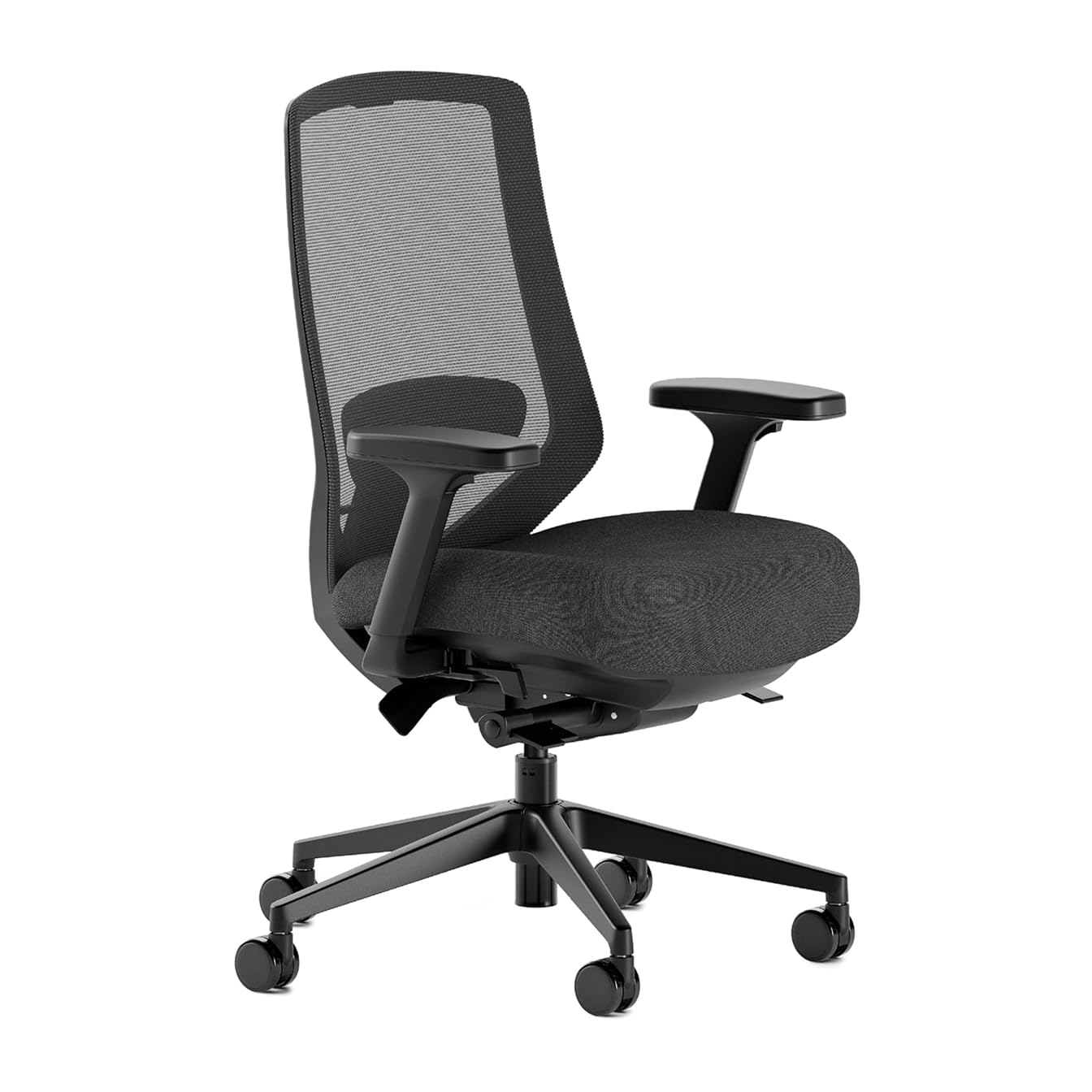
Fourteen adjustment points and 5D armrests — the chair that lets you dial in everything except the price.
Branch built this one for the buyer who wants to adjust their way to comfort, and the 14 points of adjustment give you the tools to do it.
The tilt system is designed for active sitting. A forward tilt function on the seat cushion supports leaning in, while the smooth recline responds to how you shift position through the day. The molded high-density foam cushion is built to keep its shape, and the frame is aluminum rather than the plastic or steel you find on cheaper chairs. The chair measures 27″ deep by 29.3″ wide and 40″ high.
Customers rate the quality and adjustability highest, with a couple of standouts: a teacher with years of desk-work neck and shoulder pain says it improved her posture, and another calls it the best office chair they have owned, comfortable through an eight-to-ten-hour day. Assembly takes about an hour with the included tools. The honest trade is that some buyers feel the build does not justify the top-end price, and the cushion bottoms out for heavier sitters.
The adjustability story: 14 points of adjustment and 5D armrests are what you are paying for — nothing else on this list lets you fine-tune this much.
Choose it if: you want maximum adjustability and are willing to pay for aluminum-frame build quality.
Rethink it if: you want a chair you touch once and never adjust again — you are paying for options here.
Understanding the Specs
Lumbar Support and Seat Depth
Lumbar support is the padding or shape that presses into the inward curve of your lower back. An adjustable pad lets you move it up, down, or in and out until it fits your spine — that is what makes the difference between support and a bump in the wrong place. Seat depth is the second half of the equation: it is how far the cushion extends from the backrest to the front edge. If it is too deep, your knees dangle and you slouch to compensate. If it is too shallow, your thighs lose support. A sliding seat like the ProtoArc’s 1.97-inch travel lets you fix that without changing your sitting position.
Weight Capacity, Base, and Gas Lift
Weight capacity is the maximum load the chair is rated to hold, and it determines how heavy the base and lift need to be. A chair rated to 330 lbs or 400 lbs uses heavier metal than one rated to 250 lbs. The base is the star-shaped spoke assembly under the seat; a wider base like the HYLONE’s 28 inches keeps the chair stable when you sit hard or lean back. The gas lift is the cylinder that raises and lowers the seat. Gas lifts are rated by class — Class 3 and Class 4 are common in office furniture, with Class 4 being the higher grade. A TÜV-tested Class 4 lift, like the one on the ProtoArc EC200, has been checked by an independent testing body for safety.
FAQ
How do I know if a chair will actually help my lower back?
What weight rating should I look for in a back support office chair?
Do I need seat depth adjustment on an office chair?
Is 300 lbs enough capacity for a heavy user?
Which adjustment matters more, lumbar or armrests?
Will a mesh back stay comfortable through a full workday?
How long does a quality office chair actually last?
Should I pay more for a premium chair like the Branch or MOLENTS?
How do I know if a chair will fit my height?
Is a headrest worth having on a desk chair?
Do big and tall chairs fit petite users?
What does BIFMA X5.1 certification mean for a chair?
Final Thoughts: The Verdict
For most desk workers, the back support office chair winner is the Mesh Office Chair with Headrest, Lumbar Support, 3D Arms, Wide Seat because its 20.67-inch backrest is the widest here and the 3D arms adjust on five axes, so a broad range of bodies gets a proper fit on day one. If you need more carrying capacity and a lighter footprint under a small desk, the TRALT Ergonomic Office Chair holds 330 lbs with flip-up arms. And if you want the reassurance of BIFMA-tested durability with a two-way lumbar, the MOLENTS Ergonomic Office Chair is the pick that delivers more support than its mid-premium tier would suggest.
How We Picked
We do not accept paid placement. Every pick is matched to a real buyer and a real use-case; we do not hands-on test units.
Sources & Methodology
Specifications: manufacturer listings and product documentation. Review insights: verified customer reviews, as of September 2026. Pricing: not shown on this page (it changes often); check the current price via the retailer link.
As an Amazon Associate, KitchPrep earns from qualifying purchases. This does not affect which products we feature.
Related Guides
