
Specs are compiled from manufacturer listings and verified buyer reviews and can change over time — please confirm the key details on the product page before buying.
If you are shopping for an air purifier, the one question that actually matters is simple: how much air can it push through a filter, and how quietly can it do it while you sleep? A machine with a big fan and a real HEPA filter will clear a bedroom, a living room, or a smoke-filled kitchen. A machine with a small fan and a thin filter just hums and moves dust around. That single difference is what separates the nine picks below.
I’m Mohammad Maruf — the founder and writer behind KitchPrep. This guide is built by comparing the manufacturers’ published specifications and the patterns across verified customer reviews, so you get each pick’s real strengths and trade-offs instead of marketing spin.
Some of these units are built for a nursery, some are built for a 2,000-square-foot open floor plan, and one of them never asks you to buy a paper filter again. Each has a job it does well and a job it does not do at all. Pick the one that matches your room size and your noise tolerance, and read the numbers before you buy any of the best air purifiers on this list.
Our Picks at a Glance


How To Choose The Best Air Purifiers
Before you compare brands, understand that an air purifier is a fan plus a filter plus a housing. The fan moves air, the filter traps particles, and the housing keeps it all quiet. If any one of those three is weak, the unit underperforms. That is why a cheap unit and a premium unit can look identical in a photo and behave nothing alike in a bedroom.
Start with the CADR number, not the “up to” square footage
CADR stands for Clean Air Delivery Rate, and it is the measured volume of clean air the machine delivers per minute, in cubic feet. A manufacturer can claim “up to 1,000 square feet,” but that number usually assumes you are running the fan on its highest setting and accepting a full air change every single hour. So the CADR figure is the honest one. A unit rated at 143 CFM for smoke, 153 for dust, and 167 for pollen is doing real measured work. If a listing never gives you a CADR number, treat the coverage claim as a guess.
Match the machine to the room you actually have
A purifier sized for a 1,073-square-foot room running in a 120-square-foot bedroom is wasted capacity and wasted noise. A purifier sized for a dorm room will struggle in an open-plan kitchen. Look at two numbers together: the smaller square footage it refreshes several times per hour, and the larger square footage it refreshes once per hour. The small number is the room it will actually keep clean in real time. The large number is what it can eventually process if you leave it running.
Weigh sleep mode decibels against filter cost
Decibels measure sound loudness, and the difference between a purifier at roughly 24dB and one at roughly 27dB is small on paper but noticeable on a nightstand. The trade-off most buyers discover is that the quietest settings come from the smallest fans, and the smallest fans mean less air moved. On the other side of the ledger is the filter itself. A HEPA filter is paper-like and gets thrown away, while a washable system is reusable. Disposable filters deliver consistent filtration, but you buy them again and again. Washable filters cost nothing per replacement, but you wash and dry them on a schedule.
Decide if you need auto mode and air quality sensors
Auto mode uses a sensor to read the room and raise or lower the fan speed by itself. If your air is only dirty sometimes, such as when you cook or when wildfire smoke rolls in, auto mode is the feature that does the work for you. If your air is a steady baseline of dust and dander, you can save the money and just run a fixed speed all day.
Quick Comparison
| Model | Best For | Coverage | Sleep Mode Noise | Filter Type | Amazon |
|---|---|---|---|---|---|
| Levoit Core 300-P★ Best Overall | Bedrooms and offices | 1,073 ft² (once/hr) | 24dB | 3-in-1 HEPA | Amazon |
| Levoit Core 200S-PSmallest Footprint | Dorms and nurseries | 140 ft² (4.8x/hr) | 27dB | 3-stage HEPA | Amazon |
| Coway Airmega 100Best for Odor Rooms | Small rooms with odor | 810 ft² (once/hr) | Lowest fan speed | 3-stage HEPA | Amazon |
| Winix 5520 | Large open living areas | 1,882 ft² (once/hr) | 23.5dB | True HEPA + carbon | Amazon |
| PuroAir 240 (2-Pack) | Multi-room coverage | 1,000 ft² each (once/hr) | Built-in sleep mode | 3-layer HEPA | Amazon |
| Nuwave Forever | Zero filter shopping | 2,002 ft² (once/hr) | Not stated | Washable 7-stage | Amazon |
| Sans True HEPA | Extra-large rooms | 1,854 ft² | Whisper mode | True HEPA 3-in-1 | Amazon |
| AirDoctor AD3500 | Fine-particle filtration | 2,520 ft² (once/hr) | Quiet Sleep mode | UltraHEPA + carbon | Amazon |
| Blueair Classic Pro CP7i | Big-room rapid cleaning | 1,413 ft² in 30 min | Whisper-quiet | HEPASilent dual | Amazon |
In‑Depth Reviews
1. Levoit Air Purifier for Home Pets Hair Allergens in Bedroom Quiet Purifiers
Our pick — over 4.5★ from 108,500+ verified ratings; the strongest balance of quality and price.
The quiet one that cleared a litter box room in six hours flat
Buy this if you want a bedroom purifier that disappears into the corner and still handles pet hair, cooking smoke, and pollen. It is small enough to tuck beside a nightstand, and it refreshes the air in a 222 ft² room 4.8 times per hour. Left running, it can process a 1,073 ft² space once per hour. That split coverage number is the honest way to read it: it is a bedroom machine with the lungs to help a whole floor over time.
what separates it is verified cleaning power. AHAM VERIFIDE means an independent lab tested it, and it carries a CADR (Clean Air Delivery Rate, a standard measure of how fast a purifier cleans air) of 143 CFM (cubic feet per minute) for smoke, 153 CFM for dust, and 167 CFM for pollen. The filter is HEPA-grade (a high-efficiency filter that traps tiny particles) and rated at 99.97% filtration efficiency for particles between 0.1 and 0.3 microns (a micron is one-millionth of a meter), which covers pollen, dust, and animal dander. Those are lab-tested figures, not box marketing. Compare that to the Winix 5520 further down, which pushes a much larger 1,882 ft² per hour — the Levoit leads on bedroom silence, the Winix leads on raw room size.
Owner experience backs this up. Buyers report that six hours in a litter box room left easier breathing, killed the litter box odor, and pulled a spray of cologne out of the air. Another buyer described the light and sound doing exactly what it promises: “Can be a little loud but there is a quiet mode/night mode and you can turn off the light as needed.” That is the Sleep Mode at 24dB (decibels, a measure of sound), which you genuinely stop noticing. The value story is the quiet one here, though. Nobody buys this machine for the aesthetic; they buy it because it works in a bedroom without announcing itself.
What it gets right
- AHAM VERIFIDE with 143 CFM smoke, 153 CFM dust, and 167 CFM pollen ratings.
- 24dB Sleep Mode plus off-able display lights for real bedroom use.
- 3-in-1 filter captures 99.97% of particles from 0.1 to 0.3 microns.
- Two, four, six, and eight-hour timer with a check-filter indicator.
What to plan around
- 1,073 ft² is a once-per-hour figure, not a live large-room rating.
- Voltage is 120V, so it is for US outlets only.
- The brand recommends genuine Levoit filters, not off-brand ones.
Buy it for: a bedroom, home office, or small living space where noise at night is the deciding factor.
Skip if: you need to hold a 1,000-square-foot open plan at full speed all day.
2. Levoit Air Purifier for Home Pets Bedroom Dorm Room, Smart & Voice Control
A dorm-desk purifier that answers your phone and your voice assistant
This is the pick for a 140 ft² room — a dorm, a nursery, a small office — where you would rather tap an app than bend down to a dial. The Core 200S-P refreshes that 140 ft² space 4.8 times per hour, uses a 360° air intake to pull from every direction, and runs on 27dB at its quietest. That is louder than the Core 300-P above, which sits at 24dB, so if absolute silence at bedtime is the priority, the bigger Levoit wins. If you want the app and the voice control, this one is the better fit.
Filtration is handled in three stages. A nylon pre-filter and a high-efficiency activated carbon filter catch the large stuff and absorb odors and fumes, while the main filter removes 99.97% of dust, pollen, and dander in the 0.1 to 0.3 micron range. The app also tracks your filter life, which removes the guesswork of when to swap it. There is a display-off button so the whole unit goes dark at night.
What wins people over here is the overall build and feel. Buyers describe taking a risk on used units and being impressed that they worked perfectly with new-looking filters and no smell, then running level 3 for an hour and noticing cleaner air. One buyer’s math is telling: after two weeks, the filter had already caught tiny mosquitoes. A recurring warning worth heeding is to peel the plastic wrap off the filter before first use, or the machine just moves air through plastic. The one honest gripe buyers raise is a slight whine on the lowest setting, and a high-speed fan that is loud enough to be obvious white noise.
App-first convenience: filter-life tracking, scheduling, and phone sync remove the two chores that make people abandon purifiers — guessing when to replace the filter and remembering to turn it down at night.
Reality check: 140 ft² is a small-room number, and the 27dB floor is a touch louder than the Core 300-P, so a light sleeper with a big bedroom should size up.
Reach for this if: you want app control and voice commands in a small, easy-to-move package.
Look elsewhere if: your room is over roughly 200 ft² or you need the quietest possible sleep mode.
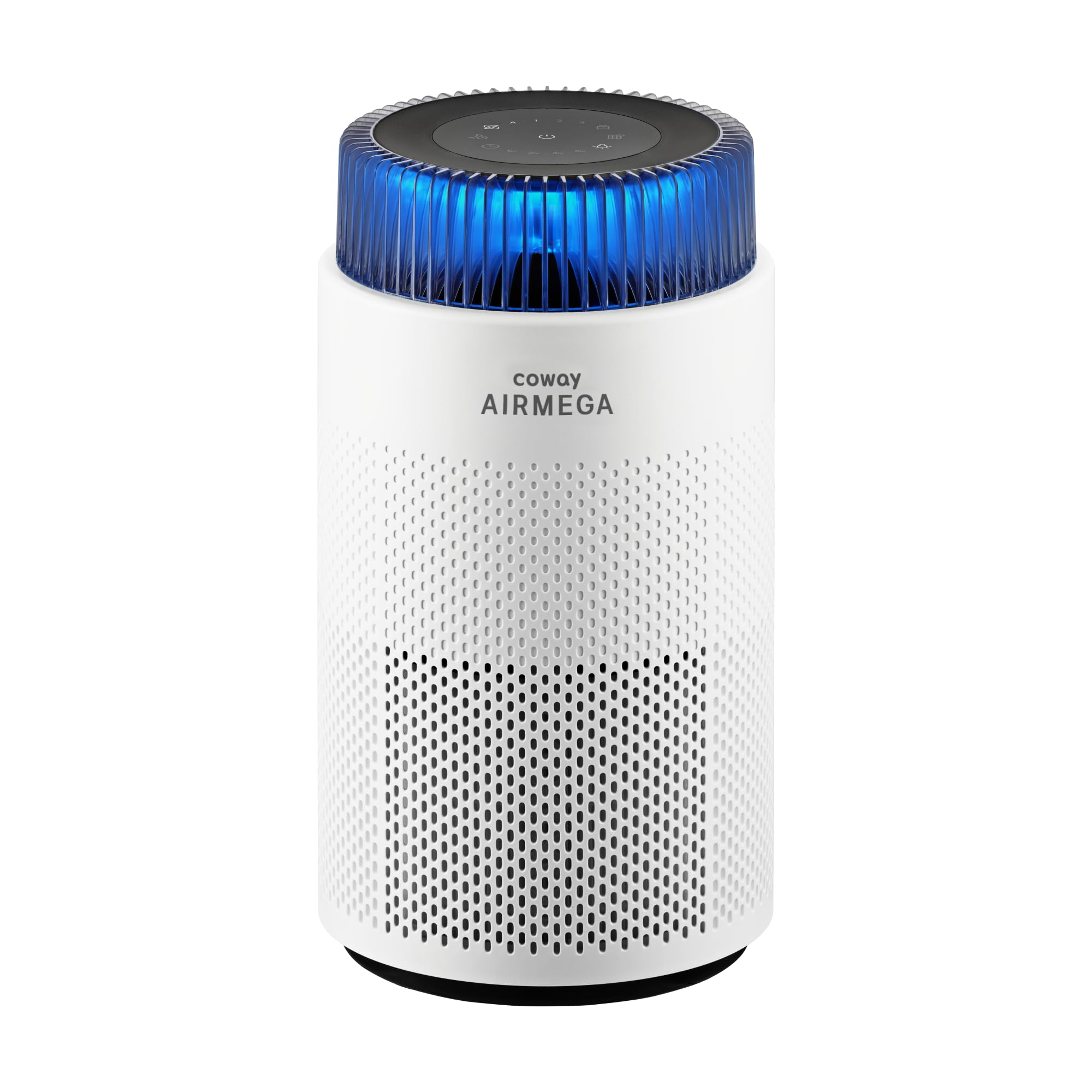
3. COWAY Air Purifiers for Home up to 810 ft², HEPA and Carbon Filter for Smoke, Allergies, Pet Dander, Odor
The small-room purifier that colors its light by how dirty your air is
Here is the pick for a kitchen, a laundry room, or a dog-crate corner where the air quality swings up and down all day. The Airmega 100 cleans a 405 ft² space in 30 minutes and an 810 ft² space in 60 minutes. It reads your air with an AQI monitor and adjusts its fan automatically, so it ramps up the moment something starts cooking and settles back down afterward. Three manual fan speeds are there if you would rather take over.
The filtration stack is a pre-filter, a deodorization filter, and a HEPA filter that reduces 99.97% of 0.3 micron particles, including pollen and other allergens, plus volatile organic compounds and odor. Volatile organic compounds are the gases that off-gas from cleaners, paints, and cooking. That three-part stack is why this one punches above its size on smell, not just on dust. Sleep mode kills the AQI and button lights and drops the fan to its lowest speed.
Owner feedback splits cleanly along one line: quietness and lighting. The ambient light is soft and non-intrusive, and buyers like that the color shift signals when the unit is actively working — it turns a color change into a signal that your cooking smells are being handled. The area that draws the most discussion is noise, and the split is real: some call it super quiet while others find it noisy. The practical read from buyers is that level one is very quiet, while level two and up sound like a stand-up fan on high. One owner’s gripe is that the button sounds cannot be muted. On the bedroom side, the report that stands out is a buyer in a bedroom helping a spouse’s allergies who says they can never tell when it is even on.
The lighting angle: a real color-changing air quality readout, with all lights switchable off, is what separates this from a plain fan-plus-filter box.
The caveat: noise opinions genuinely split, and the button tones have no mute — a dealbreaker only for households with a sound-sensitive pet.
Right for you if: you want visible proof of your air quality and automatic odor response in a kitchen or utility room.
Not for you if: you need silent operation above the lowest fan setting or a fully mute control panel.
4. WINIX 5520 Air Purifier for Home Large Room Up to 1882 Ft² in 1 Hr
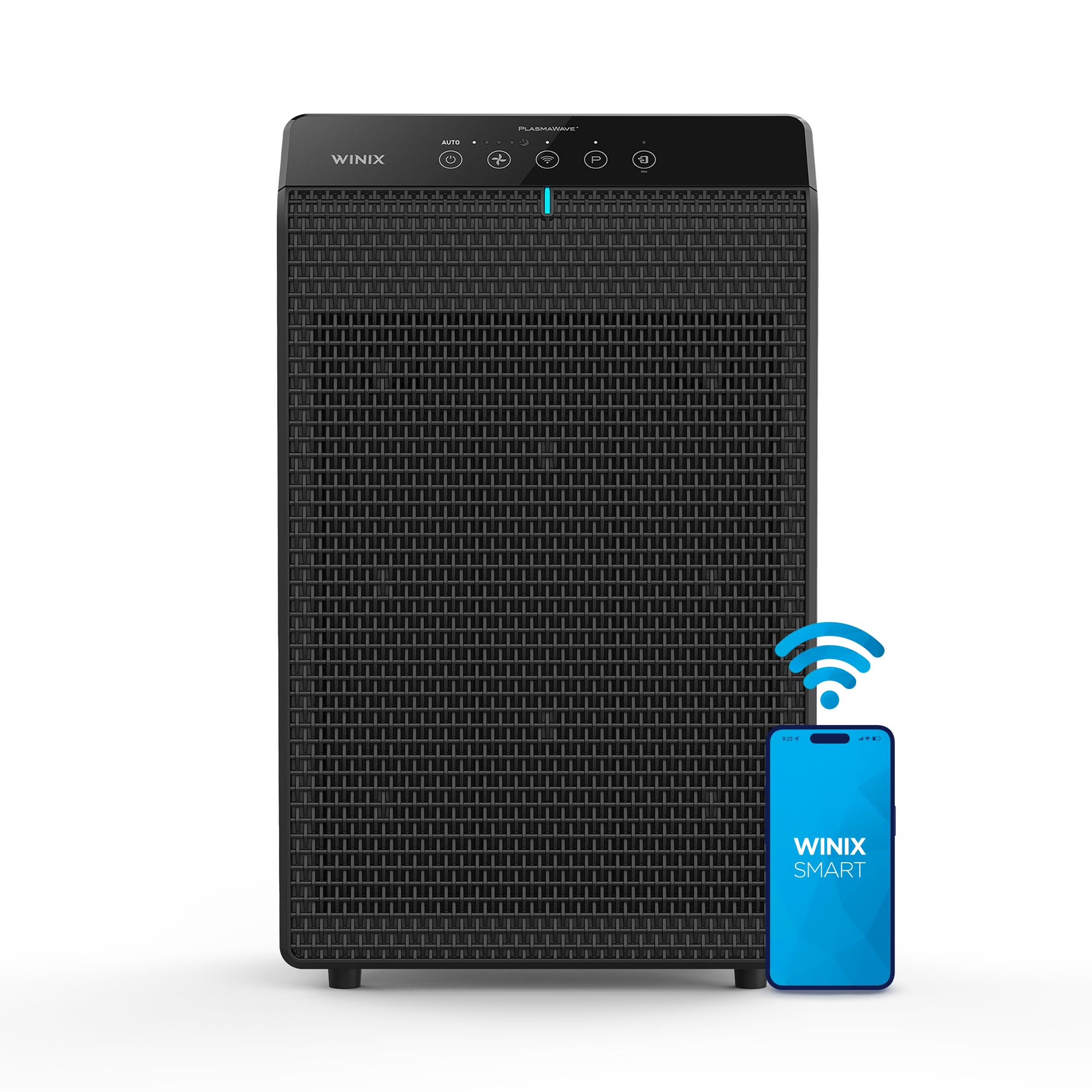
The big-room workhorse that catches particles as fine as 0.3 microns
If your problem room is an open living area or a kitchen connected to a living room, this is the one built for the volume. AHAM Verified coverage is 392 sq ft, and it cleans up to 1,882 sq ft in one hour, 941 sq ft in 30 minutes, 627 sq ft in 20 minutes, and 470 sq ft in 15 minutes. That is genuine large-room throughput, not a bedroom number borrowed from a smaller machine.
Filtration is the headline. Winix True HEPA captures 99.99% of airborne allergens as small as 0.3 microns, which includes pollen, dust, smoke, and pet dander. A separate advanced odor control carbon filter reduces VOCs and household odors from cooking, pets, and smoke, and it also helps extend the life of the HEPA filter. In front of both sits a washable fine mesh pre-filter that catches the largest particles and can be rinsed rather than replaced.
What buyers rave about most is the silence. On the slowest speed the noise drops to 23.5dB (decibels, a measure of sound), and the automated sleep mode detects a darkened room, dims and slows itself, then returns to auto in daylight without you touching it. A buyer testing fan noise on a full blast described the carbon filter doing real work: full blast during cooking cleared the smell left behind by an inefficient range hood, while on auto it stays quiet almost all the time. Filter life is the other recurring praise — owners mention the HEPA lasts around a year, where many brands demand a change every three months. The honest caveat is the app, which some buyers describe as laggy and unresponsive.
Where it wins
- 1,882 ft² in one hour, with 470 ft² cleaned in just 15 minutes.
- 99.99% capture of particles as small as 0.3 microns via True HEPA.
- 23.5dB on the lowest speed with a light-triggered sleep mode.
- Washable pre-filter cuts ongoing consumable costs.
Trade-offs
- At 13.3 pounds it is not a unit you move around casually.
- The companion app draws complaints for lag and unresponsiveness.
- Turbo mode is as loud as a floor fan on high.
Built for: large living rooms that need serious air turnover and quiet operation the rest of the time.
Think twice if: you plan to rely on the phone app for daily control rather than the included remote.
5. PuroAir 240 HEPA Air Purifiers for Home Pets Bedroom – 1,000 Ft² (2PK)
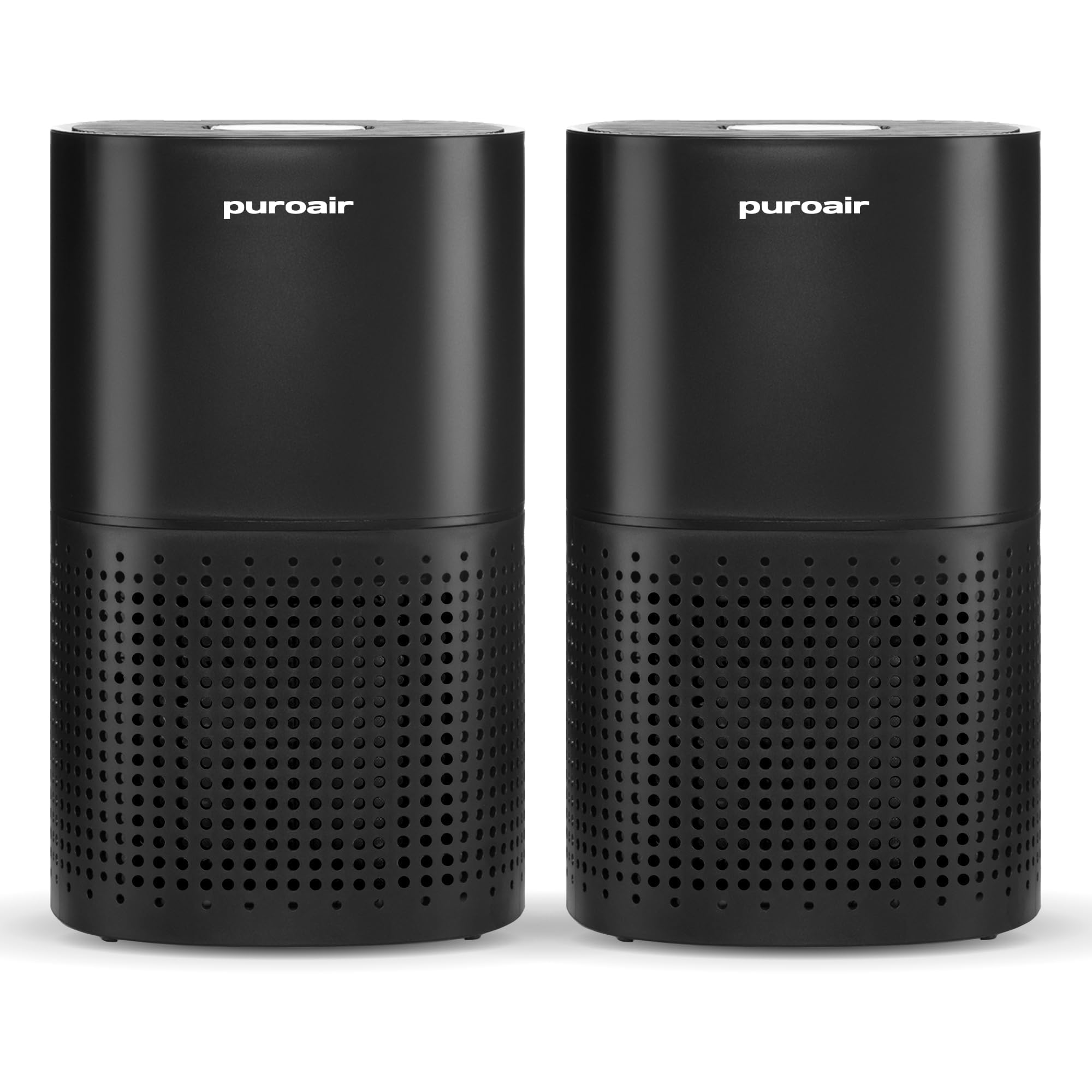
Two purifiers, two rooms, one less thing to argue about
Buying two machines at once sounds indulgent until you price out doing it one room at a time. This set puts a PuroAir 240 in two places — say a bedroom and an office — and each unit cleans up to 1,000 sq ft in one hour. A smart particle sensor watches the air and increases power when it detects pollution, so you set both and stop thinking about them. That is the entire pitch, and for a two-room problem it is a good one.
The filtration stack is three layers: a pre-filter, a HEPA filter, and activated carbon, filtering up to 99.9% of dust, pollen, smoke, pet dander, and VOCs. Volatile organic compounds are the chemical gases released by cleaning products, paint, and cooking. Each unit also has a built-in sleep mode that drops the fan to a quiet setting.
The pattern across owners is consistent: noticeable air quality improvement within hours, whisper-quiet running, and simple upkeep. The resident-cat problem is the classic testimonial here — an owner with a constantly shedding cat found the unit pulled the odors out of the air entirely, and the cat liked it enough to snuggle up beside it. Another buyer noted the air no longer smelled stale after more than twelve hours with the house closed up in heat and humidity. The recurring honest note is filter cost: buyers point out that filters are pricey across every brand, and they accept the cost as the price of cleaner air. This is a set for someone who wants coverage now, not a single hero machine.
The two-room math: the practical benefit is not the specs of one unit but the fact that two rooms run in auto mode at the same time, which is what full-home coverage actually requires.
Worth knowing: filter replacements are the ongoing cost and buyers consistently flag them as expensive, regardless of brand.
Suits: anyone with two problem rooms who wants both handled without buying and setting up twice.
Consider a single unit instead if: your air trouble is concentrated in one large space.
6. Nuwave Forever Smart Air Purifier for Home, Never Replace Air Filter System

The purifier that ends the filter reorder habit for good
The single most annoying thing about owning an air purifier is buying the filter again. This one removes that chore entirely. The Forever uses washable, reusable filters instead of replacement paper-like filters, and it purifies up to 2,002 sq ft in one hour. Intertek lab certification says it captures 100% of particles down to 0.3 microns, including smoke, dust, pollen, and pet hair, and it lowers ozone to 1 ppb while staying CARB compliant. Seven filtration stages run from stainless-steel prefilters that catch large particles down to Bio-Guard filters that trap micropollutants, with ozone removal filters in between. At 21.85 pounds it is a heavy floor unit, not a shelf piece.
This earns a spot because of the long-game math on consumables. The two things buyers mention again and again are raw performance and the fact that there is no filter bill — the machine is doing measurable work on air quality and odor, and it is doing it without a subscription.
Real ownership stories bear this out. One buyer with four large dogs reported that it eliminates wet dog odor, dust, and allergy triggers, with washable side filters catching fine dust and no recurring filter costs. A user in an older 1,550-square-foot home bought two and measured the wildfire smoke drop through the sensors. The honest trade-offs are the ones you would expect from a washable system: cleaning is easy but time-consuming, and the filters need real drying before they go back in. Run the unit for two hours on first setup to clear the plastic off-gassing, and a buyer notes the sensor can take a few minutes to register a change.
What it gets right
- Washable, reusable filters mean no ongoing replacement purchases.
- 7-stage filtration with 100% capture down to 0.3 microns, per Intertek testing.
- 2,002 ft² purification in one hour suits big open floors and basements.
- Ozone lowered to 1 ppb and CARB compliant.
What to plan for
- Cleaning the washable filters is easy but takes real time.
- At 21.85 pounds, it is a fixed appliance rather than a portable one.
- It arrives needing a two-hour off-gassing run first.
Buy it for: a large home where recurring filter costs are the thing you most want to eliminate.
Weigh it against a disposable-filter unit if: you would rather never handle a damp filter or a drying area.
7. Sans True HEPA Air Purifier for Extra Large Rooms (1,854 sq ft)
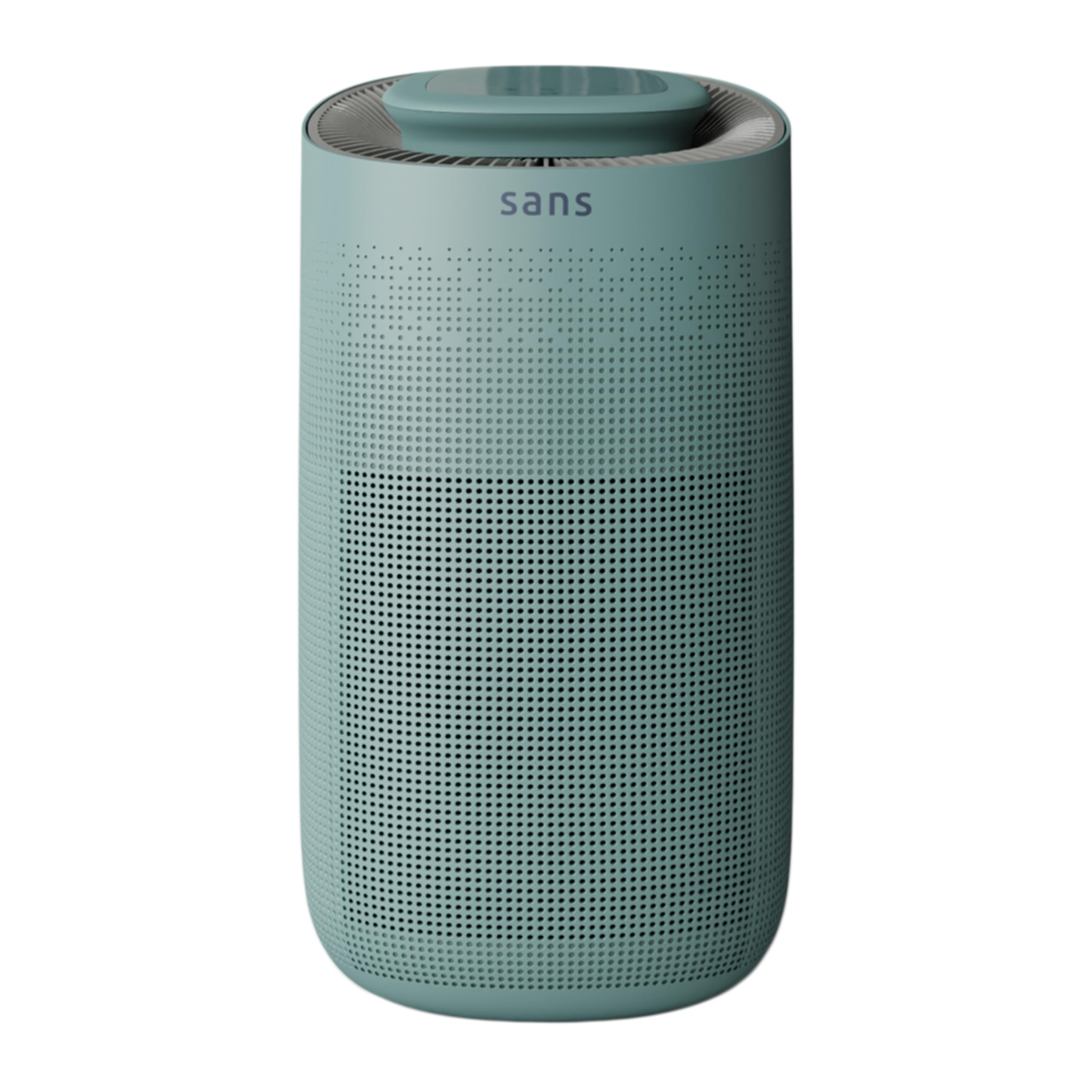
Built for the whole house, sized for the whole floor
This is the machine for an extra-large space where you want one unit doing the job instead of three small ones spread around. It covers up to 1,854 sq ft, runs a smart auto mode with real-time AQI sensors, and dims its display lights in sleep mode. At 14.5 pounds it is movable between floors without a struggle, which is more than you can say for most purifiers in this coverage class.
The filtration is a durable pre-filter, a medical-grade True HEPA filter, and an activated carbon layer working together, capturing 99.9% of particles down to 0.3 microns. A dedicated filter section traps pet hair and airborne dander before it settles on furniture. The carbon layer is built to absorb stubborn cooking smells, household smoke, and VOCs, with the goal of cutting lingering odors quickly rather than gradually. Filter replacement takes under 60 seconds, and an onboard indicator tells you when it is time.
The recurring theme in buyer feedback is dust reduction. Several buyers describe a major drop in visible dust around the home within the first month and say the air simply feels cleaner. One noted the difference in plain terms: “After the first month we noticed a major reduction in dust in the house. Air just feels cleaner.” Quieter operation and a clean look come up often in the same breath. The single strongest caution here is a genuine outlier: one owner felt it moved plenty of air but did not believe the filtration was doing anything measurable, though that is one account among dozens of positive ones about dust and odor. It is worth knowing the sensor is part of how the machine reads the room, so a unit placed in a corner reads differently than one placed in open air.
The room-size advantage: at 1,854 sq ft of coverage, this handles multi-room floors that would otherwise need three or four bedroom-sized units.
The odd bit: buyer reaction to the air sensor is not unanimous, and a rare owner felt the filtration did not register — the opposite of the dust-reduction reports most buyers give.
Best paired with: a large open floor plan, a finished basement, or a multi-room space that one unit needs to handle.
Reconsider if: you want a small bedside unit for a single room and nothing more.
8. AIRDOCTOR AD3500 Air Purifier
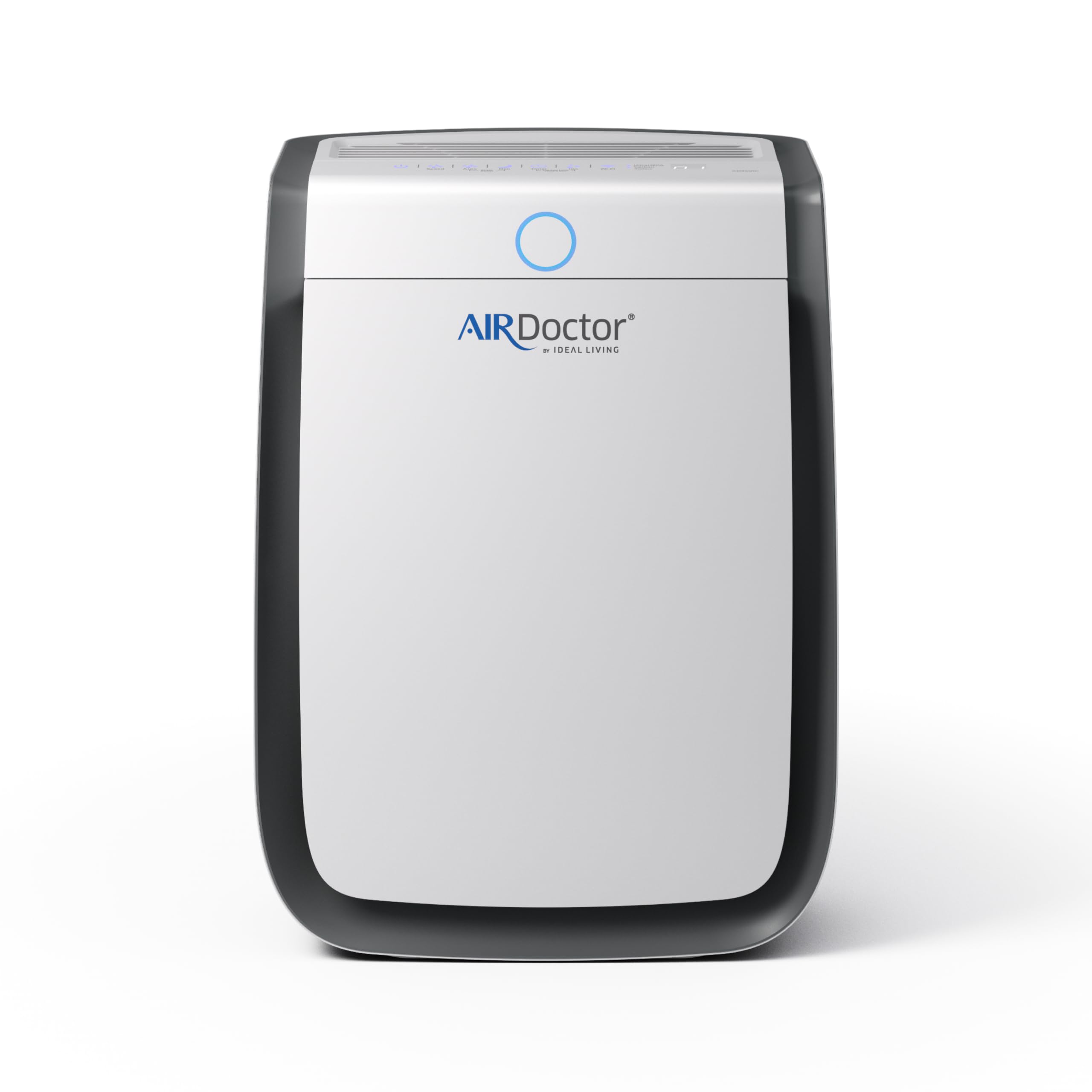
The one that chases the particles regular HEPA filters miss
If fine particles are your specific problem, this is the pick built to chase them. AirDoctor’s UltraHEPA filtration captures 99.99% of airborne particles at 0.003 microns, well below the standard HEPA threshold. It cleans a 630 ft² room in 15 minutes and up to 2,520 ft² in one hour. At 24 pounds it is a solid floor fixture, not something you tuck on a shelf.
Filtration runs three stages: a pre-filter, a premium activated carbon filter, and the UltraHEPA filter. The carbon layer is made with activated carbon and potassium permanganate to absorb and break down gases, targeting cooking fumes, pet smells, wildfire smoke, VOCs, and household odors. On top of that, PM2.5 sensors monitor your air in real time and a color-coded Halo display shows the current quality level. PM2.5 refers to particles under 2.5 microns, the size range that matters most for smoke and haze. Auto Mode adjusts fan speed and triggers Boost automatically when the sensors detect a spike. The carbon filter is designed to be replaced every 6 months and the UltraHEPA every 12, and the unit is FSA and HSA eligible.
Owner feedback centers on how quickly the auto mode reacts. Buyers describe it ramping to yellow or red during cooking, using a nebulizer, or running the dishwasher, then settling back down. One buyer in a 500 to 600 square foot area made the point that guests ask how the house smells so fresh without candles or deodorizers. A buyer dealing with asthma and COPD put it plainly: “I tried so many air purifiers out there. Even whole house Reme. Nothing was nearly as good as this.” The fair caveat that comes up is filter cost, which is genuinely higher than most, since two filters are involved and the carbon one trades out roughly twice a year. Turbo mode is also loud, and the unit itself is bulky.
Why the fine-particle spec matters: 0.003-micron capture is a tighter standard than a standard HEPA filter, and the carbon-plus-potassium-permanganate layer targets the gases that a plain filter lets pass.
The cost of that performance: two filters on different replacement schedules add up, and buyers flag that as the ongoing expense to plan around.
Reach for this if: your priority is capturing the smallest airborne particles and you want a genuine air quality display.
Look at a cheaper HEPA unit if: you want low-maintenance ownership and are not chasing fine-particle performance.
9. BLUEAIR Air Purifiers for Home Large Room up to 2,923 Ft², Classic Pro CP7i
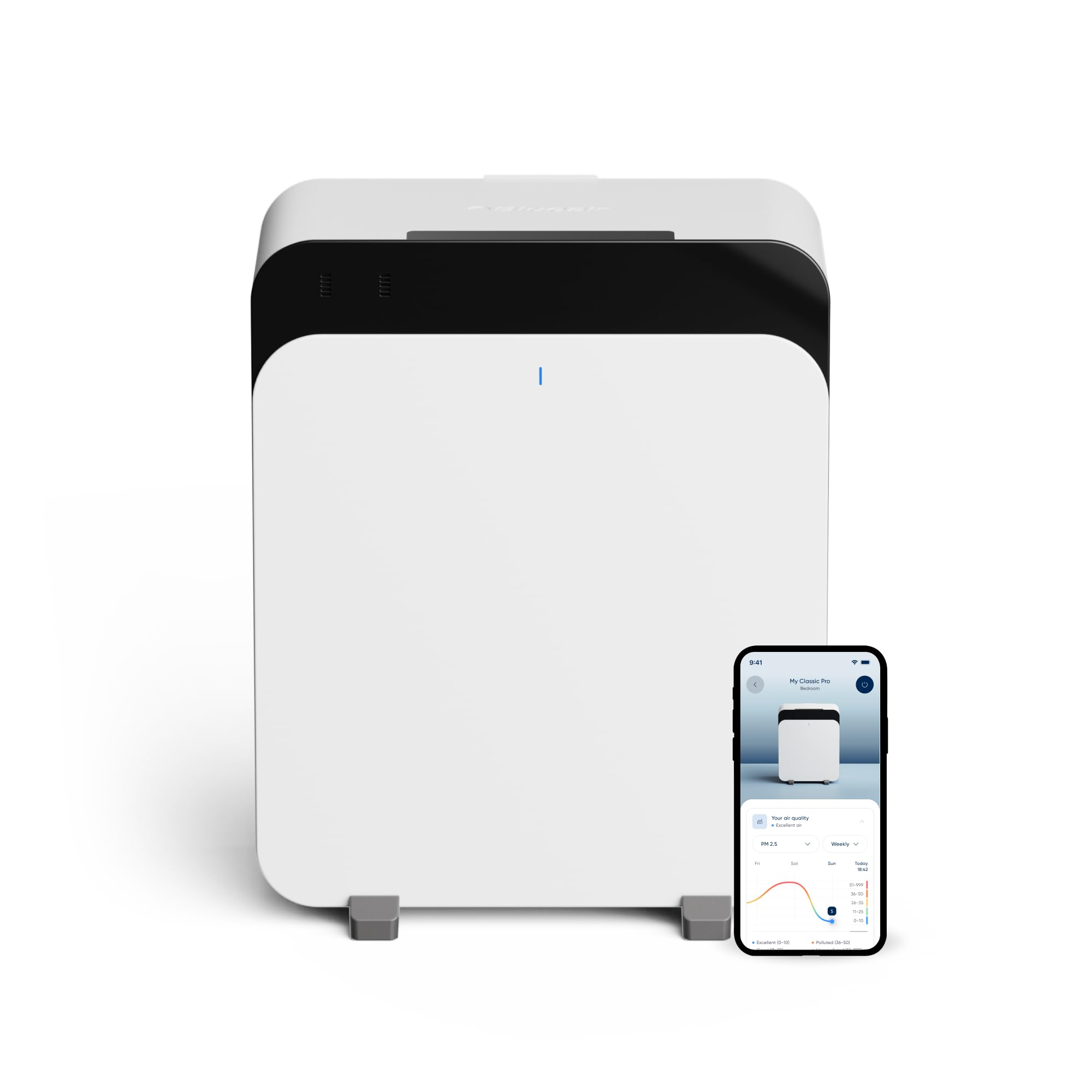
Dual fans, steel housing, and a blue light that sterilizes on a cycle
This is the most heavily built unit on the list, and it is aimed at the largest rooms. A dual fan and dual filter design pulls dirty air in and pushes cleaned air out through two side outlets, cleaning up to a 1,413 sq ft space in 30 minutes or 589 sq ft in 12.5 minutes on high. At 35 pounds in a steel body, it is a permanent fixture rather than a portable machine. The payoff for that weight is durability: the stainless-style steel is built to resist wear, abrasion, and scratching, and it carries up to a 5-year warranty.
The filtration technology is the differentiating piece. HEPASilent dual filtration combines traditional mechanical filtration with electrostatic charge to remove 99.97% of airborne particles down to 0.3 microns, catching smoke, dust, and allergen matter at low noise and low energy. On top of that, HINS Pure technology runs a repeat cycle throughout the day, activating every 10 minutes with a visible blue light for 10 seconds to sterilize, then turning off to conserve its lifetime. It operates within a 405-millimeter wavelength. A 5-color AQI display shows your air quality at a glance, with a numeric reading for detail, plus eco and auto modes, and the app handles schedules, notifications, and filter tracking. Ozone safety is certified by CARB and verified as under 5 ppb by Intertek.
The sensitivity is the trait owners single out most. It senses faint food and smoke odors and ramps up on its own, and it does the same for heavy seasonal pollen. Positioning matters more than most people expect: buyers with it between a kitchen and a living room report it blocks cooking odors from spreading. A recurring point about the look is that it earns its floor space. The honest limitation is the filter schedule: customers note the filter needs changing roughly every year, where some rival brands advertise far longer intervals, and one owner marked this as a four-star rather than five-star point. Below fan setting four it stays quiet, and above that it becomes noticeable but is rarely needed.
Standout strengths
- Dual fan design cleans 1,413 ft² in 30 minutes or 589 ft² in 12.5 minutes on high.
- HEPASilent dual filtration removes 99.97% of particles down to 0.3 microns.
- Steel body with up to a 5-year warranty and ozone verified under 5 ppb.
- 5-color AQI display with numeric readings, plus app scheduling.
What to accept
- At 35 pounds, placement is a decision you only make once.
- The filter needs replacing about yearly, shorter than some rivals advertise.
- Fan settings four and above are noticeably loud.
Made for: a very large room where you want the fastest cleaning and a build that lasts.
Skip this if: you want a lightweight unit you can move between rooms weekly.
Understanding the Specs
CADR (Clean Air Delivery Rate)
CADR is the measured amount of clean air the machine delivers per minute, given in cubic feet. It is usually broken out for smoke, dust, and pollen, because the same fan performs differently against different particle sizes. A higher CADR number means more clean air, faster. When you compare two units, compare the same contaminant column to the same contaminant column, not smoke in one column against pollen in the other, or you will read a false winner.
Micron Filtration Ratings
A micron is a millionth of a meter, and air purifier filters are rated by the smallest particle size they reliably trap. Standard HEPA is commonly rated for 99.97% capture at 0.3 microns, while some units are specified down to 0.3 microns or even 0.003 microns. The smaller the micron number in the rating, the finer the particles the filter is built to hold. Pollen, dust, and pet dander sit in the larger range, while smoke and some chemical particles are much smaller, which is why the micron figure is worth reading carefully.
Decibels and Sleep Mode
Decibels measure how loud the unit runs, and the number that matters for a bedroom is the one at the lowest speed, not the top fan setting. Sleep mode typically drops the fan speed and turns off display lights so the machine does not disturb you or glow in a dark room. A purifier that runs a fixed, modest speed all night is often the better bedroom choice than one that looks impressive on a spec sheet at full blast.
Filter Replacement Intervals
HEPA filters are paper-like and eventually clog, so they get replaced on a schedule, which is the ongoing cost of ownership. Washable filter systems trade that recurring purchase for the labor of cleaning and drying the filters yourself. Neither approach is superior in the abstract; the right one depends on whether you would rather spend money periodically or spend time periodically. Always look at replacement intervals and the number of filters required, because a two-filter machine on a short cycle costs more to run than a single-filter machine on a long one.
FAQ
Will an air purifier actually help with pet hair and dander in a bedroom?
How long does a HEPA filter last before I need to replace it?
Is a washable filter purifier as good as one with disposable HEPA filters?
How large a room can one air purifier really handle?
Why do some air purifiers cost more to run in filters than others?
Do I need auto mode and an air quality sensor or can I just run a fixed speed?
Is a purifier with a higher micron rating always the better buy?
Can I use a third-party replacement filter in my air purifier?
How much noise should I expect at night on the quietest setting?
Will an air purifier clear cooking smoke and kitchen odors?
How long should I run an air purifier each day?
Should I put one purifier in a large open floor plan or several smaller units?
Final Thoughts: The Verdict
For most people, the best air purifiers winner is the Levoit Core 300-P because it does the one thing that keeps a purifier running in a real home — it stays quiet enough to leave on all night while still pushing a verified 143 CFM of smoke-clearing air and refreshing a 1,073 ft² space once an hour. It is small enough to hide in a corner and built for the bedroom first. If a large living area is your problem, reach for the Winix 5520, which handles 1,882 ft² in an hour and drops to 23.5dB at night. And if you never want to buy a paper filter again, the Nuwave Forever covers 2,002 ft² with washable filters and no recurring replacement cost. The Levoit Core 300-P holds the highest rating here at 4.7 stars across thousands of owners, so start there if you are undecided and size up only if your room demands it.
How We Picked
We do not accept paid placement. Every pick is matched to a real buyer and a real use-case; we do not hands-on test units.
Sources & Methodology
Specifications: manufacturer listings and product documentation. Review insights: verified customer reviews, as of September 2026. Pricing: not shown on this page (it changes often); check the current price via the retailer link.
As an Amazon Associate, KitchPrep earns from qualifying purchases. This does not affect which products we feature.
Related Guides
