
Specs are compiled from manufacturer listings and verified buyer reviews and can change over time — please confirm the key details on the product page before buying.
If your basement wall sweats, stains, or grows a musty smell after every hard rain, the fix usually is not a new foundation. Most damp concrete and cinderblock walls stop leaking once they are sealed with the right product for the surface. The tricky part is that “right product” changes depending on whether your wall is bare concrete, painted block, or a below-grade foundation that moves with the seasons. Some sealers sit on top like a thick rubber skin, others soak deep inside the concrete and leave no film at all.
I’m Mohammad Maruf — the founder and writer behind KitchPrep. This guide is built by comparing the manufacturers’ published specifications and the patterns across verified customer reviews, so you get each pick’s real strengths and trade-offs instead of marketing spin.
Three specs decide which sealer wins: coverage per gallon (how many square feet one can seals), cure time (how long it needs to harden), and hydrostatic pressure limits (how much water push from the soil it can hold back). For a damp cinderblock wall that needs a paint-style finish, the INSL-X WaterBlock is the pick most owners point to. The best basement wall sealer for you depends on if you need a rubber membrane, a tintable coating, or a deep clear sealer.
Our Picks at a Glance

How To Choose The Best Basement Wall Sealer
The product you pick has to match the job in front of you. A sealer designed for a driveway slab is not the same as one built for a vertical interior wall that faces groundwater pressure. Start by identifying your wall type, then match the sealer’s coverage and cure time to how much square footage you need to cover.
Film-forming versus penetrating sealers
Film-forming sealers sit on the surface and cure into a rubbery or paint-like skin. They are the better choice when water is pushing hard against a block wall. Penetrating sealers soak into the concrete and leave no film, which keeps the natural look but relies on the surface staying dry enough to absorb the liquid.
Matching the sealer to your wall surface
Bare cinderblock, poured concrete, brick, and stone all absorb differently. A sealer that beads water on a smooth poured wall may soak straight through porous block. Check the compatible material list on each product before you buy, and confirm whether your wall has been previously painted, since a film-forming product will not bond to a failing old coating.
Understanding hydrostatic pressure limits
Hydrostatic pressure is the force of water pushing against your wall from the outside soil. Some sealers publish a pressure rating they can withstand, while others do not. If you get standing groundwater after storms, a sealer with a stated pressure rating is the safer bet than a general-purpose product.
Quick Comparison
| Model | Best For | Finish | Coverage Per Gallon | Container Size | Amazon |
|---|---|---|---|---|---|
| Ames Block & Wall Liquid Rubber★ Best Overall | Whole-basement block walls | White rubber film | — | 1 Gallon | Amazon |
| Rust-Oleum Seal-Krete OriginalBest Value | Sealing bare floors and masonry | Clear | — | 1 Gal | Amazon |
| OAIEGSD Silane Siloxane Penetrating SealerClear Finish Pick | Clear protection for garage and driveways | Transparent, no shine | 150 – 350 sq ft | 128 fl oz | Amazon |
| UGL Drylok Waterproofer | Patching leaks in block and masonry | Gray gloss, sandy texture | 75 sq ft | 1 Gallon | Amazon |
| BEEST CS-9500 Concrete Sealer | Salt and freeze-thaw protection | Clear/natural | 125 – 200 sq ft (two coats) | 1 Gallon | Amazon |
| Ames Blue Max Liquid Rubber | Below-grade walls that flex | White elastic membrane | — | 1 Gal | Amazon |
| INSL-X WaterBlock Acrylic Masonry Waterproofer | Painting interior wet basement walls | Semi-gloss white | 75 to 125 sq ft | 1 Gallon | Amazon |
| AQUA-X 11 Clear Penetrating Sealer | Natural-look floors and patios | Dries clear | 100-400 sq ft concrete / up to 800 sq ft stone | 128 fl oz | Amazon |
| MasonryDefender All Purpose Sealer | Large outdoor masonry jobs | Clear, natural look | 90-150 sq ft | 2.5 Gallon | Amazon |
In‑Depth Reviews
1. Ames Block & Wall™ Liquid Rubber Waterproofer Multi-Purpose Coating & Sealant – 1 Gallon – Perfect to Use As Concrete Sealer and Waterproofer for Basements and Foundations – Made in The USA, White
Our pick — over 4.5★ from 300+ verified ratings; the strongest balance of quality and price.
The thick white rubber coating that fills cracks and stays put on block walls
Pick this one if you are sealing an entire block basement or foundation wall and you want a white finish that hides old stains. It pours out of the can as a thick liquid rubber and cures into a tough skin. The wall it leaves behind is not just sealed; it also looks clean and bright, which is why so many owners repaint rather than just waterproof.
What wins people over is the sealing performance — by far the trait most praised in owner reviews. It fills cracks and bonds to the block, and it goes on smooth enough that you can roll it without fighting runs. As one buyer put it: “Used 10+ years. Waterproofed entire basement.” That kind of long track record is rare in this category, and it explains why the Ames name keeps coming up when contractors recommend a rubberized coating. The coverage is generous too, and buyers report it cleans up easily with water before it cures.
The catch is the thickness. It goes on like cake frosting, and if you lay it on too heavy in one pass it will not dry properly, so plan on two thinner coats instead of one thick one. Water resistance and adhesion both split opinion among owners — some walls hold beautifully, while a few note the coating does not grip a dusty or damp surface. Prep the wall clean and dry and you sidestep most of that. At 9.3 pounds, this is also one of the heavier one-gallon cans on the list, so budget your energy for the whole wall, not just the first corner.
What owners love about it
- Thick rubber formula fills cracks and locks out water on block walls
- Low odor, so it is comfortable to work with indoors
- Dries tough and white, leaving walls looking fresh
- Water cleanup before it cures keeps the job tidy
What to plan around
- Needs two thin coats; one heavy coat can stay tacky
- Will not bond to dusty or wet surfaces without prep
- Heavier can to haul than most gallon-sized competitors
Reach for this if: your whole block wall needs sealing and you want a white rubber finish that hides old water stains.
Look elsewhere if: your wall is unpainted concrete you want to keep looking like bare concrete, or you only have light seepage to stop.
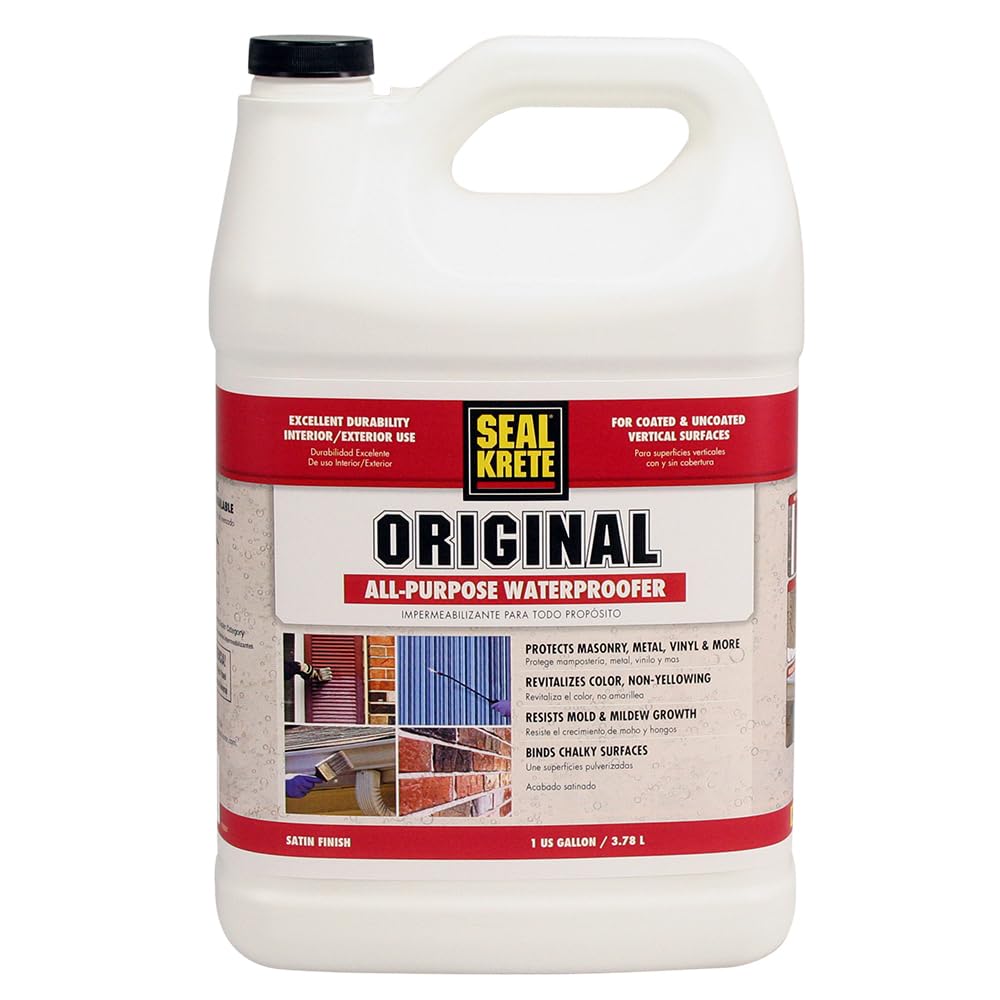
2. Rust-Oleum 100001 Seal-Krete Original All-Purpose Waterproofer, 1 Gal
The clear, do-everything sealer that handles masonry, metal, and painted surfaces
This is the pick for someone who wants one can that does several jobs — a basement floor today, a chimney or patio next weekend. It goes on clear, so it seals without changing the look of the concrete underneath. Owners mention: “I have used Seal Crete concrete sealer for years. Its a high quality product that lasts several years.” That reputation is the reason it keeps landing on recommended lists.
The quality of the finish is what owners praise most, followed closely by how easy it is to apply. It is thin enough to run through a garden sprayer, and it dries almost clear, which makes spray overlap hard to see and the job forgiving. It binds chalky surfaces and strengthens mortar joints, so brick and stucco get real benefit here.
Two honest caveats. On horizontal surfaces like a patio, the sealer stays tacky for days even when it looks dry, so it picks up dirt if you walk on it too soon. And durability divides owners: some get years out of it, while a few report the coating chipping. Treat it as a strong primer and top-coat partner rather than a permanent rubber skin, and it performs exactly as it should.
Versatility in a can: seals new or painted masonry, binds chalky surfaces, strengthens mortar joints, and even protects painted metal, so one product covers most repair-day surfaces.
Watch the dry time: it can stay tacky for days on a horizontal surface, so on floors and patios plan to stay off it longer than the label suggests.
The right can if: you are sealing concrete, brick, or stucco and want a clear finish that keeps surfaces looking original.
Not your pick if: you need a thick rubber membrane to fight heavy groundwater pushing through a block wall.
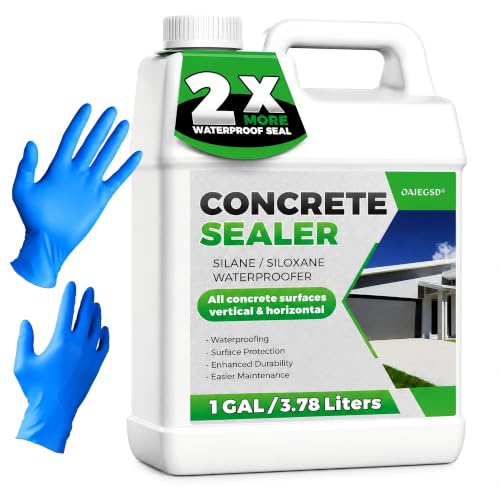
3. 1 Gallon Concrete Sealer, Water-Based Silane Siloxane Penetrating Sealer
A silane-siloxane sealer that soaks in deep and leaves stone looking untouched
A silane-siloxane sealer is a clear liquid made of two silicone compounds that soak into masonry and block water from the inside out. It leaves no film, so anything you seal — a concrete pad, a stone hearth, decorative pebbles — keeps its original color and texture.
Applying it is straightforward. Spray it on, let it soak, and wipe off any excess. Customers note it revives faded brick and stone without a wet or glossy look, and the 128-ounce jug is meant to cover 150 to 350 square feet. It repels rain and snowmelt, which matters on exterior pads and walls that take weather, and it cures without any solvent smell.
Here is the honest split. On porous surfaces like garage pads and stone, owners usually get a solid water-beading result. On dense tile grout, results fall off a cliff — one owner tried four applications with no effect at all, and the grout still darkened when wet. If your problem is a poured concrete basement wall, this is a good clear sealer. If your problem is heavy groundwater behind block, look at the film-forming picks on this list instead.
Why it earns its place
- Zero-VOC formula is safe to spray indoors with no strong odor
- Leaves masonry looking completely natural — no shine, no wet look
- Water beads on concrete pads and stone within a day
- 128 fl oz jug covers a large area of surface
Where it comes up short
- Struggles to seal dense, non-porous surfaces like tile grout
- Needs the surface clean and dry for the liquid to actually soak in
- Will not bridge cracks or stand up to active water pressure
Get it for: sealing garage floors, patios, and stone where you want zero color change and no smell.
Skip it when: you are trying to stop a wet cinderblock basement wall, where you need a film rather than a penetrating soak.
4. UGL – Drylok – Gray – Basement & Masonry Waterproofer – for Stopping Water Leaks & Dampness – Interior – Exterior Latex Base – Sandy Texture, Tintable 1 Gallon

The tintable gray coating that rolls over rough cinderblock and holds a tight bond
If your leak is a specific spot — a pond edge, a storage building floor, a sagging garage wall — this is the product built for that repair. It is a latex-base waterproofer with a sandy texture that grips rough masonry. The gray color is a real feature here because it hides the patchwork that comes with sealing block, and you can tint it if you want a different finish.
Two things stand out from owner experience. First, it is thick, which is what lets it fill and bridge cracks rather than run off the wall. Second, it rolls on easily with a nappy roller, and most people get better results with two coats than one — a common note is that the second coat goes on smooth and quick. It cures in 24 hours and covers about 75 square feet per gallon, so a single can handles a focused repair rather than a whole basement.
The trade-off is that it does not spread far. If you are sealing a whole block wall, expect to buy more than one can, and budget the extra time for that second coat. On the plus side, it is paintable, blocks moisture, and bonds hard, which is why owners keep coming back to it — including one who fixed a pond leak with it and then reused the same product on a storage building floor.
Built for rough surfaces: the sandy texture and thick body roll easily over cinderblock and masonry, and it cures in 24 hours to a hard, paintable finish.
Small-job coverage: at roughly 75 square feet per gallon, one can covers a repair, not a whole wall, so plan for extra cans on a full basement.
Choose it when: you are patching a specific leak in block or masonry and want the coating to grip a rough surface.
Think twice if: you need one can to cover a whole basement wall — this one is sized for repairs, not whole-room coverage.
5. Concrete Sealer – 9500 Ready to Use, 1 Gallon Covers up to 150-400 sq ft (Single Coat)| Penetrating Paver Sealer, Salt & Water Repellent| DOT Approved Silane/Siloxane for Stone, Patio, Driveway, Brick
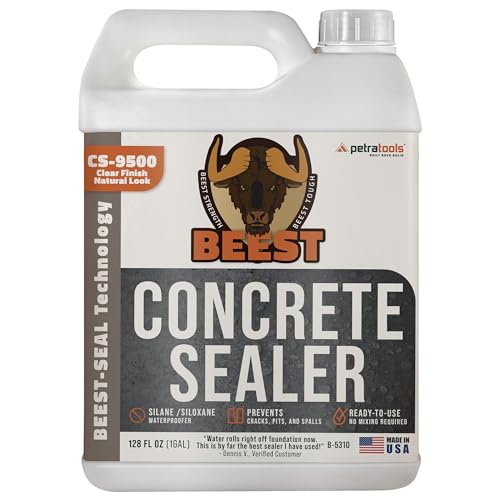
A DOT-approved sealer built to beat deicing salt and freeze-thaw cracking on driveways and pavers
This is the pick for a driveway, walkway, or patio that faces winter salt and repeated freezing. The formula is a water-based silane-siloxane blend that soaks in, repels water, and leaves no film. It meets Department of Transportation guidelines for salt and freeze-thaw protection, the benchmark for driveways and walkways that face winter.
Coverage and finish both score well with owners. A single coat covers 125 to 200 square feet when applied as directed, and the clear formula keeps pavers and stamped concrete looking almost brand new. Applying it is simple — spray it on and spread it with a broom or roller. On a garage floor, a paint roller lays it down evenly, and it seals small cracks while it soaks in.
Where it gets honest is durability under real weather. Most owners see water bead nicely for the season, but the coating can wear off under extreme conditions — one buyer in a hurricane found the sealant stripped completely and needed a fresh coat. Plan on reapplication for heavy-traffic or storm-exposed surfaces, and stick to two coats on porous pavers where a single pass may leave a few spots dry.
Standout strengths
- DOT-approved for salt and freeze-thaw protection on driveways and walkways
- Clear finish keeps pavers and stone looking natural
- 125 to 200 square feet per gallon for two coats
- Broom, roller, or sprayer application all work well
Where it asks more of you
- Severe weather can strip the coating and require reapplication
- Porous pavers may need two coats for even coverage
- Not a film-forming product, so active water pressure will still find a path
Best used on: driveways, walkways, and patios that take road salt and hard freezes every winter.
Not the right tool for: a wet basement wall where you need a rubber membrane, not a clear soak-in sealer.
6. AMES Blue Max White Liquid Rubber Waterproofer,1 Gal

A stretchy white rubber coating that moves with a foundation instead of cracking
Foundations move. They swell in wet seasons and shrink in dry ones, and a rigid coating will crack along those seams. Blue Max solves that with a rubber membrane that stretches up to 900% with the surface, so it flexes instead of splitting. That flexibility is the reason this product is aimed specifically at below-grade and insulated concrete foundations and basements.
The waterproofing result is the thing owners rave about. On leaky basement block walls, on a Bilco door seam, and on a sub-grade wall that got damp after hard rain, the coating held and no water came through. It brushes, rolls, or sprays on vertical or horizontal surfaces, cleans up with water, and stays paintable once it cures. One owner even used it as a primer under a white elastomeric roof coating and got strong adhesion.
Plan for the work. This is a thick, scoop-it-out-of-the-can product that needs two coats with 24 hours between them, so a full basement is a weekend project, not an afternoon one. Owners are split on durability, with some reporting it still holding after years and others finding it did not last on their wall — usually a sign of poor surface prep. Clean the block, let it dry, and give it the full cure time between coats.
The flex story: 900% elongation means the coating stretches and contracts with the wall, which is exactly what a moving foundation needs to stay sealed.
Patience pays off: allow 24 hours between coats and keep the wall clean and dry — rushed prep is the most common reason reviewers point out it falling short.
Pick this if: your basement is below grade, your foundation moves with the seasons, or you are sealing an insulated concrete form wall.
Choose a different sealer if: you want a one-coat job, since this thick rubber needs two passes and real dry time in between.
7. INSL-X WaterBlock Acrylic Masonry Waterproofer Paint, White, 1 Gallon

The waterproof paint that shrugs off 12 psi of water pushing through a wall
If water is actively coming through your wall and not just making it damp, this is the product aimed at your problem. It is an acrylic waterproofing paint that withstands up to 12 psi of hydrostatic pressure, the force of groundwater pushing through a basement wall. It is also alkali resistant up to pH-13, so the alkaline concrete in a basement wall will not break down the coating.
Effectiveness is the trait owners cite most, with quality close behind. On damp walls, on basement floors, and on leaks at the wall base, the coating does what it claims — one long-term user summed it up simply: “It works!… No more water leaking in, and we have had a few good long heavy rains since the second coat and everything is dry.” It also holds up where cheaper brands failed, which is why it gets mentioned in comparison with the big hardware-store names. A gallon covers 75 to 125 square feet and dries fast.
There is a limit, and the honest word is that this is not a foundation repair. It stops minor to medium wall and floor leaks, but it will not fix footer flooding or solve a major structural drainage problem — no sealer will. Apply it only when the surface and air temperature is between 50°F and 90°F. It also covers less ground per gallon than a penetrating sealer, so count your square footage before you commit.
Where it wins
- Withstands up to 12 psi of hydrostatic pressure on leaking basement walls
- Alkali resistant up to pH-13, so it holds on alkaline concrete walls
- Bright white semi-gloss finish leaves a clean, painted look
- Fast drying, so the job is quick between coats
Good to weigh first
- 75 to 125 square feet per gallon — a small footprint per can
- Needs surface and air temperature between 50°F and 90°F to cure
- Stops minor to medium leaks, not footer flooding or major drainage issues
Reach for it when: water is visibly leaking through a block or concrete wall and you want a white painted finish when the job is done.
Save your money on it if: you have standing groundwater or a structural drainage issue — this seals the wall, it does not fix the source.
8. 1 Gal. AQUA-X 11 Clear Penetrating Concrete Sealer & Stone | Natural Finish | Professional Grade | Indoor & Outdoor | Fast Dry and Long Lasting Protection

The one-coat clear sealer that dries fast enough to walk on in an hour
This is for the owner who wants a natural finish and a fast job. It is a water-based penetrating sealer that soaks into concrete and stone, repels stains and water, and leaves no film or shine. Because it is a single-coat product, you spray it once and wait — two hours for vehicle traffic or one hour for foot traffic, which is the shortest cure window on this list.
Coverage is where this one pulls ahead of the field. A single gallon covers 100 to 400 square feet on concrete and up to 800 square feet on stone, so a large patio or driveway takes far less product than a film-forming sealer would. It dries with no harsh odor and low VOCs, which makes it comfortable to use indoors — no mask required for most spaces. On a stained concrete patio, owners have seen it dry clear, bead water, and even repel citronella oil stains.
Longevity and yield are the honest caveats. Protection typically lasts 2 to 4 years before you reseal, less in harsh environments. And coverage in the real world can fall short of the advertised number — one owner applied three gallons and covered only about 600 square feet, a lower yield than the label suggests. Extremely porous surfaces may also need more than one coat. Budget generously and you will not run short mid-job.
Speed and reach: one coat, a one-hour walk-on time, and up to 800 square feet per gallon on stone make this the most efficient pick on the list for a flat surface.
Real-world yield: shoppers say that porous concrete soaks up more than the label estimate, so buy extra rather than risk stopping short.
Go with it for: a large patio, driveway, or stone surface where you want a natural look and a quick one-coat application.
Pass on it if: you need to seal a vertical block wall that is actively leaking — a penetrating sealer soaks in, it does not form a waterproof skin.
9. MasonryDefender All Purpose Brick Stone & Concrete Sealer – Transparent Penetrating Waterproof Coating for Outdoor Masonry Surfaces – 2.5 Gallon

The big 2.5-gallon jug for whole-wall and whole-driveway jobs in one buy
When your job is large — an entire brick wall, a stone porch base, a full driveway — this is the format that makes sense. The 2.5-gallon jug holds 320 fluid ounces and produces a clear, penetrating silane-siloxane seal that keeps masonry looking natural while blocking water. It is sprayed on with a pump-up garden sprayer, which makes wide coverage fast.
Sealing performance and water resistance are the top two things owners praise here. On clay brick walls, water beads up as expected, and it has solved problems other fixes missed. Owners describe using it on flagstone, stamped concrete, and aggregate alike, and they report it sprays more evenly than other brands. One buyer solved long-standing moisture rising in an old brick home — the sealer went on the outside and stopped the plaster bubbling that every previous repair had failed to fix.
Two things to know before you buy. First, shake it hard before use — this formula turns clumpy and can clog your spray nozzle if it sits. Second, discoloration divides owners, with some reporting white stains on certain surfaces; test on a hidden patch first. At 22.3 pounds the jug is heavy to carry and pour, so set up a work station rather than hauling it up a ladder. Coverage is roughly 90 to 150 square feet per gallon.
Why it works for big jobs
- 2.5-gallon jug covers a large wall or driveway in one purchase
- Clear penetrating finish preserves the natural look of brick and stone
- Sprays evenly through a pump-up garden sprayer
- Handles concrete, brick, patio stone, limestone, granite, and sidewalks
Before you start
- Must be shaken hard or it clumps and clogs the spray nozzle
- Some surfaces show white stains, so test a hidden patch first
- At 22.3 pounds the jug is awkward to carry and pour
Ideal for: a big outdoor masonry job where you want clear coverage on brick, stone, or concrete and enough product to finish without a second order.
Not the one for: a small indoor basement wall or a repair where a 2.5-gallon jug is far more product than you will ever use.
Understanding the Specs
Coverage Per Gallon
This tells you how much surface a single gallon seals, measured in square feet. It is the number that decides how many cans you need. A product listed at 75 square feet per gallon will cover a small repair wall, while one rated at 400 square feet per gallon handles a large floor. Always buy for two coats, since most sealers perform better applied twice, and remember that porous surfaces soak up more liquid than smooth ones — a real-world yield can be lower than the label estimate, so it often pays to buy slightly more than the math says.
Hydrostatic Pressure Rating
Hydrostatic pressure is the force of water pushing against a wall from the soil outside. When a product publishes a pressure rating in psi (pounds per square inch), it is telling you how much of that push it is built to hold back. A product rated to withstand a specific psi is doing real work against a wet wall, while a clear penetrating sealer with no such rating is better suited to repelling rain and spills. If your wall only gets damp, a lower-rated sealer can suffice; if water actively trickles in, look for a stated pressure rating.
FAQ
Should I use a film-forming rubber sealer or a clear penetrating sealer on a basement wall?
How many coats does a basement wall sealer need?
Can I apply a basement wall sealer over damp concrete or paint?
How long does a basement wall sealer last before I need to reapply?
Will a clear sealer change the color of my basement wall?
Can I use the same sealer on a basement floor and a basement wall?
Is a penetrating silane-siloxane sealer better than a waterproofing paint?
How much sealer will I need to cover a standard basement wall?
Do these sealers have a strong smell I should worry about indoors?
What temperature do I need to apply a basement wall sealer?
Final Thoughts: The Verdict
Across the board, the best basement wall sealer is the Ames Block & Wall Liquid Rubber because it does what a thick rubberized coating does best — fills cracks, seals block, and leaves a bright white finish that holds up for the long haul, and owners mention it still working after a decade. If you need to fight active water pushing through a wall, grab the INSL-X WaterBlock — it is rated to withstand 12 psi of hydrostatic pressure from groundwater. And for a large outdoor driveway or patio where you want a clear finish and one-coat speed, the AQUA-X 11 is the one to reach for. Whichever you choose, prep the surface clean and dry, and give the sealer its full cure time before you call the job done — that step is where most basement sealing projects succeed or fail.
How We Picked
We do not accept paid placement. Every pick is matched to a real buyer and a real use-case; we do not hands-on test units.
Sources & Methodology
Specifications: manufacturer listings and product documentation. Review insights: verified customer reviews, as of September 2026. Pricing: not shown on this page (it changes often); check the current price via the retailer link.
As an Amazon Associate, KitchPrep earns from qualifying purchases. This does not affect which products we feature.
Related Guides
