
Specs are compiled from manufacturer listings and verified buyer reviews and can change over time — please confirm the key details on the product page before buying.
The short answer: if you want a ductless heat pump that plugs into the wiring you already have, the Mountman 9000 BTU is the one most buyers end up happiest with. A 110V mini split (a ductless air conditioner and heater that runs on standard household voltage instead of a 220V circuit) is the rare HVAC purchase that does not force you to call an electrician before you call an installer. That single detail — 110V or 120V power — is what separates this whole group from the wall-mounted units that need a dedicated 220V line run from your panel. Every pick below runs on that standard outlet voltage, so you can cool a garage, a sunroom, a converted pop-up camper, or a small house without tearing into your breaker box.
I’m Mohammad Maruf — the founder and writer behind KitchPrep. This guide is built by comparing the manufacturers’ published specifications and the patterns across verified customer reviews, so you get each pick’s real strengths and trade-offs instead of marketing spin.
Here is what to keep in mind before you buy: square-footage ratings can vary wildly between models, so match the number to your actual room — and the efficiency rating on a 110v mini split is the strongest clue to how much it will cost you to run all summer.
Our Picks at a Glance
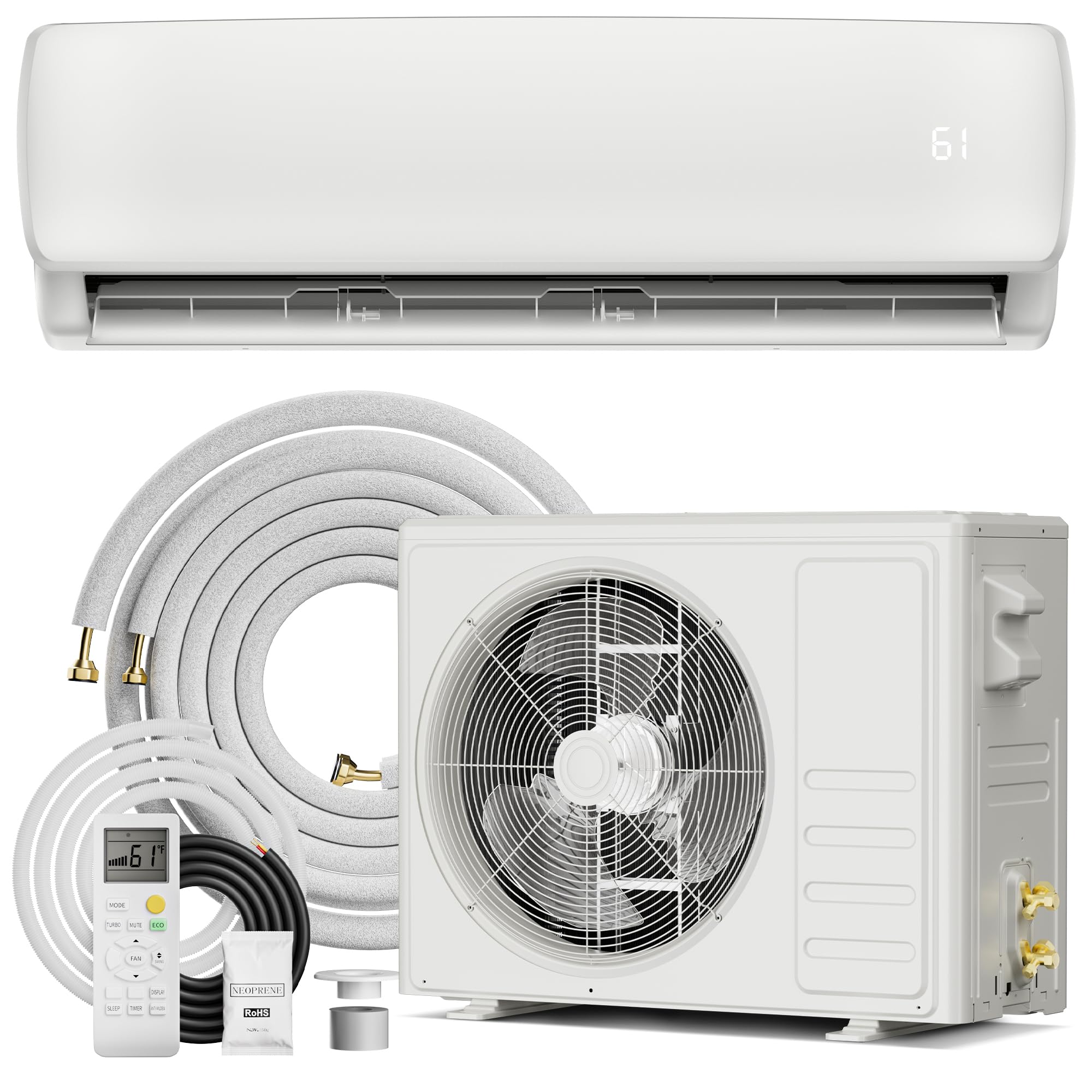

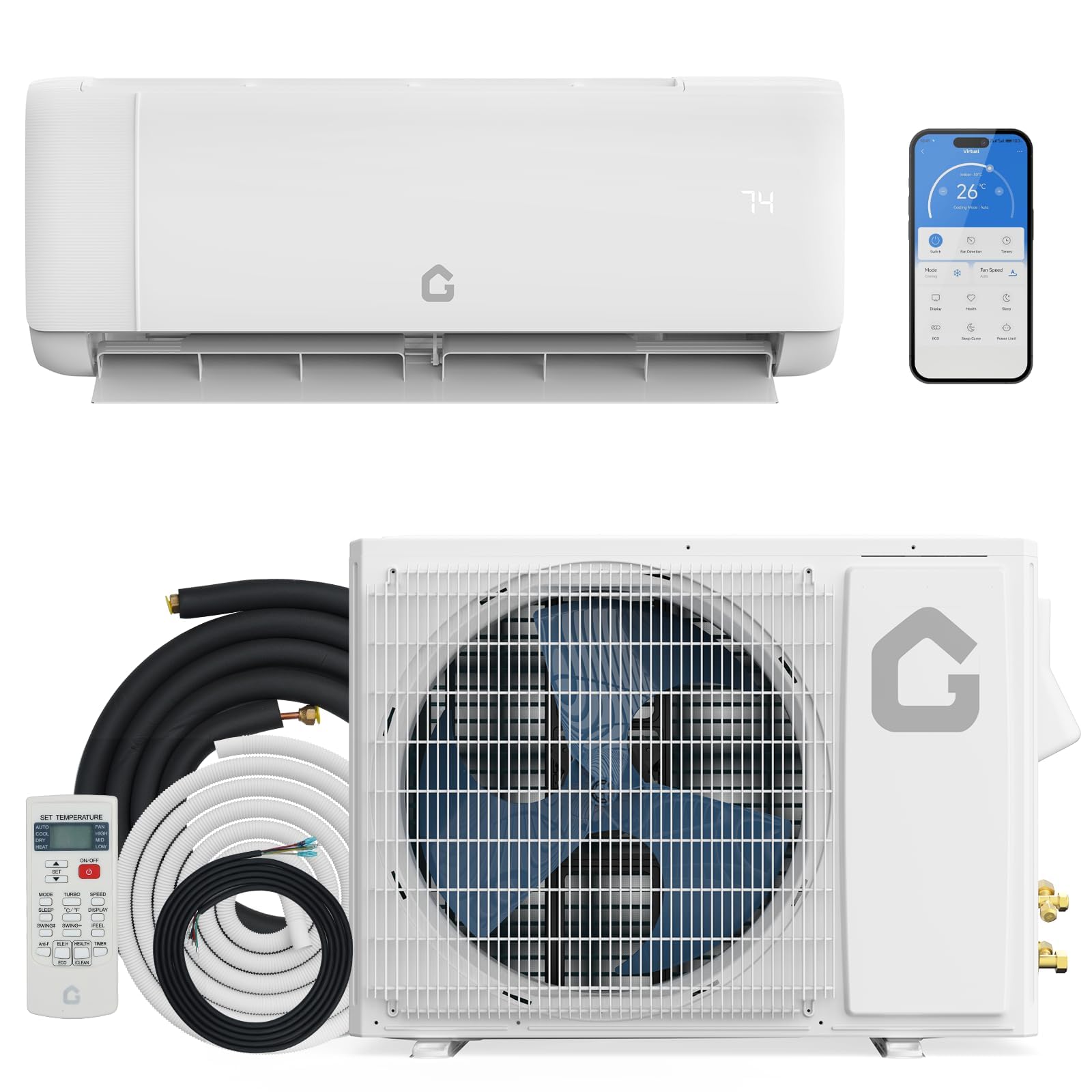
How To Choose The Best 110V Mini Split
Buying a mini split is not like buying a fan or a space heater. It is a permanent appliance that gets bolted to your wall, drilled through with copper lines, and wired into your home. Get the voltage and the room size right and it will quietly run for years. Get them wrong and you will be fighting it every season.
Match the BTU rating to your actual room
BTU (British Thermal Unit — a measure of how much heat the unit can pull out of a room per hour) is the first number to check. A 9,000 BTU unit suits a small bedroom or a one-car garage, while a 12,000 BTU unit handles a larger garage or an open living space. Look at the listed floor area in square feet, not just the BTU number, since that is what the maker actually rated the unit for. Oversizing wastes money and cycles the compressor too often; undersizing means the unit runs flat out and never quite catches up.
Understand the voltage question
A 110V mini split draws power from a normal household circuit, so in most cases you plug it in rather than hiring an electrician to run a new 220V line. A 115V or 120V unit is the same family — the labels are just different ways of naming the same standard outlet voltage. This is the biggest practical reason people choose these units: no dedicated circuit, no panel work. One thing to plan for is a breaker sized for the load, which is why knowing your unit’s amp draw matters before you install.
SEER2 and what it means for your bill
SEER2 (Seasonal Energy Efficiency Ratio, second edition — the higher the number, the more cooling you get per unit of electricity) is the number that decides your running cost. A 19 SEER2 unit and a 24.5 SEER2 unit can both cool the same room, but the higher-rated one generally uses less power to do it. If you plan to run the unit all summer, the efficiency gap is the one spec worth paying a little more for. Inverter compressors (which vary their speed instead of switching fully on and off) are what allow these efficiency ratings in the first place.
Heating performance and cold-weather limits
Every unit here is a heat pump, meaning it can reverse and heat your space too. But they are not all cut out for the same winters. Some handle outdoor temperatures well below freezing, and a few stop being effective once it gets properly cold. If you are heating a garage in a cold climate, check the rated low outdoor temperature before you buy, and note that some makers sell an add-on heating belt for the coldest months.
Quick Comparison
| Model | Best For | Cooling Power | Coverage | Efficiency | Amazon |
|---|---|---|---|---|---|
| Mountman 9000 BTU★ Best Overall | Garages and workshops | 9000 BTU | 450 sq. ft. | 19 SEER2 | Amazon |
| Confortotal 12000 BTUBest Value | Whole-home DIY cooling | 12000 BTU | 550 sq. ft. | — | Amazon |
| Garvee 12,000 BTUTop Performer | Large rooms, efficiency seekers | 18000 BTU | 750 sq. ft. | 22 SEER2 | Amazon |
| EXNOS 12000 BTU | Sunrooms and coffee trailers | 12000 BTU | 750 sq. ft. | 19 SEER2 | Amazon |
| ROVSUN 12000 BTU | Alexa/Google smart homes | 12000 BTU | 750 sq. ft. | 20 SEER2 | Amazon |
| COSTWAY 11500 BTU | Hot-climate cabins | 11500 BTU | 750 sq. ft. | — | Amazon |
| TOSOT Cosmo 9,000 BTU | Bedrooms and offices | 9000 BTU | — | 22 SEER2 | Amazon |
| DREO 12000 BTU | Premium small spaces | 12000 BTU | 700 sq. ft. | 20 SEER2 | Amazon |
| DELLA Motto Series 12000 BTU | Tiny houses and barns | 12000 BTU | 550 sq. ft. | 20 SEER2 | Amazon |
| Senville LETO 12000 BTU | Business and residential use | 12000 BTU | 700 sq. ft. | — | Amazon |
| TOSOT Aoraki 12,000 BTU | Cold climates and fresh air | 12000 BTU | 750 sq. ft. | 24.5 SEER2 | Amazon |
In‑Depth Reviews
1. Mountman 9000 BTU Mini Split AC/Heating System
Our pick — 4.5★ from 300+ verified ratings; the strongest balance of quality and price.
The garage cooler that runs on the outlet you already have.
The Mountman is the one to buy if you have a two-car garage, a workshop, or a home office that turns into an oven by July. It is a 9,000 BTU heat pump rated for 450 square feet and runs on 110/120V standard household current. That means you are not budgeting for a 220V line. A garage in North Texas at 95°F and 70% humidity gets pulled down to the mid-70s at an 80°F setting with very little fuss, which is the kind of real-world result that makes the 450-square-foot rating feel honest rather than optimistic.
What wins people over here is the build quality relative to the price. It does not feel like an entry-level box. Its rotary-scroll inverter compressor modulates speed instead of cycling on and off, and it draws roughly 12A at max. It carries six modes (cool, heat, dry, fan, Sleep, and ECO) with four fan speeds, and Sleep mode drops the indoor unit to 26dB. Energy use is genuinely thrifty: one long-term owner running three of these plus an 18,000 BTU unit for a whole house says his power bill dropped by more than half compared with window units.
The catch is the paperwork. The manual has a mixed reputation — some units ship with a genuinely detailed guide covering torque specs, wiring diagrams, and vacuum steps, while others arrive with a poorly translated booklet that leaves you hunting YouTube. The pre-charged line set is also short and metric, and at least one buyer had to re-flare a 6mm tube end that broke. If you are comfortable with basic tools and a vacuum pump, none of this stops you. If you want a plug-and-play appliance, budget for an installer.
What Earns The Top Spot
- 9,000 BTU covers 450 sq. ft. — a real two-car garage number, not a marketing stretch
- 110/120V power with no electrical upgrade, which is the whole point of this category
- Sleep mode runs at just 26dB, quieter than most people talking
- ECO mode is claimed to cut energy use by up to 30%.
- Runs about 12A max, so you know exactly what your breaker needs to handle
Where It Tests Your Patience
- The included manual is inconsistent — some copies are excellent, others are rough
- Line set is short and uses metric fittings, which can mean a re-flare job
- Long-term durability is simply unproven on a newer model
Buy it if: you want the best all-round 110V unit for a garage or workshop and you are happy doing the install yourself with a little YouTube help.
Look elsewhere if: you need coverage well past 450 square feet — step up to a 12,000 BTU model instead.
2. Confortotal 12000 BTU Mini Split Air Conditioner and Heat Pump 110V
More cooling than the Mountman for a few dollars more.
If the Mountman’s 450 square feet feels a size too small, this Confortotal is the natural step up. It pushes 12,000 BTU across a rated 550 square feet — noticeably more coverage than the 450-square-foot Mountman, and exactly the kind of jump that makes a garage cool in ten minutes instead of thirty. It is a 1-ton heat pump with WiFi built in, and it works with Alexa and Google, so you can start it from the car on the way home. The plug-in design means no electrical work, which is the reason most people buy this model in the first place.
Owners who install a pair of these to cool a whole house report the units hold temperature steadily without cycling, run quietly both indoors and out, and cost less to run than a central air system. The dehumidifier mode is a real workhorse too — one owner watching a hygrometer saw a room drop from 60% to 50% humidity in about an hour, which matters enormously in a garage or basement that feels clammy. Setup is friendly for a confident DIYer: you still need a vacuum pump, a hole saw, and a 45-minute evacuation of the lines, but the wiring is simply a plug into a 110V outlet.
The honest caveat is that the heat side is not bulletproof. While most owners get strong heat, there are reports of units that blow cool air in heat mode, and a couple of buyers needed a replacement. There is also the manual — it is thin, there is no wall-plate template included, and the remote’s buttons do not light up, so adjusting it in a dark room means finding a lamp first. None of that changes the fact that this is a lot of cooling for the money. It just means you should treat it as a DIY unit rather than a turnkey appliance.
The real draw: 12,000 BTU and a 550-square-foot rating at a value-tier price, with WiFi and voice control included as standard rather than as an upsell.
Reach for this if: your space is bigger than a small garage and you want smart-home control without paying a premium brand tax.
Think twice if: reliable heating is your top priority in a genuinely cold climate — you will want to compare against a model with a rated low-temperature heating spec.
3. Garvee 12,000 BTU Mini Split Air Conditioner & Heater
A higher efficiency rating than the Mountman, and a buyer who swears it beat a brand that cost twice as much.
The Garvee’s headline is its efficiency. At 22 SEER2 it is a step above the 19 SEER2 Mountman, which means the same cooling for less electricity over a season. It is rated for rooms up to 750 square feet — a big jump on the Mountman’s 450 and the Confortotal’s 550 — and it also runs on 115V, so it slots into the same standard outlet approach. For a large living room or a converted space that runs all day, that efficiency edge is the reason to pick this over the cheaper options.
The standout owner story here is a direct comparison: someone who had bought a better-known brand for roughly twice the money, then installed this Garvee, found it cooled a 30-foot by 40-foot uninsulated room while the pricier unit struggled in a room a third the size. That is one buyer’s experience, not a guarantee, but it tells you what the 22 SEER2 and app-enabled control are capable of when set up right. Operating noise drops to 23dB in mute mode, which is quieter than the 26dB of the Mountman’s sleep setting, and the five modes include eco and sleep. Installation takes about two hours for someone who is handy.
What you should know before ordering: like most of this group, the lines arrive pre-charged and you still need a vacuum pump and a set of gauges to do the job properly — a kit that runs over a hundred dollars if you do not already own one. Thinner copper lines than some competitors mean you should be a little careful during installation. And several owners note you cannot switch the display from Celsius to Fahrenheit at first glance, though the fix is simple once you know it.
Where it wins: 22 SEER2 efficiency and a 750-square-foot coverage rating put it above the cheaper 19 SEER2 units on running cost, while the 23dB mute mode edges out the Mountman on quiet.
Suited to: large rooms and buyers who plan to run the unit hard all summer and want lower electricity bills over the long haul.
The one gotcha: the Celsius-to-Fahrenheit display swap is confusing until you look up the button combo — factor in a few minutes with the manual on day one.
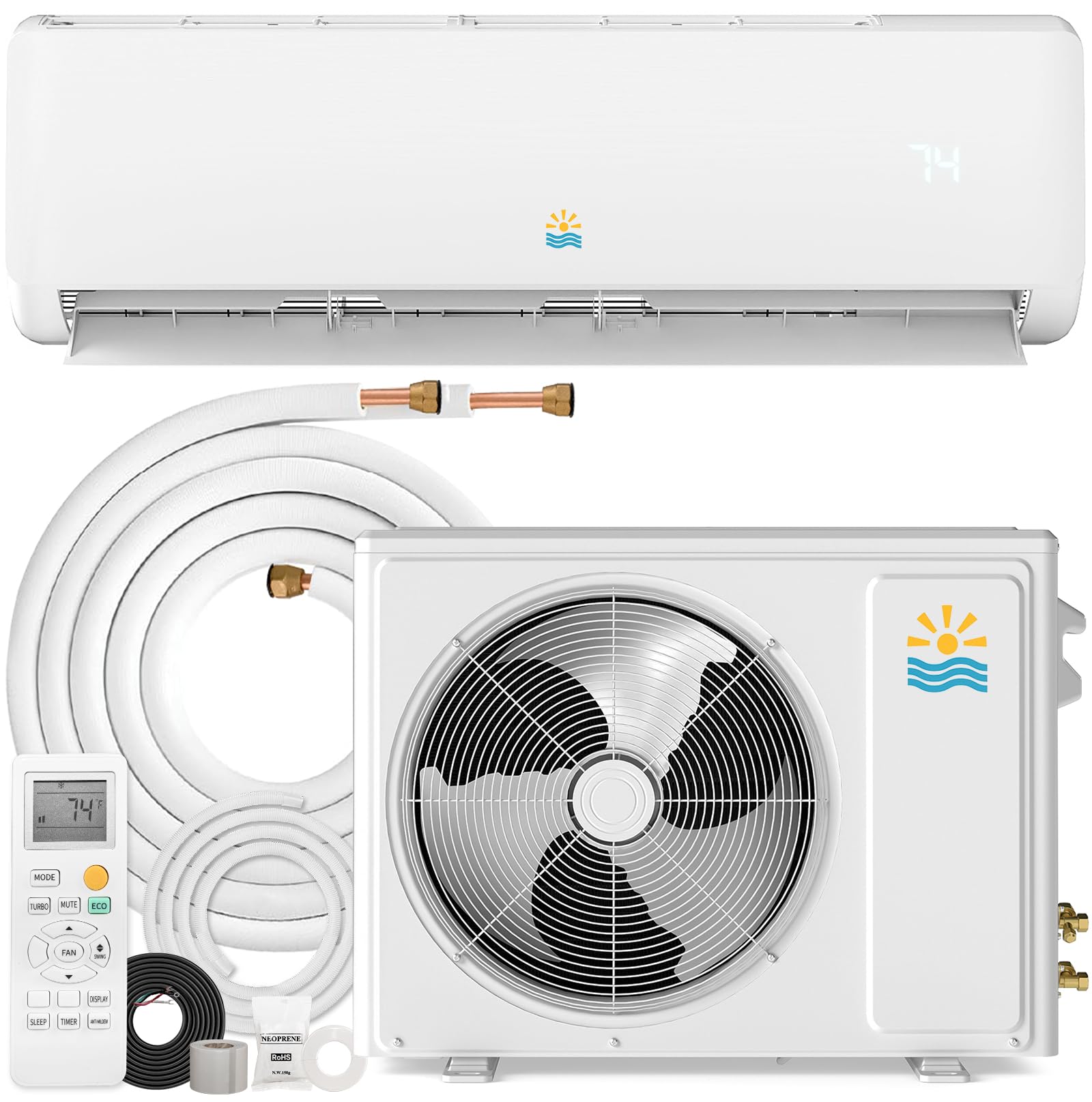
4. EXNOS 12000 BTU Mini Split AC & Heating System
Built for spaces central air cannot reach, like a hot sunroom or a food trailer.
The EXNOS is the one to look at if your problem room is a sunroom, a home addition, or a garage that your central system simply does not serve. It delivers 12,000 BTU of cooling and 12,500 BTU of heating for rooms up to 750 square feet, with a temperature range of 61°F to 88°F indoors. The heating number matters — it is slightly higher than the cooling number, which tells you this unit is built for year-round use rather than summer-only duty. It runs on a 19 SEER2 rating and uses inverter technology to vary compressor speed instead of cycling on and off.
The best evidence for how this performs comes from a coffee trailer owner running a 16x8x8 trailer with the serving window open. Even with that constant heat load, it kept the trailer cool and ran far quieter than the rooftop unit it replaced. A separate owner cooling a 15×16 sunroom reports just several minutes from startup to comfort, and another notes it handles 400 to 700-plus square feet when the mercury hits the mid-90s. The install is doable for a non-HVAC person with a bit of patience, though you still need to rent or buy a vacuum pump and gauges.
One detour worth flagging: the outdoor unit is the most vulnerable part in shipping, and there are reports of it arriving with a dent. In one of those cases, the seller responded with a partial rebate, which is a decent sign for after-sales support. Functionally, buyers have reported no real weak spot once the unit is running — it holds steady temperatures, runs quietly, and one owner says he has not noticed any change in daily power usage after a month of use. Just check the box carefully on delivery and take photos if the condenser is scuffed.
Why it stands out: a genuine dual-purpose machine with 12,000 BTU cooling and 12,500 BTU heating, aimed squarely at the rooms your main system forgets.
Choose this for: sunrooms, converted garages, and any space where you need both cooling and heating in one wall unit.
Inspect on arrival: the outdoor condenser can pick up shipping damage — photograph the packaging if it looks rough at the door.
5. ROVSUN 12000 BTU WiFi Enabled Mini Split Air Conditioner & Heater

The one HVAC pros keep buying for their own garages.
When people who install mini splits for a living choose the same model for their own home three times over, that is worth paying attention to. This ROVSUN is a 12,000 BTU inverter heat pump with a 20 SEER2 rating and 12,600 BTU of heating capacity. It handles spaces up to 750 square feet, offers four-way airflow, and — the part that makes it a category favorite — it runs on 115V, so no new wiring is needed. It also adds 20 SEER2 efficiency, app control, and voice control through Alexa and Google Assistant, all in one package.
The praise here skews technical. An HVAC tech who has been in the trade since 2018 rates the 12K unit’s build as good or better than competing brands and runs it 24/7 in an Arizona garage without any loss of efficiency or increase in noise. Another tech who has worked in the field since 1974 runs three of them to heat and cool a 2,500-square-foot Victorian and notes that 20 SEER2 efficient operation with no new wiring made the choice easy. The parts quality shows: it comes with a 28dB mute mode, a 24-hour timer, a dehumidifier mode, and a pre-charged condenser with a 16.4-foot line set and signal cord included.
Two things to know before you buy. First, each unit ships in two separate boxes, and they can arrive on different days — so do not start the install until both show up. Second, plan on a vacuum pump, and double-check the adapter fitting, because more than one buyer had to track down the right connector. The included power cord is not part of the kit, so you will need that too. Get past those logistics and this is a hard unit to fault.
Trust the trade: when installers pick a model for their own homes and run it continuously for a year without drift, that is stronger evidence than any spec sheet.
The right call for: smart-home owners with a 550 to 750 square foot space who want app and voice control plus the efficiency of a 20 SEER2 unit.
Budget for extras: the kit lacks a power cord and ships in two boxes, so plan for both before scheduling your install.
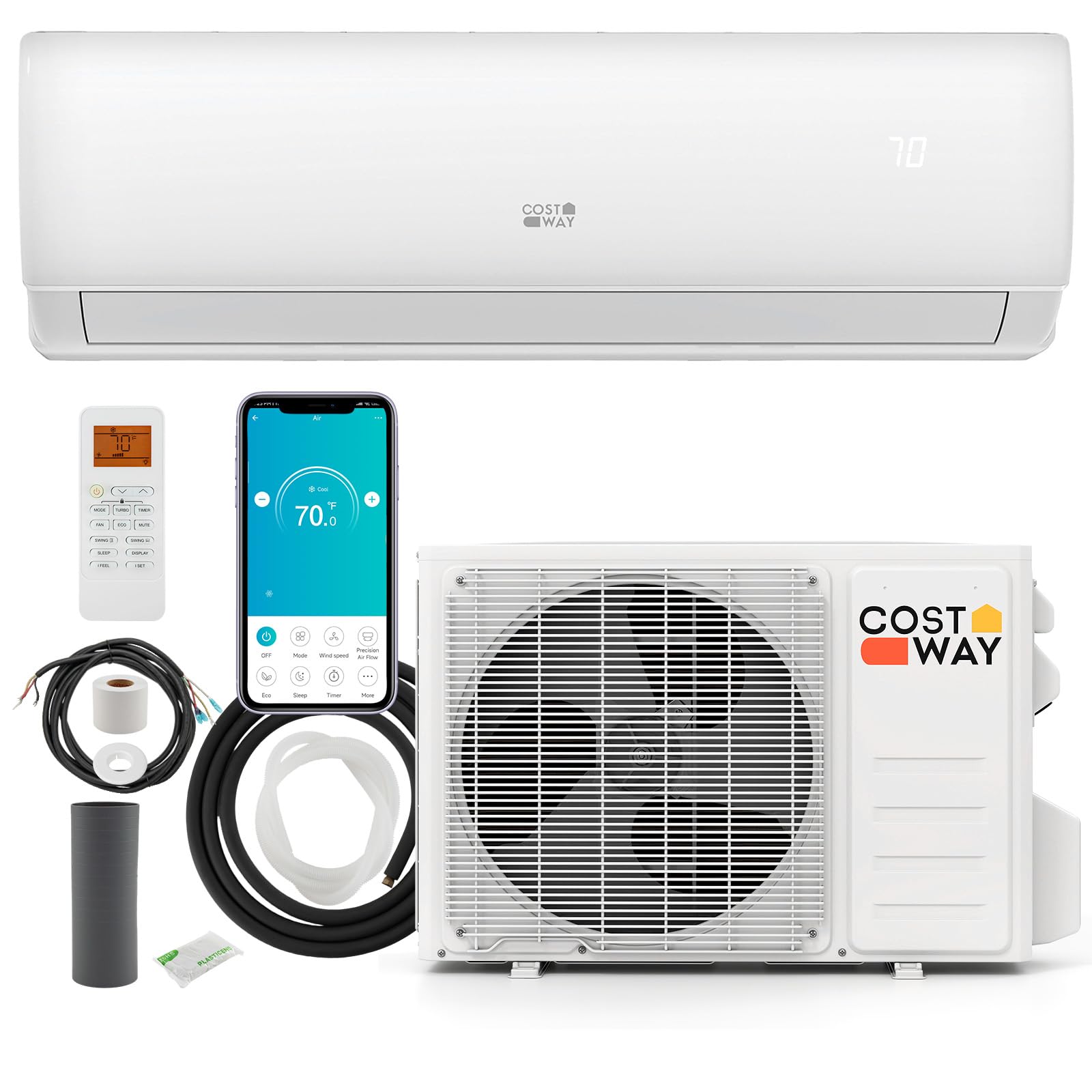
6. COSTWAY 11500 BTU Mini Split Air Conditioner
A cabin and tiny-house specialist that keeps running when the thermostat climbs past 120°F.
If you are cooling a cabin, a tiny house, or a workshop in a punishing climate, this COSTWAY earns its spot on durability alone. It is a 11,500 BTU inverter system rated for up to 750 square feet, and it is built to keep working in conditions that stop lesser units. The chassis heating prevents the outdoor unit from freezing, and it can still cool at 122°F ambient and heat down at 5°F. It uses R32 refrigerant, is compliant with ETL and AHRI, and has a GWP rating of 675 on its refrigerant — the environmentally cleaner choice.
The control package is broader than most at this level. You get WiFi, Alexa and Google compatibility, a remote with a digital display, and an unusually deep feature list: seven operating modes covering auto, cool, heat, dry, fan, sleep and ECO, plus seven fan speeds, 4D auto swing, a child lock, an I Feel mode, and a Health mode. The indoor unit also runs a 133°F self-cleaning cycle and uses a washable filter that needs a quick rinse rather than a replacement. That is a lot of comfort control for a unit at this price point.
One thing to weigh honestly: a buyer cooling a 750-square-foot uninsulated cabin found the 115V airflow dropped when adjusting the vents and needed a 15-to-25A breaker where a 220V unit would have used a smaller one. This is not a fault, it is just the trade-off of 110V power in a hardworking application — plan the breaker accordingly and keep the vents where they work. Others report good cooling, reliable temperature holding, and long-term durability expectations, so the overall picture is positive with the caveat that you should size your breaker generously.
Built for the heat: cooling at 122°F and heating at 5°F, with seven modes and seven fan speeds, makes this a genuine all-season unit for tough climates.
A strong fit for: cabins, tiny houses, and workshops in extreme climates where the outdoor unit has to survive real temperature swings.
Size your breaker: the 115V design can pull more current than you might expect, so confirm your circuit before install.
7. TOSOT 9,000 BTU Mini-Split Air Conditioner

A 0.75-ton whisper machine that disappears into a bedroom wall.
The Cosmo is aimed at the smallest rooms in the house — bedrooms, home offices, and anywhere you want cooling that you never actually hear. At 9,000 BTU and a 0.75-ton capacity, it does not pretend to cool a garage. But its efficiency is real: the Cosmo series carries a SEER2 rating of up to 22 and is claimed to save up to 62% on energy costs over baseline. It runs between 22dB and 36dB, which puts its quietest setting right at the edge of what a human ear can register in a still room.
The build quality is where this one earns its label. It is a rebranded Gree unit — Gree is one of the largest air conditioning manufacturers in the world — and owners describe the improved build, finish, and tech over earlier generations. It cools in outdoor temperatures up to 122°F and heats as low as -13°F, so it earns its keep in winter too. App control runs through the Gree+ app with voice support for hands-free adjustments, and there is a small but genuinely useful detail: the LED display can be turned off, which is what you want in a dark bedroom. Fast shipping and a strong reputation for customer service round it out.
The recurring gripe is the paperwork. Installing this yourself is described as moderately difficult, and the written instructions are thin — owners lean on YouTube for the line-set and vacuum steps. The specs sheet even gets the nut sizes wrong, so bring crow’s feet in 3/4-inch and 7/8-inch, and buy an R134A vacuum pump adapter to be safe. If you are paying a professional, none of this matters. If you are doing it yourself, watch the videos first.
Why it fits a bedroom: 22dB at its quietest, a display you can switch off, and a 22 SEER2 rating is exactly the package a light sleeper in a warm room is looking for.
Best for: buyers who need one room cooled and heated with almost no audible footprint and want efficiency to match.
Do this first: skip straight to the install videos — the printed instructions are the weak link, and the nut sizes listed are wrong.
8. DREO 12000 BTU Mini Split AC/Heating System
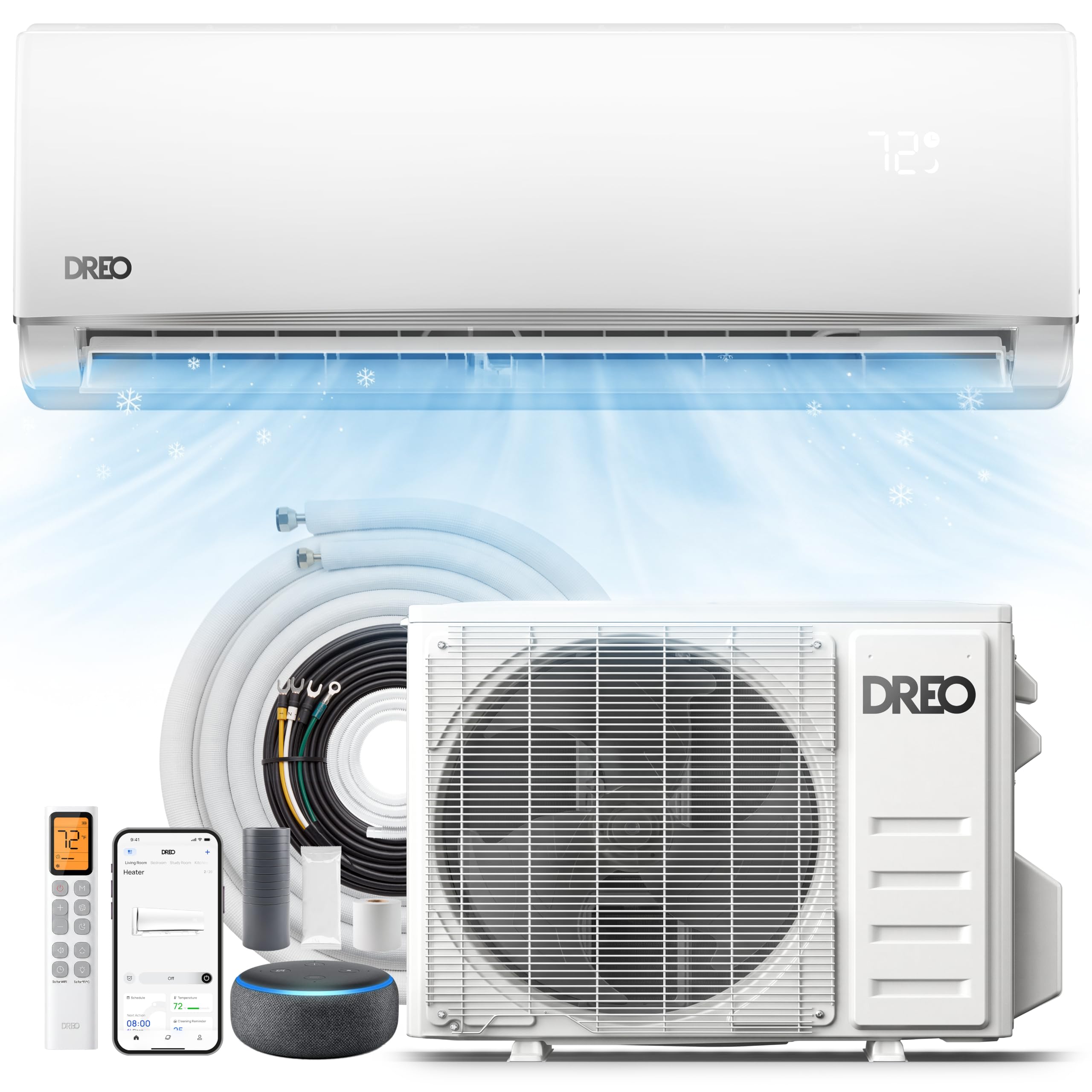
A premium small-space unit with a warranty ladder that rewards going pro on the install.
The DREO is the pick for buyers who want a step up in build and support rather than the cheapest working unit. It is a 12,000 BTU inverter heat pump rated for 700 square feet, running on 115V at 20 SEER2 with the lowest annual energy consumption here at 947 kWh per year. It runs on four modes (cool, heat, dry, fan), holds a 61°F to 88°F range, and drops as low as 28dB, with a 4-way auto swing for even airflow. The compressor is an advanced inverter design, and ECO mode is claimed to cut energy consumption by up to 40%..
What sets the DREO apart is how it is built to last. The copper tubes carry a graphene anti-corrosion coating to resist corrosion over time, and the unit operates reliably from 5°F up to 127°F. The warranty structure tells you the manufacturer means it: 12 months limited as standard, with 2-year and 5-year key component coverage available through professional installation and product registration. Owners with a garage full of DREO gear describe installing it as straightforward for a competent DIYer, though a vacuum pump, gauges, and real AC knowledge are still required. In a hot-climate test, one owner ran the 12,000 BTU version in 90 to 100°F heat for a month without a hiccup, covering roughly 1,000 square feet.
The honest trade-off is what you pay for that quality. DREO sits at the higher end of the mid-range, and even a long-time DREO owner who has owned about ten of the brand’s products calls it on the price versus cheaper competitors. What you get in return is premium construction, the anti-corrosion coating, and that warranty ladder. It is also a slightly tighter coverage rating than some 12,000 BTU competitors at 700 square feet, so a large open garage is not the best use of this unit — a small house, a container home, or a finished office is.
The Case For Paying More
- Lowest annual energy consumption here at 947 kWh per year
- Graphene anti-corrosion coating on the copper tubes is a genuine longevity feature
- 5-year key component warranty available with professional install and registration
- Runs reliably from 5°F to 127°F with intelligent defrost protection
- 12,000 BTU for 700 square feet, with a 28dB low-noise floor
Before You Commit
- Positioned at the higher end of the mid-range on cost
- The 700-square-foot rating is smaller than some 12,000 BTU rivals
- The 5-year warranty depends on professional installation and registration
- Install still needs a vacuum pump and gauges, so a full DIY job is not for everyone
Worth it for: buyers who want premium build, the longest warranty coverage on this list, and the lowest running cost, and are happy to use a pro for the install.
Not your unit if: you are chasing the lowest upfront number or need to cool an oversized open space.
9. DELLA Motto Series 12000 BTU 20 SEER2 115V Mini Split AC

among the most-reviewed 115V mini splits, and among the most divisive on the heat side.
The DELLA Motto is the unit that shows up again and again in tiny-house and garage conversations, and with good reason: it is a 12,000 BTU, 20 SEER2, 115V heat pump with a 550-square-foot rating, ETL listed, AHRI certified, and pre-charged with R-32 refrigerant for cleaner indoor and outdoor air. It draws a maximum fuse size of 20A, so you know what your breaker has to handle. It runs quietly at just 27 dBa and includes a full 16-foot copper line set with 6.56 feet of outlet drain pipe — a genuinely generous kit.
The feature depth is where it shines. The Motto carries a 4D airflow system that moves air up, down, left, and right, an I Feel mode, a 24-hour timer, sleep mode, an ECO mode, multiple fan speeds, a turbo function, and cooling, heating, dehumidifying, and dry modes. One owner runs these for climate control in a tiny house and finds them reliable and quick to dehumidify, while others report substantial reductions in their electric bills compared with portable AC units. The remote sensor reads room temperature at the remote rather than the wall unit, which fixes a common complaint about mini splits feeling too warm or too cool depending on where you are sitting.
The caveat worth taking seriously is durability on the heat side. The unit is rated for heating down to 5°F outdoor temperature, and one buyer with four DELLA units had a compressor fail after about a year of use. That is a single case across a large body of owners, and DELLA support is reported as responsive, but for a product that lives outside in the elements, it is worth flagging. Also note that the lines need to be vacuumed by a professional during installation, and the line set can be too short if you have unusually high ceilings, so measure before you commit.
The build story: R-32 refrigerant, a 20A max fuse, and a 16-foot line set with drain pipe show this is a thoughtfully equipped unit, not a stripped-down box.
Matches well with: tiny houses, barns, and insulated garages where you want a well-equipped 12,000 BTU unit with smart-airflow features.
Weigh the risk: there are reports of compressor failure around the one-year mark, so factor in the warranty and plan for a pro install.
10. Senville LETO Mini Split Air Conditioner

The household name that thousands of owners trusted to beat the heat.
Senville is the brand most buyers have already heard of, and the LETO is the model that built that reputation. It is a 12,000 BTU, 1-ton 4-in-1 heat pump rated for 700 square feet, combining AC, heat pump operation down to 5°F, dehumidifier, and fan with turbo. It carries a DC Inverter that is UL Listed and AHRI Certified, works with Alexa, and comes with a full installation kit including a 16-foot line set and communication wire, pre-loaded with refrigerant for up to 25 feet. It also backs the hardware with a 5-year parts and 5-year compressor warranty, which is among the strongest you will find here.
This is a unit that adapts to wildly different uses. One buyer cools a 23-foot by 23-foot garage with it. Another hangs one in a bedroom and reports it drops the temperature quickly while drawing about half a kilowatt-hour per hour, and holds 70°F indoors at 95°F outside in a Texas Gulf Coast garage with 80% outdoor humidity. The dry mode is a real strength for humidity control — one installer uses an external thermostat to run dry mode to keep a garage at 50 to 53% relative humidity, and uses it as freeze protection in winter. It is also quiet enough that the distinction between indoor and outdoor noise levels almost disappears.
The most important thing to understand before buying is the warranty condition. The 5-year coverage typically requires a licensed HVAC technician to install the unit and the installation to be documented — a self-install may void the protection. The Senville LETO also requires a vacuum pump and gauge set, and at least one buyer notes it needs proper line evacuation or you will lose the refrigerant charge. If you want warranty-backed performance and the strongest safety net, use a pro. If you are purely chasing the best performance per dollar on a DIY install, it is the same excellent unit without the cover.
Where it earns its name: 5-year parts and 5-year compressor coverage, a UL Listed inverter, and an AHRI certification put it at the top of the support ladder.
The safe choice: buy this if you want a widely-used unit with strong warranty backing and a pro install for confidence.
Know the rule: the 5-year warranty generally requires a licensed HVAC technician to do the install and document it — check that condition before you go DIY.
11. TOSOT 12,000 BTU 24.5 SEER2 Aoraki Series Mini-Split
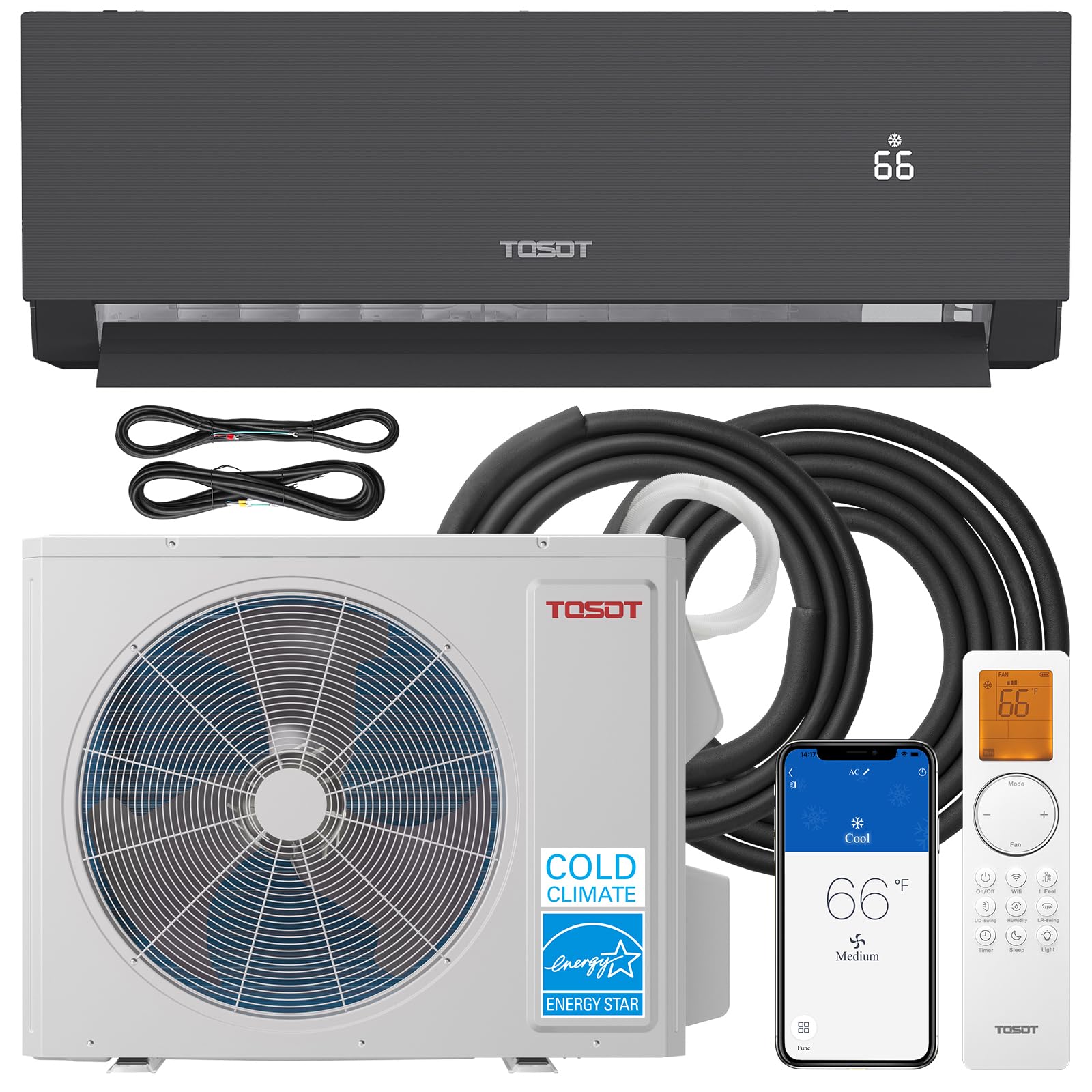
The highest efficiency rating here, and the only one you can pair with a fresh-air system.
The Aoraki Series is the premium end of this list, and its 24.5 SEER2 rating is the highest you will find among these picks. That 24.5 SEER2 rating is claimed to cut energy bills by up to 35% versus a 16 SEER2 unit., and the rating is backed by ENERGY STAR, COLD CLIMATE, ETL, and AHRI certifications, plus potential tax credit eligibility. It delivers 12,000 BTU of cooling and heating for rooms up to 750 square feet, runs on 110-120V, and is aimed squarely at buyers who want both efficiency and extreme-weather capability.
Climate performance is the Aoraki’s centerpiece. It works in temperatures from -22°F to 122°F, and features a dual electric heating belt that keeps it functioning in genuinely severe cold — a huge advantage over models that stop delivering heat below freezing. For specific scenarios like server rooms, it can cool in ambient temperatures as low as -20°F. It is also quiet — 20dB indoors, among the lowest here, with outdoor night-mode noise reduced to 52dB. The standout feature is that TOSOT claims to be the first in the US to launch a ductless mini-splitwith an optional ERV integration, meaning you can pair it with a separately purchased energy recovery ventilation accessory that recycles energy from exhaust air to pre-condition incoming fresh air. If fresh air without losing your cooled air matters to you, nothing else here does that.
The proof is in how owners use it. One buyer installed one in a 24×40 garage and dropped it from 94°F to 70°F in about two hours after an HVAC tech evacuated the lines and the R32 refrigerant was released. A plumbing contractor swapped out an old 1980s heat pump for one of these and uses the ERV function via a MODE and iFeel combination to clear cooking smoke, mushroom spores, and paint fumes — a level of air handling that no other unit on this list can match. Setup and packaging are also strong, with one owner describing double-boxed honeycomb packing that protected the unit in transit. The app works globally, so if you are cooling a rental or a second home from another state, control is straightforward.
Two honest notes before you buy. The ERV is a separately purchased accessory and needs additional wall vents, so it adds cost and complexity beyond the base unit. And while the base mini-split has strong owners’ backing, there is one reported issue with the ERV’s replaceable HEPA filter being hard to source — it does not appear in the TOSOT store on Amazon or on the TOSOT website, so you should confirm filter availability before you commit to the ERV path. On the mini-split itself, delivery can come in multiple packages and the outdoor condenser has arrived dented for at least one buyer, so inspect on arrival.
Why it leads on specs: a 24.5 SEER2 rating, the highest here, paired with an operating window from -22°F to 122°F and a dual electric heating belt for serious cold-climate duty.
The right pick for: buyers in genuinely cold climates who want the highest efficiency available, plus the option to add fresh-air ventilation later.
Plan for the extras: the ERV is a separate accessory that needs its own wall vents, and its HEPA filter can be hard to find — verify before you commit.
Understanding the Specs
BTU and square feet
BTU (British Thermal Unit, the amount of heat a unit can remove per hour) is your headline cooling number. A 9,000 BTU unit tends to suit a small bedroom or one-car garage, while a 12,000 BTU unit is generally aimed at a larger garage or open living space. The square-foot rating listed beside each unit is the maker’s own estimate, and those estimates can differ widely even between units with the same BTU figure — a 12,000 BTU unit here is rated anywhere from 550 to 750 square feet. Always match the square-foot number to your actual room, and if your space is uninsulated or has big windows, size up.
SEER2 and running cost
SEER2 (Seasonal Energy Efficiency Ratio, second edition) measures how much cooling you get from each unit of electricity, so a higher number means lower running costs. The units here range from 19 SEER2 up to 24.5 SEER2, and that gap can add up over a full summer of daily use. If you plan to run your mini split constantly, the higher-rated unit is often worth the extra upfront. Inverter compressors are what make the higher ratings possible — instead of a hard on-and-off cycle, they vary their speed to match demand, which is also why the quietest units on this list stay so quiet.
FAQ
What is the difference between 110V, 115V, and 120V mini splits?
Can I install a 110V mini split myself, or do I need an HVAC professional?
How much square footage will a 12,000 BTU mini split actually cool?
Will a 110V mini split really heat my space in winter?
Do 110V mini splits need a dedicated circuit?
How loud are these mini splits in a bedroom?
Does the pre-charged condenser mean I can skip the vacuum pump?
Can I run a mini split on solar or off-grid power?
Which is better, a 9,000 BTU or a 12,000 BTU mini split?
Do these mini splits need a wall plate template or mounting hardware?
Final Thoughts: The Verdict
For most buyers, the 110v mini split winner is the Mountman 9000 BTU — it delivers 9,000 BTU across 450 square feet on standard 110/120V power, runs at 26dB in sleep mode, and carries the rock-solid 4.5-star backing that makes it the safest bet in the group. If you need more coverage than 450 square feet, the Confortotal 12000 BTU gets you 550 square feet with WiFi and Alexa built in. For buyers in seriously cold climates, the TOSOT Aoraki is the one to reach for — its 24.5 SEER2 rating works from -22°F to 122°F, and it is the only pick here that can be paired with a fresh-air ERV system.
How We Picked
We do not accept paid placement. Every pick is matched to a real buyer and a real use-case; we do not hands-on test units.
Sources & Methodology
Specifications: manufacturer listings and product documentation. Review insights: verified customer reviews, as of September 2026. Pricing: not shown on this page (it changes often); check the current price via the retailer link.
As an Amazon Associate, KitchPrep earns from qualifying purchases. This does not affect which products we feature.
Related Guides
