
Specs are compiled from manufacturer listings and verified buyer reviews and can change over time — please confirm the key details on the product page before buying.
Rain pooling at your door and sun blasting your entryway are exactly what a fixed awning stops. The right one is sized to cover your opening and built from a material that survives the seasons. The Awntech Houstonian leads this list because it is the only model here with published 115 MPH wind and 40 PSF snow-load ratings — numbers that tell you it is engineered for real storms, not just decorative trim.
I’m Mohammad Maruf — the founder and writer behind KitchPrep. This guide is built by comparing the manufacturers’ published specifications and the patterns across verified customer reviews, so you get each pick’s real strengths and trade-offs instead of marketing spin.
Here is how to pick the best fixed awnings for your entryway, with honest takes on durability, wind ratings, and what installation really involves.
Our Picks at a Glance

How To Choose The Best Fixed Awnings
A fixed awning stays up year-round, so your choice today is one you will live with for years. Unlike retractable fabric models, these don’t roll away in a storm, so the material and the mounting system carry all the weight of your decision.
Material is the first fork in the road
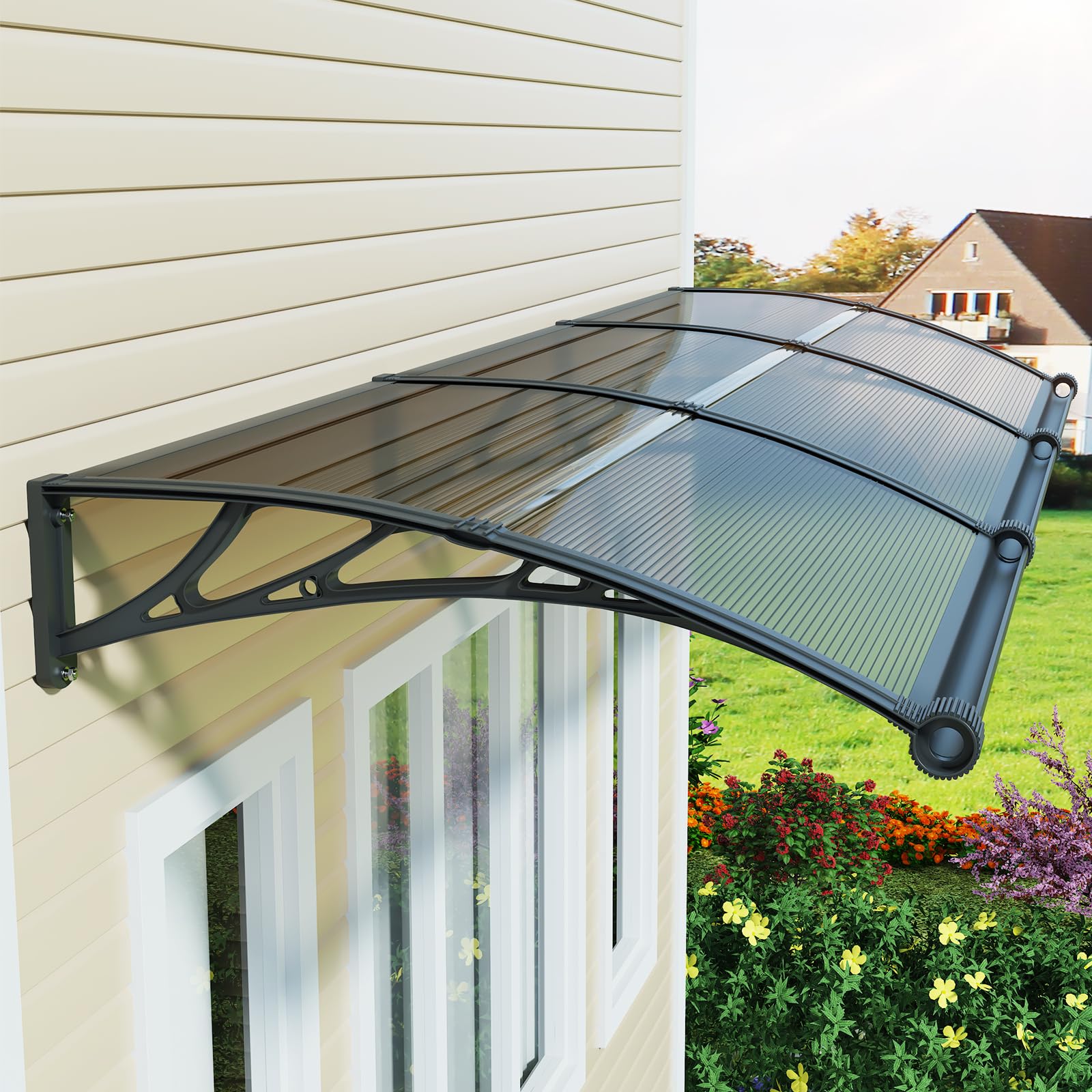
Metal awnings, usually powder-coated galvanized steel, bring a permanent, architectural look and shrug off hail and falling branches. Polycarbonate panels let light through while blocking UV, keeping a porch bright instead of cave-dark, but buyers report that “plastic” frames from some brands feel less reassuring than a full steel build.
Read the wind and snow numbers before you buy
Some manufacturers publish real test data, like a 115 MPH wind rating or a 40 PSF snow-load rating, which tells you the awning was engineered for brutal conditions rather than just decorative porch trim. If you live in a snow belt or an exposed hilltop, skip models that don’t state a wind or snow number.
Mounting is the part buyers underestimate
No awning works if it cannot mount to your specific wall. Check the mounting surfaces the manufacturer lists, whether that is wood, brick, stucco, or concrete. Most of these units are heavy and need two people to lift into place safely.
Quick Comparison
| Model | Best For | Width | Depth | Material | Amazon |
|---|---|---|---|---|---|
| Awntech Houstonian★ Best Overall | Snow-belt durability | 44 inches | 24 inches | Galvanized Steel | Amazon |
| NEBAIKA 40x120inBest Wide Coverage | Extra-wide door coverage | 120 inches | 40 inches | Polycarbonate + ABS | Amazon |
| GUANSU-CN 48x60inMost Versatile | smooth window cover | 59 inches | 47.2 inches | Polycarbonate + Aluminum | Amazon |
| GDPFN 81x32in | Adjustable angle shade | 81.7 inches | 32 inches | Alloy Steel | Amazon |
| DAWNINGHOMM 40x160in | Long porch runs | 160 inches | 39.5 inches | Polycarbonate + Aluminum | Amazon |
| Palram Aquila 1500 | Proven crowd favorite | 36.25 inches | 59 inches | Galvanized Steel + Polycarbonate | Amazon |
| HIAPES Door Awning | Clean look with gutter | 80 inches | 40 inches | Aluminum + Polycarbonate | Amazon |
| GGNEBAI 40x120in | Budget-friendly entryway | 119.3 inches | 39.5 inches | Aluminum + Polycarbonate | Amazon |
In‑Depth Reviews
1. Awntech Houstonian Open-Side Fixed Awning
Our pick — over 4.5★ from 150+ verified ratings; the strongest balance of quality and price.
The steel fortress that weathered two snowy Pacific Northwest winters without complaint.
This is the pick when you want a permanent, architectural fix rather than a plastic cover. Its 115 MPH wind rating and 40 PSF snow-load rating are the only published weather tests in this lineup — so if you face harsh winters or strong winds, your awning should have these numbers, and only the Awntech does. The powder-coated galvanized steel and sloped standing-seam roof (a ridged metal sheet that channels water) keep rain off your doorway, and at 44 inches wide by 24 inches deep, it uses far less wall space than the wider polycarbonate panels below. Owners mention it survived high winds and heavy snow near Mt. Rainier — the kind of exposure that ruins lesser awnings.
The honest trade-off is the install: the 41-pound unit needs two to three people to mount. The unit weighs 41 pounds and needs two to three people to mount safely, and the instructions draw mixed reactions — several customers note the manual is outdated or tricky, with some mounting hardware missing from the box. The open-side design keeps the profile clean and boosts airflow, but it also means there are no side panels if you want full enclosure. Reviewers point out the bolts can rust slightly over time, so swapping in galvanized replacements at install is a smart move.
What wins people over is the finished look. Owners consistently describe it as professional, not homemade, and note it adds real character to a home’s front elevation. The 5-year limited manufacturer warranty backs the claim that this is a decades-style purchase, and buyers repeatedly frame it as far cheaper than a local contractor quote for equivalent metal work. The crowd favorite sits at 4.6 stars with a strong following, and the quality is the most-praised aspect by a wide margin.
Why it wins
- Published 115 MPH wind and 40 PSF snow-load test ratings — the only picks in this list with either number
- Powder-coated galvanized steel resists rust and impact for year-round outdoor duty
- Sloped standing-seam roof directs water away from the doorway
The install catch
- 41-pound build requires two to three people to mount
- Instructions have drawn mixed and occasionally negative feedback
- Some shoppers say bolts rusting and replace them with galvanized hardware
The anchor pick: This suits homeowners in serious weather zones who want a steel awning that looks professionally installed and is rated for the worst storms.
A fair warning: Treat the assembly manual as a rough guide, plan for a two-person mount, and budget spare galvanized bolts — the build quality itself is a non-issue.
2. NEBAIKA Door Awnings Exterior, 40x120in
A 120-inch clear canopy that shades a double door while letting daylight stream through.
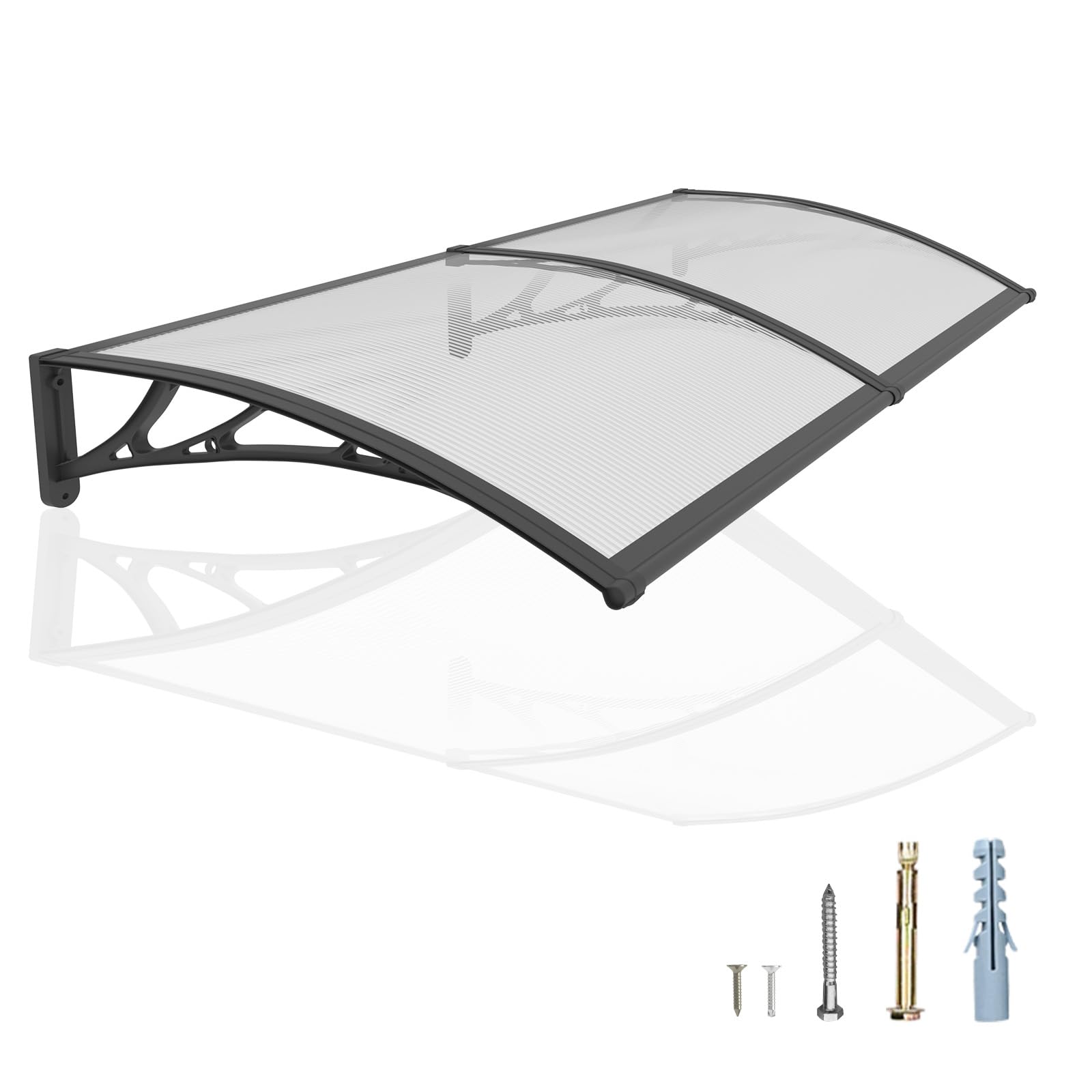
If you have a wide entry, a patio door, or a storefront, this NEBAIKA panel is the one to measure up. At 120 inches wide with a 40-inch projection, it covers more than twice the ground of the Awntech steel unit above — a 2.7x gap in width that matters when you are shading a large opening. The 5mm polycarbonate panel is marketed as shatterproof and impact-resistant, and the hollow-core design blocks 90% of UV and heat while still transmitting soft light, so your porch stays bright instead of gloomy. A built-in drainage gutter channels rain and snow away from the doorway to stop puddles forming at your threshold.
The defining compliment in the reviews is surprise. Buyers report it is “incredibly sturdy for the product it is,” with the obvious caveat that it is plastic, so keep expectations honest. The ABS brackets and polycarbonate are not in the same league as welded steel, which is why this works best over a protected entry rather than an exposed mountain front. Multiple units can be spliced end-to-end as long as the width is consistent, so you can scale it to cover a long porch run.
Installation is the recurring note of caution. The instructions get poor marks, and buyers advise that you need a tube of silicone caulk to finish the waterproofing job — it is not included. The 40×120 size is genuinely too large for one person to lift alone, and the included mounting screws for brick walls have drawn criticism for inadequate washers. View this as a two-person project with an afternoon budgeted for sealing the joints properly.
What stands out
- 120-inch width with a 40-inch projection covers wide doors and patios in one piece
- 5mm polycarbonate blocks 90% of UV and heat while letting light through
- Built-in gutter channels rain and snow away from the entry
Know before you buy
- It is plastic — sturdy for the type, but not a rival for full steel construction
- Instructions are weak and you must supply your own silicone caulk
- Mounting screws skew toward brick and drew complaints about washer size
Reach for this if: You have a wide double door or patio opening that needs one continuous canopy with light transmission and real UV blocking.
Look elsewhere if: You need maximum ruggedness in an exposed, wind-prone location — this polycarbonate build suits calmer spots.
3. GUANSU-CN 48x60in One-Piece smooth Overhang
The smooth see-through canopy that throws shade a full 47.2 inches out from the wall.
This GUANSU-CN panel answers the question of how much overhang you can get from a single molded piece. The projection distance of 47.2 inches is a full 2x deeper than the Awntech’s 24-inch depth, which means rain is carried considerably farther from your window or door frame — a real advantage in driving downpours where water blows sideways at the wall. The headline feature is the one-piece, integrally molded panel, so there is no seam down the middle to leak or collect debris. It pairs a thick double-layer polycarbonate surface with reinforced ABS brackets and an aluminum alloy fixing bar, a heavier build than a simple plastic sheet.
The catch is that first impressions vary wildly depending on who installs it. Buyers who succeeded call it “very durable” and say it looks amazing when done, with the standard warning that it needs two strong people to lift. But one owner measured the frame and found it warped with a bulge — not a user error — and another who decided not to use it worried that wind and snow could damage a house front. The hard plastic sides and aluminum rods are protective, not indestructible.
Multiple units can be joined end-to-end with identical bracket sizes, making this a genuine option for creating an unlimited-length covered run across a patio or shop front. Assembly guidance carries a specific trick: do not overtighten with too many #6 screws, follow the diagram closely, and use a quality silicone caulk on the top joints — half a tube or less. The panel has a protective film over the top surface that keeps it shiny until you peel it, so do not mistake that for a defect.
Best for: A window or standard door where an extra-deep 47.2-inch reach keeps heavy rain off the wall, installed by someone comfortable reading a diagram and using caulk.
The honest limit: Owners describe this as good value rather than premium; if an exposed house front with brutal winters is your site, the steel Awntech is the safer structural bet.
4. GDPFN Metal Awning, 81″ W x 32″ D
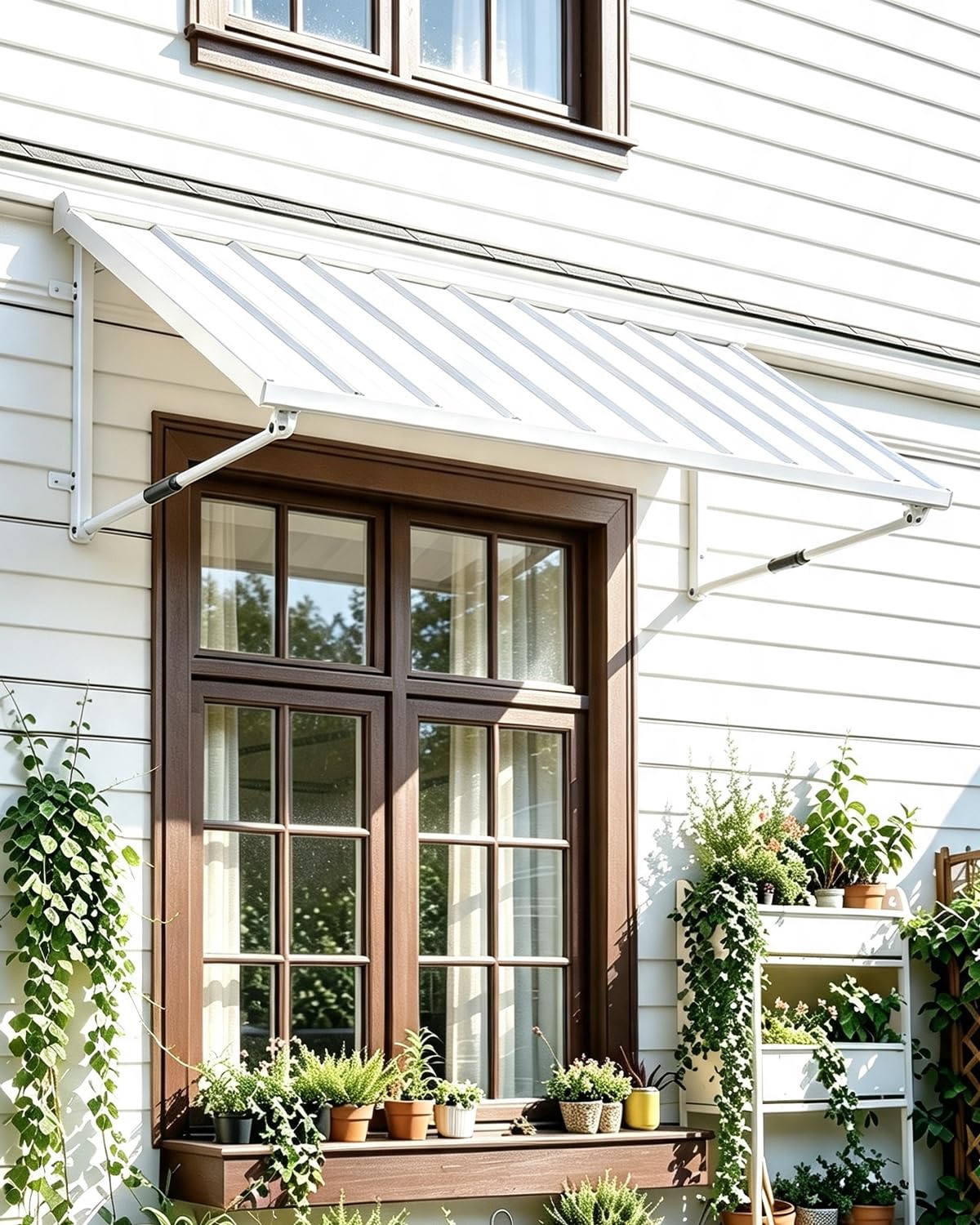
A steel canopy with a tilt you can change to match the season and the storm.
This GDPFN awning is the one that breaks the fixed-awning mold. Its 0.8mm thickened steel panels and heavy-duty frame are reinforced by triangular supports, and the adjustable brackets let you change the angle of the roof — lower it to shed heavy rain faster, or raise it to welcome low winter sun. The maker rates the frame to withstand 54-63 mph winds, which is a real published number even if it trails the Awntech’s 115 MPH rating. At 81.7 inches wide with a 32-inch projection, it sits between the compact steel unit and the giant polycarbonate panels in coverage.
Buyers split on the assembly effort. Some call it tedious and note the screw holes can be misaligned enough to need re-drilling, while others say it “went up easily” and were very pleased with the sturdy result. The recurring theme is that it delivers commercial-looking shade at a fraction of the cost of a contractor-built unit, with one owner describing it as roughly a quarter of the price of commercial options but conceding it is less sturdy than those. The dynamic drainage is the standout feature: lowering the angle lets water cascade off swiftly, and the maker claims this boosts drainage efficiency by over 50% versus a fixed-awnings design.
The honest positioning here is value-first, with the most-praised aspect being value for money. The value for money is the most-praised aspect, and the appearance earns consistent compliments for blending cleanly with exterior walls. It is not the awning for a DIY novice — the assembly is significant and the manual leans on an installation video — but for someone who wants metal durability plus the ability to tweak the angle, it covers a genuine gap in this list.
The adjustable edge
- Tilt-adjustable bracket lets you change the roof angle for summer sun or winter storms
- 0.8mm steel panels rated to withstand 54-63 mph winds
- 81.7-inch width with a 32-inch projection covers a wide entry
Assembly reality
- Significant assembly with some screw holes needing re-drilling
- Owners mention it is less sturdy than commercial-grade units at a higher budget
- Best as a two-person DIY job with patience for the manual
The pick for: Homeowners who want steel construction but also want the seasonal flexibility of adjusting the shade angle by hand.
Think twice if: You expect a bolt-together unit with perfectly aligned holes — this one rewards a handy installer.
5. DAWNINGHOMM 40″ x 160″ Awning with Drainage
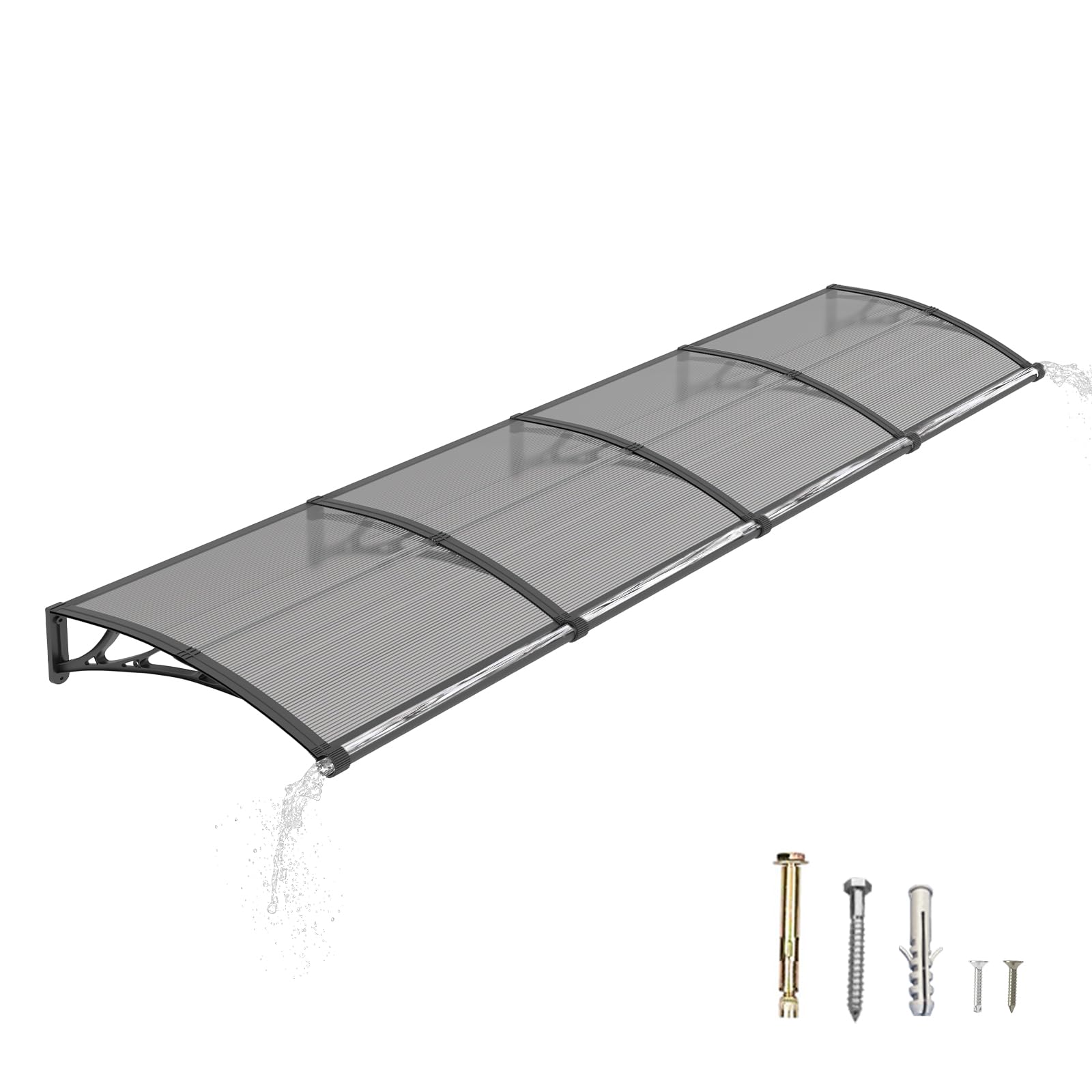
A full 160-inch clear canopy for covering a long porch wall or commercial front in one shot.
This DAWNINGHOMM panel is the widest single unit in the entire lineup, stretching 160 inches across to shade an extended run of windows or a long storefront. It uses hollow polycarbonate panels sized at 40 inches of projection, paired with ABS brackets and aluminum alloy rods, and it carries a UPF 50+ UV rating (a sun protection standard that filters most harmful rays) while staying highly transparent. The upgraded aluminum rods and sealed joints target leak prevention, and the maker frames it as dependable cover for rain, snow, and wind.
The review pattern here is gentler than most. Buyers describe it as a “perfect easy affordable weather guard,” easy to install, and good-looking over a doorway, which suggests the assembly experience is smoother than the GUANSU-CN or HIAPES builds. The recurring practical note is that the supplied mounting screws may not suit every wall — one owner swapped in decking screws instead — and you will need to buy your own caulking to seal the edges, as it does not ship with the unit.
The trade-off is material honesty. One buyer flagged that it is “entirely made of plastic” and noted it did not match expectations for a sturdier feel, while conceding it was not too bad for what it is. That makes this a fit for covered locations where light transmission and easy assembly matter more than brute-force impact resistance. For a long, shaded run at a wide 160 inches with a UPF 50+ rating, it is hard to find a single-panel competitor.
Best for: A long porch, patio wall, or commercial window run where one continuous 160-inch clear panel gives UPF 50+ shade without any seams.
Keep in mind: The whole structure is plastic-based, so expect to supply your own wall screws and caulk, and treat it as a weather guard rather than an armored shell.
6. Palram Canopia Aquila 1500 Door/Window Awning

The clear-panel classic with thick steel brackets that has proven itself across hundreds of installs.
Palram is the name most often repeated on review pages, and this Aquila 1500 is the most-proven product in this guide — a crowd favorite with a high 4.4-star score that has stood up over time. The key structural detail buyers rave about is the all-metal build: clear polycarbonate panels sit in a solid galvanized steel frame with thick steel brackets, a clear step up from the ABS plastic brackets found across most of the polycarbonate competitors here. It blocks UV while passing natural light, so your entry stays bright, and the maker backs it with a 3-year limited warranty.
At 36.25 inches wide with a 59-inch projection, it is the deepest-reaching unit relative to its width in this list, throwing water remarkably far from a door in sideways rain. Customers note it works well through Maine winters and prevents water from getting under a shed door’s sill plate — functional proof of the deep projection. The appearance is the single most-praised aspect, with owners calling it unobtrusive and modern, the kind of structure that complements rather than dominates a facade.
The honest catch is installation logistics: the 37.5-pound frame is a two-person job. The frame weighs 37.5 pounds and the instructions are written for masonry mounting, so buyers on stucco, composite siding, or soffits report needing extra framing, longer bolts, or toggle bolts when the supplied hardware misses a stud. Packaging quality draws mixed notes, with occasional damaged units on arrival, though the seller is described as responsive with replacements. Buyers consistently say the finished look justifies the effort.
Why it endures
- Thick galvanized steel frame and steel brackets rather than plastic
- 59-inch projection carries rain far from the doorway
- Appearance is the most-praised aspect — modern and unobtrusive
Install notes
- Instructions assume masonry walls; other surfaces need extra hardware and framing
- 37.5-pound frame is a two-person job
- Occasional packaging damage on delivery has been reported
The proven route: This is the safe, data-backed choice for a single door or window where you want a steel frame, clear light, and a track record of hundreds of satisfied owners.
One reality: Budget extra time and hardware if your wall is siding or stucco, since the manual only covers masonry mounting directly.
7. HIAPES Door Awnings Exterior
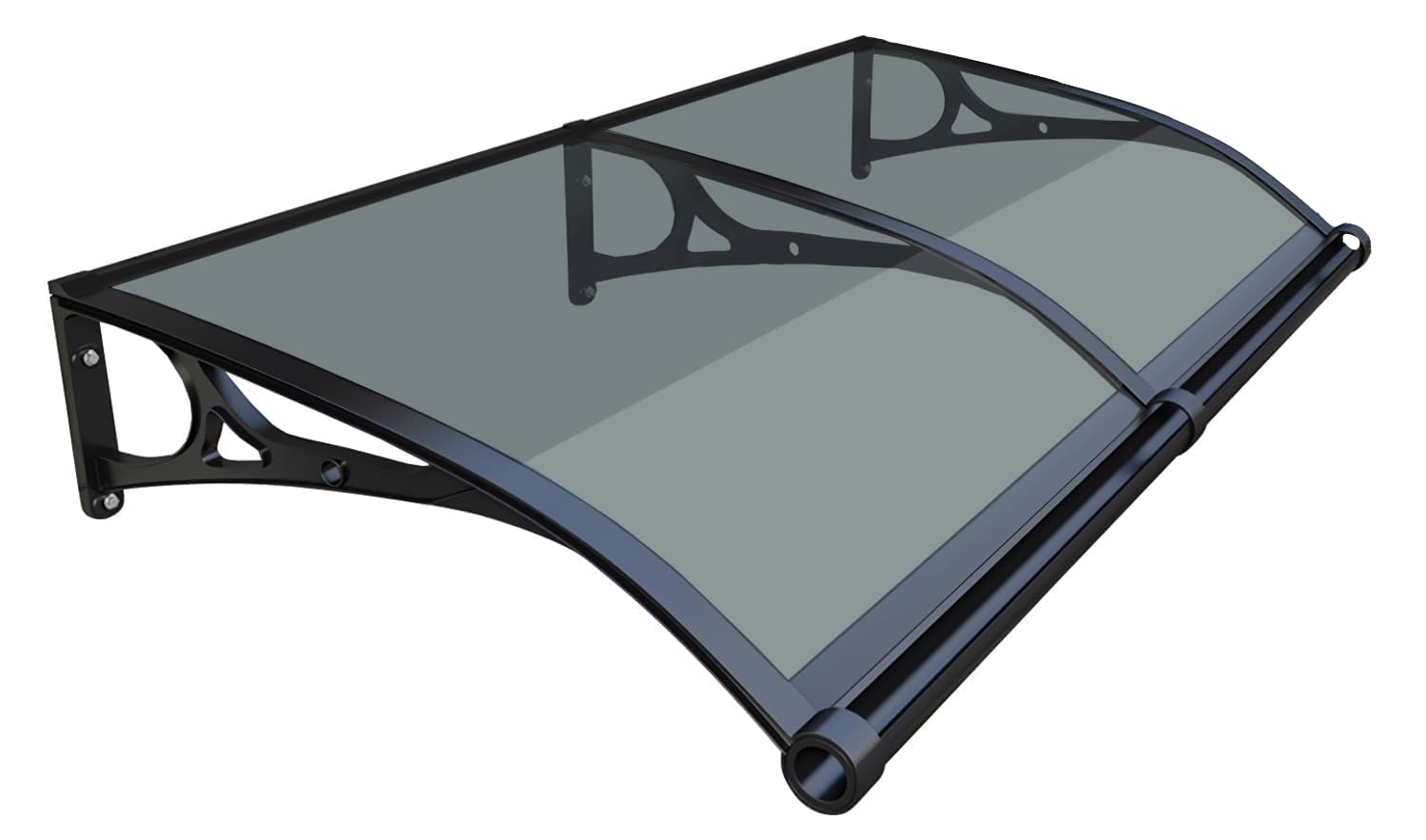
A smoke-gray canopy rated to hold up to 220 lbs with powder-coated aluminum supports.
This HIAPES unit stands at the upper end of the polycarbonate class thanks to its powder-coated aluminum alloy brackets, which buyers distinguish from the ABS plastic frames on cheaper models. The transparent panels block UPF 50+ UV radiation while keeping the entry bright, and the maker rates the structure to withstand up to 220 lbs/100kg, a published load figure that signals real engineering intent against snow accumulation. At 80 inches wide with a 40-inch projection, it covers a substantial double-door entry while draining water through an integrated gutter — a feature buyers specifically credit with diverting water away from a basement door to prevent flooding.
The quality and appearance are the most-praised aspects here, with owners describing the finished result as looking great and keeping the threshold dry. But the installation earns the most discussion, and it is mixed — one buyer called it a “beautiful nightmare,” describing a 120-inch version that took four people and three hours, with a manual described as useless and panels that needed widening to fit with sealant. Others on the standard 80-inch size report straightforward assembly when they build the full unit before wall mounting, since a partially assembled frame can feel wobbly.
Mounting is where owners part ways. Powder-coated supports are high quality, but the included hardware leans toward concrete anchors, leaving wood-siding installers to improvise with cabinet screws or Molly anchors. The lesson from the review pages is clear: build the complete awning on the ground first, then mount it as one rigid piece, and use a plywood template to mark your wall holes precisely. Do that and the payoff is a premium-looking, flood-preventing canopy.
Premium highlights
- Powder-coated aluminum supports rated to hold up to 220 lbs/100kg
- Integrated gutter channels water away from the entry and basement
- Quality and appearance are the most-praised aspects
The hard part
- Full-assembly-before-mounting is critical or the frame feels wobbly
- Manual quality is the weakest point across reviews
- Concrete mounting hardware may not suit wood siding
Choose this for: A polished look over a front or basement door where the gutter drainage genuinely stops water problems, and you are willing to do a careful two-person build.
skip it if: You want a quick afternoon install — this one demands patience and possibly improvised wall hardware.
8. GGNEBAI 40x120in Awning with Drainage Sink
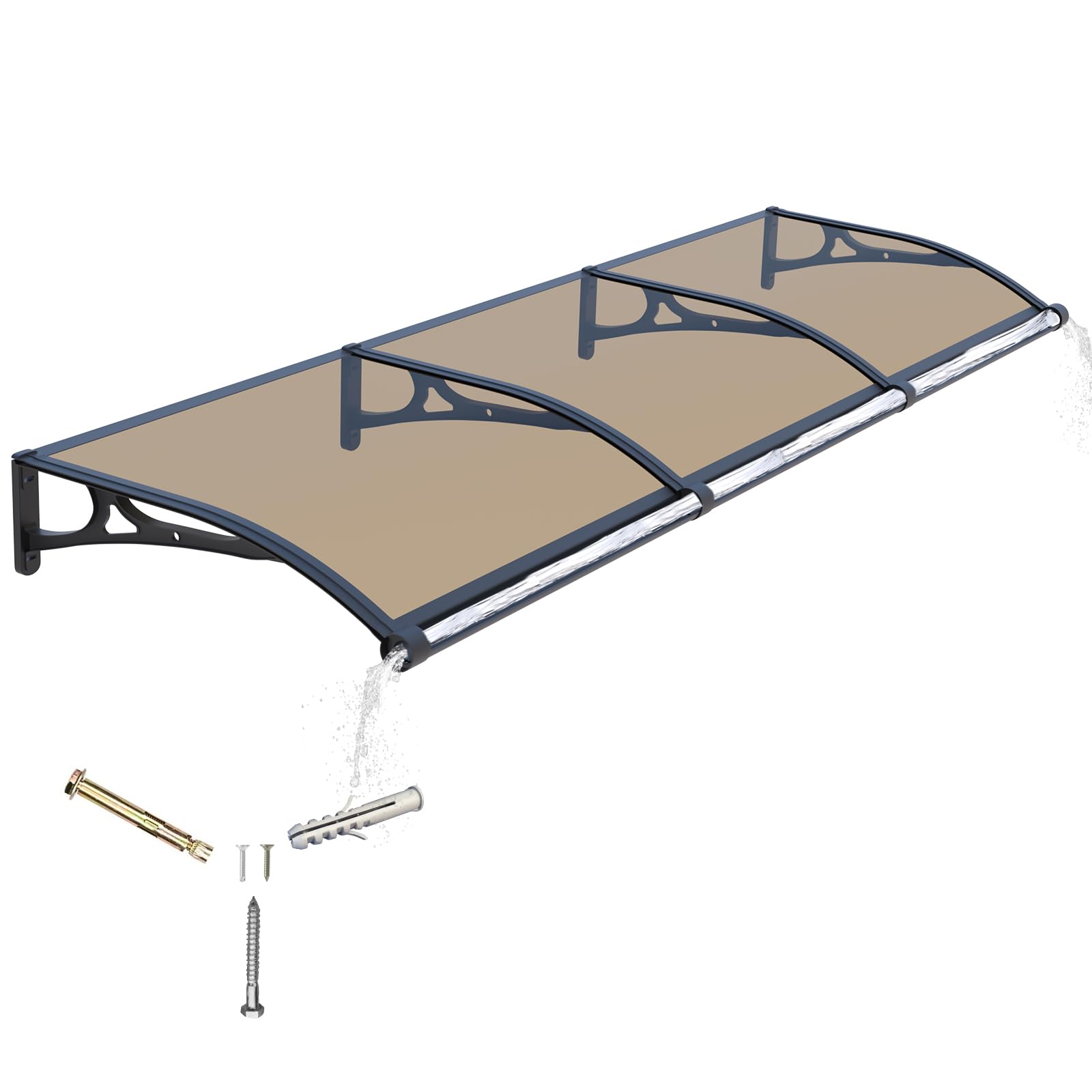
A wide 120-inch canopy with a clever split-tube gutter that shunts water sideways.
This GGNEBAI unit is the budget-friendly entry point that still brings a genuinely useful design detail. The 40×120-inch panel pairs hollow polycarbonate sheets with aluminum alloy brackets and crossbars rated to support up to 220 lbs, and it blocks UPF 50+ UV while staying highly transparent. The standout feature is the split-tube drainage groove running along the front edge — buyers describe it as a nifty design that diverts water sideways instead of letting it pour off the front edge onto the stoop, which keeps the walkway dry and prevents that annoying curtain of water at the door.
Buyers are frank that this is a very inexpensive way to add rain cover, and the surprise is how well it performs. One owner mounted it on a shop and admitted skepticism about high winds — until “the last storm proved me wrong.” Another reported it handled 10 inches of snow without issue, though the same buyer noted the installer doubted its effectiveness because the back panels felt loose until they were secured firmly to the house. The lesson is to anchor the back edge to the wall properly, and the unit ships with five screw types to suit different wall materials.
The value-for-money feedback is genuinely mixed — some call it remarkably cheap for what it delivers, while others expected more given the size. A single negative review about delivery timing stands apart from the product’s own performance. For a cabin, side entry, or workshop door where you want wide, clear, UV-blocking coverage without a premium outlay, this is the pragmatic pick, with the drainage groove as its quietly clever reason to choose it over similar panels.
The practical pick: A wide, clear canopy with effective sideways drainage that has proven it can survive real snow and wind — at a budget-friendly cost that buyers call remarkably inexpensive.
The reality check: Secure the back panels firmly to the wall and you are set; the value debate is the only recurring split in the feedback.
Understanding the Specs
Projection Depth
This is how far the awning sticks out from your wall, and it is the number that decides whether rain actually misses your door. A deeper projection like 47.2 inches or 59 inches carries water well away from the frame in driving rain, while a shallow 24-inch reach suits spots where you mostly need sun shade. Match the depth to your exposure — the more sideways rain you get, the deeper you want to go.
Wind and Snow Load Ratings
Published test numbers like 115 MPH wind or 40 PSF snow-load are the difference between an awning engineered for survival and one that is decorative. PSF means pounds per square foot of snow the roof can hold. If a manufacturer does not state these numbers and you live in a severe-weather zone, treat the awning as a fair-weather cover and choose one with published ratings instead.
FAQ
What is the difference between a fixed awning and a retractable awning?
How do I know which width fixed awning I need?
Will a fixed awning survive heavy snow and high winds?
Can I install a fixed awning by myself?
What mounting surfaces can a fixed awning attach to?
Why do the instructions for these awnings get such mixed feedback?
Is polycarbonate or galvanized steel better for an awning?
Do I need to caulk the awning to the wall?
Final Thoughts: The Verdict
The standout for most homes is the Awntech Houstonian because it is the only pick with published 115 MPH wind and 40 PSF snow-load ratings, and its galvanized steel build earns it the Best Overall crown — the strong crowd rating across a healthy number of owners backs that up. If you want clear light transmission and wide coverage over a double door, the NEBAIKA 40x120in blocks 90% of UV while keeping the porch bright. And for a proven steel-framed classic with the deepest 59-inch projection, the Palram Aquila 1500 is the one to reach for when only a track record of hundreds of happy installs will do.
How We Picked
We do not accept paid placement. Every pick is matched to a real buyer and a real use-case; we do not hands-on test units.
Sources & Methodology
Specifications: manufacturer listings and product documentation. Review insights: verified customer reviews, as of September 2026. Pricing: not shown on this page (it changes often); check the current price via the retailer link.
As an Amazon Associate, KitchPrep earns from qualifying purchases. This does not affect which products we feature.
Related Guides
