
Specs are compiled from manufacturer listings and verified buyer reviews and can change over time — please confirm the key details on the product page before buying.
When your basement floods or your pond fills with leaves, a 2-inch trash pump is what turns that mess into dry ground. The real question isn’t just which one pumps water; it’s which one keeps pumping when the water is full of debris that wrecks lesser machines. You’ll find nine of the toughest options here, from submersible electrics you drop in the water to gas-powered units that move hundreds of gallons a minute, so you can match the machine to the muck you actually deal with.
I’m Mohammad Maruf — the founder and writer behind KitchPrep. This guide is built by comparing the manufacturers’ published specifications and the patterns across verified customer reviews, so you get each pick’s real strengths and trade-offs instead of marketing spin.
For draining pools, ditches, and flooded areas full of debris, this breakdown of the best 2-inch trash pump options sorts the dependable workhorses from the ones that choke under pressure.
Our Picks at a Glance

How To Choose The Best 2-Inch Trash Pump
Every pump in this list shares a 2-inch inlet and outlet, but that’s where the similarity ends. Before you pick one, you need to settle two big questions: what’s powering it, and what exactly is flowing through it.
The first decision is power source. A submersible electric pump is quieter, starts at the flip of a switch, and never needs fuel — but you need a 115V outlet within reach of its cord. A gas-powered model is loud, needs fuel and oil, and demands a pull-start, but it frees you from extension cords and can move water across a property or out to a field.
Match the debris to the pump type
True trash pumps have an open or semi-open impeller (the spinning blade inside) that lets solids pass through instead of jamming. A semi-trash pump typically passes solids up to ½ inch, while some submersible models handle debris up to 0.3 inch. If you’re pumping sand, leaves, or small pebbles, you need a pump rated for that — and the specs spell out exactly what size debris each can swallow.
Read the flow and lift numbers together
You’ll see two numbers on every spec sheet: GPM (gallons per minute it moves) and maximum lift or head (how high it can push water vertically). A high flow rate at ground level is great for filling tanks, but if you’re pumping out a deep basement or up a steep slope, the lift number matters just as much. Don’t shop on GPM alone.
Quick Comparison
| Model | Best For | Flow Rate | Max Lift | Engine / Motor | Amazon |
|---|---|---|---|---|---|
| Tsurumi HS2.4S★ Best Overall | Dependable submersible dewatering | 53 gpm | 39 feet | 1/2 HP Electric, 115V | Amazon |
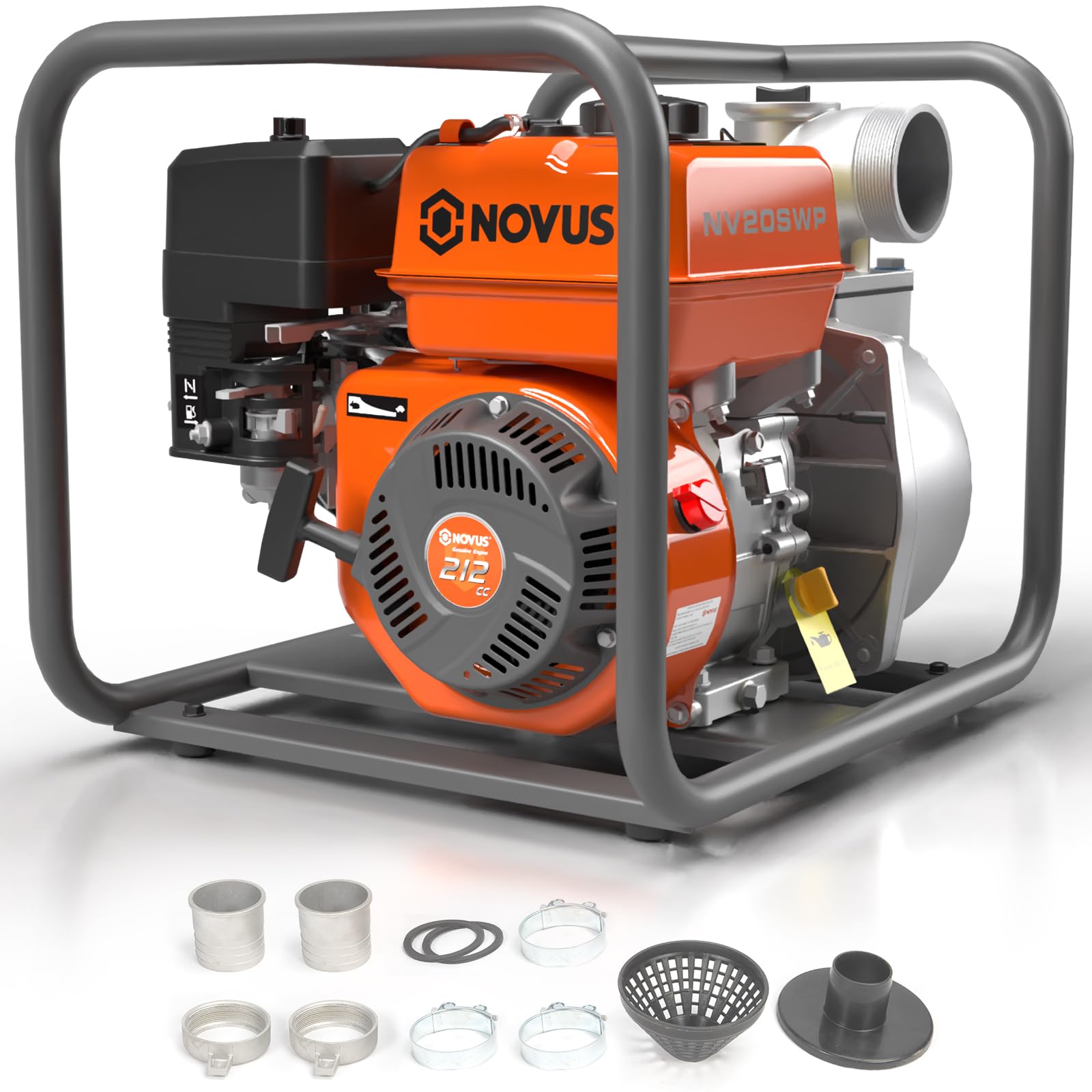
| NOVUS Semi Trash PumpTop Performer | High-lift gas-powered transfer | 141 gpm | 100 feet | 212cc Gas Engine | Amazon |
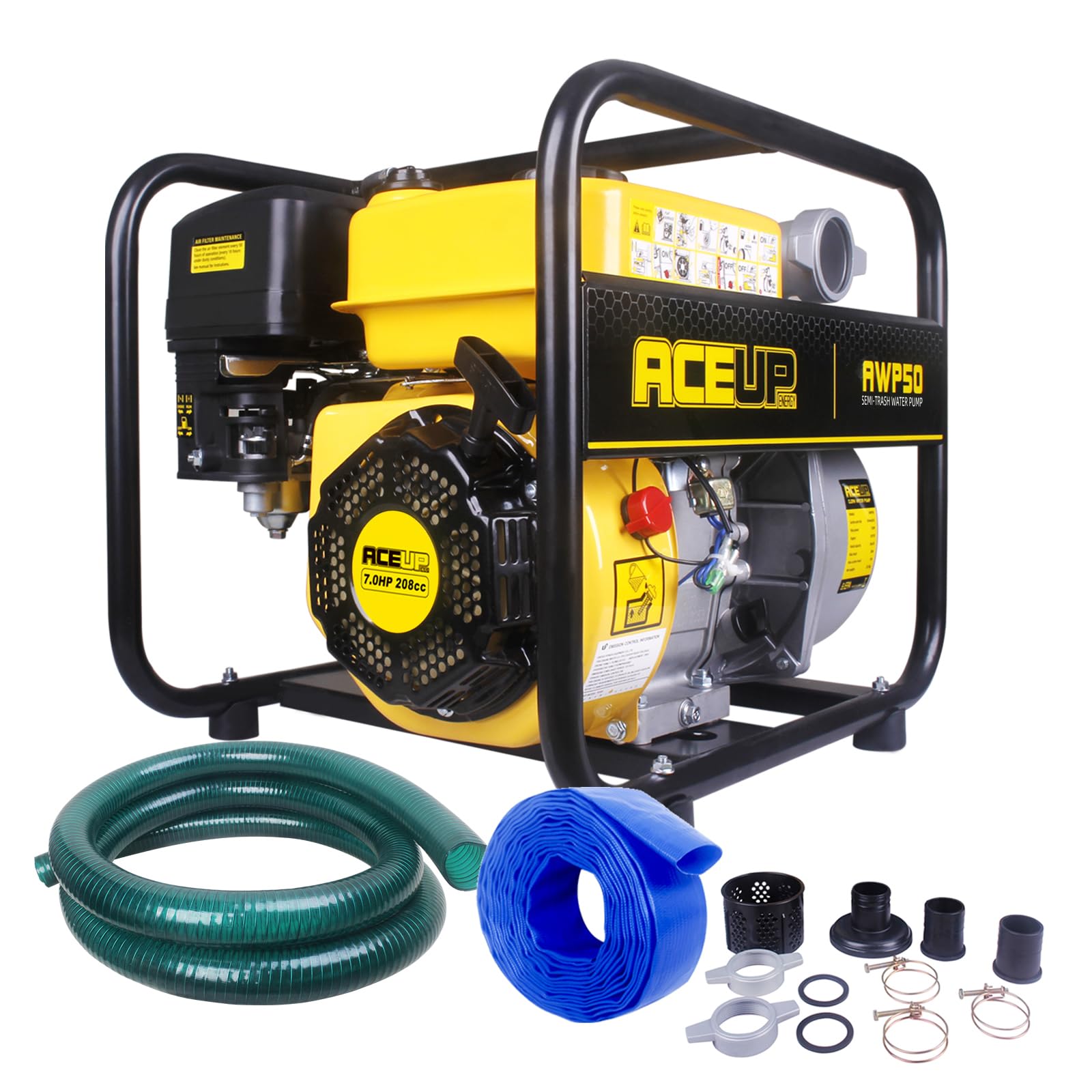
| Aceup Energy Semi Trash PumpBest Value | Complete kit with hoses | 158 gpm | 95 feet | 7 HP, 208cc Gas Engine | Amazon |
| Multiquip ST2040T | Continuous-duty electric pumping | 79 gpm | 40 feet | 1 HP Electric, 115V | Amazon |
| Tsurumi HSZ2.4S | Automatic sump-style operation | 53 gpm | 4 feet | 1/2 HP Electric, 115V | Amazon |
| Champion 100742 | Portable all-in-one setup | 158 gpm | 92 feet | 212cc Gas Engine | Amazon |
| Red Lion 6RLAG-2LST | Slurry and suspended solids | 150 gpm | 92 feet | 6 HP, 208cc Gas Engine | Amazon |
| Pacer SE2UL E5HCP | High-volume workhorse | 200 gpm | 25 feet | Honda GX160 Gas Engine | Amazon |
| BE Power WP-2065HL | All-day Honda-powered reliability | 158 gpm | — | Honda GX200 Gas Engine | Amazon |
In‑Depth Reviews
1. Tsurumi Pump HS2.4S Submersible Trash Pump
Our pick — over 4.5★ from 600+ verified ratings; the strongest balance of quality and price.
The drop-it-in-the-water workhorse that keeps running year after year, even with sand and grit in the flow.
Unlike most gas-powered picks here, the Tsurumi HS2.4S is submersible electric — you lower it straight into the water you want gone. Its semi-vortex impeller and integrated agitator (a built-in feature that stirs up settled solids) let it handle debris up to 0.3 inch without clogging, so leaves and small stones pass through instead of jamming the pump. It moves 53 gallons per minute (gpm) thanks to a 1/2 horsepower motor that runs on a standard 115V outlet with a 20-foot cord.
Buyers who drain pools for new liners report the machine chews through the job in 8 hours or less, and several note the same unit has survived around 5 years of hard use — one owner describes running it 24/7. Its quality is the aspect owners praise most, with dozens noting the solid aluminum construction the moment it comes from the start. The angled 2-inch discharge port gives you flexibility on hose fittings, and it comes backed by a 2-year warranty with UL & CSA certification.
Compared to the NOVUS gas pump above, the Tsurumi gives up raw lift — 39 feet versus the NOVUS’s 100 feet — but it wins on the simple convenience of plugging in and dropping it in. Nobody on the review pages complains about noise; it’s noted as surprisingly quiet for the power it delivers.
What wins owners over
- Runs quietly and moves water fast, with owners noting it handles flooded basements with ease
- Aluminum build and heavy construction signal durability from the first unboxing
- Semi-vortex impeller + agitator passes sand, silt, and debris up to 0.3 inch
Trade-offs to know
- Needs a 115V outlet within reach of the 20-foot cord — not for remote sites
- 39-foot max lift falls short of gas-powered alternatives for very deep or long runs
Reach for it if: you want a quiet, dependable electric pump that you drop in a pool, pond, or flooded basement and just let run.
Consider something else if: your job site is far from any power outlet — that’s where a gas engine earns its keep.
2. NOVUS 2-Inch Semi Trash Pump
The gas-powered giant that pushes water up 100 feet and across a field, starting on a few pulls.
If your water needs to climb, the NOVUS is the pick: its 212cc engine delivers a 100-foot maximum lift with 23 feet of suction, and it can push water nearly 1,500 feet across level ground. At 141 gpm, it’s no slouch on volume either, and the 2-inch inlet and outlet keep the flow fast and efficient. It weighs 55 pounds and measures 21″L x 17″W x 16″H, so it’s a machine you wheel to the job rather than carry.
Owners describe this pump as starting on the first few pulls and running like a champ through long drain jobs — buyers report two straight 8-hour shifts with no issues, and one ran it continuously for five days without complaint. The low-oil shutdown (an automatic safety that kills the engine before damage) and a filter that blocks large debris make it forgiving for first-time gas pump owners. Its pumping performance is the aspect owners praise most.
Despite its 55 pounds, it’s actually a step lighter than many comparable gas units, and it holds a prime between uses so you’re not re-priming every single time. Note that the hose is not included — budget for that separately. The cast-iron impeller and aluminum pump housing are built for years of service, and NOVUS includes a 2-year limited warranty with lifetime technical support.
Why it earns its place
- 100-foot max lift beats the Tsurumi’s 39 feet by a wide margin for deep or sloped runs
- Owners mention reliable starts on the first few pulls even after sitting
- Low-oil shutdown and debris filter protect the engine from user error
Heads-up
- Hose not included — you’ll need to buy suction and discharge hoses separately
- At 55 pounds, it’s a two-person lift into a truck bed
Best for: draining pools, ponds, and irrigation lines where you need serious vertical lift and don’t mind pulling a cord to start.
Who might pass: anyone wanting a plug-and-play unit that doesn’t require fuel, oil, and pull-start ritual.
3. Aceup Energy Semi Trash Pump 2 Inch
The complete kit that shows up with hoses attached and empties an 18,000-gallon pool in 4 hours.
Most pumps in this class arrive bare, but the Aceup shows up ready to work: included in the box are a 12-foot suction hose, a 25-foot discharge hose, clamping rings, a hose connector kit, and an intake strainer. That’s a full setup you’d otherwise buy piece by piece, making this 7 HP, 208cc gas model the best value play — it even tops the list’s flow at 158 gpm with a 95-foot max head and 27-foot max suction.
The story owners tell about this one is tough to top. Customers note it emptied an 18,000-gallon pool in 4 hours and re-primed again and again from 9 feet to reach the bottom without moving the pump — and when leaves and small trash got sucked in, they passed right through with no clogging. The iron handle and base are integrated into one piece, with shock-absorbing pads to tame vibration. It’s a recoil-start (pull-cord) engine, so you’ll add water to the pump before the first start of the day to get it primed.
It ships EPA-certified and functionally tested, backed by a 1-year limited warranty and free lifetime technical guidance. At 23 kg (about 51 pounds), it’s mid-pack for weight. If you want a genuinely complete, ready-to-run gas setup without nickel-and-diming yourself on hoses afterward, this is the smart buy.
What you actually get
- Suction hose, discharge hose, clamps, and strainer all included — ready to run from the start
- 158 gpm top-tier flow with 95-foot lift for a sturdy all-around performer
- Reviewers point out it handles leaves and small trash without clogging
Keep in mind
- Needs manual priming with water before first start each session
- Recoil start means a few solid pulls to fire it up
Pick this for: the buyer who wants one box with everything needed to start pumping on day one.
Think twice if: you prefer a submersible that needs no fuel or priming ritual — gas isn’t for everyone.
4. Multiquip ST2040T Electric Submersible Trash Pump

The 1 HP plug-in bruiser that one owner ran non-stop for 14 straight days without a hiccup.
If endurance is the job requirement, the Multiquip ST2040T is the answer. This 1 horsepower, 115-volt submersible moves 79 gpm with a 40-foot maximum head, and it’s the choice for jobs that run around the clock — the review pages show owners running it 14 days straight through muck and moss without missing a beat. The cast-iron build tells you it means business, and it stands 16.8 inches tall with a 10.3-inch diameter.
Its performance is the aspect owners praise most. The pump handles one-inch particulate (large debris for an electric unit), making it a genuine trash pump rather than a clean-water transfer pump. Owners use it for wastewater transfer, washdown duty via a hose, and even keeping an above-ground pool’s water circulating while a filter net catches leaves. The heavy-duty frame and fast operation get consistent shout-outs across the reviews.
At 36.3 pounds and 40 feet of lift, it splits the difference between the Tsurumi’s 39 feet and the far heavier gas units. One honest note from the field: don’t pull the pump by its power cord — treat the cord with respect and this unit will outlast your patience. It’s the strongest electric submersible here for anyone who wants more push than the 1/2 HP Tsurumi offers.
What stands out
- 1 HP motor delivers 79 gpm — nearly 50% more flow than the 1/2 HP Tsurumi
- Cast-iron housing with a reputation for running days on end
- Handles up to 1-inch particulate for real trash duty
Watch out for
- Power cord is not a handle — pulling by it can damage the unit
- Requires a nearby 115V outlet, limiting remote use
Reach for it if: you need an electric submersible with real muscle for long, continuous dewatering jobs.
Look elsewhere if: portability to remote, off-grid sites matters more than raw endurance.
5. Tsurumi Pump HSZ2.4S Submersible Trash Pump

The Tsurumi with a brain — a built-in ball float that starts and stops the pump all by itself.
This is the set-and-forget version of the Tsurumi HS2.4S. The key difference is the built-in ball float switch: when water rises, the pump kicks on automatically, and when levels drop, it shuts off. That means you can leave it in a sump pit, a low spot in a driveway, or a basement corner and walk away without worrying about burning out the motor by running it dry.
At its core, it’s the same proven machine — 1/2 horsepower, 115V, 53 gpm, and a 20-foot cord, handling sand, solids, and debris up to 0.3 inch with a semi-vortex impeller. The materials list reads like a premium spec sheet: die-cast aluminum with silicone carbide and urethane rubber components. Owners describe it as a beast that never missed a beat, including one who pulled it out after 7 years in storage to pump out a dirt-floor cellar during a flood.
That float switch is the defining feature for anyone who needs automatic operation at a sump or low spot in the yard. The trade-off: the float only triggers when water rises well above the unit — shoppers say it’s not ideal for getting every last inch of water out of a shallow area, though the core pumping performance gets consistent praise. It comes with the same 2-year warranty and UL & CSA certification as its sibling.
Why it’s special
- Ball float switch enables fully automatic operation — no babysitting required
- Proven Tsurumi build quality with premium die-cast aluminum and silicone carbide parts
- Buyers report it fires up reliably even after years in storage
Know the limit
- Float activates only when water is well above the unit, leaving some water behind
- 4-foot max lift makes it a sump-style pump, not a high-head mover
Choose this if: you need a pump that watches the water level for you — perfect for sumps, crawl spaces, and seasonal flooding spots.
Pass if: you’re draining a pool or pond to the very bottom; the float will leave a shallow puddle.
6. Champion 2-Inch Gas-Powered Semi-Trash Pump
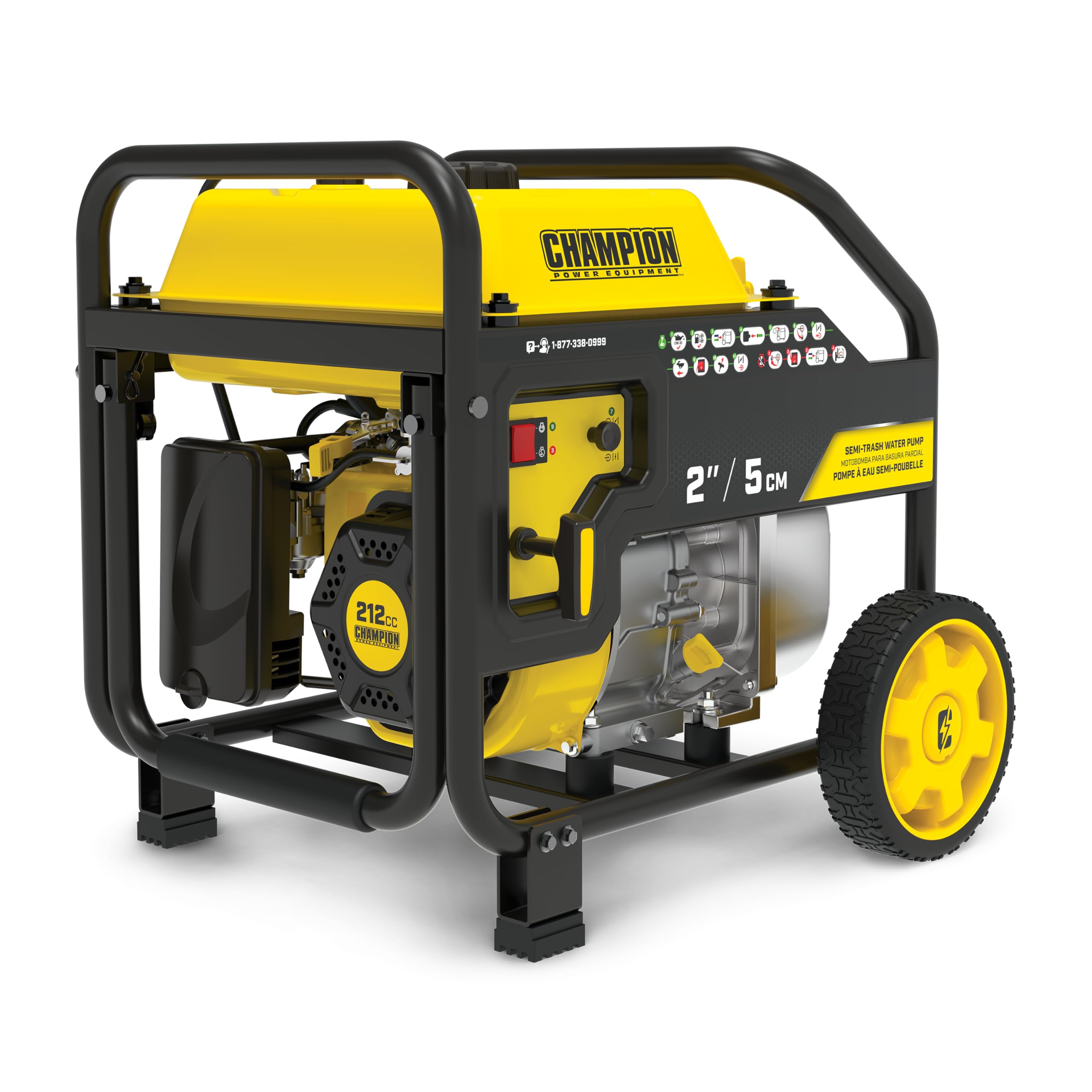
The gas pump you roll around the property on never-flat wheels, with every hose in the box.
Champion built this one for people who move the pump from one job to the next. The steel frame rides on a wheel kit with never-flat tires, so you roll it across the yard, into the truck, or out to the ditch without breaking a sweat. On top of that, the box includes a 12-foot suction hose with filter, a 25-foot discharge hose, a quick cam lock coupler, clamps, adapters, fittings, nylon tape, and a storage bag — a genuinely complete setup.
Under the hood is a 212cc Champion OHV engine pushing up to 158 gpm with a 92-foot total head and 26-foot suction head. Its 3-gallon fuel tank and 0.5-quart oil capacity keep it running for long stretches between fill-ups. As a semi-trash pump, it passes solid waste up to ½ inch in diameter through its 2-inch NPT inlet and outlet. The wide priming cap speeds up startup so you’re not fiddling with a tiny port.
In Eastern Washington, owners describe using it as a firefighting emergency pump fed by a 7,000-gallon pond, and a waterfall owner ran it almost continuously for a week pulling from a ditch. The one sour note on the pages is a single unit arriving broken in the box with a difficult return process — an occasional delivery risk, not a pattern of failures. Champion backs it with a 2-year limited warranty and free lifetime technical support.
What makes it convenient
- Wheel kit with never-flat tires makes it easy to move job to job
- Full hose kit, coupler, and fittings included — nothing else to buy
- 158 gpm with 92-foot head from a 212cc engine
Consider this
- Weighs 79 pounds — heavy, though the wheels offset it
- An occasional unit has arrived damaged; check it on delivery
Reach for it if: you want a roll-around gas setup with everything included, ready for multiple job sites.
skip it if: you need a lighter unit you can carry solo, or you prefer electric start over pull-cord.
7. Red Lion 6RLAG-2LST Semi-Trash Gas Pump

The lightweight aluminum pump built specifically to swallow sand, pebbles, and suspended solids up to ½ inch.
Red Lion engineered this one for the nastiest water you’ll encounter. It’s designed to handle liquid slurries — water carrying sand, pebbles, and suspended solids up to ½-inch in diameter — thanks to a durable cast-iron semi-open impeller and a wear-resistant silicon carbide mechanical seal. That’s the kind of spec sheet that matters when you’re pumping out a ditch or a muddy basement, not clean tap water.
At 58.5 pounds with a lightweight aluminum outer casing, it’s noticeably easier to haul than the 79-pound Champion. The 208cc, 6 HP OHV engine delivers 150 gpm with a 92-foot maximum head and 25-foot suction lift, and the 3.8-quart fuel tank keeps it running for long sessions. A built-in check valve prevents water from siphoning back when you shut it off. It ships without oil or gasoline, so you’ll add both before the first start.
One owner has run this pump for 3 years with zero issues, calling it one of the best investments made — pumping through a 20-foot suction hose into 100 feet of discharge hose with decent power. Another used it to clear a flooded basement and reports it’s still going strong. The recurring minor gripe on the pages is a cracked priming plug on some units that leaks water when running — worth inspecting on arrival. Red Lion includes a 2-year manufacturer warranty.
Built for the rough stuff
- Cast-iron semi-open impeller and silicon carbide seal handle abrasive slurry
- 58.5-pound aluminum casing is one of the lighter gas options here
- Built-in check valve stops water from flowing backward when off
Minor notes
- Ships without oil or gas — you must add both before starting
- Some units arrive with a cracked priming plug that weeps water
Pick this for: pumping sand-heavy water, muddy cellars, and debris-laden ditches where abrasion kills lesser pumps.
Look elsewhere if: your water is clean and you’d rather not manage fuel and oil for a simpler job.
8. Pacer Pumps SE2UL E5HCP

The fastest mover on this list at 200 gpm, powered by a commercial-grade Honda GX160 that starts every time.
When volume is the whole game, nothing here touches the Pacer. It tops the list at 200 gpm — the highest flow rate in this roundup — driven by a Honda GX160 commercial-duty gasoline engine with OHV design, a cast-iron cylinder sleeve, and low-oil shutoff. Honda engines have a reputation for starting on the first pull and running forever, and buyers confirm it: “runs great and starts every time” is the recurring chorus.
The pump body is molded from tough glass-reinforced polyester with stainless steel hardware, so it resists corrosion and dents in a way bare aluminum can’t match. It’s self-priming with a built-in check valve, manages a 25-foot suction lift, and uses 2-inch suction and discharge ports. Impressively, it’s molded and assembled in the USA in Lancaster, PA, which explains the premium over the other gas pumps here.
Owners note it takes minimal priming to get going and delivers strong, consistent performance. The main practical gripe: it ships without a protective cage, and buyers wish Pacer offered one as an accessory — you’ll want to add your own roll cage or frame for job-site protection. The 12-month warranty is shorter than the 2-3 year terms on rivals, but the Honda powerplant and the sheer flow rate make it the pick for anyone who measures success in gallons per minute.
Why it leads on flow
- 200 gpm is the highest output of any pump in this guide
- Honda GX160 engine with low-oil shutoff is legendary for reliability
- Glass-reinforced polyester body resists corrosion and impact
What’s missing
- Ships without a protective cage — add your own for job sites
- 25-foot lift is modest; best for level or slightly sloped transfers
Reach for it if: you’re moving massive volumes across level ground — irrigation, tank filling, or big transfers.
Pass if: you need high vertical lift; other gas models beat its 25-foot suction for deep draws.
9. BE Power Equipment WP-2065HL
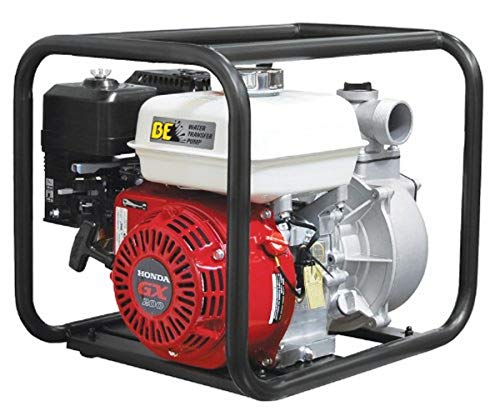
The Honda GX200-powered pump wrapped in a steel roll cage, designed to be used all day, every day.
BE Power Equipment built this around the Honda GX200 — an engine explicitly designed to run all day, every day, which is exactly what the reviews show owners doing. One buyer pumps from a creek to a 500-gallon garden holding tank over 150 feet of hose and fills it in about 2 minutes. The 6.5 HP engine delivers 158 gpm through the 2-inch inlet and outlet, matching the top flow rates on this list.
Unlike the Pacer, this one comes with proper protection: a steel roll cage surrounds the machine and provides ergonomic hand holds so you can maneuver it easily without grabbing hot engine parts. The pump body uses aluminum to keep weight manageable at 54 pounds, while the cast-iron impeller adds strength where it counts. BE Power backs it with the longest warranty in this guide at 3 years.
Buyers describe the Honda motor as starting every time without fail, and one owner notes his identical BE pump from 2016 still runs great — a strong longevity signal. The honest caveat from the pages: quality control on a new unit can be inconsistent, with one arriving unable to start, and another reviewer cautions that while the motor is Honda, the pump itself is BE’s design — it’s best for water transfer rather than extreme suction lifts. It’s the priciest pick here, but you’re paying for the GX200 name and that steel cage.
Built to last
- Honda GX200 engine is legendary for daily, all-day use
- Steel roll cage protects the machine and doubles as hand holds
- 3-year warranty is the longest of any pump in this guide
Be aware
- Occasional quality-control slip on new units — check before heavy use
- Premium price reflects the Honda name and cage, not extra flow
Choose this if: you want the most dependable engine in the class and plan to run the pump daily for years.
Consider another if: budget is tight — comparable flow is available for less without the Honda badge and cage.
Understanding the Specs
Flow Rate (GPM)
Gallons per minute tells you how fast the pump moves water. For draining a pool or filling a tank, a higher GPM like 158 or 200 means the job finishes in a fraction of the time. For a small sump or a slow leak, a 53 GPM submersible is plenty. Flow rate and lift work against each other — the higher you push water, the less volume you move.
Max Lift vs. Suction Lift
Maximum lift (or head) is how high the pump can push water vertically on the discharge side — a 100-foot lift handles a steep slope or a long run. Suction lift is how high the pump can pull water up from below, typically 23-27 feet for gas models. Electric submersibles skip suction entirely because they sit in the water.
FAQ
What’s the difference between a trash pump and a semi-trash pump?
Gas-powered or electric submersible — which should I choose?
What does “self-priming” mean and why does it matter?
How big a debris can a 2-inch trash pump handle?
How many gallons per minute do I need to drain a pool quickly?
Do gas trash pumps come with hoses included?
Can I leave a submersible trash pump running unattended?
Why do gas pumps need oil and gas added before first use?
How high can these pumps push water uphill?
What’s the difference between inlet/outlet size and actual debris passage?
Final Thoughts: The Verdict
If you want one dependable pick, the best 2-inch trash pump is the Tsurumi HS2.4S because it pairs proven submersible reliability with genuinely quiet operation and a build that customers note surviving years of hard use — all without the fuel and pull-start hassle of gas. If you need serious vertical lift and raw volume for ponds and irrigation, grab the NOVUS with its 100-foot lift. And if you want the single fastest machine for moving massive volumes across level ground, the Pacer at 200 gpm is the one to reach for.
How We Picked
We do not accept paid placement. Every pick is matched to a real buyer and a real use-case; we do not hands-on test units.
Sources & Methodology
Specifications: manufacturer listings and product documentation. Review insights: verified customer reviews, as of September 2026. Pricing: not shown on this page (it changes often); check the current price via the retailer link.
As an Amazon Associate, KitchPrep earns from qualifying purchases. This does not affect which products we feature.
Related Guides
