
Specs are compiled from manufacturer listings and verified buyer reviews and can change over time — please confirm the key details on the product page before buying.
Standing water in a basement, a sputtering RV faucet, or a rain barrel that never builds pressure — each one is a different job, and no single “Automatic Water Pump” fits all of them. This guide sorts the eight best-selling automatic pumps by what they actually do: some siphon away floodwater until the floor is nearly dry, others boost pressure in a camper or garden line the moment you open a tap. You will learn which type matches your setup before you spend a dollar.
I’m Mohammad Maruf — the founder and writer behind KitchPrep. This guide is built by comparing the manufacturers’ published specifications and the patterns across verified customer reviews, so you get each pick’s real strengths and trade-offs instead of marketing spin.
An automatic pump starts and stops on its own via a float or pressure switch, so you don’t have to babysit it. The right automatic water pump does exactly that—whether you are draining a pool, guarding a sump pit, or pressurizing an RV sink—so you skip the hours of manual work.
Our Picks at a Glance


How To Choose The Best Automatic Water Pump
Before picking a brand, decide what job you need done. A pump that moves 2500 gallons per hour out of a flooded basement will not pressurize an RV shower line, and a 12-volt diaphragm pump cannot keep up with a burst pipe. So ask yourself: do you need to move large volumes of water from a low point, or push water uphill through pipes at a steady pressure?
Match the Pump Type to Your Water Source
Submersible pumps sit in the water they are draining — think sump pits, pools, and flooded basements. They use a float switch that starts the motor when the water rises above a set level and stops it when the level drops. Diaphragm pressure pumps, by contrast, sit outside the water and use a pressure switch to deliver water on demand, which is why you see them in RVs, camper kitchens, and garden irrigation systems. The distinction shapes every other decision you make.
Read Flow Rate and Lift Height Together
Flow rate, measured in gallons per minute (GPM), tells you how fast the pump moves water at zero lift. Lift height — sometimes called head — tells you how high the pump can push water vertically. A pump with a high GPM but a low lift height will struggle to move water up to a second floor. Look for both numbers together to understand whether the pump can handle the distance in your specific setup.
Check the Automatic Shut-Off Logic
Automatic operation only helps if the shut-off works reliably. Float switches on submersible pumps need room to move freely in the pit. Pressure switches on diaphragm pumps stop the motor when the line reaches a preset pressure, like 55 PSI or 70 PSI. If the switch fails or gets stuck, the pump either runs dry and overheats or cycles on and off constantly — a common complaint that shows up across the review data. Look for models with thermal overload protection as a safety net.
Quick Comparison
| Model | Best For | Flow Rate | Lift Height | Horsepower | Amazon |
|---|---|---|---|---|---|
| DICMIC RV Water Pump★ Best Overall | Camper & RV on-demand pressure | 3 GPM | 55 PSI | 12V DC | Amazon |
| FLUENTPOWER 1/2 HP Sump PumpTop Performer | Basement flooding & pool draining | 42 GPM | 26 ft | 0.5 hp | Amazon |
| Green Expert 1/3HP Sump PumpBest for Low Water | Last-inch flat floor drainage | 33 GPM | 23 ft | 0.35 hp | Amazon |
| Aquastrong Condensate Pump | HVAC & dehumidifier drip removal | 85 GPH | 20 ft | 0.38 hp | Amazon |
| YOUNGTREE 5.5 GPM Pump | Garden irrigation & rain barrels | 5.5 GPM | 164 ft | 110V AC | Amazon |
| FOTING 1HP Stainless Pump | Heavy-duty pool & sewage water | 4600 GPH | 32 ft | 1 hp | Amazon |
| ECO-WORTHY 5.5 GPM Pump | Cleaning & spraying down surfaces | 5.5 GPM | 131 ft | 110V AC | Amazon |
| SEESII 1HP Submersible Pump | Fast pool & hot tub evacuation | 5548 GPH | 36 ft | 1 hp | Amazon |
In‑Depth Reviews
1. DICMIC RV Water Pump
Our pick — over 4.5★ from 300+ verified ratings; the strongest balance of quality and price.
A direct bolt-in replacement for common RV pumps, restoring 55 PSI pressure without plumbing changes.
If you own a camper, motorhome, or boat with a tired original pump, this 12-volt DC unit is the crowd’s favorite fix. Buyers report that the 3.0 GPM flow at 55 PSI matches the feel of the factory equipment, and it bolts into the exact same mounting holes as the original 4008-101-A65 or 4008-101-E65 motors. The self-priming diaphragm design pulls water up on its own, so you do not wrestle with priming it before every trip.
The built-in thermal protection and dry-run capability are the safety nets that matter on the road — if the fresh tank runs empty, the motor does not burn itself out. The internal check valve keeps water from draining back into the tank when the pump is off, which preserves your prime between uses. A wide 10.39″L x 5.63″W x 5.12″H footprint slides into the standard RV water bay without a fight.
Owners consistently call the operation smooth and, in many cases, quieter than the aging unit it replaces. The common thread across the review pages is fit: it is an exact match for the original motor, which is why owners mention swapping it in and getting perfect pressure on the first try. The single most-discussed trade-off is durability — while many say it is still running strong, a few report failures after only weeks, which makes the manufacturer’s direct-contact promise worth testing early.
What wins people over
- Exact bolt-in fit for common RV pump replacements, confirmed by owners of a 2020 Salem.
- Quiet operation and strong pressure that matches the original motor’s feel.
- Self-priming with a built-in check valve, so it holds prime between uses.
The honest trade-offs
- A minority of customers note premature failure after a few weeks.
- Runs on 12V DC, so it needs the vehicle’s battery or a converter.
- Built for RV plumbing pressure, not high-volume flood removal.
Reach for this if: you want a drop-in replacement that restores quiet, steady pressure to an RV, camper, or marine freshwater system.
Look elsewhere if: you need to drain a flooded basement or pool — that job needs a high-volume submersible pump, not a pressure pump.
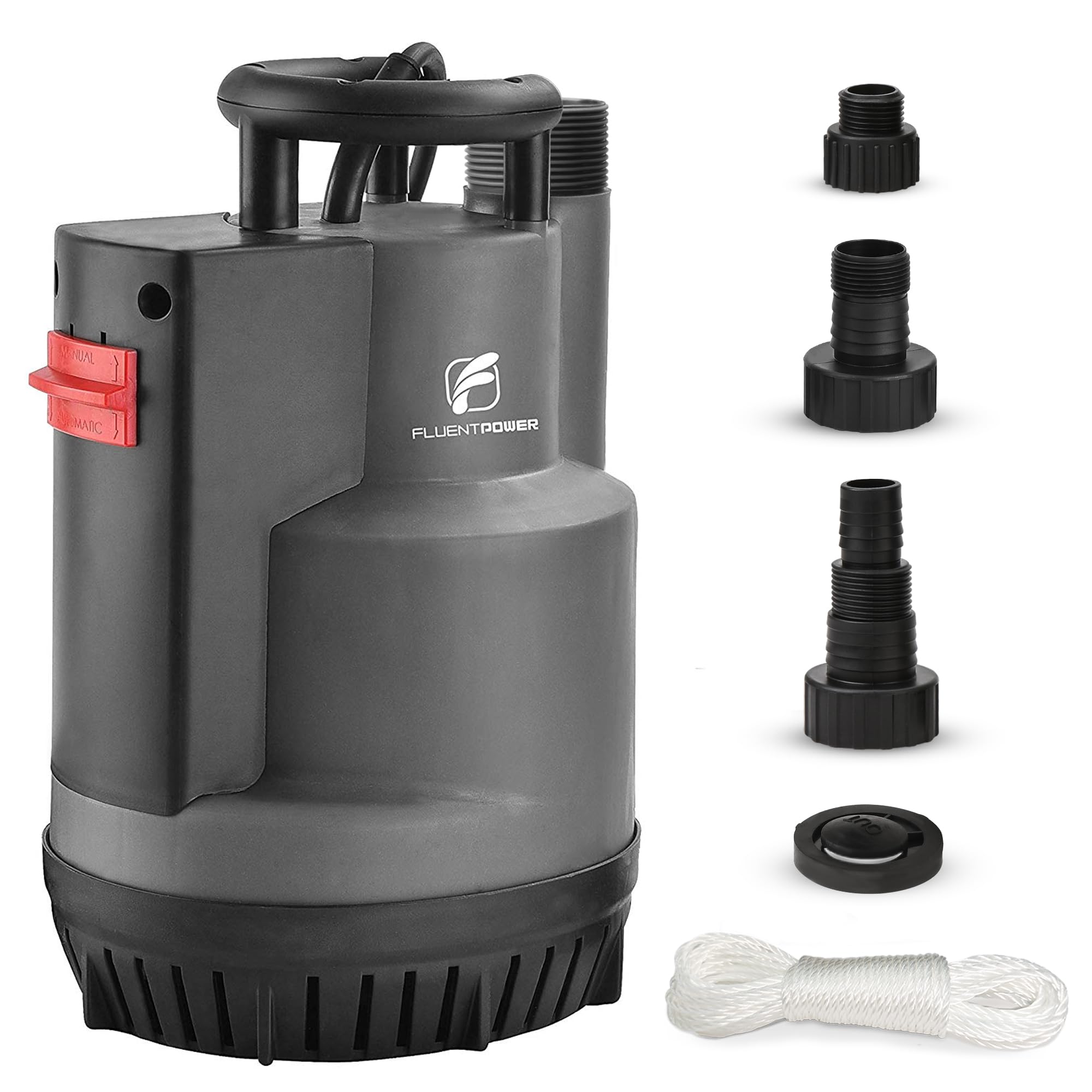
2. FLUENTPOWER 1/2 HP Submersible Sump Pump
A 2500 GPH submersible that automatically activates during floods, offering reliable backup protection.
When a monsoon or burst pipe threatens your basement, the FLUENTPOWER 1/2 HP Sump Pump moves up to 42 gallons per minute and lifts water as high as 26 feet—a flow rate roughly fourteen times what the DICMIC RV pump delivers, so these two serve completely different worlds. Its integrated float switch (a buoyant device that rises with water) wakes the pump when water climbs above 4 inches and shuts it off around 2 inches, giving you round-the-clock protection for a sump basin or window well. Owners in monsoon-prone areas call it affordable insurance that sat idle for two years, then kicked in during a storm overflow and saved the basement.
The dual-mode design adds flexibility. Flick it to manual mode when you need to chase the water down to about 1/2 inch, which is handy for draining a hot tub or a low spot that the float cannot reach. A 16.4 ft power cord reaches distant outlets, and the included GHT 3/4″ and NPT 1″ adapters connect to a standard garden hose, plus a G 1-1/2″ adapter for high-capacity discharge lines.
The recurring complaint in the review data is durability — several reviewers point out the motor died after about 18 months of service, and at least one saw a backup unit quit within two weeks of installation. The built-in thermal overload protection will shut the motor off if it overheats and let it restart after cooling, but the mixed long-term reliability is the reason this strong performer does not take the top spot.
Best for emergencies: A powerful, versatile drainer whose automatic float switch makes it a dependable basement sentry — just do not assume it will outlive a typical sump pump.
Choose it if: you need fast, high-volume water removal from a pool, pond, hot tub, or flooded basement with the option of manual low-water draining.
Think twice if: you expect years of continuous duty — the durability reviews are mixed, so treat it as a strong value rather than a lifetime investment.
3. Green Expert 1/3HP Submersible Sump Pump
A submersible that drains flat floors down to a 1/25-inch water level, leaving them nearly dry.
The Green Expert earns its spot by chasing water down to a suction level of just 1/25 inch, so it removes that final film of water on a rigid, flat floor where a conventional float switch pump leaves puddles—something the FLUENTPOWER above cannot do. Its 0.35 hp motor (about 43% less powerful than the FLUENTPOWER’s 0.5 hp) still moves up to 33 gallons per minute at peak, and the whole unit weighs 3.65 kg, so you can carry it from a window well to a hot tub.
The standout feature is the water-sensor switch, which stops the pump automatically after 15 seconds when no water is detected, preventing the annoying cycling that comes with a traditional float. It also includes a non-return valve to stop backflow. Owners praise the complete accessory kit — hose adapters for 3/4″ GHT garden hoses and 1″ or 1-1/2″ high-capacity lines, plus a lifting rope — and note it arrives ready to go with plug-and-play automatic or manual modes.
The honest catch is the sensor. While some shoppers say the auto shut-off works perfectly, others found it unreliable, and durability complaints appear in the data alongside a jab at customer service. The pump also needs a rigid, flat surface to hit that ultra-low base — soft or flexible covers can block the suction. One owner who ran it dry on a pond pump reported it died with a buzz and smoke, so manual-mode users should monitor it.
What stands out
- Drains down to a 1/25 inch suction level — class-leading for flat-floor drying.
- Sensor-based auto shut-off stops the motor 15 seconds after water is gone.
- Oil-free motor with thermal overload protection runs clean and quiet.
What to watch
- Sensor reliability draws mixed owner feedback, so test the auto mode early.
- Needs a rigid, flat surface to reach its lowest suction point.
- Durability and support complaints appear more often than on the top pick.
Best for: homeowners who need to dry a garage, basement, or low-lying floor down to the last droplet without standing guard.
Not ideal for: buyers who want a set-and-forget sump pump and cannot tolerate a sensor that sometimes needs a watchful eye.
4. Aquastrong 1/38 HP HVAC Condensate Pump
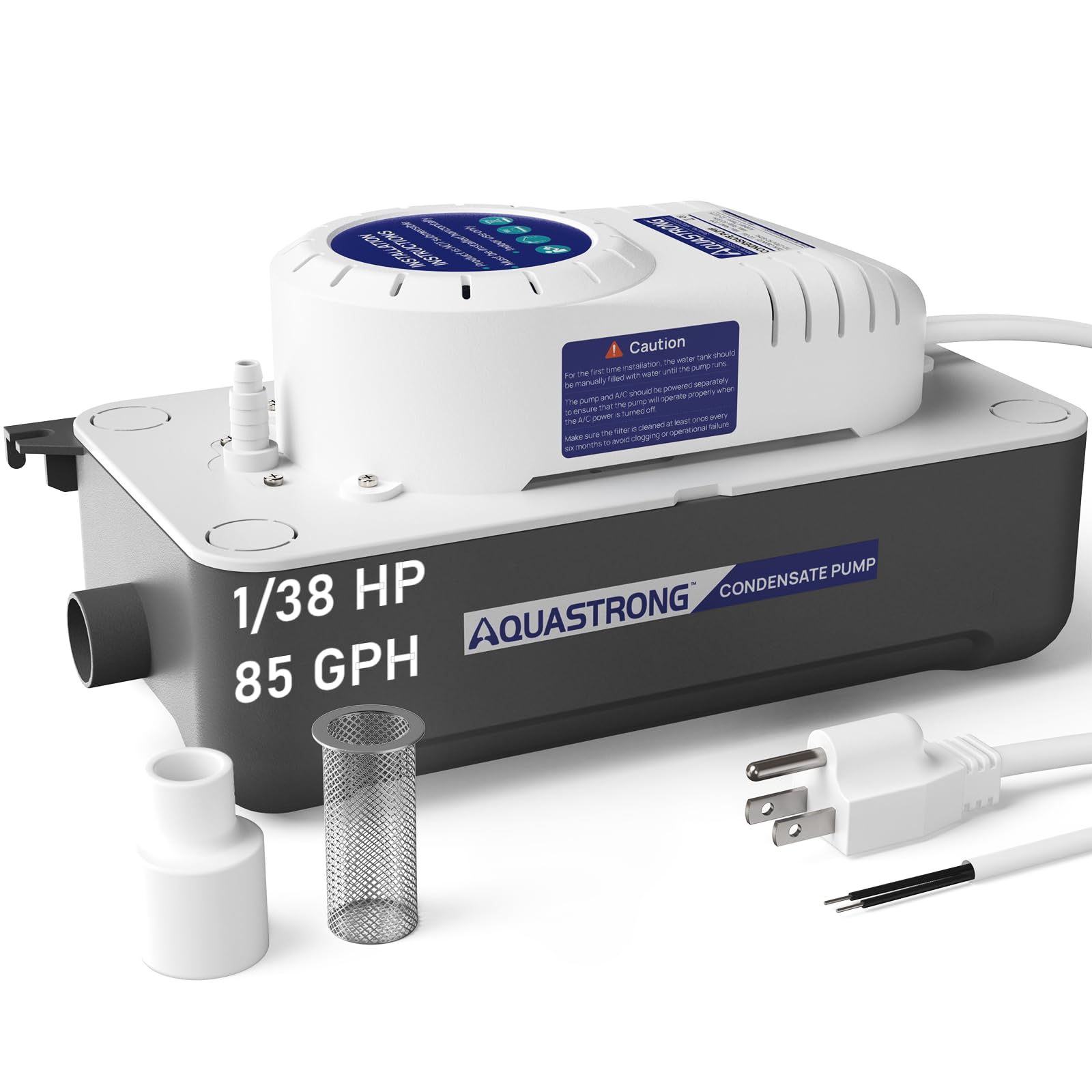
A compact condensate pump that quietly removes drips from ACs and dehumidifiers, preventing overflow.
This is the specialist of the list — it does not drain basements or pressurize showers. Instead, it collects the condensation that drips from an air conditioner, furnace, or dehumidifier and pushes it up to 20 feet vertically so you can route the water to a drain or outside. The small 1/38 hp motor moves 85 gallons per hour, which sounds modest until you realize it is matching the drip rate of a hard-working AC unit in a humid climate. The 1/2-gallon removable reservoir makes cleaning straightforward.
The automation comes from a hall switch — a magnetic sensor that starts the pump when water reaches 2.28 inches in the tank and stops it at 1.26 inches. Two signal lead wires can be wired directly into the HVAC appliance as a safety switch: if the water level gets too high, the pump tells the AC to shut off before the reservoir overflows. Five 1-inch inlet ports let you connect multiple condensate sources, and the built-in check valve keeps water from siphoning back.
Owners find it easy to install in a few minutes and appreciate the quiet operation, with one noting it handles a 7-foot vertical run without issues. The durability concern is real, though — several buyers report the unit failing within a few months, which makes the 2-year warranty a feature to rely on. Keep the float and filter basket clean at least every six months, as the manufacturer advises, to avoid clog-related failures.
Purpose-built and priced right: It solves a very specific problem — condensate removal — with a compact footprint, but it is not a general-purpose water pump.
Get it if: your AC or dehumidifier needs a reliable way to pump condensation up to a drain, and you value the high-water safety cutoff.
skip it if: you need to move large volumes of water or pressurize a line — this pump measures flow in gallons per hour, not per minute.
5. YOUNGTREE Water Pressure Diaphragm Pump 110V AC

An on-demand pump that boosts rain barrel pressure to 70 PSI for effective garden spraying.
The YOUNGTREE 110V AC on-demand pump delivers 5.5 gallons per minute at a factory-set 70 PSI (pounds per square inch, a measure of water pressure), which owners say is enough to run a shower and kitchen faucet simultaneously in an RV without noticeable drop-off. Its automatic pressure switch starts the pump the moment you open a tap or nozzle and stops it when you close it—a behavior that protects the motor from running dry and makes it ideal for rain barrel irrigation, garden sprinklers, and even a tankless water heater feed.
The YOUNGTREE’s headline spec is the lift: it self-primes up to 9.8 vertical feet and can push water up to 164 feet of head (the vertical height it can overcome), which is dramatically higher than the submersible pumps on this list because it is built to pressurize a line, not just drain a pit. Its pure copper motor and CE certification (a European safety mark) speak to build quality, and the thermal overload protection cuts the circuit if the temperature passes 70°C (158°F) to prevent damage.
Owners mention it works great with a 275-gallon rain barrel setup and that it auto-shuts off when a spray nozzle is released, preventing burnout. The durability data is the concern — multiple customers note failures after just days of use, though one noted the brand’s customer service eventually sent a free replacement after some back-and-forth over return shipping. In an RV, the noise is faint enough that you only hear it when everything else is quiet.
Why owners like it
- Strong 70 PSI pressure keeps up with simultaneous shower and kitchen use.
- Auto pressure switch starts and stops with the tap to prevent dry running.
- High 164-foot lift capacity suits multi-level or long-line setups.
The durability question
- Several reviewers point out early failure within days, though support often steps in.
- Value-for-money and pressure consistency draw mixed feedback.
Reach for it if: you want on-demand pressure for garden irrigation, rain barrels, or an RV without the cost of a full plumbing overhaul.
Look elsewhere if: you need a pump for floodwater removal — this is a pressure pump, not a volume pump.
6. FOTING Full 304 Stainless Steel Sump Pump
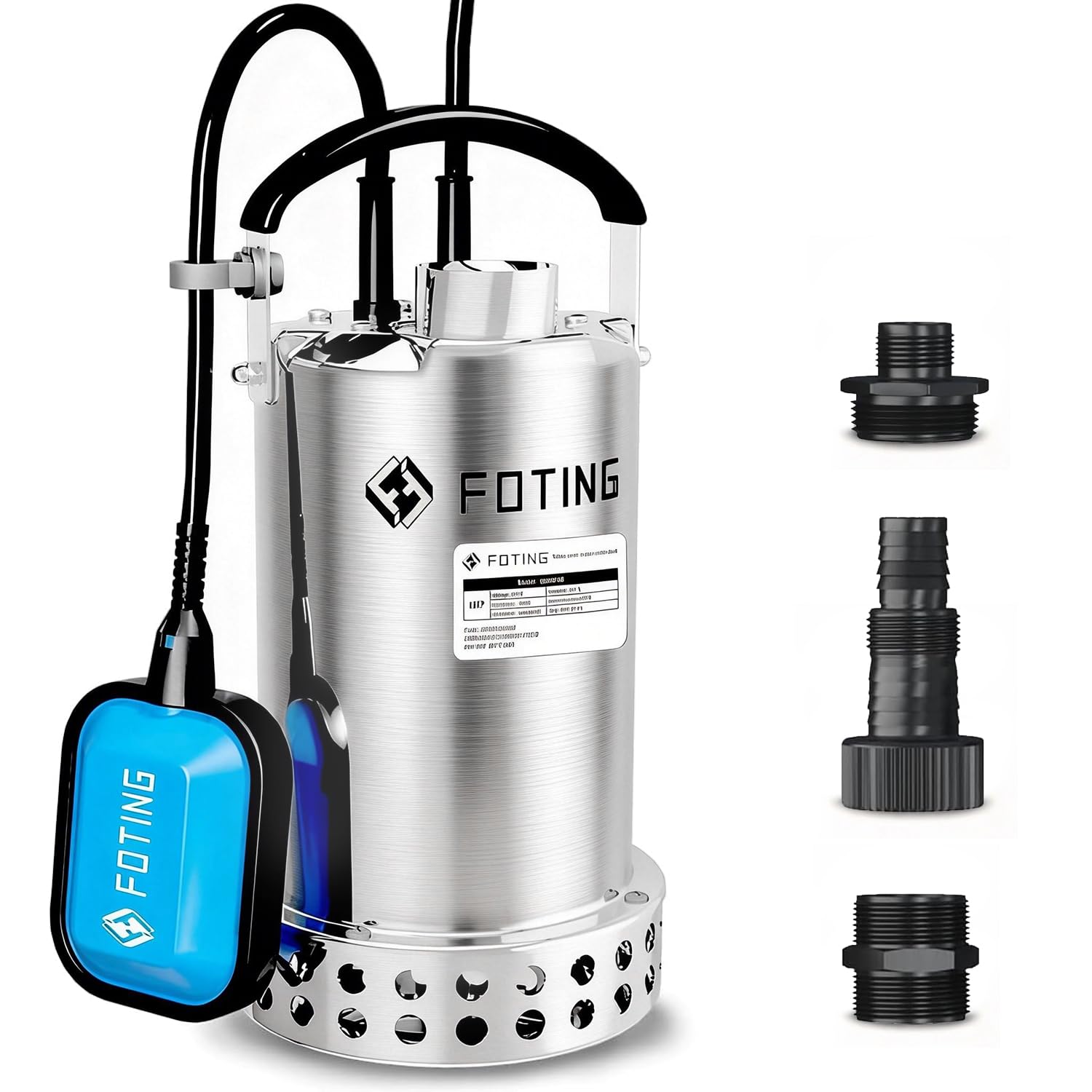
A stainless-steel 1 HP pump that drains a 275-gallon hot tub in about 15 minutes.
If raw power is the priority, this 1 hp unit leads the submersible pack with a 4600 GPH flow rate and a 32-foot vertical lift. The defining difference from the FLUENTPOWER is the construction: an integrated 304 stainless steel housing and base that provides better cooling and corrosion resistance than the plastic shells on cheaper pumps. Owners note the heavy, all-metal build feels genuinely sturdy, and the thermal overload protection suits continuous-duty water removal.
The automatic float switch starts the pump when water rises above 7 inches and shuts it off below 1-1/2 inches. Because it is a sump pump, it can also operate in manual mode by locking the float in the bracket for continuous draining — a useful backup if the switch fails. The top-discharge design lets it fit in narrow pits, and the double-deck suction holes on the base filter debris while handling solids up to 2/5 inch.
The review consensus praises the build quality and water-moving capacity, with owners using it to drain backyard fountains annually. The trade-offs are real: the float mechanism drew mixed feedback, with some owners needing to adjust it so it moves freely, and a minority report durability failures within a year, including one unit that tripped breakers. Support is sometimes hard to reach by phone.
Brute force with a metal jacket: The stainless build and 4600 GPH flow justify the premium tier for heavy-duty jobs, though the float switch may need fiddling.
Best for: pool owners and homeowners who want corrosion-resistant power for large-volume draining and do not mind a heavier unit.
Consider alternatives if: you need a compact, lightweight pump for occasional small jobs — this one is overkill for a backyard fountain.
7. ECO-WORTHY 110V AC Fresh Transfer Diaphragm Pump
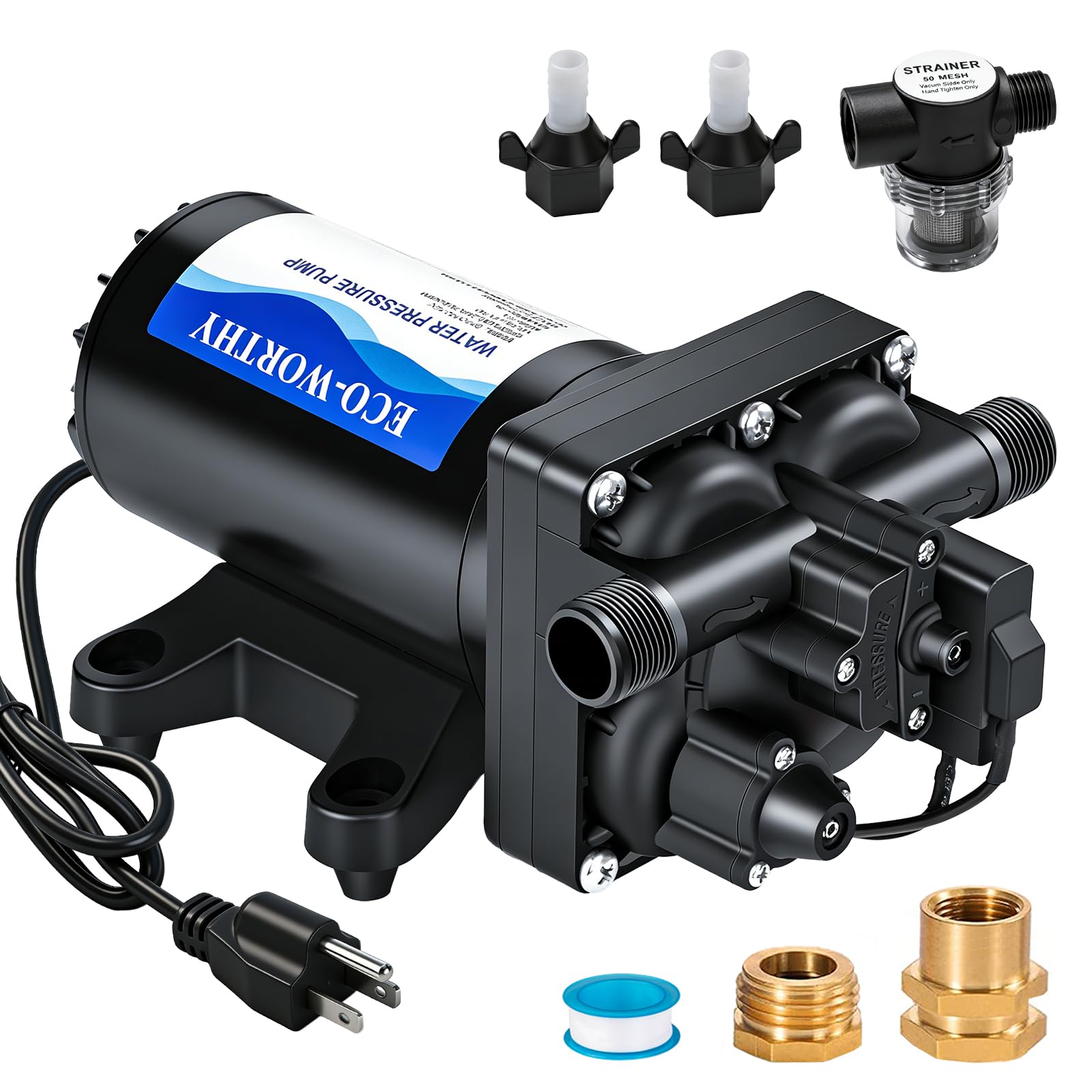
A quiet 5.5 GPM pump that delivers 70 PSI for cleaning boat decks and driveways without noise.
The DICMIC 110V AC diaphragm pump matches the YOUNGTREE on flow rate at 5.5 GPM (gallons per minute), but it is tuned for continuous spraying and cleaning rather than household faucet pressure. Its pressure switch is set to 70 PSI, it self-primes up to 9.8 vertical feet, and it lifts up to 131 feet—slightly less head than the YOUNGTREE’s 164 feet, but still ample for boat decks, driveways, and cleaning off parts. The stainless steel material and compact 10.6″ x 5.9″ x 5.2″ footprint make it easy to store between uses.
The built-in thermal overload protection disconnects the circuit if the temperature exceeds 70°C (158°F), which is important for a pump rated for continuous running beyond an hour. Shoppers say it solves low-pressure problems with rain barrel drip irrigation systems and note it is quiet enough that you cannot hear it running. One buyer measured it pushing water a solid 50 feet down a line.
The catch is longevity. Several buyers report units failing within a year, sometimes twice, and the warranty process involves video calls, disassembly checks, and return shipping costs that frustrated off-grid users. A recurring winter lesson from owners: drain and store the pump indoors, because freezing can trip the GFCI and damage the unit. You will also need to buy adapter fittings separately to connect a standard garden hose.
What it does well
- Very quiet operation that owners say is easy to forget while running.
- Fast setup and strong pressure for cleaning and irrigation tasks.
- Compact, sturdy build with a stainless steel material rating.
What to budget for
- Fitting adapters sold separately add cost and minor installation friction.
- Durability is the weak spot — protect it from freezing and prolonged hard use.
Pick it if: you need a quiet, high-pressure sprayer for boat decks, driveways, or rain barrel drip lines — not a permanent installation.
pass on it if: you want a pump that can sit outside year-round or handle household plumbing without adapter gymnastics.
8. SEESII 1HP Automatic Submersible Water Pump
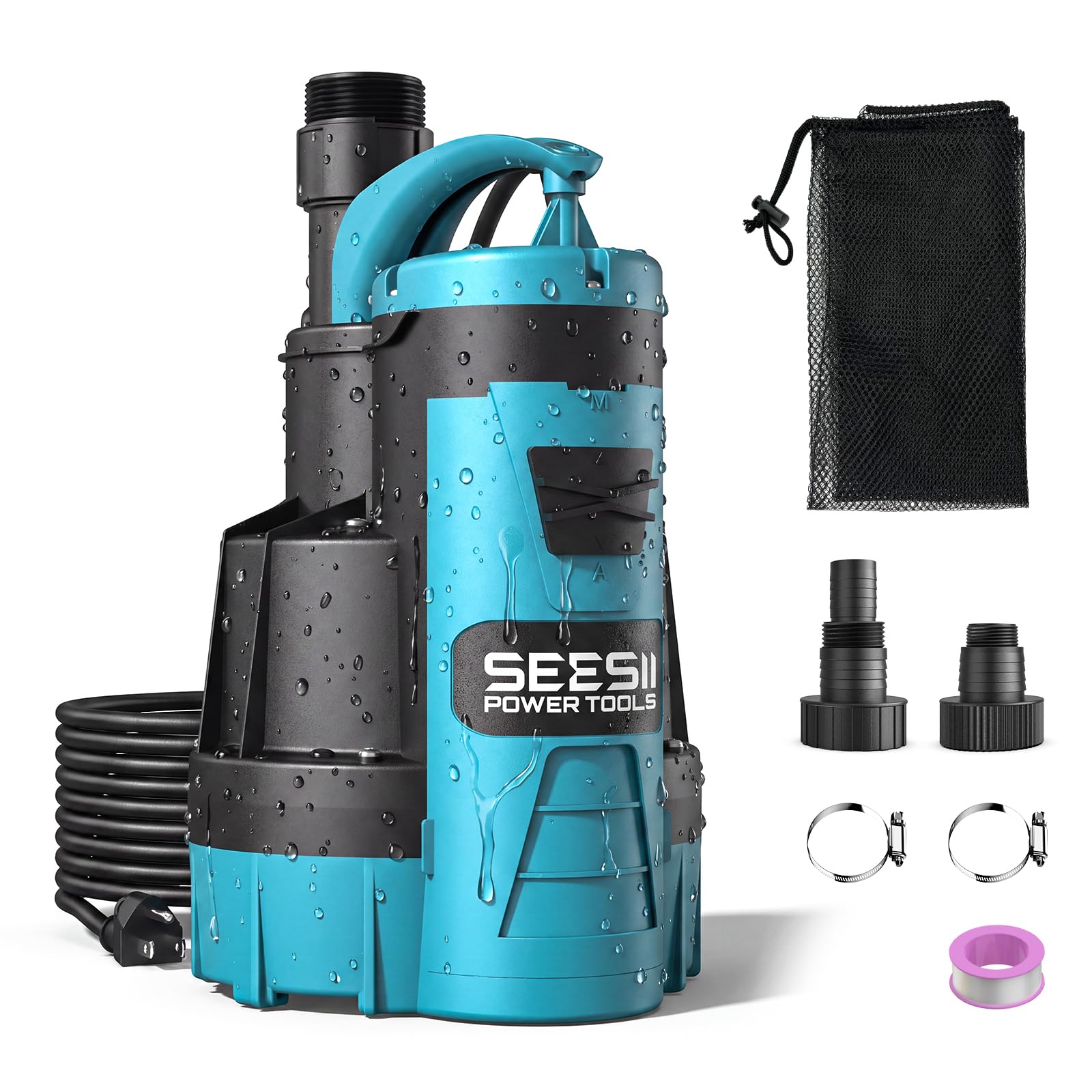
The budget-tuned firehose that empties a 500-gallon hot tub in under six minutes.
Here is the fastest pump on the list by flow rate: 5548 GPH, which the maker says drains a 500-gallon hot tub in under 6 minutes. With a 1 hp motor and a 36-foot max lift, it surpasses the FOTING’s 4600 GPH for sheer volume, yet it lands at a more accessible price point. The built-in float sensor handles the automation, starting the pump automatically when water is detected and shutting off when the job is done, with a manual mode for continuous draining down to the lowest water level. Dry-run protection shuts the motor off if the water runs out.
The design emphasizes portability — the compact 8.66″ x 7.48″ x 13.78″ body stays under 12 lbs and includes a built-in carry handle, so you can move it from sump pit to pool deck to a flooded yard. A 25-ft power cord gives substantial reach from any standard 110V outlet. The anti-clogging filter screen and bottom suction design handle leaves and small solids without jamming the impeller. Included accessories cover hose adapters, clamps, and a mesh filter bag.
Owners mention strong performance with real-world speed, including draining a 35,000-gallon pool and transferring a 50-gallon rain barrel in 30 minutes. The battery-life praise in the review summary is notable for owners using it with tool-style batteries, with one unit reportedly lasting a month without a charge. The durability record is mixed, however — a minority report failures after 10 to 12 uses, and at least one owner had an unresolved refund inquiry. Still, for the price, it delivers the highest flow-per-dollar on this list.
The flow-rate king on a budget: The SEESII 1HP Submersible out-moves pumps costing more, and its dry-run protection (which shuts the motor off if water runs out) adds confidence for unattended draining.
Best for: anyone who needs the fastest possible water evacuation — pools, hot tubs, ponds — without paying premium-tier prices.
Not for: buyers who need a pressure-boosting pump for an RV or garden line, or those who demand proven multi-year durability.
Understanding the Specs
Flow Rate vs. Lift Height
Flow rate, in gallons per minute (GPM) or gallons per hour (GPH), measures how much water the pump moves at its peak. Lift height tells you how high it can push water vertically. These two numbers must be read together — a pump that moves 42 GPM at ground level may slow dramatically when pushing water up 20 feet. For a flooded basement, prioritize GPM. For an RV or garden line, prioritize pressure measured in PSI.
Float Switch vs. Pressure Switch
A float switch rides on the water surface and triggers the pump when the level rises — the standard for submersible sump pumps. A pressure switch monitors line pressure and starts the pump when you open a tap, which is how diaphragm pumps deliver on-demand water. Each automates a different job: floats drain pits and basements; pressure switches feed faucets and sprinklers.
Horsepower and Motor Protection
Horsepower (hp) roughly tracks how much work the motor can do, with higher hp moving more water or pushing it higher. Thermal overload protection is the safety system that shuts the motor off if it overheats — a critical feature for pumps that run unattended. Dry-run protection goes further and stops the motor if the water supply runs out, preventing the pump from burning itself up.
Self-Priming and Check Valves
Self-priming means the pump can pull water up on its own without you manually filling the line first — essential for diaphragm pumps mounted above the water source. A built-in check valve stops water from flowing backward through the pump when it is off, which preserves the prime and prevents backflow. Look for both if your pump sits above the water line rather than submerged in it.
FAQ
What is the difference between an automatic and a manual water pump?
Will an RV water pump work for my garden irrigation system?
How high can a sump pump lift water?
Can I use a submersible pump to drain my hot tub?
How do I know which pump fits my RV?
How long do automatic water pumps last?
What does self-priming mean and why does it matter?
How many gallons per minute do I really need?
Final Thoughts: The Verdict
If you want one dependable pick, the automatic water pump winner is the DICMIC RV Water Pump because it is the crowd favorite—carrying a 4.6-star score from over 300 owners—and delivers the exact drop-in fit, quiet operation, and strong 55 PSI pressure that RV and camper owners want most. If you need to defend a basement from flooding, grab the FLUENTPOWER 1/2 HP Sump Pump for its 42 GPM flow and automatic float switch. And for fast, high-volume draining on a budget, the SEESII 1HP Submersible at 5548 GPH (gallons per hour) is the one to reach for.
How We Picked
We do not accept paid placement. Every pick is matched to a real buyer and a real use-case; we do not hands-on test units.
Sources & Methodology
Specifications: manufacturer listings and product documentation. Review insights: verified customer reviews, as of September 2026. Pricing: not shown on this page (it changes often); check the current price via the retailer link.
As an Amazon Associate, KitchPrep earns from qualifying purchases. This does not affect which products we feature.
Related Guides
