
Specs are compiled from manufacturer listings and verified buyer reviews and can change over time — please confirm the key details on the product page before buying.
When the power goes out, a 2000 Wh battery is the difference between watching your freezer defrost and living your normal life for days. This guide ranks the heavy hitters — the portable power stations that can actually run a full-size refrigerator, a CPAP machine, or a window air conditioner without breaking a sweat. You’ll see exactly which unit fits a camper, which one belongs in a hurricane zone, and which models are built to outlast a decade of daily use.
I’m Mohammad Maruf — the founder and writer behind KitchPrep. This guide is built by comparing the manufacturers’ published specifications and the patterns across verified customer reviews, so you get each pick’s real strengths and trade-offs instead of marketing spin.
These picks all carry at least 2,000 watt-hours of LiFePO4 storage, with some reaching nearly 4,000Wh, so they handle real appliances reliably. Find your match among these top-tier 2000 wh battery options and never sit in the dark again.
Our Picks at a Glance

How To Choose The Best 2000 Wh Battery
Before you scroll through 13 power stations, know this: watt-hours (Wh) is the total fuel tank, and watts (W) is how fast you can drain it. A 2,000Wh unit running a 500W load lasts about four hours. Match the capacity to the appliances you actually need, not the ones you dream about powering.
Capacity vs. Expandability
Some stations are a fixed size, like the compact BLUETTI Elite 200 V2 at 2,073.6Wh. Others grow with you: the Anker SOLIX C2000 can add an expansion battery to reach 4kWh, and the ABOK Ark3600 stretches from 3,840Wh up to 11,520Wh. Think about whether you will ever need a second unit stacked alongside the first.
Chemistry: LiFePO4 Is the Baseline
Lithium Iron Phosphate (LiFePO4) is the safe, long-life battery chemistry used in every pick here. It handles thousands of charge cycles without degrading — most of these units are rated for over 4,000 cycles, which translates to roughly a decade of regular use. That durability is why it replaced older lithium-ion technology in this class.
Output Ports and Voltage
Count your outlets before you buy. A standard US home runs on 120V, so most stations output 120V AC. Higher-end units like the PECRON F5000LFP and the GROWATT HELIOS add 240V split-phase output to run dryers and water pumps. Also check for a TT-30 RV port if you plan to plug into a camper.
Quick Comparison
| Model | Best For | Capacity | Output | Weight | Amazon |
|---|---|---|---|---|---|
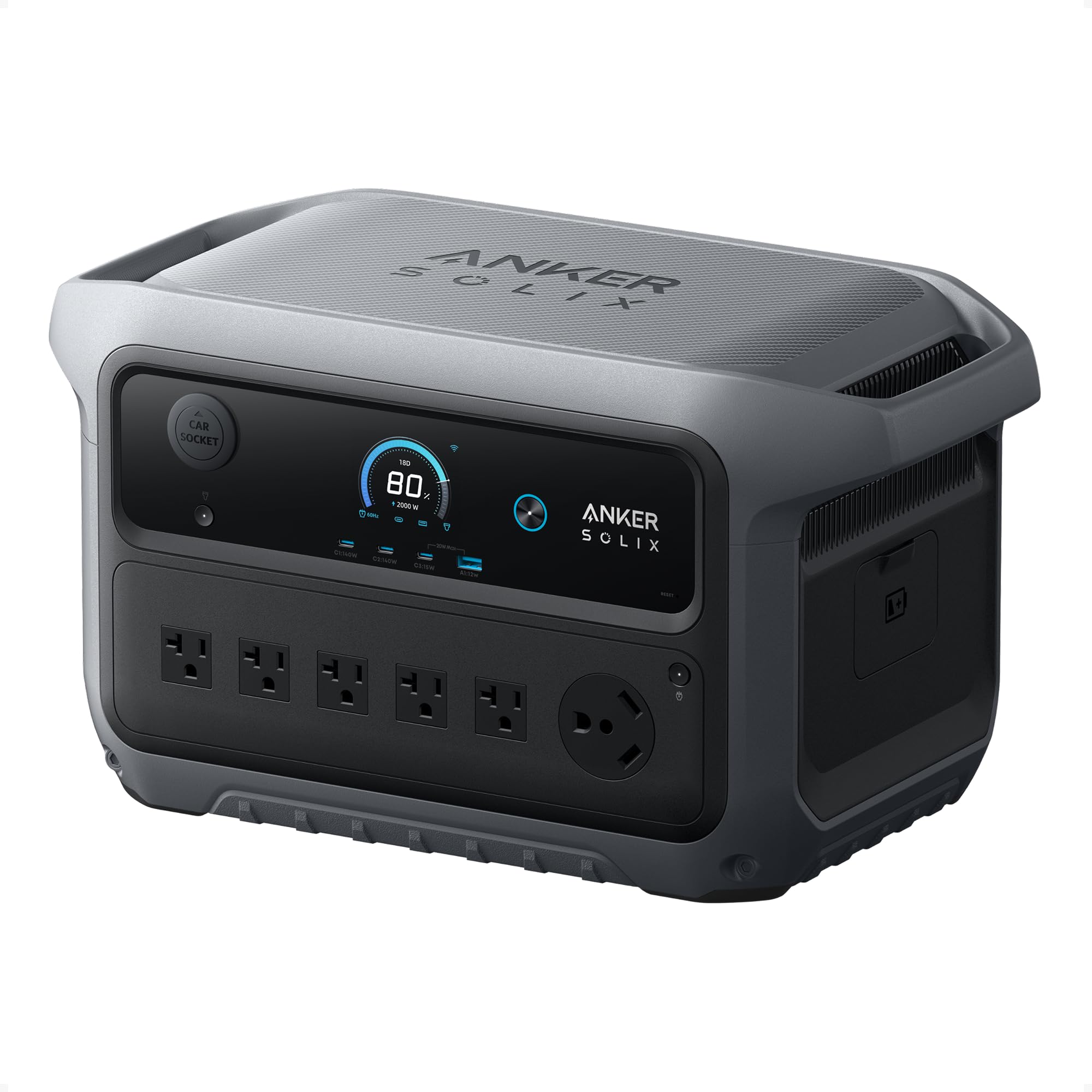
| Anker SOLIX C2000 Gen 2★ Best Overall | Fast weekday convenience | 2,048Wh | 2,400W | 41.7 lb | Amazon |
| BLUETTI Elite 200 V2Daily-Use Champ | Daily-use savings | 2,073.6Wh | 2,600W | 53.4 lb | Amazon |
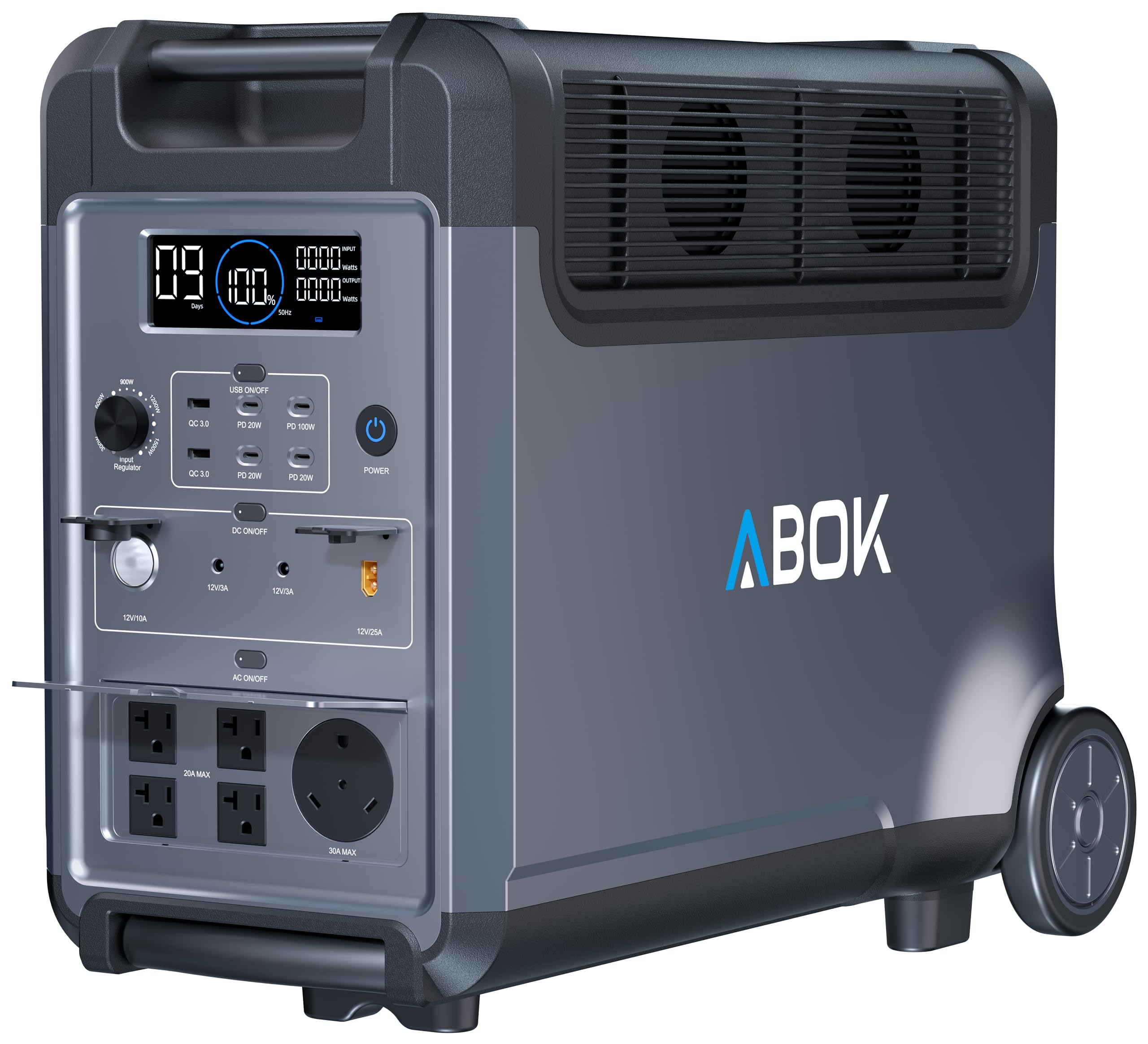
| ABOK Ark3600Expandable Beast | Whole-home muscle | 3,840Wh | 3,600W | 92 lb | Amazon |
| Jackery HomePower 3000 | Outage essentials | 3,072Wh | 3,600W | 59.5 lb | Amazon |
| BLUETTI Elite 300 | RV travel | 3,014.4Wh | 2,400W | 58 lb | Amazon |
| Anker SOLIX F3000 | Generator pairing | 3,072Wh | 3,600W | 91.5 lb | Amazon |
| EF ECOFLOW Delta 3 Ultra | Office-steady power | 3,072Wh | 3,600W | 72.1 lb | Amazon |
| VTOMAN FlashSpeed Pro 3600 | Emergency kits | 3,096Wh | 3,600W | 83.8 lb | Amazon |
| Jackery HomePower 3600 Plus | Big home backup | 3,584Wh | 3,600W | 77.2 lb | Amazon |
| EF ECOFLOW DELTA Pro | Mobile business | 3,600Wh | 3,600W | 99 lb | Amazon |
| FOSSIBOT F3600 Pro | Off-grid solar setup | 3,840Wh | 3,600W | — | Amazon |
| PECRON F5000LFP | Heavy appliances | 5,120Wh | 7,200W | 123.9 lb | Amazon |
| GROWATT HELIOS 3600 | Whole-house 240V | 7,200Wh | 7,200W | 250 lb | Amazon |
In‑Depth Reviews
1. Anker SOLIX C2000 Gen 2
Our pick — over 4.5★ from 500+ verified ratings; the strongest balance of quality and price.
The compact 41.7-pound station that charges faster than most rivals recharge their phones.
The headline here is a full 100% recharge in just 58 minutes — no other pick in this lineup gets you back to full that quickly from a wall outlet. You get 2,048Wh of LiFePO4 storage with a 2,400W rated output and a 4,000W peak, so it handles most window and RV air conditioners on startup without tripping.
What wins people over is the runtime per charge: buyers report it “runs AC ~1.5 hrs, fridge for days,” which tracks with its ultra-low 9W standby draw. At 18.1 × 9.8 × 10.1 inches, it slides neatly under counters or TV stands, making it feel more like furniture than a generator you haul out during storms.
The honest trade-off sits at the edges. Owner consensus says the app’s runtime estimates get fuzzy when appliances cycle on and off, and it won’t run an AC unit for long stretches. You can add an expansion battery to reach 4kWh and double fridge runtime, but that is an extra purchase.
What wins owners over
- Full charge in 58 minutes via AC and solar
- Ultra-low 9W standby stretches every watt
- Five grounded outlets help older homes
Where it has limits
- App runtime estimates are rough for cycling loads
- No long-duration AC cooling performance
Reach for this if: you want one station that takes the least time to refill after an outage and disappears into your living space.
Look elsewhere if: you need days of whole-home power without buying the separate expansion battery.
2. BLUETTI Elite 200 V2
A 6,000-cycle workhorse that can actually pay for itself by shifting when you use power.
That makes the 2,073.6Wh capacity feel different from the others — it is a daily tool, not just an emergency stash.
On performance, the turbo charging story is strong: owners measure 50% in 43 minutes and a full 100% in 85 minutes from the wall, or 80% in 50 minutes with solar. Its 2,600W continuous output with a 3,900W power-lifting mode runs a 1,300W microwave and a 1,600W air fryer without complaint, though heavier loads can trigger an occasional overload reset via the power button.
The catch is physical: at 53.4 pounds, it is no featherweight, though owners note the dual handles make car camping manageable. It also lacks battery expansion, so what you buy is what you get — and the app has a learning curve for scheduling charges.
The daily-value case
- Standby power of just 10W, roughly 3 times lower than similar units
- Its 6,000+ cycle LiFePO4 battery is rated for 17 years of daily use.
- Three charging modes let you trade speed for silence
The practical limits
- No expansion battery option
- Rubbery buttons and a confusing app at first
Best suited to: the owner who runs it every day for savings, not just storm season.
Think twice if: you want to expand capacity later — this one is a fixed-size unit.
3. ABOK Ark3600
A wheeled 3,840Wh powerhouse that kept a 58-quart fridge running for days on 12V alone.
This unit starts at a massive 3,840Wh — a full 88% more capacity than the Anker SOLIX C2000’s 2,048Wh — and expands to 11,520Wh when you need whole-home endurance. Owners mention running a 58-quart fridge via the 12V port since Saturday morning and still showing 64% battery Monday afternoon, even in 97°F heat.
Real-world stories go beyond the fridge. One owner measured around 22% battery left after a full day running a wet vac, heat gun, and SDS-Max drill simultaneously across multiple outlets. The 3,600W rated output with a 4,500W peak covers 99% of household appliances, and the telescoping handle plus durable wheels make the 92-pound weight feel far more manageable than it should.
Fair caveats: it is 120V only with no 240V option, and owners who charged purely by solar in Washington’s cloudy weather waited about 3 days for a full tank. The app is also lightly documented for setting charge limits.
Why owners rave
- 15 output ports power many tools at once
- Reaches full from AC alone in 3 hours
- Indoor-safe, silent, and fume-free
The honest limits
- 120V output only, no 240V for dryers
- Solar-only recharge is slow in cloud cover
Grab it for: serious home backup and workshop use where 120V tools and multiple appliances run all day.
skip it if: you have 240V appliances or need solar to refill you fast in gloomy weather.
4. Jackery HomePower 3000
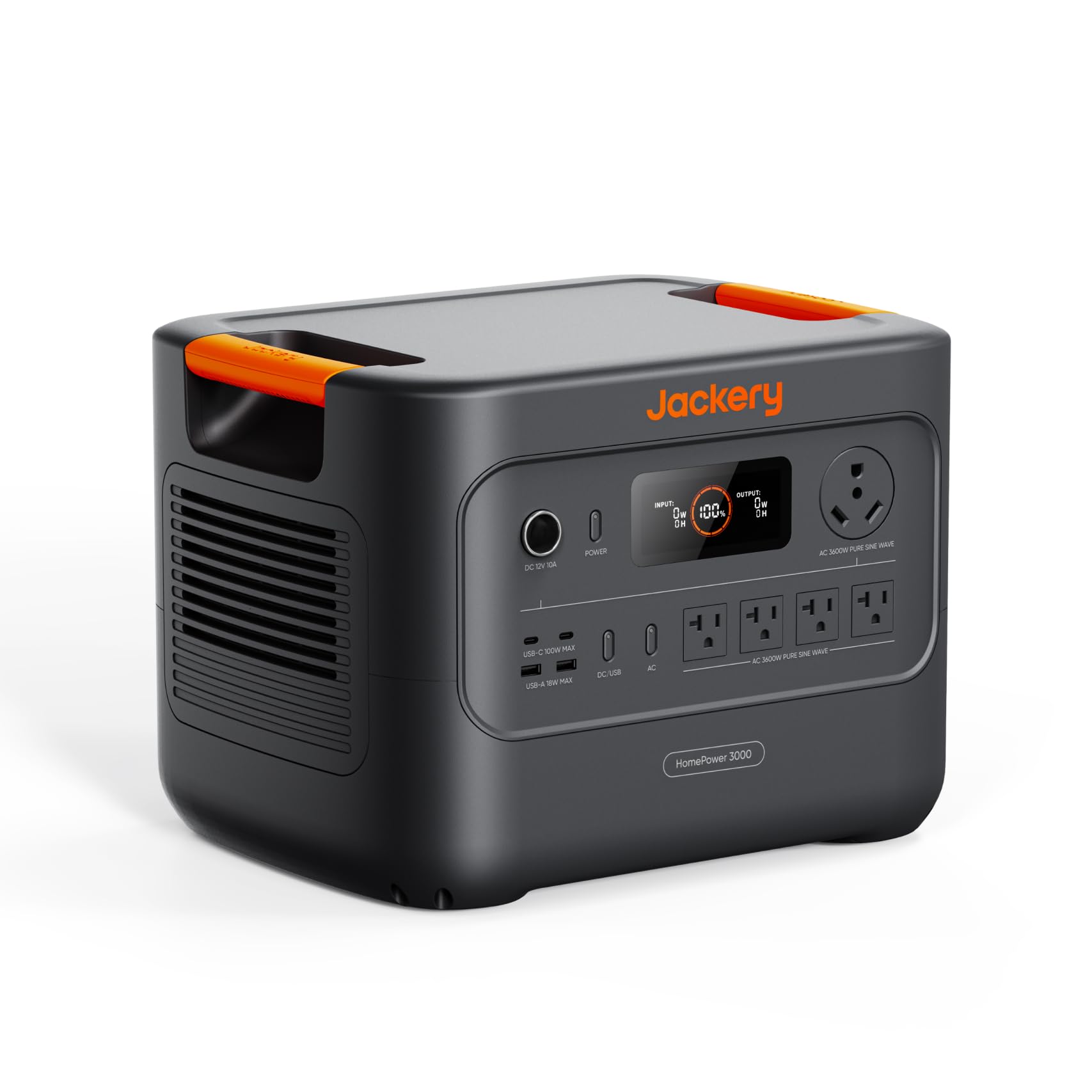
A 30A-powered unit that kept a side-by-side fridge going for more than 30 hours.
The Jackery HomePower 3000 pairs a 3,072Wh capacity with a 3,600W output and a 7,200W surge — enough headroom to start a fridge compressor or an air fryer without stalling. Buyers specifically chose it over BLUETTI for its 30A outlet, which feeds camper power and office gear during outages.
Real-world numbers look strong: a Whirlpool side-by-side refrigerator ran for over 30 hours, and customers note powering a big TV, router, lamps, and an electric blanket for many hours straight. Its ≤20ms UPS switch (a backup that kicks in faster than your computer can blink) keeps security cameras and video calls running without a hiccup during storms.
The honest complaints are physical. At 59.5 pounds, it is heavy, and the cooling fan measures roughly 60dB under load, so it is not a silent nightstand companion. Full charge takes 1.7 hours hybrid or 2.2 hours on AC alone — respectable, though not class-leading.
Built-in strengths
- UL-certified UPS switches in under 20ms
- Dual 100W PD USB-C ports fast-charge drones and tablets
- TT-30 RV port for plug-and-play camper power
Weighty reality
- Roughly 60dB fan noise under heavy load
- 60+ pounds needs both handles to move
Best for: the homeowner who wants a dependable, UL-certified UPS-style backup for fridges and routers.
Not ideal for: silent nightly UPS use or buyers who need solar panels to refill in under a day.
5. BLUETTI Elite 300
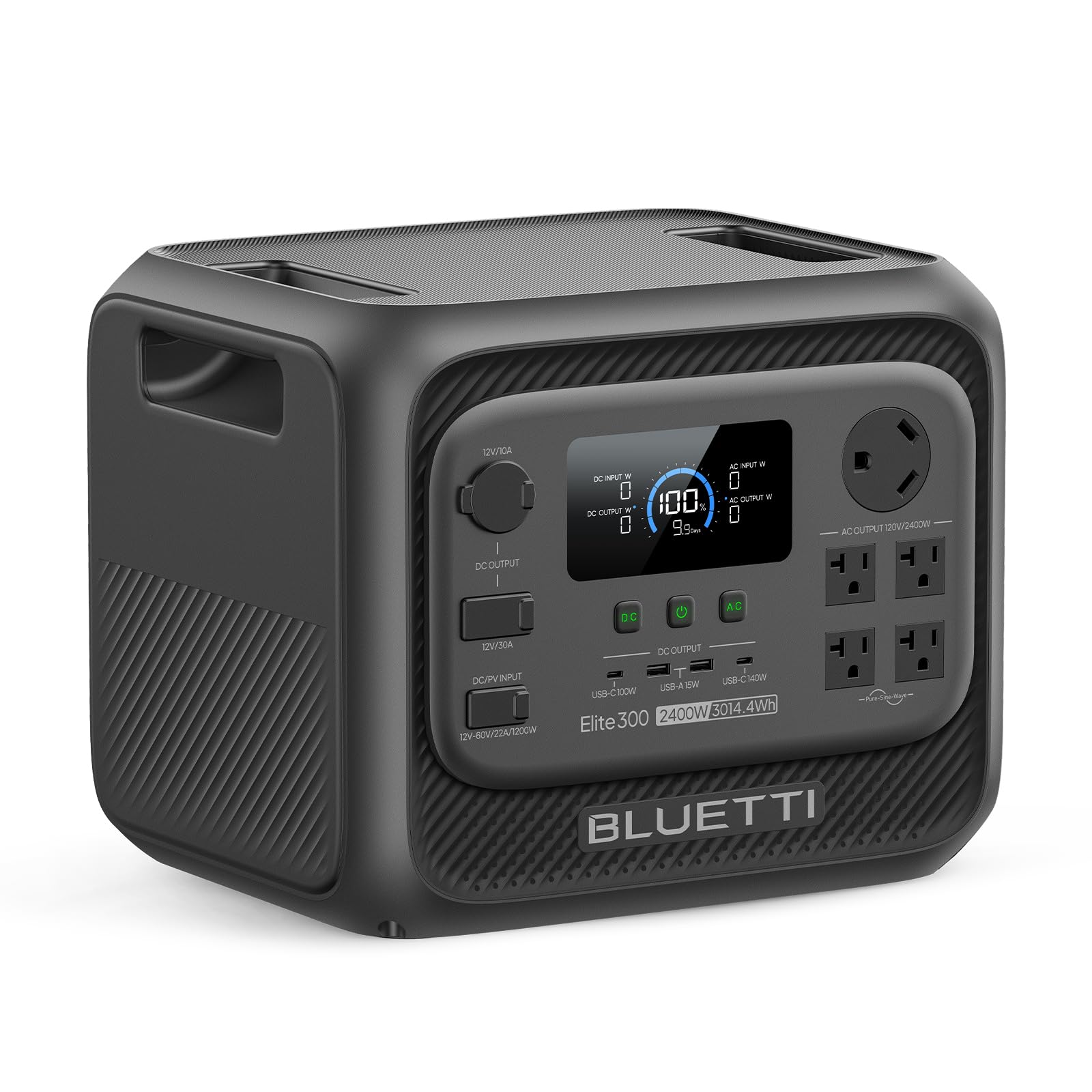
The Frost & Sullivan-recognized smallest 3kWh station that fits like two ammo cans.
At 3,014.4Wh in a frame nearly 59% smaller than traditional large stations, this unit solves the storage problem that plagues big batteries. Owners describe it as the size of two ammo cans with the weight of a truck battery, and one camped an entire weekend on a single charge — fridge, fans, and phones included.
RV owners get a genuine TT-30 RV outlet plus a high-current 12V/30A DC output, which feeds 12V fridges, water pumps, and diesel heaters directly. The 2,400W continuous output with a 4,800W surge handled a 2,400W load for 30 minutes in testing, and the 10ms UPS switch performed flawlessly during power transitions.
Where it steps back: there is no battery expansion, and solar input caps at 1,200W. One owner found the display hard to read in direct sunlight, and the app requires a phone for some features. Charging from 0 to 80% takes as fast as 78 minutes, which is competitive.
The compact win
- TT-30 RV port plus 12V/30A DC output
- 0 to 80% in as fast as 78 minutes
- Fits small cabinets and camper storage
Small trade-offs
- No expansion battery option
- Solar capped at 1,200W input
Pick this for: RV and camper-van owners who need a true dual-voltage DC setup in a small footprint.
Look past it if: you plan to grow capacity or feed more than 1,200W of solar panels.
6. Anker SOLIX F3000
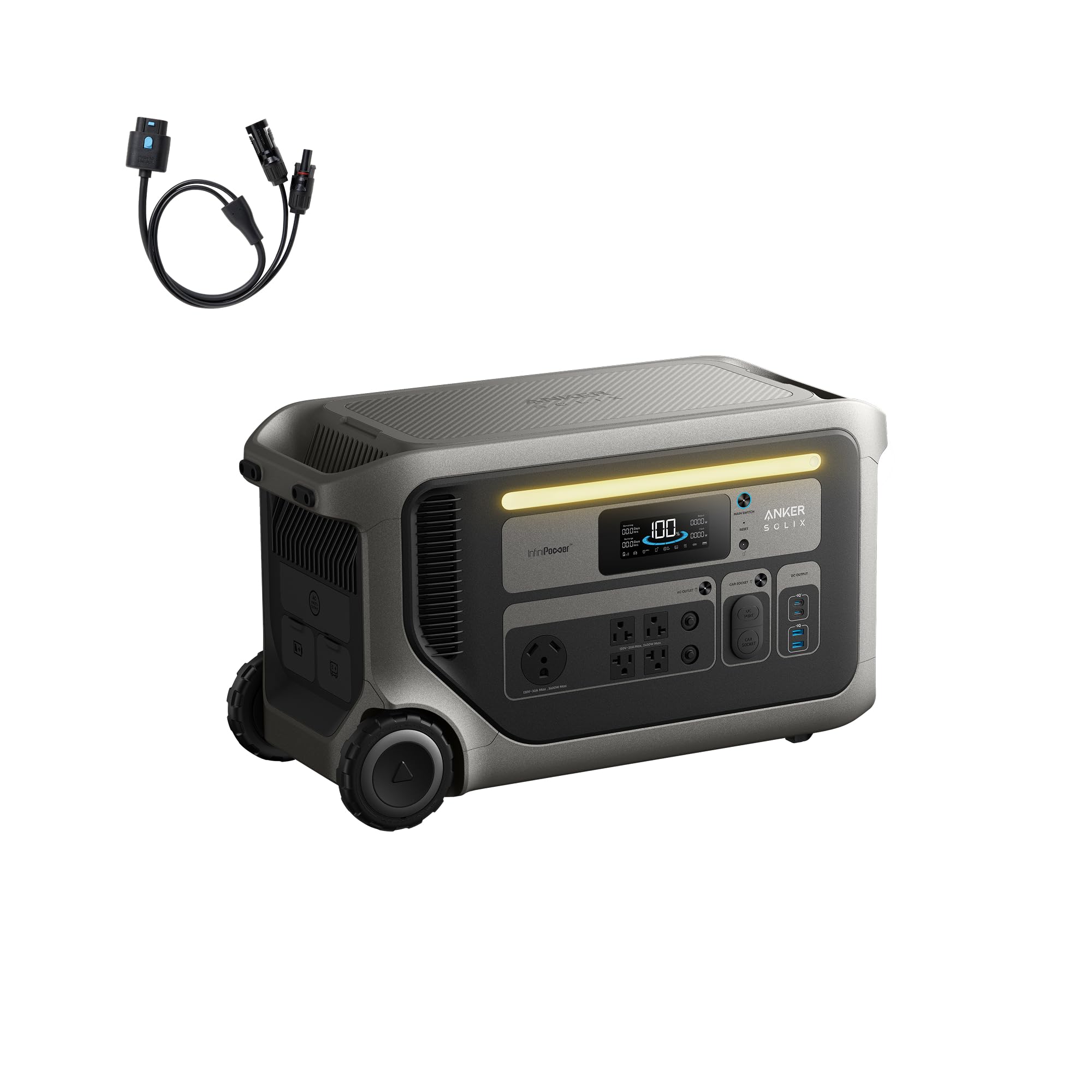
The pass-through champion that recharges at 3,600W while still running your appliances.
Its defining trick is massive 3,600W pass-through charging — you can plug in a generator and keep running your fridge at full power at the same time, no interruption. Owners powered roughly 60% of their home during an outage test, and one ran a 13k Coleman roof AC for 6 to 8 hours on low cool.
The 3,072Wh capacity expands to 24kWh with add-on batteries, With add-on batteries, the system can deliver up to 80 hours of backup power.. Its ultra-low idle draw delivers 125 hours of AC idle standby time, or it can run a 190W fridge for 42 hours straight. A full recharge hits in about 90 minutes via a 30A outlet, and dual solar ports accept up to 2,400W.
The limit is weight and bulk: at 91.5 pounds it rolls on 6-inch wheels, but it is a large footprint. Owners noted the bundled high-wattage solar panels are heavy and finicky to orient — two 400W panels produced only 550W max in one test. There is no 240V split-phase output either.
The endurance case
- Recharge and run appliances simultaneously via 3,600W input
- 125 hours of AC standby on low idle power
- Expandable to 24kWh
Heavy lifting required
- 91.5 pounds, bulky even with wheels
- Bundled solar panels under-deliver in testing
Choose it for: a hybrid setup where a fuel generator tops you up while the station runs your home.
Pass if: you need a compact unit or 240V output for large appliances.
7. EF ECOFLOW Delta 3 Ultra
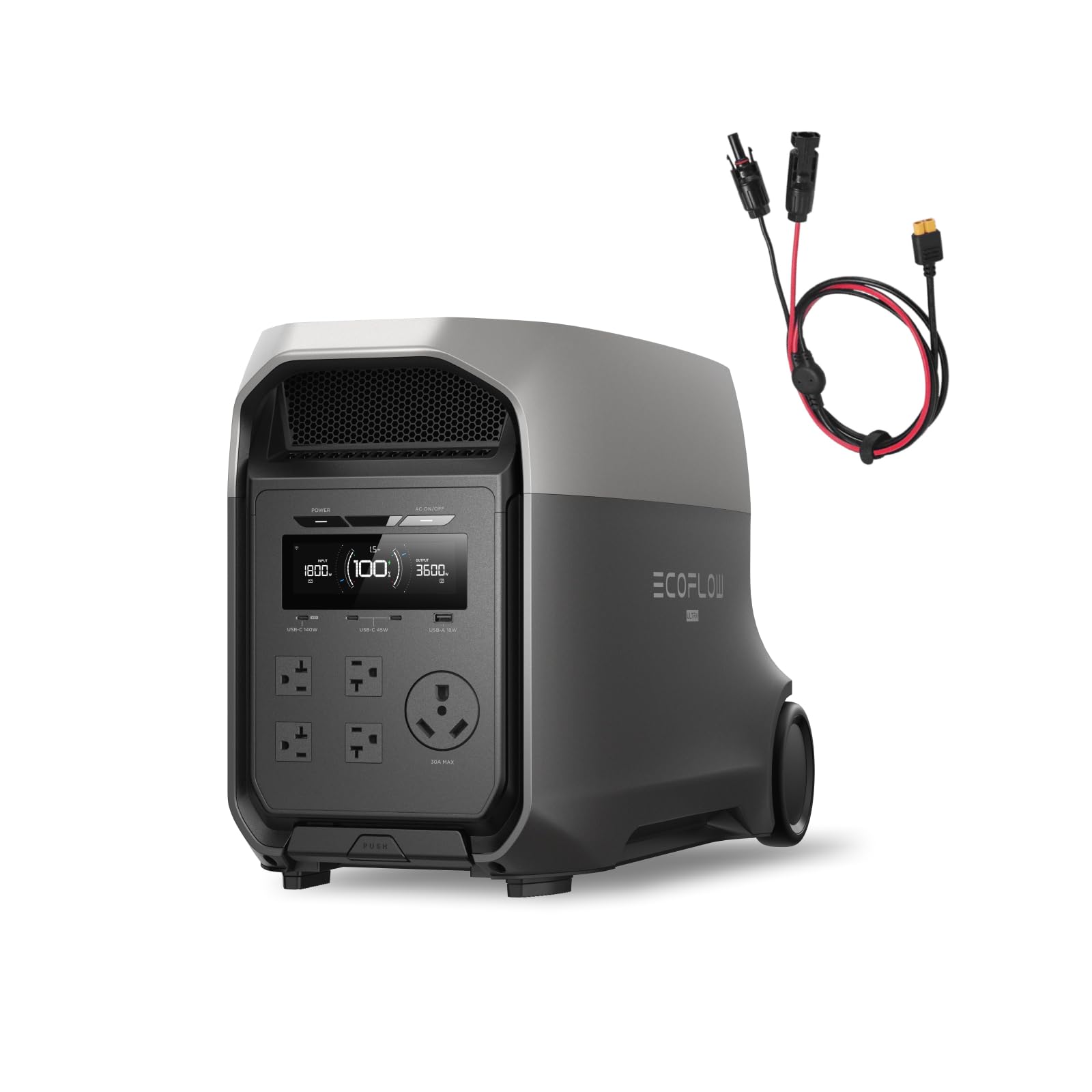
A whisper-quiet 25dB station that switches from grid to battery in under 10ms.
For home-office and apartment users, silence matters, and this unit hums at just 25dB under load — quieter than a library’s whisper. Owners handling a 75-200W per hour home-office load report flawless performance, and the <10ms UPS switch (grid-to-battery transfer faster than a blink) kept a test user’s setup running without a single drop.
The 3,072Wh capacity pairs with a 3,600W continuous output and a 7,200W surge. A 76-year-old owner found the 75-pound unit manageable thanks to suitcase-style wheels and a handle, and a 1,500W heater test dropped the charge from 100% to 81% in 30 minutes — strong real-world efficiency.
The catch is expandability: the base Delta 3 Ultra has no expansion slots, while a separate Plus version adds them. Owners also found the button layout confusing when coming from an older Delta 3. Charging options are solid with X-Stream technology through wall, solar, car, or the EcoFlow Smart Generator.
The quiet power case
- 25dB under load suits overnight and office use
- Almost instant <10ms grid-to-battery switch
- AC pass-through enables continuous operation
Missing flexibility
- No expansion slots on the base model
- Button layout differs from older Delta units
Take it if: silent, reliable home-office backup with instant switchover matters more than future expansion.
Look to the Plus version if: you already know you will want extra batteries later.
8. VTOMAN FlashSpeed Pro 3600
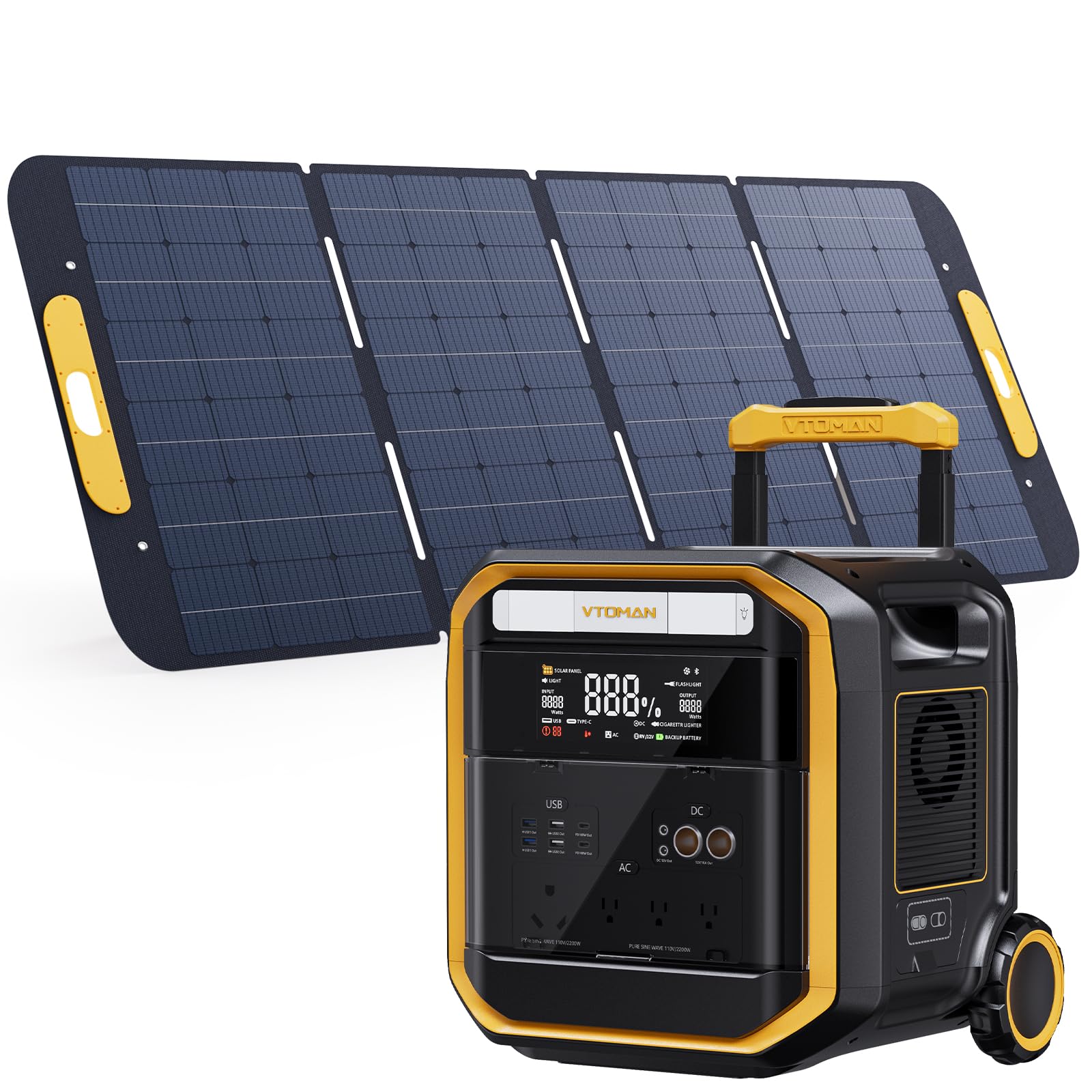
A wheeled 83.8-pound unit that ships with its own 400W solar panel in the box.
Most stations make you buy solar separately, but this VTOMAN bundle includes a 400W monocrystalline panel — a genuine advantage for anyone wanting off-grid readiness on day one. Its CHARGECORE system refills 0 to 100% from a wall outlet in just 2 hours and accepts up to 800W of solar input.
The 3,096Wh capacity with a 3,600W output and a 6,000W surge runs refrigerators, WiFi routers, laptops, and CPAP machines during outages. Owners running a farmer’s market stall reported steady, reliable power through the entire day, and the build feels substantial and quality-made. A cord storage compartment on top keeps cables tidy.
The durability case is strong: EV-grade cells with LIFEBMS monitoring promise 3,000+ cycles at 80% capacity and 6,000+ at 50%. The honest downside is mostly logistics — it is heavy at 83.8 pounds, and one unit arrived with a loose handle suggesting prior use, though that is an exception rather than the norm.
The bundle advantage
- 400W solar panel included in the box
- 2-hour full recharge from AC
- Wheeled with a sturdy pull-up handle
Before you commit
- Heavy at 83.8 pounds
- Quality checks on arrival needed
Best for: first-time buyers who want one box with everything needed to start generating solar power immediately.
Think twice if: weight is your primary concern — this unit is built like a tank.
9. Jackery HomePower 3600 Plus

The lightest 3.6kWh LFP station that rolls on luggage wheels and runs a furnace for 12 hours.
Jackery claims this is the lightest 3.6kWh LFP station, using automotive-grade CTB tech to cut size by 34% and weight by 29.3% versus comparable models. At 77.2 pounds with a telescopic handle, reviewers point out wheeling it from kitchen to garage easily, and one runs it daily in a garage powering the door opener and power tools.
The 3,584Wh capacity expandable to 21kWh per unit powers a 3-person household for over 2 weeks when stacked. Real-world reports show a gas furnace, fridge, and freezer running up to 12 hours, while a dinner for two on an induction cooktop consumed just 19% of the battery. Charging from 0 to 100% takes 2 hours via hybrid AC+DC.
Its ceramic membrane battery cells tested at 302°F aim to prevent thermal runaway, and Rated for 6,000 cycles and a 10-year lifespan, it is built to last.. The dual-voltage parallel capability (120V and 240V) means you can pair two units for 7,200W output. Owners consistently praise its near-silent operation.
Why owners stay loyal
- 29.3% lighter than comparable 3.6kWh stations
- 6,000 cycles and a 10-year lifespan
- Extremely quiet in daily garage use
The commitment
- Full expansion needs extra units
- Premium-tier investment
Reach for it if: you want a rolling, near-silent whole-home station that outlasts a decade of storms.
Look elsewhere if: a fixed 3,584Wh without immediate expansion matches your needs better.
10. EF ECOFLOW DELTA Pro
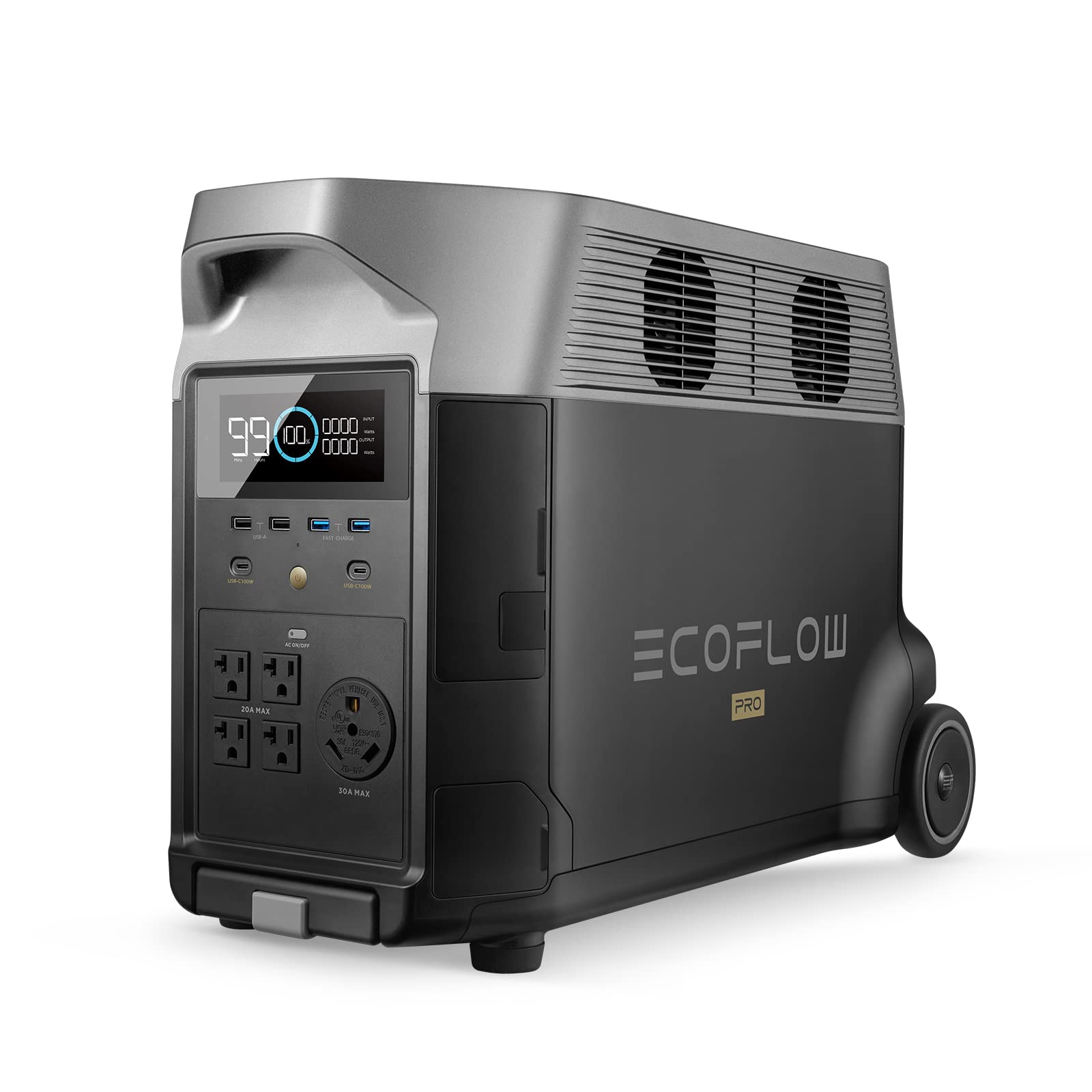
The 3600W station with 15 output methods that runs a heat press all day at vendor markets.
This is the unit mobile businesses rely on. One owner runs a heat press flawlessly at vendor markets with zero voltage drops, and the 3,600Wh capacity with 3,600W output handles five AC outlets simultaneously. The 3600Wh LFP battery expands up to 25kWh with extra batteries or Smart Generators.
Its three charging modes are genuinely flexible: 1.8 hours via a 240V outlet at 3,000W, 2.7 hours from a standard 1,800W wall outlet, or 2.8 hours from four 400W solar panels with up to 23% conversion efficiency. The smart app over Wi-Fi or Bluetooth tracks charge level, temperature, and discharge rates across every connected device.
Expect to lift 99 pounds, and the fan gets loud when you push it hard. One reviewer noted a damaged delivery box that could not be returned, so check yours the moment it arrives. Despite that, it has a large owner base and a long track record in this class.
The professional edge
- Run two units paired for 7,200W output
- 15 output methods including a car port and Anderson port
- Fast 1.8-hour charge on 240V outlets
The burden
- 99 pounds is a two-person lift out of a vehicle
- Fan noise rises under heavy load
Choose it for: vendor markets, mobile business, or serious home backup where proven reliability matters.
Pass if: you need something you can lift alone or that runs silently under a heavy load.
11. FOSSIBOT F3600 Pro
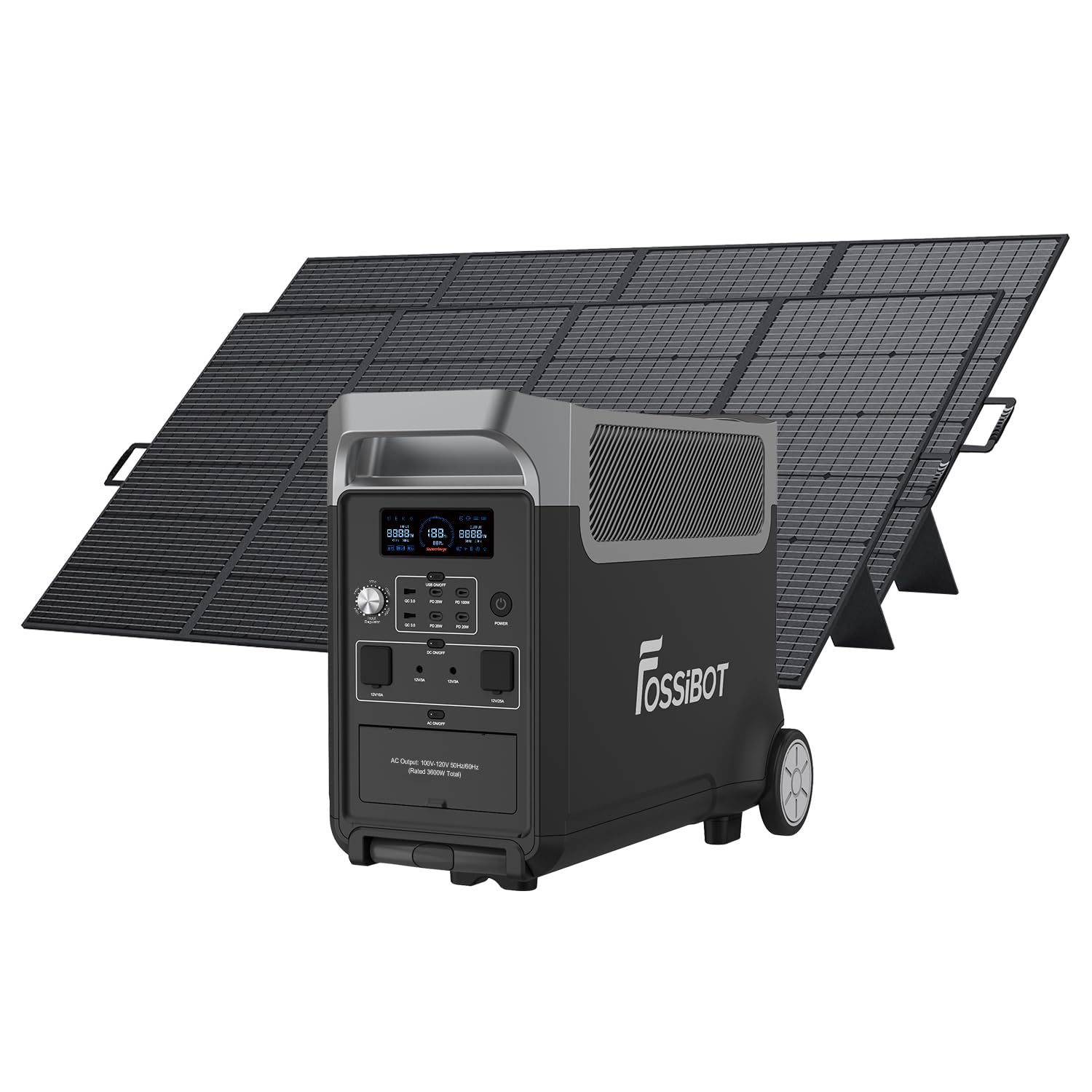
A complete kit with dual 420W IP67 solar panels and a 10ms UPS for off-grid setups.
This bundle includes two 420W monocrystalline solar panels with up to 23.4% conversion efficiency and IP67 waterproofing (totally sealed against dust and rain), so it is ready for outdoor charging in harsh weather. Each panel weighs just 20.39 pounds, and the station’s 3,840Wh capacity expands to 11.52kWh with two add-on batteries.
Owners highlight an unusual trait: extremely low self-discharge at just 500µA, meaning it holds a 100% charge for months unplugged — perfect for seasonal camping where no charging is available. The 10ms UPS keeps CPAP machines, desktops, and security cameras alive through grid drops, and hybrid charging hits full in 1 hour 50 minutes.
Its premium EVE LiFePO4 cells support a remarkable Its EVE cells support 6,500+ charge cycles with 80% capacity retention, backed by a 5-year warranty.. The wheeled design with a retractable handle moves easily, and a detachable magnetic 3W LED flashlight adds a practical touch. Note that the station and panels ship separately due to lithium battery transport rules.
The off-grid advantages
- Dual 420W IP67 waterproof solar panels included
- Ultra-low 500µA self-discharge holds charge for months
- 6,500+ charge cycle rated EVE cells
What to expect
- Panel and station ship in separate packages
- Heavy cargo that carriers may hesitate to deliver
Best for: off-grid campers who want a complete solar kit that stays fully charged between trips.
Look elsewhere if: you prefer buying the station first and adding panels later.
12. PECRON F5000LFP
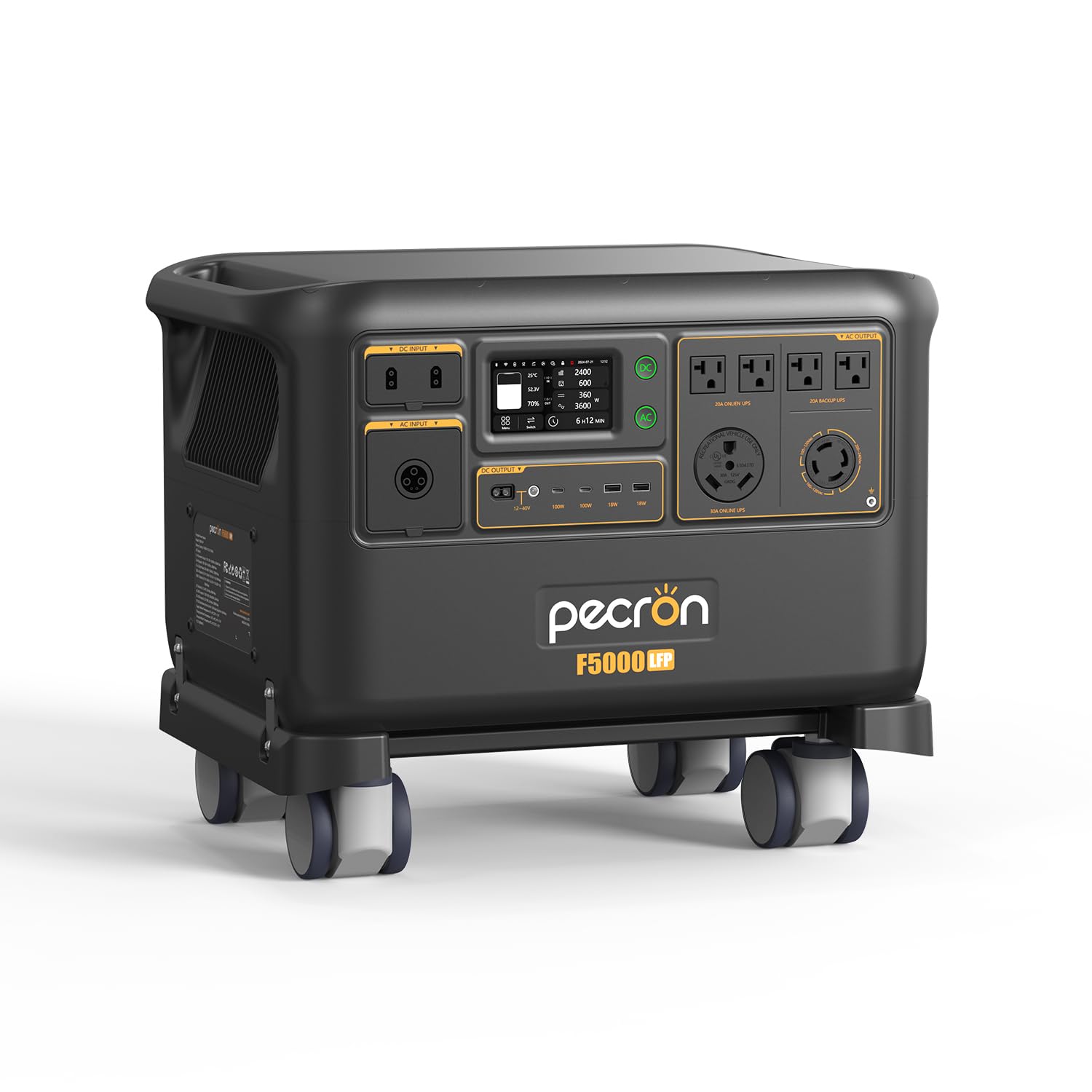
The 5,120Wh dual-voltage generator that powers a washer, dryer, and dishwasher.
This is a different weight class. The F5000LFP delivers a 7,200W output across 120V and 240V dual voltage, and owners confirm it runs a washer, dryer, and dishwasher — appliances that smaller stations cannot touch. At 5,120Wh capacity, it supports an entire household’s essentials for up to 3 days, expanding to 35.8kWh with six add-on batteries.
Two 20A and one 30A 0ms online UPS outlets provide instant, gap-free backup for WiFi, aquariums, CPAP machines, and computers. Solar enthusiasts get 2 input ports supporting a massive 6,400W total, letting you build a serious home energy system. The smart app schedules charging during off-peak hours to cut power bills.
The honest trade-offs: at 123.9 pounds, this is a two-person lift despite the detachable cart, and the battery heating function matters for winter use. Solar controller faults appeared in a few reports, though support resolved issues with replacements, and the 30dB low-noise mode keeps it bedroom-friendly for CPAP users.
The whole-home power
- True 120V/240V dual voltage for dryers and pumps
- 0ms online UPS outlets keep devices running with no gap
- 6,400W total solar input capacity
The scale reality
- 123.9 pounds needs two people to move
- Some solar controller faults reported early on
Grab it for: running genuinely heavy 240V appliances and building a scalable home backup bank.
Think twice if: you need something that rolls into a closet — this one demands floor space and muscle.
13. GROWATT HELIOS 3600
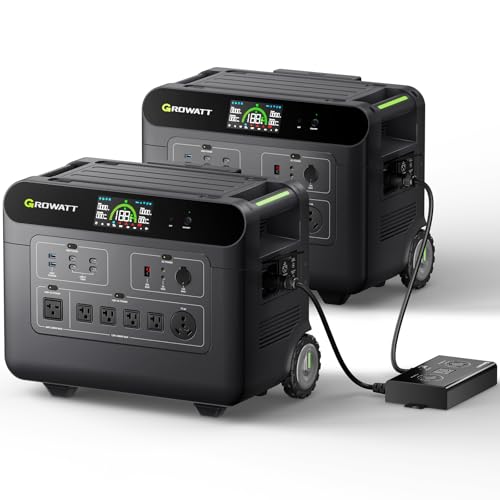
A dual-unit 7,200W parallel system that replaces a whole-house generator setup.
This combo ships with two 3,600W/3,600Wh LFP stations plus a split-phase connector, giving you 7,200Wh capacity and true 240V/7,200W output before any expansion. Owners run large window AC units for over 12 hours on a single charge, and one has used it as the main power supply for an off-grid house for nearly a year with no degradation.
The parallel design lets you expand each unit to reach a total of 36kWh, Expanded to 36kWh, it can power a home for up to 7 days.. Charging is flexible: each unit accepts 2,000W of solar, and AC-DC hybrid charging hits full in 1.5 hours. NEMA 14-30 outlets feed electric water heaters, with a TT-30 plug for RV use.
Its EV-grade LFP cells These cells retain 80% capacity after 4,000 cycles., backed by <15ms EPS switchover and cold-start technology down to -22°F. The genuine downside is physical: at 250 pounds combined, this is a permanent installationfor a garage or utility room, not a carry-around unit. Owners also note the app can be finicky — Bluetooth connections occasionally drop despite detecting the unit — and the 240V parallel mode disables the EPS backup function.
The whole-house case
- True 120V/240V 7,200W output from dual units
- Expandable to 36kWh for week-long outages
- Fast 1.5-hour hybrid AC-DC full charge
The installation reality
- 250 pounds combined — a permanent install
- App connectivity issues reported; 240V mode disables EPS
Choose it for: a true whole-house backup that runs dryers, water pumps, and AC without a fuel generator.
Pass if: you need portability — this is a stationary power system, not a travel companion.
Understanding the Specs
Watt-Hours (Wh)
This is your fuel tank size — the total energy stored. A 2,000Wh battery can run a 100W TV for 20 hours or a 500W fridge compressor for 4 hours. Bigger numbers mean longer runtime, but also heavier and pricier units. Most picks here range from 2,048Wh up to 5,120Wh, with the GROWATT combo hitting 7,200Wh.
Continuous vs. Surge Watts
Continuous watts is what the station delivers steadily. Surge (or peak) watts is the brief burst needed to start motors — like a fridge compressor or AC kicking on. A station rated 2,400W continuous with 4,000W peak can start appliances that draw more momentarily than the continuous rating.
LiFePO4 Chemistry and Cycles
Lithium Iron Phosphate (LiFePO4) cells handle far more charge cycles than older lithium-ion — typically 4,000 to 6,500+ cycles while retaining 80% capacity. That translates to 10+ years of daily use, which is why every serious station in this class uses it. A 500-cycle battery would die in under two years of daily cycling.
UPS Mode and Switch Time
UPS (Uninterruptible Power Supply) mode keeps devices running when grid power cuts. The switch time — measured in milliseconds — is how fast the station takes over. A 10ms switch keeps computers and routers running without a reboot; slower switches cause a noticeable blink or shutdown.
FAQ
How long will a 2000 Wh battery run a refrigerator?
Can a 2000 Wh power station run a window air conditioner?
What is the difference between 120V and 240V output?
How long does it take to recharge a 2000 Wh battery?
Can I expand the capacity of these power stations later?
What does the UPS mode do on a power station?
How many solar panels do I need to recharge a 2000 Wh station?
Is it safe to use these power stations indoors?
What is the lifespan of a LiFePO4 power station battery?
How heavy are these 2000 Wh power stations?
Final Thoughts: The Verdict
For most buyers, the 2000 wh battery winner is the Anker SOLIX C2000 Gen 2 because it recharges faster than any other in this class — a full 100% in 58 minutes — while staying portable at 41.7 pounds and sipping just 9W on standby. If you plan to run it daily and shift your electricity use to cheaper off-peak hours, the BLUETTI Elite 200 V2 is built for that routine. And if you need to power 240V appliances across your whole home, the PECRON F5000LFP delivers that muscle.
How We Picked
We do not accept paid placement. Every pick is matched to a real buyer and a real use-case; we do not hands-on test units.
Sources & Methodology
Specifications: manufacturer listings and product documentation. Review insights: verified customer reviews, as of September 2026. Pricing: not shown on this page (it changes often); check the current price via the retailer link.
As an Amazon Associate, KitchPrep earns from qualifying purchases. This does not affect which products we feature.
Related Guides
