
Specs are compiled from manufacturer listings and verified buyer reviews and can change over time — please confirm the key details on the product page before buying.
When you need to tame extreme heat or just stop the chill, the width of your insulation is often the deciding factor. A 12-inch-wide roll fits standard ductwork, forge interiors, and kiln floors without wasteful trimming or frustrating seams. The picks below are matched flexibly — some are exactly 12 inches wide, while others offer 12 inches as a selectable size option, so you get the same real-world coverage.
I’m Mohammad Maruf — the founder and writer behind KitchPrep. This guide is built by comparing the manufacturers’ published specifications and the patterns across verified customer reviews, so you get each pick’s real strengths and trade-offs instead of marketing spin.
Finding the right protection means choosing between ceramic blankets that shrug off forge heat and foil-faced wraps that keep ducts and attics comfortable, and this breakdown of the best 12 inch wide insulation rolls sorts out exactly which one fits your project.
Our Picks at a Glance


How To Choose The Best 12 Inch Wide Insulation Rolls
The first step is figuring out the temperature your insulation will actually face. A wood stove baffle and a garage ceiling have totally different needs, and picking the wrong material means wasted money or a fire hazard.
Ceramic fiber vs. foil-faced vs. foam
Ceramic fiber blankets are the heavyweights, rated for extreme heat and made to line forges, kilns, and furnaces. Foil-faced bubble or cotton wraps are for moderate jobs — reducing heat loss from ducts, adding a reflective barrier in an attic, or keeping a truck cab cooler. Neoprene foam handles cushioning and mild temperature swings but is not a fire barrier.
Thickness and density tell the real story
Do not trust a label that just says “thick.” Look for the actual inch measurement — a 1-inch ceramic blanket is a different product from a 0.4-inch duct wrap. Density, measured in pounds per cubic foot, tells you how tightly packed the fibers are; a higher number means better heat blocking and more stiffness for vertical panels.
Coverage math matters
Before checkout, multiply the length by the width to see how many square feet you get. A short 12-inch section covers barely a square foot, while a 15-foot roll can wrap several ducts. Some listings sell two rolls in a pack, which often changes the value picture completely.
Quick Comparison
| Model | Best For | Material | Thickness | Coverage | Amazon |
|---|---|---|---|---|---|
| SIMOND STORE Ceramic Fiber Roll★ Best Overall | Forge and kiln lining | Ceramic | 1 inch | 2 sq ft | Amazon |
| SIMOND STORE 2400F BlanketTop Performer | High-heat baffles | Ceramic | 1 inch | 2.67 sq ft | Amazon |
| Preboun Foil Duct WrapBest Value | Large duct jobs | Cotton and foil | 0.4 inch | 180 sq ft | Amazon |
| Eunice Neoprene Sheet | Cushioning and sound | Neoprene | 0.25 inch | 1416 sq in | Amazon |
| Yens Bubble Cushioning | Shipping protection | Plastic | 0.5 inch bubbles | 250 sq ft | Amazon |
| Uboxes Thermoflex Bubble | Temp-stable shipping | Aluminum | 0.16 inch | 65 sq ft | Amazon |
| UBMOVE Reflective Roll | Radiant heat blocking | Polyethylene | 0.19 inch | 125 sq ft | Amazon |
| Frienda Duct Wrap | Self-adhesive sound deadening | Aluminum, fiberglass | 0.13 inch | 60 sq ft | Amazon |
| HVAC Premium Flex Duct | Full duct replacement | Aluminum | R-4.2 rated | 25 ft length | Amazon |
In‑Depth Reviews
1. SIMOND STORE Ceramic Fiber Insulation Roll
Our pick — over 4.5★ from 500+ verified ratings; the strongest balance of quality and price.
The crowd favorite for forge and kiln work, with a 2600F heat rating that handles direct flame.
This ceramic blanket is the clear top pick because it solves the hardest problem in this category: surviving extreme heat. Rated to 2600F., it is built for jewelry making, furnace lining, and exhaust heat shields, taking direct fire without issue. The 1-inch thickness and 8 lbs/ft3 density give it real substance you can feel when you cut it, and the included blade is a thoughtful extra.
What wins people over is the quality and effectiveness, with owners using it across ceramic kilns and ATV exhaust pipes. One buyer shared a line that sums up the loyalty: “I’ve bought this item perhaps 10 times and it works as advertised.” The ceramic composition breaks down to 32%-34% alumina and 49%-52% silica, with less than 1% impurities — the chemistry that lets it shrug off a furnace.
The trade-off is that a 12-inch by 24-inch piece covers just 2 square feet, so this is for focused repairs, not whole-wall jobs. The durability feedback also carries a note of caution: fibers can shed during use, so wear gloves and keep it away from skin when handling.
Why it takes the top spot
- Heat rating of 2600F — faces direct fire with no issues
- 8 lbs/ft3 density — stiff, substantial, and easy to cut to shape
- Two rolls per pack — double the coverage for a single purchase
Who should look elsewhere
- 2 sq ft coverage — far too small for large duct or attic jobs
- Fibers can shed — gloves are a must during installation
Perfect match for: anyone lining a forge, furnace, or kiln who needs proven, repeated-purchase heat protection at a 1-inch thickness.
Reach for this instead if: you are covering walls or ducts, where this blanket’s tiny 2-square-foot footprint will frustrate you.
2. SIMOND STORE Ceramic Fiber Insulation Blanket 2400F
A thicker, denser ceramic slice that packs tight into mufflers and forges alike.
This blanket earns its place with a critical advantage over the top pick: at 1 inch thick and 12 by 32 inches, it covers 2.67 square feet — a third more surface than the 2-square-foot roll above, which matters when you are filling a muffler or lining a kiln floor. Rated to 2400F. with the same 8 lbs/ft3 density, it is a direct upgrade for anyone who kept running out of material.
Owners praise how it fits their needs, with one forge user writing: “Great Ceramic Blanket for the price! Came just as advertised! I’m using it in my Gas Forge!” The chemistry shifts slightly here — 43-47% alumina and 53-57% silica — and buyers report the extra packing fills mufflers completely where other brands disintegrate in months.
The honest catch is the value-for-money feedback, which splits opinions, and the fact that a single roll means one shot at getting the cut right. The shedding issue common to ceramic fiber applies here too, so handle it with care.
Why it leads on length: the 32-inch run beats the 24-inch top pick for anyone wrapping a longer baffle or muffler section.
The real fit-note: ceramic fiber is itchy to handle — gloves and a mask are the sensible setup for cutting.
Choose it for: gas forge, kiln floor, or muffler packing where the extra 8 inches of length saves you from piecing scraps together.
skip it if: you want two rolls for the money — this listing ships a single blanket, unlike the two-pack above.
3. Preboun 2 Rolls Foil Duct Insulation Cotton Wrap
The coverage king — 180 square feet of cotton-and-foil wrap for whole-house duct jobs.
If your project is measured in rooms, not inches, this is the roll for you. The Preboun wrap delivers 180 square feet across two 12-inch by 15-foot rolls, a massive 67.4x more coverage than the 2.67-square-foot ceramic blanket above. At a 0.4-inch thickness, it is built for HVAC pipes, walls, garages, and even car soundproofing, cutting heat loss and vibration without specialized tools.
Buyers find it a genuine bargain — the phrasing “2 bundles, typically for the price of one, plenty to complete the job” captures the consensus. One clever owner insulated a 4-foot by 4-foot dog kennel to keep a hen warm through a winter hatch, proving the versatility beyond ducts.
But be honest about the quality-control gripes that surface here. The most detailed critical review is blunt: the foil arrived torn and patched with clear tape on one unit, and the same buyer measured the product closer to 0.125 inches than the advertised 0.4 inches. The recurring theme is the silver foil peeling — most owners say a quick spray of adhesive on the ends fixes it, but it is an extra step to expect.
The value argument
- 180 sq ft across 2 rolls — enough to wrap multiple ducts in one pass
- Cotton and foil build — cuts heat loss and dampens pipe vibration
- Reusable — remove and reattach as needs change
Set expectations early
- Foil peeling is common — budget a little adhesive for the ends
- Thickness can run thin — some units measure below the stated 0.4 inch
Ideal for: ductwork, attics, and walls where raw square footage matters more than extreme heat tolerance.
Not for: forge or furnace contact — cotton and foil cannot survive direct flame like ceramic can.
4. Eunice Sponge Neoprene Foam Sheet with Adhesive
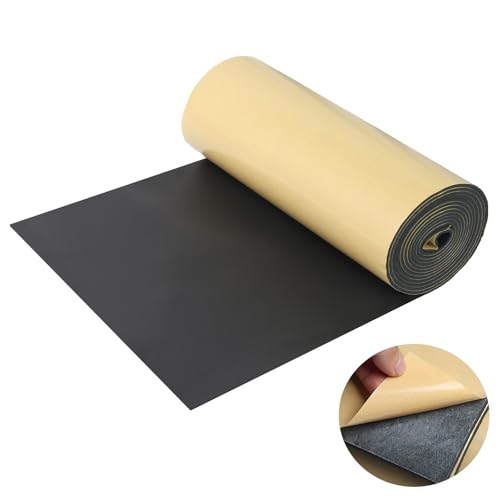
The peel-and-stick all-rounder that cushions, seals, and insulates in one roll.
This neoprene sheet is the pick when your problem is friction, noise, or moisture rather than fire. The closed-cell rubber (closed-cell means the material’s bubbles are sealed, so it does not soak up water) is naturally non-absorbent, non-slip, and moisture-proof, with a strong adhesive backing that sticks to most surfaces. At 0.25 inches thick and 118 inches long, it covers 1416 square inches of padding.
What surprises owners is the range of uses. It has lined toolbox drawers so tools stop sliding, padded camper bed plywood edges to protect sheets, covered sauna neck pillows to keep sweat off, and even cushioned the inside of a leg brace. The adhesive earns raw praise — “super sticky” is the repeated verdict — and it cuts cleanly with scissors or a blade.
The honest limits show up under load. The foam has no memory, so heavy foot pressure on a bunk bed ladder flattened it permanently, and the durability verdict splits between “very durable” and “tears easily.” The temperature range is -150°C to 50°C, which is fine for comfort but nothing near a stove.
Where it shines: the strong adhesive means it stays put on metal, wood, and curved surfaces without extra fasteners.
Where it falls short: this is a comfort and sound layer, not a heat shield — keep it away from direct flame.
Buy it for: toolbox liners, camper padding, cushioning, and light soundproofing where a sticky, easy-to-cut foam is the answer.
Choose ceramic instead if: your goal is blocking high heat — neoprene is not rated for fire contact.
5. Yens 250 ft Bubble Cushioning Roll

High-volume bubble protection with clean perforations every 12 inches for fast packing.
This roll is the outlier in the lineup because it is pure shipping protection, not a thermal barrier. The 250-foot length at 12 inches wide with 0.5-inch large bubbles gives you serious cushioning volume, and the perforation every 12 inches means you tear off exactly what you need without hunting for scissors. It is a packing-specialist’s pick, and the repeat-order history backs that up.
Owners are split in a way that matters. The praise is loud — “the best bubble wrap on Amazon. Perforation is very good. Bubble strength is A+” — and some buyers have ordered it dozens of times. But the quality is frustratingly inconsistent between batches, and a vocal minority report bubbles that release air at the lightest touch.
The recurring gripe is consistency, not function. When a good batch arrives, it is excellent; when a bad batch arrives, it is nearly useless for protection. This is not a thermal insulation product, so pair it with a reflective wrap if temperature stability is part of your shipping goal.
What regular shippers love
- 250 sq ft per roll — serious volume for ongoing packing needs
- Perforated every 12 inches — clean tears, no scissors required
- Large 0.5-inch bubbles — solid cushioning for fragile items
The known gamble
- Quality varies by batch — some rolls deflate on contact
- Not thermal insulation — bubbles block shock, not heat
Grab it if: you ship regularly and value perforation and volume for wrapping fragile goods.
Think twice if: you need temperature control — this cushions but does not insulate against heat or cold.
6. Uboxes Thermoflex Insulated Bubble Roll

A lightweight foil-faced bubble layer that keeps shipped goods cool on the move.
When you need to ship something temperature-sensitive — plants, food, electronics — this 65-foot roll of foil-backed bubble is a practical middle ground. At 12 inches wide and 0.16 inches thick, it adds a reflective aluminum layer over bubble cushioning, giving you both shock protection and a radiant heat barrier in one wrap. It is light enough that shipping costs stay low.
The honest feedback shows this is a “good enough for the job” product rather than a premium one. One owner flatly called it “literally cheap bubble wrap with thin foil backing” but admitted it “worked just fine for my temporary application.” Buyers confirm it keeps products cool when used as a shipping liner, and the low weight is a genuine advantage for postage.
The weaknesses are real. The aluminum only sits on one side, which limits its insulation effect, and the listing has caused confusion over width — some expected 16 inches and received the correct 12 inches. Quality feedback is mixed, with an occasional unit showing flat, airless sections that look rough if you ship to customers.
The cost call: for a one-time shipping job or temporary window cover, the low weight and foil face deliver decent value.
The honest limit: this is not a structural insulation — treat it as upgraded bubble wrap, not a wall barrier.
Reach for it when: you mail temperature-sensitive items and want cushioning plus a reflective layer without heavy freight costs.
Pass if: you need real R-value for a building — this thin foil bubble is not that material.
7. UBMOVE Reflective Insulation Roll

Reflective foil that bounces back 96% of radiant heat across a 125-foot roll.
This is the radiant-heat specialist of the group. Made in the USA with a 3/16-inch bubble layer and foil outer face, It reflects 96% of radiant heat. transfer. — the kind of heat that radiates off a hot roof or through a sun-baked wall. The R-value of 4.9 to 14.1. depends on how you install it, and that range tells you setup matters. At 12 inches wide and 125 feet long, it covers 125 square feet of barrier.
Owners mention real temperature drops, with one measuring a 40% reduction in a tack room. and others noting an “immediate difference” in a tack room that stays cooler in summer and warmer in winter. It cuts easily with scissors, installs without mess, and owners specifically note rodents are far less likely to nest in it than in traditional fiberglass.
The complaints are consistent: some rolls measure short of the advertised 125 feet, and thickness perception is split between “thick enough” and “very thin.” Measure your runs before cutting to avoid coming up short on a long wall.
Why it wins for radiant heat
- Reflects 96% of radiant heat — real, measured performance for hot roofs and walls
- 125 sq ft coverage — enough for a garage ceiling or greenhouse section
- R-value 4.9 to 14.1. — legitimate thermal resistance when installed correctly
Installation realities
- Length can run short — some rolls arrive under the advertised 125 feet
- Air gap required — performance drops if it sits flush against a surface
Select it for: garages, tack rooms, greenhouses, and metal buildings fighting radiant summer heat.
Avoid it if: your goal is conduction insulation in winter — this needs an air gap to work as rated.
8. Frienda Self Adhesive Duct Insulation Wrap
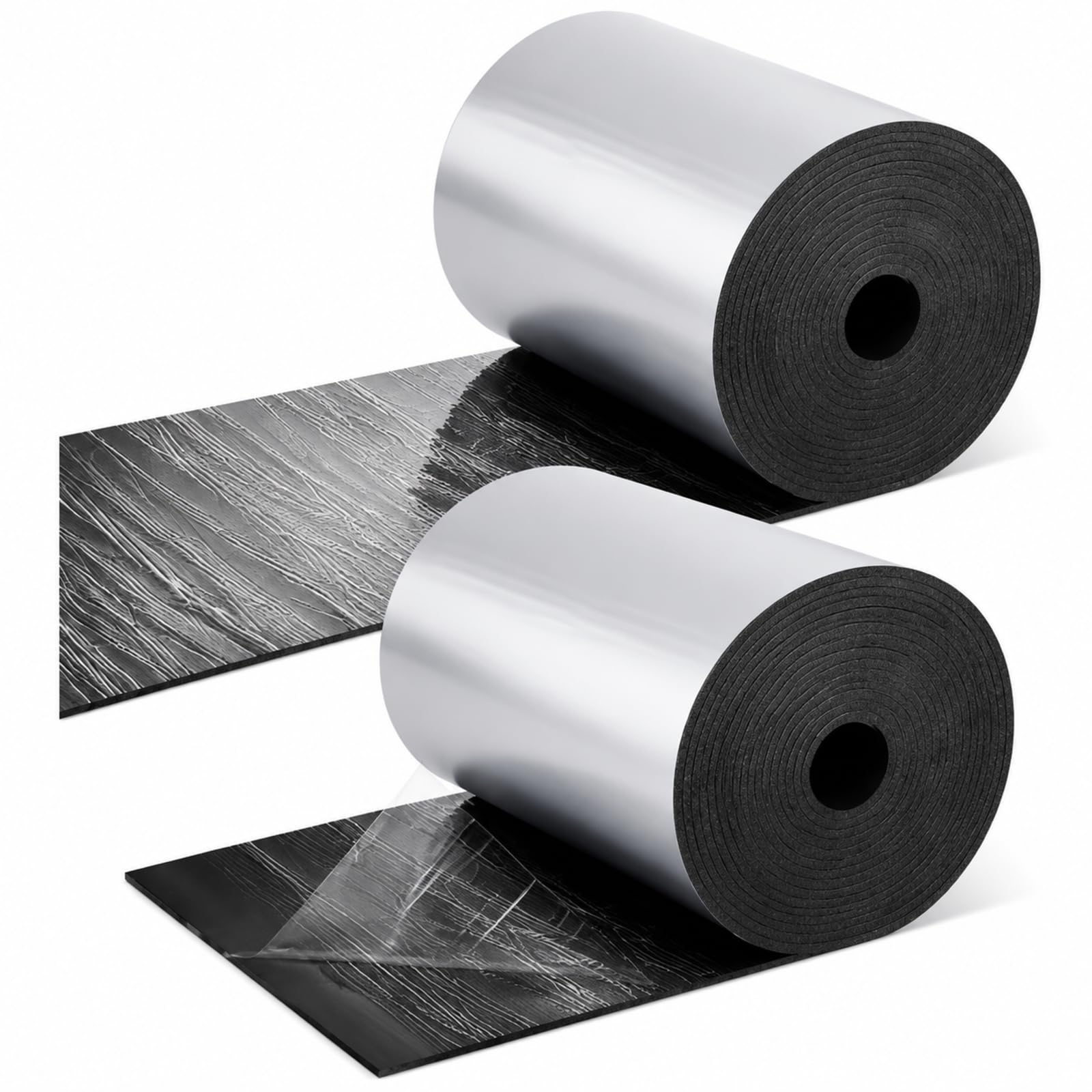
A self-sticking foil wrap that goes up in minutes without tape or tools.
The defining feature here is the self-adhesive backing, which changes the installation game. Each of the two rolls measures 12 inches by 360 inches — that is 60 square feet total — at a thin 0.13 inches. You unroll, cut, and press it onto smooth surfaces, with owners reporting a 30-minute install for a full box truck wheel well. No tape, no staples, no adhesive spray.
Buyers specifically praise it for cold box trucks and freightliner wheel wells, where the aluminum-and-fiberglass construction adds a reflective layer over foam. The insulation and quality feedback is uniformly positive, with the easy 30-minute install standing out as the headline benefit.
The honesty check comes from one owner who found it “does not work too well to keep the duct warm” and noted the roll does not track straight — it wanders sideways as you roll it out, which complicates clean lines on long runs. At 0.13 inches, this is a thin radiant layer, not a thick thermal blanket.
The time-saver: self-adhesion means this is the fastest wrap in the lineup for covering a wheel well or smooth duct.
The trade-off: thin material and a wandering edge make it fussy for long, perfectly straight runs.
Best applied to: box trucks, smooth pipes, and wheel wells where fast peel-and-stick coverage beats perfect cosmetics.
Not the one for: keeping ducts genuinely hot — the thin 0.13-inch layer is a radiant aid, not a thermal blanket.
9. HVAC Premium Insulated Flex Duct R-4.2

A complete 25-foot duct run with R-4.2 insulation built in, not wrapped on.
This is the product for when your existing duct is damaged and needs replacing outright. Rather than a wrap, this is a full 12-inch flexible duct, 25 feet long, with the fiberglass insulation built into the wall between inner and outer aluminum layers. The R-4.2 rating means real thermal resistance, and the aluminum skin on both sides resists the mice that chew through plain flex duct.
The construction is genuinely heavy-duty: an air-tight inner core that cuts pressure loss and stops fiberglass erosion into the airflow, plus a reinforced outer jacket that resists tears and punctures. Buyers who replaced rodent-damaged ducts found it easy to work with and swap into place, and the two included clamps mean you can complete the connection without extra parts.
The honest consideration is scope. At 25 feet with a 12-inch diameter, this is a serious, project-sized purchase for a real duct run, not a small repair. It is the correct pick when the old flex duct is compromised, but overkill if you simply need to wrap an existing pipe in a reflective layer.
The heavy-duty case
- R-4.2 insulated core — genuine thermal resistance built into the duct wall
- Aluminum inside and out — deters pests and resists punctures
- Air-tight inner core — keeps fiberglass out of the airflow
Know the scale
- 12-inch diameter — only fits systems sized for large flex duct
- 25-foot length — a full-run purchase, not a quick wrap fix
Choose it when: a section of your HVAC duct is chewed, crushed, or leaking and needs a real replacement with insulation already in the wall.
pass on it if: you only want to wrap an existing duct — that job calls for the Preboun or Frienda rolls above.
Understanding the Specs
Temperature rating
The single most important number for ceramic products. A rating like 2400F or 2600F tells you the maximum heat a blanket can face before breaking down. If you are lining a forge or chimney, match or exceed your expected fire temperature. For duct and wall work, this spec barely matters — you need R-value instead.
Density in lbs/ft3
This measures how tightly packed the fibers are. An 8 lbs/ft3 ceramic blanket is the standard for forge and kiln work — stiff enough to stand upright, dense enough to block heat. Lower density means softer, floppier material that suits cushioning or sound jobs, not fire barriers.
Thickness in inches
Thickness drives performance. A 1-inch ceramic blanket offers real insulation depth, while a 0.4-inch duct wrap is a lighter thermal aid. Be skeptical of vague claims — check the actual inch figure. A product that measures 0.125 inches will not perform like one listed at 0.4 inches.
R-value and radiant reflection
R-value measures resistance to heat flow through conduction. Reflective foil barriers work differently: they bounce radiant heat rather than blocking conduction. Foil products often quote a range (like 4.9 to 14.1) because performance depends on an air gap. No air gap, far lower real-world performance.
FAQ
Will ceramic fiber insulation handle direct flame contact?
What is the difference between R-value and a foil radiant barrier?
How much coverage do I actually get from a 12-inch wide roll?
Why does the thickness vary so much between insulation types?
Can I use ceramic fiber insulation in my home oven or pizza oven?
Is foil-faced bubble wrap a substitute for real building insulation?
How do I cut ceramic fiber to fit my forge or kiln?
What is the difference between 8 lbs/ft3 and other ceramic densities?
Will a self-adhesive insulation wrap stick to any duct surface?
Can I wrap a muffler or exhaust pipe with these insulation rolls?
Final Thoughts: The Verdict
For extreme heat work, the 12 inch wide insulation rolls winner is the SIMOND STORE Ceramic Fiber Roll because its 2600F rating and proven repeat-purchase track record make it the dependable choice for forges and kilns. If your ductwork needs whole-house coverage, grab the Preboun Foil Wrap for its 180 square feet of material. And for radiant heat in a garage or greenhouse, the UBMOVE Reflective Roll is the one to reach for.
How We Picked
We do not accept paid placement. Every pick is matched to a real buyer and a real use-case; we do not hands-on test units.
Sources & Methodology
Specifications: manufacturer listings and product documentation. Review insights: verified customer reviews, as of September 2026. Pricing: not shown on this page (it changes often); check the current price via the retailer link.
As an Amazon Associate, KitchPrep earns from qualifying purchases. This does not affect which products we feature.
Related Guides
