
Specs are compiled from manufacturer listings and verified buyer reviews and can change over time — please confirm the key details on the product page before buying.
Picking your first sewing machine is about one thing: getting from “I’ve never touched one” to “I just hemmed these pants” without tears. The machines below are chosen for how they handle that exact journey — easy threading, forgiving stitches, and clear instructions that don’t assume you know a bobbin from a buttonhole.
I’m Mohammad Maruf — the founder and writer behind KitchPrep. This guide is built by comparing the manufacturers’ published specifications and the patterns across verified customer reviews, so you get each pick’s real strengths and trade-offs instead of marketing spin.
We sorted the crowded market to find the best basic sewing machine for beginners that actually teaches you to sew instead of fighting you, balancing stitch counts, weight, and real owner feedback.
Our Picks at a Glance


How To Choose The Best Basic Sewing Machine for Beginners
Beginners don’t need a machine with hundreds of stitches and a touchscreen. They need reliability: a machine that threads smoothly, doesn’t jam, and produces an even straight stitch every time. That’s the real difference between a first machine you love and one you shove in a closet.
Threading and the bobbin make or break day one
The single biggest frustration for newcomers is threading the needle and winding the bobbin (the small spool underneath that forms the bottom half of the stitch). An automatic needle threader is a small hook that pushes thread through the eye for you — it saves your eyesight and your patience. And a “drop-in top bobbin” means you place the bobbin in a slot on top instead of wrestling it into a side compartment; it’s harder to mess up.
Mechanical vs. computerized controls
Most beginner machines are mechanical: you turn dials to pick a stitch and adjust length, with no screen or memory. That’s a feature, not a limitation. A mechanical machine does what you tell it the moment you tell it, with nothing to reset or glitch. Computerized models add conveniences later, but they also add complexity that first-timers rarely need.
Stitch count: enough is better than more
You’ll actually live on straight, zigzag, and a buttonhole stitch for your first months. Think of extra stitches as future options, not required features. A machine with 12 to 27 solid stitches covers mending, hemming, and simple crafts without overwhelming you with dials you never touch.
Quick Comparison
| Model | Best For | Built-in Stitches | Weight | Needle Threader | Amazon |
|---|---|---|---|---|---|
| Brother XM2701★ Best Overall | Most beginners overall | 27 | 12.6 lb | Automatic | Amazon |
| Brother XM3700Top Performer | More stitch variety | 37 | 12.5 lb | Automatic | Amazon |
| Janome MOD-15Quality Pick | Quality-focused novices | 15 | 11.7 lb | Manual | Amazon |
| Nexgenz FY-520 Kit | Light, compact starter kit | 12 | 5 lb | Manual | Amazon |
| Buvnatep SM-520A | Apartment-sized mending | 12 | 3.7 lb | Manual | Amazon |
| American Home AH600 | Kids and teen learners | 12 | 12.8 lb | Manual | Amazon |
| Stoigeld SM-725 Kit | Complete practice kits | 12 | 4.2 lb | Manual | Amazon |
| MILLEPUNTI MKR45 | Decorative stitch fans | 25 | 14.9 lb | Automatic | Amazon |
| SINGER 4452 | Heavy fabrics ambition | 32 | 14.6 lb | Automatic | Amazon |
In‑Depth Reviews
1. Brother XM2701 Sewing Machine
Our pick — over 4.5★ from 19,000+ verified ratings; the strongest balance of quality and price.
The crowd-pleasing workhorse that turned total novices into mask-sewing machines during the pandemic.
The XM2701 leads this list because it solves the exact problem beginners face: threading. Its automatic needle threader pushes the thread through the eye for you, and the jam-resistant drop-in top bobbin sits right on top where you can see it. That combination means your first session is about sewing, not fighting the machine.
With 27 built-in stitches including decorative, blind hem, zigzag, and stretch options plus an auto-size buttonhole, you have room to grow without feeling buried in features. The free arm — the narrow extension you can slide pant legs and cuffs around — makes hemming genuinely easy. It weighs 12.6 pounds, so it’s portable enough to carry to a class or a friend’s house, and the 15.3-inch depth gives you a decent work area for quilting or larger projects.
Buyers report this is a “durable workhorse” that survived 1,000+ masks during Covid, memory bears, bags, and zippers without breakdowns, though they note it gets noisy and the LED light is dim. One 42-year-old father learned to hem pants in under 30 minutes using Brother’s YouTube video — the kind of easy ramp-up that defines this machine. The metal frame and 25-year warranty promise longevity, while Brother’s free lifetime phone and chat support is a rare safety net for beginners.
Why newcomers rave
- Automatic needle threader saves your eyes and patience
- 27 stitches plus auto-size buttonhole grows with you
- Free arm makes hemming pants and sleeves simple
- Metal frame with 25-year limited warranty
The honest trade-offs
- Runs on the noisy side during sewing
- Built-in light is dim for dark fabric work
- Plastic presser foot lever can break if forced
Reach for it if: you want a proven, full-featured first machine with support that lasts — it’s the safest bet in this list for a true beginner.
Look elsewhere if: you need to sew through very thick layers like heavy denim seams routinely; handwheel assist is required there.
2. Brother XM3700 Sewing Machine
The bigger sibling of our top pick, adding 10 more stitches for sewers who outgrow the basics fast.
You get more room to grow with the XM3700, which offers 37 unique built-in stitches and a one-step auto-size buttonhole (a buttonhole that sizes itself to your button automatically) — so you won’t feel boxed in six months in. It shares the same beginner-friendly DNA as the XM2701: an automatic needle threader (a lever that pulls the thread through the needle for you) and a jam-resistant drop-in top bobbin (a bobbin that loads from the top, so it rarely tangles) keep your setup routine frustration-free.
The included kit goes further than average: a white accessory pouch, 5 sewing feet (zigzag, zipper, blind stitch, buttonhole, and button sewing), a 3-piece needle set, twin needle, and 4 bobbins. At 12.5 pounds, it’s nearly identical in portability to the XM2701, and the free arm (the narrow extension that lets you slide cuffs or sleeves over it) handles those tricky spots with the same ease. Owners describe the directions as easy to understand, and one buyer reports using it to produce 30,000 masks without durability complaints — a sign of how sturdy this mechanical design is.
The self-threading feature gets mixed reactions, and some owners mention durability issues with units breaking after a few uses, so treat the auto-threader gently and follow the guide exactly. But the overwhelming pattern is positive: buyers call it smooth, strong on even stitches, and ideal for teaching others. It’s the pick for someone who knows they’ll sew regularly and wants margin to explore more stitch patterns without jumping to a computerized model.
Stitch freedom: 37 built-in stitches give you decorative and stretch options the 27-stitch XM2701 can’t match, for a small step up in cost.
Watch the threader: the automatic needle threader is handy but finicky for some owners — keep the manual nearby until you master the hook position.
3. Janome MOD-15 Sewing Machine
The quiet, precise Japanese-built machine that experienced sewers buy for their own kids.
Janome has a reputation among sewing teachers for smooth, reliable mechanics, and the MOD-15 earns it with 15 built-in stitches including a 4-step buttonhole. It’s the anti-overwhelm choice: just enough stitches to cover mending, hemming, and simple crafts, with adjustable stitch length and zigzag width so you can fine-tune your straight stitch. The top-loading bobbin sits under a clear cover and uses a 5-piece feed dog system — the teeth that pull fabric through — for steadier, more even feeding than cheaper machines.
At 11.7 pounds with a 14.25-inch width, it’s a touch smaller and lighter than the Brother full-size models. The free arm and drop feed (which disengages the feed dogs for free-motion work) add versatility down the road. Buyers consistently note three things: it’s quiet, it threads easily with automatic tension, and it doesn’t skip stitches even on knits. One parent bought it as a gift for a daughter wanting to learn, and now prefers it to their own pricier machine. A 40+ year sewing veteran called it a keeper, praising the stitch variety for repairs and small projects.
Fleece is the known weak spot: lint buildup can cause noise and thread breaks, so keep a lint brush handy if you sew fluffy fabrics. The metal frame and 25-year warranty signal durability for years of learning. It’s the pick for someone who values build quality over sheer stitch count and wants a machine that feels solid from the first touch.
Build-first philosophy: metal construction and a 25-year warranty mean this handles daily beginner use without the flimsiness of ultra-cheap plastic models.
Fleece caveat: lint from fleece can jam the works — plan to brush the feed dogs after fluffy projects.
4. SINGER 4452 Heavy Duty Sewing Machine

The heavy-duty legend that punches through canvas and webbing when you’re ready to sew tough stuff.
Most beginners start with cotton and jersey, but if you already dream of tote bags, denim repairs, or even tactical gear, the SINGER 4452 is the machine that won’t flinch. Its stronger motor delivers enhanced piercing power for multiple layers and thicker fabrics, and the full metal frame keeps everything stable at high speed — it sews up to 1100 stitches per minute. The 32 built-in stitches open up 110 stitch applications, meaning straight, stretch, and decorative options plus a one-step buttonhole are all on tap.
Customers note it handles 4 layers of Molle webbing plus 2 layers of 1000D fabric without effort, and one owner noted it outperformed a Viking Emerald 116 that struggled on the same projects. The all-in-one accessory kit is genuinely complete: six presser feet including a walking foot and non-stick foot, heavy-duty needles, a clearance plate, quilting guide, and more. The top drop-in bobbin with a clear view cover makes it easy to monitor your thread supply while you sew.
If you’re only ever sewing lightweight cotton, a lighter machine serves you better. But if you know thick fabrics are in your future, this machine’s metal frame and 32-stitch range mean you buy once instead of upgrading later. The free SINGER Creativate app adds manual, tutorials, and troubleshooting tips right on your phone.
Built for tough fabric
- Stronger motor with 1100 stitches/min speed
- 32 stitches open up 110 applications
- Full metal frame for stability at speed
- Complete kit with walking foot and heavy-duty needles
Who should pause
- 14.6 lb weight makes it a desk fixture, not a traveler
- Some owners hit durability issues after years of hard use
- Overkill if you only sew lightweight cotton
Choose this when: you plan to sew multiple layers, canvas, or home-decor fabric and want speed plus power in one frame.
Pass if: you want a light machine for occasional light mending — the weight and power are wasted on simple cotton hems.
5. MILLEPUNTI MKR45 Sewing Machine
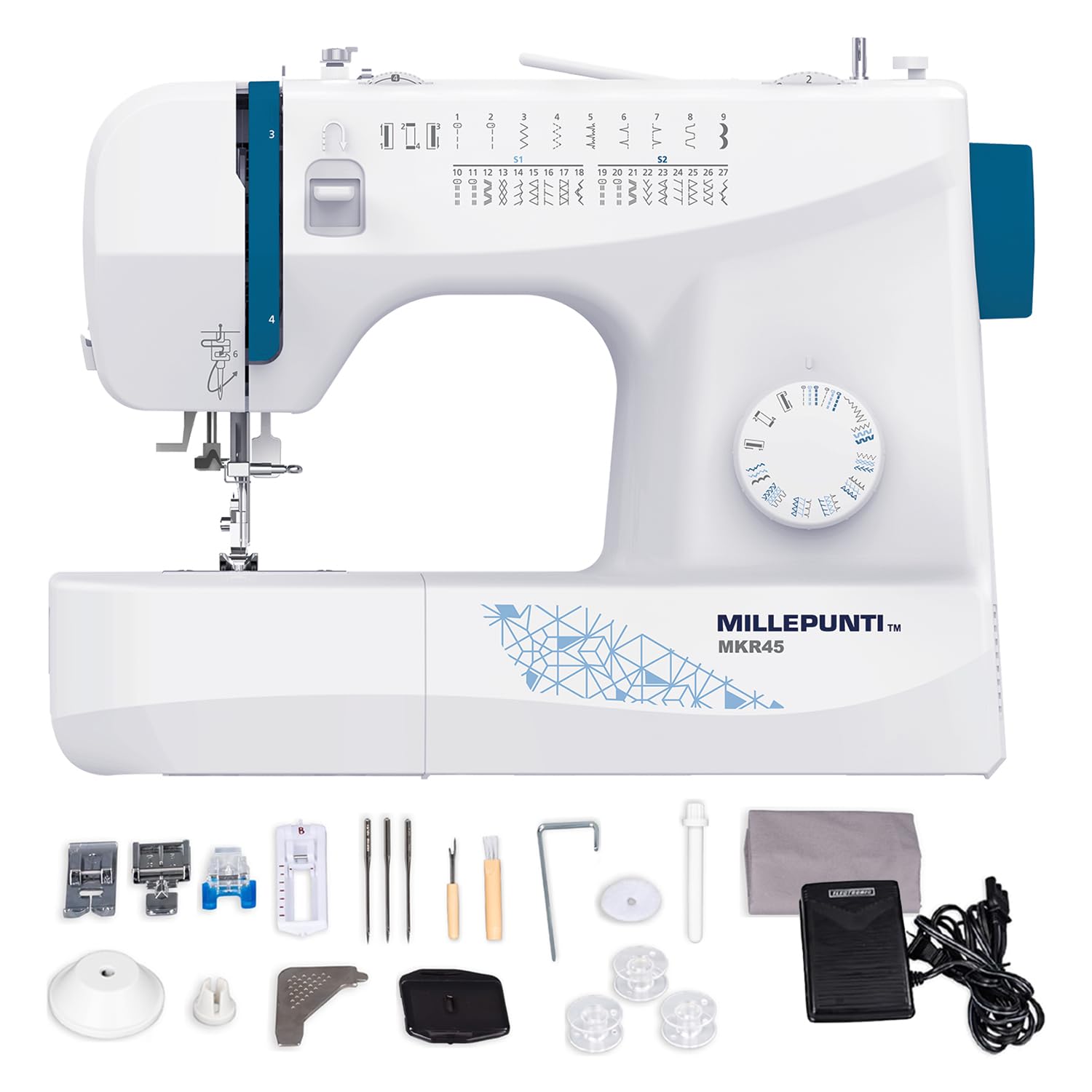
The Italian-designed machine for sewers who want decorative flair without leaving the beginner lane.
If your idea of fun sewing is adding decorative touches to pillowcases, doll clothes, and gifts, the MILLEPUNTI MKR45 brings 25 distinct built-in stitches, with an emphasis on decorative patterns that let you infuse projects with creativity. The brand’s NECCHI heritage shows in the metal construction and the generous accessory bundle: 4 sewing feet, 3 bobbins, a variety pack of needles, a seam ripper/brush combo, quilting guide, and a non-woven fabric dust cover. It’s designed as a first machine for adults, seniors, and new home starters.
The automatic needle threader and automatic bobbin winder are the standout conveniences here, streamlining what’s usually the most fiddly part of starting a project. Owners with limited eyesight particularly appreciated the clear directions and the threader — it restored their ability to quilt and sew. The free arm handles pants, cuffs, and sleeves with a smooth surface that makes maneuvering easy.
The catch is reliability: while many owners praise the performance and ease of use, a recurring minority reports the automatic needle threader doesn’t function properly, and one buyer found the instructions far from clear enough for a true beginner. At 14.9 pounds, it’s also the heaviest machine in this guide, so it’s a permanent desk resident rather than a carry-along. It’s the right pick if you’re drawn to decorative stitching and don’t mind a learning curve on the threader, but a total novice might find the Brother or Janome easier to start on.
Decorative focus: 25 stitches lean toward creative flair, plus a full accessory kit with dust cover for storage.
Mixed threader record: the auto needle threader is either a blessing or a frustration depending on the unit — budget time to learn it.
6. Nexgenz Portable Sewing Machine Kit
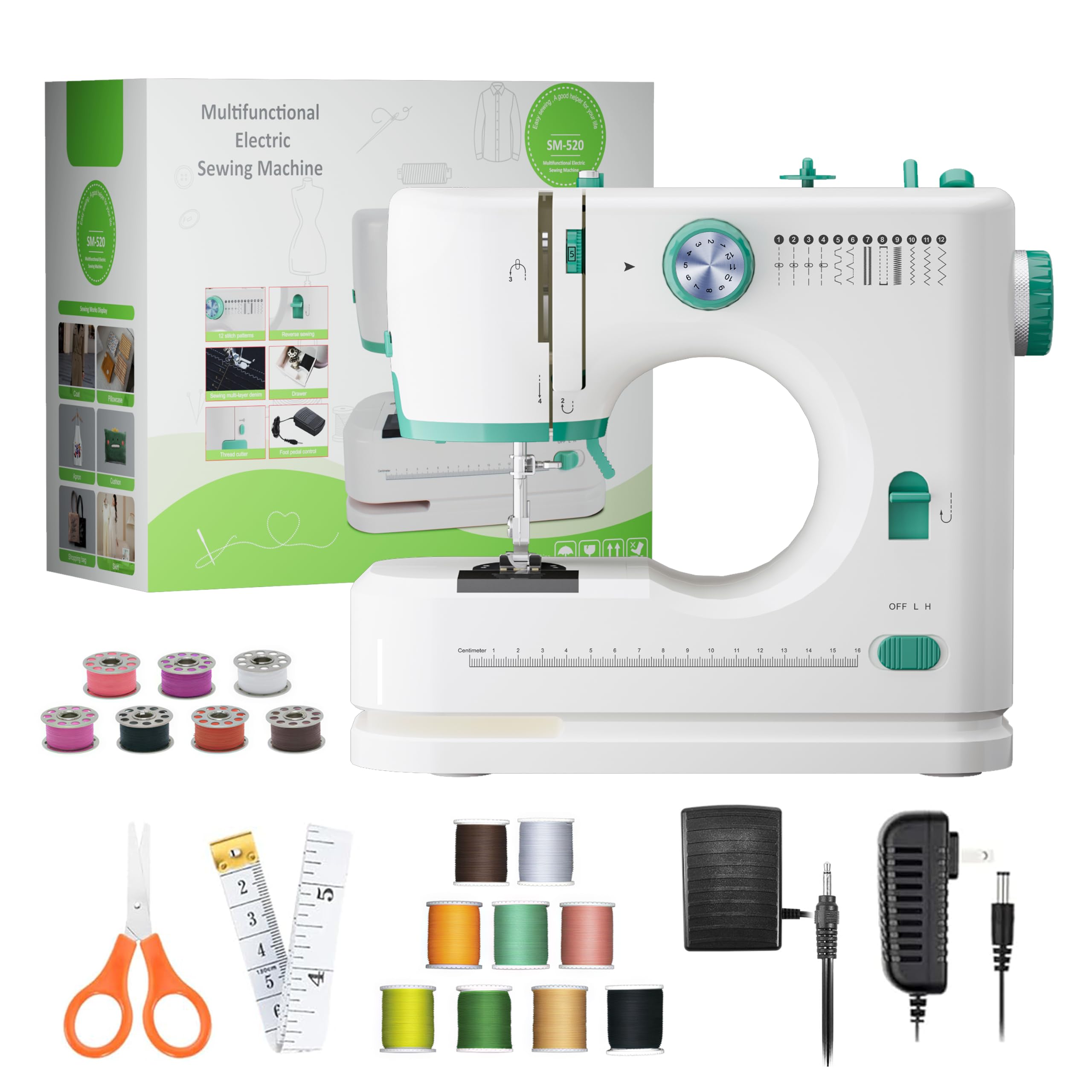
The featherweight 5-pound starter kit that fits in a drawer and still sews “beautiful stitches” per owners.
Not everyone has room for a full-size sewing machine, and that’s exactly who the Nexgenz serves. At just 5 pounds with a compact 10.2-inch depth, it’s a fraction of the weight of the Brother XM2701 above (which tips the scales at 12.6 pounds) and nearly half the physical footprint. The top carry handle and built-in storage drawer for needles, bobbins, and accessories mean it lives happily on a shelf or in a closet between projects, or travels to a friend’s house in a tote bag.
With 12 stitch patterns including straight and decorative options, a reverse sewing feature for sturdy seam ends, and a 2-speed foot pedal, it covers the essentials for repairs and small crafts. The kit is the real value story: bobbins, spools of thread, spare needles, and a needle threader are all included, so there’s no separate shopping trip before your first stitch. Shoppers say excellent stitch quality on baby crib accessories and other home projects, and the ease of use earns consistent praise — the anti-frustration promise holds up.
There are real limits to know. This is a mini machine for light work, not a heavy-duty model: thick or multi-layer fabrics will strain it. The smaller throat (the space to the right of the needle) means large quilts are impractical. And with a plastic body, it won’t handle the same abuse as a metal-frame Brother. But for hemming, mending, doll clothes, and craft projects, owners describe it as ideal for beginners and casual sewers — a genuine entry point that costs little and takes up almost no space.
Small-space hero
- 5 lb weight with carry handle for true portability
- Built-in storage drawer keeps accessories together
- Complete kit with threads and needles included
- 2-speed pedal helps beginners avoid messy stitches
Know its limits
- Plastic body suits light fabrics only
- Small throat area limits large quilting projects
- Manual threading requires steady hands
Grab it for: apartments, dorms, or travel where every pound and inch counts and projects stay light.
Think twice if: you plan to sew denim, canvas, or quilts — this is strictly for light fabric work.
7. Buvnatep SM-520A Sewing Machine
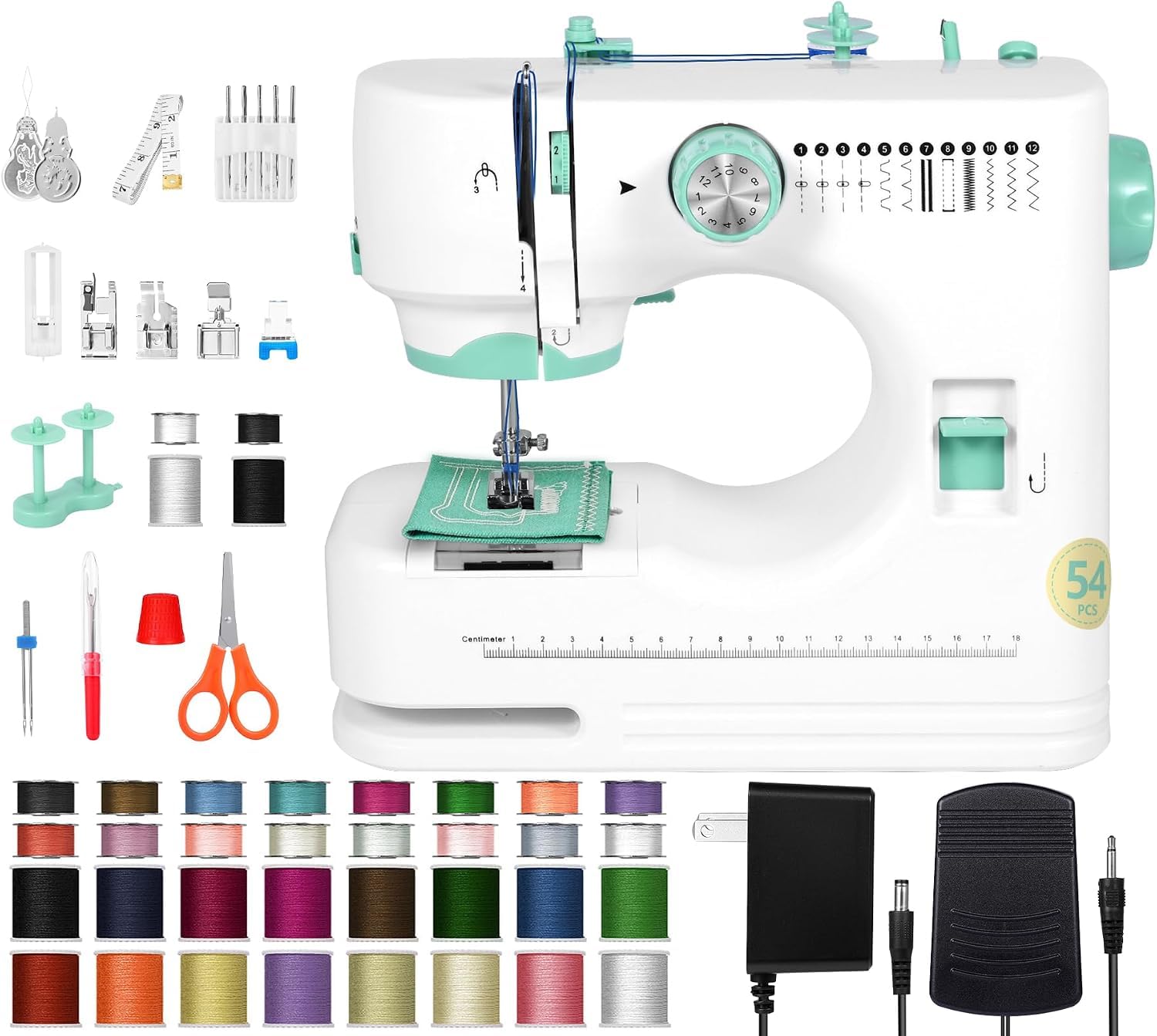
The lightest machine here at 3.7 pounds, pre-threaded and factory-tested so your first stitch is nearly instant.
At just 3.7 pounds with a 10.6-inch depth, this is the lightest and most space-saving machine in our lineup — genuinely dorm-room friendly. But its smartest beginner feature is the pre-threading: each machine arrives threaded and checked before packing, with a small test fabric included so you can see the stitch condition and get familiar before starting your own projects. That removes the most intimidating first hurdle entirely.
The twin needle support is the standout capability here, letting you create two clean parallel lines for hems and decorative seams. The reverse stitch function reinforces the start and end of seams, which is essential for clothing repairs and patching. With 12 built-in stitch patterns, a 2-speed setting, and both foot pedal and button control options, you can start slow and speed up as you gain confidence. The built-in LED light improves visibility around seams and on darker fabrics, and buyers report it works on AC or battery power for flexibility.
Owners describe it as compact, easy to store, and perfect for small repairs like hemming pants easily. The included kit is comprehensive — threads, needles, presser feet, scissors, and a pedal — and the mint green color gets genuine affection (“She’s so beautiful!!!!” sums up the vibe). Like the other mini machines, it’s meant for light fabrics and small projects; it won’t power through heavy denim. It’s the pick for a young beginner, a very small space, or someone who wants the absolute minimum fuss to start sewing.
Zero-setup start: pre-threaded with test fabric included means you sew within minutes of unboxing, not after an hour of setup.
Light-duty only: at 3.7 lb plastic construction, reserve it for mending and crafts, not multi-layer heavy fabric.
8. American Home Believe AH600

The free-arm champion whose extra room around the needle won over a 9-year-old learning to quilt.
Most beginner machines cram the needle close to the body, but the Believe AH600 deliberately offers more open space — owners note “the free arm has so much room, competitors had nothing in this.” That extra clearance makes it forgiving for kids and anyone whose fine motor control is still developing. The illustrated manual is genuinely simple to follow, and one buyer reports teaching a 9-year-old to thread and wind the bobbin from it; that child now quilts and repairs clothes independently.
It arrives with 12 pre-set stitches, a 4-step buttonhole feature (you make a buttonhole in four guided steps), and automatic touches that reduce beginner errors: the bobbin winder stops when full, and automatic stitch control manages width and length for straight, blind hem, zigzag, and decorative stitches. The tension dial gives quick stitch adjustment, and two snap-on presser feet (buttonhole and zigzag) cover the essentials. At 12.8 pounds with a carry handle, it’s transportable to grandma’s house or a sewing class without a dedicated bag.
The fun decals and mint-and-white styling make it approachable for younger learners, which is clearly the intended audience. Some owners found the manual’s order confusing (bobbin winding comes first) and needed YouTube help, so budget a short learning curve. The metal frame and 25-year warranty add durability confidence. It’s the right machine for teaching a child or teenager, or for an adult who wants the simplest possible path to quilting and repairs with a bit more sewing surface than the mini machines offer.
Teaching-friendly: extra free-arm room plus a clear illustrated manual makes this the pick for passing sewing skills to the next generation.
Manual order quirk: follow the YouTube video rather than the booklet’s sequence for the smoothest first setup.
9. Stoigeld SM-725 Sewing Machine Kit
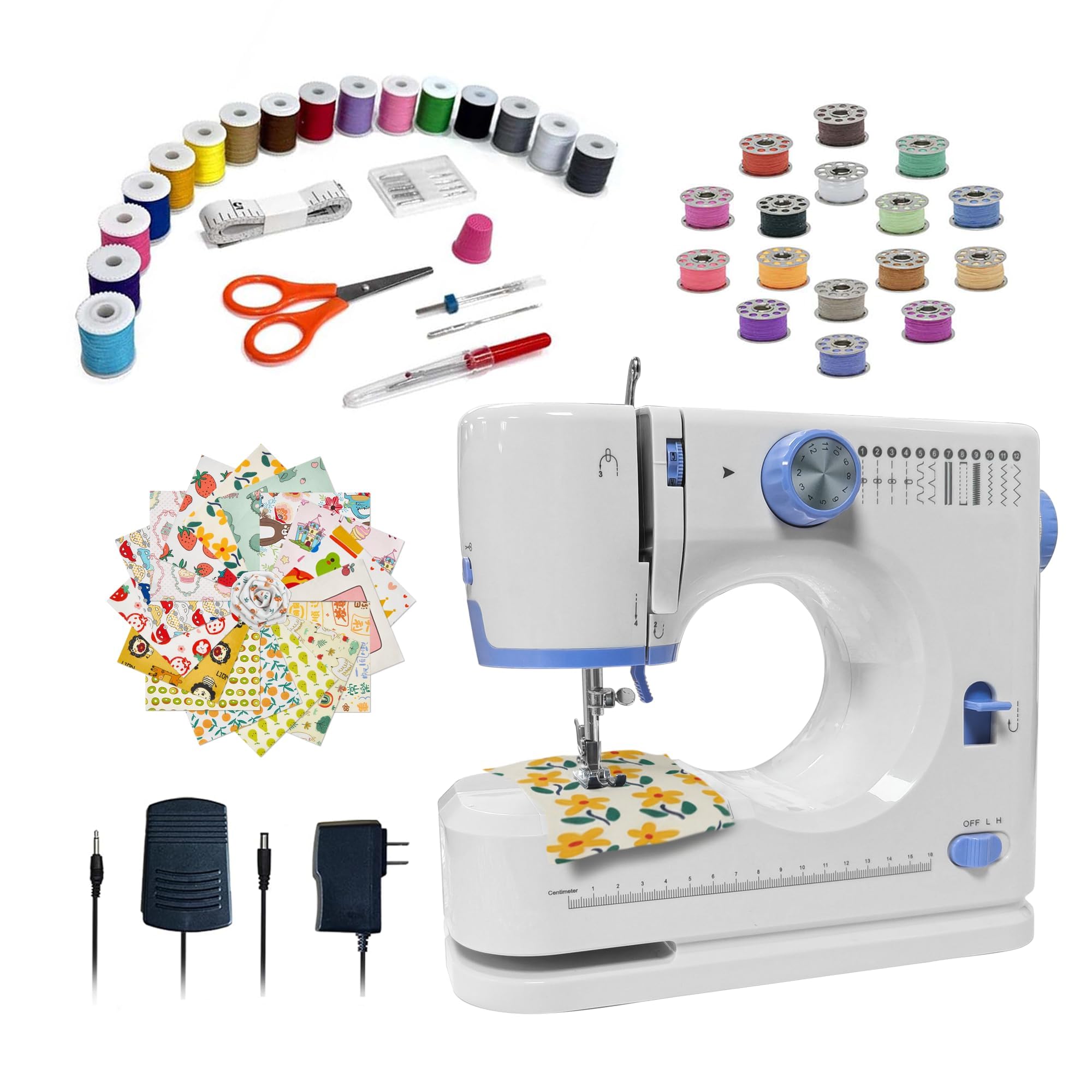
The kit that hands you 20 practice fabrics and 32 thread spools so your first projects cost nothing extra.
The Stoigeld SM-725 is the most literal “starter kit” in this guide: it arrives with 32 sewing threads and 20 practice fabrics, so you can make mistakes and learn without burning through your good material. That’s a genuinely smart way to build confidence — owners describe it as a great starter kit where everything needed is included and no extra purchase is required. The two-speed setting (high and low) helps beginners learn control before speeding up.
With 12 built-in stitches, a 4-step buttonhole, and reverse function, it covers the beginner basics of home mending, DIY creation, and school teaching. The compact body weighs just 4.2 pounds with product dimensions of 10.3 by 9.5 by 4.4 inches, making it easy to store between projects. The company is refreshingly honest about its limits: this is an entry-level machine for light fabrics like thin cotton and linen up to 4-6 layers, with denim only suitable for 2-4 layers. That clarity prevents the jam-and-return cycle that plagues over-ambitious beginners.
Owners praise the included accessories, the easy threading with the provided tool, and the compact size that doesn’t dominate a room. The recurring suggestion: the setup video could be clearer, so be prepared to follow the written instructions carefully. The sturdiness gets mixed feedback, which tracks with a plastic-body budget machine — treat it gently and it will serve for learning. It’s the pick for a school setting, a gift for a young crafter, or anyone who wants the lowest-friction possible entry into sewing with all materials included.
Everything to start
- 32 threads plus 20 practice fabrics included
- 4.2 lb with 2-speed control for learning
- 12 stitches with 4-step buttonhole
- Honest light-fabric guidance prevents jams
Set expectations
- Plastic ABS body suits light cotton and linen only
- Setup video could be clearer per owners
- Not built for daily heavy use
Best for: classrooms, kids’ first machines, or adults who want to test the sewing waters with all materials included before committing to a full-size model.
Not for: anyone planning regular projects on denim, canvas, or multiple heavy layers.
Understanding the Specs
Built-in stitch count
This tells you how many different stitch patterns the machine can make without any extra attachments. For a beginner, 12 to 15 solid stitches — straight, zigzag, blind hem, and a buttonhole — cover nearly all mending and craft needs. Higher counts like 27 or 37 add decorative and stretch options, which are nice to grow into but not required to start. Don’t pay extra for a huge stitch library you’ll never touch.
Automatic needle threader
This small hook mechanism pushes the thread through the needle’s eye for you. Threading a needle is the most common beginner frustration, especially with poor lighting or aging eyes. Machines with this feature let you skip the squinting and start sewing immediately. If you’re buying for a child or someone with vision challenges, an automatic threader is almost essential.
Free arm
A free arm is the narrow, exposed extension on the left side of the machine that lets you slide tubular items — pant legs, cuffs, sleeves — over it for easy hemming. Without one, you’re wrestling fabric in awkward positions. Nearly every beginner machine in this guide has one, but the amount of clearance around the arm varies; the American Home AH600 notably offers more room than competitors.
Machine weight and materials
Lighter machines (3-5 pounds) are portable and easy to store but are usually plastic-bodied and suited to light fabrics. Heavier machines (11-15 pounds) typically have metal frames that stay stable at speed and handle thicker materials — but they live on your desk rather than in a bag. Match the weight and build to where you’ll sew and what you’ll sew, not to what looks impressive in a photo.
FAQ
How many stitches does a beginner sewing machine really need?
What’s the difference between a drop-in top bobbin and a front-loading bobbin?
Should a beginner buy a mechanical or computerized sewing machine?
Why does my thread keep jamming or breaking?
Can a light mini sewing machine handle denim or multiple layers?
What accessories should come with a beginner sewing machine?
Is a free arm important for a beginner?
How much should I spend on a first sewing machine?
What’s the difference between a 15-stitch and a 37-stitch machine?
Do beginner sewing machines come with a warranty?
Final Thoughts: The Verdict
For most beginners, the best basic sewing machine for beginners is the Brother XM2701 because its automatic needle threader, jam-resistant drop-in bobbin, and 27 stitches remove the two biggest frustrations newcomers face while leaving room to grow. If you want more stitch variety from day one, grab the Brother XM3700 with its 37 built-in stitches. And if you’re planning to sew thick fabrics or heavy layers, the SINGER 4452 is the one to reach for, with its powerful motor and full metal frame ready to punch through canvas and webbing.
How We Picked
We do not accept paid placement. Every pick is matched to a real buyer and a real use-case; we do not hands-on test units.
Sources & Methodology
Specifications: manufacturer listings and product documentation. Review insights: verified customer reviews, as of September 2026. Pricing: not shown on this page (it changes often); check the current price via the retailer link.
As an Amazon Associate, KitchPrep earns from qualifying purchases. This does not affect which products we feature.
Related Guides
