
Specs are compiled from manufacturer listings and verified buyer reviews and can change over time — please confirm the key details on the product page before buying.
You need a 100 Amp Outdoor Panel that matches the real job it will do. A main breaker panel (a box with a built-in switch that cuts power to your whole house) is different from a main lug subpanel (a box that feeds a workshop or solar array from an existing main). Neither works if the meter reader or fire department can’t reach it as your local code requires. Here are five weatherproof boxes, each built for a specific job, so you pick the right one the first time.
I’m Mohammad Maruf — the founder and writer behind KitchPrep. This guide is built by comparing the manufacturers’ published specifications and the patterns across verified customer reviews, so you get each pick’s real strengths and trade-offs instead of marketing spin.
if you need a meter-main combo (a single box that houses the meter and the main breaker) for a new service or a subpanel for a shop, these picks cover it. 100 amp outdoor panel buying depends on circuit count, main lug versus main breaker, and weatherproof build.
Our Picks at a Glance
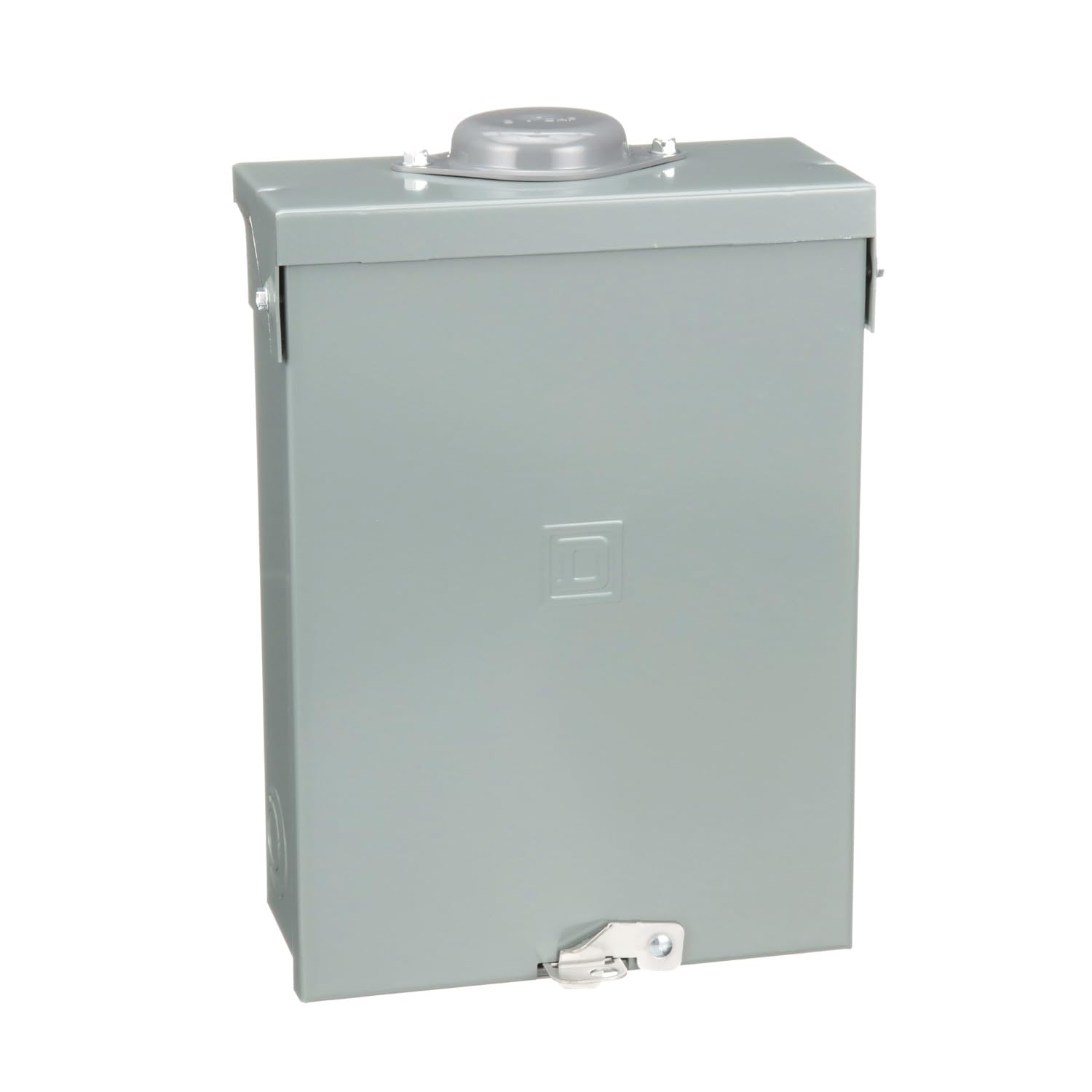

How To Choose The Best 100 Amp Outdoor Panel
Before you scroll through panels, settle one basic question: is this box the main disconnect (the single switch that shuts off all power to your property), or is it a subpanel fed from an existing main? That answer tells you if you need a main breaker or a main lug panel, and it decides whether your local inspector approves the work.
Main Lug vs. Main Breaker
A main lug panel has no built-in breaker — it is meant to receive power that is already protected upstream. That makes it the right call for a subpanel in a detached garage, workshop, or yard shed fed from your house’s main panel. A main breaker panel includes its own disconnect, so it can act as the service entrance for a whole property, letting the utility feed it directly and giving firefighters a single shutoff. Confirm which role your panel must play before you commit.
Count Your Spaces, Not Just Your Circuits
The numbers on the label tell you two things: the number of physical breaker slots (spaces) and the total circuits those slots can handle when you use slim tandem breakers. A 6-space 12-circuit panel fits six full-size breakers or twelve narrow ones, while a 10-space 20-circuit box doubles your flexibility. If you are wiring a shop full of tools, more spaces keep you from buying a second box later.
Weatherproofing Starts With the Enclosure
Outdoor panels carry a NEMA 3R rating, meaning they shrug off rain and sleet, but the material still matters for the long haul. Metal boxes deliver serious rigidity, yet rust can creep in near salt air — one owner’s old metal panel survived 20-plus years in a marine environment before replacement demanded attention. Plastic enclosures never corrode but can feel less substantial. Alloy steel sits between them, offering strength with a painted finish that resists the elements.
Quick Comparison
| Model | Best For | Panel Type | Spaces & Circuits | Weight | Amazon |
|---|---|---|---|---|---|
| Square D QO612L100RBCP★ Best Overall | Compact subpanel & solar combiner | Main Lug | 6 Space / 12 Circuit | 9.6 lb | Amazon |
| Square D QO816L100RBCPTop Performer | More circuits in a metal shell | Main Lug | 8 Space / 16 Circuit | 9.3 lb | Amazon |
| Siemens W0202MB1100CU | Straightforward service disconnect | Main Breaker | 2 Space / 4 Circuit | 11.6 lb | Amazon |
| Siemens MC1020B1100S | All-in-one meter & breaker combo | Meter Main | 10 Space / 20 Circuit | 20.5 lb | Amazon |
| Siemens MM0202ML1100S | Relocating an existing meter | Meter Main (no breaker) | 1 Circuit | — | Amazon |
In-Depth Reviews
1. Square D QO612L100RBCP 100 Amp 6-Space 12-Circuit Outdoor Main Lug Load Center
Our pick — over 4.5★ from 200+ verified ratings; the strongest balance of quality and price.
The compact Square D main lug that handles subpanels and solar tie-ins with the crowd’s strongest approval.
This panel earns its spot for versatility in a small, weatherproof plastic box. It carries a 100A rating (the maximum current it can handle) with six spaces for twelve circuits — enough for a whole subpanel in a detached garage, yet small enough that buyers use it as a dock and yard combiner box for a 48-volt solar array, gathering cables before they run to a charge controller (a device that regulates battery charging). The plastic enclosure shrugs off rain without any rust risk, and the cover locks shut to keep curious hands off the breakers.
Function matches the build. Owners consistently point to the quality of Square D gear from Schneider Electric — a master electrician recommended this exact style as the subpanel for a whole-house surge protector. The box is easy to open with breakers that are simple to reach, and the crowd favorite is this panel at the head of the guide: 4.7 stars across 200+ owners is the strongest proof-to-popularity balance in this roundup.
The one catch to plan around is that no ground lug mounts inside, a part buyers pick up cheaply at any local hardware store. The recurring suggestion is to grab that lug before you start wiring, since it is the only missing piece on an otherwise complete unit.
Why owners chose it
- Build quality is the top praise — 13 owners single out the solid, well-made construction.
- Rainproof plastic shell means zero corrosion worries in wet locations.
- Lockable cover adds security for outdoor and yard installations.
Plan around this
- No internal ground lug — budget for a separate part at install.
- Six spaces fill fast if you plan many new circuits later.
Best for: workshop, garage, and solar-array subpanels needing a compact, corrosion-proof shell with room for six full-size breakers.
Think twice if: you need a main breaker for a service entrance — this is a main lug box, so upstream protection is required.
2. Square D QO816L100RBCP 100 Amp 8-Space 16-Circuit Main Lug Outdoor Load Center
The metal-shell subpanel that adds four more circuit spaces over its sibling for the same 100A feed.
If the 6-space Square D above leaves you wanting room, this 8-space 16-circuit version is the natural step up. It is lighter on the scale at 9.3 pounds versus the 9.6-pound plastic pick, yet it trades that plastic for a rigid metal enclosure that measures 8.03″L x 8.03″W x 12.51″H — a compact footprint that still leaves two extra spaces for future breakers. The 100A main lug design makes it a straightforward subpanel, and buyers report it is an exact match when rebuilding or replacing an old Square D box.
The real-world evidence points to genuine longevity. One owner replaced a flooded subpanel and noted the old metal unit had held up for 20-plus years in a saltwater marine environment before needing replacement — a strong signal this enclosure is built for the long haul. It is also the value standout, with buyers noting the real Square D equipment undercuts the MSRP they expected to pay.
Like its smaller sibling, this panel expects you to supply a ground bar strip separately if your install needs one. And while the metal is stout, the honest note from owners is that outdoor-rated metal can still rust and corrode slowly over time — a fair trade-off for the rigidity.
The crowd’s verdict: this is the panel buyers reach for when they want Square D quality with more circuit headroom than the 6-space model, all in a marine-tough metal shell.
One honest caveat: metal outdoors means eventual surface corrosion in harsh climates, so plan the mounting location with that in mind.
3. Siemens W0202MB1100CU 100 Amp Outdoor Circuit Breaker Enclosure

The hefty Siemens complete kit for replacing a service disconnect switch, breakers and all.
This one is for the homeowner facing a failed or outdated service disconnect — the simple job of swapping a 100A main switch. Siemens ships it as a complete kit with the box, breakers, and bus terminal already assembled, so there is no hunting for separate parts. At 11.6 pounds with an 11.6-pound build and dimensions of 7.99″L x 5.2″W x 17.72″H, it has real heft, and buyers describe it as heavy, well built, and solid. One owner used it to replace a disconnect originally installed in 1952, and it worked flawlessly as the new service entrance for the house.
The 2-space format keeps things focused: it is a dedicated disconnect rather than a distribution hub, so do not expect room for a dozen branch circuits. Its job is to give the fire department and your family a single shutoff point between the meter and the rest of the property. For that narrow mission, the build quality is exactly what you want from Siemens copper bus material and a single-phase design.
Owners are consistently satisfied with the material quality and report it works great as a straight replacement. The trade-off is pure simplicity — this panel is not trying to be a multi-circuit subpanel, so pair it with a separate distribution box if you need many branch circuits downstream.
Why it earns its slot: buyers replacing decades-old disconnects want a drop-in, complete-unit solution, and this is the one that delivers without extra parts.
Know the limit: two spaces means disconnect duty only, so plan a real subpanel if you are feeding multiple new circuits.
4. Siemens MC1020B1100S 10 Space 20 Circuit 100-Amp Surface Mount Meter Load Center
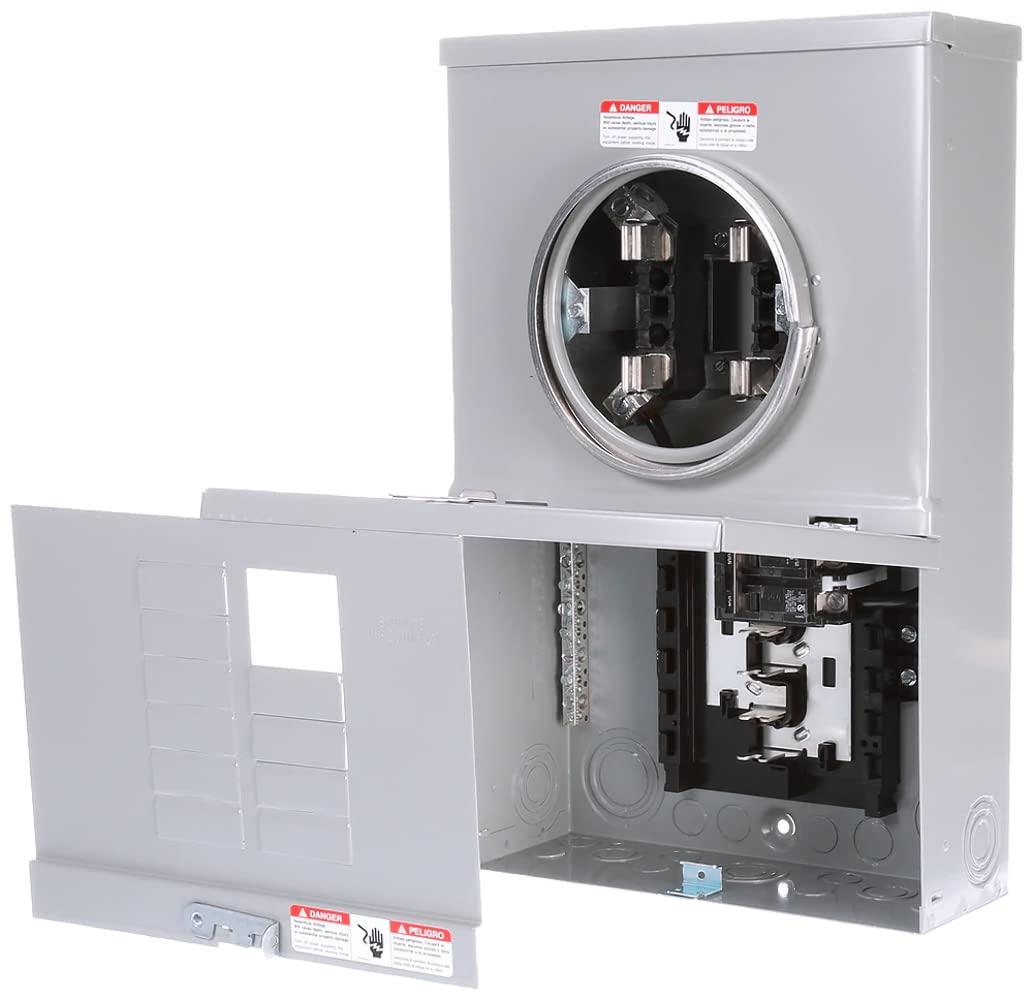
The all-in-one meter and breaker combo that collapses a service entrance into a single 20.5-pound unit.
Here is the heavy hitter for new construction or a full service upgrade where the utility meter must share one enclosure with your main breaker. The Siemens MC1020B1100S combines the meter socket and a 10-space 20-circuit breaker panel into a single surface-mount box, so you get ten full spaces for branch circuits without a separate meter can and panel. It tips the scales at 20.5 pounds — more than double the 9.3-pound Square D subpanel above — because it carries the whole service entrance in one weatherproof alloy steel housing measuring 5.12″L x 19.88″W x 12.88″H.
The numbers tell the circuit story clearly: this combo offers 20 circuits versus the bare 1 circuit of the simpler meter-main below it, giving you a genuine 20.0x gap in flexibility for the same 100A service. It is UL Listed, uses the RX-type hubs for overhead feed, and owners confirm it passed inspection as a meter and fuse panel in one. Functionality is the top praise, with buyers reporting it works perfectly for running electric around a property and handling a whole workshop or storage building.
The real-world flag worth heeding is utility approval. Several buyers emphasize checking with your local electric provider before purchase — the meter socket must be sanctioned by the utility for their service. This is an overhead-feed-only unit, so it is not the pick for underground service runs.
The big advantages
- Meter socket and 10-space breaker panel in one UL Listed enclosure saves a second box.
- Functionality is the leading praise — owners call it a great value for new construction.
- Passed inspection for buyers wiring shops and outbuildings from scratch.
Confirm before buying
- Overhead feed only — not built for underground utility service.
- Your electric provider must approve the meter-main combination first.
Reach for this if: you are putting up a new service entrance or shop and want the meter and main breaker unified in one sturdy box.
Look elsewhere if: your utility feeds underground or rejects a specific meter socket — approval is a gate you cannot skip.
5. Siemens MM0202ML1100S 100-Amp Meter Main

The bare UL Listed Siemens meter can for relocating an existing service to where the meter reader can actually reach it.
This pick solves a very specific pain: your meter sits somewhere inaccessible — say, a back porch the meter reader cannot get to — and code now demands a service disconnect the fire department can reach. The MM0202ML1100S is the genuine Siemens meter can that buyers use when relocating an existing meter, and it arrives as a ring-type cover alloy steel enclosure. Note the “main breaker not included” in the name: this is the meter housing, not a full breaker panel.
The honest owner feedback splits cleanly. On the engineering side, the enclosure is a quality product that does what it should once installed. But the recurring gripe is interior space — experienced hands describe it as very tight to work in, with one installer who has reworked or replaced 50-plus of these over time rating the engineer design poorly. The neutral lug sits angled sideways, requiring the removal of the neutral strap to realign, and standard screw heads leave pros wishing for Allen bolts. A 1.25″ conduit with 1/0 cable is a squeeze.
Weigh that against its purpose. If your local code requires a service means of disconnect and you need to relocate a meter, this UL Listed Siemens unit works — owners confirm it satisfies the requirement. Just know going in that the install demands patience, and the top entrance does not come with a weatherproof cover, so a little extra wire-bending room and a WP cover are on you.
Where it shines
- Genuine Siemens meter can straight from the manufacturer, not a third party.
- Ring-type alloy steel cover stands up to outdoor weather.
- UL Listed for service disconnect duty per current code.
The install reality
- Interior is tight — experienced electricians call the layout frustrating to wire.
- No weatherproof cover included for the top conduit entrance.
Grab it for: a meter relocation where code compliance matters more than wiring comfort and a pro handles the install.
Pass if: you want ample wire-bending space and an easy DIY layout — this enclosure will test your patience.
Understanding the Specs
Spaces, Circuits, and Tandem Breakers
The two numbers on a panel label — like 6-space 12-circuit or 10-space 20-circuit — are not interchangeable. Spaces are the physical slots for breakers. Circuits are what those slots can handle when you install slim tandem breakers that fit two circuits in one slot. More spaces equal more future flexibility, so a 10-space panel doubles the expansion room of a 6-space box without needing a bigger service.
Main Lug vs. Main Breaker vs. Meter Main
A main lug panel has no built-in disconnect; it expects protected power from an upstream breaker, making it a subpanel. A main breaker panel includes the disconnect, so it can serve as the main service entrance. A meter main combo fuses the utility meter socket and the breaker panel into one enclosure, collapsing two boxes into one — but only for the feed type it is built for, like overhead.
FAQ
What is the difference between a main lug and a main breaker outdoor panel?
Is a meter main combo required for a new service entrance?
How many circuits do I actually need in a 100 amp subpanel?
Does a 100 amp outdoor subpanel need its own ground rod?
Will a metal outdoor panel rust in a coastal or marine environment?
Can I use a 100 amp main lug panel as my main service disconnect?
Are Siemens and Square D breakers interchangeable in these panels?
How much working space should I leave around an outdoor panel?
What does it mean if a panel is rated NEMA 3R?
Why do some Siemens meter panels not include the main breaker?
Final Thoughts: The Verdict
For the majority of shoppers, the 100 amp outdoor panel winner is the Square D QO612L100RBCP because its rainproof plastic build plus six spaces of subpanel flexibility earned the strongest owner approval in this roundup at a budget-friendly price. If you want double the circuit headroom in one metal box, grab the Square D QO816L100RBCP. And for a true new-service entrance where the meter and breakers live together, the Siemens MC1020B1100S is the one to reach for.
How We Picked
We do not accept paid placement. Every pick is matched to a real buyer and a real use-case; we do not hands-on test units.
Sources & Methodology
Specifications: manufacturer listings and product documentation. Review insights: verified customer reviews, as of September 2026. Pricing: not shown on this page (it changes often); check the current price via the retailer link.
As an Amazon Associate, KitchPrep earns from qualifying purchases. This does not affect which products we feature.
Related Guides
