
Specs are compiled from manufacturer listings and verified buyer reviews and can change over time — please confirm the key details on the product page before buying.
You want a 1-inch poly pipe that uncoils flat and stays put, so your water line runs straight without kinks or wrestling matches. We compare five reliable coils, focusing on the specs that make installation easy or a real headache.
I’m Mohammad Maruf — the founder and writer behind KitchPrep. This guide is built by comparing the manufacturers’ published specifications and the patterns across verified customer reviews, so you get each pick’s real strengths and trade-offs instead of marketing spin.
We break down the best 1-inch poly pipe options by length, flexibility, and pressure ratings to help you choose the right coil for your next project.
Our Picks at a Glance


How To Choose The Best 1-Inch Poly Pipe
Buying the right coil means thinking about three things before you click: the type of plastic, the pressure it can handle, and how long a run you actually need. A 100-foot coil is perfect for a single repair, but a 300 or 500-foot roll is what you want for a whole property water line.
PEX-A vs PEX-B vs Polyethylene
The letters tell you how the plastic was made, and that changes how it behaves in your hands. PEX-A is the most flexible type, so it resists kinking and bends around corners with fewer fittings. PEX-B is stiffer but often cheaper per foot. Plain polyethylene (PE) is the classic black pipe used for wells and irrigation.
Pressure and Temperature Ratings
The PSI number tells you the maximum water pressure the pipe can safely handle. A higher number, like the 160 PSI you see on most PEX, gives you more margin for water hammer or hot water. Temperature matters just as much — hot water lowers the pressure a pipe can hold, so always check both numbers together.
Quick Comparison
| Model | Best For | Length | Max Pressure | Wall Thickness | Amazon |
|---|---|---|---|---|---|
| Happybuy PEX-B★ Best Overall | Large radiant heating jobs | 300 ft | 217 psi | 0.15 in | Amazon |
| Cresline PolyethyleneBest for Wells | Well and drip irrigation lines | 100 ft | 100 psi | 0.072 in | Amazon |
| SharkBite PEX-A | Buried potable water lines | 100 ft | 160 psi | 0.125 in | Amazon |
| SupplyGiant PEX-A | RV parks and tight bends | 100 ft | 160 psi | 0.09 in | Amazon |
| VEVOR PEX-B | Whole-property supply runs | 500 ft | 160 psi | 0.07 in | Amazon |
In‑Depth Reviews
1. Happybuy Non-Barrier PEX Tubing 1 Inch x 300 Feet
Our pick — over 4.5★ from 300+ verified ratings; the strongest balance of quality and price.
The longest single roll here, built for whole-house radiant heating without splicing mid-run.
At 300 feet, this Happybuy coil covers far more ground than the 100-foot SharkBite and SupplyGiant rolls above, meaning fewer joints and fewer spots where a leak could start. That length makes it the right call for laying out radiant floor loops or a long driveway snow-melt system.
The pressure ceiling is the headline number: it handles up to 217 psi at 20℃, which is comfortably higher than the 160 psi rating on the VEVOR when the water is cold. The wall is thick too, at 0.15 inches, which gives you more plastic between the water and the outside world than the thinner 0.07-inch VEVOR coil.
Owners consistently praise the build quality and the value, and they note the included pipe cutter makes slicing through the PEX quick and clean. Buyers report the coil arrives exactly as described, though the included clamps are only useful if you already own the crimp tool they are designed to work with.
What Wins People Over
- 300-foot length minimizes fittings on big radiant jobs
- High 217 psi cold-water rating adds safety margin
- Cutter included right in the box
Watch Out For
- Coil can arrive stiff and resists straightening
- No connectors included, only clamps
The pick for big layouts: grab this if you are running a long radiant heating loop and want one continuous line.
The reality check: you will need to buy crimp fittings and a cinch tool separately to actually make connections.
2. Cresline 100 ft. L Polyethylene Pipe 125 psi
The familiar black poly roll that owners trust for well pipes and drip lines above all else.
This is the one true polyethylene pipe in the lineup, the type you picture when someone says “poly pipe” — a tough black coil meant for buried service. It is the clear choice if your project is a well line or a long irrigation run for bushes, not a indoor radiant heat system.
The numbers show an honest trade-off. It is rated at 100 psi max pressure, which is a 60% gap below the 160 psi the SupplyGiant and VEVOR PEX coils handle, so it is not built for high-pressure indoor plumbing. The 0.072-inch wall is also the thinnest here, about 74% thinner than the SharkBite’s 0.125-inch wall.
Owners mention it is “perfect for my well pipe,” and gardeners find it the easiest way to water a row of bushes with drip heads. The practical tip owners share is to unroll it in the sun first so the plastic can relax — applying too much heat is a mistake they warn against.
Know your project first: this coil is a specialist for wells and drip irrigation, not a general-purpose plumbing pipe.
An honest warning: the low pressure ceiling and thin wall mean you should not use it for a hot water system.
Reach for this if: you are replacing a well pipe or setting up drip irrigation without high pressure demands.
Look elsewhere if: you need a pipe for indoor potable water or radiant heat, where PEX makes more sense.
3. SharkBite 1 Inch x 100 Feet White PEX-A
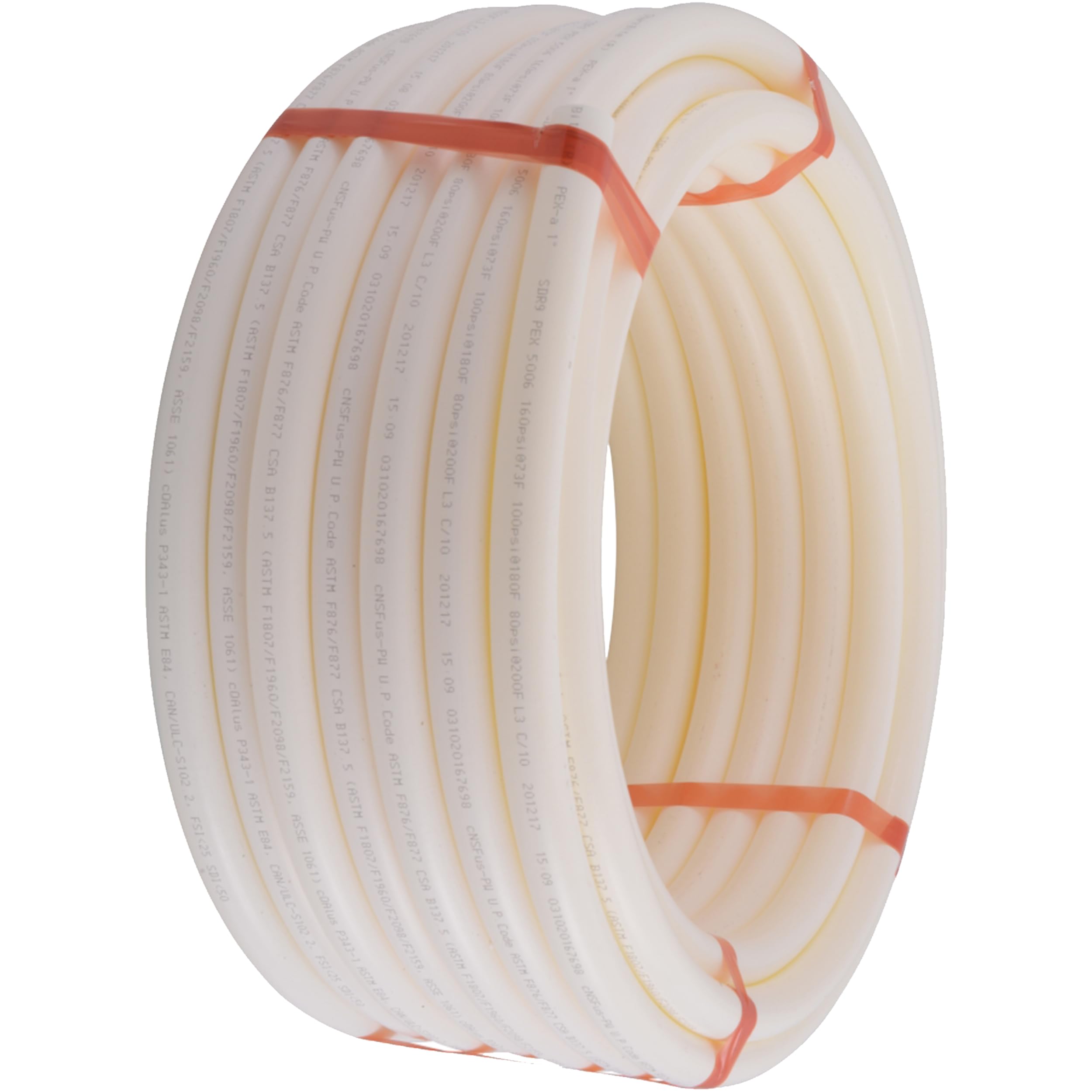
The brand-name PEX-A that bends around corners without elbows and shrugs off being buried.
This SharkBite coil is the premium pick for a reason: it is certified for direct burial, including under concrete, which makes it the safest bet if you are running a line you never want to dig up again. The PEX-A construction is the most flexible type of PEX, so it bends around corners without needing elbow fittings.
The wall thickness stands out in this comparison. At 0.125 inches, it is roughly 74% thicker than the Cresline’s 0.072-inch wall, giving you more material to resist punctures underground. It holds 160 psi max pressure at 33–70 degrees F, and is made in the USA.
Customers note the fittings hold with serious force — “I could not pull them apart” is the recurring line from owners who buried their connections and did not want to dig them back up. The one honest complaint is that the coil holds its curve stubbornly, so it is a pain if you need perfectly straight tubing.
Why It Leads on Durability
- Direct burial certified, safe under concrete
- Thick 0.125-inch wall resists punctures
- PEX-A flexibility means fewer fittings
The Catch
- Coil memory makes straight runs difficult
- Only 100 feet, so big jobs need multiple rolls
Best for buried lines: choose this when the pipe goes underground and failure is not an option.
Think twice if: you need perfectly straight tubing, since the coil refuses to fully straighten.
4. Pex Tube Coil 1 Inch x 100 Ft, Blue, Non-Barrier

A blue PEX-A coil with a wide 1.13-inch outside diameter for snake-like routing in tight spots.
This SupplyGiant coil shares the flexible PEX-A pedigree with the SharkBite, but its outside diameter is the widest here at 1.13 inches — compare that to the 0.63-inch outside diameter on the Happybuy roll. That extra girth, with a 0.862-inch inner diameter, keeps water flowing freely even as the pipe snakes through cramped spaces.
It is rated at 160 psi minimum temperature of 73 degrees, and approved for burial applications including under concrete. Owners running RV parks report it works great for that exact use case, and the size comes correct from the start.
The honest notes are mixed. Some buyers found the PEX-A slow to contract after expansion, and one owner strongly disagreed with the sizing claim, insisting the inside diameter measured closer to 3/4 inch than a full inch. For most users the quality lands fine, but the sizing dispute is worth knowing before you commit.
The flexibility win: PEX-A offers the tightest bend radius of any PEX type, which means fewer kinks and easier routing around obstacles.
The honest asterisk: a couple of owners dispute the true inside diameter, so double-check your fittings if exact sizing is critical.
Pick this for: RV park hookups and retrofit jobs where you need maximum bendability.
skip it if: a disputed inside diameter would derail your project — measure before you cut.
5. VEVOR PEX Pipe 1 Inch x 500 FT, Non Oxygen Barrier White B
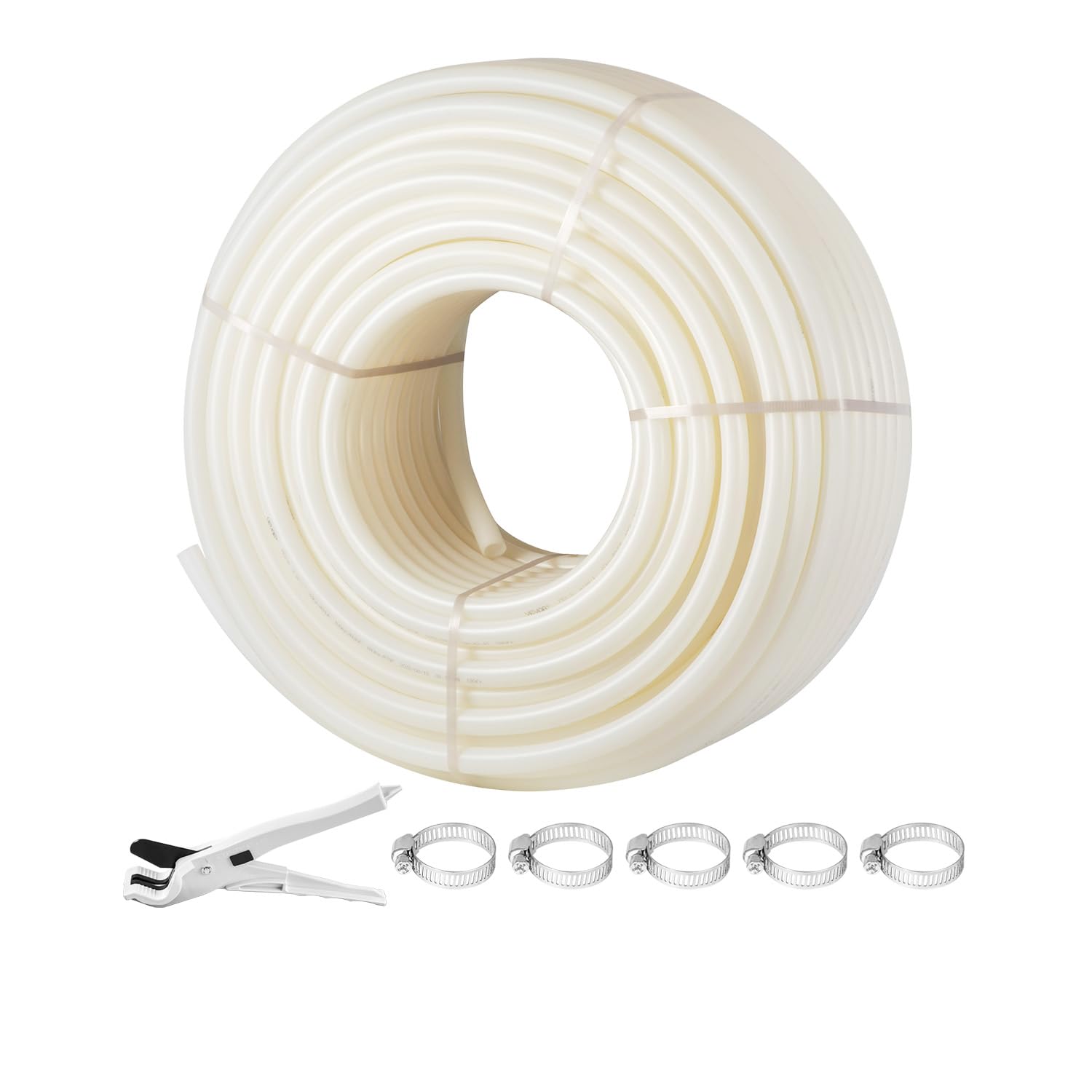
A 500-foot monster roll that prices out lowest per foot for whole-property supply lines.
If you are plumbing an entire property, this VEVOR coil is the value king: 500 feet in one roll, which is a 5x gap over the 100-foot SharkBite and SupplyGiant options. That kind of length means you can run a municipal water line from the street or feed a whole irrigation system without a single splice.
The specs tell a story of balance. It handles 160 psi max pressure and keeps a 100 PSI rating even at 180°F, so hot water is not a problem. The wall is on the thinner side at 0.07 inches with a 1.13-inch outside diameter, but the PEX-B material keeps the cost down while staying crack-resistant down to -40°F.
Reviewers point out it unrolls easily and lays down with little effort, and it has held up as a water line for months without a leak. The recurring gripe is coiling — a few owners found the plastic nearly impossible to make perfectly straight, and one had to cut in a coupling where a kink left a stress mark.
Why It’s the Value Play
- 500-foot roll is the cheapest per foot here
- Holds 100 PSI even at 180°F for hot water
- Includes a pipe cutter and clamps
What to Expect
- Coil memory makes it hard to lay perfectly straight
- Thin 0.07-inch wall demands careful handling
The budget pick for big runs: choose this when you need maximum length for the least money per foot.
The trade-off: fight the coil’s curves or cut out any kinked sections before burying your line.
Understanding the Specs
PSI and Pressure Ratings
PSI, or pounds per square inch, is the measure of water pressure the pipe can safely hold. A 160 psi rating means the pipe handles typical home water pressure, which usually sits between 40 and 80 psi, with plenty of room to spare. Hot water weakens plastic, so check the rating at your water temperature, not just the cold number.
Wall Thickness and Outside Diameter
The wall thickness, measured in inches, tells you how much plastic sits between the water and the outside world. A thicker wall like 0.125 inches resists punctures better when buried, while a thinner wall like 0.07 inches is lighter and cheaper. The outside diameter, usually around 1.1 inches for 1-inch pipe, determines which fittings and clamps will fit.
FAQ
What is the difference between PEX-A and PEX-B pipe?
Can I bury 1-inch PEX pipe directly in the ground?
Why does my new pipe coil refuse to lay straight?
How do I know which fittings work with my 1-inch pipe?
What does the PSI rating actually mean for my home?
Is a 100-foot coil enough or should I buy a longer roll?
Can I use 1-inch poly pipe for hot water?
What is the best way to cut PEX pipe cleanly?
Final Thoughts: The Verdict
If you want one dependable pick, the 1-inch poly pipe winner is the Happybuy 300-foot coil because it delivers the best blend of length, a thick 0.15-inch wall, and a high 217 psi cold-water rating for radiant heating work. If you want the most flexible and burial-safe option, grab the SharkBite PEX-A. And for the biggest project at the lowest cost per foot, the VEVOR 500-foot roll is the one to reach for.
How We Picked
We do not accept paid placement. Every pick is matched to a real buyer and a real use-case; we do not hands-on test units.
Sources & Methodology
Specifications: manufacturer listings and product documentation. Review insights: verified customer reviews, as of September 2026. Pricing: not shown on this page (it changes often); check the current price via the retailer link.
As an Amazon Associate, KitchPrep earns from qualifying purchases. This does not affect which products we feature.
Related Guides
