
Specs are compiled from manufacturer listings and verified buyer reviews and can change over time — please confirm the key details on the product page before buying.
Hanging shelves into brick can take an afternoon or turn into a fight with a bit that just spins and smokes. You need raw punching power to get through masonry, but the wrong tool leaves you wrestling an 8-pound beast or swapping batteries every few holes. The cordless market now offers three real choices: a compact all-rounder, a dedicated rotary hammer for serious concrete, and a premium workhorse that can mix mortar all day.
I’m Mohammad Maruf — the founder and writer behind KitchPrep. This guide is built by comparing the manufacturers’ published specifications and the patterns across verified customer reviews, so you get each pick’s real strengths and trade-offs instead of marketing spin.
We break down jackhammer-style impact energy versus everyday drilling torque so you can confidently choose the best battery powered hammer for your specific jobs without overpaying for power you will never use.
Our Picks at a Glance


How To Choose The Best Battery Powered Hammer
Before you compare brands, you need to know what kind of “hammer” action you actually need. There are two very different mechanisms hiding under similar names, and picking the wrong one means either sluggish drilling or wrecking your bits.
Hammer Drill vs. Rotary Hammer
A standard hammer drill, like most of the models here, uses a mechanical clutch to create a rapid vibration while the bit spins. This is perfect for occasional brick, block, or thin concrete. A rotary hammer, usually with an SDS-Plus chuck, uses an actual piston to smash the bit forward with real force. That dedicated punch is what you need for rebar, thick poured concrete, or drilling many holes in a row — think anchor installs and foundation work.
Chuck Type Sets Your Bit Options
Most general drills use a keyless 1/2-inch chuck that accepts standard round-shank twist bits. A rotary hammer uses an SDS-Plus chuck, which locks the bit in with grooves and allows the bit to slide for the hammering action. The trade-off is simple: universal chucks are versatile, SDS-Plus is brutally effective on masonry but needs an adapter to use standard bits.
Battery Platform Loyalty
Buying a battery powered hammer drill usually means committing to an ecosystem. Brands like Milwaukee (M18 and M12), DEWALT (20V MAX), Makita (18V LXT), and RYOBI (ONE+) each have their own batteries that do not fit other brands. If you already own tools in one system, buy the bare tool to save money. If you are starting fresh, the included battery and charger kit is usually the smarter value.
Quick Comparison
| Model | Best For | Type / Chuck | Max RPM | Metal Capacity | Amazon |
|---|---|---|---|---|---|
| Milwaukee M12 Fuel 2-Tool Kit★ Best Overall | Compact home & repair | Hammer Drill / Keyless | 1550 rpm | — | Amazon |
| DCK 20V Brushless Hammer DrillBest Value | Budget structural work | Hammer Drill / 1/2″ Metal | 2,200 rpm | 0.5 in | Amazon |
| Dong Cheng 20V Rotary HammerMasonry Specialist | Serious concrete drilling | Rotary Hammer / SDS-Plus | 1,400 rpm | 0.88 in | Amazon |
| DEWALT DCD799B ATOMIC | Tight spaces, homeowner | Hammer Drill / 1/2″ Ratcheting | 1,650 RPM | 0.4 in | Amazon |
| RYOBI ONE+ HP PBLHM101B | DIY concrete + platform | Hammer Drill / 1/2″ Metal | 2,100 RPM | 0.5 in | Amazon |
| DEWALT DCD1007B XR | Extreme torque pro jobs | Hammer Drill / 1/2″ Metal | — | 0.5 in | Amazon |
| Makita XPH07Z | Pro long-handle drilling | Hammer Drill / 1/2″ | — | 0.5 in | Amazon |
| Milwaukee 2912-20 M18 FUEL | Heavy concrete & chipping | Rotary Hammer / 1″ SDS Plus | — | 0.5 in | Amazon |
In‑Depth Reviews
1. Milwaukee Electric – M12 Fuel. 2-Tool Combo KIT
Our pick — over 4.5★ from 800+ verified ratings; the strongest balance of quality and price.
The tiny 12-volt kit that owners say punches shockingly above its size class.
You do not need an 18V or 20V platform to get serious work done, and this M12 combo proves it. The whole kit weighs 8.1 pounds, yet the drill spins up to 1550 rpm (revolutions per minute, or how fast the bit turns). Owners consistently report it drills wood and sheet metal while staying small enough for tight spaces a full-size drill cannot reach. Owners most praise its quality, then its power-to-size ratio.
The second tool in the kit is a compact driver that owners call excellent, and the comfortable handle gets regular mentions. Battery life is the quiet star: buyers report using it one to two times weekly for electrical work and getting a month or two out of a single charge. It is a 2-battery kit on the 12-volt M12 platform, so it is not for driving 12-inch deck screws all day. As one owner put it, if you need that, “find a different job.”
What wins people over is the balance of compactness and dependability for maintenance and repair work. It is the rare premium-brand pick that feels justified for a homeowner who values ergonomics over brute force, and pros appreciate it as a go-to for 90 percent of tasks like auto, electrical, and general home repair.
What the praise centers on
- Compact and lightweight for a 2-tool kit
- Comfortable handle and well-balanced feel
- Long runtime on a single charge for light weekly use
- True premium Milwaukee build quality
Who should look elsewhere
- Lacks the masonry punch for lag bolts and concrete
- 12V platform suits light-to-moderate duty, not daily pros
Reach for it when: you want one refined, easy-to-handle kit for home repairs, electrical, and auto work without lugging a heavy 20V rig.
Think twice if: your main jobs involve thick concrete or masonry lag bolts — this compact 12-volt is not built for that pounding.
2. DCK 20V Brushless Hammer Drill
A complete 600W kit that owners compare to a corded drill for a budget price.
Driving tapcons into concrete is easy, owners mention, because the hammer function is excellent. The brushless motor (a motor without carbon brushes, so it runs cooler and lasts longer) outputs 600W of power with 531 in.lbs of torque (inch-pounds, a measure of twisting force). The faithful say that is enough to compare it directly to a corded unit. The 4.0Ah battery delivers a claimed 800 screws per charge, and customers note charging it about once a month with regular use.
Where this kit separates itself is the box contents. You get the drill, a 2A charger, 42 drill and driver bits, a belt hook, and a 12-inch storage bag — everything a first-time buyer needs to start working immediately. The quality is the most-mentioned trait by a wide margin at 115 mentions, with functionality second at 85.
You get 3 modes — standard drilling, hammer drilling, and screw driving — plus a 22+1+1 torque clutch (a dial that stops the bit at set force levels) for precise control. Compared to the Dong Cheng rotary hammer above, this DCK drills a 0.5-inch hole in steel versus 0.88 inches for the rotary, and spins faster at 2,200 rpm versus 1,400 rpm. That makes it the better all-purpose choice, even if the rotary wins on pure masonry.
The budget workhorse: buyers describe it as a “go-to” tool that does everything, and the included bit assortment means no extra purchases before your first job.
Worth noting: the all-metal keyless chuck is praised, though a few owners found it glitchy after heavy hammer use — treat it gently during intense masonry work.
3. Dong Cheng 20V Max Cordless Rotary Hammer Drill
A true SDS-Plus piston hammer that drills concrete on a level standard drills cannot reach.
This is the honest-to-goodness rotary hammer for buyers who are tired of standard hammer drills bouncing off dense concrete. With 2.1 Joules of impact energy and a 0-1,400 RPM brushless motor, it delivers 4,500 BPM (blows per minute) of real piston force. Reviewers point out drilling four 1/2-inch holes at 2 inches deep in under 5 minutes, and several describe it as a labor saver that pounds through material that has stalled other drills.
The defining difference versus nearly everything else on this list is the SDS-Plus chuck. This tool does not just spin a bit — it locks SDS-Plus bits in with grooves for quick changes and lets the bit slide as the piston hammers. The downside is that standard twist bits need an SDS adapter, and owners note the unique battery means you are committed to this brand unless you buy adapters. It is heavy at 4.5 pounds for the tool itself, which actually helps the hammer do its job.
Power is the theme in the reviews: it out-performs prior hammer drills on concrete block, and one buyer used it to install hurricane panels successfully. Quality leads the positive aspects at 20 mentions, with drilling performance second at 15. The catch is battery life, which earns mixed feedback — some say it holds good energy while others report the battery dying after about 6 months of use.
Best suited for: the occasional-to-regular DIYer who works with concrete, brick, or rock and wants rotary hammer power without contractor pricing.
Who it misses: daily contractors, who find it too light for continuous use and should plan on a spare battery or a corded backup.
4. DEWALT DCD799B 20V MAX ATOMIC Compact Hammer Drill

DEWALT’s shortest 20V hammer drill for reaching studs and joists ordinary drills cannot fit.
If your projects live in tight corners — between studs, inside cabinets, up on a ladder — this ATOMIC model is built specifically for you. At 6.49 inches of head length, it is DEWALT’s shortest 20V MAX hammer drill, and the compact body hides a brushless motor delivering up to 1,650 RPMs and 28,050 BPMs. Shoppers say it drills through solid brick easily and handles dense old-growth timber.
DEWALT rates this model at 14% more power than its predecessors., and the 1/2-inch ratcheting chuck keeps bits locked firmly during high-torque work. The weight is the sleeper advantage here: at just 2.5 pounds, it disappears in a tool bag and does not wear your wrist out on overhead work. Quality leads the review counts at 76 mentions, with performance second at 55 — an unusually strong ratio that speaks to consistent owner satisfaction.
The catch is durability feedback that is genuinely mixed, with several buyers reporting issues with the chuck falling out over time. That makes this a “tool only” purchase (no battery included) best suited to light-to-moderate household drilling where the compact size earns its keep, rather than daily jobsite abuse.
What owners love
- Truly compact and lightweight for a 20V hammer drill
- Drills brick with no struggle even after months of use
- 552 UWO of power in a small package
- Smooth variable speed trigger with useful clutch
The honest caution
- Reported chuck issues in some units flag a durability question
- Bare tool — you must supply a DEWALT 20V battery
5. RYOBI ONE+ HP 18V Brushless Hammer Drill/Driver

The 18V ONE+ model that makes drilling concrete feel like cutting soft butter.
RYOBI’s ONE+ HP series is the smart move for homeowners already invested in the largest cordless platform in the world, and this PBLHM101B is the hammer drill that keeps them loyal. The brushless motor delivers up to 2,100 RPM with a hammer mode that owners say makes 3/8-inch holes up to 5 inches deep in concrete feel easy. The 1/2-inch ratcheting metal chuck provides strong bit retention, and the 24-position clutch prevents overdriving screws.
RYOBI rates this model at 45% faster hammer drilling than standard motors., and real-world reviews back it up: buyers mounted a flag pole where a regular drill failed, and others note it handled concrete “like it’s supposed to.” The power is strong enough to twist in your hand if you are not holding on firmly. Owners describe it as lightweight for a battery drill, which makes extended overhead work feasible.
The pragmatic appeal of RYOBI is the ecosystem: the ONE+ HP 18V batteries and chargers work across hundreds of tools, so this bare tool (battery not included) is a low-cost way to add hammer drilling to an existing collection. Quality tops positive mentions at 27, with functionality second at 14. Durability sees mixed feedback, so the 30-day limited warranty is note for those who push tools hard.
A natural fit for: DIYers who own RYOBI ONE+ tools and want credible masonry capability without leaving the platform.
Not ideal for: daily professional abuse — RYOBI is built for weekend warriors and light commercial work, not continuous jobsite pounding.
6. DEWALT 20V MAX XR 1/2 Inch Brushless Hammer Drill

DEWALT’s most powerful 20V hammer drill with anti-kickback tech for serious torque.
Owners describe this DCD1007B as “brutal power and impeccable percussion,” and the spec sheet backs up the bravado. With 2,100 in-lbs of max torque, DEWALT calls it the highest-rated max torque cordless 1/2-inch hammer drill in its class, with a 3-speed all-metal transmission to manage that output. The heavy 5-pound build is the price of that power, and buyers openly admit it is “kind of heavy but not bad.”
The standout safety feature is the ANTI-ROTATION System, which senses if the tool starts spinning out of control and shuts it down instantly — essential when you are pushing high torque into metal or core drilling concrete. Owners have used it to mix thin-set and grout, core drill concrete, and report it never runs out of power. The pivoting 3-position LED is another touch owners love for illuminating dim areas.
It drills up to 275 holes per charge, each in 2.6 seconds., which translates to real productivity on the job. It is also TOOL CONNECT chip ready for tracking and management (chip sold separately). Quality leads the positive mentions at 75, with performance second at 33, and durability third at 18 — a profile that screams professional-grade.
The pro’s pick for: electricians, plumbers, and remodelers who need maximum torque for large-diameter holes in wood, metal, and concrete all day.
Accept the trade-off: at 5 pounds it is heavier than compact rivals, and the electronic clutch takes getting used to if you prefer a mechanical one.
7. Makita XPH07Z 18V LXT Brushless Hammer Driver-Drill

The long-handled 18V workhorse that replaces corded drills for 6-inch hole saws.
Professional electricians sing the praises of this XPH07Z for one specific reason: it replaces a corded drill for 6-inch hole saws through LVLs (laminated veneer lumber) without stalling. The brushless motor delivers 1,090 in.lbs of max torque at up to 31,500 BPM, and the extended handle length gives you the leverage to control that power. Buyers report drilling 30-50 holes per install in electrical work.
The brushless motor extends run time by up to 50% per charge.. Removing carbon brushes means the motor runs cooler and lasts longer. The trade-off owners note is that battery life runs shorter than rivals under heavy load, and the all-metal build is heavy at 5.5 pounds — capable of tweaking your wrist if you push it without the side handle.
Makita positions this as a professional light-to-medium hammer drill, and buyers agree it is a “work horse” that handles 12-inch by 1-inch augers through double 2x4s with ease. It is also the tool of choice for mixing mud, grout, and mortar. The long handle is the defining difference versus the DEWALT DCD1007B above — Makita leans into leverage for torque control, while DEWALT leans into anti-rotation electronics.
The professional edge
- Long handle design aids torque control on heavy jobs
- Handles 4-inch hole saws through LVLs with no stalls
- Brushless motor runs cooler for longer life
- Strong torque owners rank above DEWALT, below Milwaukee
What to watch
- Heavy all-metal build can strain the wrist without the side handle
- Battery life runs shorter than some rivals under sustained load
Grab this for: heavy drilling into engineered lumber, mixing mortar, and electrical rough-ins where leverage beats compactness.
Reconsider if: you mostly do light fastening — the XFD10Z in the same lineup is a better fit for everyday small tasks.
8. Milwaukee 2912-20 M18 Fuel 1″ SDS Plus Rotary Hammer
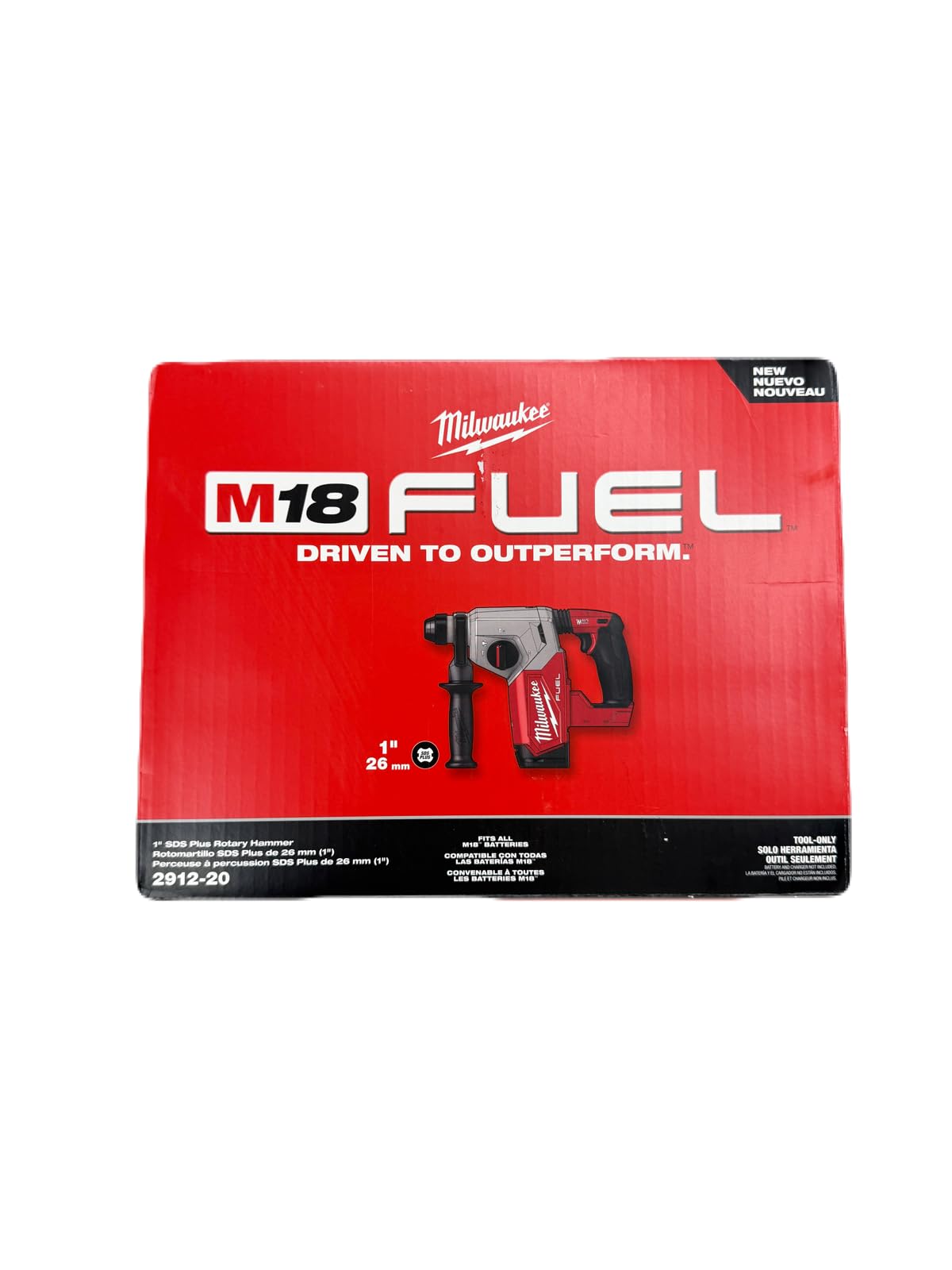
The M18 piston-driven SDS hammer that owners say drills 5-inch concrete like it is nothing.
Owners describe drilling through 5-inch thick concrete as “easy work” with this tool, making it the top of the food chain for battery powered hammering. The 2912-20 is a true 1-inch SDS Plus rotary hammer (SDS Plus is a bit system that locks bits securely for heavy hammering) with a brushless motor, using a piston mechanism rather than the vibration of a standard hammer drill. The power is so impressive that buyers wish they had bought it years ago rather than struggling with corded alternatives.
The defining feature is AUTOSTOP Control, which senses bind-ups and shuts the tool down to protect you from violent kickback. It is part of the M18 System with over 200 compatible solutions, and owners note the charge lasts through heavy work sessions with no degradation over years of ownership. At 7.5 pounds it is substantial, but owners mention it is “so much lighter than dealing with my old corded one.”
Performance is the runaway top aspect at 61 mentions, with power second at 20 — an uncommon concentration that shows this tool does exactly what it promises. Compact size earns praise at 7 mentions, with owners calling it a great size for a rotary hammer. The battery life feedback is mixed, and the wise advice from owners is to pair it with a high-capacity “big boy” battery for sustained drilling.
The concrete destroyer: the tool you reach for when you need anchor holes in poured foundations, cores through walls, or chipping work — no cord, no compromise.
Budget your battery: it ships without a pack, so the real investment is a high-capacity M18 battery to open up the full drilling speed.
Choose this over the Dong Cheng rotary if: you are doing serious, repeated concrete work and want Milwaukee’s AUTOSTOP safety and M18 platform longevity.
Not for the casual DIYer: the price and 7.5-pound heft only make sense if you genuinely drill masonry regularly.
Understanding the Specs
Impact Energy (Joules)
This is the true measure of hammering force in a rotary hammer. One Joule is roughly the energy of a 2.2-pound weight dropping from a height of 4 inches. A rotary hammer with 2.1 Joules, like the Dong Cheng, delivers a genuine piston blow that smashes through concrete — a standard hammer drill has no such rating because it relies on vibration, not impact energy.
Torque (in-lbs) vs. Speed (RPM)
Torque is twisting force — it is what lets a drill power through thick steel or drive large screws without stalling. Speed (RPM) is how fast the chuck spins, which matters for clean holes in wood and metal. A high-torque drill like the DEWALT DCD1007B at 2,100 in-lbs is built for raw grunt, while faster-spinning models like the DCK at 2,200 rpm excel at rapid drilling in softer materials.
FAQ
What is the difference between a hammer drill and a rotary hammer?
Can I use regular drill bits in an SDS-Plus rotary hammer?
What does BPM mean on a hammer drill?
How much torque do I really need in a battery hammer drill?
Is a brushless motor worth the extra cost?
Can the Milwaukee M12 compact drill really handle masonry?
What size battery do I need for heavy drilling?
Can one hammer drill replace a corded drill?
Final Thoughts: The Verdict
Across the board, the best battery powered hammer winner is the Milwaukee M12 Fuel 2-Tool Kit because it pairs premium build quality with a compact size that handles the overwhelming majority of home and repair tasks without wearing you out. If you want serious concrete-drilling punch on a budget, grab the Dong Cheng Rotary Hammer; its 2.1 Joules of impact energy (a measure of the force per blow) is the real deal for masonry. And for the professional who needs maximum torque and anti-kickback safety, the DEWALT DCD1007B XR is the one to reach for.
How We Picked
We do not accept paid placement. Every pick is matched to a real buyer and a real use-case; we do not hands-on test units.
Sources & Methodology
Specifications: manufacturer listings and product documentation. Review insights: verified customer reviews, as of September 2026. Pricing: not shown on this page (it changes often); check the current price via the retailer link.
As an Amazon Associate, KitchPrep earns from qualifying purchases. This does not affect which products we feature.
Related Guides
