
Specs are compiled from manufacturer listings and verified buyer reviews and can change over time — please confirm the key details on the product page before buying.
You need a 12V solar panel that actually keeps your battery alive through winter or powers your shop during an outage—not just one that looks good on paper. The three specs that decide real-world output are wattage (how much power it can produce), amperage (the current it pushes toward your battery), and cell efficiency (how well it converts sunlight into electricity). Below are nine panels, from compact maintainers to full-size rigid powerhouses, so you can match one to your RV, cabin, or off-grid setup.
I’m Mohammad Maruf — the founder and writer behind KitchPrep. This guide is built by comparing the manufacturers’ published specifications and the patterns across verified customer reviews, so you get each pick’s real strengths and trade-offs instead of marketing spin.
Weighing cell efficiency against physical size and rated amperage reveals which 12v solar panel genuinely earns a spot on your roof or rack.
Our Picks at a Glance

How To Choose The Best 12V Solar Panel
A note before we dive in: this list uses flexible matching, so a panel rated at 18V that charges a 12V battery system sits alongside true 12V panels, since they serve the same job. You are never misled—each pick below is built for a 12-volt battery bank.
Match wattage to your daily energy use
Start with what you are powering. A 25W panel is a trickle charger, perfect for stopping a parked car or tractor battery from draining. A 50W panel handles a gate opener or small winter loads. A 100W panel is the workhorse that can keep a fridge running or recharge a power station on a clear day. The bigger the wattage, the faster your battery refills, but also the more roof space and weight you commit to.
Check amperage to understand charging speed
Amperage tells you how quickly electricity flows into your battery. A panel pushing 6.42A will replenish a battery noticeably faster than one delivering 2.67A, assuming similar sunlight. This is why a single 100W panel can out-charge two smaller ones—more current arrives at the battery terminals per hour of good sun.
Decide between rigid glass and flexible panels
Rigid panels with aluminum frames and tempered glass are the long-haul champions, built to shrug off hail and decades of weather. Flexible panels trade some durability and efficiency for the ability to bend over curved RV roofs or store flat when space is tight. If your mounting surface is flat and permanent, go rigid. If the roof curves or you need portability, flexible wins.
Quick Comparison
| Model | Best For | Wattage | Amperage | Efficiency | Amazon |
|---|---|---|---|---|---|
| Renogy 50W Rigid★ Best Overall | Gate openers & winter top-ups | 50 watts | 2.67 A | 22% | Amazon |
| JJN 100W 10BB RigidBest Value | Full-size off-grid arrays | 100 watts | 6.42 A | 23% | Amazon |
| JJN 100W N-Type 16BBTop Performer | High-efficiency setups | 100 watts | 6.42 A | 25% | Amazon |
| ECO-WORTHY 100W N-Type | Bifacial gain & low light | 100 watts | 4.69 A | 25% | Amazon |
| Sun Energise 25W MPPT | Trickle charging & maintaining | 25 watts | 2 A | 21%-30% | Amazon |
| DOKIO 100W Suitcase | Portable camping power | 100 watts | — | High | Amazon |
| Topunive 2x100W Flexible | Curved roofs on a budget | 100 watts | 5.24 A | 23% | Amazon |
| Topsolar 100W Kit | Complete all-in-one setups | 100 watts | 4.5 A | High | Amazon |
| Renogy 100W Flexible | Airstream & stealth installs | 100 watts | 4.84 A | 22% | Amazon |
In-Depth Reviews
1. Renogy Solar Panel 50 Watt
Our pick — over 4.5★ from 650+ verified ratings; the strongest balance of quality and price.
The compact mid-power panel that quietly solves winter battery drains for gates and trailers.
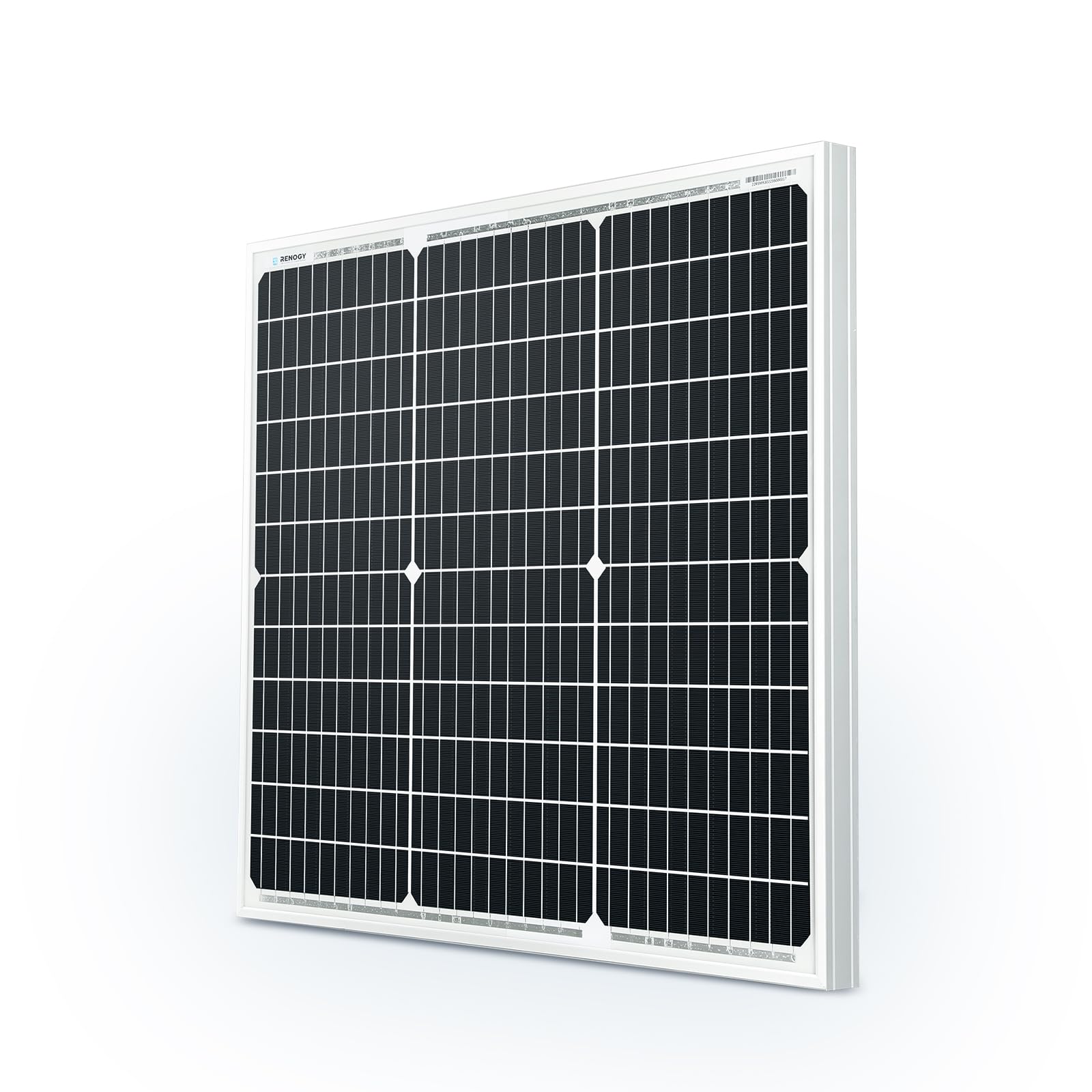
If your gate battery kept dying with a 20W panel through winter, this 50W rigid panel is the direct fix—it delivers double the wattage of that older unit, rated at 50 watts and pushing 2.67A (amps) toward your battery. Owners who made that exact swap report the problem simply disappeared, with the panel keeping their gate opener running without fuss. The 22% efficient monocrystalline cells (a type of solar cell that converts sunlight into electricity) sit in a corrosion-resistant aluminum frame measuring 22.8″L x 19.8″W x 1.2″H, small enough to fit a dash or a compact roof.
The build quality here is the thing buyers rave about most, with the sturdy aluminum frame and solid connectors earning consistent praise. It is rated to withstand high winds of 2400Pa and snow loads of 5400Pa, so it shrugs off weather that would trouble cheaper units. Pre-drilled grounding holes make installation straightforward, and it works with Renogy’s own Z-Brackets, pole mounts, and tilt mounts if you want to expand later. The 5-year material and workmanship warranty covers the aluminum frame and tempered glass against weather damage.
One genuine limitation: at 2.67A, this is not a fast bulk charger for a big depleted battery bank—it is a maintainer and steady charger for smaller loads. Buyers report that pairing it with a charge controller is wise to avoid overcharging. And while most units arrive pristine, a few owners have reported glass damage in shipping, so inspect the panel on arrival. If your need is a reliable, quality 50W panel rather than a full-size array, this is the one.
What wins owners over
- Pumps 50W even in shady spots, per consistent owner reports
- Build quality earns the most praise by far
- Compact 22.8″ frame fits tight mounting spots
The honest trade-offs
- 2.67A output means slow charging for large drained banks
- Occasional units arrive with cracked glass in transit
The steady choice: grab this if a gate, trailer, or small cabin battery needs reliable winter-long upkeep.
Look elsewhere if: you need to refill a large RV battery bank from empty quickly—step up to a 100W panel instead.
2. JJN 100 Watt Solar Panel, 10BB Monocrystalline
The 100W workhorse that powered an entire shop through an outage without breaking a sweat.
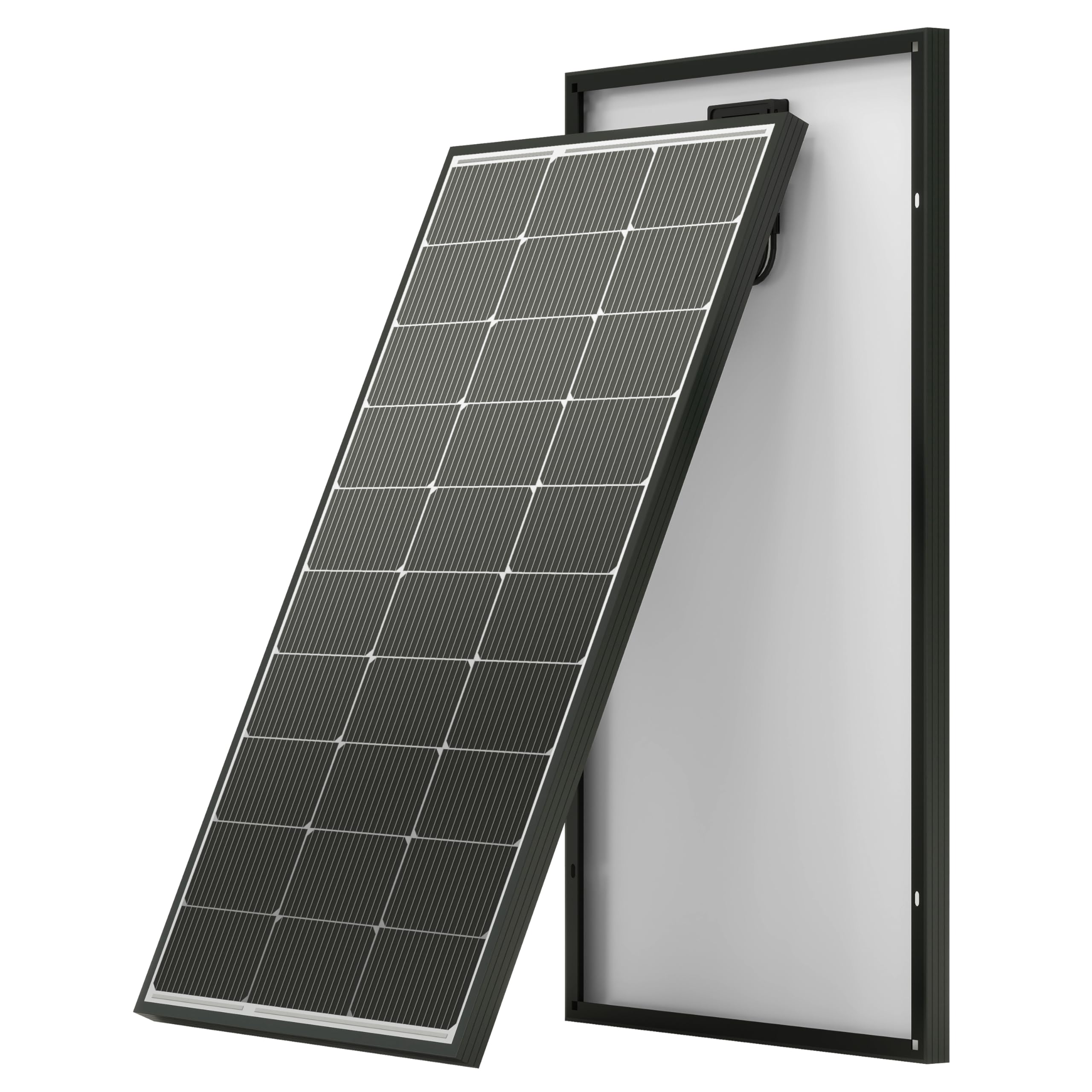
Buyers who ran eight of these panels through six-plus months report full wattage output, with one setup pushing 15A at 24V to run an AC, compressor, and tools for over six hours during a power cut. Each panel is rated at 100 watts and delivers 6.42A, using 10BB (ten busbar) monocrystalline cells to hit a 23% conversion rate. That is a solid efficiency number for a panel at this level, meaning you capture more energy from the same sunlight than conventional lower-grade cells.
The 13.7-pound panel measures 38.2″L x 22.7″W x 1.2″H, and owners note it is light enough for one person to handle during rooftop installation. A single panel generates up to 500Wh per day with 5 hours of direct sun, per the maker’s claim. The anodized aluminum frame and tempered glass are rated for 2100Pa wind and 5100Pa snow loads, and the IP65 junction box with IP67 connectors keeps moisture out in exposed rooftop duty.
A recurring note across reviews is that panels occasionally arrive with shattered glass from shipping, though the maker’s support team replaces damaged units within days. The 30-year transferable power output warranty is among the longest in this class, offsetting the shipping risk. If you are building a multi-panel array for a cabin, shop, or RV, this is the smart budget play—owners repeatedly call it affordable at roughly half the price of competitor panels.
Why it earns its place
- Performance is the most-praised aspect by a wide margin
- Full 100W output confirmed by owners in real use
- 30-year transferable power output warranty
What to watch
- Some units ship with cracked glass—inspect on arrival
- Sharp corners make careful handling important
Best for arrays: choose this when you want maximum watts per dollar for a multi-panel off-grid setup.
Think twice if: you need a single lightweight panel for a curved roof—go flexible for that job.
3. JJN 100 Watt N-Type 16BB High Efficiency
The N-type cell design that squeezes 25% efficiency from a 100W footprint.
This is the higher-efficiency sibling in the JJN lineup, and the numbers show it—25% conversion efficiency versus the 23% of the 10BB model above, an advantage that means more power from the same patch of sun. Owners running eight of these flat-mounted on a camper roof measured 90% of rated output across the array, hitting 720W from eight 100W panels in cool full sun. The wattage is identical at 100W per panel with 6.42A output, but the N-type cells and 16 busbar design reduce power loss and keep the panel running cooler.
The frame is corrosion-resistant aluminum, rated for 2400Pa wind and 5400Pa snow loads, with an IP65 junction box and IP67 MC4 connectors. It weighs the same 13.7 pounds as the 10BB version but measures in at 22.7″L x 1.2″W x 38.2″H, a slightly different footprint for mounting flexibility.
Quality is what owners highlight most here, noting sturdy construction and consistent output across multiple panels. A few buyers mention minor cosmetic scratches from shipping, but the maker backs this with a 25-year transferable power output warranty. If you are building a permanent array where every fraction of efficiency counts toward your daily energy harvest, this panel justifies its edge over standard 100W options.
Efficiency leader: the 25% N-type cells plus half-cut design deliver more real power per square inch than typical 100W panels.
The catch: you pay a small premium for that efficiency gain, and shipping can leave cosmetic marks on the frame.
4. ECO-WORTHY 100 Watt N-Type Bifacial
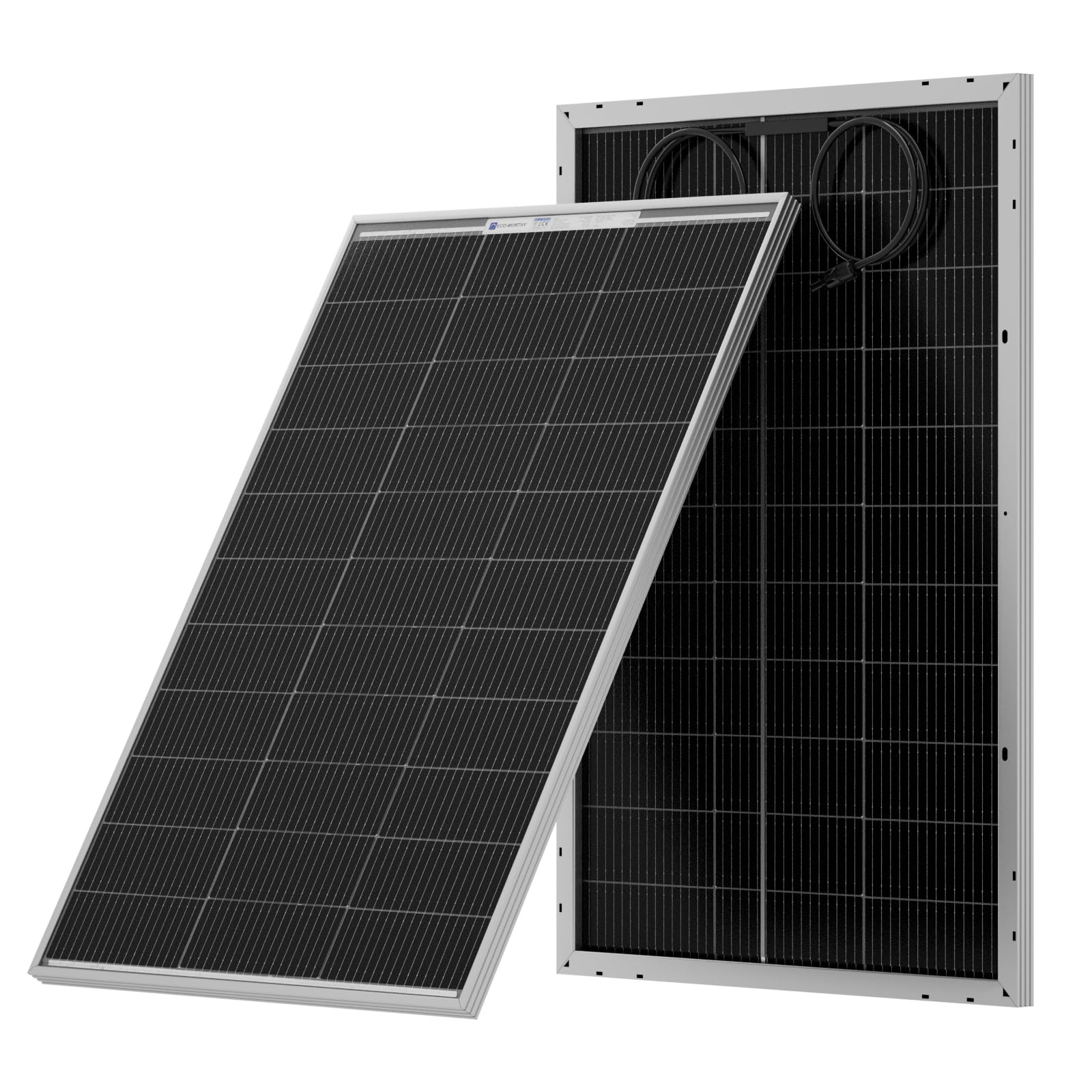
The dual-sided panel that pulls extra watts from reflected light off the ground below.
Unlike standard panels that only capture sun from the front, this 100W mono panel has a dual-sided design that generates energy from both the front and back, capturing reflected light to deliver up to 15% extra output. Owners running a four-panel setup on an off-grid shed report over 20 amps in full sun, fully charging two 100AH batteries. The N-type cells deliver a 25% conversion efficiency, and the advanced 16 busbar design minimizes hot spots and micro-cracks for a longer service life.
At just 35.63″L x 23.03″W x 1.18″H, this panel is thinner than traditional 1.38-inch models while keeping the same 100W output, and it tips the scales at 11.7 pounds—noticeably lighter than the 13.7-pound JJN panels above. The 3.2mm tempered glass and IP68 protection handle 2400Pa wind and 5400Pa snow loads, and the low temperature coefficient keeps output strong even in desert heat. Owners also note it handles harsh temperatures and storms without issue.
The thing that stands out in owner feedback is the brand’s longevity—one buyer reports ECO-WORTHY panels they purchased almost 12 years ago still outperform their Renogy panels. Quality is the most-praised aspect, with buyers calling these sturdy, reliable, and easy to install. The honest caveat is that output varies: while some panels generate the full advertised 100 watts, others produce about 75 watts in bright sun, so manage expectations for peak numbers.
The standout strengths
- Bifacial design adds up to 15% output from reflected light
- Lighter build than comparable rigid 100W panels
- Proven brand track record stretching back a decade
Keep in mind
- Some units produce around 75W rather than the full 100W
- Durability feedback is positive but the sample is smaller
Reach for this if: you want a lighter 100W rigid panel with bifacial gain for a shed, RV, or van roof.
skip it if: you demand guaranteed full-rated wattage—individual panels can vary.
5. Sun Energise 25W MPPT Solar Charger

The smart trickle charger with MPPT brains that kept a 7-year-old RV battery alive through three years of storage.
This is not a bulk charger—it is a maintainer, and it excels at that job. Owners mention keeping a 7-year-old RV battery at 12.6V for three years in storage and a Ford Transit chassis battery charged for weeks through winter. The built-in smart MPPT controller tracks up to 99% efficiency, pulling more usable power from weak winter sun than a basic charger. The 25W rating draws from A+ mono cells with efficiency up to 21%-30%.
The 3-stage charging algorithm (bulk, absorption, float) auto-cuts off at full charge and resumes when drained, preventing overcharging. It works with gel, deep cycle, SLA, flooded, AGM, sealed lead-acid, and LiFePO4 lithium 12V batteries. IP65 waterproofing plus spark-proof, short-circuit, and reverse-polarity protections suit exposed mounting on cars, boats, trucks, or lawnmowers.
Owners appreciate that it is well-built and easy to wall-mount, with LED indicators showing charging status at a glance. One buyer notes you should clean the panel face with a non-abrasive cleaner to keep output strong. The honest limits: this is a slow charger, not suited to reviving a deeply depleted battery, and the standard cable may be short—several owners recommend grabbing the longer extension cord. It works great for keeping a lawnmower, tractor, or boat battery topped off indefinitely.
Set-and-forget charging: the built-in MPPT and 3-stage algorithm mean you connect it once and it manages the rest.
Not for dead batteries: this maintains a healthy charge—it will not rescue a fully drained bank quickly.
6. DOKIO 100W Portable Solar Panel Suitcase
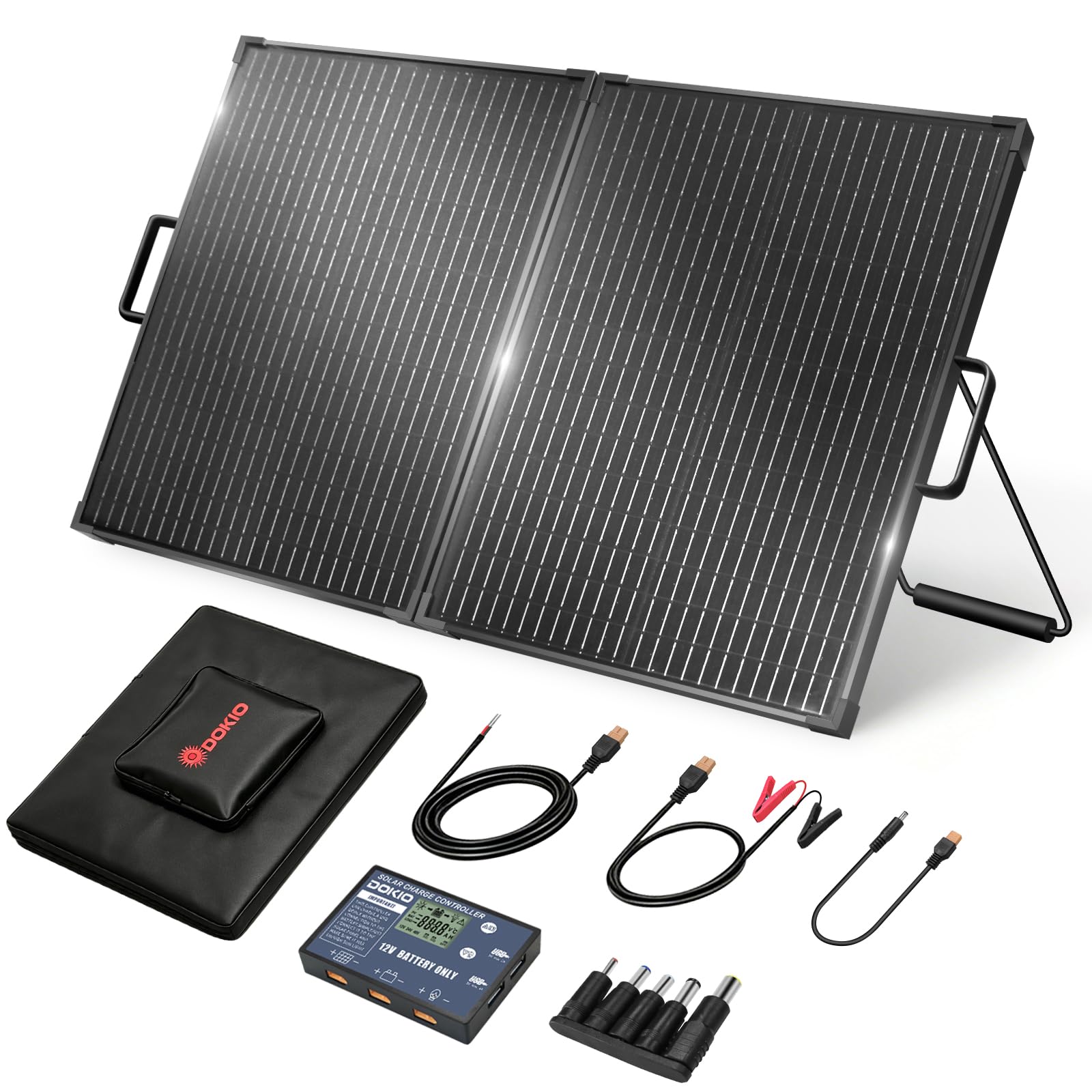
The fold-up briefcase that recharges a camper fridge battery for over a month on a single setup.
This portable suitcase folds to roughly 24 x 20 inches for easy hauling, and customers note it works right from the start—unfold, clip to the battery, and it starts charging. The 9.8-foot cable reaches sunny spots across a campsite, and the rubber handle eases carrying to a fishing spot or trailhead.
The built-in smart PWM (Pulse Width Modulation) controller adds intelligent protection against reverse polarity, overcharging, short-circuit, and reverse current, plus integrated 5V 2A USB ports to top off your phone directly. The corrosion-resistant aluminum frame is built for extended outdoor use with a 25-year transferable power output warranty. Owners note the rigid glass panels are heavy but durable, ideal for a semi-permanent camp setup where you want real wattage without rooftop installation.
Versatility is the theme in owner feedback—it works great in low sun, pairs well with EcoFlow and other power stations, and the canvas case includes a pocket for extension cables. The honest gripes: the stand legs are flimsy (adequate but not sturdy), and you must double-check battery polarity when connecting the alligator clips, since reversing it can damage the controller. If you want portable 100W power without drilling into your roof, this suitcase delivers.
What makes it useful
- Peak output measured above rated 100W in real use
- Folds to briefcase size with a padded canvas bag
- Dual USB ports charge phones alongside your battery
The honest catches
- Stand legs feel flimsy—fine for flat ground, not wind
- Wrong polarity on the clips can burn the controller
Grab this for: camping, tailgating, or emergency backup where you need portable watts without permanent mounting.
Look elsewhere if: you want a fixed rooftop array—this is built for mobility, not permanence.
7. Topunive 2-Pack 100W Flexible Solar Panels

The 0.12-inch-thin flex panels that bent onto a car roof and still pushed past 100% rated output.
Reviewers point out reaching a high of 408 watts from four of these 100W panels, meaning each exceeded its rating, and a built portable array on a PVC frame delivered 361W total, about 90W per panel. The 9BB (nine busbar) A-grade monocrystalline cells hit up to 23% conversion efficiency.
Flexibility is the defining trait: each panel bends to a minimum arc radius of 45cm (about 17.7 inches), so it conforms to curved trailer roofs, boat decks, or van tops where rigid glass panels cannot fit. Made from ETFE (a durable, UV-resistant plastic film) with a TPT back sheet, it handles heat well and is easy to clean. The IP67-rated junction box (fully sealed against dust and water) includes two built-in bypass diodes to keep power flowing even if one cell is shaded, and the 0.1-inch profile makes for a stealthy installation. One owner even reported the panel survived being ripped off a roof at 70mph and run over by several vehicles—still working fine.
Build quality earns the most praise here, along with the genuine flexibility that standard panels lack. The honest trade-offs matter: some shoppers say delamination after about 4 weeks, and power output varies—some panels deliver up to 80 watts while others only manage about 50 on sunny days. This is a budget flex panel, so the durability risk is real. If you need to cover an uneven surface and accept the longevity gamble, the low weight and bendability win.
The big wins
- Ultra-light 4.4 lb build is easy to mount and store
- Bends to fit curved surfaces rigid panels cannot
- Survives serious abuse, per owner reports
The durability gamble
- Some units delaminate after weeks of use
- Output varies, with some panels making only ~50W
Choose this when: weight and bendability matter more than long-term durability, like portable or curved-surface setups.
Pass if: you need a permanent roof array that will outlast a decade—rigid glass is the safer bet.
8. Topsolar 100W 12V Solar Panel Kit

The all-in-one kit that charged a Class A engine battery in four hours, wiring and controller included.
This is the grab-and-go solution for anyone who wants a working 12V system without piecing together parts. The package includes the 100W panel, a 12V/24V intelligent 30A charge controller, two 16-foot MC4 cables, two 5-foot O-ring cables, and a V-shaped tilt mount bracket—everything needed to connect panel to battery. Buyers report charging a Class A engine battery in about four hours and keeping tractor and buggy batteries topped off with two panels wired in parallel. The panel is rated at 100 watts driving 4.5A toward your battery.
The included V-shaped bracket adjusts the mounting angle for better sun capture, and it can attach to ground, wood, or wall surfaces. The monocrystalline cells sit in a heavy-duty anodized aluminum frame with a tempered glass shield, and the whole panel weighs about 15.84 pounds for easy handling. The intelligent charge controller provides full protections against overcharge, over-discharge, over-voltage, and short-circuit, so you can hook it up and let it manage the charging cycle automatically.
Functionality is the most-praised aspect, with owners saying it works well and keeps fridges running even on cloudy days. Setup is genuinely easy—one owner notes they just connected battery then panel and it started by itself with no programming needed. The honest caveats: some buyers find the included mounting brackets and instructions lacking, and a few report the controller getting stuck in 24V mode. The panel itself holds up well over years, but the accessory quality trails the core panel.
Everything included: this kit saves you the headache of matching a controller and cables to your panel.
The trade-off: the mounting hardware and instructions are the weak link—plan to supplement the brackets.
9. Renogy Flexible Solar Panel 100 Watt

The ultra-thin flexible panel that hugs an airstream’s curved roof and weighs just 4 pounds.
At only 0.08 inches tall and 4 pounds, this is the thinnest and lightest 100W panel in the lineup—about 95% thinner than its rigid counterpart, per the maker. The advanced polymer materials make it weigh 70% less than conventional panels, and the 240° ultra-flex design bends over the curved roof of an airstream where a glass panel would shatter. Owners running these on a van for three years report a peak output of 175W from the panel, and a pair recharged a Goal Zero Yeti 1000 during hurricane season in Florida. It delivers 4.84A at 22% efficiency.
The super-thin lamination lays nearly flat, so it is hardly noticeable from the ground. It is rigorously tested to withstand extreme winds of up to 2400Pa (pascals, a unit of pressure) and snow loads of up to 5400Pa, so it holds up in harsh weather. The IP68 rating means it is fully sealed against dust and immersion, and the lightweight 4-pound build makes it easy to mount flush on an RV roof with adhesive. Owners praise the easy 3M tape installation and the sturdy, flexible build that improves on older Renogy designs.
Quality and easy installation are the two most-praised aspects, with owners noting strong low-light output and a worthwhile premium for Renogy’s reliability and 5-year warranty. The honest caveats: power output varies, with some owners reporting the panel falls short of 100 watts, and it runs about 10% less efficient than rigid panels. Durability is the real watch-point—it is durable if not folded, and flexible does not mean foldable. If you need a curved-roof solution from a brand with solid support, this is the premium pick.
The premium advantages
- Weighs 70% less than conventional rigid panels
- Bends 240° for curved airstream and van roofs
- Backed by Renogy’s 5-year warranty and support
Know before you buy
- Output can fall shy of the rated 100 watts
- Runs about 10% less efficient than rigid panels
Worth it for: curved RV roofs and stealth installs where a rigid panel physically cannot fit.
Skip if: you have a flat roof and want maximum efficiency—a rigid panel beats this on output.
Understanding the Specs
Wattage vs. Real Output
A panel’s rated wattage is measured in a lab under perfect full sun at 25°C. In the real world, clouds, heat, and shade all reduce that number. Owners often see 70-90% of the rated output in normal daytime conditions, which is why buyers pair a panel with a charge controller and size up if they need guaranteed power on overcast days.
Amperage and Charging Speed
Amperage (amps) is the flow of current into your battery. A panel delivering 6.42A fills a battery faster than one pushing 2.67A in the same sunlight. When matching a panel to a battery, aim for a charge rate that refills your daily energy use—bigger amp numbers mean quicker recovery from heavy use.
FAQ
How many watts do I need for a 12V battery?
Can a 100W panel charge a 12V battery fully?
What is the difference between rigid and flexible solar panels?
Do I need a charge controller between the panel and battery?
How long does a 12V solar panel last?
Will a 12V solar panel work in cloudy or winter conditions?
Can I connect multiple 12V solar panels together?
How do I mount a rigid 12V solar panel?
What does IP65 or IP68 waterproof rating mean for solar panels?
Can a flexible panel be folded for storage?
Final Thoughts: The Verdict
Across the board, the top pick in this 12V solar panel roundup is the Renogy 50 Watt because it delivers trusted quality, a proven 22% efficiency, and the exact wattage to solve the most common problem: a battery that keeps dying in storage or winter. If you want maximum watts per dollar for a larger off-grid setup, grab the JJN 100W 10BB, which owners confirm delivers full output and even powered a shop through an outage. And for a curved RV roof or a portable camping rig, the DOKIO 100W Suitcase or Renogy 100W Flexible are the ones to reach for, depending on whether you value portability or a stealthy permanent mount. All five of these picks hold strong ratings from hundreds of owners, so you can buy with real confidence.
How We Picked
We do not accept paid placement. Every pick is matched to a real buyer and a real use-case; we do not hands-on test units.
Sources & Methodology
Specifications: manufacturer listings and product documentation. Review insights: verified customer reviews, as of September 2026. Pricing: not shown on this page (it changes often); check the current price via the retailer link.
As an Amazon Associate, KitchPrep earns from qualifying purchases. This does not affect which products we feature.
Related Guides
