
Specs are compiled from manufacturer listings and verified buyer reviews and can change over time — please confirm the key details on the product page before buying.
When the grid goes down, the real question is how long you’ll be without power and what you’ll lose. A serious backup generator system keeps your fridge cold, your family connected, and your home safe through a multi-day outage.
I’m Mohammad Maruf — the founder and writer behind KitchPrep. This guide is built by comparing the manufacturers’ published specifications and the patterns across verified customer reviews, so you get each pick’s real strengths and trade-offs instead of marketing spin.
We break down a range of backup generator system options, explaining fuel types, power output, and safety features so you can confidently choose the right one for your home.
Our Picks at a Glance

How To Choose The Best Backup Generator System
To pick the right backup system, first list the appliances you can’t live without—fridge, furnace blower, sump pump, lights—and add up their wattage. That total is your target running watts, which tells you the generator size you need.
Power Output: Running Watts vs. Peak Watts
The running watts is the continuous power a generator can supply, while peak watts (also called surge watts) is the temporary burst needed to start motors, like a refrigerator compressor or an air conditioner. Always look at the peak number first—if a generator can’t handle the startup surge, it will stall when your fridge kicks on even if the running wattage looks sufficient.
Fuel Type: Gas, Propane, or Battery
Portable gas generators are workhorses but require fuel storage and regular maintenance. Dual-fuel and tri-fuel models offer flexibility, letting you switch to propane or natural gas that stores indefinitely without going bad. Battery power stations are silent, fume-free, and perfect for running electronics indoors, but their capacity is limited by battery chemistry and they need a way to recharge for extended outages.
Quick Comparison
| Model | Best For | Power Type | Running Watts | Fuel Tank / Capacity | Amazon |
|---|---|---|---|---|---|
| Westinghouse 6500W Dual Fuel★ Best Overall | Budget Whole-Home Backup | Dual Fuel | 5300W (Gas) | 4.7 Gallons | Amazon |
In‑Depth Reviews
1. Westinghouse 6500 Watt Dual Fuel Home Backup Portable Generator
Our pick — over 4.5★ from 950+ verified ratings; the strongest balance of quality and price.
The heavy-duty workhorse that powers a whole home on gasoline or propane.
This Westinghouse is the crowd’s clear favorite—a substantial 274 CC 4-Stroke OHV engine with a cast iron sleeve delivers 5300 running watts on gasoline (6500 peak) and 4800 running watts on propane (5800 peak). You get the flexibility to choose your fuel source: gasoline for maximum output, or propane, which stores safely for years without going bad.
You won’t wake up to refill this generator in the middle of the night: its 4.7-gallon fuel tank includes a fuel gauge and delivers up to 14.5 hours of run time. Buyers report they “Saved two fridges worth of food, recharged my backup sump battery, and even ran my modem, tv, a couple lights, and my hair straightener during a prolonged outage.” For a whole-home setup, the L14-30R 30A outlet (a standard 30-amp twist-lock receptacle) is transfer switch ready, so you can safely feed power into your house’s wiring.
Setup is genuinely plug-and-play: it ships with engine oil, a funnel, propane hose, tool kit, and wheel kit. The quality and ease of use are the two most-praised aspects by far, with over 200 owners highlighting how simple it is to operate and start on the first pull. An automatic low oil and CO shutdown adds critical safety.
What Owners Love
- Dual-fuel flexibility to run on gas or propane
- Transfer-switch-ready 30A outlet for home wiring
- Wheel kit included for easy movement
Reality Check
- Noticeably loud—one RV owner admitted it’s loud but worth it for AC
- LED lights can flicker when on generator power, a quirk of most open-frame units
Who it fits: Homes needing reliable whole-house (up to 30A) backup with the option to burn long-storage propane.
Real trade-off: At 274 CC, it’s a powerful machine, but you’ll want to place it outdoors and away from living spaces due to the noise.
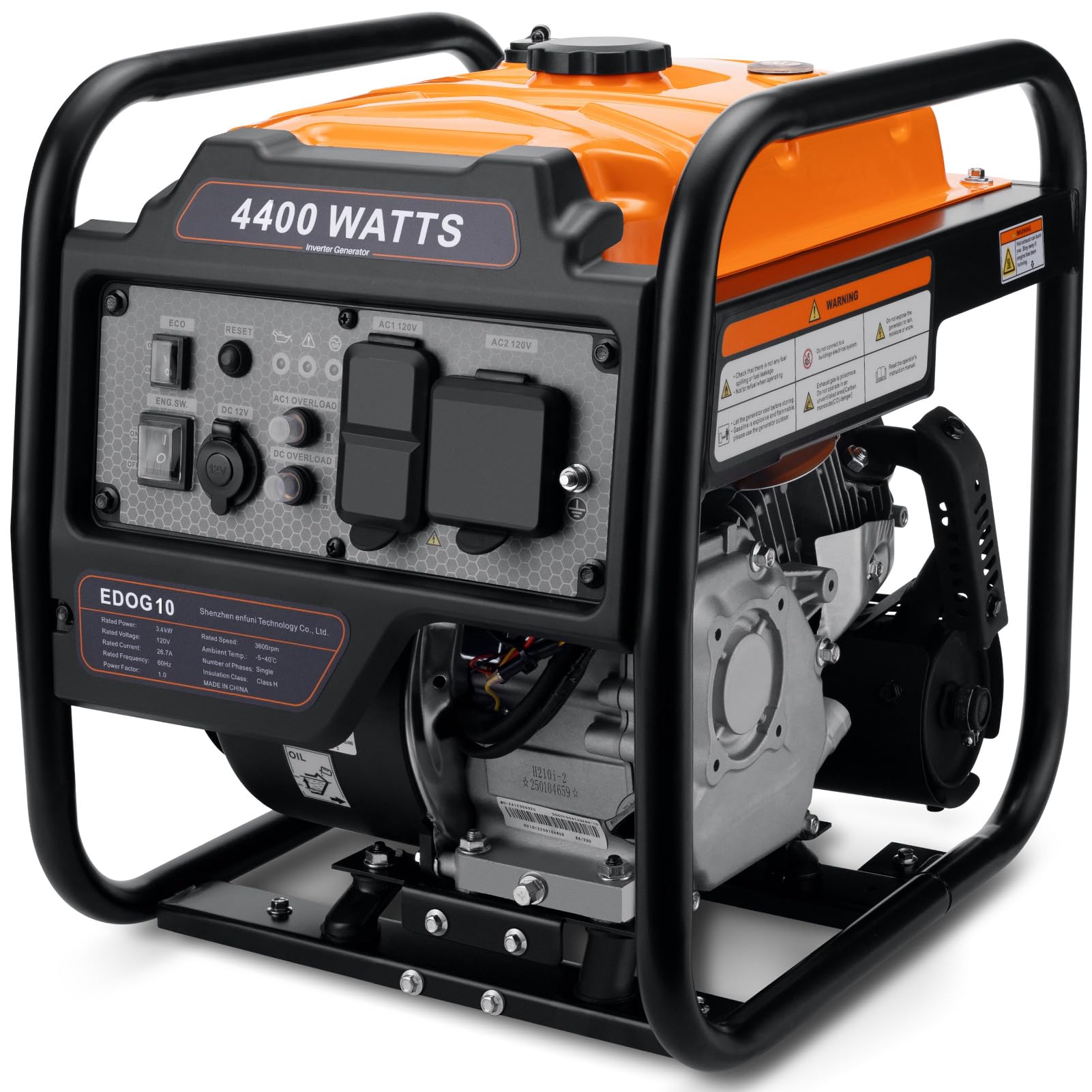
2. Oxseryn 4400 Watts Inverter Generator
A compact open-frame inverter that offers serious power for its size and a 14-hour run time.
This Oxseryn takes the “inverter” benefits—cleaner power for your electronics and better fuel economy—and packs them into an open-frame body with 3400 running watts and 4400 peak watts. That’s a 70% jump in running power over the smaller 2800-watt Oxseryn model, putting it in range for RV camping and more demanding home backup.
This generator’s 2-gallon fuel tank has a fuel gauge and delivers up to 14 hours of run time at 25% load with ECO mode (an economy setting that adjusts engine speed to the load), making it a viable overnight option. Buyers have used it to run a 24-foot enclosed car trailer with a fridge, AC, and outlets simultaneously—one reports it “runs 24ft enclosed car trailer with a fridge, ac, and outlets.” It’s rated under 72 dBA (decibels, a measure of loudness) from 23 feet away, so it’s not library-quiet, but owners find it tolerable and better than older non-inverter units.
Long run time is a standout here. Multiple owners note it’s efficient—one ran “2 gallon tank lasted about 4 hours with a sump pump and washing machine.” The 208 CC engine (cubic centimeters, a measure of engine size) also backs up sensitive electronics cleanly, and the low oil shutdown and overload protection are welcome safety nets for a budget-friendly price.
Standout Strengths
- 4400 peak watts / 3400 running watts for the price
- 14-hour run time on a 2-gallon tank
- Clean power safe for electronics
Watch Out For
- Some units arrived with loose bolts that needed tightening
- Exhaust noise under heavy load is noticeable
Ideal for: RV owners and homeowners who want a big jump in power over a tiny 2000-watt unit without paying a fortune.
The catch: A few owners mention reliability concerns after weeks of consistent use—it’s best for light-to-moderate backup duty.
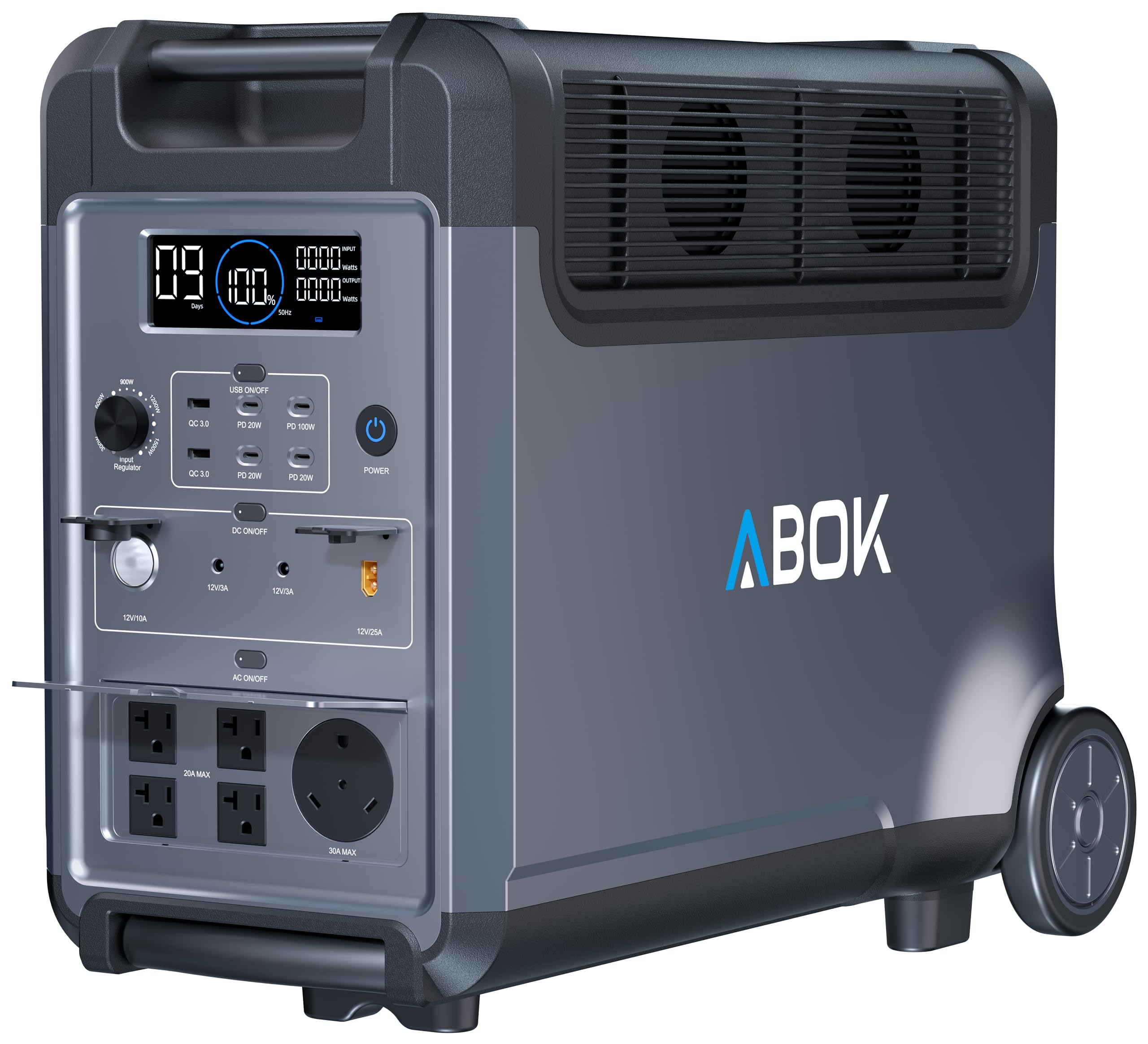
3. ABOK Ark3600 Portable Power Station 3600W
A wheeled, quiet giant of stored energy that’s ready to run heavy tools and fridges with zero fumes.
The ABOK Ark3600 is a serious piece of home infrastructure disguised as a portable battery. It holds a massive 3840Wh of energy in EV-Grade Lithium Iron Phosphate (LiFePO₄) cells and can push a continuous 3600W output with a 4500W peak—enough to run 99% of household appliances. The battery is rated for over 4000 cycles and a 10-year lifespan.
Owners love that it’s completely silent and safe to run indoors—no fumes, no extension cords through windows. One power user ran a wet vac, heat gun, and an SDS-Max drill simultaneously for a full workday and still had 22% battery left. Another powered two full-size refrigerators for nearly two days, and in a -20 degree weather outage, it saved someone’s pipes from freezing.
The built-in telescoping handle and durable wheels make the 92-pound unit surprisingly mobile, and the Bluetooth app lets you monitor performance remotely. It charges from a wall outlet in about 3 hours or combines AC plus solar (2000W PV input) to hit a full charge in just 1.29 hours.
Why it stands out: The sheer energy density and 15 output ports give it whole-home flexibility, and owners call out its value against gas generators that cost twice as much to run.
Honest note: At 92 pounds, it’s heavy; solo unboxing is tricky, but the wheels solve mobility once it’s on the ground.
Grab this if: You want silent, indoor-safe emergency power that can also run power tools at a job site.
Consider otherwise: If you need 240V output for a well pump or large AC unit, this 120V unit won’t handle it.
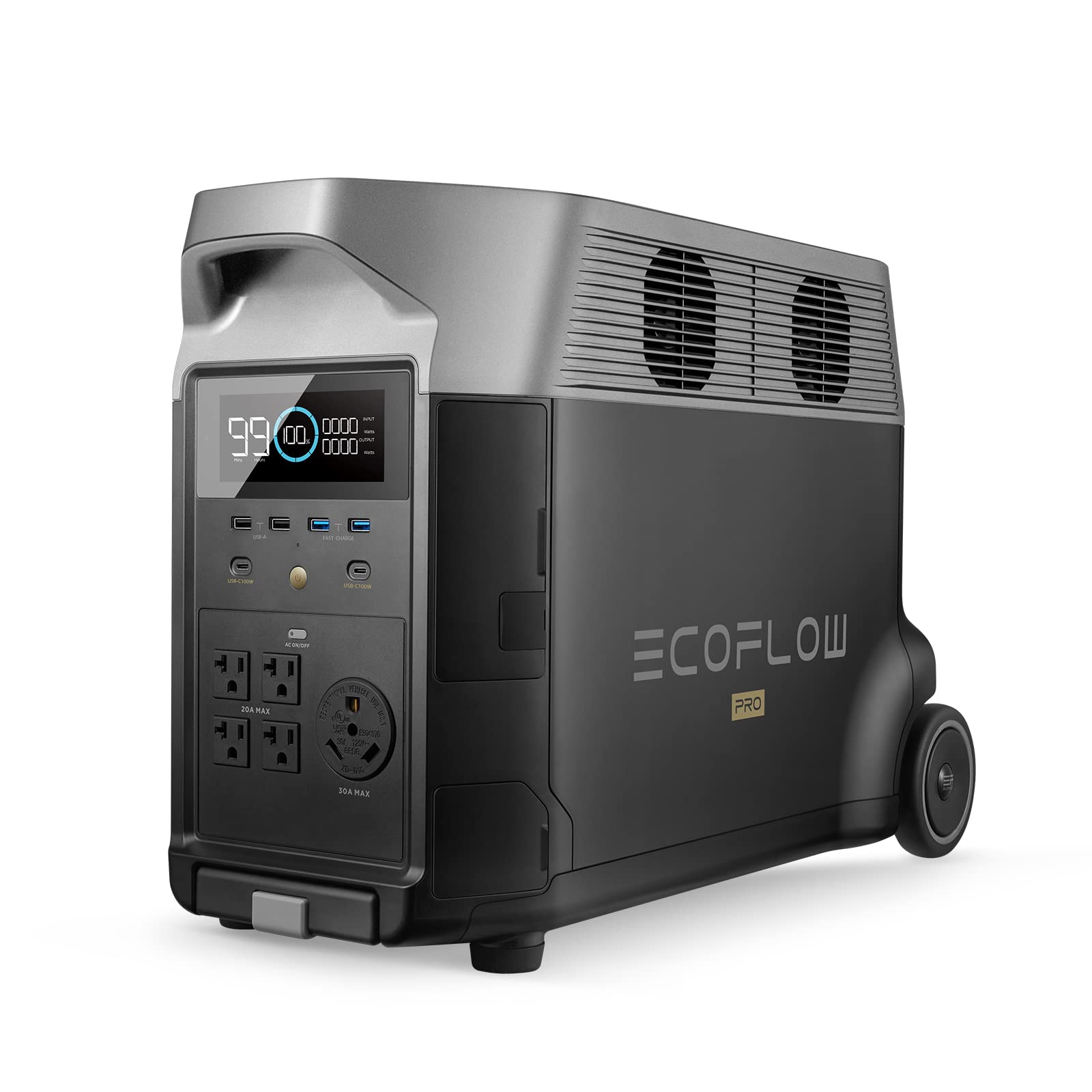
4. EF ECOFLOW DELTA Pro 3600Wh Power Station
The range-topping battery system that expands to 25kWh and recharges faster than any rival.
The EcoFlow DELTA Pro is a premium battery generator that redefines what a portable power station can do. With a 3600Wh LFP battery, it can expand its capacity up to a massive 25kWh when paired with extra batteries or EcoFlow’s Smart Generator, turning a single portable unit into a true whole-home backup system.
Its headline feature is X-Stream fast charging: it fully recharges the internal battery in just 1.8 hours from a 240V outlet, or 2.7 hours from a standard 1800W wall outlet. Owners have used it to power an entire vendor market stall’s heat press flawlessly, and one ran their fridge and lights overnight with 30% power to spare. The app control via Wi-Fi or Bluetooth lets you check charge levels and customize settings from your phone.
With 15 output methods—including 5 AC outlets, 2 USB-C (100W), and USB-A fast charge—it can power multiple devices simultaneously. Pair two units together for a combined 7200W output. The 99-pound unit is heavy but manageable, and the LiFePO₄ battery chemistry and smart battery management system ensure safety and longevity.
The biggest win: The 1.8-hour recharging speed means even after a full drain, you’re back to full power faster than any similarly sized competitor.
Keep in mind: The fan gets noticeably noisy under heavy load, which owners mention as the only real drawback during active charging.
Best suited for: Tech-savvy homeowners who want an expandable, app-controlled battery system that can start small and grow with their needs.
skip it if: You want a single low-maintenance fuel generator for long, multi-week outages.
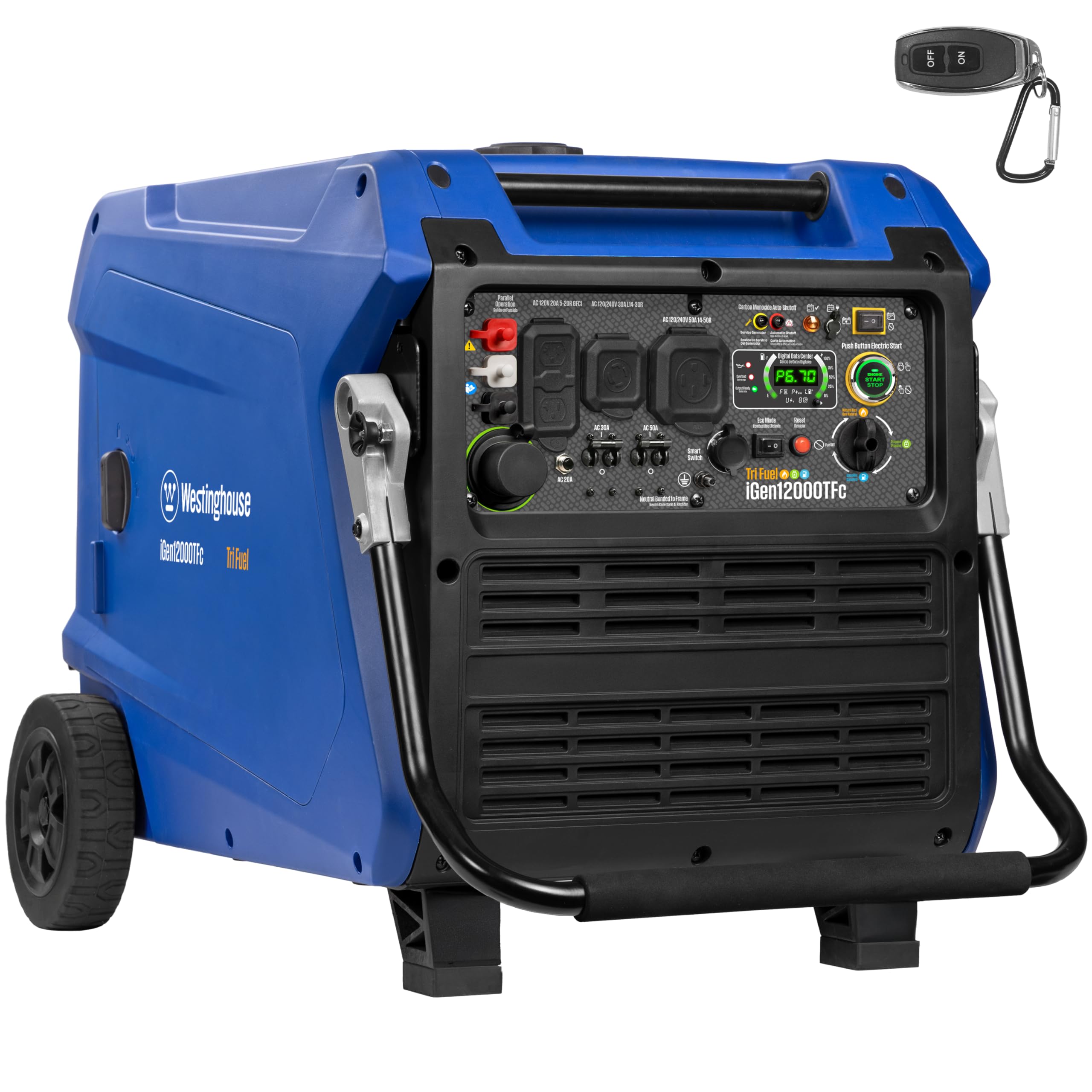
5. Westinghouse 12000 Peak Watt Tri-Fuel Inverter Generator
The tri-fuel powerhouse that starts with a key fob and runs a whole home at under 64 dBA.
This is Westinghouse’s flagship for serious whole-home backup. The iGen12000TFc offers true tri-fuel flexibility—you can run it on gasoline (9000 running watts), propane (8100 running watts), or natural gas (7200 running watts), giving you ultimate fuel security in any scenario. The massive 7.9-gallon tank on gasoline delivers up to 19 hours of run time at 25% load, so you can sleep through the night without refueling.
It’s remarkably quiet for its size. With Eco Mode, insulation, and mufflers, it operates at as low as 64 dBA—quiet enough for a neighborhood. The heavy-duty 457cc 4-stroke OHV engine is protected by low oil shutdown and a CO sensor for safety, and the remote start key fob means you can start it from the warmth of your home.
The inverter technology produces clean power with ≤3% THD (total harmonic distortion), which is safe for your sensitive electronics like TVs and computers. Its inverter tech cuts fuel consumption by up to 50% versus traditional generators by matching engine speed to load. Buyers who own it praise its quiet, smooth operation and easy access to maintenance points like the oil filter and air filter.
Why It’s a Flagship
- Run on gas, propane, or natural gas
- Remote start key fob for convenience
- 19-hour run time on the 7.9-gallon tank
Consider This
- Weighs 191 pounds—it’s a permanent fixture, not a portable
- Battery can drain when idle for over a week
Who this is for: Homeowners wanting permanent, whole-house, transfer-switch-ready power with the flexibility of three fuel sources and minimal noise.
The trade-off: At 191 pounds, this isn’t something you toss in a truck bed—it’s made for a permanent outdoor spot.
6. Anker SOLIX S2000 Portable Power Station
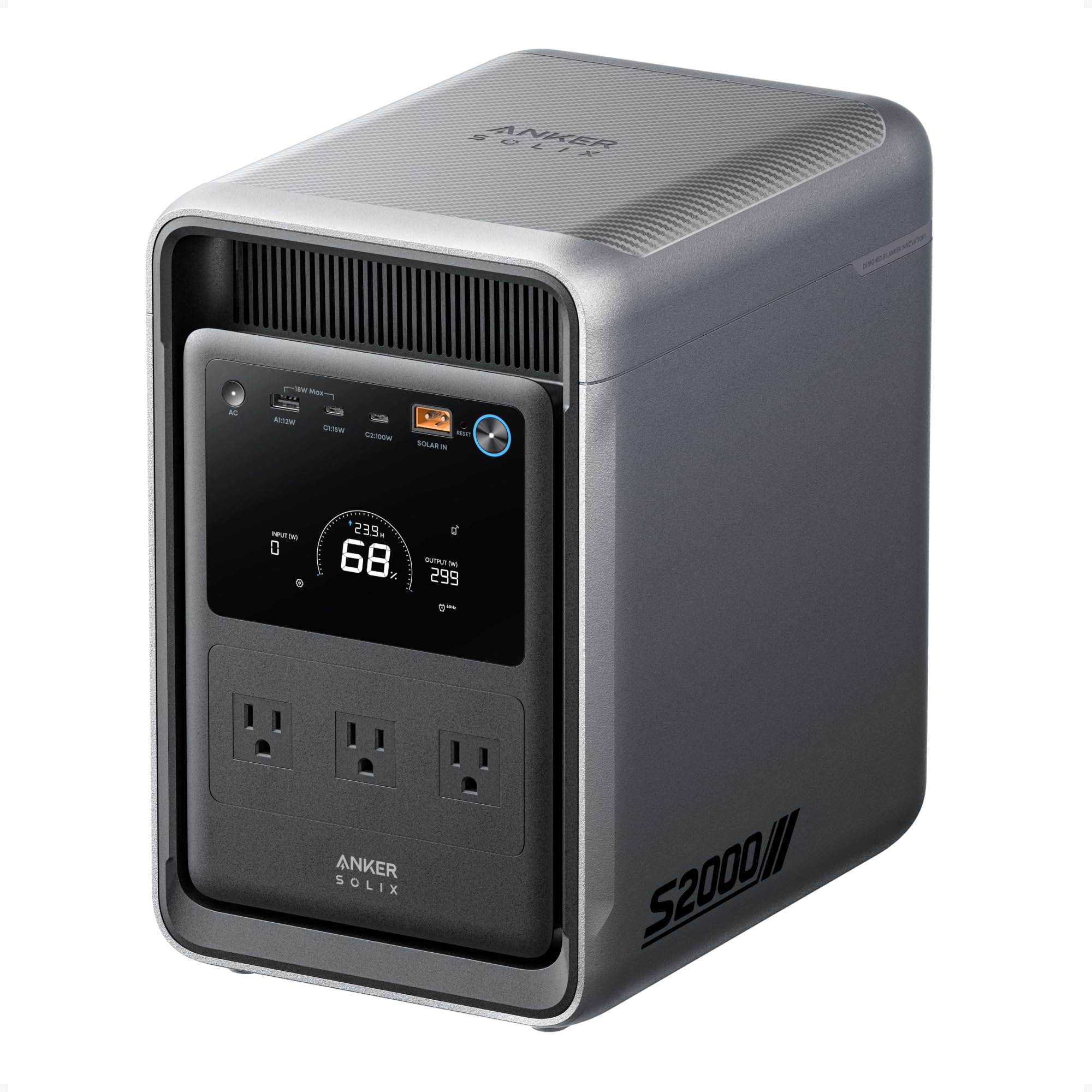
The compact 2kWh battery with a 35-hour fridge backup claim and 10,000-cycle battery life.
The Anker SOLIX S2000 is the smartest pick for keeping your food and essentials running through an outage. With a 2,010Wh capacity and ultra-low 6W idle power draw, it’s engineered to run a standard refrigerator for up to 35 hours—which owners have verified in real-world tests. It provides 1500W continuous output and can surge to 3000W for starting motors.
It’s marketed as the smallest and lightest 2kWh station—30% smaller and 25% lighter than average, at 8.2 × 11.1 × 12.7 inches and 35.7 pounds. That makes it genuinely easy to move from your living room to your kitchen, unlike heavier 2kWh rivals. The built-in LiFePO₄ battery is rated for 10,000 charge cycles and a 15-year lifespan.
You can recharge this unit six ways, including up to 400W solar input (watts of solar power), wall outlet, generator, or car outlet. Its <10 ms UPS switchover time (the delay before backup power kicks in) means critical devices like CPAP machines or routers won’t even blink during a brownout. Reviewers praise it as an exceptional value, handling a 13-hour outage while powering a lamp, fridge, coffee maker, and hot shower—while still having 30% battery left.
The Big Wins
- Truly portable at 35.7 lbs for a 2kWh unit
- 35-hour fridge backup on a single charge
- 10,000-cycle LFP battery lasts ~15 years
Small Flaws
- No 12V DC port for direct RV/car accessories
- Fan is noticeably noisy during high-speed charging
Reach for this if: You want a highly portable, long-lasting battery to keep your fridge and essential electronics humming during short-to-medium outages.
Think twice if: You need to power high-draw appliances like a well pump or electric oven, which exceed its 1500W continuous output.
7. Anker SOLIX F3000 Portable Power Station
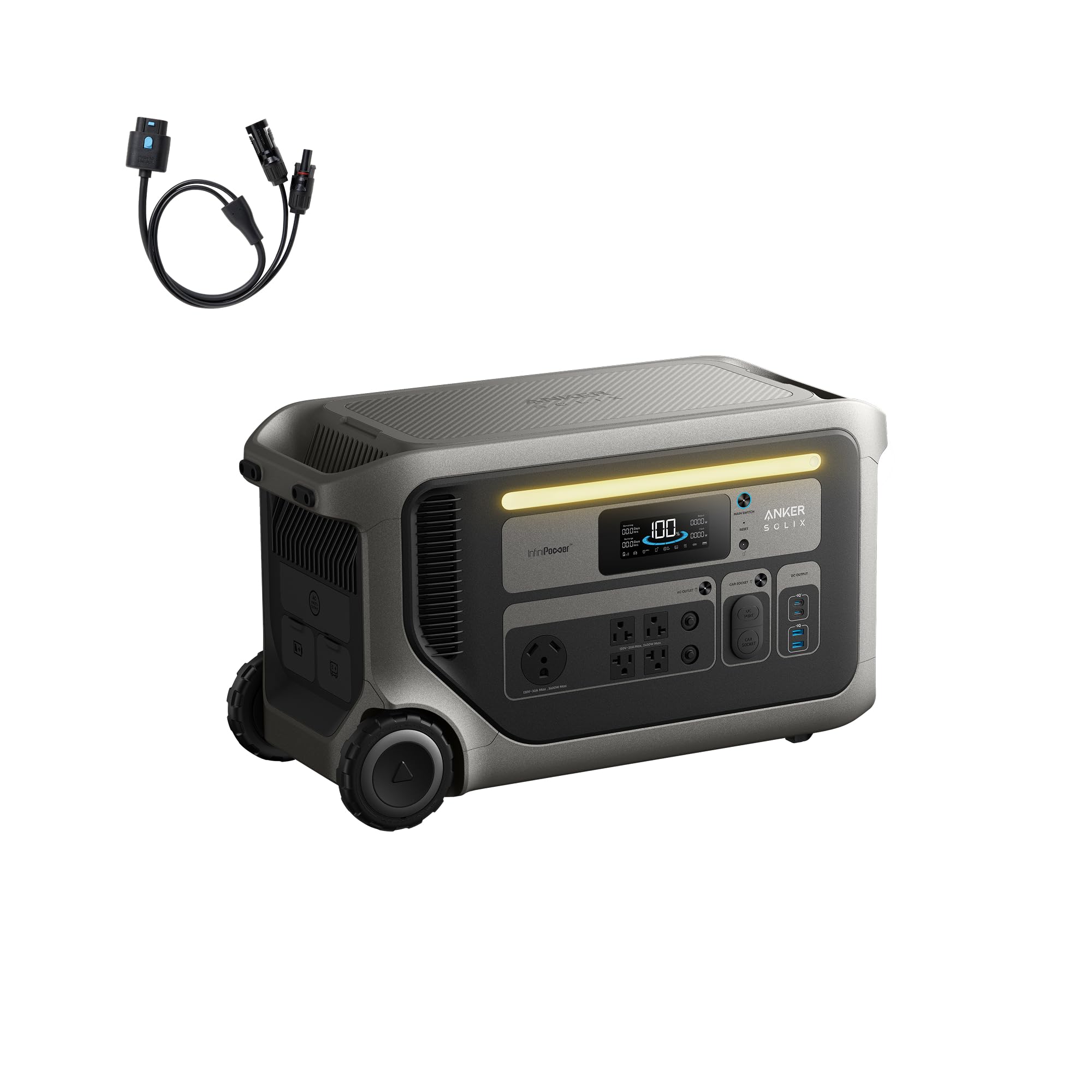
A high-voltage battery powerhouse that offers 120/240V output and 6,000W hyper-fast recharging.
The Anker SOLIX F3000 is built for power users who refuse to be limited. It holds 3,072Wh of energy and can deliver 120V output, or pair two units at 240V for demanding appliances like a central AC or EV charger. Its headline feature is massive 3,600W pass-through charging: you can recharge it with a 120V generator while simultaneously running appliances at full power.
The battery chemistry is future-proof—a 10,000-cycle LiFePO₄ battery with a 15-year lifespan. Its ultra-low idle power consumption gives you 125 hours of AC idle standby time, or it can run a 190W fridge continuously for 42 hours. That’s the kind of endurance that makes an outage feel like a minor inconvenience.
Recharging is equally impressive. It accepts up to 2,400W of solar input and can combine a fuel generator with solar for a hyper-fast 6,000W recharge rate. With 8 outlets spread across front and back, you can keep everyday devices separate from always-on appliances for a cleaner setup. A UPS function with <10 ms switchover protects sensitive electronics.
The power-user appeal: The 6,000W combined recharge input is industry-leading, and the 240V pairing option makes it genuinely whole-home capable.
A fair warning: It weighs 91.5 pounds—it has wheels, but you’re not carrying this up stairs.
Choose this for: A home backup that can run 120V essentials now and scale to 240V appliances or a 24kWh expanded system later.
Look elsewhere if: You want the simplest, cheapest way to power a few lights and a phone charger.
8. BLUETTI Elite 30 V2 Portable Power Station
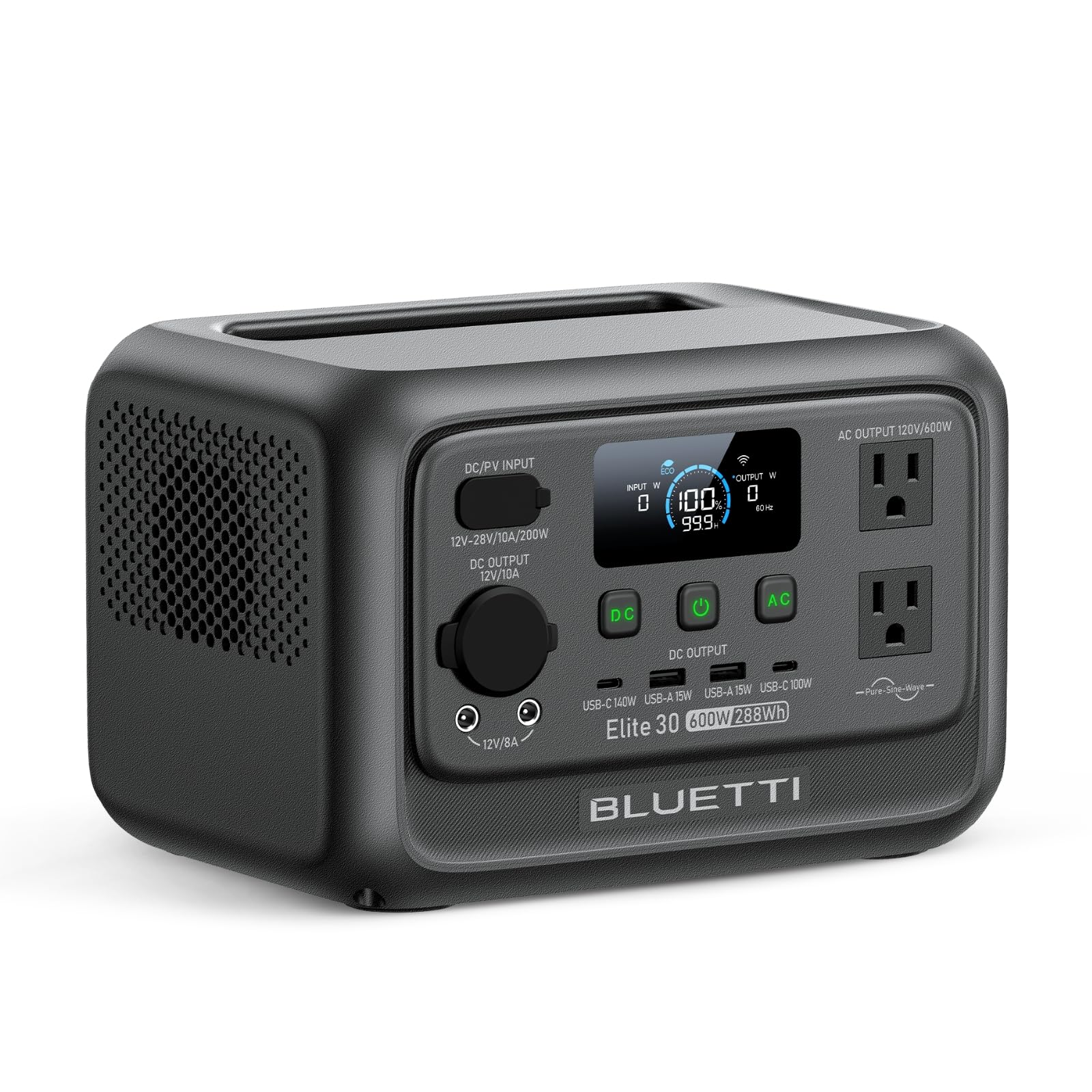
The 9.4-pound featherweight that delivers serious UPS-grade protection for your critical devices.
The BLUETTI Elite 30 V2 is the ultimate “keep the WiFi and laptop running” backup. Weighing just 9.4 pounds, it’s designed to be carried anywhere during a storm, with a 288Wh capacity that’s perfect for powering modems, routers, laptop chargers, fans, and CPAP machines through an outage. Its 600W continuous output (1500W surge in Power Lifting Mode) handles more than you’d expect from such a compact unit.
Owners have creatively used it as a rock-solid UPS alternative, running a home server and networking equipment without a hiccup during outages. One buyer reports running their WiFi for 6 hours and a fan for 8 hours on a single charge, while another powered an electric blanket all night during a camping trip. The LiFePO₄ battery chemistry is ideal for always-on applications.
Its 8 charging modes are a standout feature—it recharges from 0-80% in just 45 minutes via a 380W wall charge, or 0-100% in 70 minutes. You can also charge it via solar, car, or a combination. The 10ms ultra-fast UPS switchover time means your devices won’t drop power during a grid blip.
Compact But Mighty
- 9.4 lbs—truly portable for storm prep
- 80% charge in just 45 minutes
- 600W output with 1500W Power Lifting surge
Know Before Buying
- 288Wh capacity limits it to small electronics, not full appliances
- Battery life feedback is mixed—some units don’t hold charge as long
Perfect for: Apartment dwellers and remote workers who need to keep internet, phones, and a CPAP machine alive during an outage.
Not for: Whole-house backup—this is a lifeboat for your essential electronics, not a power plant.
9. Oxseryn 2800-Watts Portable Inverter Generator
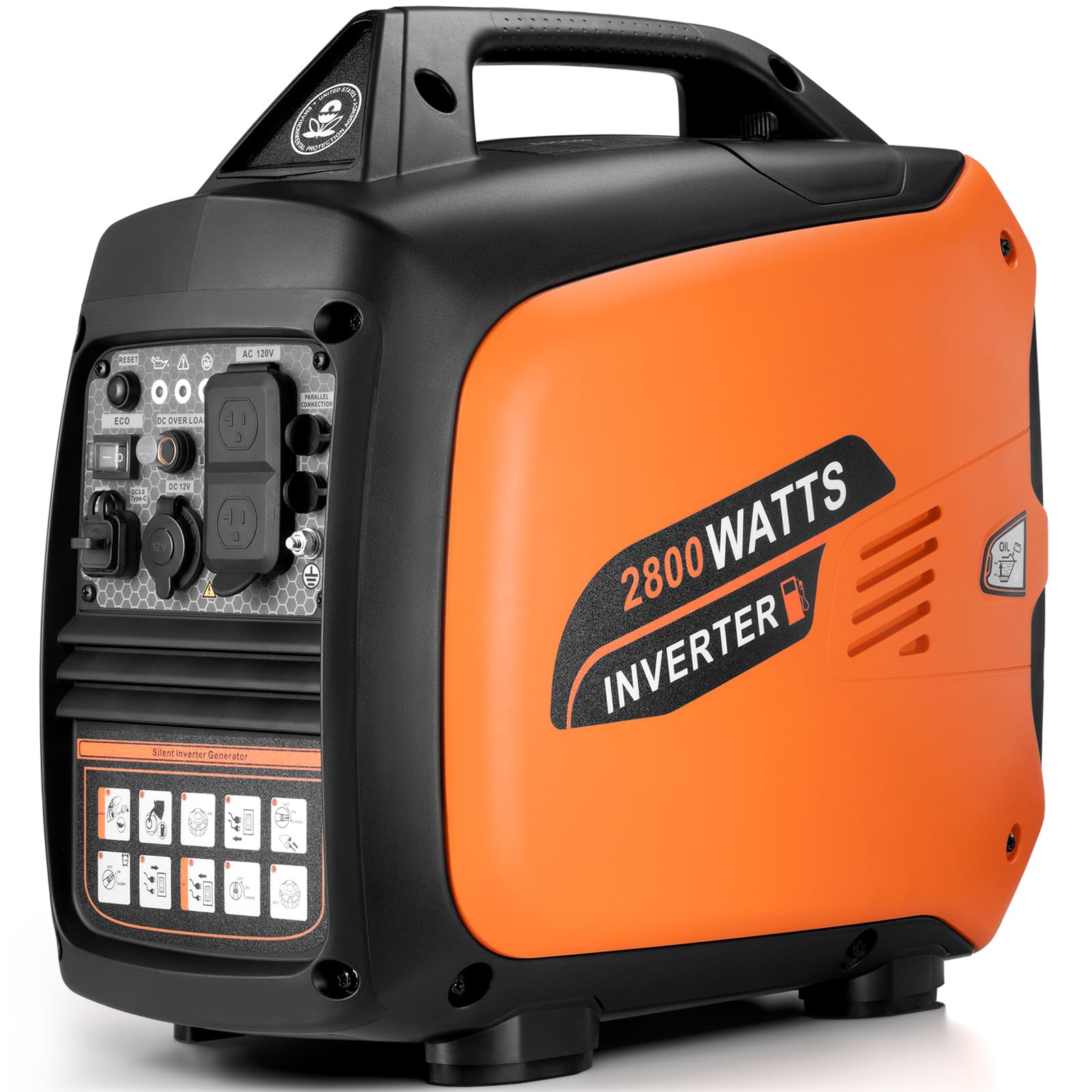
A super-quiet, 39-pound travel companion that produces clean power for your sensitive gadgets.
This small Oxseryn inverter generator is built for one clear purpose: quiet, clean power for camping, tailgating, and light home backup. Under 58 dBA from 23 feet away—quieter than a normal conversation—it’s a fraction of the noise of a traditional open-frame generator. At 39-40 pounds with a built-in handle, it’s genuinely easy to lift into a truck bed or trailer.
Its 79.8CC 4-stroke OHV engine produces 2800 peak watts and 2000 running watts, with a 1.1-gallon fuel tank that delivers up to 9 hours of runtime at 25% load. That’s significantly less capacity than the big Westinghouse’s 4.7-gallon tank and 14.5-hour runtime, but this unit is a fraction of the weight and size. The clean power output—less than 3% THD—means you can confidently plug in your phone, laptop, drone, or camera without worrying about voltage spikes damaging them.
Multiple customers note it starts on the first pull and is remarkably quiet. One buyer successfully “ran 15k BTU AC with old gas (2400W start),” while another powered an entire 1800 sq ft home at just 950W (fridge, fans, lights, TV, and a CPAP). It also features ECO mode for better fuel economy and a parallel function so you can link two units for double the output.
Why It’s a Great Buy
- Under 58 dBA—one of the quietest in its class
- Clean power (less than 3% THD) for electronics
- Parallel capable to double output with a second unit
Consider These Limits
- 1.1-gallon tank means shorter runtime than bigger units
- It won’t run a microwave on its own—peak power is limited
Best for: Campers, RVers, and homeowners who prioritize quiet operation and portability for powering smaller loads.
Be realistic: It’s a 2000-watt running machine, so don’t expect it to start a large central AC unit.
10. WEN 4800-Watt RV-Ready Portable Inverter Generator

An RV-ready inverter generator that powered a home for 9 straight days during an outage.
The WEN 56477i hits a balance for those who want enough power for an RV or essential home circuits without jumping to a massive, heavy open-frame unit. Its 224cc engine produces 4800 surge watts (peak starting power) and 4000 rated watts (continuous power)—enough to run a 30-amp camper’s AC, microwave, and lights simultaneously, or keep a home’s fridge, freezer, and WiFi running through an outage.
One owner’s story captures its reliability: it “ran 9 days straight during Palisades fire outage,” powering a fridge, freezer, WiFi, TV, and appliances via extension cords while achieving 8 hours per tank. Other reviewers point out powering a 30amp camper with AC and microwave on minimal draw, and pairing two units (with phase sync) to run a whole house, including a 4-ton AC.
It’s designed for portability with onboard wheels and a telescoping pull handle, weighing 72.7 pounds. The fully enclosed design keeps noise down—owners describe it as quiet and smooth. A WEN Watchdog CO Shutdown Sensor automatically turns it off if dangerous carbon monoxide levels are detected. The fuel shutoff feature boost engine lifespan by running the carburetor dry before shutdown, preventing fuel varnish.
Why Owners Rate It High
- Clean inverter power safe for laptops and phones
- Wheels and telescoping handle for easy transport
- CO shutdown sensor for family safety
What to Watch
- Requires frequent oil changes (no oil filter)
- Some find it occasionally hard to start after running a while
Who it fits: RV owners who want to run their AC, and homeowners needing a quieter, cleaner backup for essential circuits.
The honest caveat: Regular maintenance is a must; it’s not a “low-maintenance” machine.
11. EF ECOFLOW DELTA Pro Ultra 6144Wh Power Station

The whole-house battery that can power a 3-ton AC and replaces a whole gas generator setup.
The EcoFlow DELTA Pro Ultra is the most ambitious battery backup system on this list. It’s a modular whole-house generator: one inverter supports both 120V and 240V with an exceptional 7200W output, enabling it to run almost any heavy household appliance—even a 3-ton central air conditioner. You can triple the inverters for an incredible 21.6kW AC output.
Starting with a single 6144Wh battery, it delivers an estimated two days of essential power. But the system scales dramatically: You can add up to 15 batteries for a gigantic 90kWh of capacity. That scales to over 30 days of essential power for a standard North American household. The 6144Wh single battery fully recharges in just 2 hours—faster than any other 6kWh solar generator.
It excels as a smart home system. The EcoFlow app lets you prioritize specific circuits and analyze home power usage, potentially offsetting peak electricity rates with stored solar energy. The online UPS function has a 0-ms transfer time, offering 24/7 protection for sensitive devices against grid disturbances.
The Ultimate Backup
- 7200W output powers a 3-ton central AC
- Scalable from 6144Wh to 90kWh for 30+ days of power
- Online UPS with 0-ms transfer protects sensitive electronics
Real-World Considerations
- Premium investment that requires planning and installation
- Battery life feedback is mixed, and some find customer service inconsistent for such a large purchase
For the home that wants everything: If you want a permanent, silent, expandable power solution that can run your AC and integrate with solar, this is the gold standard.
A big commitment: This is less a portable gadget and more a home infrastructure project—plan your circuits and budget accordingly.
Understanding the Specs
Running Watts vs. Peak Watts
Think of running watts as the steady cruise speed and peak watts as the short burst needed to start a motor. The peak (surge) watts matter most because appliances like fridges and ACs draw 2-3 times their running power for a split second when starting. Match the peak watts to your largest appliance’s startup draw to ensure the generator doesn’t stall.
Fuel Source & Clean Power
Gasoline is the most common but degrades over months, while propane and natural gas store indefinitely—making dual-fuel and tri-fuel generators more flexible for emergency use. Inverter generators, meanwhile, produce cleaner electricity (measured by THD, total harmonic distortion) that’s safer for delicate electronics like laptops and TVs. A THD under 5% is generally considered safe for sensitive devices.
FAQ
How many watts do I need to power my house during an outage?
Is a dual-fuel generator better than a single-fuel generator?
What is the difference between a generator and a power station for home backup?
Can I use a generator to keep my fridge and freezer running safely?
What is a transfer switch and do I need one for my generator?
How long can I run a generator continuously?
Are inverter generators worth the extra cost compared to traditional ones?
How do I maintain a backup generator for when I need it?
Final Thoughts: The Verdict
If you want one dependable pick, the backup generator system winner is the Westinghouse 6500 Watt Dual Fuel because it delivers massive whole-home power (5300 running watts) and the essential dual-fuel flexibility, all at a budget-friendly price. If your priority is a silent, indoor-safe battery that needs zero fuel, the Anker SOLIX S2000 is a brilliant, portable choice for keeping your fridge and electronics alive. And for those who want to power their entire home—including 240V appliances and a central AC—from a single premium system, the EF ECOFLOW DELTA Pro Ultra is the ultimate whole-house solution worth serious consideration.
How We Picked
We do not accept paid placement. Every pick is matched to a real buyer and a real use-case; we do not hands-on test units.
Sources & Methodology
Specifications: manufacturer listings and product documentation. Review insights: verified customer reviews, as of September 2026. Pricing: not shown on this page (it changes often); check the current price via the retailer link.
As an Amazon Associate, KitchPrep earns from qualifying purchases. This does not affect which products we feature.
Related Guides
