
Specs are compiled from manufacturer listings and verified buyer reviews and can change over time — please confirm the key details on the product page before buying.
Few things are more frustrating than laying new vinyl plank only to watch the edges curl up and pop loose weeks later. A poor adhesive choice, not the flooring itself, is usually the culprit. This guide focuses on the glue that physically bonds vinyl flooring to a wood subfloor, cutting through the confusion of which formula actually works.
I’m Mohammad Maruf — the founder and writer behind KitchPrep. This guide is built by comparing the manufacturers’ published specifications and the patterns across verified customer reviews, so you get each pick’s real strengths and trade-offs instead of marketing spin.
Find the right adhesive for vinyl flooring on wood by comparing three proven formulas and their real-world strengths.
Our Picks at a Glance

How To Choose The Best Adhesive for Vinyl Flooring on Wood
Your subfloor is plywood or oriented strand board (OSB), so you need a formula that explicitly states it bonds to wood. Check the label for “plywood” or “wood subfloor” compatibility before you buy anything else.
Pressure-Sensitive vs. Hard-Set Formulas
Pressure-sensitive adhesive stays slightly tacky after drying, letting the vinyl be pressed down and repositioned briefly. It is the forgiving choice for a first-time DIYer laying plank over a weekend. Hard-set adhesives cure into a rigid bond, which suits commercial jobs but leaves zero room for error.
Drying and Working Time
Working time is how long the glue stays usable after you spread it, while cure time is how long until the bond reaches full strength. A formula with a 30-minute to 1-hour window forces a fast pace, so a full 24-hour cure means you can take breaks between sections without the glue setting on you.
Solvent-Free and Cleanup
Water-based and solvent-free adhesives clean up with water while wet, which is a huge relief for an indoor job. Once they dry, removal is far harder, so wiping spills immediately keeps your tools and floor edges clean.
Quick Comparison
In-Depth Reviews
1. ROBERTS Universal Resilient Flooring Adhesive
Our pick — 4.5★ from 400+ verified ratings; the strongest balance of quality and price.
A single gallon that covers planks, sheet vinyl, and carpet tile with a forgiving pressure-sensitive grab.
The best all-around pick for a wood subfloor is this acrylic latex formula from ROBERTS, a 1-gallon (3.78 L) can that weighs in at 8.4 pounds. It is pressure-sensitive, which means you can lay luxury vinyl plank (LVP), luxury vinyl tile (LVT), vinyl composition tile (VCT), or vinyl sheet goods and still get a little forgiveness while positioning. The label lists APA-rated plywood as a proper surface, so it targets exactly the wood subfloor you are working with.
Buyers report it holds carpet to camper walls and ceilings through 115°F+ summers without lifting or bubbling — a strong sign of heat resistance. The trade-off is a long drying time in low spots; some installers waited about 6 hours for those areas to fully dry, so plan your pace around a slow cure rather than a quick one. As owners put it, the glue is “very easy to apply” and the vinyl “adhered nicely” once pressed down.
Keep a bucket of water nearby during the job. This adhesive cleans up with water while wet, but once it dries, even lacquer thinner won’t remove it, so wipe any spills or tools immediately. For a weekend project spread over several days, this forgiving working time is a real advantage over faster-setting rivals.
What wins people over
- One can handles LVP, LVT, VCT, sheet vinyl, and vinyl-backed carpet tile
- Microban protection fights stain growth that can degrade the adhesive
- Holds firm through extreme summer heat in camper applications
Know before you buy
- Low spots can take roughly 6 hours to dry completely
- Pail lids can leak in shipping, so tape them before storage
Reach for it if: you’re covering a wood subfloor with planks, sheet vinyl, or carpet tile in one versatile adhesive.
Look elsewhere if: you need a glue that fully cures and lets you walk on the floor the same day.
2. Lucida Surfaces CoreBond Pro-Grade Adhesive
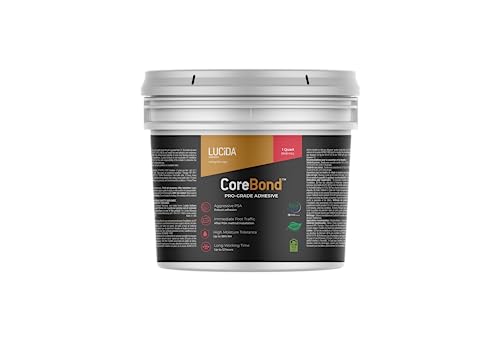
The small-batch specialist that cures in one hour and wipes off with a damp cloth.
This Lucida Surfaces CoreBond formula is the speed pick, reaching full cure in just 1 hour — a 24x faster cure than the marine-grade RecPro adhesive that takes a full day. It is a pressure-sensitive adhesive that arrives in a 1-quart can weighing only 2 pounds, which makes it 4.2x lighter than the hefty ROBERTS gallon. That small footprint means it shines for glueing down replacement vinyl tile in an RV or motorhome rather than tackling a whole house.
Its working time sits around 30 minutes to 1 hour, and 1 quart covers roughly 40 square feet, so it fits small repairs and single rooms. Owners mention it “worked perfectly” for replacing vinyl tile in a motorhome, and they liked how easy it was to wipe up excess while still wet. Leftover adhesive that dries can be lifted with mineral spirits, but catching it early with a damp cloth is the simpler path.
The honest catch: this is a pressure-sensitive bond meant for vinyl plank without attached backing, PVC, and carpet tile, so it is not the tool for a massive open-plan install. For a contained project where you want the floor done and walkable today, though, the rapid cure is a genuine convenience.
Speed advantage: Full cure in 1 hour versus 24 for marine-grade rivals, so you can finish and use the space the same day.
Coverage reality: 40 square feet per quart makes this a repair and small-room choice, not a whole-home adhesive.
3. RecPro RV Roll On Floor Adhesive
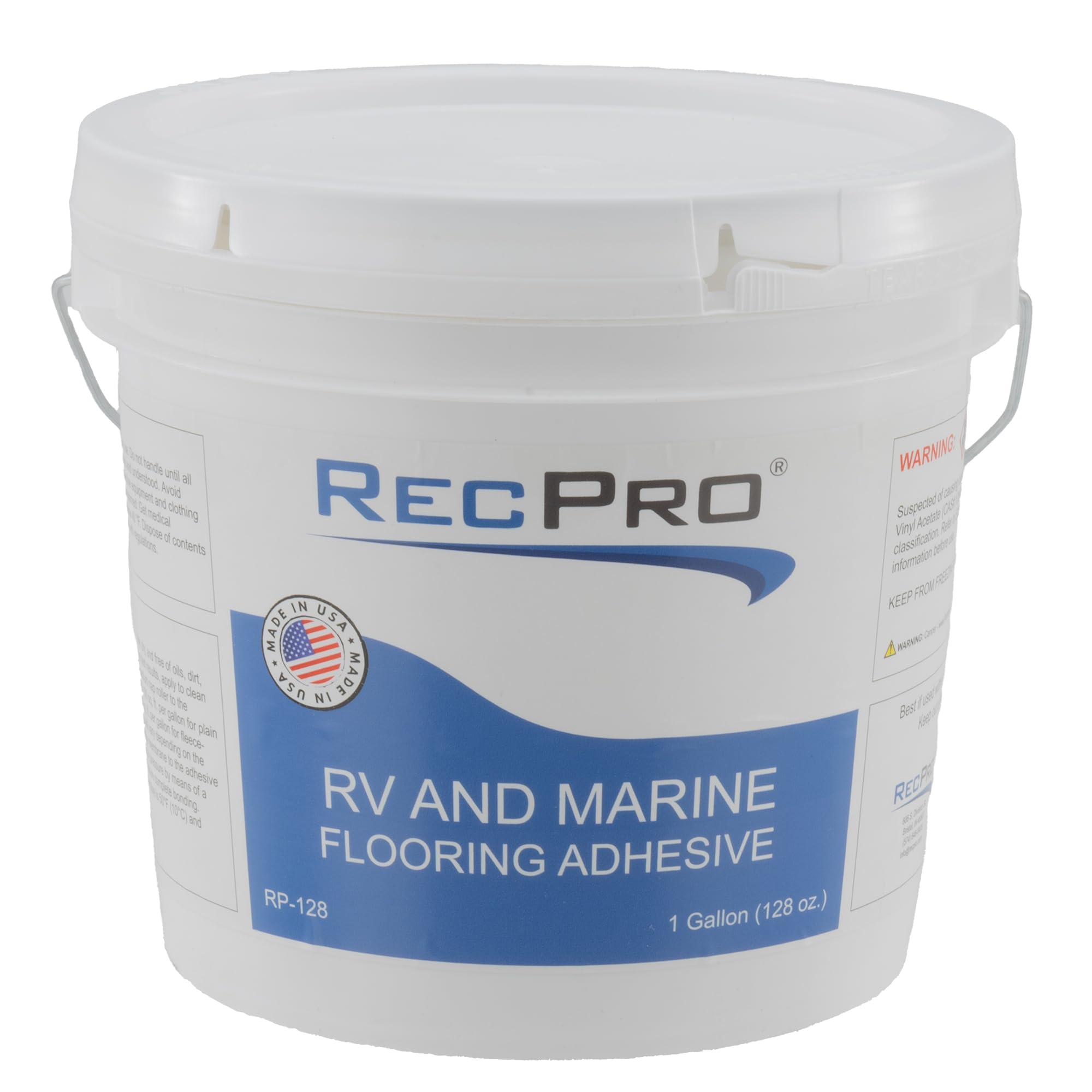
A water-based bond designed for the constant flex and moisture of RV and boat wood floors.
This RecPro adhesive is built for vehicles, not living rooms, and it shows in its 24-hour full cure time. The water-based formula is meant to penetrate plywood and create a secure connection with vinyl flooring, which is exactly why pontoon boat and RV owners reach for it. One gallon covers about 100 square feet when applied with a notched trowel, and the maker recommends letting it sit for 24 hours before use.
You will appreciate how easy this adhesive is to apply — it is the top praise in owner feedback. Customers note it works excellently for felt-backed polyvinyl (a type of vinyl with a soft fabric underside) on wood, with one using 2 gallons for a 19’x8′ pontoon boat at 73°F with a medium nap roller, praising the long working time. For best results, apply it between 65-75 degrees Fahrenheit, so keep the room warm enough for a clean bond.
The recurring gripe is the consistency, which some describe as runny, and it is not trowel-friendly for every install. A steel roller is recommended to press the vinyl down and push out air pockets. The 24-hour cure means this is a plan-ahead adhesive, but that long working time is a blessing for covering a large surface without rushing.
Built for vehicles
- Water-based formula penetrates plywood for a secure marine bond
- Long working time suits large-area coverage without rushing
- One gallon covers roughly 100 square feet
Plan around these
- Consistency is runny, and it is not friendly to trowel application
- Requires a full 24-hour cure before use
Choose it for: felt-backed vinyl or rubber coin flooring on a boat or RV wood deck, not for a standard living room.
skip it if: you want to walk on the floor the same day or prefer a thick trowel-grade paste.
Understanding the Specs
Full Cure Time
This is the time the adhesive needs to reach its strongest bond. The Lucida cures in 1 hour, while the RecPro needs a full 24 hours. A quick cure gets you back on the floor fast, but a long cure gives you a bigger window to slide planks into place without the glue setting prematurely.
Working Time and Coverage
Working time is how long the glue stays tacky and usable after you spread it. The Lucida offers about 30 minutes to 1 hour across 40 square feet per quart, while the RecPro’s long open time covers roughly 100 square feet per gallon. Match the coverage to your room size so you do not run out mid-project.
FAQ
Can I use regular floor adhesive on a wood subfloor?
How long does adhesive take to dry on wood?
What is the difference between pressure-sensitive and hard-set adhesive?
Will this adhesive work on vinyl plank without attached backing?
How much area does 1 gallon of adhesive cover?
Is water-based or solvent-based adhesive better for indoor vinyl?
How do I remove excess adhesive from vinyl after installation?
What temperature should the room be when applying adhesive?
Final Thoughts: The Verdict
Across the board, the adhesive for vinyl flooring on wood winner is the ROBERTS Universal because one gallon tackles planks, sheet vinyl, and carpet tile with a forgiving pressure-sensitive grab. If you’re repairing vinyl tile in an RV or boat, grab the Lucida CoreBond for its fast 1-hour cure. And for a full marine-grade refloor of a boat deck, the RecPro is the one to reach for. Each formula has a clear job, so pick the one that matches your room size and how quickly you want to walk on it.
How We Picked
We do not accept paid placement. Every pick is matched to a real buyer and a real use-case; we do not hands-on test units.
Sources & Methodology
Specifications: manufacturer listings and product documentation. Review insights: verified customer reviews, as of September 2026. Pricing: not shown on this page (it changes often); check the current price via the retailer link.
As an Amazon Associate, KitchPrep earns from qualifying purchases. This does not affect which products we feature.
Related Guides
