
Specs are compiled from manufacturer listings and verified buyer reviews and can change over time — please confirm the key details on the product page before buying.
Starting your first quilt is notable until you stare at a wall of machines and spec sheets that read like a foreign language. The good news is that you do not need a long-arm to make a beautiful first quilt — you need a machine that feeds fabric evenly, offers a quarter-inch foot, and comes with a wide table so your project does not drag. This guide cuts through the noise to find the beginner quilting machines that actually make learning fun rather than frustrating.
I’m Mohammad Maruf — the founder and writer behind KitchPrep. This guide is built by comparing the manufacturers’ published specifications and the patterns across verified customer reviews, so you get each pick’s real strengths and trade-offs instead of marketing spin.
We compared stitch counts, included quilting feet, table sizes, and real owner experiences to find the friendliest machines for your first quilt.
Our Picks at a Glance


How To Choose The Best Beginner Quilting Machines
Buying your first quilting machine is about finding one that removes obstacles, not adds features you will never touch. Focus on the basics that make piecing accurate and quilting manageable.
Look for the right feet included in the box
A quarter-inch piecing foot is non-negotiable for accurate quilt blocks. A walking foot helps feed multiple quilt layers evenly so your top layer does not shift. Check what is bundled — buying these separately adds cost and hassle.
Check the workspace for a growing quilt
The space to the right of the needle determines how easily you can maneuver a bulky quilt. A wide table or included extension table gives you a flat surface to support the fabric, preventing drag and uneven stitches. A free arm is a bonus for sewing sleeves and cuffs on garments.
Decide between mechanical and computerized controls
Mechanical machines use dials and are often simpler to repair, while computerized models offer features like a start/stop button, speed slider, and needle up/down — helpful for precise stopping at seam ends. Beginners often find the speed control on a computerized machine makes them less intimidated.
Quick Comparison
| Model | Best For | Built-In Stitches | Machine Weight | Key Quilting Bonus | Amazon |
|---|---|---|---|---|---|
| Janome JW8100★ Best Overall | All-around quilting value | 100 | 12 pounds | Extension table & ¼” foot | Amazon |
| Janome 2212Mechanical Favorite | Simple mechanical reliability | 12 | 14.9 pounds | Free arm & drop feed | Amazon |
| Brother CP100X | Lightweight versatility | 100 | 10.5 pounds | Wide table & walking foot | Amazon |
| SINGER 4432 | Heavy-duty speed | 32 | 14.6 pounds | Quilting guide included | Amazon |
| SINGER 4423 | Power for thick layers | 23 | 17.1 pounds | Extra-high presser foot lift | Amazon |
| Brother CS7205 | Stitch variety seekers | 150 | 2.2 pounds | Wide table & walking foot | Amazon |
| PooLin EOC02 | Feature-packed budget pick | 200 | 16.5 pounds | Wide table included | Amazon |
| Bernette B37 | Precision stitching | 50 | 17.6 pounds | 15 needle positions | Amazon |
| JUKI TL-2000Qi | Serious quilting speed | — | 25.4 pounds | Extension table included | Amazon |
In‑Depth Reviews
1. Janome JW8100 Computerized Sewing Machine
Our pick — over 4.5★ from 950+ verified ratings; the strongest balance of quality and price.
The computerized workhorse that quilts straight from the start with its own extension table.
This Janome is the rare machine that bundles everything a new quilter needs to start immediately. It ships with an extra-wide extension table, an even feed foot for handling multiple layers, and a quarter-inch quilting foot for accurate piecing — you will not be hunting for separate purchases. The 100 built-in stitches and 7 one-step buttonholes give you room to grow beyond quilts into garments and home décor.
Beginners often worry about speed control, and this machine answers with a slider plus a start/stop button so you can sew without the foot pedal while you build confidence. The 7-piece feed dog system moves fabric evenly, preventing the shifting and puckering that ruin precise seams on cotton and layered materials. Owners highlight the quiet operation and versatility, with one long-term user noting: “I have had it for a few years now and it’s still chugging along.”
At 12 pounds, it is light enough to carry to a quilting class, which several owners appreciate. A few units have failed early despite general praise for durability, so register your warranty. — a reminder to register your warranty. The built-in threader and jam-proof drop-in bobbin save you the frustration of setup, letting you focus on the fun part.
What wins people over
- Quilting-ready kit includes extension table, even feed foot, and ¼” foot
- Start/stop button and speed slider for gentle, controlled stitching
- Quiet operation with smooth fabric feeding on multiple layers
Worth knowing
- Durability feedback is mixed — some buyers report years of service, others early breakage
- The built-in light could be brighter for dark fabric work
Your best bet if: you want one machine that handles piecing, quilting, and garment sewing from day one without buying extra feet or tables.
Think twice if: you prefer a purely mechanical machine with no electronics to potentially fail over time.
2. MILLEPUNTI MHP30 Electronic Sewing Machine
An electronic entry point with a friendly LCD screen for budget-conscious first-time quilters.
If you want the convenience of a computerized machine without the premium price tag, this Millepunti delivers the essentials. The big LCD display shows stitch type, width, and length clearly, so you can see what you are selecting before you sew. With 40 built-in stitches including a 1-step buttonhole and stretch options, you have enough variety for quilting basics and garment repairs.
Setup is beginner-friendly with an automatic needle threader and a horizontal drop-in bobbin system for smooth winding. The free arm lets you maneuver around cuffs and sleeves, while the drop feed mechanism allows for free-motion quilting when you are ready to try that skill. Owners upgrading from older machines report being delighted with how well it works for small projects like bags and placemats.
The honest caveat here is longevity — one owner reported their unit lost power within two years with no easy repair path, a reminder that budget electronics carry more risk. At 15.8 pounds, it is on the heavier side, which helps it stay steady on a table. This is a sensible pick if you are testing whether quilting is your hobby before investing in a higher-tier machine.
Balanced take: Great price and user-friendly electronics for light quilting projects, but the durability record is unproven compared to established brands.
Who it suits: Beginners who want an LCD-guided experience for occasional smaller projects.
3. Janome 2212 Front-Loading Sewing Machine
The no-nonsense mechanical dial machine that keeps working while you learn the craft.
For those who want to understand the mechanics of sewing without a computer screen, this Janome keeps things refreshingly simple. With 12 built-in stitches selected via a dial and a four-step buttonhole, it covers the fundamentals of straight stitching, zigzag, and blind hem. The 5-piece feed dog and extra-high presser foot lift handle multiple fabric layers with ease, making it a capable partner for piecing quilt blocks.
Owners mention smooth operation and durability, with several using it reliably for over five years. One quilter noted it successfully sewed through tough 60’s tie quilts without complaint. The machine is lightweight at 14.9 pounds, and the free arm with drop feed gives you flexibility for sewing sleeves and other cylindrical items. The vertical oscillating hook bobbin is a traditional design that some find simpler to troubleshoot.
The reverse requires holding a lever, a minor ergonomic quirk that takes getting used to. Quality thread matters here — owners found cheap thread tangles while better brands like Gutermann run smoothly. This is the machine to choose if you want a sturdy, affordable tool with fewer electronic components that could fail.
Solid and simple: A dependable mechanical workhorse ideal for learning stitch fundamentals and basic quilting.
Consider instead if: you want a start/stop button or a wider variety of decorative stitches for creative projects.
4. Brother CP100X Computerized Sewing and Quilting Machine

A featherlight 10.5-pound machine with a wide table and walking foot for serious quilting reach.
This Brother is a standout for quilters who want to move their machine or have limited space. At just 10.5 pounds, it is easy to lift onto a table, yet the durable metal frame keeps it stable while you sew through thick denim or heavy quilts. The package includes a wide table plus 10 sewing feet — including a walking foot and quilting foot — so you have the right tools for feeding multiple quilt layers evenly.
With 100 built-in stitches and 8 auto-size buttonholes, the CP100X offers plenty of variety for utility, decorative, and heirloom projects. The speed slider and start/stop button are a blessing for those who cannot use a foot pedal — one owner with back issues found they could sew standing up with precise control. The 1-step needle threader reliably pushes thread through the needle, saving your eyes and patience during setup.
The machine is quiet, and the controls sit above the needle for easy access. A few owners noted bobbin winding can occasionally wrap thread under the post, requiring a manual nudge, and the needle threader is a bit bulky. For a beginner who wants portability without sacrificing quilting capability, this is a top contender.
Why it stands out
- Featherweight design at 10.5 pounds for easy transport to class
- Includes walking foot and ¼” piecing foot in the box
- Speed slider allows slow, precise stitching without the pedal
The nitpicks
- Bobbin winding can snag and needs a manual fix at times
- The fixed needle bar means no needle position adjustment
Reach for this if: you need a portable machine that still handles walking-foot quilting and comes fully equipped.
Look elsewhere if: you want adjustable needle positions for precise zipper or topstitching work.
5. SINGER 4432 Heavy Duty Sewing Machine

A powerful metal-framed speedster that chews through denim and canvas without breaking a sweat.
For beginners who plan to quilt with thicker fabrics or make home décor, this Singer brings serious piercing power. Its motor delivers 60% more power than standard machines, punching through thick layers with ease., delivering up to 1,100 stitches per minute so you can fly through long seams. Made with a sturdy metal frame, it handles multiple layers of denim, canvas, and quilting cotton without the machine slowing down or skipping stitches.
The 32 built-in stitches expand to 110 stitch applications, covering basic, stretch, decorative, and repair needs. A one-step buttonhole, free arm, and adjustable stitch length give you flexibility for everything from quilt binding to garment alterations.
Owners love the straightforward, no-electronics controls that make it simple to operate, with one Civil War reenactor praising how well it performs on costume projects. The main trade-offs are a short power cord that limits pedal placement and a mixed reliability record — many run smoothly, but others report needle breakage issues that require patience. This machine is ideal if speed and power matter more than decorative stitch variety.
Built for tough jobs: Excellent piercing power for heavy fabrics and fast quilting, but bring quality thread and expect a learning curve on tension.
skip it if: you mainly sew delicate fabrics and prefer a quieter, lighter machine.
6. SINGER 4423 Heavy Duty Sewing Machine
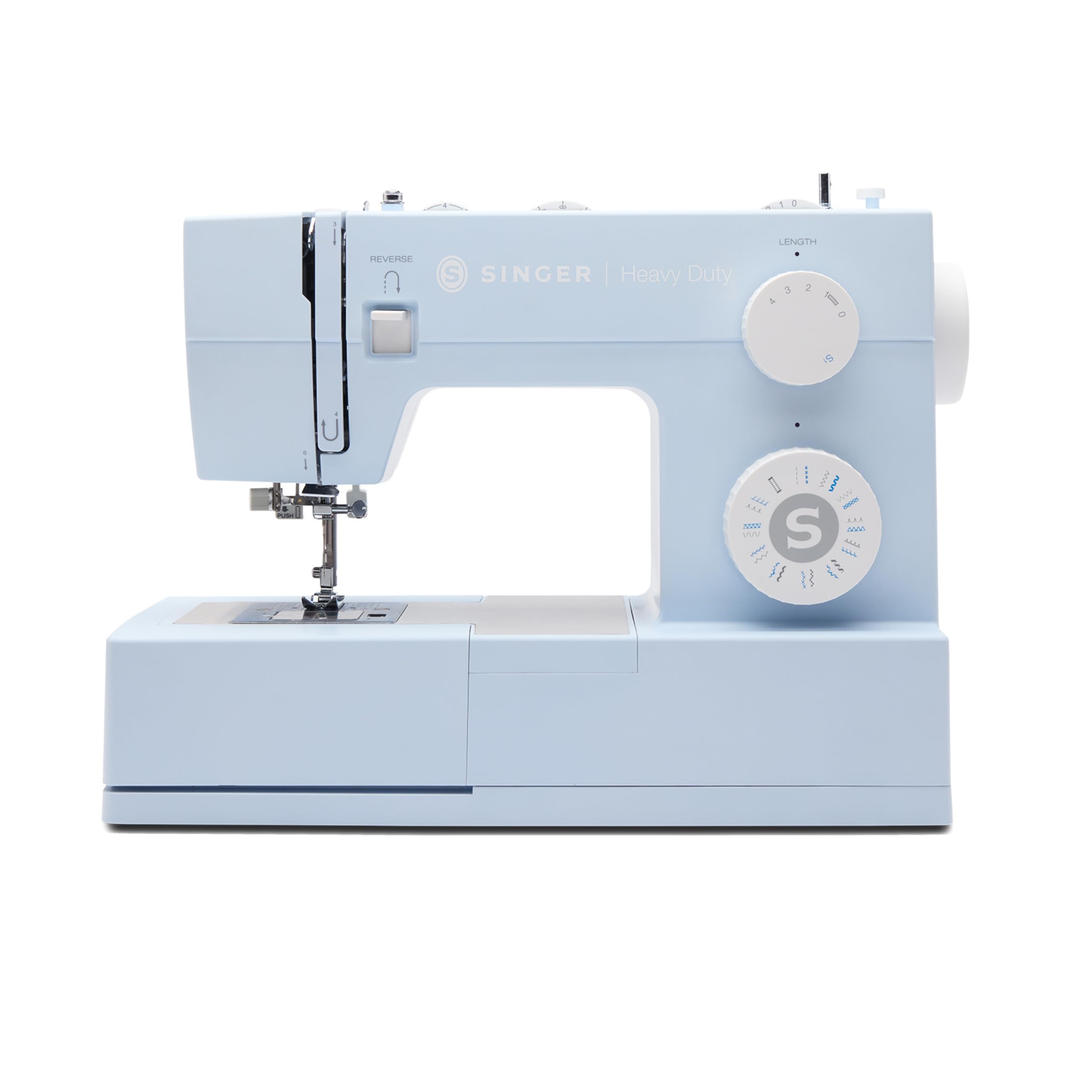
The heavy-duty blue machine with a stainless steel bedplate that beginners call idiot-proof.
This Singer earns its “heavy duty” name with a metal frame and stainless steel bedplate that reduce vibration and let fabric glide smoothly. Its motor sews 1,100 stitches per minute with 50% more power than standard machines, handling thick layers smoothly., making it easy to stitch through multiple layers of denim, leather, and canvas. A beginner who sews outdoor gear praised it for handling 10oz leather and 6-8 layers of denim without issues.
The 23 built-in stitches cover 97 stitch applications, giving you solid options for seams, decorative work, and stretch fabrics. The automatic needle threader eliminates eye strain, while the top drop-in bobbin with a transparent cover lets you monitor thread supply easily. The extra-high presser foot lift accommodates thick quilt sandwiches, and the adjustable presser foot pressure helps you switch from delicate silks to heavy-duty textiles.
Owners consistently call it quiet and powerful, with many noting it runs faster and smoother than heavier machines they replaced. The recurring advice is to use type 15 plastic bobbins — metal ones cause jams. The included soft cover is flimsy, the pedal cord is short, and there is no seam guide marked on the machine, so pick up a magnetic one. For a beginner who wants to sew everything from backpacks to quilts, this delivers remarkable value.
The strong points
- Powerful motor handles thick layers and heavy fabrics smoothly
- Extra-high presser foot lift fits bulky quilt projects
- Bright LED light and automatic needle threader for easy setup
Watch outs
- Plastic foot pedal and accessories feel less durable than the metal frame
- No seam guide markings on the machine bed
Choose this for: a beginner who wants one machine that can quilt, sew leather, and handle home repairs without fuss.
Consider alternatives if: you want more than 23 stitches or prefer a computerized speed slider over a pedal.
7. Brother CS7205 Computerized Machine
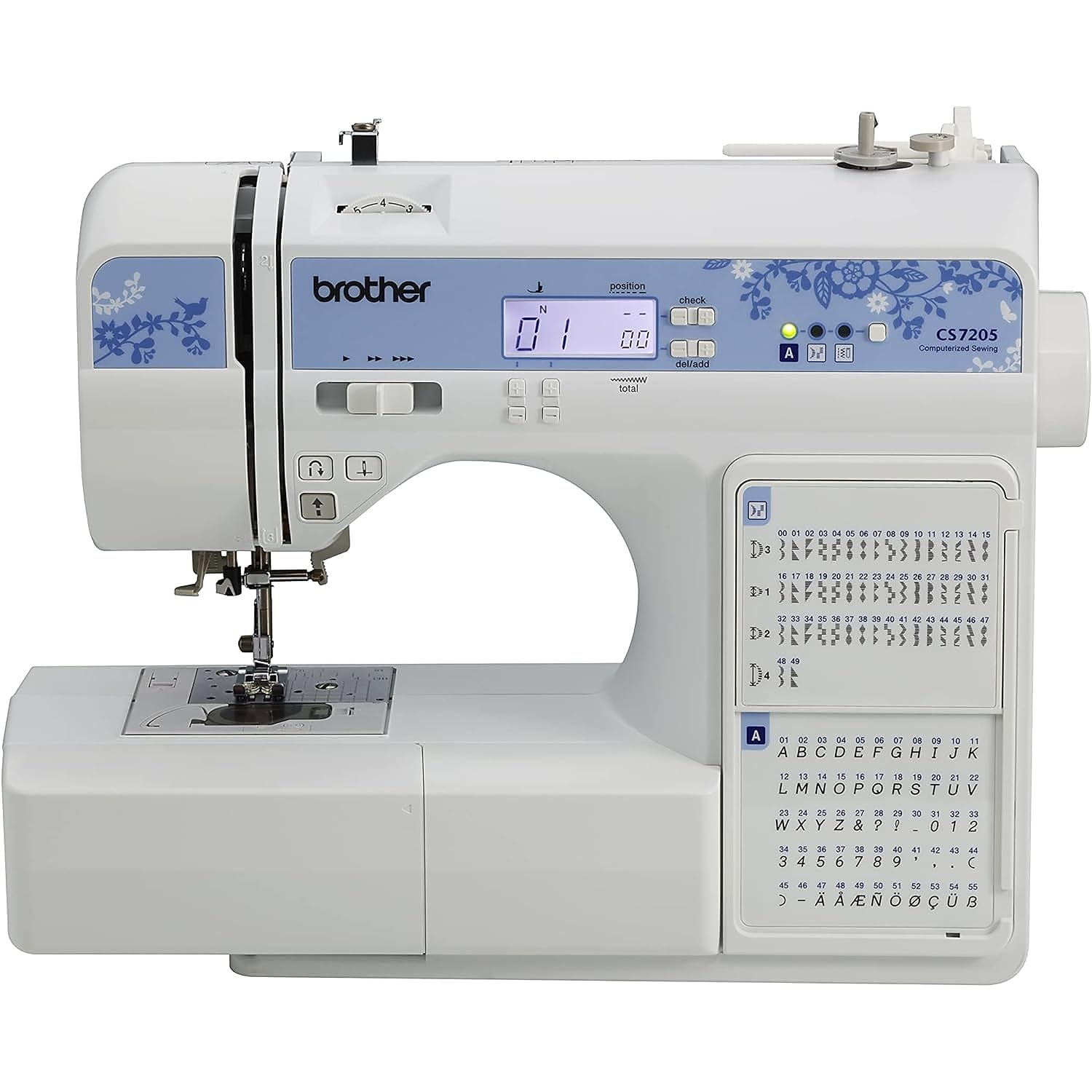
A versatile stitch library with 150 options and a walking foot that outperforms pricier rivals.
For the beginner who wants maximum creative options without a steep learning curve, this Brother delivers an enormous stitch library. The 150 built-in stitches include utility, decorative, heirloom, and even one alphanumeric font for personalizing projects, plus 8 one-step auto-size buttonholes. The easy-view LCD screen displays your stitch selection, and the quick-set drop-in bobbin is jam-resistant for frustration-free winding.
The included wide table supports larger quilting projects, and you get 11 sewing feet — including a walking foot that owners value at -100 if bought separately. The automatic needle threader pushes thread through the needle cleanly, and the machine runs quietly and smoothly. Owners note it handles light to medium fabrics beautifully, which covers most beginner quilting with cotton.
A 69-year-old experienced sewer proclaimed this budget Brother outperforms machines costing over, praising its features and ease. At just 2.2 pounds, it is remarkably lightweight, though owners say it feels heavy enough to stay steady on the table. The trade-offs are no automatic thread cutter and a machine best suited for lighter materials — heavy denim may strain it. For a beginner building a creative practice, this is an outstanding value.
Creative powerhouse: An unbeatable stitch selection and foot bundle for light-to-medium fabric quilting.
Not ideal for: heavy-duty projects like leather or thick canvas that demand more piercing power.
8. PooLin EOC02 Computerized Sewing Machine
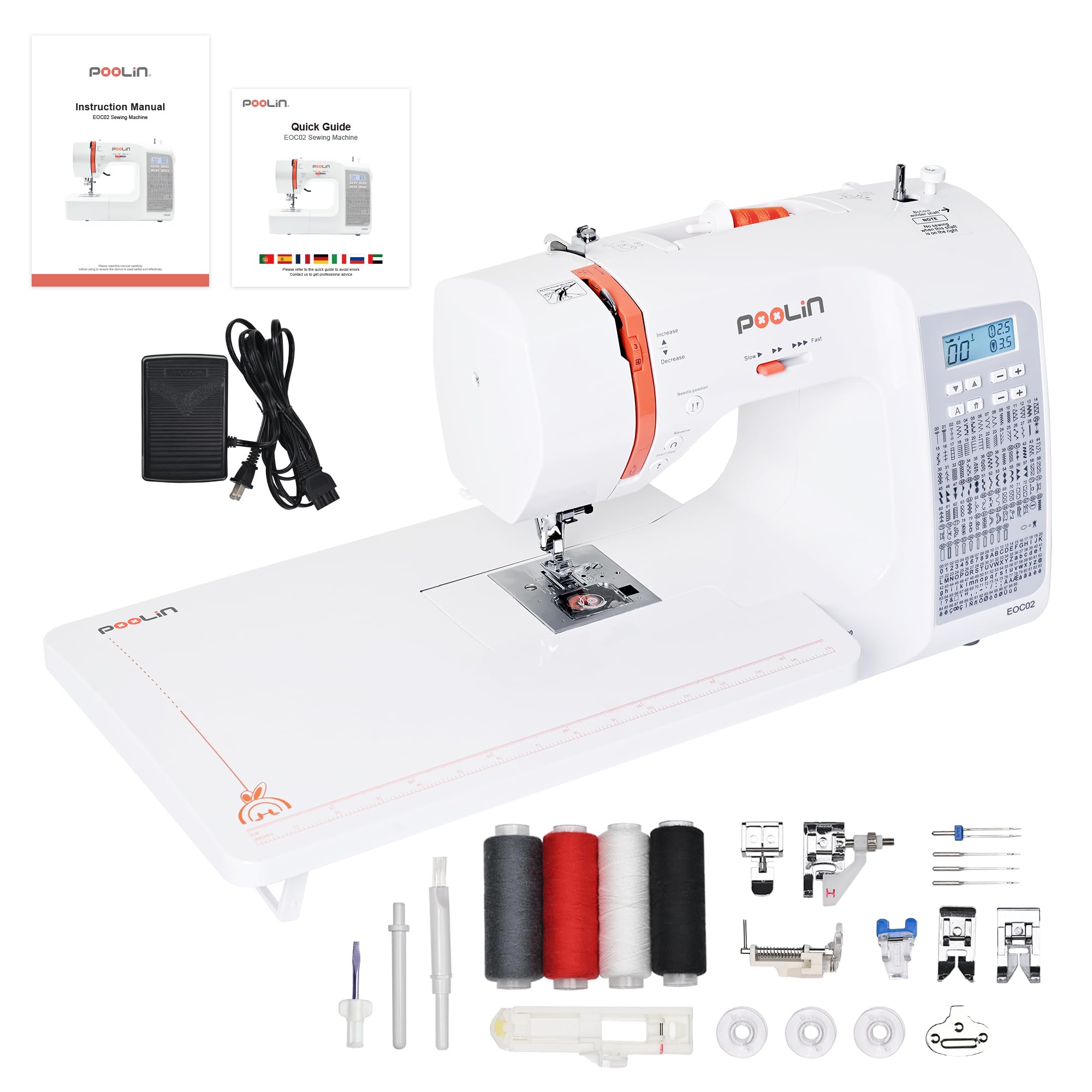
A 200-stitch electronic machine with a wide table that makes intricate patterns a one-touch affair.
This PooLin packs an enormous 200 built-in stitches — including utility, decorative, and alphanumeric patterns — into a user-friendly package aimed squarely at beginners. The LCD screen clearly shows stitch selection, and intuitive controls let you adjust speed and patterns with ease. A one-click start/stop button frees you from the foot pedal, while the needle position button lifts the bobbin thread with a single press.
The extra-wide table provides generous workspace for quilts and bulky materials, and you can detach the accessory compartment to access the free arm for cuffs and sleeves. It handles medium-weight fabrics like cotton and linen beautifully, plus heavier denim, twill, and canvas for jeans or bags. Owners praise its even, neat stitches on small projects like a toddler vest, delivering boutique-quality results with clear instructions.
The brand offers a support team that guides you through assembly and threading, plus a social media group for tips and video tutorials. At 7.5 kg (about 16.5 pounds), it has a solid presence on your table. A few owners wished the walking foot were included for quilt sandwiches, and one noted cotton thread issues that were likely a needle problem. For a beginner wanting maximum stitch variety at a friendly price, this is a compelling choice.
Versatile and friendly: Huge stitch library, clear LCD, and one-touch controls make pattern experimentation easy.
Best for: crafters sewing garments, bags, and medium quilts who want support and tutorials.
9. Bernette B37 Computerized Sewing Machine

A Bernina-family machine offering true stitch precision with 15 needle positions for flawless seams.
If you want the engineering pedigree of a Bernina without the flagship price, the Bernette B37 delivers reliable, precise stitching. With 50 built-in stitches including quilting and decorative patterns, plus 5 automatic buttonholes, it covers the essentials beautifully. The memory function lets you save stitch combinations you use often, and adjustable speed control with a start/stop button smooths the learning curve for beginners.
The standout feature is its 15 needle positions and up to 7 mm stitch width, giving you fine control for zippers, topstitching, and precise edge work. It sews up to 700 stitches per minute — a moderate speed that keeps beginners in control. The 2-step presser foot lift handles multiple layers, and the automatic needle threader removes a common frustration. At 17.6 pounds, it is a solid, stable machine that does not vibrate at speed.
Owners describe it as quiet with quality stitches, and one beginner called it “phenomenal” with a built-in thread cutter and lovely design. However, durability feedback is mixed, and one owner found it struggled with heavy fleece and denim despite needle changes. The compact size is praised, though some note the extension table shown in photos is not included. For a beginner who values stitch precision over raw power, this is a refined choice.
Precision-focused: Excellent needle position control and stitch quality for garment and light quilting work.
Not for: heavy-duty fabrics like thick denim or leather that need a stronger motor.
10. JUKI TL-2000Qi Sewing and Quilting Machine

The high-speed straight-stitch specialist with an aluminum frame that serious quilters graduate to.
This is the machine beginners aspire to after mastering the basics — a dedicated straight-stitch powerhouse built for serious quilting. The JUKI TL-2000Qi sews up to 1,500 stitches per minute with an aluminum die-cast arm and bed that keep vibration remarkably low. Owners describe it as a true workhorse that breezes through 8 layers of denim without skipping a stitch, making it perfect for quilt sandwiches and heavy projects.
The tapered head design gives excellent visibility for free-motion quilting, and the included extension table provides a wide work area for large quilts. Updated with LED lights and a one-pedal operation, it also features an automatic needle threader. The package includes a walking foot, needles, bobbins, oil, and tools — everything you need to get started. A 5-year limited warranty covers this machine for long-term confidence.
Owners love the perfect straight stitches and flawless quarter-inch seams, with one noting it works great on a Grace quilting frame. The trade-offs are real: there is no speed control slider, the automatic threader is considered poor by some, and you must oil it regularly. At 25.4 pounds, it is heavy and hard to move. This is not a first machine for casual sewing — it is a long-term investment for quilters who know they are hooked.
Why quilters rave
- Blazing 1,500 stitches per minute for fast quilting
- All-metal construction minimizes vibration for smooth lines
- Excellent visibility for free-motion quilting
The compromises
- Straight stitch only — no zigzag or decorative stitches
- Requires regular oiling and specific Organ HLx5 needles
- Heavy at 25.4 pounds, so plan a permanent home for it
Worth the leap if: you are committed to quilting and want machine-quilting speed and precision that a combo machine cannot match.
Hold off if: you need one machine for garments, mending, and quilting — you will miss the zigzag and buttonhole stitches.
Understanding the Specs
Built-in Stitches and Buttonholes
The stitch count tells you how many patterns the machine can sew — a number like 100 means you have utility stitches for seams plus decorative options for creativity. More is not always better for a beginner; you need a solid straight stitch, zigzag, and a one-step buttonhole. Stretch stitches matter if you plan to sew knits. Focus on having the stitches you will actually use for quilting and mending.
Workspace: Throat Space and Tables
The throat space is the area to the right of the needle where your quilt bunches up as you sew. A wider throat makes maneuvering a large quilt easier, but an included extension table or wide table helps support the fabric’s weight. This prevents drag that causes uneven stitches and saves your back from hunching. A free arm — where the base narrows — is a bonus for sewing cuffs and sleeves.
FAQ
How many stitches do I really need for beginner quilting?
What is the difference between a mechanical and a computerized sewing machine for quilting?
Why is a quarter-inch foot essential for quilting?
What is a walking foot and when do I need one?
Can a regular sewing machine quilt a large quilt?
Does machine weight matter for quilting?
What is a drop-in bobbin versus a front-loading bobbin?
How do I know if a machine is “heavy duty” enough for quilting?
Final Thoughts: The Verdict
For most newcomers, the beginner quilting machines winner is the Janome JW8100 because it arrives quilting-ready with an extension table, even feed foot, and quarter-inch foot included — no extra purchases needed. If you want maximum stitch variety and a featherlight machine, grab the Brother CP100X. And for the pure mechanical simplicity of a dial-operated workhorse, the Janome 2212 is the one to reach for.
How We Picked
We do not accept paid placement. Every pick is matched to a real buyer and a real use-case; we do not hands-on test units.
Sources & Methodology
Specifications: manufacturer listings and product documentation. Review insights: verified customer reviews, as of September 2026. Pricing: not shown on this page (it changes often); check the current price via the retailer link.
As an Amazon Associate, KitchPrep earns from qualifying purchases. This does not affect which products we feature.
Related Guides
