
Specs are compiled from manufacturer listings and verified buyer reviews and can change over time — please confirm the key details on the product page before buying.
Before you buy 1/2 inch aluminum tubing, ask yourself one question: are you bending a long continuous run, or cutting precise straight sections? That choice decides if you need a soft, coiled roll or a rigid, pre-cut stick. This guide ranks the best options by that real-world fit, covering fuel, oil, air, cooling, and structural builds — with the honest specs that show which one bends without kinking.
I’m Mohammad Maruf — the founder and writer behind KitchPrep. This guide is built by comparing the manufacturers’ published specifications and the patterns across verified customer reviews, so you get each pick’s real strengths and trade-offs instead of marketing spin.
Here is the straight answer on which 1/2 inch diameter, pressure-rated, and coil-versus-straight formats work best for automotive, refrigeration, and shop projects — in plain, everyday English.
Our Picks at a Glance

How To Choose The Best 1/2 Inch Aluminum Tubing
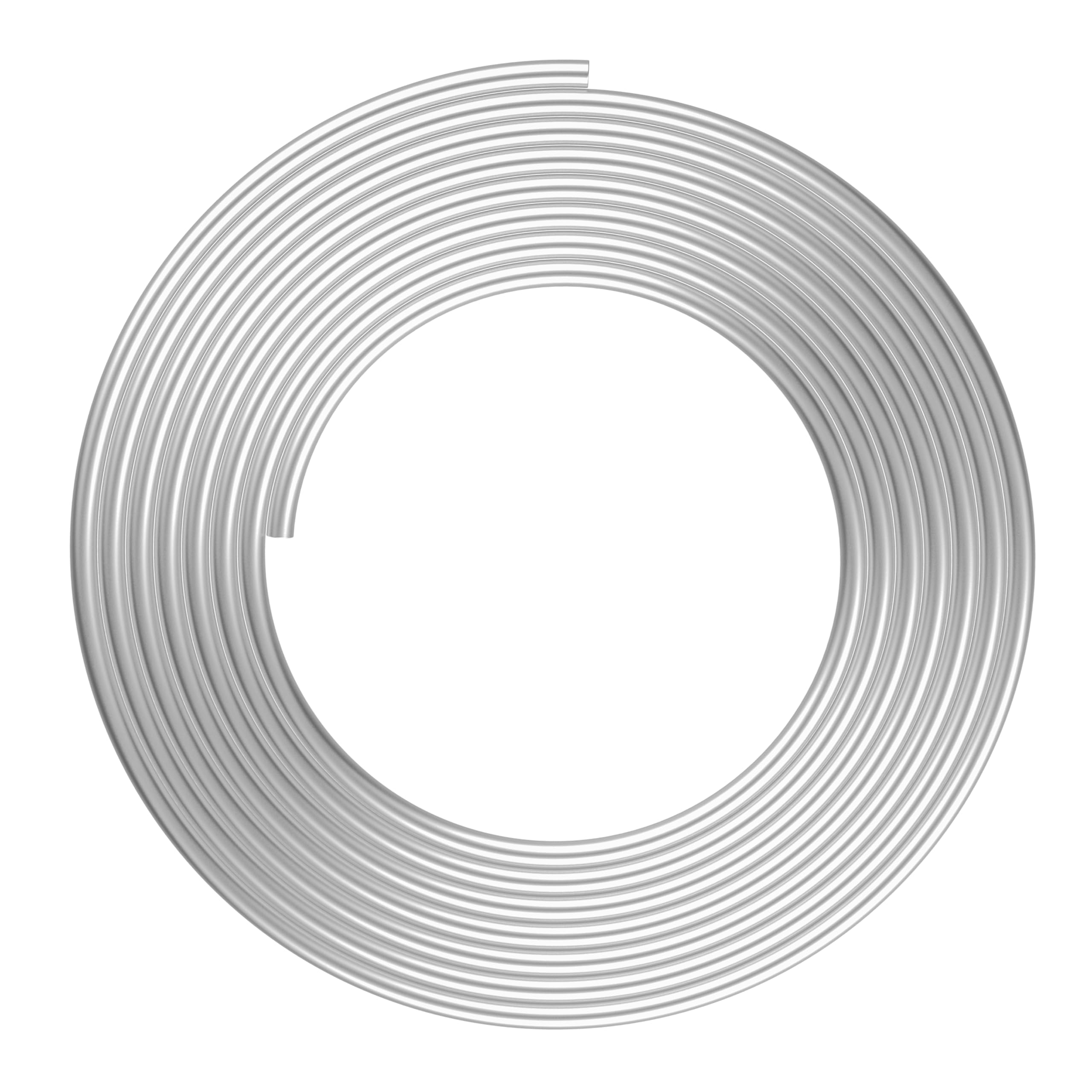
Before you hit add to cart, you need to match the tubing format to the job. A coiled roll is built for long, continuous runs where you bend the line around engines or compressors. A rigid straight tube is for frames, rails, and structural pieces where you need a precise, unbent length.
Wall Thickness Is the Bending Decider
The wall thickness — the metal between the hollow center and the outside — controls how the tube behaves under pressure. A thicker wall like 0.050 inches resists kinking and holds up to higher mechanical stress, but it is stiffer and harder to shape by hand. A thinner wall like 0.035 inches bends easier with simple tools, but it demands more care on sharp angles or it will collapse.
Alloy Grade Tells You the Personality
Not all aluminum is the same. The 3003 alloy used in fuel lines is praised for excellent workability and corrosion resistance, making it the go-to for bending and flaring. The 1060 grade offers high thermal and electrical conductivity along with easy weldability, which is why it shows up in refrigeration and air-compressor lines. The 6061 and 6063 alloys are heat-treated structural metals — much stronger and stiffer, ideal for frames but far harder to bend by hand.
Quick Comparison
| Model | Best For | Length | Wall Thickness | Max Pressure | Amazon |
|---|---|---|---|---|---|
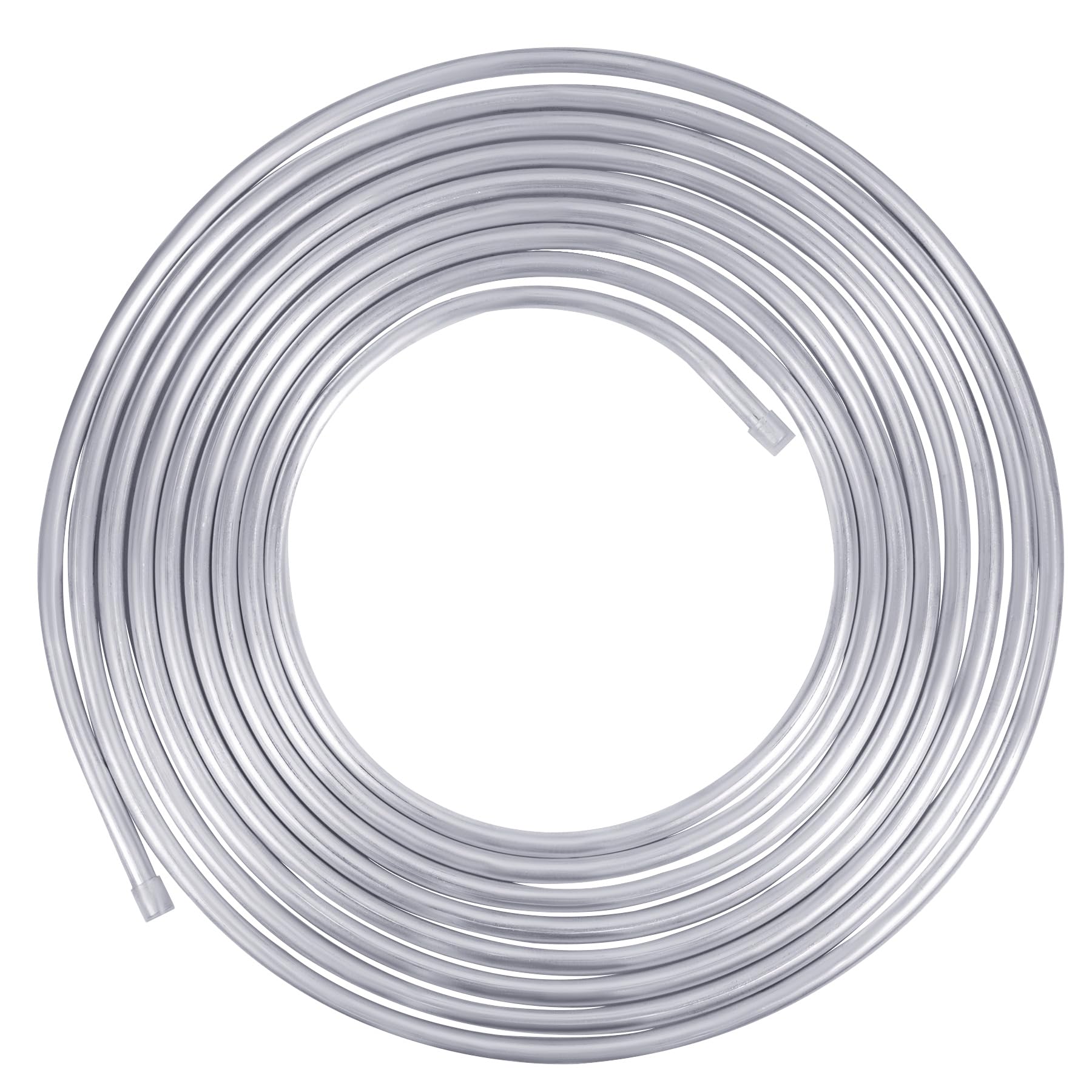
| Podavelle 25 ft Coil★ Best Overall | Long fuel & air runs | 25 feet | 0.89 mm | 650 psi | Amazon |
| YullSorom 10 ft CoilBudget Champion | Budget brake & fuel lines | 10 feet | 0.035 inches | 650 psi | Amazon |
| KWOKWEI 20 ft CoilDIY Favorite | DIY cooling & fuel projects | 20 feet | 0.04 inches | — | Amazon |
| Randall Mfg 4 ft Stick | Straight structural pieces | 48 inches | 0.050 inches | — | Amazon |
| AC Performance 16 ft Coil | Compression-fitting installs | 192 inches | 0.8 mm | 650 psi | Amazon |
| Vigorous 25 ft Coil | Custom-shape compressor lines | 25 feet | 0.04 inches | — | Amazon |
| K&S Precision 4-Pack | Crafts & model building | 36 inches (x4) | 0.035 inches | — | Amazon |
| OnlineMetals 6061 Stick | Structural & axle shafts | 36 inches | 0.12 inches | — | Amazon |
In‑Depth Reviews
1. Podavelle 1/2″ OD Aluminum Hard Fuel Line Tubing Coil (25 ft)
Our pick — over 4.5★ from 400+ verified ratings; the strongest balance of quality and price.
The long-run champion that bends through 90-degree angles without kinking, ideal for full vehicle line replacements.
You get a full 25 feet of continuous line here, so you avoid splicing multiple shorter pieces together. This coiled roll is extruded from lightweight 3003 grade aluminum alloy, and buyers report it holds its shape beautifully on sharp bends; one even used it for a full air ride suspension setup, relying on its 650 psi max rating, the highest on this list.
Because it is compatible with fuel, oil, water, gasoline, diesel, ethanol, and E85, this tubing is versatile across automotive and shop projects. Buyers mention that a metal line outlasts rubber hoses, which tend to crack after several years — one trailer owner replaced a failing rubber hose with this and expects it to last far longer.
The trade-off is that the aluminum is soft — some owners say almost too soft for heavy-duty structural jobs, where steel or stainless would hold up better. For standard vehicle and air-system line work, though, that softness is exactly what makes it easy to flare and route.
What wins people over
- 25-foot continuous run means fewer joints and less risk of leaks.
- Bends cleanly at 90 degrees and greater without kinking, per owners.
- Flare-friendly for 37° AN fittings with tube nuts and sleeves.
The honest limit
- Softer than steel — not ideal for heavy structural loads.
- Weighs 0.61 kg, which is noticeable when handling the full coil.
Reach for this if: you are running long fuel, oil, or air lines that need one clean, unbroken 25-foot path.
Look elsewhere if: your project needs rigid structural support rather than a bendable pressure line.
2. YullSorom 1/2″ OD Aluminum Coiled Tubing (10 ft)
A wallet-friendly 10-foot coil that still carries a full 650 psi rating for brake, fuel, and cooler lines.
At just 10 feet, this coil is for the targeted repair rather than the full-vehicle overhaul — a single rusted brake line or a short fuel run from tank to pump. It holds a maximum working pressure of 650 PSI, and buyers confirm it flares if needed even though most just pair it with compression fittings.
Owners mention it looks cleaner than rubber fuel hose while bending easily into shape. It is cut from an extruded aluminum alloy with good corrosion resistance, and at just 0.26 kg it is the lightest coil on this list — noticeably easier to manage than the heavier Podavelle at 0.61 kg when you are working in tight spaces.
One owner swapped a gasoline line with compression fittings and noted it “bends easy enough and seems to be plenty durable.” The catch is the shorter length; if your route spans more than about 10 feet, you’ll need joints or a longer roll.
Best-value read: You get a genuine 650 psi hard line without paying for surplus footage you will not use.
Who this suits: DIYers with a single line to replace and no desire to store a big leftover coil.
3. KWOKWEI 1/2″ OD 1060 Grade Aluminum Coiled Tubing (20 ft)
A smooth 1060-grade coil that resists moisture, making it a shop-air hero, not just a fuel line.
This 20-foot coil stands out for its high-grade 1060 aluminum with a smooth design — no welded seam means a smooth, uniform surface and stronger structure. It offers excellent thermal conductivity and weldability, and you can join it with gas welding, hydrogen welding, or contact welding if your build calls for it.
The real-world proof comes from an owner who built an air-to-liquid cooler for their compressor line: it “works perfectly at a third, the cost of copper” and removed roughly 90% of the moisture before it reached the tank. That is the kind of condensation-killing result that makes this a smart pick for compressor and refrigeration work.
Buyers find it easy to bend by hand yet strong enough for higher pressures, and it flares and double-flares cleanly for a fuel-injection upgrade.
Signature strength: smooth 1060 construction that welds easily and resists corrosion in demanding thermal setups.
Keep in mind: No pressure rating is published, so stick to low-to-mid pressure uses like vents and cooler lines.
4. Randall Mfg 4 ft Clear Anodized Aluminum Round Tube (6063-T6)

A rigid 48-inch structural stick with the thickest wall here — built for frames, rails, and repairs, not bending.
This is the odd one out in the best way: a straight 48-inch tube, not a coil, made from 6063-T6 alloy with a clear anodized finish. Its wall measures a substantial 0.050 inches — 43% thicker than the YullSorom’s 0.035-inch wall — giving it dependable strength for fabrication, trim, and support applications.
Because it is a rigid stick rather than a soft coil, it is meant for cutting to precise lengths, drilling, and fastening — think frames, rails, sleeves, and display fixtures. One reviewer noted the inside diameter sits just over 3/8″, letting a 3/8″ steel rod fit snugly inside while the outside diameter stays an exact 1/2″.
Made in the USA by Randall Manufacturing, it carries a clean, corrosion-resistant anodized surface. The honest caveat is that some buyers found the tube’s concentricity — how perfectly round the hollow center is — inconsistent on individual pieces, so it pays to inspect yours before committing it to a precision-machined part.
Best for: straight structural lengths where you cut, drill, and fasten rather than bend.
Not for: routed fuel or air lines that need a continuous curved shape.
5. AC Performance 1/2″ Aluminum Fuel Line Hard Tube (16 ft)

A 16-foot coil that plays perfectly with compression fittings — customers note zero leaks on fuel-injected builds.
This coil earns its spot on compression-fitting compatibility. One owner replaced rusted fuel and supply lines on a fuel-injected car and reported “NOT ONE LEAK” using compression fittings, because the aluminum bends easily where steel tubing is miserable to work with.
At 650 PSI maximum working pressure, it handles brake, fuel, transmission, and automotive AC lines. Buyers praise it as just as good as expensive alternatives — one found no real difference between this and a pricier brand on an EFI fuel and return line setup.
The caution flags are real but manageable: the aluminum is very soft, and one owner found it kinks if bent more than about 20 degrees by hand, recommending a proper bending tool for sharper angles. Also, at least one owner advises against using it with E85 fuel, so check compatibility with your specific fluid before committing.
Core strength: Compression fittings seat cleanly on this line, saving you from flare-tool headaches.
Respect the limits: Soft metal means use a bender for tight turns and confirm fluid compatibility first.
6. Vigorous 1/2″ OD smooth 1060 Aluminum Coiled Tubing (25 ft)

A tight-tolerance 25-foot smooth coil that holds its shape outdoors — even months after installation.
This Vigorous coil brings precision to the table: its diameter tolerance runs about ±0.05mm and length tolerance about ±3mm, so the line you measure is the line you get. It is made from corrosion-resistant, weldable 1060 aluminum with a 0.04-inch wall.
Buyers have used it in wildly different ways — a fuel cell vent tube, antenna radials, a tilt-front-end coolant line, and a custom compressor setup that stayed strong after months outside. The common thread is that it bends easily into exactly the shape needed without special tools or elbow fittings.
One antenna builder noted it is rigid enough to hold position on its own for 2 to 3 feet, and even further when filled with wooden dowels. The recurring buyer tip is to pair it with quality compression fittings, since cheaper fittings sometimes fail to seal properly on soft aluminum.
Why it stands out: Tight manufacturing tolerances give predictable bends and a clean final install.
Smart pairing: Invest in good fittings — the metal is only as leak-proof as what you screw onto it.
7. K&S Precision Metals Round Aluminum Tube 9319 (4 x 36″)
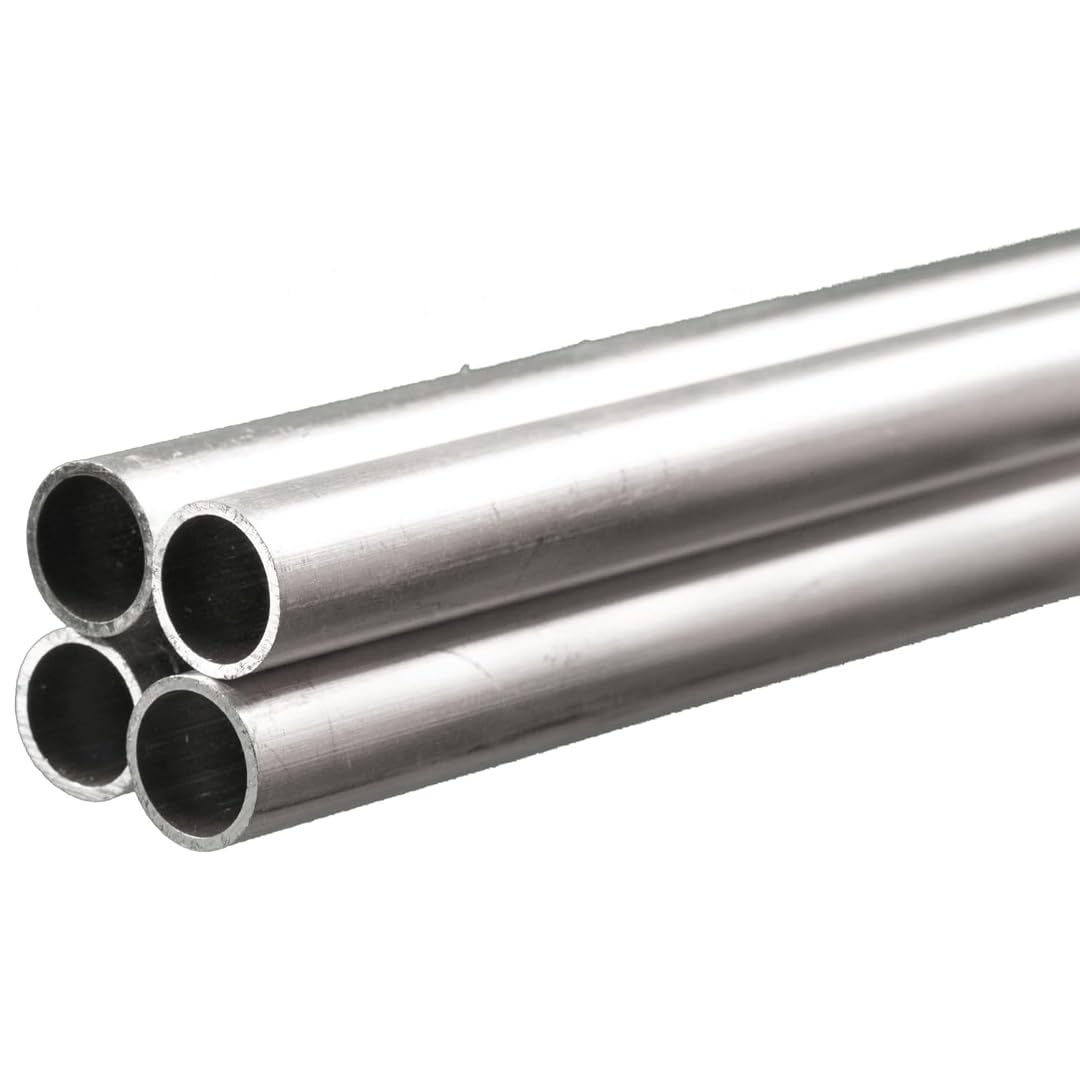
Four straight 36-inch sticks in one box — the practical multipack for crafts, model builds, and DIY fabrication.
This is a rarity in the aluminum-tubing aisle: a 4-pack. You get four straight 36-inch tubes of 3003-H14 aluminum alloy, a formulation known for good strength, wear resistance, and easy handling. The multipack makes it ideal for home décor, HVAC, automotive fabrication, and marine projects where you need several clean straight sections.
Because these are straight sticks with a thin 0.035-inch wall rather than soft coils, they suit cutting, drilling, and welding jobs like handrails, lighting fixtures, and furniture frames. Buyers confirm the quality is good at the price, and one noted they used the tubes successfully for custom fuel lines after cutting and bending them to shape.
The honest limitation is in that thin wall — one owner explicitly warned it is not recommended for bending, since the narrow 0.035-inch metal can collapse under aggressive shaping. And an occasional shipment arrives with tubes bent in transit, which is a packaging risk to watch for.
Best for: projects needing multiple straight, identical sections — models, trim, and light fabrication.
skip it if: your plan involves sharp hand bends; the thin wall prefers straight duty.
8. OnlineMetals 6061 Aluminum Round Tube (0.5″ OD x 0.12″ Wall, 36″)

The aerospace-grade structural stick with a massive 0.12-inch wall — for loads, not lines.
When your project needs to carry real weight, this is the tube. It is 6061 aluminum in a T6 drawn temper — a heat-treated alloy used in aerospace, automotive, marine hardware, and bicycle frames. Its wall thickness is a chunky 0.12 inches, far beyond anything else here, which makes it a structural shaft rather than a bendable line.
The practical result: owners have used it for kayak cart axles and joining heavy fiberglass rods, relying on its excellent strength-to-weight ratio and weldability. Inside diameter comes to 0.26 inches, leaving a thick solid wall around the hollow center to resist bending and impact.
It meets ASTM-B210 and AMS-4082 specifications, so it is genuine certified material rather than a generic import. The trade-off is obvious: at this stiffness, you are not hand-bending anything — this is cut-to-length, drill, and bolt territory. Some buyers also noted the wall thickness can run slightly inconsistent, so measure your specific piece for precision fits.
Ideal for: axles, shafts, structural frames, and any part that must withstand real force.
Wrong tool for: routed fuel or cooling lines — this tube simply will not bend like the coils above.
Understanding the Specs
Outside Diameter vs Inside Diameter
The outside diameter (OD) is the measurement across the full tube including the walls — for everything here, that is 1/2 inch. The inside diameter (ID) is the hollow space where fluid flows or where a rod slides in. When you are matching to compression fittings or flared AN fittings, the OD is what matters most, because fittings grip the outside surface. When you need to slide this tube over another rod, the ID is the number to check.
Wall Thickness
Wall thickness is the metal between the outer surface and the hollow inner core, measured in inches or millimeters. Thicker walls (like 0.050 or 0.12 inches) resist kinking and handle higher mechanical stress but resist hand-bending. Thinner walls (like 0.035 or 0.04 inches) bend easily with simple tools but will collapse if you force too sharp an angle. Match the wall to the job: thin for routed lines, thick for structural parts.
FAQ
Can I bend 1/2 inch aluminum tubing by hand without special tools?
What is the difference between a coiled roll and a straight tube?
Which alloy should I choose for a fuel line?
Will 1/2 inch aluminum tubing work with compression fittings?
Is aluminum tubing safe for E85 or ethanol fuel?
How do I keep the tubing from kinking on sharp bends?
Which is stronger for structural builds, 6061 or 1060 aluminum?
How much tubing do I need for a typical vehicle fuel line?
Final Thoughts: The Verdict
For most buyers, the 1/2 inch aluminum tubing winner is the Podavelle 25-foot coil because its 3003 alloy bends cleanly through sharp angles at a solid 650 psi, making it the most versatile all-rounder. If you want a budget-friendly 10-footer for a single brake or fuel line repair, grab the YullSorom coil. And for a rigid structural stick that handles real loads, the OnlineMetals 6061 tube is the one to reach for — its 200+ ratings confirm dependable build quality.
How We Picked
We do not accept paid placement. Every pick is matched to a real buyer and a real use-case; we do not hands-on test units.
Sources & Methodology
Specifications: manufacturer listings and product documentation. Review insights: verified customer reviews, as of September 2026. Pricing: not shown on this page (it changes often); check the current price via the retailer link.
As an Amazon Associate, KitchPrep earns from qualifying purchases. This does not affect which products we feature.
Related Guides
