
Specs are compiled from manufacturer listings and verified buyer reviews and can change over time — please confirm the key details on the product page before buying.
Bending 1/2-inch conduit by hand is a core electrical skill, and the tool you choose determines whether you get a clean 90-degree corner or a crushed, kinked mess that wastes pipe and time. The best bender for you hinges on your work volume: a daily professional needs rugged, exact-marked iron, while a weekend DIYer might prefer a lighter aluminum head that’s easy to store. This guide compares the top-rated heads and full assemblies to help you match the tool to your actual workload.
I’m Mohammad Maruf — the founder and writer behind KitchPrep. This guide is built by comparing the manufacturers’ published specifications and the patterns across verified customer reviews, so you get each pick’s real strengths and trade-offs instead of marketing spin.
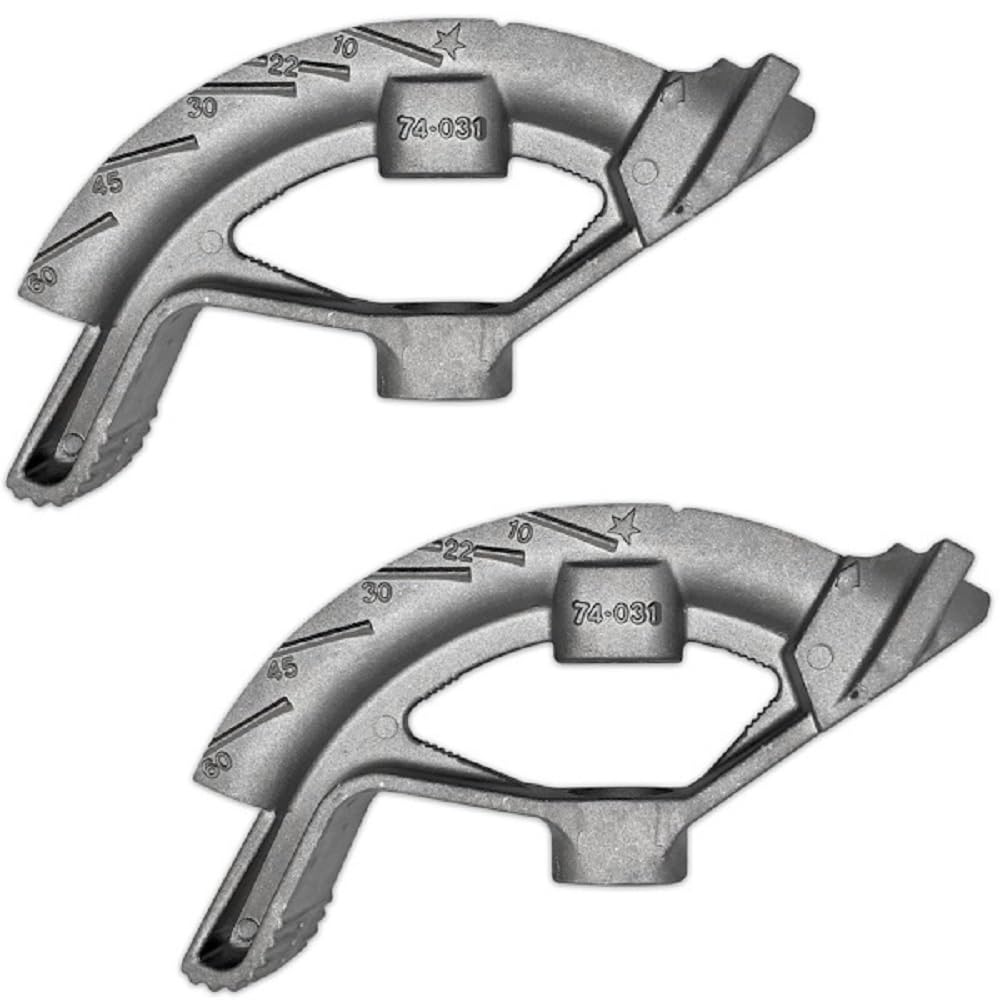
You can trust this breakdown of the top 1/2 inch conduit bender models to pinpoint the best fit for your next wiring job.
Our Picks at a Glance


How To Choose The Best 1/2 Inch Conduit Bender
Before you pick, understand that the main choice is between a bender head for EMT (Electrical Metallic Tubing, the thin steel pipe) and one rated for rigid or IMC (thicker, heavier pipe). A 1/2-inch EMT bender is the standard start, but tools differ in their material, markings, and included handle.
Material: Iron vs. Aluminum
Ductile iron heads are praised for strength and lasting for years under daily heavy use, though they add noticeable weight. Aluminum heads are lighter and easy to carry but can wear faster if you are bending pipe professionally on every job.
Markings and Precision
Look for raised marks cast into both sides of the head, including a star, arrow, and degree scale. These let you line up for stub-ups, offsets, and back-to-back bends with confidence, without squinting at a faded sticker.
Handle and Assembly
Before you buy, decide how you’ll carry it. Some benders are a complete head-and-handle unit, while others are just a head you mount on a pipe or an existing handle. If you need to fit it in a toolbox, a take-down handle (one that separates for storage) offers portability; if you want grab-and-go simplicity, a fixed assembly works better.
Quick Comparison
| Model | Best For | Material | Pipe Compatibility | Handle Included | Amazon |
|---|---|---|---|---|---|
| IDEAL 74-026★ Best Overall | Professional daily use | Ductile Iron | 1/2″ EMT | Yes | Amazon |
| NSI CB50Budget Champion | Budget-focused DIY | Aluminum Die Cast | 1/2″ EMT | No | Amazon |
| DMNI 1/2″ Pack of 2Spare Head Pick | Having a spare head | Aluminum | 1/2″ EMT | No | Amazon |
| Southwire MCB1/2 | Casual, cost-effective use | Aluminum Head | 1/2″ EMT | Yes | Amazon |
| TEMCo TH1909 | Multi-size versatility | Aluminum | 1/2″ & 3/4″ EMT, 1/2″ Rigid | Yes | Amazon |
| Greenlee 841AH | Smooth 90-degree releases | Aluminum | 3/4″ EMT, 1/2″ Rigid/IMC | Yes | Amazon |
| IDEAL 74-027 | Iron strength for thicker pipe | Ductile Iron | 3/4″ EMT, 1/2″ Rigid/IMC | Yes | Amazon |
| Greenlee 1810 Kicker | Fast, repeated offsets | High-Tensile Steel | 1/2″ EMT (0.56″ offset) | No (Hand Press) | Amazon |
In‑Depth Reviews
1. IDEAL Electrical 74-026 Ductile Iron Bender
Our pick — over 4.5★ from 250+ verified ratings; the strongest balance of quality and price.
The tradesperson’s ironclad choice for clean, accurate bends on 1/2-inch EMT, day after day.
The ductile iron head delivers a rugged build that withstands heavy daily use without flexing. It comes as a complete head-and-handle unit, so you can start bending immediately, and the baked-on blue enamel finish on the handle resists corrosion. It uses the industrial-standard Benfield bending system, so marks align as experienced electricians expect.
Raised star, arrow, degree-scale, and rim-notch markings are cast into both sides for clear reading in awkward positions. The grooved internal hook surface prevents pipe slippage during tough bends. This accuracy earns the most praise from owners.
Buyers specifically note its strength and sturdiness, calling the iron material “real strong and sturdy,” and they consider it good value for the money. Unlike the lighter aluminum options on this list, this one is built for the electrician who bends pipe for a living and needs reliability on every job, even if it costs a bit more upfront.
Why it earns the top spot
- Raised marks on both sides improve visibility for precise bends.
- Grooved hook stops pipe slippage when you apply force.
- Heat-treated stress points keep bends accurate under pressure.
The honest trade-off
- Ductile iron adds weight compared to aluminum heads.
- Sized specifically for 1/2″ EMT, so it won’t bend 3/4″ pipe.
Reach for this if: you are a working electrician who wants one reliable, accurate bender that will endure daily job-site abuse.
Look elsewhere if: you only need a light tool for a rare home project and want to save weight and money.
2. NSI CB50 Aluminum Die Cast Conduit Bender
A lightweight die-cast head that delivers clean bends without emptying your wallet.
If you are watching your budget, this bender head is the smart entry point: the aluminum die-cast body is light enough for easy handling yet strong enough for everyday use. It is sized for 1/2-inch EMT, the most common conduit for residential and light commercial work. Because it comes as just a head with no handle, you can mount it on a spare handle or pipe you already own, which keeps the upfront cost low.
The head includes cast-in angle indicators with raised bending points, helping you line up accurate bends without a separate guide. A 5-degree inside radius means the curve is gentle enough to pull wire easily later. Buyers report it is “very sturdy” and that it fits Klein handles from other benders, adding to its versatility.
Buyers praise this bender for its quality feel at a budget price, with one owner reporting it handled old galvanized water pipe “like a champ” under heavy use. The trade-off, owners mention, is that the cast-in marks (the guide lines on the tool) lack the full star-and-arrow set found on premium models, so you may need your own measurements for complex offsets. This suits the DIYer who wants a dependable tool without paying pro-grade prices.
Best for the weekend warrior: This head delivers professional results on 1/2″ EMT for a fraction of the cost of iron models.
A fair caveat: The markings are simpler than the Benfield-style marks on the IDEAL, so expect a small learning curve.
3. 1/2″ Bender Hand Bender with Head (Pack of 2)
Two lightweight aluminum heads so you always have a spare on the job site.
The standout feature of this set is the value of receiving two heads in one package, which is a 2.0x gap in quantity compared to single-head models like the IDEAL 74-026. This is ideal for a professional who frequently misplaces tools or wants to keep one head in the truck and one in the workshop. The aluminum construction keeps each head lightweight and easy to handle.
Each head is designed to make bending electrical conduit precise, with raised markings cast into both sides for visibility. The grooved internal hook surface prevents slippage when applying extra force, and the heat-treated stress points help you get accurate bends up to 90 degrees. The “adjustable angle guide” is the key selling point for getting that perfect fit in commercial or residential projects.
Owner feedback shows the bender works well on EMT, with one user pairing it with a 44-inch threaded steel pipe handle and reporting no issues. However, the single most critical thing to know is this package comes without a handle, meaning you must supply your own pipe or handle to use it. Buyers have flagged that the listing description is confusing on this point, so treat this as a head-only purchase for someone who already has a handle system.
Choose this for: having a redundant backup head that fits standard handle threads.
Think twice if: you expect a ready-to-use tool—this set requires you to source a compatible handle.
4. Southwire Conduit Bender & Handle

A solid, budget-conscious bender and handle combo that handles standard bends without kinks.
This Southwire model is a complete assembly, including both the durable aluminum head and the handle, ready to use immediately. It is engineered for control, using a grooved hook design to deliver a reliable, non-slip grip on the conduit while you bend. It is designed to reliably repeat common bends like stubby-ups, offsets, back-to-back, and saddle bends.
Owners consistently note it makes “perfect bends without any kinks,” which is the core function you want from a hand bender. The aluminum head keeps it manageable to carry, and the included handle means no extra shopping for parts. It is the exact model many find at local hardware stores, offering a familiar feel at a reasonable price.
The most-discussed aspect is its sheer bendability, with owners praising how easily it creates clean curves. Several buyers highlight that it handles both box and standard bends effectively. The trade-off is that it lacks the bubble levels and extra marks found on higher-priced benders, making it a basic tool that gets the job done without premium extras. If you want a simple, effective, and cost-friendly bender for intermittent use, this is a strong candidate.
Why it’s a crowd-pleaser: It makes professional-looking bends with zero kinks, and the value is hard to argue with.
What you give up: You won’t find bubble levels or extensive markings—this is a no-frills, get-it-done tool.
5. TEMCo 2 in 1 Dual Shoe Conduit Bender

Two benders in one tool, covering 1/2-inch and 3/4-inch EMT with a single head.
The “2 in 1” claim here is literal: this single head has shoes for both 1/2-inch and 3/4-inch EMT, plus the ability to handle 1/2-inch rigid and IMC. This means you get multiple benders for the price of one, saving space in your truck or tool bag. It uses the same bend radius as a standard bender, so your math for offsets and 90s stays familiar.
Portability is a major theme in the feedback. The handle is a two-piece design that breaks down for a compact storage footprint, a feature owners love for fitting into a job box. The head is heavier because of its dual-size versatility, but it can stand on its own, which makes single-handed bending easier. The included handle has a handy offset multiplier chart printed on it.
Buyers are impressed by the cast head’s clean finish and lack of mold marks (rough edges left from manufacturing). The head is heavier than a single-size aluminum option, but that weight buys you flexibility—you can bend any pipe size you meet on a job. TEMCo backs this with a 5-year limited warranty and a 1-year no-questions-asked return policy, so you can try it risk-free.
The flexibility perks
- Covers 1/2″ & 3/4″ EMT and 1/2″ Rigid in one tool.
- Two-piece handle breaks down for compact storage.
- Comes with a 5-year limited warranty.
What to watch
- The dual-shoe head is noticeably heavier than single-size models.
- Owners suggest using thread compound to keep the handle joint tight.
6. Greenlee 841AH Site Rite Aluminum Hand Bender

The aluminum bender that never sticks on the pipe after a clean 90-degree pull.
While this Greenlee is technically a 3/4-inch EMT head, it also bends 1/2-inch Rigid and IMC, making it a crossover tool for electricians working with heavier conduit. Customers note this is the only bender among three brands tried that doesn’t stick on the pipe after a 90-degree bend. That smooth release saves time and frustration on every single bend.
The aluminum construction keeps the assembled tool manageable, and the included handle means it’s ready to work from the start. It’s a “Site Rite” model, a nod to Greenlee’s long-standing reputation for accurate, durable bending tools. Owners call it “one of the better grade tools made,” citing its quality and reliability.
If you frequently bend 1/2-inch rigid conduit, this is a superior choice over standard EMT-only aluminum benders because the shoe profile is made for that thicker wall. The main caveat owners raise is the Made in China origin, with a few preferring US-made tools, but the performance is universally praised. For a smooth, dependable bend on rigid pipe, this Greenlee is a top-tier pick.
Grab this if: you need a reliable bender for 1/2-inch rigid or IMC and hate when tools stick on the pipe.
Pass on it if: you strictly bend 1/2-inch EMT and want a head that’s purpose-built for that thinner wall.
7. IDEAL Electrical 74-027 Conduit Iron Bender

The ductile iron heavyweight that pushes through 1/2-inch rigid without complaint.
The core material here is ductile iron, which IDEAL notes provides more strength than malleable iron or aluminum. This makes it an excellent match for the 1/2-inch rigid and IMC conduit it supports, alongside 3/4-inch EMT. The durability is designed to withstand a lifetime of heavy daily use, which is why it earns the “iron workhorse” label.
Visibility is a key feature: raised markings are cast into the head on both sides, making it easy to see your bend angles. A serrated step and internal hook surface prevent slippage when you’re applying serious force to a stubborn piece of pipe. The assembly includes the bender head and a handle, plus an instruction guide.
Electricians in the reviews call it the “best bender I’ve used to date,” appreciating the good weight and nice balance. A common thread is that IDEAL’s angle marks line up better than other major brands, making it easier to get the right bend on the first attempt. The trade-off is the extra weight you carry for that iron strength, but for a professional bending thick-wall pipe, the leverage is welcome.
The pro’s pro tool: If you bend 1/2-inch rigid pipe, the iron head gives you the muscle and stability to do it cleanly.
The honest cost: Expect a heavier tool and a higher price tag than aluminum, justified by long-term durability.
8. Greenlee 1810 Little Kicker Offset Hand Bender

A specialty press that creates identical box offsets in one quick step, every single time.
This is not a standard bender—it is a purpose-built tool for one specific task: creating perfect offset bends for 1/2-inch EMT to enter electrical boxes. It creates these box offsets in a single-step operation with a maximum offset of 0.56 inches (9/16 inch), matching the knockout in the box. Instead of measuring and bending freehand, you insert the conduit, depress the handle, release, and remove a perfect offset.
The high-tensile steel build is designed for optimal performance and a long tool life, even though it looks like a small, unassuming press. The real value is speed and consistency: it makes identical offsets every time, ensuring a clean, professional-looking installation for wall-mounted boxes with exposed conduit. Reviewers point out completing large projects with dramatically fewer errors.
If you’re an electrician running long conduit stretches to multiple boxes, this tool saves hours. One reviewer of a similar model reported finishing 40-50 boxes in days with near-zero errors, calling it invaluable for large jobs. But it’s a niche tool—it won’t do standard 90-degree bends, so you’ll still need a conventional hand bender for those. Reserve it for professional repetitive offset work, not casual home projects.
The production tool: If you wire large jobs with many boxes, this pays for itself in time saved and clean results.
Know before you buy: It only does offsets on 1/2-inch EMT, so it complements—not replaces—a standard bender.
Understanding the Specs
Ductile Iron vs. Aluminum Heads
The head material determines the bender’s durability and heft. Ductile iron is a strong, tough metal that resists bending and wear, making it the choice for daily professional abuse. Aluminum is much lighter, easier to carry, and strong enough for standard EMT work, but it may not hold up as well over years of heavy rigid-pipe bending.
EMT vs. Rigid/IMC Conduit Compatibility
Check the shoe size carefully against the pipe you plan to bend. EMT is thin-wall steel tubing, while rigid and IMC are thicker and heavier. A 1/2-inch EMT bender has a different shoe profile than a bender for 1/2-inch rigid, so buying a tool rated for the right pipe type prevents kinks and crushed walls.
Understanding Bend Markings
Professional benders have raised marks cast into the head: a star for back-to-back bends, an arrow for stub-ups, and a degree scale for angled bends. These let you line up the pipe accurately before you pull. More marks mean you can execute a wider range of bends without a separate protractor.
Offset Bends and the Little Kicker
A standard bender requires manual math and careful pulling to create an offset near a box. A dedicated offset tool uses a mechanical press to create a fixed, precise bend automatically. This guarantees identical offsets every time, a huge advantage for repetitive work on exposed conduit runs.
FAQ
Can I use a 1/2 inch EMT bender to bend rigid or IMC conduit?
What is the difference between a full assembly and a head-only bender?
How do the star and arrow markings help me bend conduit?
Is an aluminum bender durable enough for daily professional work?
Why does my bender get stuck on the pipe after making a 90 degree bend?
What does a dual-shoe conduit bender do?
Can I bend 3/4 inch conduit with a 1/2 inch bender?
What is the Benfield bending system mentioned on some benders?
Do I need a special tool for offset bends near electrical boxes?
How do I maintain my conduit bender to make it last?
Final Thoughts: The Verdict
For the majority of shoppers, the 1/2 inch conduit bender winner is the IDEAL Electrical 74-026 because its ductile iron build (a tough, bendable metal) and crisp markings give you the accuracy and durability a working electrician needs daily. If you want one tool for multiple pipe sizes, the TEMCo 2 in 1 handles both 1/2-inch and 3/4-inch EMT (electrical metallic tubing). For specialists wiring long runs of boxes, the Greenlee 1810 Little Kicker turns repetitive offsets into a one-step process, saving you time on big jobs.
How We Picked
We do not accept paid placement. Every pick is matched to a real buyer and a real use-case; we do not hands-on test units.
Sources & Methodology
Specifications: manufacturer listings and product documentation. Review insights: verified customer reviews, as of September 2026. Pricing: not shown on this page (it changes often); check the current price via the retailer link.
As an Amazon Associate, KitchPrep earns from qualifying purchases. This does not affect which products we feature.
Related Guides
