
Specs are compiled from manufacturer listings and verified buyer reviews and can change over time — please confirm the key details on the product page before buying.
Choosing a new wheel for your bench grinder is about matching the abrasive to the metal you touch to it. A silicon carbide wheel eats carbide tool bits, while white aluminum oxide keeps hard steels cool, and a CBN wheel simply refuses to wear out. The right grit and the right material mean the difference between a clean edge and a blue, ruined one.
I’m Mohammad Maruf — the founder and writer behind KitchPrep. This guide is built by comparing the manufacturers’ published specifications and the patterns across verified customer reviews, so you get each pick’s real strengths and trade-offs instead of marketing spin.
Find a balanced, durable replacement that matches your spindle size, then pick the bench grinder wheels that sharpen fast without overheating your tools.
Our Picks at a Glance

How To Choose The Best Bench Grinder Wheels
Your bench grinder wheel is the only thing touching your tool, so its material and grit decide the result. A mismatch can overheat a chisel or fail to touch carbide at all.
Match the Abrasive to the Metal
Silicon carbide wheels are for cemented carbides and non-ferrous metals, while aluminum oxide wheels suit steels. If you sharpen high-speed steel lathe tools daily, a CBN wheel cuts cool and lasts far longer than a traditional stone.
Grit Numbers and What They Do
A 60-grit wheel removes metal fast, a step up to 80 offers a medium cut, and a 120 or 150 grit leaves a smoother finish. Coarse grits shape, fine grits refine — most shops keep one of each on the grinder.
Arbor Size and Speed Rating
The center hole, or arbor, must match your grinder’s spindle — common sizes are 1/2 inch and 5/8 inch. Check the wheel’s maximum RPM too; a wheel rated below your grinder’s speed is dangerous.
Quick Comparison
| Model | Best For | Abrasive | Grit | Diameter x Arbor | Amazon |
|---|---|---|---|---|---|
| AmaCupid 6″ Carbide Wheel★ Best Overall | Carbide tool tips | Silicon Carbide | 80 | 6″ x 1/2″ | Amazon |
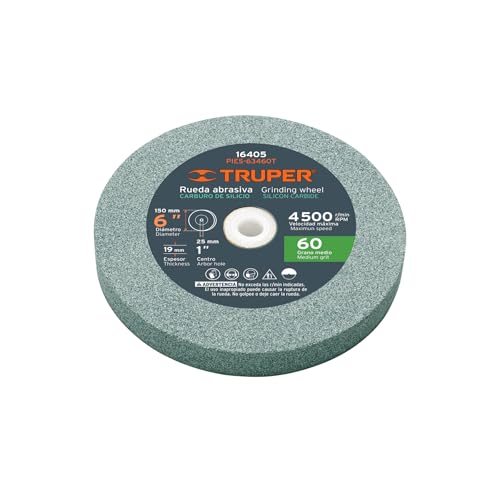
| Truper Silicon CarbideBudget Champion | Carbide masonry bits | Silicon Carbide | 60 | 6″ x 1″ | Amazon |
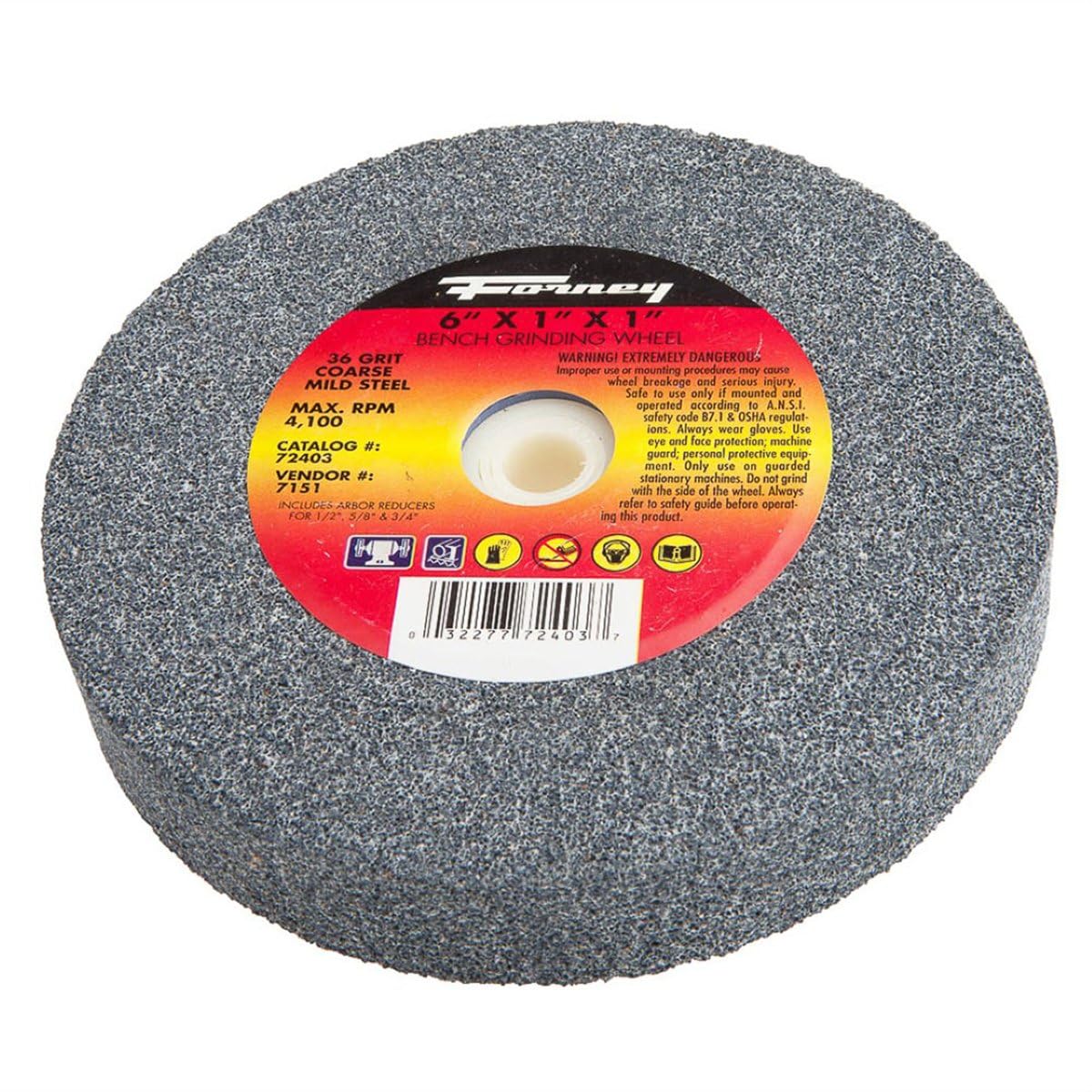
| Forney 72404Thickest Cut | Mild steel grinding | Aluminum Oxide | 60 | 6″ x 1″ | Amazon |
| AmaCupid 6″ Steel Wheel | Knives & drill bits | Aluminum Oxide | 80 | 6″ x 1/2″ | Amazon |
| Norton Gemini 6″ | Multi-metal deburring | Aluminum Oxide | 60 | 6″ x 1″ | Amazon |
| POWERTEC 8″ 120 Grit | Lathe tool sharpening | White Aluminum Oxide | 120 | 8″ x 5/8″ | Amazon |
| Norton 6″ Very Fine | Fine edges on chisels | White Aluminum Oxide | 150 | 6″ x 1″ | Amazon |
| DeWalt OEM 429633-00 | DW756 replacement | Aluminum Oxide | — | — | Amazon |
| moresuperhard CBN 8″ | HSS lathe tools | CBN | 180 | 8″ x 5/8″ | Amazon |
In‑Depth Reviews
1. AmaCupid 6″ 80 Grit Silicon Carbide Wheel
Our pick — over 4.5★ from 350+ verified ratings; the strongest balance of quality and price.
The hard, fast carbide specialist that arrives balanced when others wobble
When your carbide lathe tips go dull, this wheel restores them fast. The silicon carbide abrasive (a sharp, hard grit made for cemented carbides and non-ferrous metals) cuts those tips quickly and prevents burning the tool edge — buyers specifically report using it to sharpen the carbide teeth on a stump grinder. At 80 grit and 3/4 inch thick with a 1/2 inch arbor, it is a medium-cut stone built for grinders with a 1/2 inch spindle.
The praise centers on its quality and how well it functions on tough materials. Buyers report that out of four stones tested, this was the only one balanced — even name-brand wheels ran out of true. The trade-off is that it wears faster than a standard grinding wheel, though owners note it still delivers several sharpenings before shrinking too small to use.
The quick take: this 6-inch wheel suits anyone sharpening carbide or grinding glass, ceramics, and stone. Look elsewhere if you need a wheel for tough, high-impact steels — silicon carbide isn’t built for that.
2. Truper Silicon Carbide 6″ 60 Grit Wheel
A coarse green carbide wheel with adapters for nearly any spindle
This Truper wheel is for grinding tungsten carbide tools and non-ferrous metals like bronze, brass, and copper. It is a 60 grit coarse wheel, so it removes material aggressively, and it is rated up to 4,500 RPM. The included adapters (1/2 to 5/8 inch, 5/8 to 3/4 inch, and 3/4 to 1 inch) mean it fits a wider range of grinder spindles than most.
Buyers consistently call it good value for money, noting it works well on carbide masonry bits. The honest caveat is that functionality and durability get mixed feedback — a few owners mention the stone wears away easily and one notes the green wheel works on carbide tool bits but carries no English labeling. If you want a budget silicon carbide wheel with flexible mounting, this fits the bill.
Reach for this if: you need a coarse carbide-capable wheel and value the included spindle adapters. Think twice if you want a long-lasting stone for heavy daily grinding.
3. Forney 72404 Vitrified 6″ x 1″ 60 Grit Wheel
A full inch of aluminum oxide that shapes tools without coming apart
For general grinding and sharpening on mild steel, this Forney wheel delivers a coarse, fast cut. It uses a vitrified bond aluminum oxide stone — not for carbide. Its standout dimension is the 1-inch thickness, a full 0.25 inches thicker than the 0.75-inch wheels elsewhere in this guide, so you get more working surface before the stone wears down. The 60 grit cut is coarse and fast.
Heavy grinders report this wheel holds together — one owner who grinds a lot notes they have worn through two of them without any coming apart. The recurring concern is balance, with several buyers mentioning a wobble during use, so check the mount and flanges carefully. For a thick, durable steel-grinding stone, this is a strong mid-range pick.
Who it beats: thinner 3/4-inch steel wheels on sheer working depth. Who it doesn’t: anyone needing carbide capability or a perfectly balanced stone from the start.
4. AmaCupid 6″ 80 Grit Aluminum Oxide Wheel for Steels
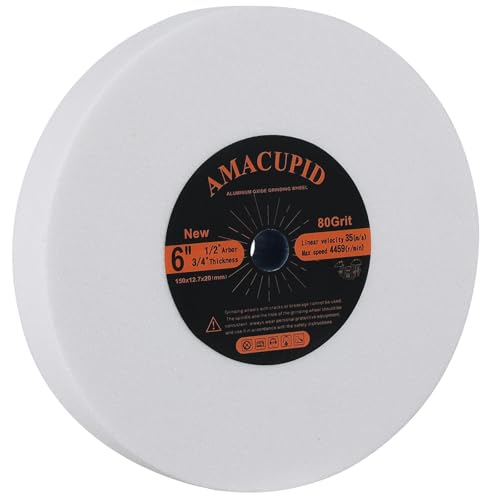
The cool-cutting white oxide wheel that sharpens knives in a restaurant rush
This AmaCupid wheel is for grinding hard and heat-sensitive steels, using white aluminum oxide grains that stay sharp and generate low heat. That cool cutting action matters — it stops tool edges from bluing and losing their temper. A restaurant owner reports it sharpens knives quickly and brings back a clean, smooth edge, saving time versus manual sharpening.
Buyers also use it for drill bits and lawnmower blades, praising the hard, fast cut. At 80 grit and 3/4 inch thick with a 1/2 inch arbor, it is the same size as the carbide version above but tuned for steel. The notable negative is balance — several customers note wobble and vibration, so mount it and test before heavy use.
The deciding factor: if you sharpen knives, drill bits, or blades daily, the cool-cutting white oxide makes this a top choice. skip it if your grinder spindle isn’t 1/2 inch.
5. Norton Gemini 6″ x 3/4″ 60 Grit Wheel
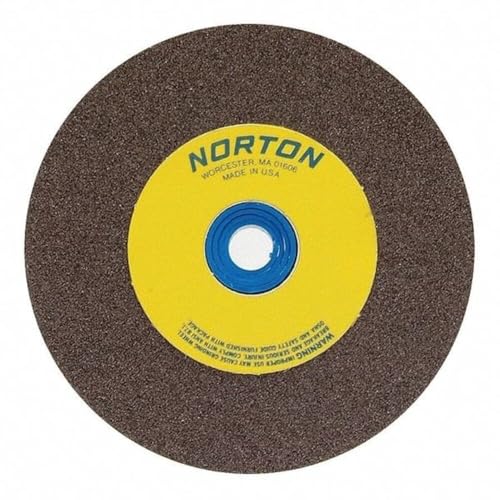
A versatile 60 grit that rescues an old grinder and cuts across metals
This Norton Gemini wheel handles a broad range of surfaces — stainless steel, hard and soft carbon steels, titanium, aluminum, brass, and iron. That makes it a true multi-metal workhorse for deburring and tool sharpening on bench and pedestal grinders running up to 4140 RPM. It is a 6-inch wheel with a 1-inch arbor and 3/4-inch thickness.
Reviewers point out it saved an old grinder that seemed headed for the trash, cutting well and running balanced. The provided arbor reducers, however, get consistent criticism — several owners say the blue plastic spacers have poor tolerances and recommend replacing them with quality metal bushings. Functionality and value get solid praise, making this a dependable mid-range choice if you already have good reducers.
Best for: a single wheel that works across many metals. The catch is the included plastic reducers — plan to swap in metal bushings for a smooth, safe run.
6. POWERTEC 8″ 120 Grit White Aluminum Oxide Wheel

A finer 120 grit on an 8-inch wheel for precise lathe tool edges
This POWERTEC wheel steps up in both size and grit — 8 inches in diameter and 120 grit, a medium-fine cut that works exceptionally well on steel for stock removal or sharpening drill bits and lathe tools. It uses premium white aluminum oxide, which cuts cool on hardened or high-speed tool steels, and has a 5/8-inch arbor with a 3,600 maximum RPM rating.
Woodturners are the core fans here, with one reporting the first wheel lasted about two and a half years of regular use on turning tools. Another buyer bought it specifically to dress sintered diamond hole saws, finding it cheaper than dedicated dressing sticks. The recurring note is balance — some report no wobble while others feel vibration, so test-mount before serious work.
The standout spec: an 8-inch, 120-grit white oxide wheel that keeps a cool, precise edge. Choose it for fine sharpening; it won’t remove metal as fast as a coarse 60 grit.
7. Norton 6″ 150 Grit Very Fine Wheel
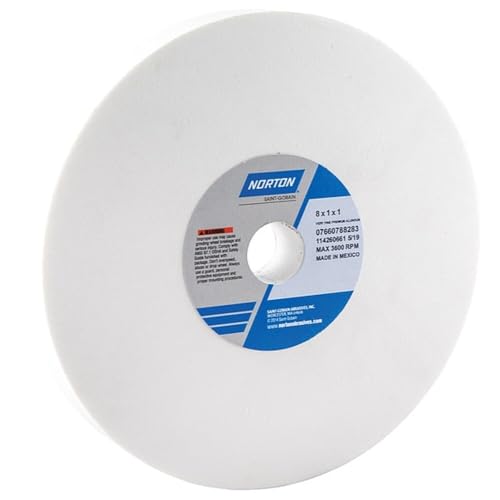
The very fine 150 grit that puts a razor edge on chisels and knives
This Norton wheel is the finishing stone of the lineup — a very fine 150 grit white aluminum oxide wheel for deburring and tool sharpening on soft carbon steels, tool steels, and super alloys. It runs on grinders up to 4140 RPM and measures 6 inches in diameter with a 3/4-inch thickness and 1-inch arbor. Its job is refining edges, not heavy stock removal.
Shoppers say this wheel makes blades razor sharp, and it is ideal for regrinding chisels, with several noting it cuts fast without heat. The dominant criticism is balance — buyers report it can make a grinder walk across the floor, and it wears down quickly. That said, many find it balanced perfectly from the start, so quality control varies.
Reach for this if: you want a fine finishing edge on chisels and knives. Look elsewhere if you need a durable daily workhorse — this one wears and can wobble.
8. DeWalt OEM 429633-00 Bench Grinder Wheel

A genuine replacement stone that wears slowly and sharpens hard
This is the factory replacement wheel for the DeWalt DW756 bench grinder, sold new and bulk packed. It is a hard wheel that owners mention wears away slowly, providing sharpening power without the stone wasting quickly. One owner even calls it much better than a Norton wheel they tried.
The wheel runs balanced well, but the arbor adapters get dinged — one buyer had to make an adapter for a 5/8-inch shaft. Compatibility is the key here: it is designed specifically for DW756 grinders, so confirm your model before ordering. For DeWalt owners wanting a genuine, hard-wearing stone, this is the no-guess replacement.
The short version: a hard, slow-wearing OEM stone for DW756 owners. It is not the choice if you need a universal fit or a faster-cutting coarse grit.
9. moresuperhard CBN 8″ 180 Grit Wheel

The 180 grit CBN wheel that never needs dressing and stays cool
This is the premium play — an 8-inch, 180 grit CBN (cubic boron nitride, a super-abrasive second only to diamond) wheel built on a 6061 aluminum core with full nickel plating for durability and corrosion resistance. It is for sharpening HSS (high-speed steel) lathe tools, chisels, and woodturning tools with low heat, preventing thermal damage to the edge. It carries a 5/8-inch arbor and an ideal operating speed of 1,000–3,600 RPM.
The headline benefit is zero maintenance — no truing or dressing required, unlike traditional stones. Customers note it runs true, spins perfectly at fast and slow speeds, and keeps chisels cool without blueing. One owner waited five years to mount it and immediately regretted the delay. Durability and fit get mixed notes, with some saying it runs a little snug, but the quality and sharpness praise is overwhelming.
Who it’s for: serious woodturners and machinists who want a cool, long-lasting, no-dressing wheel for HSS tools. Who it’s not for: casual users who won’t justify the premium cost.
Understanding the Specs
Abrasive Material
Aluminum oxide is the everyday choice for steels, and white aluminum oxide runs cooler for hard or heat-sensitive steels. Silicon carbide handles cemented carbides and non-ferrous metals like brass and copper. CBN is a super-abrasive for high-speed steel that barely wears.
Grit and Bond
Lower grit numbers mean a coarser, faster cut — 60 for shaping, 80 for medium work, 120 and up for finer edges. The vitrified bond, a ceramic-like structure, holds the grains and resists wear. A finer grit leaves a smoother finish but removes metal slower.
Arbor Size
The arbor hole must match your grinder’s spindle exactly — commonly 1/2 inch or 5/8 inch. A wheel with a 1-inch arbor needs reducers. Mounting a wheel on the wrong spindle risks vibration and even breakage.
Maximum RPM
Every wheel has a speed limit. Running a wheel faster than its rating can cause it to shatter. Match the wheel’s max RPM to your grinder’s no-load speed, and always inspect for cracks before mounting.
FAQ
What is the difference between 60 grit and 80 grit wheel?
How do I know if a wheel fits my bench grinder?
Can one wheel sharpen both carbide and steel tools?
Why does my new grinding wheel wobble?
What does a CBN wheel do that a regular wheel doesn’t?
How long does a bench grinder wheel last?
Is a 1-inch thick wheel better than a 3/4-inch?
What is the 4,500 RPM rating on a wheel mean?
Final Thoughts: The Verdict
For most buyers, the bench grinder wheels winner is the AmaCupid 80 Grit Silicon Carbide because it sharpens carbide tips fast and arrives balanced. If you want a cool-cutting steel specialist, grab the AmaCupid 80 Grit Steel Wheel. And for a no-maintenance premium upgrade, the moresuperhard CBN Wheel is the one to reach for.
How We Picked
We do not accept paid placement. Every pick is matched to a real buyer and a real use-case; we do not hands-on test units.
Sources & Methodology
Specifications: manufacturer listings and product documentation. Review insights: verified customer reviews, as of September 2026. Pricing: not shown on this page (it changes often); check the current price via the retailer link.
As an Amazon Associate, KitchPrep earns from qualifying purchases. This does not affect which products we feature.
Related Guides
