
Specs are compiled from manufacturer listings and verified buyer reviews and can change over time — please confirm the key details on the product page before buying.
Before you buy a 200 amp meter socket, check with your utility company: they may require a ring or ringless cover, and you may need a bypass so the meter can be swapped without pulling the main. The units below are the ones inspectors approve and power companies actually connect, not just the flashiest listings.
I’m Mohammad Maruf — the founder and writer behind KitchPrep. This guide is built by comparing the manufacturers’ published specifications and the patterns across verified customer reviews, so you get each pick’s real strengths and trade-offs instead of marketing spin.
Whether you’re wiring a new build or a service upgrade, the right 200 amp meter socket must match your feed type, bypass style, and local utility rules to pass inspection.
Our Picks at a Glance

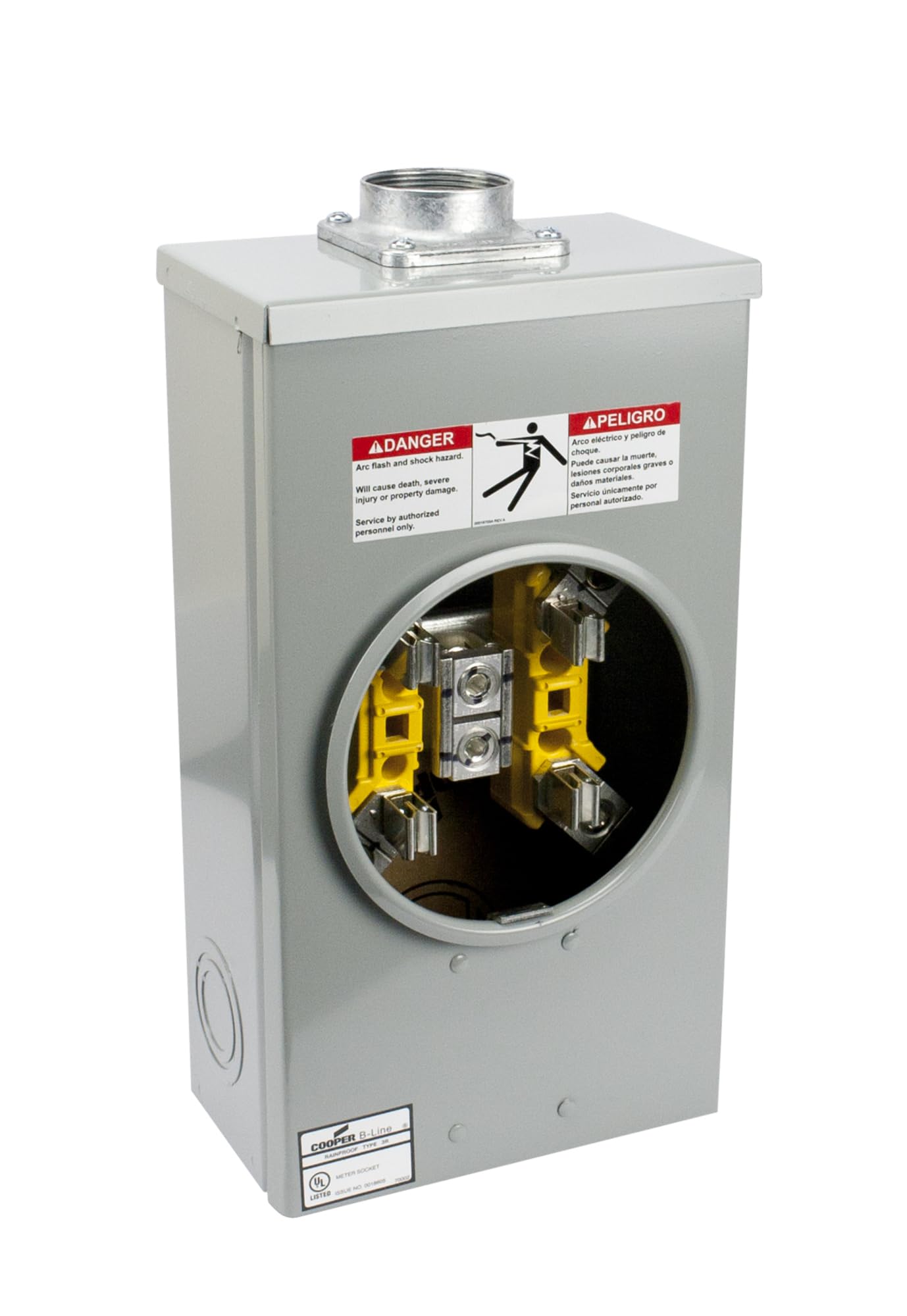
How To Choose The Best 200 Amp Meter Socket
Before you compare prices, you need to answer three questions: Does your utility use a ring or ringless socket? Is your service fed from overhead lines or underground conduit? And does your local code require a bypass so the meter can be pulled while power stays on? Each of these changes which model you can legally install.
Ring vs. Ringless Cover
A ringless cover uses a single large metal plate that the meter sits inside, with no retaining ring around the meter itself. Many utilities prefer this because it discourages tampering and makes pulling the meter a utility-only job. Ring-type sockets have a visible ring that holds the meter in place, which some homeowners prefer because it makes meter changes easier. Ask your utility which they require before ordering.
Bypass Types: Horn vs. Lever
A bypass lets the power company keep your service live while they swap the meter. A horn bypass uses small metal horns to bridge the connection, while a lever bypass uses a mechanical handle you flip to divert power around the meter. Lever bypasses are common for solar installations because you can isolate the meter for testing the inverter. Not every socket has a bypass — some are rated no-bypass — so match the socket to whether your utility plans to hot-swap your meter.
Feed Type: Overhead vs. Underground
Overhead feed sockets bring the service drop down from utility poles through the top of the box. Underground feed sockets connect to conduit that runs up from below, often with a side or bottom entry. Some sockets handle both with a choice of hubs. The Siemens SUAT317-0GF is overhead-feed only, while the Murray RH173CRF handles both, so knowing your service drop matters before you buy.
Quick Comparison
| Model | Best For | Bypass Type | Cover Style | Feed Type | Amazon |
|---|---|---|---|---|---|
| Square D UHTRS212B★ Best Overall | Straightforward replacements | Horn | Ringless | Overhead | Amazon |
| 204 MS68Top Performer | Overhead ring-type installs | None listed | Ring | Overhead | Amazon |
| Eaton UTRS213BE | Matching Eaton panels | None listed | Ringless | Overhead/Underground | Amazon |
| Siemens SUAT317-0GF | Overhead feed with no bypass | None (no bypass) | Ringless | Overhead only | Amazon |
| Square D UHTRS223A | Underground service | Horn | Ringless | Underground | Amazon |
| Murray RH173CRF | Solar and testing setups | Lever | Ringless | Overhead/Underground | Amazon |
| Siemens MM0202B1200 | All-in-one meter plus main | None listed | Ring | Overhead/Underground | Amazon |
In-Depth Reviews
1. Square D UHTRS212B 200A Ringless Meter Socket
Our pick — over 4.5★ from 300+ verified ratings; the strongest balance of quality and price.
This 4.6-star rated ringless socket with a horn bypass is the top pick for straightforward overhead replacements.
This Square D socket is the one owners describe as the fix for a meter that was literally falling out of the old box. The horn bypass means the utility can swap your meter without killing power to the house, and the aluminum build gives it the rigidity a 200 amp connection deserves.
What wins people over is the combination of smooth function and a price that feels like a steal for a UL Listed part. Buyers report their electric company came and hooked it up within hours of inspection — one owner put it as “plug ‘n play.” One even adapted it to an RV pedestal to track power usage there.
It’s a ringless overhead-feed box (5.6″L x 11.7″W), so it’s not built for underground conduit service. If your utility demands a ring-style meter base, this unit won’t satisfy that requirement — check that before you order.
What owners love
- Horn bypass keeps service live during meter swaps.
- Aluminum body survives weather and handling.
- UL Listed, so inspectors and utilities sign off.
Know before buying
- Ringless design isn’t accepted by every utility.
- Overhead feed only — not for underground service.
Your best move: if you need a ringless overhead socket with a horn bypass for a standard replacement, this is the one to order.
The one catch: confirm your utility allows ringless before you commit.
2. 204 MS68 200A, 1P, 4 Jaw, Meter Socket
The ring-type overhead socket with a NEMA 3R rating that handles 600 volts AC.
This is the socket to reach for when your utility requires an old-school ring-style meter base. It’s rated for 600 volts AC, uses a single-phase overhead feed, and carries a NEMA 3R rating — which means it’s built to sit outdoors and shrug off rain and ice.
The honest complaint that surfaces is value: owners mention the price runs high, driven purely by supply and demand when no local electrical supply house has stock. The other recurring note is that this meter box does not have an internal ground bar, so you’ll need to handle grounding separately to meet US code.
Against the Square D above, this one is the ring-type counterpart — same 4-jaw job, but with a retaining ring you can see. Weigh that against your utility’s preference before you pick between the two.
What you get: a functional NEMA 3R outdoor-rated 200 amp socket for overhead ring-style installs, when local supply is dried up.
Plan around: the missing internal ground bar — budget for a separate grounding solution.
3. Eaton Cutler-Hammer 200A Ringless Meter Socket
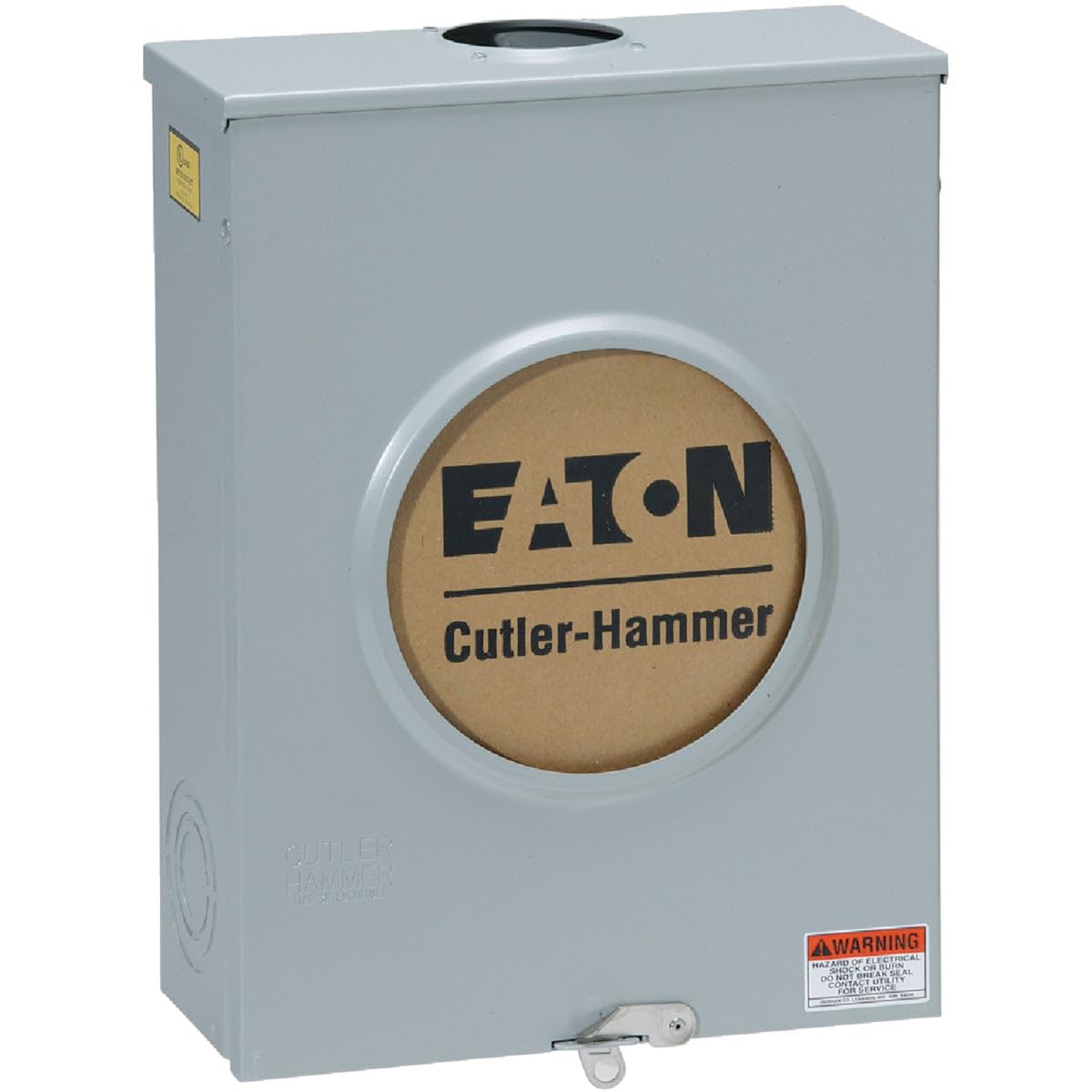
The Eaton that lines up its knockouts perfectly with an Eaton panel for a clean install.
This ringless unit earns its rep from a detail that saves real time: “Knockouts lineup perfectly with Eaton electrical panel knockout,” as customers note. When the knockouts in the socket and the panel align, you skip the usual struggle of punching out mismatched holes.
It’s a flexible pick because it handles both overhead and underground feed, and at 16 ounces it’s noticeably lighter than the beefier steel boxes — easy to heft into place on a wall. Utility companies have connected it without issue on new builds.
The trade-off is packaging: a few units arrive with cockeyed corners or screws that weren’t seated right on the meter prongs. It’s cosmetic, not structural, but inspect yours when it lands.
The smart buy: if you’re pairing it with an Eaton outdoor panel, the knockout alignment alone is worth it.
Check on arrival: give the corners and screws a once-over for shipping dings.
4. Siemens SUAT317-0GF 200-Amp 4 Jaw Ringless Meter Socket

This 4.7-star rated Siemens offers four ground/neutral lugs and 350 kcmil rated lugs for heavy conductors.
This one is rated 200 amp continuous and 250 amp maximum, with no bypass at all. That makes it a clean, simple choice for installations where the utility handles meter swaps with a planned outage — you won’t pay for a bypass you don’t need.
The 350 kcmil lugs and four ground/neutral positions provide ample space for landing large service conductors. It’s an overhead-feed-only surface-mount box, and it uses RX type hubs for the service entrance.
Against the other overhead picks above, the trade-off is clear: you lose the horn bypass but gain the bigger lugs and a spare ground/neutral position. Just note that a rare unit has shipped with a lug missing — check the terminals right after unboxing.
Built for big wire
- 350 kcmil max lugs handle heavy service conductors.
- Four ground/neutral lugs for flexible termination.
- 250 amp maximum rating gives headroom.
Fit check
- Overhead feed only — no underground entry.
- No bypass means power must be cut for meter work.
Grab this for: an overhead service where your utility doesn’t need a hot meter swap and you’re running large gauge wire.
Look elsewhere if: you need a bypass or underground feed.
5. Square D UHTRS223A 200A Ringless Underground Meter Socket

The underground-service sibling of our top pick, with the same horn bypass and Square D build quality.
This is the socket you want when your service feeds come up from underground conduit rather than dropping from overhead lines. It’s ringless, carries the horn bypass, and lets the electric company connect the main line without drama — reviewers point out “hooked the main line into it with no problem.”
You get real working room inside: one owner paired it with a 100 amp service and 1 1/4″ conduit and called it “huge room to work.” That extra space makes both the line side and the load side easier to land, and it leaves headroom if you later bump to a heavier service.
Compared to the Square D UHTRS212B above, the difference is entry point — this one is purpose-built for side and bottom underground entry, while the 212B is an overhead box. Measure your conduit approach before you choose.
Why it earns its spot: the horn bypass plus underground entry plus the spacious interior is a rare combination.
Set up properly: you’ll want the right-sized hub for a top entry and an offset for the bottom feed.
6. Murray RH173CRF 200-Amp 5 Jaw Lever Bypass Meter Socket

The lever-bypass socket that solar owners love for isolating the meter to test the inverter.
This is the one for anyone with a solar system. The 100% rated lever bypass with clamping action lets you flip a handle and cut the meter out of the circuit — one solar owner calls it “very nice to have a lever bypass in order to test the AC side of the solar inverter.” That’s a feature no horn-bypass socket can match.
It’s 200 amp continuous duty rated, uses 350 kcmil max rated lugs, and accepts both overhead and underground feed. A 7/8″ barrel lock provision lets the utility secure the socket against tampering.
Against the horn-bypass units above, this is the premium route — you’re paying for the mechanical lever and its clamping action. It’s also a 5-jaw socket, not 4-jaw, so confirm your meter form matches before you order.
Why solar owners buy it
- Lever bypass isolates the meter without pulling it.
- Handles both overhead and underground feed.
- Barrel lock provision for utility security.
Know first
- 5-jaw design — verify your meter fits.
- Premium price for the mechanical lever.
Choose this for: solar production metering or any setup where you need to isolate the meter while the system stays live.
skip it if: a basic horn bypass is all your utility requires.
7. Siemens MM0202B1200 200-Amp Meter Main Combination

The all-in-one meter plus 200A main breaker that fits tight spaces and runs 16 circuits.
This is a different animal — a meter main combination that bundles the socket, a 200A main breaker, and 16 circuits into one enclosure (18″L x 6.5″W x 17.5″H). For a small home, shop, or accessory structure, that can replace a separate meter socket plus service panel with a single compact box. It’s UL Listed, single-phase, and rated for outdoor use.
It’s the choice buyers reached for after failed attempts with separate pieces, and one owner paired it with a 27kW Generac and upgraded the guts to copper. The interior separates utility and homeowner sides, with an accessible disconnect for customers or firefighters.
The caution comes from the utility side: it’s a ring-style base, and one buyer found their power company refused it because they required ringless. Check with your utility before ordering this one — the same box that’s perfect for one area is flat-out rejected in another.
The space saver: meter socket, main breaker, and 16 circuits in one 26.6-pound box — ideal where wall space is tight.
Verify first: this is ring-type, so confirm your utility accepts ring meter bases.
Understanding the Specs
Jaw Count: 4 vs. 5
Jaws are the metal clips that grip the meter’s prongs to make electrical contact. A 4-jaw socket handles the two hot and two neutral connections standard for single-phase home service. A 5-jaw socket adds a fifth position, which some meters and certain utility configurations require. If your utility supplies a 5-jaw meter, a 4-jaw socket won’t accept it — match the jaw count before you order.
Bypass Types: Horn vs. Lever
A bypass keeps your service live while the meter is removed. A horn bypass uses metal horns that the utility swings into place to bridge the connection. A lever bypass is a mechanical handle you flip to route power around the meter — handy for solar testing because you can isolate the meter without pulling it. Some sockets have no bypass at all, which is fine if your utility always schedules an outage for meter work.
FAQ
What is the difference between a ring and ringless meter socket?
Does a 200 amp meter socket include a main breaker?
Can I install a 200 amp meter socket myself?
What is a horn bypass on a meter socket?
What does NEMA 3R rating mean for a meter socket?
Will a 4-jaw meter socket work with my utility’s meter?
What is the difference between overhead and underground feed?
Why do some meter sockets cost much more than others?
Final Thoughts: The Verdict
For most people, the 200 amp meter socket winner is the Square D UHTRS212B because it pairs a horn bypass with a UL Listed aluminum build at a price buyers keep calling a steal. If you’re feeding from underground conduit, grab the Square D UHTRS223A for the same quality with the right entry. And for solar setups where you need to isolate the meter, the Murray RH173CRF lever bypass is the one to reach for.
How We Picked
We do not accept paid placement. Every pick is matched to a real buyer and a real use-case; we do not hands-on test units.
Sources & Methodology
Specifications: manufacturer listings and product documentation. Review insights: verified customer reviews, as of September 2026. Pricing: not shown on this page (it changes often); check the current price via the retailer link.
As an Amazon Associate, KitchPrep earns from qualifying purchases. This does not affect which products we feature.
Related Guides
