
Specs are compiled from manufacturer listings and verified buyer reviews and can change over time — please confirm the key details on the product page before buying.
Whether you are trimming baseboards, framing a picture, or building a deck, the whole job lives or dies on one thing: whether the blade lands exactly where your pencil line says it should. A miter saw that drifts on the angle means gaps in corners, wasted lumber, and the slow frustration of recutting every piece. This guide breaks down the corded and cordless options that actually hold their settings, sorted by what each one does best.
I’m Mohammad Maruf — the founder and writer behind KitchPrep. This guide is built by comparing the manufacturers’ published specifications and the patterns across verified customer reviews, so you get each pick’s real strengths and trade-offs instead of marketing spin.
From compact cordless models for job-site portability to heavy 12-inch sliders for crown molding, these are the miter saws that earn their spot on your bench.
Our Picks at a Glance

How To Choose The Best Miter Saws
Match the saw to the work you do most. A small cordless unit handles trim and 2x4s, while a 12-inch dual-bevel slider (a saw that tilts both left and right for angled cuts) tackles crown molding and thick hardwoods. Your choice depends on your space, your power source, and the width of the boards you cut most.
Blade Size Sets Your Cutting Capacity
Larger blades cut wider boards in one pass. A 7-1/4-inch blade suits baseboards and framing lumber, a 10-inch blade fits most DIY trim work, and a 12-inch blade gives you the maximum cutting width for thick stock and crown molding. Narrower blades also make the saw lighter and easier to move around.
Sliding Arms vs. Fixed Arms
A sliding miter saw pulls the blade forward and back along rails, letting you cut wider boards than a fixed-arm saw with the same blade size. That extra travel is what you need for crown molding nested against the fence or for wide baseboards. Fixed-arm saws are lighter and take up less bench space, but cap out on material width.
Single Bevel vs. Double Bevel
Bevel is the tilt of the blade left or right for angled cuts. A single-bevel saw tilts one direction only, so you flip the workpiece for compound cuts on the other side. A dual-bevel saw tilts both ways without flipping the wood — faster for crown molding and repeated angled work, but heavier and pricier.
Quick Comparison
| Model | Best For | Blade Size | Power / Type | Cutting Angle | Weight | Amazon |
|---|---|---|---|---|---|---|
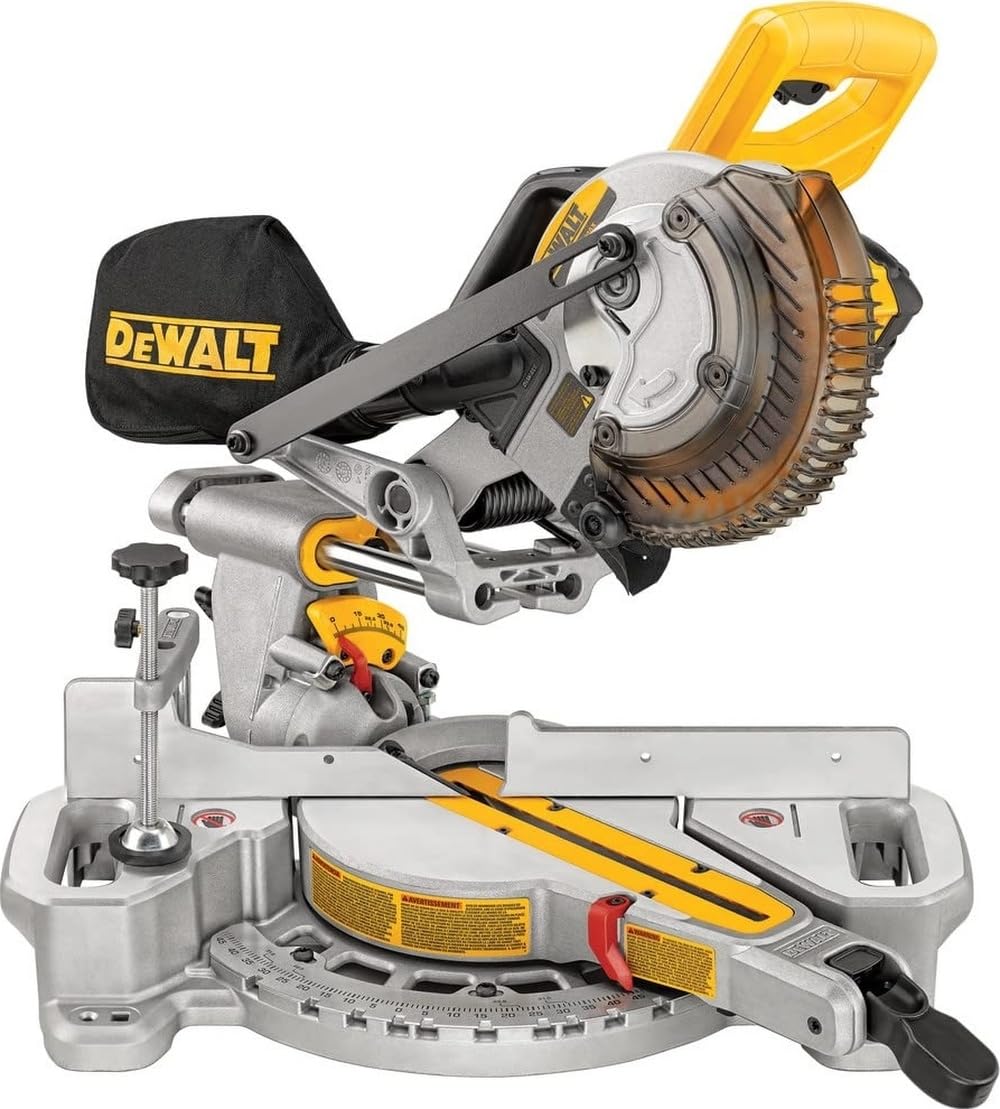
| DEWALT DCS361M1★ Best Overall | Job-site portability | 7.25″ | 20V Max Cordless | 48° | 31.6 lbs | Amazon |
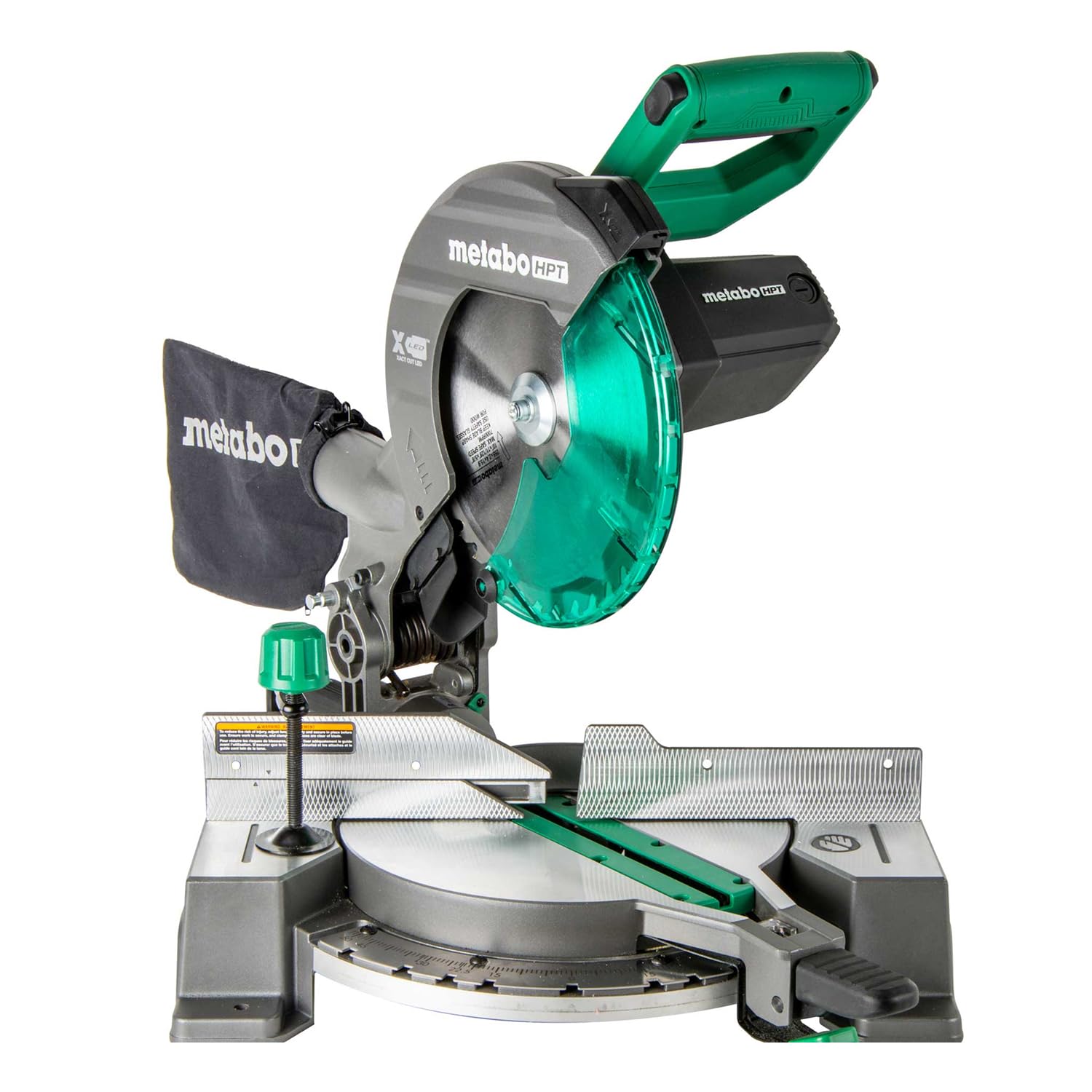
| Metabo HPT C10FCG2Best Value | DIY value & precision | 10″ | 15-Amp Corded | 52° | 24.2 lbs | Amazon |
| Ryobi P553Compact Pick | Compact cordless jobs | 7.25″ | 18V Cordless | 45° | 19 lbs | Amazon |
| Genesis GMS1015LC | Budget home projects | 10″ | 15-Amp Corded | 45° | 16 oz | Amazon |
| Evolution R185SMS+ | Multi-material cutting | 7-1/4″ | 10-Amp Corded | 45° | — | Amazon |
| CRAFTSMAN CMCS714M1 | Cordless sliding cuts | 7-1/4″ | 20V Max Cordless | 90° | 21.8 lbs | Amazon |
| Delta S26-263L | Sliding cuts on a budget | 10″ | 15-Amp Corded | 45° | 29-1/2 lbs | Amazon |
| DEWALT DWS716 | Dual-bevel precision | 12″ | 15-Amp Corded | 50° | 48.3 lbs | Amazon |
| Makita LS1040 | Accurate trim work | 10″ | 15-Amp Corded | 90° | 25 lbs | Amazon |
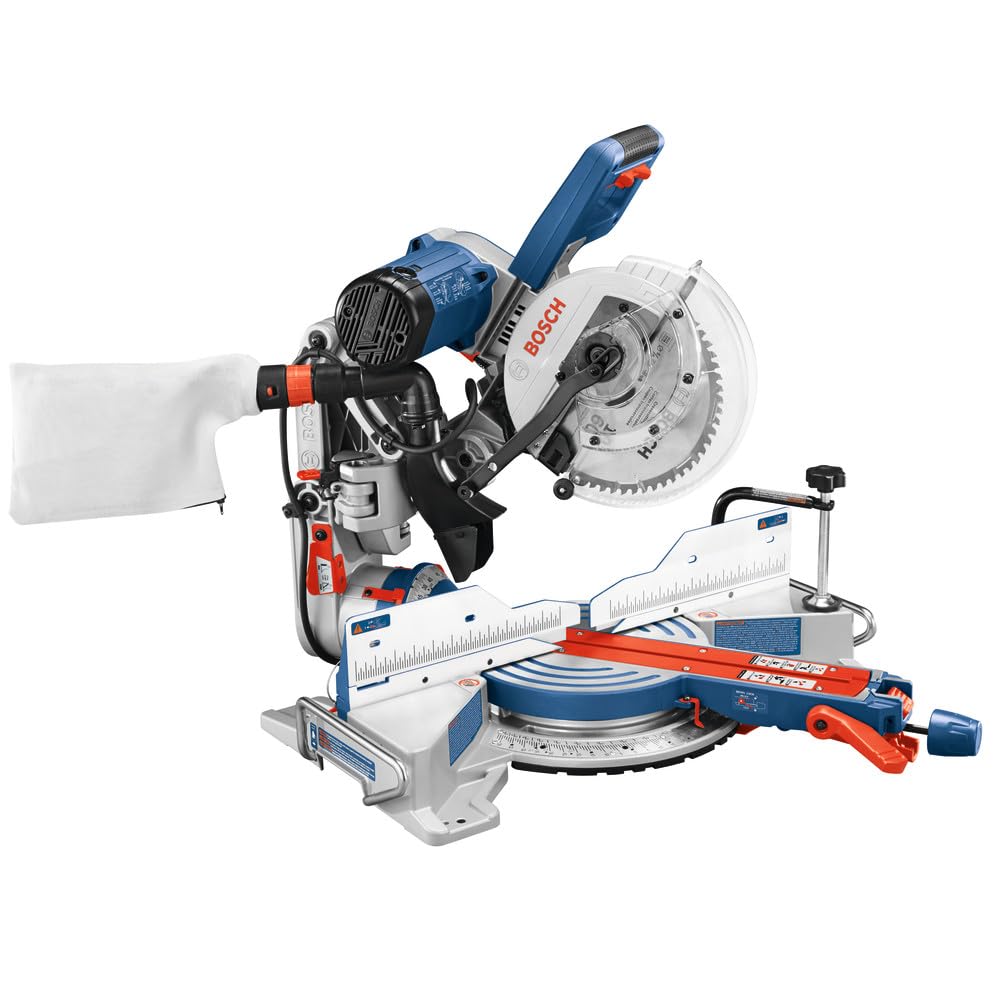
| BOSCH CM10GD | Professional precision | 10″ | 15-Amp Corded | 90° | 64 lbs | Amazon |
| Makita LS1019L | Pro-grade crown molding | 10″ | 15-Amp Corded | 90° | 57.9 lbs | Amazon |
In‑Depth Reviews
1. DEWALT 20V MAX 7-1/4-Inch Miter Saw (DCS361M1)
Our pick — over 4.5★ from 800+ verified ratings; the strongest balance of quality and price.
The cordless that follows you to the parking lot, the ladder, or anywhere without an outlet.
Forget hunting for a power strip. This DEWALT runs on the 20V Max battery platform, and with the included DCB204 pack it averages 183 cuts of 2×4 pine or 275 cuts of 3-1/4-inch baseboard on a single charge. For most trim jobs, that means you start and finish without swapping batteries.
The cutting guidance is what wins people over. Instead of a laser that needs calibrating, it uses an integrated cut line cross-cut positioning system that casts a shadow line right where the blade will land. Buyers call the blade’s battery durability “amazing” and report it handles fine hardwoods with the stock carbide blade. The adjustable stainless steel miter detent plate includes 11 positive stops, so common angles click into place fast.
It cuts compound angles to 48 degrees and bevels left, and it swallows 3-5/8-inch nested crown plus 3-1/2-inch base vertically. All that fits in a 31.6-lb package with a cam lock miter handle. The one honest gripe in the reviews is the clamp feeling a bit flimsy, though owners say it still works fine — this is a saw for trim, light framing, and project work, not a daily production tool.
Why it wins
- Real portability — no cord, no outlet, easy to carry
- Shadow line system is accurate without laser calibration
- Hundreds of cuts per battery charge
The trade-offs
- Some owners find the material clamp flimsy
- 7-1/4″ blade limits wide-board cuts
Reach for it when: you need a saw that leaves the workshop and goes to the work.
Look elsewhere if: you mostly cut wide stock or thick hardwoods that a 7-1/4″ blade can’t span.
2. Metabo HPT 10-Inch Single Bevel Compound Miter Saw (C10FCG2)
A 10-inch workhorse that balances price, portability, and clean trim cuts for the DIY crowd.
This is the saw DIYers keep coming back to, and the reason is simple: it is genuinely light and genuinely accurate. At 24.2 pounds, it is heavier than the 19-pound ONEAND cordless above, but that extra weight buys a bigger 10-inch blade and a corded 15-Amp motor spinning up to 5,000 RPM. It chews through 2x4s, 2x6s, and trim without bogging down.
Quality is the thing owners praise most — over 120 of them single it out. The saw arrives calibrated from the start, with a sharp 40T TCT blade and a shadow line that buyers report beats Makita’s laser on visibility. The miter table swings 0-52 degrees left and right, while the bevel tilts 0-45 degrees left, with adjustable bevel stops for repeatable compound cuts.
Owners mention it “works for what I needed for” on small boards 6 inches or less, and call it “great for first timers” with a stable base and a helpful LED light. The recurring caveat: the dust bag is mediocre, and some owners hit a stubborn arbor nut when swapping blades. It also uses click-in detents rather than a custom angle lock, so fully free-form angles need a little more fuss.
Solid all-rounder: the smart pick for a first-time owner who wants a real 10-inch saw without the premium price tag.
Who it’s not for: anyone who needs dual-bevel tilt or a perfect dust collection system.
3. ONEAND / RYOBI 18V Cordless 7-1/4-Inch Compound Miter Saw
The lightest, most space-friendly option here — built for small shops and quick trim jobs.
If bench space is precious, this is the saw. It weighs just 19 pounds, which makes it the featherweight of this lineup, and it runs off the standard RYOBI 18V ONE+ battery system. You already own those batteries, you can skip the charger and just buy the bare tool. No outlet required, so it moves easily from room to room.
Buyers love it for picture frames, molding, and small renovation cuts, with several noting it handles 2x4s without issue when you flip the material for a double-sided cut. The miter angles go to 45 degrees, and the compound head tilts for bevel work. Owners also point out it hooks straight to a shop vac — as one puts it, Ryobi “should provide hose adapters as I hook this up directly to my shop vac.”
The quality is honestly mixed in the reviews — some call it improved over the older version, while others find the stock blade rough and want a laser or flashlight for line marking. For crafters and small-space users, the portability wins; for anyone needing precision wide cuts, this isn’t the one.
Best for
- Tiny workshops and craft spaces
- Battery compatibility with the RYOBI ONE+ system
- Easy transport with no cord to manage
Keep in mind
- Quality and cut performance get mixed reviews
- No laser or shadow line for guidance
- Stock blade is rough on hardwoods
Grab it if: you need a grab-and-go saw for small trim and already own RYOBI batteries.
Skip it for: precision work or heavy daily cutting.
4. Genesis GMS1015LC 15-Amp 10-Inch Compound Miter Saw

The budget 10-incher that brings a laser guide, 9 miter stops, and surprising cut quality.
Value for money is what wins people over here — over 60 owners call it out as the saw’s best trait. You get a 10-inch carbide blade, an integrated laser guide for alignment, and 9 positive miter stops at the angles you use most, all wrapped in a die-cast aluminum base. For a home-project saw, that’s a lot of accuracy for the money.
A 15-Amp motor spins the blade, and the electric brake stops it in seconds after each cut. The arbor lock makes blade changes quick. Customers note it “cuts fantastic” on trim and handles 2x4s with ease, with a clean cut and a genuinely effective laser line. The included 60T carbide blade, hold-down clamp, dust bag, two extension wings, and two AAA batteries for the laser mean you’re ready to cut from the start.
Max cutting capacity at 45°x45° is 1-3/8″ high by 3-5/16″ wide. The honest downsides: it’s very loud (ear protection is a must), the dust bag is weak, and the supports struggle with lumber over 8 feet long. One owner also warns it’s not for metal cutting, since the heat can melt plastic parts. For woodworking, baseboards, and picture frames, it’s a reliable budget pick.
Smart budget buy: a real 10-inch saw with laser guidance that leaves money in your pocket for a good blade upgrade.
The catch: expect noise and weak dust collection, and keep it on wood.
5. Evolution Power Tools R185SMS+ Sliding Miter Saw

The one saw that crosses the wood-metal-plastic line without changing blades.
Most miter saws are wood-only. This Evolution is the exception — it’s a dry metal cutting chop saw that slices through steel pipe, angle iron, and metal roofing with minimal heat and no sparks, leaving an instantly workable finish. For a DIYer who welds or does metal projects, that single versatility makes it the most useful saw on this list.
Quality is the top praise, with over 60 owners highlighting it. The 15-amp motor uses a high-torque gearbox to reduce load and improve steel cutting, and the included TCT (tungsten carbide tipped) blade handles mild steel, wood, and plastic. Reviewers point out “super smooth ball bearing slides” and a smooth-starting motor, plus a lightweight frame that’s easy to move around. The sliding arm gives you wider cuts than a fixed 7-1/4″ saw.
It offers a 45-degree bevel and 50-degree miter, and the cold-cut design means long blade life — averages 1000 cuts in 2×2-inch mild steel. The catch, as some owners note: parts can feel a little cheap, and occasional units ship missing the dust bag. But the cutting performance and multi-material ability keep it a favorite for small workshops and rolling carts.
The strength
- Cuts wood, plastic, and dry metal with one blade
- Smooth ball-bearing sliding mechanism
- Long blade life on steel — about 1000 cuts in 2×2″ mild steel
The weakness
- Build quality can feel a bit cheap
- Some units arrive without the dust bag
Choose this if: your projects mix wood and metal and you want one saw for both.
Pass if: you only cut wood and want a more premium-feeling build.
6. CRAFTSMAN V20 Cordless Sliding Miter Saw (CMCS714M1)

Cordless freedom plus a sliding arm for wider cuts, all in a package that respects your back.
This is the cordless saw that doesn’t ask you to choose between portability and cutting width. The sliding arm gives an 8-inch cross cut at 90 degrees and a 5-1/2-inch cross cut at 45 degrees — real capacity for baseboards and trim, delivered without a cord. And it runs on the V20 battery platform with a 4.0Ah pack and fast charger included.
Performance is the thing owners highlight most — over 65 of them mention it. The 3,800 RPM motor cuts through 2x4s, hardwoods, baseboard, and trim with ease, and the battery is the star: up to 585 cuts in 3-1/4-inch MDF baseboard on a single charge. Shoppers say the battery “runs forever” and they “can get through 52 two-by-fours easily.” The LED cut line positioning system casts a shadow line that one owner calls “a perfect cut line indicator.”
It handles 3-5/8-inch nested crowns and 3-1/2-inch baseboards vertically, with 9 casted miter detent stops for quick angle changes. The 21.8-lb frame has side carry handles for easy transport. The honest limitations: this is a DIY darling, not a daily contractor tool. Owners note it struggles on wood 3 inches or thicker — the blade motor hits the wood with no height adjustment — and the clamp can block 45-degree cuts until you move it.
DIY balance: cordless sliding power with battery life that genuinely lasts all day, so you can keep cutting without hunting for an outlet.
Not for pros: skip it if you regularly cut thick stock or run a saw all day, every day.
7. Delta 10-Inch Compound Sliding Miter Saw (S26-263L)

A budget sliding saw with serious depth for wide boards, from a trusted tool brand.
What sets this Delta apart at its price point is the sliding arm plus a deep throat. It cuts nominal 2×12 lumber at full bevel — a spec that usually demands a bigger, pricier saw. Quality is the top praise, with over 55 owners calling it out, and the 5,500 RPM, 15-Amp motor cuts through pine easily.
The saw is genuinely lightweight at 29-1/2 lbs, and the cord exits out the rear of the slide bar to stay out of the blade’s way. A spindle lock holds the arbor securely while you loosen the blade nut for quick changes. Owners find it “accurate from the start” with a smooth slider and an effective clamp for holding workpieces. The 10-inch blade takes a 5/8-inch arbor.
Bevels go left from 0-45 degrees. The honest caveats: the laser is weak and really only works indoors, the dust bag is ineffective (plan on a shop vac), and some buyers report the build feels sturdy but one had a plastic throat plate break on first use. A few note it’s louder than expected. For a weekend warrior who needs the cutting depth, the value is there.
The upside
- Cuts nominal 2×12 lumber at full bevel
- Lightweight for a slider at 29-1/2 lbs
- Smooth slider with accurate out-of-box cuts
The downside
- Laser is weak — indoor use only
- Dust bag barely works
- Loud enough to need ear protection
Get it for: wide-board cuts and big bevels without a big budget.
Think twice if: you want a reliable laser or premium dust collection.
8. DEWALT 12-Inch Double-Bevel Compound Miter Saw (DWS716)

The 12-inch dual-bevel that flips left and right without flipping your workpiece.
For crown molding and deep baseboards, this is the saw to beat. The 12-inch blade plus tall sliding fences support crown molding up to 6-5/8-inch nested and base molding up to 6-1/2-inch vertically against the fence. A 15-Amp motor drives it through a whole room of baseboards without complaint — owners mention exactly that.
The stainless steel miter detent plate has 14 positive stops for repeatable accuracy, and the cam lock miter handle with detent override delivers quick, accurate angles. The double-bevel design tilts 0-48 degrees to both left and right, with positive stops at 0, 22.5, 33.9, and 45 degrees. Miter capacity runs 0-50 degrees left and right. Buyers chose it over a single-bevel model specifically for the “superior metal parts, finish, and angle stops.”
It’s a heavy, substantial tool at 48.3 pounds, so it’s bench-mounted rather than carried around. Owners note it needs about an hour of tuning and alignment from the start, and while dust collection is better than older saws, some dust still escapes. The included carbide-tipped blade is sharp and ready, and the vertical clamp keeps workpieces secure. This is the premium pick for serious trim work.
Pro-grade power: a 12-inch dual-bevel that takes on crown molding and thick baseboards with authority.
Plan for: bench space, setup time, and a shop vac hooked up for dust.
9. Makita LS1040 10″ Compound Miter Saw

The lightweight 10-inch trim specialist that stays accurate for years.
Makita’s reputation rides on tools like this. The LS1040 is a 10-inch compound miter saw (a saw that cuts angled crosscuts) built on a machined aluminum base with dual slide rails, and it weighs about 25 pounds — light enough that it “makes corners like a dream” for a user doing artwork framing. The 15-Amp direct-drive motor spins 4,600 RPM for clean, smooth cuts in trim and moldings.
Owners call it super accurate and say it handles 90-95% of typical home trim work. The miter table cuts 0-45° left and 0-52° right, with 9 positive stops at 15°, 22.5°, 30°, 45° (left or right) and 0° for 90-degree cuts. Bevel cuts go up to 45° to the left. The included 40T micro-polished blade cuts clean and smooth from the start, and the vertical vise holds workpieces firmly.
The design is a single-pivot arm, not a slider, so wide boards are a no-go. Owners note it’s noisy — it “starts with a bang” — and the blade change bolt can be very hard to remove, needing a rubber mallet on the wrench. But the build is all-metal and durable, and the included 45-degree square helps with setup. For trim work and portability, this is a proven classic.
The strengths
- Lightweight at ~25 lbs for easy transport
- Accurate, clean cuts ideal for trim and framing
- All-metal build that lasts
The trade-offs
- No sliding arm — limited on wide boards
- Starts loudly on power-up
- Blade change bolt can be stubborn
Pick it for: precise trim work where portability and accuracy matter more than raw width.
Skip it for: wide crown molding or big dimensional lumber.
10. BOSCH 15.0 Amp CM10GD 10-Inch Dual-Bevel Glide Miter Saw
The articulated-arm glide saw that shrinks your footprint and smooths every cut.
For professional-grade accuracy in a compact frame, the Bosch CM10GD is a standout. Its Axial-Glide System uses articulated hinge arms instead of rails, reducing the saw’s front-to-back footprint by up to 10 inches compared to slide saws with similar capacity. You get the width of a slider without needing a full bench of depth. Quality is the top praise — over 100 owners highlight it.
A powerful 15-Amp motor delivers 4,800 no-load RPM, and the cutting capacity is wide: 12-inch horizontal, 5-1/2-inch vertical baseboard against the fence, and 6-inch crown nested at 45 degrees spring. The bevel lock lever and range selector sit up front, so you never reach behind the saw to change tilt. Owners call the operation “smooth like butter” and praise the “laser-accurate cuts” for flooring and cabinetry work.
Bevel capacity is a wide 47° left and 47° right with detents at 0, 33.9, and 45 degrees. Miter detents hit 0, 15, 31.6, 22.5, 45, and 60 degrees, with a push-button override for fine adjustments. Tall sliding 4-1/4-inch fences ease bevel setups. The honest caveats: at 64 pounds it’s heavy, there’s no laser, the included dust bag is mediocre (a shop vac is essential), and some wish for a soft start since it jumps on startup.
Why pros want it
- Articulated glide arms save up to 10″ of bench depth
- All adjustments are up front and easy
- Buttery-smooth operation with precise detents
What to know
- Heavy at 64 lbs — not a carry-around saw
- No laser; needs a shop vac for dust
Buy it for: tight workshop spaces and pro-level precision on wood flooring and cabinetry.
Reconsider if: you want a laser guide or a lighter saw you’ll haul around.
11. Makita LS1019L 10″ Dual-Bevel Sliding Compound Miter Saw with Laser

A 10-inch slider that cuts like a 12-inch for crown molding, at a fraction of the Kapex price.
This is the saw that dedicated crown molding work dreams about. The 10-inch blade delivers the crown molding cutting capacity of a 12-inch saw — 6-5/8-inch nested — while keeping a smaller, lighter frame at 57.9 lbs. The linear ball bearing system is engineered for “dead-on” accurate cuts, and the innovative direct drive gearbox with a guard system increases vertical cutting capacity to 5-1/4 inches.
Performance is the thing owners praise most, with over 100 highlighting it. The unique 2-steel rail sliding system offers single slide-glide operation, reducing the footprint and allowing the saw to run flush against a wall. A laser line guides cuts, and owners call it “dead-on accurate for precision cutting.” It miter cuts to 60 degrees and bevels to 48 degrees. One long-time owner who compared it against a Festool Kapex reported the Makita delivers “near Kapex quality at 1/3 price” with accuracy and smooth operation.
The 15-Amp motor has a soft start — it runs quiet and smooth, unlike some saws that bang on startup. Dust collection is excellent, rated near Kapex-level by owners, though the rear dust port is awkward. The honest caveats: some units arrive misaligned (Makita replaces them), the laser needs occasional checks, and it’s heavy for portable use despite being light for its class. A 60T micro-polished blade, bag, hex wrench, triangular rule, and vertical vise come included.
The pro’s choice: big crown molding capacity, laser guidance, and near-Kapex dust collection at a lower price.
Check on arrival: verify the rail alignment early — a few units ship out of spec, and Makita service handles replacements.
Understanding the Specs
Bevel and Miter Angles
Miter is the horizontal swing of the blade for angled cuts across a board’s width. Bevel is the vertical tilt of the blade for angled cuts through a board’s thickness. Compound cuts use both at once — think crown molding. A dual-bevel saw tilts both left and right, saving you from flipping the wood.
Positive Stops and Detents
These are the click-in positions at common angles like 15°, 22.5°, 30°, and 45°. A detent plate with positive stops locks the saw firmly at those angles for fast, repeatable setup. More stops mean quicker changes between the angles you use most.
Shadow Line vs. Laser Guide
A laser guide projects a red line showing where the blade will cut. A shadow line (or cut line positioning system) casts the blade’s own shadow onto the work via an integrated light. Both eliminate guesswork, but shadow lines never need calibration drift the way lasers sometimes do.
Sliding Mechanism and Capacity
A sliding miter saw pulls the blade forward along rails or arms to cut wider boards than a fixed-arm design. The trade-off is weight, depth, and cost. The key number is cross-cut capacity at 90 degrees — the widest board you can cut in one pass.
FAQ
What is the difference between a miter saw and a compound miter saw?
Is a sliding miter saw worth the extra cost?
Will a 7-1/4-inch miter saw handle baseboards?
What does a dual-bevel miter saw do that a single bevel cannot?
How long do cordless miter saw batteries last?
What is the difference between a shadow line and a laser guide?
Can I cut metal with a miter saw?
Why is a miter saw so loud?
How do positive stops and detents help accuracy?
What blade size do I need for crown molding?
Final Thoughts: The Verdict
For most people, the miter saws winner is the DEWALT DCS361M1 because it pairs real cordless freedom with the accuracy of a shadow line system, all in a portable 31.6-lb frame. If you want the best corded value for trim work, grab the Metabo HPT C10FCG2 — a 10-inch, 15-Amp saw that owners praise for quality at a budget-friendly price. And for professional-grade crown molding and precise compound cuts, the Makita LS1019L delivers 12-inch cutting capacity in a 10-inch package, with near-Kapex dust collection and accuracy that justifies its premium position.
How We Picked
We do not accept paid placement. Every pick is matched to a real buyer and a real use-case; we do not hands-on test units.
Sources & Methodology
Specifications: manufacturer listings and product documentation. Review insights: verified customer reviews, as of August 2026. Pricing: not shown on this page (it changes often); check the current price via the retailer link.
As an Amazon Associate, KitchPrep earns from qualifying purchases. This does not affect which products we feature.
Related Guides
