
Specs are compiled from manufacturer listings and verified buyer reviews and can change over time — please confirm the key details on the product page before buying.
A smoke alarm that screams at 3 a.m. because you toasted bread is the fastest way to hate a safety device. The good news: today’s battery-operated combos pair smoke and carbon monoxide detection in one unit, and the best ones are engineered to ignore cooking steam. This guide cuts through the spec sheets to the nine models actually worth mounting on your wall or ceiling.
I’m Mohammad Maruf — the founder and writer behind KitchPrep. This guide is built by comparing the manufacturers’ published specifications and the patterns across verified customer reviews, so you get each pick’s real strengths and trade-offs instead of marketing spin.
We’ve separated the dependable from the annoying so you can find the right battery operated smoke and carbon monoxide alarm for your home’s layout and your tolerance for false alarms.
Our Picks at a Glance


How To Choose The Best Battery Operated Smoke and Carbon Monoxide Alarm
A combo alarm guards against both fast-flaming fires and the odorless carbon monoxide that can leak from a faulty furnace. Because carbon monoxide is invisible and odorless, the detector’s sensor is your sole early warning.
Sealed Battery vs. Replaceable Batteries
The biggest decision you’ll make is battery style. Sealed 10-year lithium batteries mean you never change a battery, but the whole unit is replaced when it dies. Models that run on 2 AA batteries let you swap in fresh power every year, which some buyers prefer for cost and convenience.
Sensor Type and False Alarms
Photoelectric sensors are better at detecting slow, smoldering fires and are far less prone to false alarms from cooking and shower steam. If your detector sits near a kitchen, this matters more than almost any other spec.
Interconnection and Smart Features
If one alarm detects a threat, interconnected units all sound together, which is crucial for alerting you from the basement while you sleep upstairs. Some interconnection is wireless and doesn’t require Wi-Fi, while other models are fully standalone.
Quick Comparison
| Model | Best For | Battery Type | Alarm Loudness | Voice Alerts | Amazon |
|---|---|---|---|---|---|
| BRK SC9120B★ Best Overall | Easy retrofits & networking | 1 x 9V (included) | Loud (wired-compatible) | No | Amazon |
| X-Sense XP0H-SNBest Value | LCD CO level readout | Sealed Lithium (10 yr) | Loud | No | Amazon |
| First Alert SMCO200Top Performer | Slim profile & style | AA Batteries | Audible | No | Amazon |
| Kidde 30CUDR | Widely-reviewed reliability | 2 x AA (included) | 85 dB | No | Amazon |
| Kidde 900-CUDR-V | LED status & voice combo | 2 x AA (included) | 85 dB | Yes | Amazon |
| First Alert PC1210 | 10-year sealed simplicity | Sealed Battery (10 yr) | Audible | No | Amazon |
| X-Sense SC01-W 3-Pack | Whole-home wireless linking | Sealed Lithium (10 yr) | 85 dB | No | Amazon |
In-Depth Reviews
1. BRK SC9120B Smoke and Carbon Monoxide Alarm
Our pick — over 4.5★ from 450+ verified ratings; the strongest balance of quality and price.
The swap-friendly safety upgrade that plays nicely with existing wired systems
The defining trick of the BRK SC9120B is its dual life: it runs on a 9V battery (included), yet it can interconnect with BRK and First Alert hardwired smoke and carbon monoxide alarms already in your walls. That makes it the easiest path if you’re replacing a ten-year-old unit and want the new one to trigger the whole network without rewiring the house.
You can install this without touching your existing wiring — buyers report “I replaced my ten+ year old units” with no modification. The universal mount bracket fits most ceilings, and separate smoke and CO latching indicators (lights that stay on to show which hazard triggered the alarm) tell you exactly what set it off. At just 10 ounces, it’s light enough to stay put on a ceiling plate without sagging.
The trade-off is battery life: a 9V alkaline needs yearly swaps instead of a sealed decade-long cell, and there’s no voice alert telling you which danger is present. What you get instead is a brand-name sensor with a 7-year limited warranty and a reputation so consistent that one owner ran the same model from 2017 until 2026 before swapping.
Why It Wins
- Fully battery-powered but links to existing hardwired BRK/First Alert networks
- Separate latching indicators for smoke vs. CO events
- Easy universal mount bracket speeds up replacement
Know Before Buying
- 9V battery needs replacing roughly every year
- No voice announcement of the hazard type
Who it fits: homeowners with existing BRK or First Alert wired units who want a drop-in battery replacement that still joins the network.
Fair warning: if you hate annual battery swaps, a sealed 10-year model suits you better.
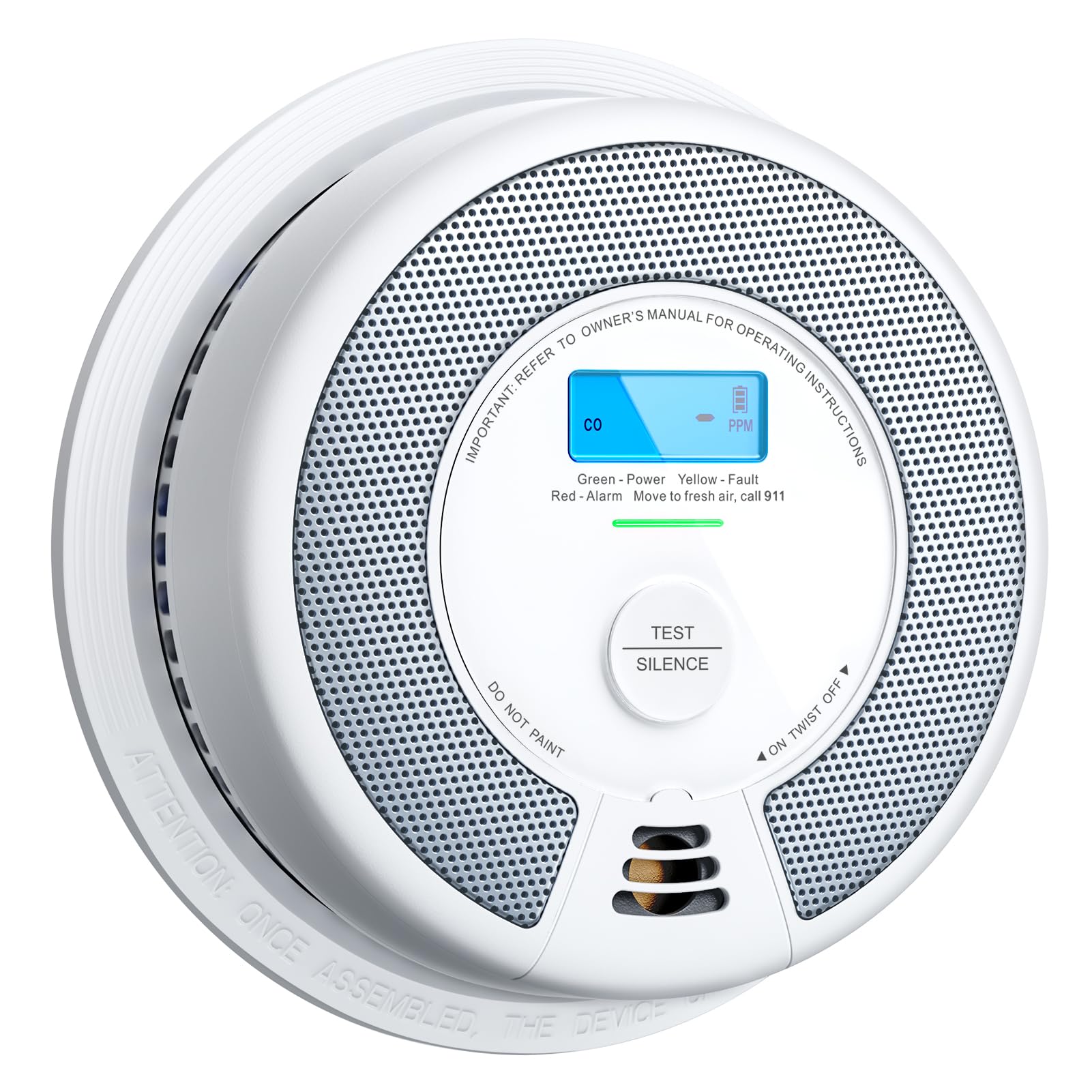
2. X-Sense Smoke & Carbon Monoxide Alarm, SC06
The tidy retrofitter with a live carbon monoxide readout and a decade of sealed power
Two features set the XP0H-SN apart. First, the extra-large 5.7-inch mounting bracket hides old screw holes and ceiling stains left by a previous alarm, so your reinstall looks freshly painted. Second, the easy-to-read LCD shows real-time CO levels and battery life — the screen stays dark during standby so it won’t disturb your sleep, then lights up during an alarm or test.
The sealed 10-year lithium battery means no biannual reminders to change cells, and the built-in self-test checks the sensors, electronics, and battery every 60 seconds automatically. Buyers confirm the value of that: the reliability of this unit is what wins people over, with no-false-alarm reports standing out against big U.S. brands, and one RV owner calls the install “easy to install in my rv has a ten battery.”
This is the standalone model — it does not support wireless interconnection and has no Wi-Fi. If you want a whole-home linked network, the XP0H-WN version handles that instead.
Smart self-check: a 60-second internal test cycle runs automatically, so you get confidence between your manual monthly tests.
Note the limits: it’s a basic standalone unit, so skip it if you need units that talk to each other.
Best for: anyone replacing an old alarm who wants a clean wall, a CO level readout, and zero battery swaps for a decade.
Think twice if: you’re building an interconnected whole-home system.
3. First Alert Battery Combination Smoke & Carbon Monoxide Alarm
A wafer-thin standard-battery combo that upgrades the look of any ceiling
At just 5.67 inches wide and 1 inch deep, the First Alert SMCO200 is half the depth of a standard alarm, which makes it the rare safety device that actually improves a room’s appearance. Owners upgrading from bulky older units consistently praise how much cleaner it looks after a few minutes of installation with the included AA batteries.
The engineering underneath is First Alert’s Precision Detection, which complies with new industry standards to cut down cooking nuisance alarms while still providing early warning in a real fire. It’s a true 2-in-1 — guarding against both smoke and carbon monoxide — and the end-of-life warning tells you when the unit itself needs replacing, not just the batteries.
The honest note: despite the anti-false-alarm tech, some owners still report the occasional nuisance trigger, and a few flag long-term durability concerns. If you cook a lot with no exhaust fan, you may still hit the silence button now and then.
What Buyers Love
- Slim design looks far nicer than bulky older detectors
- Replaceable AA batteries for easy upkeep
- Precision Detection reduces cooking nuisance alarms
What To Weigh
- Some owners still see occasional false alarms
- No voice warnings for hazard type
Grab it if: aesthetics matter and you want a low-profile battery unit that’s simple to maintain.
pass on it if: your home is prone to steam or smoke triggers and you need maximum false-alarm resistance.
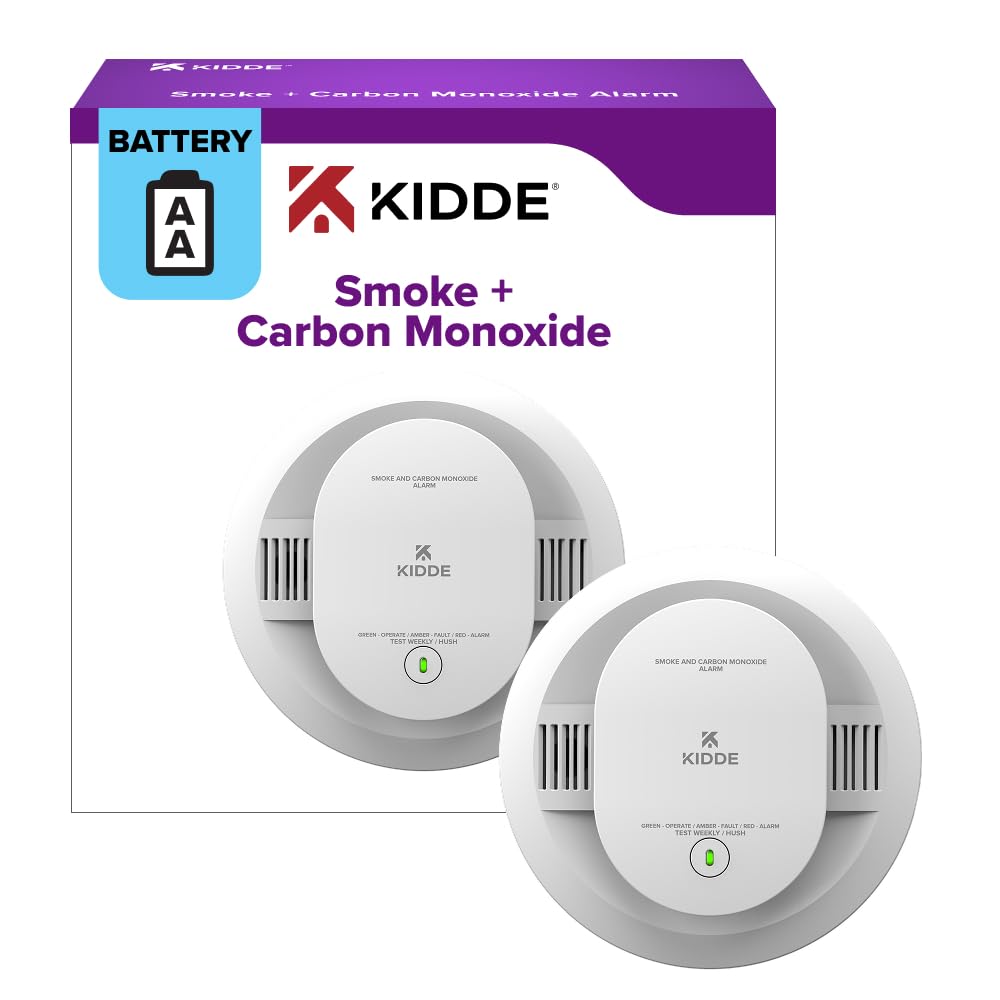
4. Kidde Smoke & Carbon Monoxide Detector, 30CUDR
A crowd-favorite 2-in-1 that earns its keep with accuracy and easy setup
The Kidde 30CUDR is the no-frills sibling of the voice-alert model above, and for many buyers that’s exactly right. It detects both smoke and carbon monoxide with the same over-25%-faster sensing, blasts a loud 85-decibel alarm with a red LED light, and runs on two included AA batteries for simple, no-wiring installation. If you just want dependable 2-in-1 protection without paying for voice extras, this is the one.
What wins people over is accuracy — the advanced sensing tech distinguishes real smoke from everyday cooking, which is why it’s a favorite for kitchens. It’s tested to meet UL 217 10th Edition, UL 2034 5th Edition, and FCC standards, and the 10-year limited warranty covers you from the date of purchase.
There are two honest caveats. The mounting plate isn’t compatible with older alarm brands, so a swap means changing the plate. And while its reliability feedback is mixed, the accuracy praise outweighs it significantly — over 57 buyers specifically single out how well it detects real threats.
Why It’s Popular
- Over 25% faster smoke detection for real fires
- Advanced sensing reduces false alarms from cooking
- Simple 2-AA battery setup, no electrician needed
Consider This
- Mounting plate won’t fit older alarm brands
- No voice alerts, just the siren and LED
Best for: households that cook often and want a fast, accurate detector without extra voice features.
Note: plan to swap the mounting plate when replacing an old unit of a different brand.
5. Kidde Smoke & Carbon Monoxide Detector, 900-CUDR-V

A self-checking sentinel with color-coded LED status and spoken hazard alerts
The Kidde 900-CUDR-V pairs the voice announcements of the 30CUDR-V with one big addition: 24/7 self-testing that constantly checks the device is operating as expected. That’s a genuine difference for anyone who worries about a silent failure — the unit is always watching itself, even if you forget the manual monthly push test.
The LED warning light system makes status checks instant: green means normal operation, amber flags an operating error, and red signals smoke, fire, or carbon monoxide. The voice alarm calls out “Fire!” or “Warning Carbon Monoxide,” and the photoelectric sensor catches slow, smoldering fires while the electrochemical sensor handles CO. It’s UL Listed, battery-operated for power-outage reliability, and runs on two included AA batteries with a 10-year limited warranty.
Reliability is mixed: the build earns 40 positive mentions, but some customers note false alerts after a few months. Mounting is flexible with a bracket that installs in 4 orientations, and at 8.8 ounces it’s featherlight on the ceiling.
Constant vigilance: built-in self-checks plus status LEDs mean you always know your detector’s health at a glance.
Watch for: occasional false alarms reported by a minority of owners over time.
Reach for it if: you want the most feature-rich battery detector with self-diagnostics and clear voice guidance.
Keep in mind: no detector is immune to the rare defect, so test monthly regardless.
6. First Alert PRC710 PC1210 10-Year Combination Detector

First Alert’s budget-minded sealed-battery combo with nuisance-free photoelectric sensing
At just 6.4 ounces, the First Alert PC1210 is among the lightest detectors here, and its 10-year sealed battery means no battery replacements for the life of the alarm. The nuisance-free photoelectric technology is specifically designed to reduce false alarms from cooking and shower steam, which makes it a strong budget pick for kitchens and bathrooms.
It meets UL standards and complies with legislative requirements for 10-year battery operated smoke alarms, backed by a 10-year limited warranty.
The one meaningful complaint is battery longevity: some reviewers point out the ten-year battery wore out early, around two years in a few cases. For most that’s not the norm, but if you need guaranteed decade-long power, a brand with fresher stock might serve you better.
Set-and-forget budget pick: a featherlight sealed-battery combo that ignores cooking steam and needs zero maintenance for a decade.
Buyer caution: a minority report the sealed battery died well before the 10-year mark.
Choose it if: you want a light, affordable sealed-battery detector without paying for voice or smart features.
Think twice if: you can’t risk an early battery failure and want the most proven longevity.
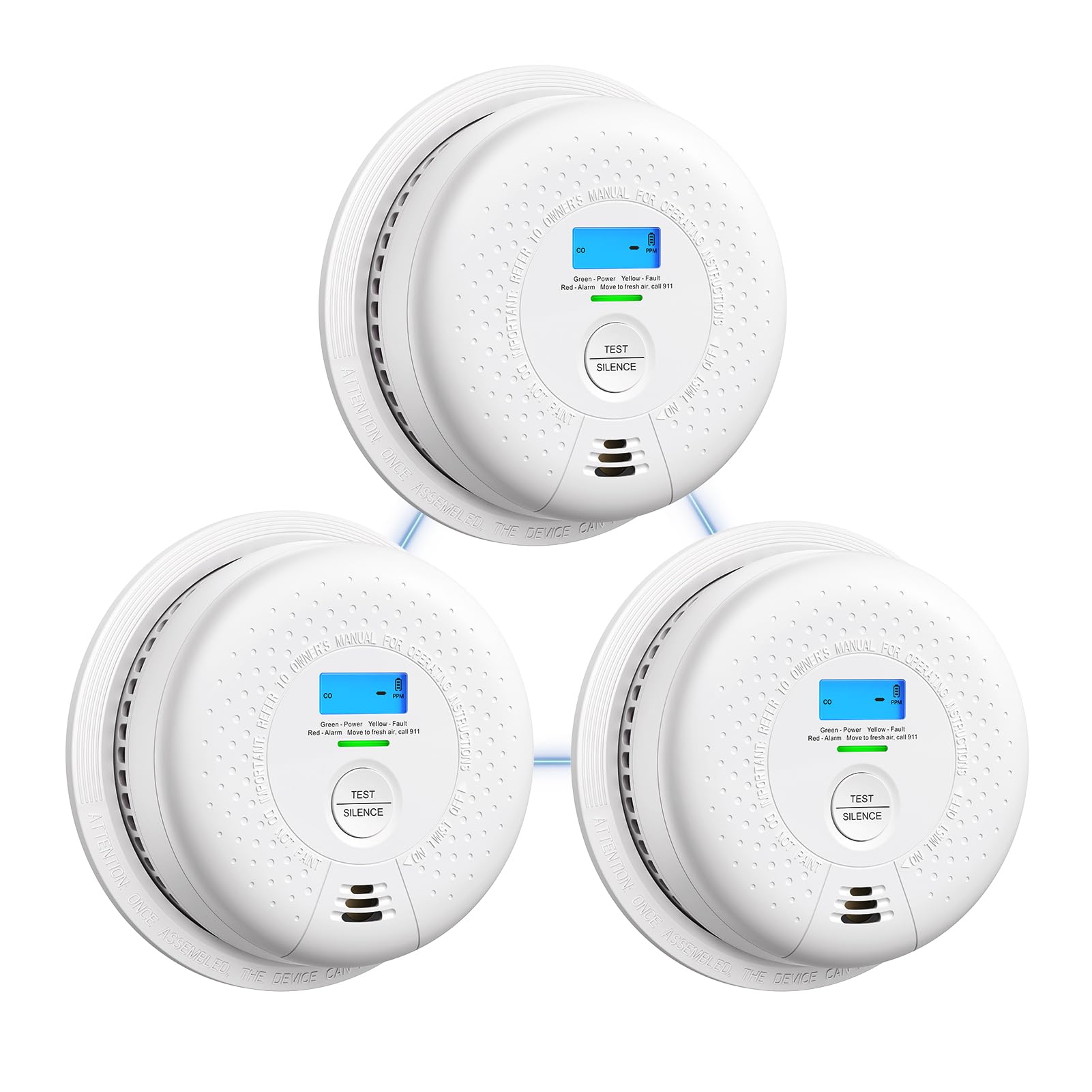
7. X-Sense Interconnected Smoke and CO Detector Combo, SC01-W 3-Pack
Three linked sentinels that wake the whole house when one detects danger
The SC01-W 3-Pack solves the classic problem of a fire in the basement while everyone sleeps upstairs. It supports wireless interconnection — if one alarm detects a threat, all interconnected alarms sound together — and you can link up to 18 X-Sense Link+ devices for whole-home coverage. No Wi-Fi required, just the included mounting hardware on any wall or ceiling.
Each unit carries the 10-year sealed lithium battery and 2-in-1 protection against smoke and carbon monoxide, certified to UL 217 and UL 2034. The 85 dB alarm is loud enough to rouse a household, and owners confirm the interconnect setup is straightforward: “Easy to install, set up and interconnect. I just needed a Phillips screwdriver,” with one buyer linking a set of 6 to a set of 3 without issue.
A few practical notes: the green LED blinks once per minute to confirm operation on older plaster and lath walls, and the silence button only quiets one unit briefly — if there’s real CO, you’ll need to clear the air and move to fresh air. At 1.14 kg total for the 3-pack, it’s a substantial box, but it replaces three separate alarms.
Whole-Home Value
- Wireless linking across up to 18 devices, no Wi-Fi needed
- Three sealed 10-year units cover multiple rooms at once
- Loud 85 dB alarms that trigger simultaneously
Setup Notes
- Mounting plate may be small for round electrical boxes
- One unit’s silence button only quiets it briefly
Best for: multi-bedroom homes or RVs where one alarm isn’t enough and you want everything linked without professional wiring.
Consider this: if you have round electrical boxes, you may need a larger cover plate for a flush finish.
Understanding the Specs
Sealed 10-Year Battery vs. AA Batteries
Sealed lithium batteries mean you never open the unit for a decade — when it dies, you replace the whole alarm, and a low-battery warning tells you it’s time. AA-powered models let you swap in fresh batteries yearly, which some buyers prefer for cost, but you have to remember to do it. A sealed 10-year battery eliminates the low-battery chirp that often gets ignored.
Photoelectric Sensor and False Alarm Resistance
Photoelectric sensors detect the larger particles from slow, smoldering fires and are far less sensitive to steam and cooking smoke than older ionization types. Photoelectric sensors are standard in modern combos because they detect real smoke while ignoring cooking steam. For kitchen-adjacent placement, photoelectric sensing is the most critical spec to prioritize.
FAQ
How often should I replace a battery-operated smoke and CO alarm?
What does UL 217 and UL 2034 certification mean for my safety?
Can I interconnect battery-operated alarms without wiring?
Will cooking or shower steam set off a photoelectric alarm?
What is the difference between voice alert and standard beeping alarms?
How loud does the alarm need to be to wake a sleeping family?
Is a battery-operated alarm as reliable as a hardwired one?
Can I replace one brand’s old alarm with a different brand’s new one?
Why does my alarm sometimes chirp even without smoke or CO?
How do I install a battery-operated smoke and CO alarm myself?
Final Thoughts: The Verdict
Choosing between sealed 10-year lithium and replaceable AA batteries depends on your tolerance for annual maintenance. For the majority of shoppers, the battery operated smoke and carbon monoxide alarm winner is the BRK SC9120B because it combines a brand-name sensor with the flexibility to join existing wired networks. If you want zero battery swaps for a decade, grab the X-Sense SC06. And for whole-home linked coverage without an electrician, the X-Sense SC01-W 3-Pack is the one to reach for — one nudge: the SC06 is the crowd favorite, 4.5 stars across 300+ owners, for good reason.
How We Picked
We do not accept paid placement. Every pick is matched to a real buyer and a real use-case; we do not hands-on test units.
Sources & Methodology
Specifications: manufacturer listings and product documentation. Review insights: verified customer reviews, as of August 2026. Pricing: not shown on this page (it changes often); check the current price via the retailer link.
As an Amazon Associate, KitchPrep earns from qualifying purchases. This does not affect which products we feature.
Related Guides
