
A 20‑quart pot isn’t “just a bigger pot.” It’s a different category of cooking—where heat behaves differently, steam management matters, and ergonomics suddenly become a make‑or‑break detail. One day you’re simmering broth all afternoon. The next you’re doing a seafood boil, batch chili for a crowd, or water‑bath canning that turns your kitchen into a mini production line.
If you’re shopping for a 20 qt cooking pot, you’re really shopping for confidence on your heaviest day: the day the pot is full, the burner is maxed, the lid is rattling, and you need to lift, pour, or move something you definitely don’t want to spill. The “best” model isn’t the one with the flashiest listing—it’s the one that stays predictable when volume, heat, and time are all working against you.
Most buying guides get lazy here. They compare capacities (which are all the same), repeat basic stainless steel talking points, and stop right before the details that actually determine whether you love your pot or quietly banish it to a bottom cabinet. This guide goes after the real friction points: which bases scorch thick sauces, which lids chatter or fog, which handles feel safe when wet, what “tri‑ply” actually means in the real world, and how each model behaves on induction vs gas vs glass‑top stoves.
Below you’ll find 14 of the most popular and most talked‑about 20‑quart options—ranging from commercial‑grade workhorses to budget pots that surprisingly punch above their weight. I’m using real owner patterns (what people praise after months, what they complain about after the first big cook) plus the engineering “why” behind those experiences—so you can make one good decision and move on.
How to Choose the Right 20 Qt Cooking Pot
A 20‑quart pot is a small “system,” not a single item. You’re buying a base design, a lid behavior, a handle philosophy, a steel grade, and a shape that either works with your stove… or constantly fights it. Here’s the decision framework I use when I want a big pot that still feels calm to use when it’s loaded.
1. Start with your “main use” (because it changes the ideal pot shape)
Most people think “20 quarts is 20 quarts.” True. But how that volume is shaped changes boil‑over risk, heat distribution, evaporation, and even how your recipes taste. Pick the bucket you live in:
- Broth, stock, and soups: Taller walls help reduce evaporation and keep simmering stable. A base that heats evenly matters because you’ll run long, gentle cooks.
- Pasta and noodles: Wider pots reduce clumping and make stirring easier. Height matters if you like cooking long spaghetti without breaking it.
- Chili, curry, thick sauces, tomato sauce: Base quality becomes the entire game. A thin base creates a hot ring that scorches. A better base buys you forgiveness.
- Seafood boils: Wide openings make stirring and loading easier, and big handles matter when you’re dumping water and shells.
- Water‑bath canning: You need enough height to cover jars with water while keeping a steady boil. Lid fit and handle safety become high‑stakes.
- Brewing / outdoor burners: Stability and heavy base construction matter. Some people even prefer pots that can be modified (valves, fittings).
2. Pick “tall vs wide” with your stove in mind
A lot of 20‑quart pots look similar online, but the moment you set one on a real burner, the differences show up fast:
- Tall + narrower pots can feel more stable on a single burner and reduce boil‑over risk because the waterline sits farther from the rim.
- Wide + shallower pots heat more like a sauté pan. They give you surface area for browning (amazing for braises and ragu), but they take up more stovetop real estate and can feel awkward on small burners.
- Glass‑top ranges reward pots with flat, stable bases. Sliding a heavy pot is a scratch risk—so you want something that sits planted, not wobbly.
- Induction rewards a base that’s fully magnetic and consistently flat. A warped base on induction isn’t just annoying—it can cause cycling, uneven heating, and weird “hot spot” behavior at the worst time.
Quick practical move: measure your largest burner diameter and compare it to the pot’s base footprint (not the rim width). A rim can be wide while the true heat‑contact base is smaller—and that’s what determines whether you’ll get a steady simmer or a frustrating “boil only in the center” situation.
3. Understand the base: impact‑bonded disc vs tri‑ply vs true commercial “engine” bases
This is where great pots separate from “fine for boiling water” pots.
- Impact‑bonded (disc) base: An aluminum disc is bonded to the bottom. This usually heats faster than fully thin stainless and helps reduce hot spots. Disc‑base pots can be excellent for boiling, soups, and general use—especially if the disc is thick and well bonded.
- Tri‑ply base (disc) or “3‑ply bottom” marketing: Some brands use “tri‑ply” to describe the bottom only (steel + aluminum + steel). This can still be very good—just know you’re mainly buying bottom performance, not fully clad sidewalls.
- Hybrid / commercial‑grade designs: Heavier bases and better bonding reduce warping, hold heat more steadily, and behave more predictably during long simmers. These are the pots people keep for years because they don’t require babysitting.
If you only boil water and simmer broths, a strong disc base is usually enough. If you cook thick chili, tomato sauce, apple butter, or anything that likes to stick, you’ll feel the difference immediately with a more serious base.
4. Steel grade matters… but not in the way most listings imply
You’ll see terms like 18/10, 18/8, 18/0, 21/0, “nickel free,” and “food grade.” Here’s the real‑world translation:
- 18/10 or 18/8 stainless (often 304): Great corrosion resistance, common in premium cookware. Not always magnetic by itself—so many induction‑ready pots add a magnetic layer in the base.
- 18/0 stainless (often 430): More magnetic and often induction‑friendly, sometimes used for bases or full bodies. Can be totally fine for big pots if the build quality is there.
- Nickel‑free stainless (often 21/0): Popular with people who prefer avoiding nickel exposure or who have sensitivities. It can also be very induction‑friendly because it’s magnetic.
Practical tip: if induction is your priority, prioritize a pot that’s clearly marketed as induction‑compatible and has a base that stays flat. If nickel‑free matters to you, choose a brand that calls out the alloy clearly and has consistent lid fit and quality control.
5. The lid is not a “bonus”—it’s your control system
A 20‑quart pot without a lid you trust is like a car with mushy brakes. Lid details control boil‑over, evaporation, and how often you have to “hover” in the kitchen.
- Glass lids: Great for monitoring. But they can fog, rattle, or be oven‑limited. Look for vent holes and sturdy handle design.
- Stainless lids: Usually more durable and oven‑friendly. You lose visibility, but you gain toughness and often better heat retention.
- Steam vents: A small vent can reduce lid chatter and stop pressure from building—very helpful during long simmers and canning boils.
6. Handles are the hidden “safety rating”
When your pot is full, handle design is the difference between “confident lift” and “white‑knuckle moment.” Here’s what actually matters:
- Wide loops that accept a real oven mitt (not just bare fingers).
- Attachment method: Riveted handles are common and strong. Welded handles can be very strong too, and they keep the interior smooth (easier cleaning). Either can be excellent when done well.
- Heat behavior: Some handles stay cooler because of their shape and how they’re attached. Others conduct heat fast. Owner feedback usually reveals this quickly.
- Grip comfort when wet: In canning season, everything gets steamy. A handle that feels secure wet is a big deal.
7. The “big pot reality” checklist people forget until after they buy
- Sink fit: A tall pot can be annoying to wash in a standard sink. If your sink is small, prioritize smoother interiors and fewer crevices (or plan to soak and rinse in stages).
- Storage: A flat lid stores easier than a domed lid. A wide pot needs a wide shelf.
- Stovetop clearance: A very tall pot under low cabinets can be frustrating to stir. A shorter pot can be easier in tight kitchens.
- Arrival condition: Big pots get dented in shipping more than small cookware. Buy a model with solid packaging reputation, and inspect immediately.
8. How to inspect your pot the moment you unbox it
This takes two minutes and can save you a headache:
- Check the rim: It should be round and smooth, not oval or sharp.
- Set it on a flat surface: Press gently—no rocking. A tiny wobble can become worse after heat cycles.
- Test the lid: It should sit flat and feel “intentional,” not loose or mis‑sized.
- Check handle tightness: Rivets should look clean and consistent. Welds should look smooth and uniform.
- Look for base bonding issues: The disc should look evenly attached without gaps.
Now you’re ready to use the comparison table and pick a pot that matches how you actually cook.
Quick Comparison: 14 20 Qt Cooking Pot Picks
Use this table to match the right pot to your cooking style fast—then jump to the reviews for the details that don’t show up in specs: how the lid behaves during a hard boil, whether the handles feel safe when wet, how the base behaves with thick chili, and what owners say after multiple big cooks.
On smaller screens, swipe or scroll sideways to see the full table.
| Model | Pot style | Standout strength | Best match | Amazon |
|---|---|---|---|---|
| Ciwete 20‑Quart 3‑Ply Stock Pot (Copper Handles) | Tri‑ply stockpot | Sear‑then‑simmer performance with a showpiece finish and smart details | Most home cooks who want one “do it all” big‑batch pot | Amazon |
| WINCO Tri‑Ply Stock Pot (Tri‑Gen), 20‑Quart | Commercial stockpot | Fast, even heating with restaurant‑grade durability and dripless rim | Serious batch cooks who want predictable simmer power | Amazon |
| Winco Commercial Stainless Steel Brazier w/ Lid, 20‑Quart | Brazier / rondeau | Wide, flat browning surface + heavy stability for braises and sauce | People who brown first, then simmer (ragu, chili, short ribs) | Amazon |
| NutriChef 20‑Quart Heavy‑Duty Stockpot | Heavy base | “Sturdy and serious” feel with even heat and big‑batch reliability | Families who want a strong everyday stockpot that lasts | Amazon |
| MICHELANGELO 20‑Quart Stainless Stock Pot (Glass Lid) | Sauté‑friendly | Thick base that can sauté aromatics, then simmer without drama | One‑pot cooks who hate transferring pans mid‑recipe | Amazon |
| Falaja 20‑Quart Stock Pot (Stainless Lid + Scale Marks) | Canning‑leaning | Tight lid fit + measurement marks + steady heat for big batches | Soup, stew, cheese‑making, and canning prep cooks | Amazon |
| Ecolution 20‑Quart Stock Pot (Glass Lid) | Simple monitor | Easy‑watch cooking with a thickened base and no‑nonsense handling | People who want a straightforward pot that behaves on induction | Amazon |
| HOMICHEF 20‑Quart Nickel‑Free Stock Pot | Nickel‑free | Nickel‑free build + strong induction friendliness + standout support | Nickel‑sensitive shoppers and induction‑first kitchens | Amazon |
| Bakken‑Swiss 20‑Quart 18/8 Stockpot (Stainless Lid) | Fast boil | Quick heating + polished build + canning‑friendly performance | People who want speed, shine, and steady simmer control | Amazon |
| Update International 20 Qt Stock Pot w/ Cover (NSF) | Commercial value | Serious tri‑clad base + induction ready + “brew‑kettle” toughness | Outdoor burners, brewing, and long‑term “buy once” cooks | Amazon |
| Cook N Home 20‑Quart Stockpot (Stay‑Cool Handles) | Comfort grip | Silicone‑wrapped handles + glass lid make big boils feel calmer | Busy kitchens that prioritize safe handling and visibility | Amazon |
| P&P CHEF 20 QT Stock Pot (Glass Lid + 3‑Ply Bottom) | Heavy build | Thick bottom + polished interior + solid “big batch” confidence | Meal preppers and canners who want sturdy without fancy extras | Amazon |
| Bakken‑Swiss 20‑Quart Stockpot (Tempered Glass Lid, 18/0) | Budget watch‑lid | Glass lid visibility + stable base at a wallet‑friendly entry point | Budget shoppers who still want induction‑ready practicality | Amazon |
| IMUSA 20‑Quart Stainless Stock Pot | Ultra budget | Lightweight “big boil” utility for simple jobs and outdoor use | Boiling‑first cooks who want the lowest‑stress spend | Amazon |
In‑Depth Reviews: 14 Big‑Batch Pots That People Actually Keep Using
Now we’ll go pot by pot. I’ll focus on the real‑life questions that decide satisfaction: does the base feel forgiving with thick food, do the handles feel safe when the pot is full, does the lid help you control the cook, and how does it behave on real stovetops (especially induction and glass‑top)?
1. Ciwete 20‑Quart 3‑Ply Stock Pot – The Rare “Pretty AND Practical” Workhorse

Some big pots are purely functional. Some are purely decorative. The Ciwete 20‑quart is one of the few that lands in the sweet spot: it looks like a “leave it on the stove” piece, but it behaves like a serious batch‑cooking tool once the heat is on. That combination matters more than people think—because when a pot is genuinely pleasant to use, you use it more often, and it earns its cabinet space.
What owners consistently respond to here is the confidence feel: the base heats evenly enough that you can sauté directly in the pot, then add liquids and simmer without immediately worrying about a scorched ring. That’s the quiet superpower of a better bottom design— it reduces the number of “save the sauce” moments. It also changes your workflow. Instead of browning aromatics in a skillet, then transferring, you can build flavor right where the big batch will live. Less mess. Less heat loss. More control.
The details are thoughtfully done. The interior measurement marks aren’t just “nice”—they’re a speed tool when you’re making broth, diluting concentrate, or repeating the same big recipe. The vented glass lid earns its keep during long simmers: it lets you monitor reduction without constantly lifting (which is basically a heat‑dump every time you do it). And the handles—besides looking great—are shaped in a way that makes two‑handed lifts feel more stable, which is exactly what you want when the pot is actually full.
This is also one of the better choices for cooks who bounce between stovetops. On induction, a solid base reduces the annoying “cycle hot/cold” effect you can get with thin steel. On gas, it helps spread flame heat more evenly. On glass‑top, it feels planted enough that you’re not fighting wobble. In short: it’s the pot that makes big cooking feel less like a project.
Why you’ll like it
- Sear‑then‑simmer friendly – Great for building flavor directly in the pot, not in a separate pan.
- High “use it often” factor – Looks good, feels solid, and doesn’t punish you with fiddly handling.
- Useful measurement marks – Speeds up repeating recipes and big batch prep.
- Visibility without lifting – Vented glass lid helps you manage reduction and boil‑over risk.
Good to know
- Mirror finishes show fingerprints and water spots faster—easy to clean, but not “always perfect.”
- Glass lids are typically oven‑limited compared with steel lids; keep that in mind if you finish dishes in the oven.
- Like any serious 20‑quart pot, it’s bulky to wash in a small sink—smooth interiors help, but the size is real.
Ideal for: cooks who want one dependable big pot that can handle chili, broth, pasta, and canning prep—without feeling like an ugly utility purchase.
2. WINCO Tri‑Ply 20‑Quart Stock Pot – Fast, Even Heat That Feels “Restaurant Calm”
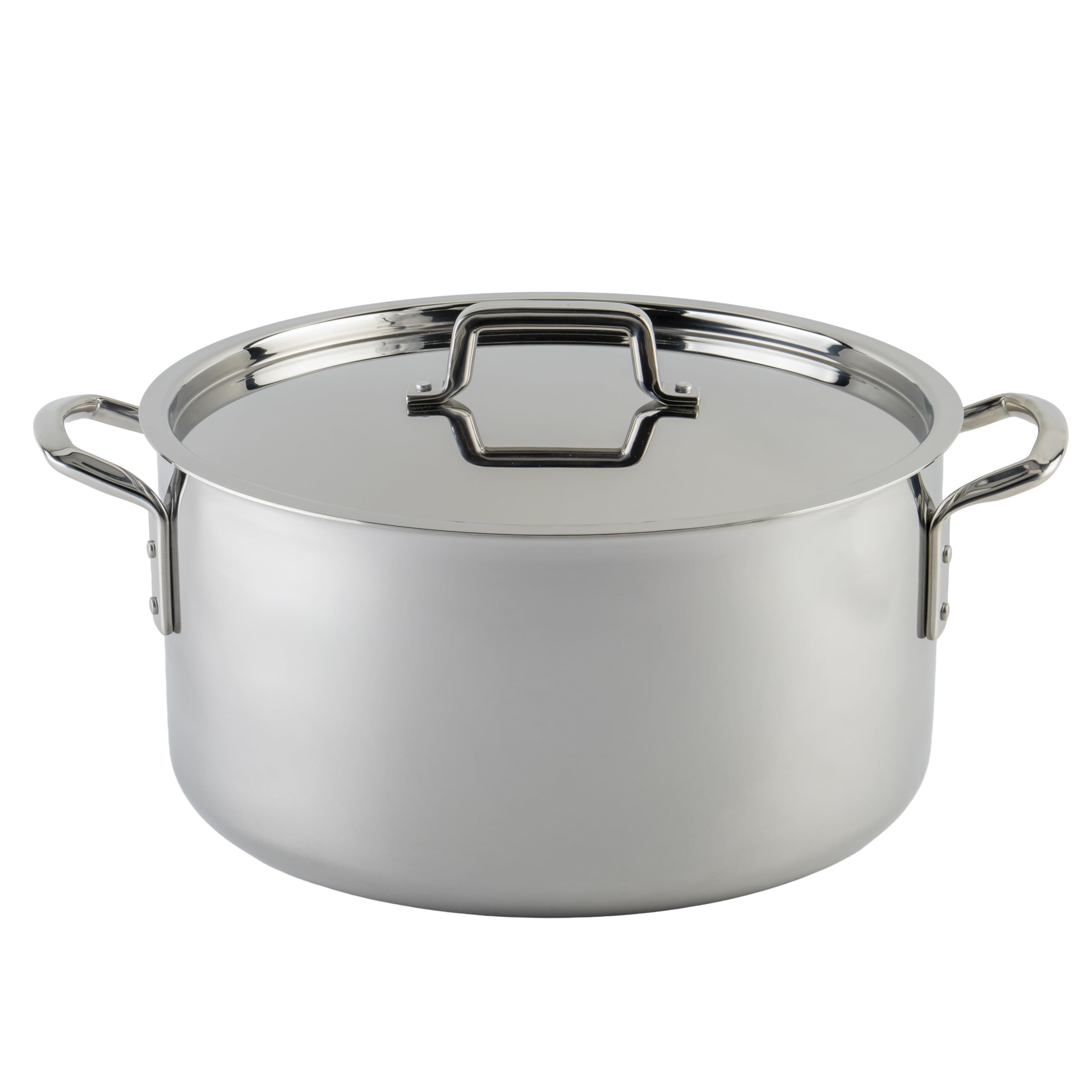
If you want a pot that behaves like a professional kitchen tool—fast heat response, steady simmer behavior, and a build that doesn’t feel precious— the WINCO Tri‑Gen 20‑quart is the kind of purchase you make once and stop thinking about. It’s designed for volume cooking where consistency matters: soups that simmer for hours, big batches of rice, stock days, and long reductions where a “hot ring” would ruin your work.
Owners repeatedly highlight the same experience: it heats unusually fast and stays even. That “night and day” upgrade feeling is what happens when a pot’s thermal design matches the job. With large volumes, you don’t just need heat—you need controlled heat. A base that spreads energy evenly lets you keep the burner lower, which protects delicate flavors and reduces the risk of scorch at the bottom. That’s also why people love it for outdoor burners and propane setups: it gets up to temp without forcing you to max out heat for ages.
Another real‑world advantage is the rim and handle design. A fluted rim that pours cleanly sounds small—until you’re pouring gallons of hot liquid. It reduces mess and reduces panic. The wide loop handles are built for big hands and mitts, and because of how they’re attached, many users report they feel more comfortable (and in some cases cooler) than expected. There’s also a “clean interior” benefit: fewer crevices for gunk to hide in, which matters when you’re doing thick soups or starchy cooks.
The only consistent complaint trend isn’t about the pot’s performance—it’s about shipping and packaging. Big pots are magnets for dents if the box is flimsy. The smart move: inspect immediately, wipe down, and make sure the lid sits correctly and the base is flat. Once you get a good one in hand, this is the kind of stockpot people talk about like it’s part of the family.
Why it stands out
- Fast heat, even simmer – Great for long cooks where stability matters more than raw power.
- Pouring control – Fluted rim helps you move liquids cleanly without drips.
- True “workhorse” build – Designed for repeated big batches, not occasional use.
- Comfortable, stable handles – Wide loops feel secure with mitts and heavier loads.
Good to know
- Packaging quality can be inconsistent—inspect for dents and a flat base right away.
- It’s built for function, not showroom shine—expect “use patina” sooner than on decorative cookware.
- Like most commercial‑leaning pots, it’s happiest on a strong burner; tiny burners may feel underpowered for full-volume boils.
Ideal for: serious home cooks who make big batches often and want a pot that heats evenly, pours cleanly, and feels built for years of real use.
3. Winco 20‑Quart Stainless Brazier – The Wide “Flavor Builder” for Big Sauces

A brazier (sometimes called a rondeau) is a different beast than a tall stockpot—and if you cook “brown first, then simmer,” it can feel like cheating. The Winco 20‑quart brazier is built around surface area: a wide flat bottom that spreads heat and gives you space to caramelize onions, brown meat, and build fond without stacking ingredients into a cramped tower.
Here’s the expert insight people rarely spell out: thick sauces and braises fail when you can’t manage the first 20 minutes. If you overcrowd a narrow pot, you steam instead of brown. If you can’t spread ingredients, you don’t get deep flavor. And if your pot doesn’t hold heat evenly, you scorch while you’re chasing browning. A wide brazier solves all three problems. It lets you cook like a restaurant: build flavor in layers, deglaze confidently, then add liquids and settle into a long simmer.
Owners describe this kind of pan as “built to last” with satisfying heft, and that heft is doing real work: stability on the stove, less warping, and more consistent heat. The lid helps you trap moisture for braises, and the reinforced handles make it realistic to move from burner to counter without feeling like the pot is flexing under load.
The trade‑off is footprint. This pan takes space, and it wants a burner that can cover its base. In small kitchens, it may hog the stovetop. But if you routinely cook for a crowd—Sunday sauce, beans, stew, braised meats—this shape can replace both a Dutch oven and a stockpot for a lot of recipes. It’s one of those tools that makes cooking feel more controlled and less chaotic.
Why it’s a big deal
- Massive browning surface – Better caramelization and deeper flavor without overcrowding.
- Stability and heft – Feels planted on the stove, especially with heavy loads.
- Ideal for thick cooks – Chili, ragu, braises, beans—this shape makes them easier to manage.
- Commercial durability – Built for repeated big cooks and long simmers.
Good to know
- Large footprint: you need space and a burner that can support the wide base.
- Not the best “pasta tower” pot—shorter walls mean more evaporation and more boil watching.
- Shipping dents can happen with heavy cookware—inspect rim roundness and lid fit immediately.
Ideal for: cooks who care about browning, fond, and deep flavor—and want one big pan that can handle braises and sauces like a pro kitchen.
4. NutriChef 20‑Quart Stockpot – The “Feels Expensive” Heavy‑Base Workhorse
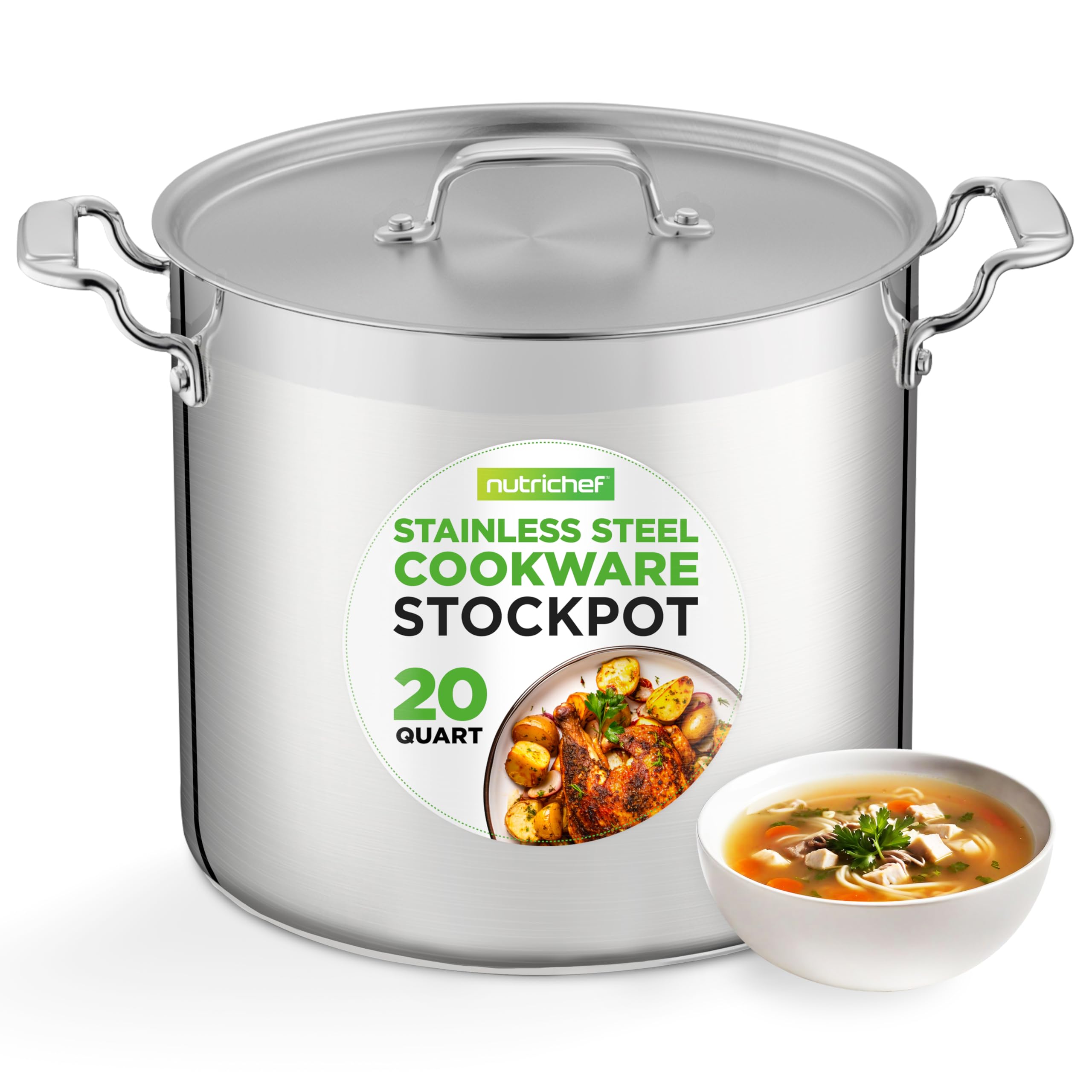
NutriChef’s 20‑quart stockpot is one of those “you can feel it when you touch it” purchases. People often describe it as solid, sturdy, and worth stepping up for because it doesn’t have that thin, flimsy vibe that makes you nervous around high heat. In big pots, that confidence isn’t emotional— it’s practical. A heavier base helps stabilize heat, reduces scorching risk, and makes long simmering sessions less stressful.
This pot shines for the classic big‑batch jobs: preserves, soups, stews, sauces, and boil sessions where you want steady performance. Owners also mention that once you learn its rhythm—especially on induction—it becomes a reliable part of the kitchen. One subtle advantage of heavier stockpots is that you can often cook on a lower setting. That means less violent boiling, less lid chatter, and fewer “why is it boiling over?” surprises, especially when you have starchy water or foam‑heavy broths.
Real‑life honesty: this is not the lightest pot, and it’s not trying to be. A big pot that feels light can be fine for boiling, but when you start doing thick cooks, you want a base that behaves like an engine, not a thin plate. The “acceptable trade” people mention—weight for strength—is exactly what you want to hear in a 20‑quart category.
There are a couple of quirks you should know. Some owners mention a sharper rim edge than expected, and some mention the interior finish can feel a little more textured than ultra‑premium stainless—meaning wiping out small spots can take a bit more effort. Neither is a dealbreaker. But if you’re very sensitive to sharp edges or you want a buttery‑smooth interior wipe, it’s worth noting.
Why people trust it
- Heavy‑duty feel – Confidence booster for big cooks and longer simmers.
- Even heat distribution – Helps reduce hot spots and scorch risk in thick recipes.
- Big‑batch versatility – Great for preserves, soups, pasta boils, and meal prep.
- Looks good on the stove – Clean stainless style that doesn’t feel “utility only.”
Good to know
- Heavier pots require more careful lifting—always use two hands and proper mitts when full.
- Some users report a sharper rim edge; be mindful when washing or pouring.
- Textured stainless can hold onto lint during spot cleaning—use microfiber instead of paper towels.
Ideal for: families who want a sturdy, reliable stockpot that feels like it will last through years of big‑batch cooking and preserving.
5. MICHELANGELO 20‑Quart Stock Pot – Built for Sauté‑Then‑Simmer Cooking
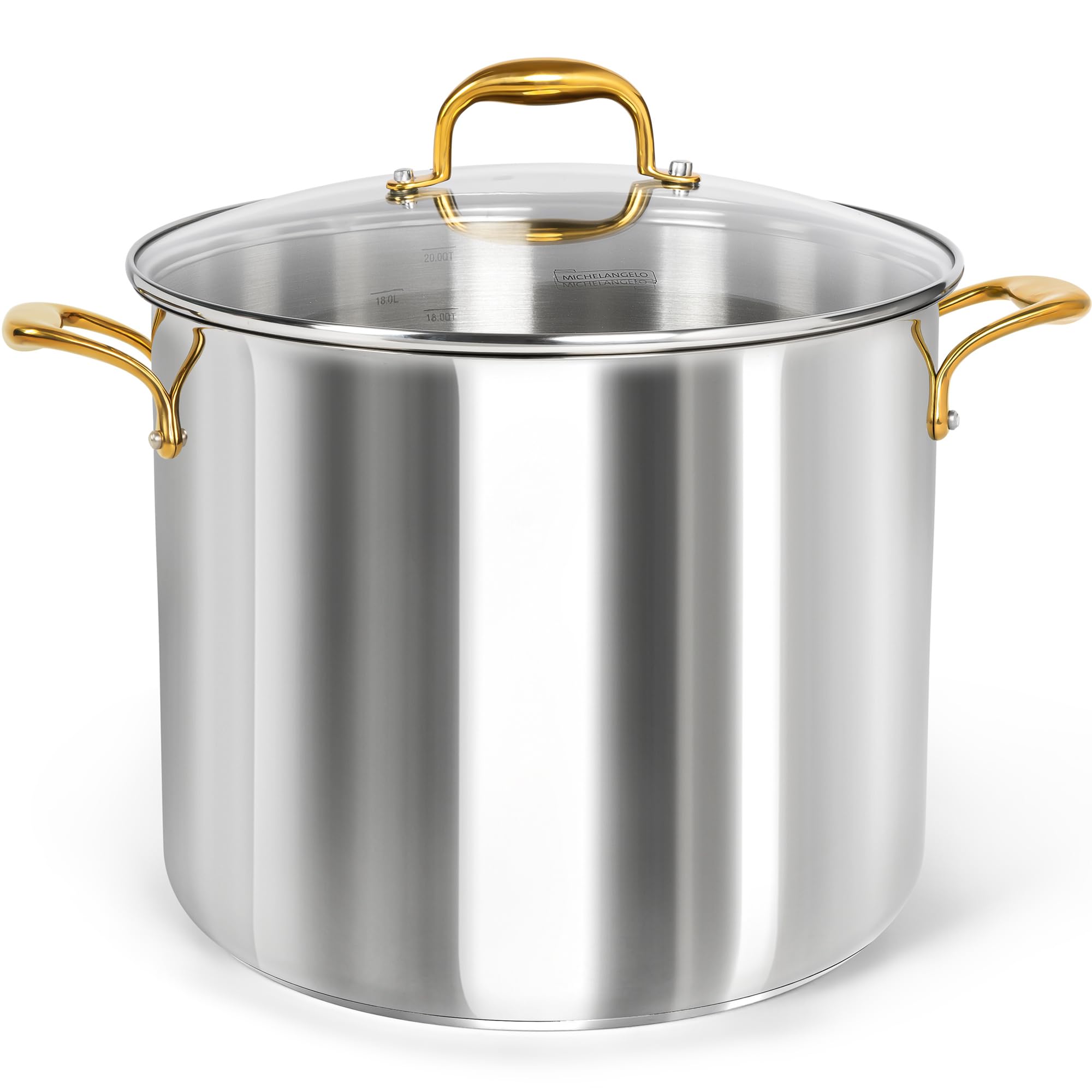
Here’s a frustration almost everyone has with big recipes: you start in a skillet to sauté onions, garlic, or meat… then you transfer to a big pot, then you deglaze the skillet, then you wash another pan. It’s a workflow tax. The MICHELANGELO 20‑quart leans into a simpler approach: a thick, even‑heating base that can handle the sauté stage directly—so your big recipe stays in one vessel from start to finish.
That matters because the sauté stage is where flavor is born. If the pot’s base is thin or uneven, you get scorched aromatics or you avoid browning altogether to “play it safe.” A stronger base lets you cook with intent: you can sweat vegetables gently, push heat for browning, then pull back for a slow simmer without the bottom turning into a danger zone. Owners specifically mention the convenience of sautéing in the pot—this is not just a spec sheet feature; it changes how you cook.
The glass lid and ergonomic handles add to the day‑to‑day ease. When you’re making stock, stews, or broths, being able to check the surface without lifting the lid is a legit upgrade. Lifting dumps heat, changes simmer behavior, and can lead to boil‑overs because you keep “peeking.” A vented glass lid keeps you informed without poking the pot every five minutes.
This is also a strong “giftable” pot in the category. People describe it as sleek and high‑end looking, which matters if you’re buying for someone setting up a kitchen. Just remember: with newer listings, long‑term durability patterns can take time to emerge. The good news is the design choices here—thick base, secure handles, simple stainless construction—are the right ones for long life.
Why it’s a smart workflow pot
- Sauté directly in the pot – Fewer pans, less mess, and better flavor building.
- Even heating base – More control when you’re shifting between browning and simmering.
- Glass lid monitoring – Helps you manage reduction and avoid unnecessary lid lifting.
- Clean stainless design – Looks modern and fits most kitchen aesthetics.
Good to know
- Glass lids are generally less “abuse tolerant” than steel lids—treat it like cookware, not construction gear.
- In very high heat sautéing, handles can warm up; mitts are still a smart habit with any large pot.
- If you only ever boil water, a simpler disc‑base pot may be enough—this one shines when you cook in stages.
Ideal for: one‑pot cooks who want to sauté and build flavor directly in their big pot—then simmer without scorching drama.
6. Falaja 20‑Quart Stock Pot – Big Capacity with Boil‑Over Control Details
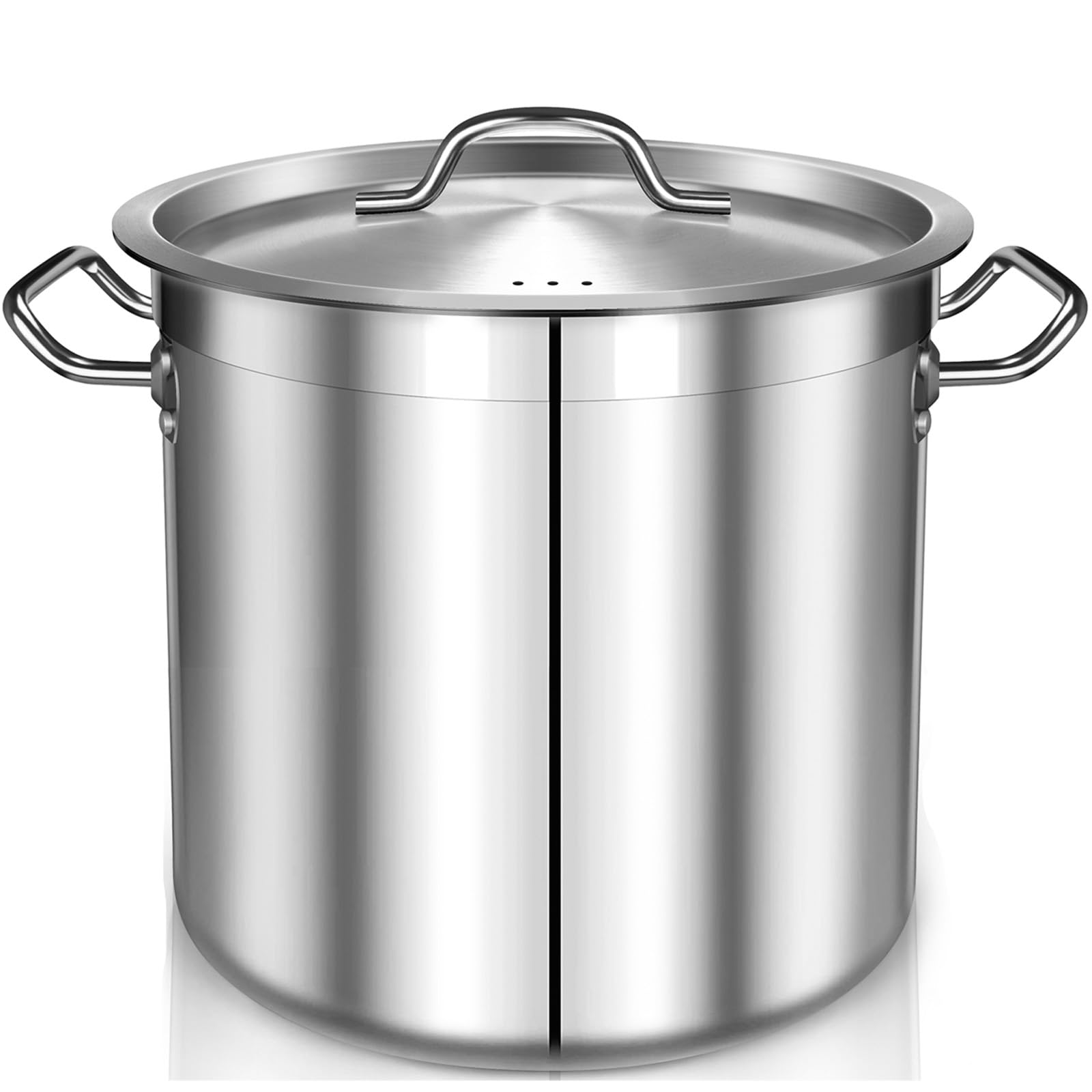
Falaja’s 20‑quart stockpot is designed with a “secure cooking” mindset: reinforced structure, sturdy handles, and a lid setup that’s trying to help you avoid the two big‑pot nightmares—boil‑overs and awkward, slippery handling. Owners frequently talk about it as “heavy duty” and “dependable,” and in this category, those words usually signal two things: a base that distributes heat more evenly and a body that doesn’t flex or feel fragile.
One standout here is the lid concept. A tightly fitted stainless lid with steam vent holes gives you a more controlled boil. It reduces the pressure‑build “lid dance” that can happen when you crank heat, and it helps keep foam and starchy water from turning into a mess. That’s a big deal for pasta, milk‑heavy cooks, and canning prep where you’re maintaining a vigorous boil for extended periods.
The measurement scale marks inside are also more useful than they sound. When you’re making cheese with gallons of milk, mixing brines, or building a consistent stock recipe, volume markings help you replicate results without guessing. Owners mention using it for cheese‑making, big batches of soup/chili, and canning season prep—all very “real world” jobs where you want stability.
The best way to think about this pot: it’s built to survive frequent large cooks. If your kitchen rhythm includes repeating the same big recipe (weekly soup, monthly stock, seasonal canning), a pot like this becomes less of a purchase and more of a system you rely on.
Why it’s a strong batch‑cook tool
- Secure lid behavior – Steam vents and tight fit help control boiling and reduce mess.
- Sturdy, confident build – Designed to handle big loads without feeling flimsy.
- Measurement marks – Great for repeat recipes, brines, and large volume precision.
- Versatile cooktop compatibility – Plays well across different stovetop types.
Good to know
- Heavier build means heavier washing and lifting—plan your “move it” strategy before it’s full.
- Tall pots can be awkward in small sinks; soaking and rinsing in stages helps.
- Like many big pots, occasional cosmetic marks from shipping can happen—wipe and inspect right away.
Ideal for: cooks who want a secure‑feeling lid, strong handles, and a pot that feels built for repeated large batches (especially soups, chili, and canning prep).
7. Ecolution 20‑Quart Stainless Stock Pot – Easy‑Watch Cooking with a Thick Base
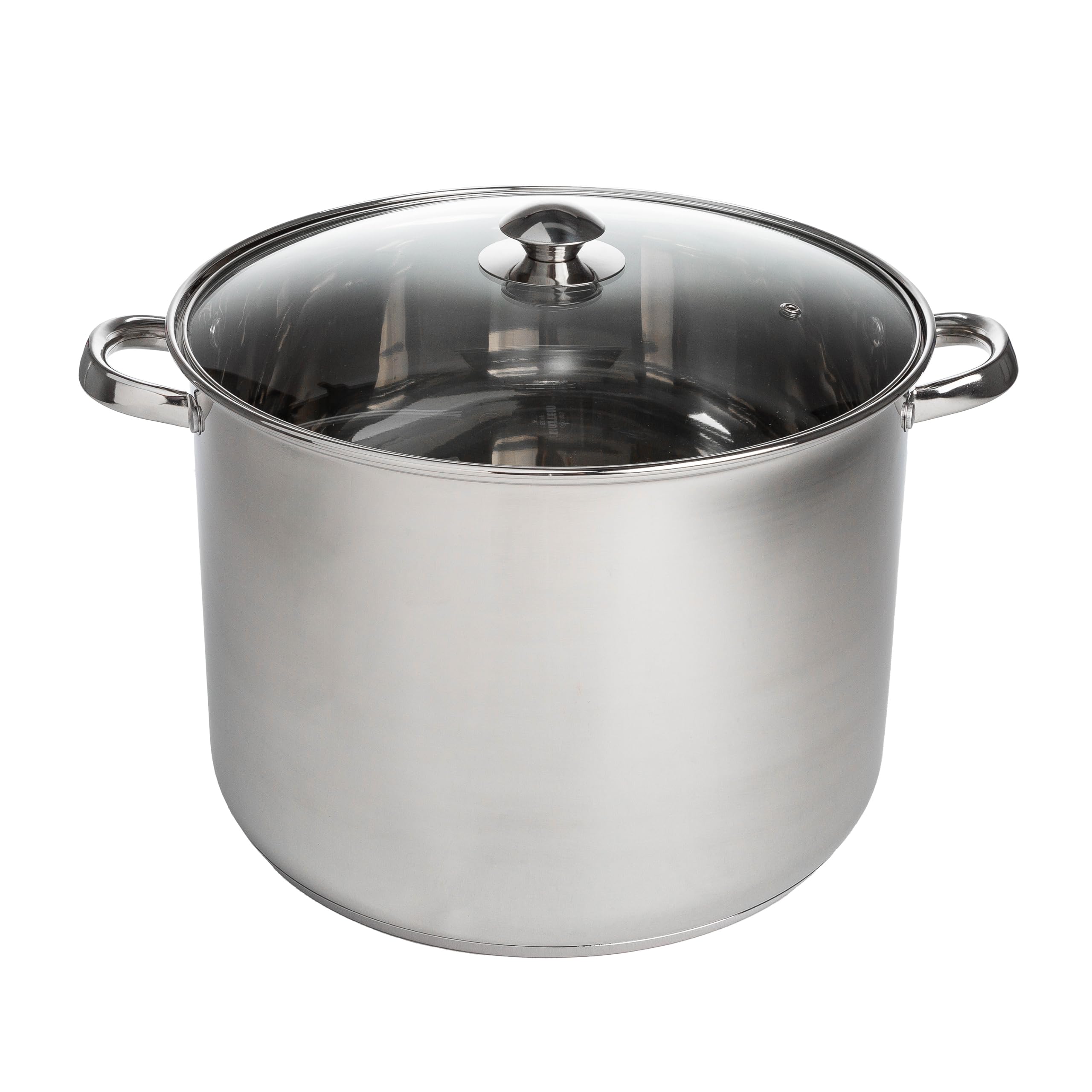
Ecolution’s 20‑quart stock pot is for people who want a straightforward, practical pot with two priorities: (1) a base that behaves better than thin stainless, and (2) a clear view into the pot so you can control the cook without hovering. Owners describe it as “really nice” and appreciate the even heat behavior—especially on induction—because the base is meaningfully thicker than the walls.
That “thick base / thinner walls” construction is common in value‑friendly big pots, and it can be a very good trade when the bonding is done well. Here’s why: the base is where heat matters most. The walls mostly act as containment and insulation. So if you get the base right, you get most of the cooking performance benefit without paying for fully clad sidewalls. For soups, beans, broths, and pasta boils, this style can deliver excellent results.
The glass lid is a practical win for people who do long simmers. You can watch the surface to keep it at a true simmer (not a hard boil), which matters for clarity in stock and tenderness in beans. You also avoid the constant “lift and lose heat” cycle. If you’ve ever struggled with a pot that boils too hard, then cools too much after you lift the lid, you’ll appreciate the stability a watch‑lid gives you.
There is one common “quirk” reported with some glass‑lid pots: as the lid heats, you can sometimes hear light cracking/popping sounds from the metal‑to‑glass expansion. It’s often just thermal expansion doing its thing, but if you’re lid‑noise sensitive, it’s worth knowing. Many users simply cook without the lid during certain phases and use it for simmer stages.
Why it’s a good everyday choice
- Even base performance – Thickened base helps avoid hot spots for common big‑pot cooking.
- Glass lid control – Monitor simmer and reduction without dumping heat.
- Easy cleanup – Many owners say it cleans easily after typical soups and stews.
- Strong value positioning – Practical build without paying for extra “ecosystem” features.
Good to know
- Walls may be thinner than premium commercial pots—better for boiling than aggressive high‑heat searing.
- Some users report lid noise during heating; it can be normal expansion, but it surprises people.
- Wider pots can take more burner space; measure your stovetop layout if space is tight.
Ideal for: cooks who want easy monitoring and reliable base heating for soups, beans, and big boils—especially on induction.
8. HOMICHEF 20‑Quart Nickel‑Free Stock Pot – For Induction Kitchens and Sensitive Shoppers

HOMICHEF has built a niche reputation with a very specific promise: nickel‑free stainless cookware with a serious, thick base. That’s a powerful combination for two types of buyers: people with nickel sensitivities (or who simply prefer nickel‑free alloys), and people who cook on induction and want a pot that “just works” with a strong magnetic response.
Owners who love this pot talk about it with unusual emotion—partly because it performs well, and partly because it fills a need that’s hard to shop for. They describe even heating at medium settings, a pot that can handle big soups and chili without immediate sticking drama, and a finish that feels premium enough to enjoy looking at. Several also mention that both the pot handles and lid handle stay relatively cool during stovetop cooking, which can happen when handle geometry reduces direct conduction.
There’s also a standout pattern in owner feedback that matters: customer service. In a category where shipping damage and lid issues can happen, a brand that responds fast and makes things right reduces your risk. That’s especially important with large cookware, because big items are more likely to arrive dinged or mis‑shaped than small pans.
The main “watch out” is quality control around lid fit. Some owners report receiving lids that didn’t fit correctly on the first try. That’s frustrating, but many also report the brand ultimately corrected the issue. The smart move is simple: test lid fit immediately. If it seats properly, you’ll likely love the pot’s performance and keep it for a long time.
Why it’s unique
- Nickel‑free stainless – A rare feature set for shoppers who prioritize it.
- Induction‑friendly behavior – Magnetic response and thick base help with stable heating.
- Even heating at medium heat – Great for long simmer cooking without constant babysitting.
- Notable customer support – Owners frequently mention helpful, responsive service.
Good to know
- Lid fit issues have been reported—inspect and confirm immediately on arrival.
- Large size can make cleaning in small sinks awkward; smooth technique matters more than scrubbing strength.
- Mirror finishes show water spots; wipe dry after washing if you care about appearance.
Ideal for: induction‑first kitchens and shoppers who specifically want nickel‑free stainless—without sacrificing a thick, confidence‑building base.
9. Bakken‑Swiss 20‑Quart 18/8 Stockpot – Speedy Heating + Polished Craftsmanship

This Bakken‑Swiss stockpot is one of the most consistently praised “surprisingly premium” options in the 20‑quart category. Owners talk about it like a real upgrade: faster heat‑up compared with older thin pots, steady boiling behavior for canning, and a finish that feels crafted rather than generic.
The performance story here is all about the base. When people say a pot “boils quickly,” what they’re usually feeling is better heat transfer and less wasted energy. That matters most in canning and big pasta boils, where you’re trying to move a lot of water from cold to rolling boil. It also matters when you’re doing a long simmer and want to maintain a stable bubble without keeping the burner cranked. Several owners mention that once boiling is reached, they can turn heat down significantly and still hold a vigorous boil—exactly what you want.
Bakken also gets points for practical details: etched interior measurement marks (useful for repeat recipes), small lid vent holes (helpful for reducing fog and controlling steam), and a generally “nice to live with” build. People also talk about how good it looks— not as a shallow compliment, but because it feels like a pot you’re proud to use for guests and gatherings.
The only common friction point is the classic big‑pot issue: published dimensions sometimes emphasize rim width (including handles), while cooks actually care about base diameter (will it fit my burner?). In real kitchens—especially glass‑top ranges—that base measurement determines how evenly it heats. The good news: many owners report it fits well once they test it, but it’s worth doing your own quick measurement check.
Why people love it
- Fast heat‑up – Great for canning boils and big water volumes.
- Strong craftsmanship feel – Polished finish and sturdy handling inspire confidence.
- Useful interior markings – Helps with precision in big batches.
- Stable boil control – Many owners report maintaining boils on lower heat settings.
Good to know
- Base diameter isn’t always obvious from listing dimensions—measure your burner and plan for fit.
- As with most stainless, hard water can leave spots—vinegar wipe removes mineral residue easily.
- Big pots are hard to wash in small sinks; rinse/soak strategy matters more than brute scrubbing.
Ideal for: cooks who want fast boil performance and a polished, sturdy pot that feels like a genuine upgrade for canning and big batches.
10. Update International 20 Qt Stock Pot – Induction‑Ready, NSF, and Built Like a Tool

This is a “serious pot” in the most literal sense. Update International’s Super Steel stockpot line is built with a heavy tri‑ply base that behaves like an engine—excellent heat transfer, good stability, and the kind of durability that attracts brewers and outdoor‑burner cooks. Owners describe it as commercial‑grade and long‑lasting, and many specifically mention how efficiently it conducts heat on gas compared to older aluminum pots.
Here’s an underrated advantage of a heavy base: it teaches you to cook smarter. Instead of cranking heat to fight thin metal, you can use medium‑low heat and still reach boiling and maintain a steady simmer. That’s not just comfort—it’s better cooking. Broths stay clearer, sauces reduce more evenly, and you spend less time scraping a scorched ring.
This pot also attracts “project cooks”—people who brew beer, make large batches of sauce, or do seasonal processing. Some owners even mention modifying it (for example, welding fittings for a valve) because the metal is substantial enough to support that kind of use. That is not something people say about flimsy cookware. It’s the language of trust.
The trade‑off is aesthetics and shipping risk. The finish may be more utilitarian than boutique cookware, and large pots can arrive with dents if shipping protection isn’t strong enough. Some owners report reshaping a slightly oval rim so the lid fits correctly—possible with sturdy steel, but obviously not ideal. If you get one that arrives in perfect shape, this is the kind of pot you may never replace.
Why it’s a keeper for serious cooks
- Heavy, efficient base – Excellent for steady boiling and long simmers with less burner strain.
- Commercial reliability – NSF listing and tool‑like durability attract power users.
- Great for propane/outdoor use – Stable and substantial for higher‑output burners.
- Long‑term value mindset – The kind of pot people describe as “lifetime” cookware.
Good to know
- Shipping dents or slight oval shaping can happen—inspect rim roundness and lid fit immediately.
- More utilitarian finish compared with premium “showpiece” stainless.
- Heavy build is a blessing for cooking, but a workout for washing—plan your sink strategy.
Ideal for: serious batch cooks, brewers, and outdoor‑burner users who want a commercial‑leaning pot that behaves efficiently and lasts.
11. Cook N Home 20‑Quart Stockpot – Stay‑Cool Handles for Busy, Steamy Kitchens

Cook N Home’s 20‑quart stockpot earns its reputation in a simple way: it makes big cooking feel safer. The silicone‑wrapped handles are the feature people remember because they reduce the “where do I grab this?” anxiety when steam is everywhere and the pot is heavy. That’s a real quality‑of‑life upgrade during canning season, pasta boils, and large stews where you’re moving hot liquid.
The construction is also designed to behave predictably: stainless body with an impact‑bonded aluminum disc base for even heating. Owners talk about it being sturdy and heavy without being impossible to manage—exactly what you want from a big pot that needs stability. The glass lid with a vent helps you monitor and control cooking. That vent hole is more important than it looks because it reduces pressure and helps the lid stay calmer during a strong boil.
One surprisingly practical detail people mention is the pot’s height. It’s not overly tall, which can be a win in kitchens with low cabinets or for cooks who want easier stirring access. Shorter height can also make storage easier. The flip side is that shorter pots can evaporate more during long simmering. If you do all‑day broth, you’ll want to keep an eye on liquid level and lid usage.
The main “watch out” reported by owners is handle coverage on the lid. If the silicone/grip area is shorter than your hand placement, you can accidentally touch hot metal and get burned. The fix is simple: always grab the lid handle from the safe grip area and use a mitt when in doubt. Big‑pot cooking is not the moment to rely on bare fingers.
Why it’s a comfort pick
- Stay‑cool style handles – Silicone wraps improve confidence during lifts and moves.
- Even heating disc base – Helps prevent hot spots in common big‑batch cooking.
- Glass lid visibility – Monitor cooking without lifting and losing heat.
- Kitchen‑friendly proportions – Often easier to stir and store than very tall stockpots.
Good to know
- Lid grip coverage can be shorter than expected—grab carefully and use mitts.
- Shorter pots can evaporate more in long simmers—watch liquid levels for stock days.
- Like all 20‑quart pots, it gets very heavy when full—two‑handed lifting is non‑negotiable.
Ideal for: busy kitchens that prioritize safe handling and visibility—especially for pasta boils, canning prep, and large stews.
12. P&P CHEF 20‑Quart Stock Pot – Thick Bottom Confidence with Easy Cleaning
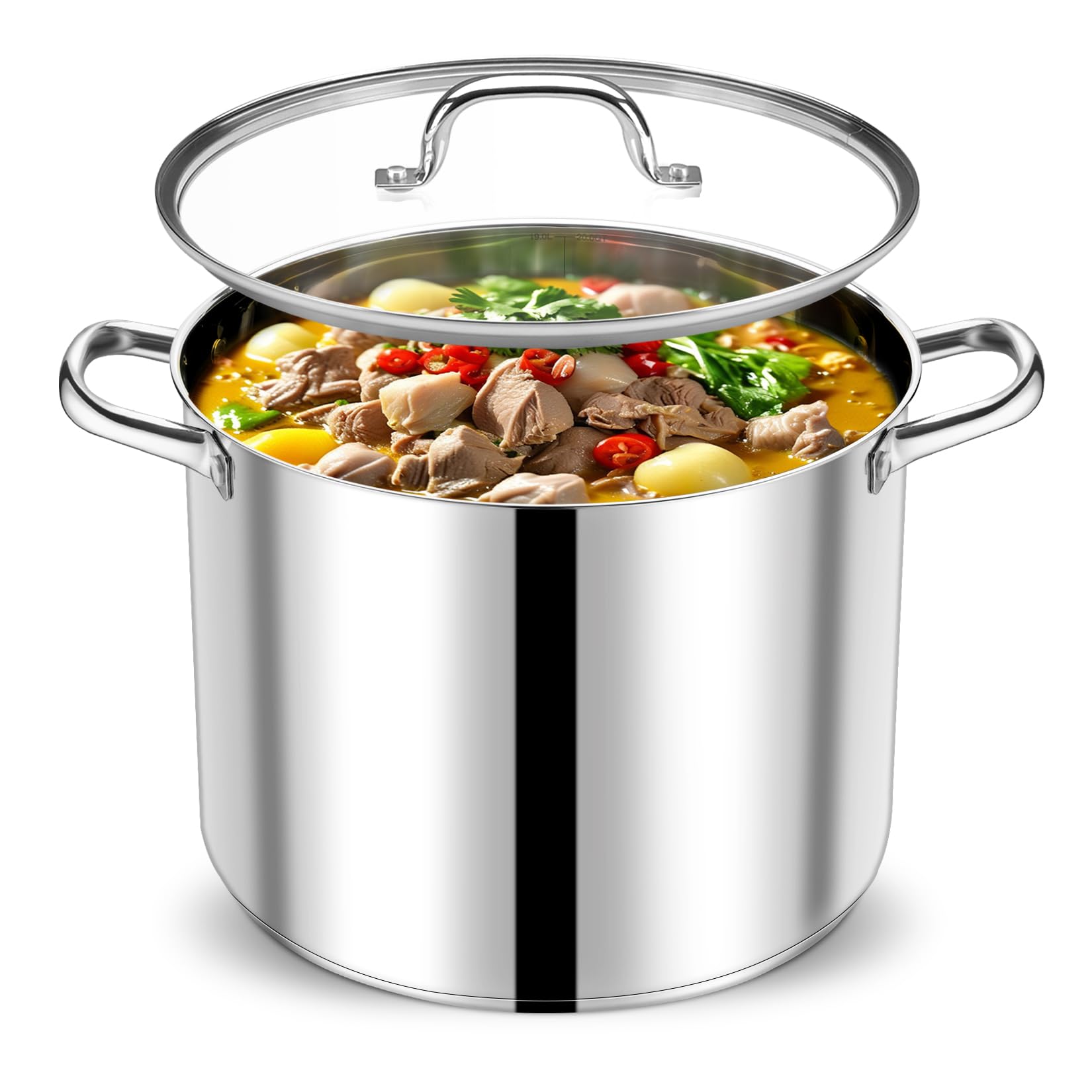
P&P CHEF’s 20‑quart pot is a classic “no nonsense” option that gets love for the fundamentals: a thick bottom, solid handling, and an interior that cleans without turning into a battle. People who buy it often say some version of “big and does the job,” and in cookware, that’s high praise—because it means the pot behaves the way a big pot should: stable, predictable, and not fussy.
The thick 3‑ply bottom is the headline feature because it helps prevent warping and spreads heat more evenly across the base. That’s what you want for large batches of chili and stew where the bottom can otherwise become a scorching danger zone. Owners describe heat distribution as “nice” and appreciate that they can cook big batches without splitting the job into two pots. That’s the whole reason you’re buying 20 quarts in the first place.
The glass lid with a vent hole helps keep cooking controlled and safer. Being able to monitor the boil is practical, and the vent helps reduce pressure buildup so the lid isn’t constantly rattling. The polished exterior and interior are also more than aesthetics: smoother stainless generally releases food residue more easily, which matters when you’re cleaning sticky soups and starchy cooks.
You may see cosmetic staining or discoloration at the bottom after high‑acid cooks (tomatoes are famous for this). That’s usually normal stainless behavior and more about mineral and heat marks than performance. The key point: owners report it doesn’t change food quality. If you care about a perfect interior shine, a gentle stainless cleaner and a soft scrub pad can restore it.
Why it’s a strong value
- Thick, stable bottom – Helps reduce hot spots and improves confidence for thick cooks.
- Easy cleaning feel – Polished surfaces reduce “stuck food” frustration for many owners.
- Great for meal prep – Lets you cook one huge batch instead of splitting recipes.
- Useful lid design – Glass visibility + vent improves boil control.
Good to know
- Cosmetic staining can happen after acidic cooks; it’s usually cleanable and not a performance issue.
- Glass lid durability is always a consideration—store it carefully and avoid hard knocks.
- Heavier build means heavier washing—soak first, then clean with soft tools for best results.
Ideal for: meal preppers, soup makers, and canning‑season cooks who want a sturdy pot with a thick bottom and easy maintenance.
13. Bakken‑Swiss 20‑Quart (Tempered Glass Lid) – Easy Monitoring on a Budget

If your priority is getting a functional 20‑quart pot without overspending—and you want to monitor cooking without lifting the lid— this Bakken‑Swiss tempered glass lid version is a strong candidate. Owners often describe it as well built for the price, with a thicker base than the sidewalls (good) and a lid that fits cleanly (also good). For common jobs like dog food batches, soups, rice, and pasta, those fundamentals matter most.
The glass lid is the main lifestyle feature. It reduces the “hover” factor, especially for people who are still learning big‑pot timing. When you can see the surface, you can keep the cook at a gentle simmer and avoid sudden boil‑overs. The vent also helps release steam, which can reduce lid chatter and fogging. For busy kitchens, that visibility turns a big pot into a more relaxed tool.
Another interesting owner pattern: some people mention the handles feel cool enough to touch during cooking (still be smart—steam and time matter), and they appreciate the clean-up being simple even with stickier foods. That’s a sign the interior finish and base behavior are doing their job.
The realistic compromise is durability and finish perfection. Some users report the interior bottom can show marks quickly after early uses. That’s common in stainless cookware and often cosmetic, but if you want a pot that stays showroom‑perfect, you’ll want to step up to a more premium finish. For most people shopping this tier, the real win is that it performs and doesn’t feel cheap.
Why it’s a smart entry pick
- Great visibility – Glass lid helps control boiling and simmering without lifting.
- Stable base feel – Thicker bottom improves heat distribution for common cooking jobs.
- Easy daily handling – Many owners like the balance of weight and sturdiness.
- Strong budget value – Delivers core performance without premium pricing.
Good to know
- Cosmetic marks can show early on the interior bottom; usually not a performance issue.
- Glass lids are the most fragile component—store carefully and avoid banging in sinks.
- If you do aggressive high‑heat browning, a heavier commercial pot will feel more forgiving.
Ideal for: budget‑minded cooks who want glass‑lid monitoring and a stable base for soups, pasta, and everyday big‑batch cooking.
14. IMUSA 20‑Quart Stock Pot – The “Big Boil Only” Budget Workhorse
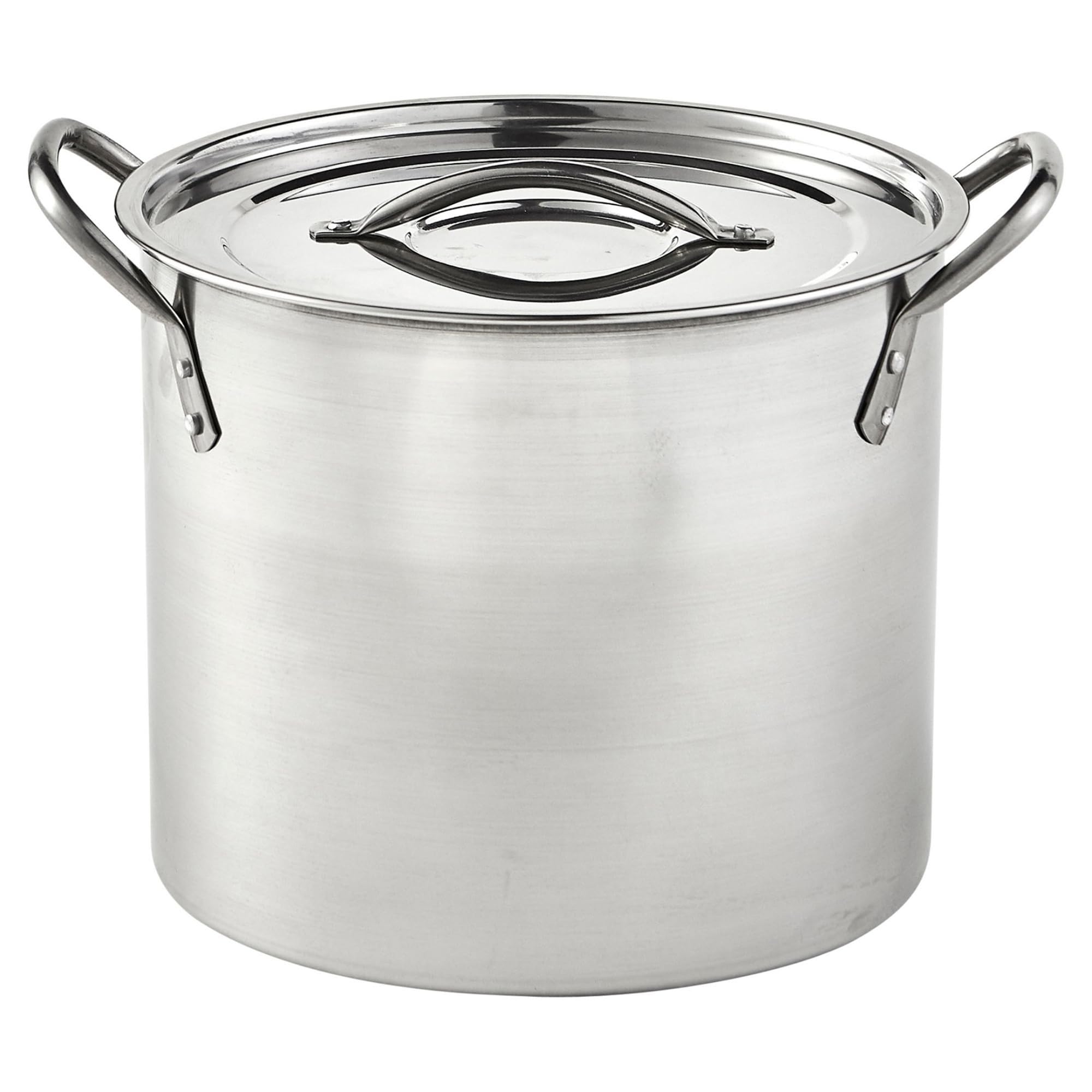
The IMUSA 20‑quart pot is for a specific type of buyer: you need a large stainless vessel for boiling, simmering, and utility jobs, and you don’t want to spend more than necessary. People buy this kind of pot for everything from lobster boils to outdoor water heating, maple syrup processing, and other “big container” tasks where stainless is preferred over reactive metals.
In owner feedback, you’ll see a clear pattern: it’s a good bargain and “works perfect” for straightforward jobs, but it’s not built like a premium stockpot. That means you should treat it like what it is: a lightweight stainless pot designed for liquid‑heavy cooking where the main job is holding volume. If you crank high heat or try to brown thick sauces aggressively, thinner walls and lighter bases can create hot spots and frustration.
A very practical note from owners: handle attachment can be a weak point if you use the pot for non‑intended extreme applications. For normal cooking—boiling water, soups, stews—the handles are typically fine. But if you’re doing unusual projects or heavy mechanical stress, you’ll want to monitor handle integrity and never lift a full pot in a way that strains attachments.
Here’s how to win with this pot: use it for what it’s best at—volume boiling and simmering—keep heat moderate, stir occasionally, and avoid treating it like a brazier. In that lane, it can be a genuinely useful tool. If you want “one pot for everything,” choose a thicker‑base option above.
Why people buy it
- Budget‑friendly volume – Great for big boils and large liquid cooks.
- Simple stainless build – Useful for many kitchen and outdoor tasks where stainless is preferred.
- Lightweight handling – Easier to move when empty compared to heavy commercial pots.
- Practical “second pot” – Great as a dedicated utility pot so your nicer cookware stays nicer.
Good to know
- Thinner build is less forgiving for high‑heat browning and very thick sauces.
- Shipping dents can happen more easily with lighter steel—inspect on arrival.
- If you need serious long‑term durability for frequent heavy cooks, step up to a heavier base model.
Ideal for: buyers who want a budget stainless pot for big boils, simmering, and utility jobs—without expecting premium “sauce‑safe” performance.
How Big‑Pot Heating Actually Works (and Why Bases Matter)
Here’s the truth: a 20‑quart pot doesn’t cook like a 6‑quart pot. The volume creates a thermal “lag,” meaning the pot takes longer to respond to burner changes—and mistakes compound. That’s why base construction is everything. A better base doesn’t just heat faster—it heats more predictably, which is what stops scorched bottoms and boil‑over chaos.
What makes a big pot feel “premium” in real cooking
- A base that spreads heat – Thick disc or tri‑ply bottoms reduce hot rings that burn chili and sauce.
- Flat, stable contact – Especially on induction and glass‑top stoves, a stable base maintains even energy transfer.
- Lid behavior you can trust – Vents and tight fits reduce rattling and help control foamy boils.
- Handles that invite two‑handed lifting – Wide loops and secure attachment reduce “slip fear” when the pot is full.
- Easy clean interior geometry – Smooth interiors and minimal crevices matter when you cook sticky, starchy, or oily foods.
This is why you see so many cooks gravitate toward thick‑base commercial pots for frequent batches. It’s not about “status.” It’s about a pot that stays calm when you’re cooking hard.
Habits that prevent scorching and boil‑overs (even in cheaper pots)
- Heat up in stages – Start medium, then increase. Big pots punish “full blast from cold.”
- Stir early, stir smart – Thick foods stick in the first 10–15 minutes when the base is hottest.
- Use the lid strategically – Fully closed lids trap steam and foam; vented lids or a slight crack can calm boil‑overs.
- Salt timing matters – For pasta, wait until water is hot and moving before heavy salting to avoid undissolved deposits.
- Don’t slide on glass‑tops – Lift and set to prevent scratches and preserve base flatness.
When you combine a good pot with good habits, big‑batch cooking stops being stressful and starts feeling like a superpower.
FAQ: Buying and Using a 20‑Quart Pot Without Regret
Is a 20‑quart pot too big for everyday cooking?
What’s the difference between a stockpot and a brazier?
Disc base vs tri‑ply: what should I actually choose?
How do I know if it will work on induction?
Glass lid or stainless lid—which is better?
Can I use a 20‑quart pot for water‑bath canning?
How do I keep stainless from sticking or scorching with chili and sauce?
How do I clean water spots and heat discoloration?
Final Thoughts: Choose the 20 Qt Cooking Pot You’ll Actually Reach For
A great big pot changes your kitchen rhythm. You stop splitting recipes. You stop worrying about boil‑overs every time you cook pasta for a crowd. You start making broth and freezing it because it’s finally easy. The right pick isn’t the one that looks best in a listing—it’s the one that feels predictable when the pot is full and the cook is long.
Here’s how to translate this guide into a confident purchase:
- Want the best “do it all” balance? Start with the Ciwete 20‑Quart 3‑Ply Stock Pot. It’s the rare combo of strong base behavior, smart usability details, and a finish you’ll actually enjoy seeing.
- Want commercial‑grade simmer power? Choose the WINCO Tri‑Ply 20‑Quart Stock Pot. It’s a true workhorse for repeat batch cooks who care about even heat and long-term durability.
- Cook “brown first, then simmer”? Go for the Winco 20‑Quart Brazier. That wide base is a flavor-builder for chili, ragu, braises, and beans.
- Induction-first or nickel-free priority? Look at the HOMICHEF 20‑Quart Nickel‑Free Stock Pot. It’s a strong pick for shoppers who want a specific material approach without sacrificing base thickness.
- Want “sturdy and simple” without overthinking? The NutriChef 20‑Quart Stockpot is a dependable heavy‑base option that many people describe as a real upgrade from thin old pots.
- Need safer grips for steamy, busy cooking days? Consider the Cook N Home 20‑Quart Stockpot for its comfort‑focused handles and visibility-friendly lid.
- Want a commercial-leaning “tool” for outdoor burners or brewing? The Update International 20 Qt Stock Pot is built with serious base construction and long-haul durability in mind.
- Need the lowest-stress budget option for big boils? The IMUSA 20‑Quart Stock Pot is best treated as a simple “volume vessel” for boiling and simmering.
If you want one purchase that pays off again and again, pick the 20 qt cooking pot that matches your hardest day— canning, big batches, or long simmer sessions—and you’ll cook with a calm confidence that makes the whole kitchen feel easier.
